How To Incorporate Math Learning Over March Break

There are still a few days left of March break, which means there is still some time to fit in some math learning! We get that March break often means time off from a regular learning routine, but there are some easy, fun ways to keep your child practicing their math skills while on vacation. While online math help such as Dropkick Math Academy is always a good idea, there are many other ways to get your child interested and engaged in math over the holidays. 

Math skills are important to help our kids gain confidence in problem-solving as they grow up, so coming up with creative ways to encourage math exploration doesn’t just have to happen inside the classroom – it can manifest over March break too! Read on to find out how easy and fun incorporating math over break can be.

A Perfect Opportunity

March break is a perfect opportunity for students to explore the world of math and expand their knowledge beyond what is taught in the classroom. It can also be a great time for bonding with friends and family as you explore together. Here are some ideas on how to incorporate math learning over March break.

Get The Games Going!

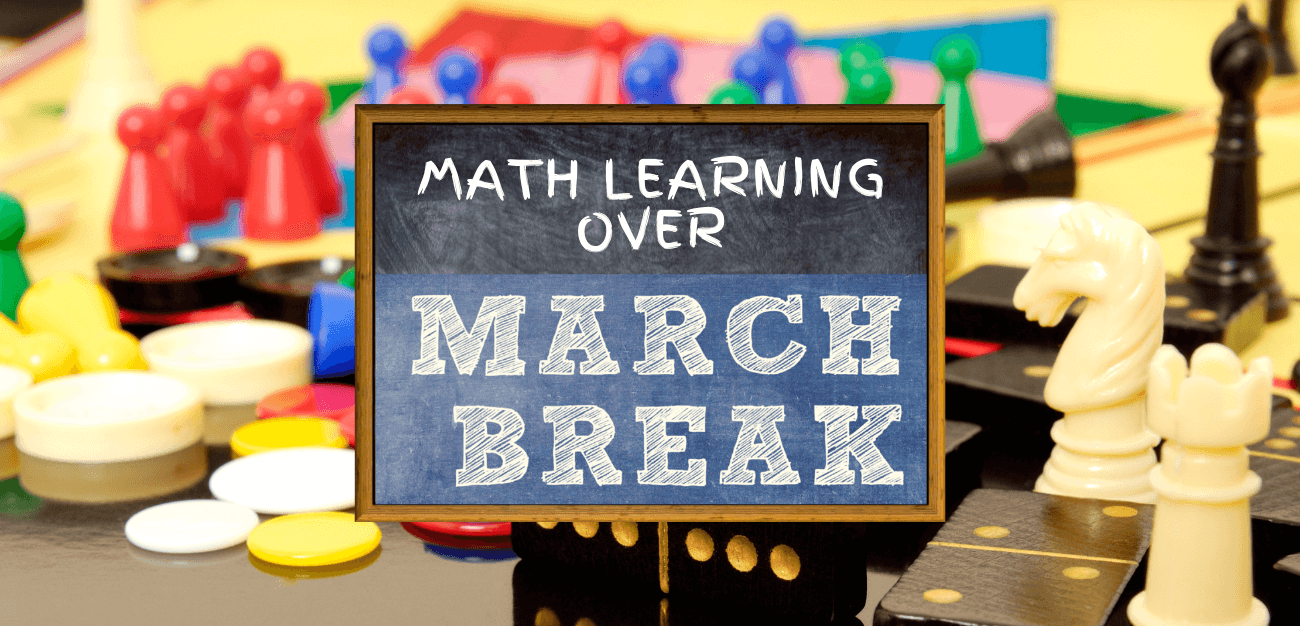
Board games have long been recognized as a fantastic means of entertainment, but did you know they also serve as an excellent tool for children to practice and develop their math skills? Engaging in such games fosters a fun and interactive environment and enables children to apply their mathematical thinking in real-world contexts. These games have the remarkable ability to challenge and enhance children’s numeracy, problem-solving, and strategic thinking abilities without even realizing that they are learning through play. 

Many board games such as Monopoly, Chess, Checkers, Yahtzee, and Risk require basic arithmetic. Another option is to create or purchase math-based card games like “24” which requires players to find combinations that add up to 24 using available cards.

This invaluable practice can aid in strengthening the foundation of math concepts and boosting children’s confidence in their mathematical capabilities. Thus, incorporating board games into a child’s recreational activities can provide a delightful and informative experience with long-lasting benefits.

Turning Trips and Experiences Into Mathematical Intrigue

There’s no doubt that immersing oneself in real-world applications offers a far more stimulating and engaging approach to learning mathematics. Stepping outside the confines of traditional textbooks and exercises, students can turn to an array of unique interactive experiences. Museums, art galleries, aquariums, zoos, and science centers become arenas of exploration where mathematical concepts spring to life unexpectedly. 

Whether observing geometric shapes within the design of a masterpiece at an art gallery or breaking down fractions to better understand an animal’s proportion at the zoo, our world becomes an infinite source of mathematical intrigue. Encountering math in these varied environments deepens the learner’s understanding and fosters an appreciation for the incredible applications of mathematics in the world around us.

Apps & Programs

There are many apps available today which focus solely on teaching mathematical concepts through exciting game experiences. Most of these apps are specifically geared towards certain age groups, so it helps to find one that matches your child’s level of skill/ability before downloading it. 

Additionally, some programs offer video lessons from certified math teachers, which can help boost understanding of more difficult concepts quickly and effectively. These lessons range from short tutorials all the way up to full courses, depending on how much time you want your child to spend on this activity during March Break.

Dropkick Math Academy offers virtual programs taught by certified Ontario teachers that cover a wide range of subjects. Whether your child needs help with fractions, decimals or algebra, we have classes that can help! 

Making Math Activities Fun

For hands-on activities related to mathematics, try folding paper projects like origami or building paper models – this allows for experimenting with shapes (geometry) and patterns (algebra) as well as measuring space (coordinate geometry). For sports enthusiasts who also love numbers, there is fantasy football/basketball/baseball – by making predictions about player performance these leagues provide an excellent opportunity for student engagement. Last but not least, outdoor scavenger hunts make great use of coordinates so that students can learn how distances relate in terms of x & y axes while performing tasks outdoors!

Making Math Enjoyable

Making a “math playground” during March Break will give students something positive they can look back on once school resumes after the break is over. With all the above suggestions, hopefully, parents will find something suitable for their children – whatever they choose should be both educational as well as enjoyable!

Choosing The Right Math Tutor For Your Child

The prospect of hiring a tutor for your child over the holidays can be incredibly beneficial in maintaining academic progress, but it may also present a challenging decision in selecting the perfect fit. It’s essential to consider several factors when embarking on this journey, such as the math tutor’s experience, communication skills, and teaching style that would best complement your child’s learning needs. Understanding your child’s specific academic goals and areas requiring improvement is crucial in guiding the search for the right tutor. 

By actively seeking recommendations from trusted sources, vetting potential candidates, and engaging in open communication with your child, finding the ideal tutor becomes a less daunting task, thus facilitating an enriching learning experience outside the traditional classroom environment.

At Dropkick Math Academy, we wholeheartedly believe in transforming the way children approach and appreciate mathematics by making it a joyful and exciting experience. By encouraging parents to actively participate in their child’s learning journey, we aim to create a nurturing environment where both children and parents can uncover the underlying principles of mathematics hand-in-hand. It is our mission to spark curiosity and foster a genuine love for math, making it a delightful adventure that captivates young minds and empowers them to realize their full potential in this invaluable subject. Together, we can build a strong foundation and lay the groundwork for future success in math and beyond at the Dropkick Math Academy.

For more information about Dropkick Math Academy online math help and to learn if our programs would be a good fit for your child, visit our website today! 
Why All Students Have The Capacity To Think Algebraically

Most people think that only good math students can think algebraically. This, however, is not true. Algebraic thinking is a skill that all students can learn. In fact, all students have the capacity to think algebraically if they are given the opportunity to do so. Algebraic thinking allows students to see patterns and relationships in data, which can help them make better decisions in school and life. 

If you want your child to be able to think critically and solve complex problems, then you should encourage them to learn how to think algebraically. Luckily, plenty of resources can help them do this, including online math help from Dropkick Math Academy! So don’t wait any longer; start encouraging your child today! They will thank you for it later.

What Is Algebra?

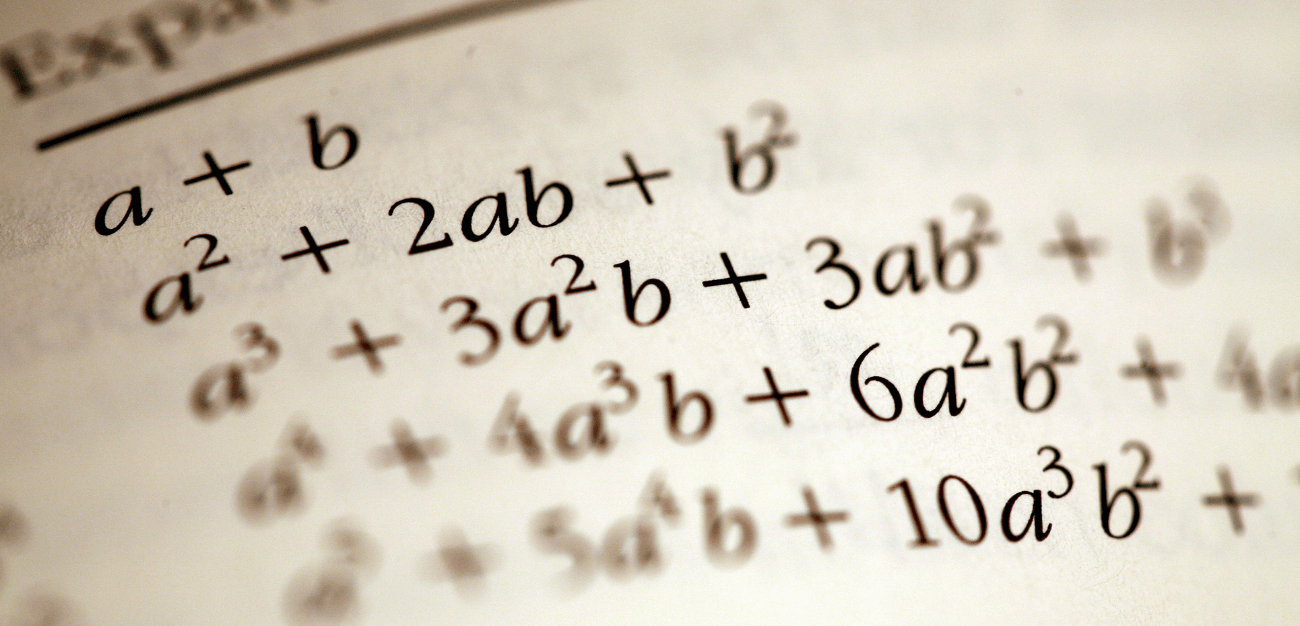
Algebra is a mathematical subject that deals with symbols and the rules governing how they interact. It is considered a universal language, as it helps us understand and describe patterns we see in the world around us. Algebra is used in many fields, such as physics, engineering, and economics. 

While many people view algebra as a dry and difficult subject, it is very useful in everyday life. For example, algebra can help us to solve problems such as finding the lowest price for a product or working out how long it will take to travel a certain distance. Algebra is an important tool that can be used to solve real-world problems. 

Online Math Help For Algebra

Algebra can seem difficult to some students because it requires the ability to think abstractly. This can be difficult for some students because it is not intuitive. It is based on symbols and variables rather than numbers, so students need to be able to manipulate these symbols to solve equations. 

While this may seem daunting, for many people, algebra is simply a matter of practice makes perfect. The more a student does it, the better they will become at it. Of course, students will be at different places when starting out, but that is ok. All students can think algebraically and do so quite often! 

These students might benefit from working with a tutor or taking an algebra class. With a little extra help, most students can overcome their struggles with algebra.

How To Think Algebraically

Thinking algebraically can seem scary for many people. Everyone has heard jokes about algebra and how it is virtually impossible to learn. But that simply isn’t true. Every student has the capacity to learn how to think algebraically if given the right instruction and tools. 

The first step to start when learning how to think algebraically is learning the definition. By learning the definition of what it means to think algebraically, a student can then begin to use algebraic thinking skills to make sense of different situations. 

The focus of algebraic thinking should begin with operations and processes rather than numbers and computations. When algebra is studied this way, the rules for manipulating numbers and letters in equations aren’t confusing but are instead a natural extension of what students know about the equation. 


How The Pandemic Caused The Worst Education Crisis In History

It’s been a few years since the pandemic hit, and we are starting to see its effects on education. Schools were closed, children were out of school for extended periods of time, and virtual learning was introduced. This was all done in an effort to keep children safe from the virus. But what about the long-term effects? Are our children worse off now than they were before? In this blog post, we will talk about the worst education crisis in history.

Research is now starting to come forth concerning education and how the pandemic influenced our children. Some parents were happy to keep their children home from school, while others wanted them back in class. No matter what side of the argument you were on, all parents wanted the same thing – for their children to keep up with schooling and not fall behind. To try and keep up with their education, some parents turned to online math help or searched for a tutoring company. 

The Research 

While some educational interventions were able to help keep children on track in the interim, the overall effect of the pandemic is now being recorded as researchers conduct studies. So far, studies are showing that the coronavirus pandemic has caused alarmingly high learning losses in math and reading. This loss of education has been felt worldwide and is now reported as the worst education crisis ever recorded. 

One of the largest studies done to date on the effects of the covid pandemic on school children around the world was conducted by Unicef, UNESCO and The World Bank. The results were published in a new report and attributed school closures as one of the most significant factors in disrupting children’s education across the board from low-income to high-income countries. 

The report found that schools were forced to close quickly and adapt the curriculum to an online learning environment, often leaving teachers without the proper resources or training. Despite the best efforts by schools, the report found that “the deployment, uptake, and effectiveness of such programs has varied greatly, and in most countries, offered an inadequate substitute for in-person learning.” 

In Canadian studies, researchers have found that students who switched between remote and in-person learning had a tumultuous education experience amid COVID-19. Many education advocates are now highlighting the loss in education as a longer-term concern that will persist even after COVID-19 wanes.

Children Who Are Already Struggling

Researchers have noted that these disruptions in education have affected students who were already struggling before the pandemic hit even more than others. This means that for students who were already working through challenges at school, the pandemic made it even more difficult to have an enriching educational experience. 

Even without a pandemic, teachers look for students struggling with learning losses and find ways to work with the child toward eliminating the gap. For some students, this means summer school or after-school tutoring. However, with an added loss of education from the pandemic, the worry is that there is just not enough time or resources for these students to catch up to their peers. 

While Canada has yet to release any official information regarding education loss caused by the pandemic, other countries have the metrics to prove that children have fallen behind where they should be. It has also yet to be determined how this will affect them long-term. Although this is disturbing news, parents need to discuss the loss of education away from their children. Students have been through a lot in the past couple of years, and anxiety may already be high. If they believe they may be at risk of falling behind, it can add extra stress and cause them even more pressure. Just remember that almost every family is in the same boat, and the government is stepping in to help make a difference.  

Ontario’s Learning Action Recovery Plan

As schools scramble to find ways to support learning recovery and work on a further plan to target learning loss head-on, many provinces throughout Canada are offering additional funding to support reading and math for all students. For example, in Ontario, this comes in the form of Ontario’s Learning Recovery Action Plan for Students, which has been designed to help students who have been struggling in school catch up and get back on track. 

As research shows, the pandemic has caused the worst education crisis in history, the question becomes how we fix it and help our children catch up without overwhelming them. Many educators are calling for protecting and increasing investments into education, saying it should be the first among priorities to get the children the help they need.