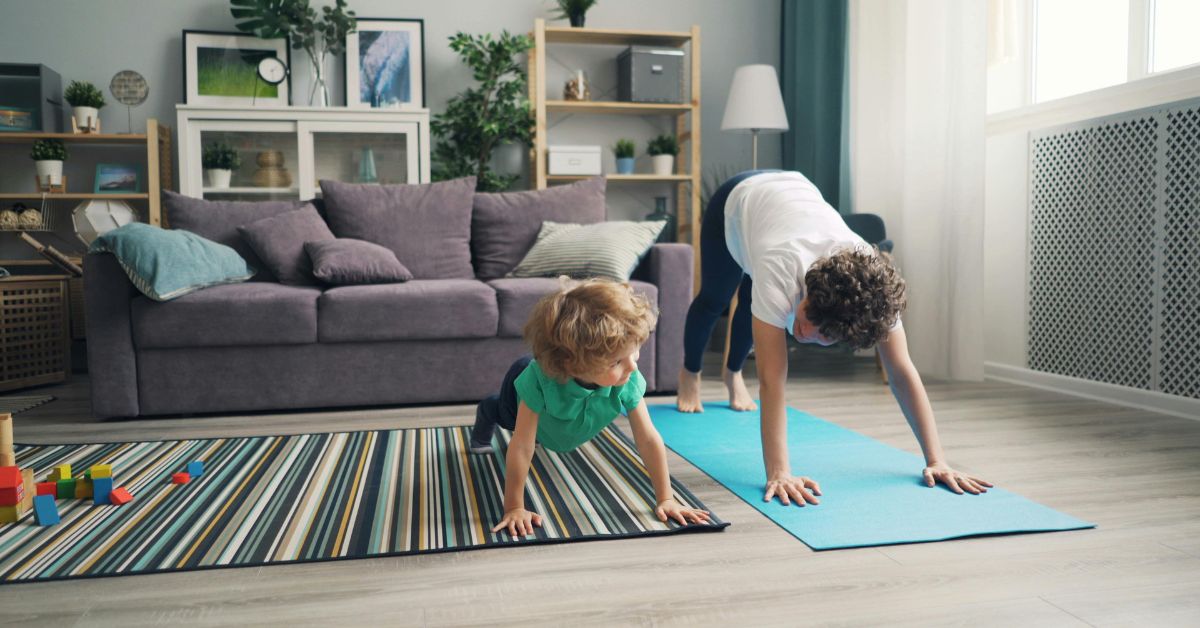
How Much Physical Activity Do Kids Really Need?

Kids need at least 60 minutes of physical activity every day—that’s the widely recommended baseline from health experts. The good news? It doesn’t have to look like traditional gym class. As homeschooling parents, you have flexibility to build movement naturally into your day.

How Long Should Gym Class Be?

If you’re trying to replicate a “school-style” gym class at home, aim for 30–60 minutes, 3–5 days per week. But here’s the truth most parents don’t realize: you don’t need a formal gym class every day to meet your child’s physical activity needs.

Instead, think in terms of total daily movement.

Here’s a simple way to break it down:

  • Structured activity (20–40 minutes)
    Think: planned exercise, sports, or a “gym class” block. 
  • Unstructured play (20–40 minutes)
    Think: backyard play, biking, climbing, imaginative games. 
  • Light activity throughout the day
    Think: walking, chores, movement breaks between lessons. 

This flexible approach works especially well for homeschooling families because it fits naturally into your routine without adding pressure.

Why Physical Activity Matters More Than You Think

Physical activity isn’t just about burning energy—it directly impacts your child’s brain, mood, and learning ability. Many parents notice better focus after their kids have had time to move, even if it’s just 15 minutes outside.

Regular movement helps:

  • Improve concentration during lessons 
  • Reduce stress and anxiety 
  • Support healthy growth and development 
  • Build confidence and social skills 
  • Improve sleep (which makes everything easier) 

When kids don’t get enough movement, you’ll often see the opposite: restlessness, lack of focus, and frustration during school time.

One of the biggest mindset shifts for homeschooling parents is realizing that physical activity isn’t “extra.” It’s a core part of learning, just like reading or math.

There’s a moment most homeschooling parents experience at some point: your child is bouncing in their seat, staring out the window, or melting down over a simple worksheet. It’s easy to assume it’s a discipline or attention issue, but often it’s something much simpler—they need to move. Movement resets their brain in a way sitting still never will. When you start seeing physical activity as a learning tool instead of a break from learning, your entire homeschool day begins to flow more smoothly.

How To Build Physical Activity Into Your Homeschool Day

The easiest way to meet the 60-minute goal is to spread activity throughout the day instead of trying to cram it into one block.

Here’s a simple framework you can start using this week:

1. Start the Day With Movement

Before jumping into academics, try:

  • A short walk 
  • Stretching or yoga 
  • A quick backyard game 

Even 10–15 minutes can make a big difference in focus.

2. Add Movement Breaks Between Subjects

Instead of going straight from math to reading:

  • Do jumping jacks 
  • Have a quick dance break 
  • Walk around the block 

3. Schedule a Midday “Gym Time”

This can be your structured activity window:

  • Sports practice 
  • Workout videos 
  • Bike rides 
  • Park time 

4. Use Active Learning

Sneak movement into lessons:

  • Spell words while tossing a ball 
  • Practice math facts while hopping or pacing 
  • Read aloud while walking 

5. End With Free Play

Let kids unwind naturally:

  • Backyard play 
  • Neighborhood games 
  • Creative movement 

This approach keeps kids engaged without feeling like they’re stuck in a rigid schedule.

Child wearing jeans and tan sneakers climbs a wooden playground ladder on a sunny autumn day.

Easy Physical Activities For Homeschool Families

You don’t need expensive equipment or a full gym setup to keep your kids active. Some of the best activities are simple, free, and easy to repeat.

Here are practical ideas you can rotate:

Outdoor Activities

  • Bike riding 
  • Nature walks or hikes 
  • Playing tag 
  • Jump rope 
  • Obstacle courses using household items 

Indoor Options (Rainy Days)

  • Dance parties 
  • YouTube kids’ workout videos 
  • Yoga for kids 
  • Balloon volleyball 
  • Hallway races 

Structured Activities

  • Local sports leagues 
  • Martial arts classes 
  • Swimming lessons 
  • Homeschool co-op PE classes 

Chores That Count as Exercise

  • Raking leaves 
  • Sweeping 
  • Carrying groceries 
  • Gardening 

Yes—chores absolutely count as physical activity. It all adds up.

One homeschooling mom told us she stopped stressing about “gym class” entirely when she realized her kids were already moving constantly throughout the day. Between helping in the yard, riding bikes, and playing outside with neighbors, they were easily hitting the recommended activity levels. What changed wasn’t their routine—it was her perspective. Sometimes the problem isn’t that kids aren’t active enough, but that we’re trying to force movement into a box it doesn’t need to fit in.

Common Mistakes Parents Make (And How To Fix Them)

Even with the best intentions, it’s easy to overcomplicate physical activity in your homeschool.

Here are a few common pitfalls:

1. Treating Gym Like a Formal Subject

You don’t need:

Fix: Focus on consistency, not perfection.

2. Expecting Long Attention Spans

Younger kids especially won’t stick with 45 minutes of structured exercise.

Fix: Break it into smaller chunks throughout the day.

3. Relying Too Much on Screens

While workout videos are helpful, they shouldn’t be the only activity.

Fix: Prioritize outdoor and hands-on movement when possible.

4. Skipping Activity on Busy Days

This happens often when school runs long.

Fix: Use quick 10-minute movement bursts instead of skipping entirely.

5. Comparing to Traditional Schools

Homeschool doesn’t need to mirror public school schedules.

Fix: Use your flexibility as an advantage.

Simple Steps You Can Take This Week

If you’re feeling overwhelmed, don’t worry—you don’t need a complete overhaul. Start small.

Here’s a realistic plan:

  1. Pick one daily movement habit
    Example: 15-minute walk after breakfast. 
  2. Add one fun activity
    Example: family dance party or backyard game. 
  3. Set a reminder for movement breaks
    Even 5 minutes between lessons helps. 
  4. Get outside once per day
    Fresh air makes everything easier. 
  5. Let go of perfection
    Some days will be more active than others—and that’s okay. 

The goal is consistency, not a perfect schedule.

Some days will look amazing—you’ll get a full hour of activity, sunshine, and happy, energized kids. Other days will fall apart, and you’ll be lucky if anyone leaves the couch. That’s normal. Homeschooling isn’t about perfect days; it’s about building rhythms over time. When movement becomes a natural part of your routine instead of a checklist item, it sticks in a way that feels sustainable for the long haul.


FAQ: How much exercise do kids need each day for homeschooling?
Children need at least 60 minutes of daily physical activity, including a mix of active play, exercise, and movement. Homeschooling makes this easier by allowing flexibility—short bursts throughout the day can fully meet physical activity requirements.

FAQ: What counts as physical activity for homeschool PE?
Physical activity includes anything that gets kids moving—sports, outdoor play, chores, dancing, and even active learning. You don’t need a formal homeschool PE curriculum as long as your child stays active consistently.

FAQ: Do homeschoolers need a structured gym class?
No, homeschoolers don’t need a formal gym class to meet physical activity goals. A combination of structured exercise and unstructured play works just as well, and often better, for maintaining healthy movement habits.


Keep Learning With DKM Homeschool Resource

Finding the right balance between academics and physical activity can feel overwhelming at first, but it becomes second nature with time. Your kids don’t need a perfect gym schedule—they need consistent opportunities to move, play, and grow.

The beauty of homeschooling is flexibility. You can create a rhythm that works for your family, your space, and your child’s energy levels. Start small, stay consistent, and adjust as you go.

If you’re looking for more practical homeschool tips, encouragement, and simple strategies that actually work in real life, explore more articles here at DKM Homeschool Resource. We’re here to help you build a homeschool life that feels doable—and even enjoyable.

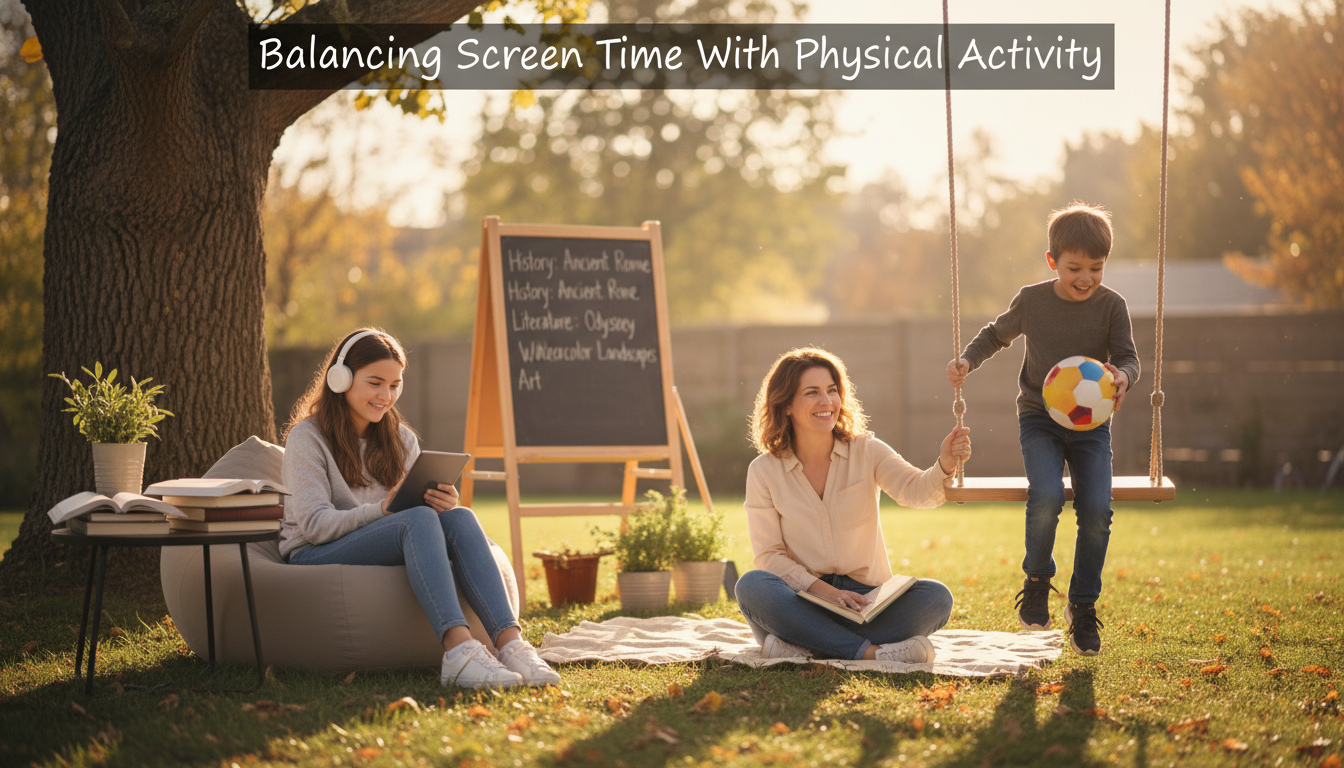
Balancing Screen Time With Physical Activity

Homeschool organization hacks can completely transform your day, and your sanity. When your homeschool runs smoothly, everything from lesson time to cleanup becomes easier and more enjoyable.

At DKM Homeschool Resource, we’ve worked with countless families who felt overwhelmed at first, but found that a few simple systems made all the difference. Let’s walk through the practical strategies that actually work.

What Causes Burnout In Homeschooling Parents?

Burnout in homeschooling parents is usually caused by trying to do too much without clear systems in place. Many parents feel pressure to replicate traditional school at home, leading to long days, cluttered schedules, and constant frustration.

Other common causes include:

  • Lack of structure or inconsistent routines 
  • Trying to manage every subject, grade, and child alone 
  • Overloaded curriculum choices 
  • No clear boundaries between school and home life 
  • Constant comparison to other homeschool families 

When everything feels chaotic, even simple tasks become exhausting. That’s why organization isn’t just helpful, it’s essential.

Here’s the key truth: you don’t need to do more, you need to organize better.

Create A Simple Homeschool Routine (Not A Rigid Schedule)

One of the biggest mistakes we see is parents creating overly detailed schedules that fall apart within days. Life with kids is unpredictable, and rigid plans often lead to frustration.

Instead, focus on a flexible daily rhythm.

Try this simple structure:

  1. Morning Block (Core Subjects)
    • Math, reading, writing 
  2. Midday Break
    • Lunch, outdoor time, free play 
  3. Afternoon Block (Light Learning)
    • Science, history, art, or projects 

This gives your day direction without locking you into exact times.

Quick Tip:
Use anchor points instead of exact hours. For example:

  • “Math happens after breakfast” 
  • “Reading happens before lunch” 

This keeps your day moving, even when things don’t go perfectly.

Declutter Your Homeschool Space (Yes, It Matters)

You don’t need a Pinterest-perfect homeschool room. But you do need a space that isn’t overwhelming.

Too much stuff creates:

  • Decision fatigue 
  • Lost materials 
  • Constant cleanup stress 

Start with a simple reset:

  • Keep only current curriculum within reach 
  • Store extra materials in bins or closets 
  • Limit supplies to what your kids actually use 

Example:
If your child uses the same 5 markers every day, they don’t need access to 40.

Less clutter = clearer thinking for both you and your kids.

Use Weekly Planning Instead Of Daily Panic

Use Weekly Planning Instead Of Daily Panic

Daily planning is one of the fastest ways to feel behind.

Instead, plan your homeschool week in one sitting.

Here’s a simple weekly system:

  • Pick 3–5 priorities for the week 
  • Assign subjects loosely to each day 
  • Leave 1 “catch-up” day open 

Example Weekly Plan:

This removes the pressure of “getting everything done today.”

This is where many parents experience a mindset shift that changes everything. Homeschooling doesn’t have to mirror traditional school in order to be successful. In fact, the more you try to recreate a classroom at home, the more friction you’ll feel in your daily routine.

When you begin to see your homeschool as a flexible learning environment rather than a strict system, your stress level drops significantly. Your children also respond better because the atmosphere feels calmer and more natural.

Over time, this approach builds confidence. Instead of second-guessing every decision, you begin to trust your rhythm, your pacing, and your ability to adjust when needed.

Organize Materials So Kids Can Be Independent

If you’re constantly being asked, “Where is my book?”, your system isn’t working yet.

The goal is independence.

Set up simple systems your kids can follow:

  • Label bins by subject 
  • Use folders for each child 
  • Keep daily materials in one easy-to-access spot 

Simple Setup Example:

  • “Math bin” with workbook + pencil 
  • “Reading basket” with current books 
  • “Art drawer” for creative time 

Game-Changer Tip:
Create a “Daily Basket” for each child with everything they need for that day.

This eliminates 90% of interruptions.

Avoid These Common Homeschool Organization Mistakes

Even with the best intentions, certain habits can make homeschooling harder than it needs to be.

Watch out for these:

  • Overplanning every minute of the day 
  • Buying too many curriculum options at once 
  • Not building in breaks 
  • Trying to teach all children at the same time 
  • Constantly switching systems 

Reality Check:
The most effective homeschool systems are simple, and repeatable.

If it feels complicated, it probably won’t last.

Build Systems That Save You Time Every Week

The secret to staying organized isn’t working harder, it’s creating repeatable systems.

Here are a few that make a big impact:

1. Sunday Reset

  • Prep materials for the week 
  • Review lesson plans 
  • Organize supplies 

2. End-of-Day Reset

  • Put materials back 
  • Clear workspace 
  • Prep for tomorrow 

3. Monthly Declutter

  • Remove unused curriculum 
  • Rotate books 
  • Reorganize supplies 

These small habits prevent overwhelm from building up.

There’s something powerful about walking into your homeschool space and knowing exactly where everything is. It creates a sense of calm that carries into your teaching and your children’s learning.

When your systems are working, you spend less time managing chaos and more time actually connecting with your kids. That’s where the real value of homeschooling shines through.

And here’s the encouraging part, these systems don’t have to be perfect to work. They just need to be consistent.

Simple Steps You Can Take This Week

If you’re feeling overwhelmed, don’t try to fix everything at once. Start small.

Here’s your action plan:

  • Pick ONE area to organize (desk, shelf, or bin) 
  • Create a simple daily routine 
  • Plan next week in one sitting 
  • Remove 25% of unused materials 
  • Set up one system (like daily baskets) 

Progress, not perfection, is what creates momentum.

Many parents hesitate to simplify because they worry they’re not doing enough. But the truth is, simplifying often leads to better results. When your homeschool is manageable, you show up more consistently, and your children learn in a more relaxed environment.

It’s also important to remember that your homeschool will evolve. What works this season may change next year, and that’s completely normal. Flexibility is not failure; it’s part of the process.

The more you give yourself permission to adjust, the more sustainable your homeschool becomes over time.

Homeschool FAQs

FAQ: How do I stay organized while homeschooling multiple children?
The best way to manage homeschooling multiple children is by using shared routines and simple systems like subject bins and daily baskets. Focus on independent work time and rotate your attention. Keeping your homeschool schedule flexible helps reduce stress and keeps everyone on track.

FAQ: What is the best homeschool schedule for beginners?
The best homeschool schedule for beginners is a simple routine with morning core subjects and lighter afternoon activities. Avoid strict time blocks and instead use a flexible homeschool routine. This makes it easier to stay consistent without feeling overwhelmed.

FAQ: How can I reduce homeschool stress quickly?
To reduce homeschool stress quickly, simplify your daily plan, declutter your space, and focus on just a few priorities each day. Using homeschool organization hacks like weekly planning and simple systems can make an immediate difference in how your day feels.

Supporting You Every Step Of The Way

Homeschooling doesn’t have to feel overwhelming or chaotic. With the right organization hacks, you can create a routine that works for your family, and actually enjoy the process along the way.

Start small, stay consistent, and give yourself grace as you build your systems.

At DKM Homeschool Resource, we’re here to support you every step of the way. Explore more of our blog for practical homeschool advice, encouragement, and tools designed to make your journey smoother and more rewarding.

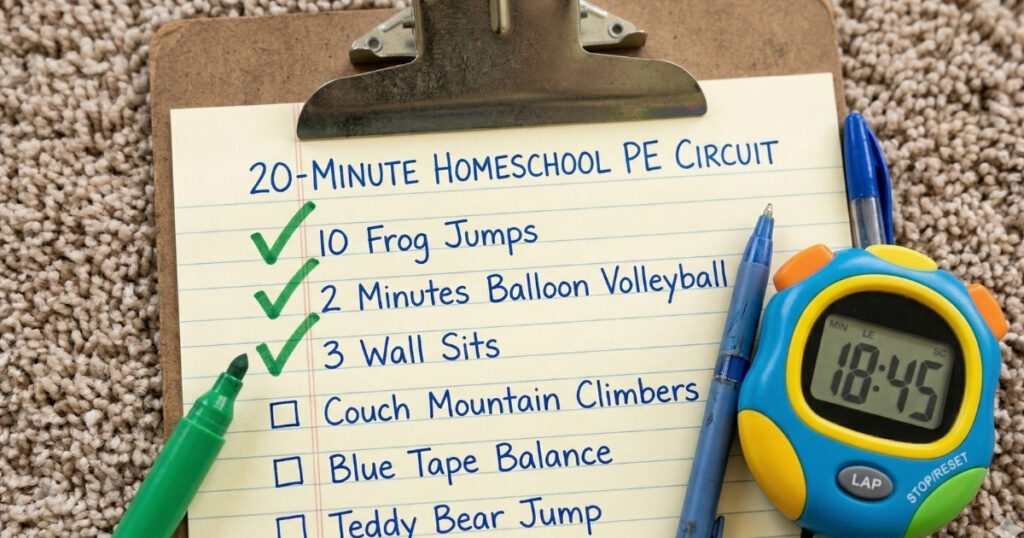
20-Minute Homeschool PE Fitness Circuit (Indoor Routine)

Yes, 20 minutes of circuit training is absolutely enough for homeschool PE—especially when it’s structured, intentional, and consistent. You don’t need a full gym class to keep your kids healthy. You just need a simple plan and a little movement.

At DKM Homeschool Resource, we work with busy homeschool parents every day. Most feel stretched thin trying to fit in math, reading, meals, and laundry—then suddenly realize, “Oh no… we forgot PE again.” The good news? You don’t need a complicated plan. A simple 20-minute indoor fitness routine can completely change the energy in your homeschool day.

Let’s walk through exactly how to make it work.

Is 20 Minutes Of Circuit Training Enough?

Absolutely. When done 4–5 days per week, a 20-minute homeschool fitness circuit can provide meaningful cardiovascular activity, muscle engagement, and coordination practice. Kids don’t need hour-long workouts. They need consistency, variety, and movement that feels fun rather than forced.

Many parents assume physical education has to look like public school gym class. It doesn’t. In a homeschool setting, you have the advantage of flexibility. A well-designed indoor circuit training routine keeps kids moving efficiently without dragging out the day.

Think about it this way:

  • 20 focused minutes = more movement than a distracted 45-minute gym class
  • Short bursts keep kids engaged
  • It prevents burnout (for you and them)
  • It fits naturally between subjects

If your child already plays outside later in the day, rides bikes, or participates in sports, this 20-minute routine becomes the structured foundation of your homeschool PE curriculum.

And honestly? It often improves focus for the next subject.

How To Set Up A Simple Indoor Homeschool Fitness Circuit

You don’t need fancy equipment. You don’t need a Pinterest-perfect playroom. You need about 6–8 feet of space and a timer.

Here’s the simple structure we recommend at DKM Homeschool Resource:

Step 1: Choose 6 Exercises
Pick movements that alternate between cardio and strength.

Example:

  1. Jumping jacks
  2. Push-ups (wall or floor)
  3. High knees
  4. Squats
  5. Plank hold
  6. Mountain climbers

Step 2: Set a Timer

  • 40 seconds work
  • 20 seconds rest
  • Rotate through all 6 exercises
  • Repeat once (2 total rounds)

That’s 18–20 minutes.

Step 3: Add a Warm-Up (2 minutes)

  • Arm circles
  • March in place
  • Light stretching

Step 4: Cool Down (2 minutes)

  • Slow breathing
  • Forward fold stretch
  • Shoulder rolls

Total time: 20–25 minutes including transitions.

Quick Tip:
If you have multiple kids, assign one child as the “timer captain.” It gives ownership and reduces sibling squabbles.

A Sample 20-Minute Indoor Routine You Can Use Today

A Sample 20-Minute Indoor Routine You Can Use Today

Let’s make this even easier. Here’s a ready-to-use homeschool PE workout you can start this week.

Round 1 (40 seconds each, 20 seconds rest):

  • Jumping jacks
  • Wall sit
  • High knees
  • Modified push-ups
  • Plank hold
  • Skater jumps

Round 2:

Repeat the same sequence.

If your kids are younger (ages 5–8), simplify:

  • Hop in place
  • Bear crawl
  • Star jumps
  • Frog squats
  • Freeze dance
  • Crab walk

For older students (10+), increase difficulty:

  • Burpees
  • Full push-ups
  • Jump squats
  • Plank shoulder taps
  • Speed skaters
  • Mountain climbers

Keep it playful. Play upbeat music. Let them create silly names for exercises. Homeschool physical education should feel energizing—not like boot camp.

One homeschool mom we worked with started doing the circuit right after lunch because her kids were sluggish. Within a week, she noticed math went smoother and afternoon attitudes improved dramatically. Movement resets the brain.

Common Mistakes Parents Make With Homeschool PE

Let’s talk about what not to do.

Mistake #1: Overcomplicating it
You do not need a full homeschool PE curriculum package to get started. Start simple. You can always expand later.

Mistake #2: Inconsistency
Doing a 60-minute workout once a week doesn’t help much. Short daily routines are more effective.

Mistake #3: Turning It Into Punishment
Exercise should never feel like discipline. Avoid phrases like “Since you didn’t finish your work, go do push-ups.”

Mistake #4: Comparing to Other Families
Some families do organized sports every day. Some don’t. Your homeschool fitness routine only needs to serve your children.

Consistency beats perfection every time.

Homeschooling already asks a lot of you. When PE feels complicated, it’s usually the first subject to disappear. The key is to view movement as part of the rhythm of your day rather than another subject to manage. When fitness becomes routine, it stops feeling like one more thing on your checklist and starts feeling like a reset button for everyone.

You might notice that your child resists at first. That’s normal. Many kids are used to sitting for long stretches. After a week or two of daily indoor exercise, most begin to expect it and even remind you when it’s time. The structure becomes comforting, and the energy boost becomes noticeable.

How To Fit PE Into A Busy Homeschool Schedule

This is where most parents struggle.

Try one of these approaches:

Option 1: Morning Energy Boost
Start your homeschool day with the 20-minute circuit. It wakes everyone up.

Option 2: Midday Reset
Do PE right before or after lunch to break up academic blocks.

Option 3: Afternoon Brain Break
When focus fades, hit the timer.

You can even combine subjects:

  • Count jumping jacks for math
  • Spell vocabulary words during rest periods
  • Track heart rate for science

Physical activity supports learning. Studies consistently show that movement improves concentration and memory retention.

If your homeschool day feels chaotic, anchor it with predictable movement. Children thrive on rhythm. A daily indoor workout becomes a cue: “Now we shift gears.”

And here’s the beautiful part—this routine costs nothing. No gym memberships. No expensive equipment. Just intentional time.

Making Fitness Fun For Different Ages

Homeschool families often teach multiple ages at once. That can feel tricky when it comes to physical education.

Here’s how to simplify:

For Preschoolers:

  • Animal walks
  • Freeze dance
  • Follow-the-leader
  • Obstacle courses with couch cushions

For Elementary:

  • Timed circuits
  • Relay challenges
  • Fitness bingo
  • Exercise dice (assign moves to numbers)

For Middle School:

  • Interval training
  • Simple strength tracking
  • Step challenges
  • Online kid-friendly workout videos

You can rotate themes:

  • Superhero workout day
  • Olympic-style challenges
  • Ninja training
  • Dance party circuit

Kids engage more when imagination is involved.

We’ve seen families transform homeschool PE into a highlight of the day simply by shifting mindset. Instead of seeing exercise as another checkbox, they began seeing it as family connection time. Laughter during crab walks and friendly competition during plank holds build memories. Fitness becomes relational, not just physical.

The more positive the environment, the more sustainable the routine becomes. Children who associate movement with encouragement are far more likely to maintain healthy habits long-term.

Simple Steps You Can Take This Week

If you’re feeling overwhelmed, start here:

  1. Pick a consistent time (even 10:30 AM daily).
  2. Choose 6 exercises.
  3. Set a timer for 20 minutes.
  4. Do it for 5 school days straight.

That’s it.

Optional low-cost resources:

  • Free workout timers on YouTube
  • Printable fitness trackers (many free PDFs online)
  • Music playlists for motivation
  • A $10 jump rope

You don’t need more planning—you need momentum.

Remember, homeschool fitness doesn’t have to look perfect. It just has to happen.

Common PE Homeschool Questions

FAQ: How many days a week should we do homeschool PE?
Ideally, aim for 4–5 days per week. A short indoor fitness routine done consistently is more effective than occasional long workouts. Daily movement supports physical health and improves focus during your homeschool schedule.

FAQ: Does circuit training count toward homeschool PE requirements?
Yes, circuit training absolutely qualifies as physical education in most homeschool settings. It includes cardiovascular activity, strength building, and coordination practice. Always check your state homeschool laws, but structured indoor exercise typically meets PE expectations.

FAQ: What if my child hates exercise?
Start small and keep it playful. Use games, music, or themed workouts to build engagement. Many resistant kids respond well to short homeschool fitness challenges rather than long workouts, especially when parents participate alongside them.

Homeschool Advice You Can Trust

You don’t need a perfect homeschool plan—you need sustainable habits. A 20-minute indoor fitness circuit is one of the simplest ways to support your child’s health, improve focus, and bring positive energy into your day.

At DKM Homeschool Resource, we believe homeschooling should feel doable. Practical systems beat complicated curriculum every time. When you build small routines like daily movement, you create stability that supports every other subject.

If this post helped you, explore more of our homeschool advice, encouragement, and ready-to-use resources. We’re here to help you homeschool with confidence, clarity, and a little less overwhelm.

How to Turn Nature Walks Into a Full PE Credit (Unit Study Style)

Nature walks can absolutely count as a full PE credit in your homeschool when you track physical activity, add simple learning components, and build consistent routines. With a unit study approach, walking outdoors becomes exercise, science, observation practice, and even journaling—all wrapped into one simple, enjoyable homeschool habit.

You can turn nature walks into a full homeschool PE credit by scheduling regular walks, tracking active minutes, and adding simple educational elements like observation, journaling, or nature study. Using a unit study approach allows walking to combine physical fitness with science, geography, and mindfulness while meeting homeschool physical education requirements.

Homeschool parents often assume PE has to look like organized sports or formal fitness programs. But the truth is, movement in nature can be one of the most effective—and enjoyable—ways to meet physical education goals.

At DKM Homeschool Resource, we often encourage families to think outside the traditional classroom model. When learning connects to real life and the environment, children stay curious, active, and motivated.

Let’s look at how a simple nature walk can become one of the easiest homeschool credits you’ll ever teach.

How Can You Use The Environment To Support Children’s Learning?

The environment is one of the most powerful teaching tools available to homeschool families. Parks, trails, neighborhoods, and nature preserves provide endless opportunities for movement, observation, and discovery.

When children walk outdoors regularly, they naturally develop:

  • endurance
  • coordination
  • balance
  • curiosity about the world

Instead of separating PE, science, and outdoor play, you can combine them into a unit study experience.

For example, during a nature walk your child might:

  • climb hills or uneven terrain (strength and endurance)
  • observe bird species (science)
  • measure distance walked (math)
  • write about what they saw (language arts)

This approach mirrors how children learn naturally—through exploration and movement.

And the best part? It requires very little planning.

Why Nature Walks Make an Excellent Homeschool PE Credit

Physical education is about developing healthy movement habits, not just structured workouts. Walking regularly outdoors can easily meet those goals.

A typical homeschool PE credit often equals 120–150 hours of physical activity per year. That sounds like a lot, but nature walks make it surprisingly manageable.

For example:

  • 30 minutes a day
  • 4–5 days per week
  • throughout the school year

That adds up quickly.

Nature walks also provide benefits traditional PE sometimes misses.

Physical benefits

  • cardiovascular endurance
  • muscle development from uneven terrain
  • improved posture and balance
  • overall stamina

Mental and emotional benefits

  • stress reduction
  • improved focus for later schoolwork
  • connection to nature
  • creativity and curiosity

Many homeschool parents notice something interesting: kids who walk before lessons often focus better during math and reading.

Movement wakes up the brain.

Creating A Simple Nature Walk Unit Study Plan

Creating A Simple Nature Walk Unit Study Plan

Turning nature walks into a homeschool PE credit doesn’t require a complicated curriculum or detailed lesson plans. In fact, the simpler your system is, the more likely your family will stick with it. The key is building a routine that blends movement, observation, and a little bit of reflection so that each walk supports both physical activity and learning.

Start by choosing a consistent walking schedule that fits naturally into your homeschool rhythm. Many families find that three days a week works well, such as Monday, Wednesday, and Friday mornings. Others prefer shorter walks four days a week. The specific schedule matters less than the consistency. When nature walks become a normal part of the week—just like math or reading—kids begin to expect and enjoy that time outdoors.

Next, decide how long your walks should be. Younger children usually do well with 20–25 minutes of walking, especially if there are interesting things to see along the way. Older elementary and middle school students can easily handle 30–45 minutes, particularly if the trail includes hills, uneven paths, or places to explore. If your child is new to regular walking, start small and gradually build up. Over time, their stamina will increase naturally.

It’s also helpful to keep a simple activity log. This doesn’t have to be complicated or time-consuming. A notebook, spreadsheet, or printable PE tracker works perfectly. After each walk, write down the date, location, and how long your child walked. You might also jot down one or two things they noticed during the walk, such as a bird they spotted or an interesting plant along the trail. These small observations reinforce the learning aspect of the unit study while also giving you documentation for your homeschool records.

Example PE log:

DateLocationMinutes WalkedObservations
Sept 5Local park35Saw ducks and frogs
Sept 7Neighborhood trail30Leaves changing color

Another helpful strategy is adding a gentle weekly focus to your walks. This is what turns the activity into a unit study rather than just exercise. For example, one week you might encourage your child to notice different types of trees. Another week you could focus on insects, weather patterns, or the sounds they hear while walking. The goal isn’t to lecture or turn the walk into a science class. Instead, it simply encourages children to observe the world around them more closely.

Location variety can also make a big difference in keeping nature walks interesting. If possible, rotate between a few nearby spots such as a neighborhood loop, a local park, a wooded trail, or even a school playground after hours. Different environments provide different physical challenges and new things to discover. Walking on dirt paths, hills, gravel trails, or grassy fields naturally strengthens different muscles and keeps kids more engaged than the same flat sidewalk every day.

It can also be helpful to build a short reflection time into your routine after each walk. This doesn’t need to take more than five or ten minutes. Some children enjoy drawing something they saw during the walk, while others prefer writing a few sentences about their favorite moment. Younger children might simply tell you what they noticed while you record it for them. These quick reflections reinforce observation skills and help kids connect physical activity with learning.

One of the best parts of using a nature walk unit study is how easily it adapts to different ages. Younger children might focus on spotting animals or collecting interesting leaves, while older students can track distances, identify plant species, or record weather conditions. This flexibility makes nature walks an ideal activity for families homeschooling multiple children at once.

Most importantly, keep the experience relaxed and enjoyable. Nature walks work best when they feel like an adventure rather than another assignment. When children feel free to explore, ask questions, and move at a comfortable pace, they stay engaged and curious. Over time, those simple walks become a powerful combination of exercise, observation, and meaningful learning—exactly what a homeschool PE unit study is meant to provide.

Activities That Turn a Walk Into a Full Learning Experience

This section is where nature walks really shine. With just a few creative ideas, you can transform a simple walk into a meaningful homeschool activity.

Here are some easy add-ons families love.

1. Nature observation challenge

Ask kids to find:

  • 3 different leaves
  • 2 birds
  • something red in nature
  • something that moves

This keeps children engaged while walking.

2. Distance and mapping

Older students can:

  • track distance with a phone or smartwatch
  • map trails
  • calculate pace

That quietly introduces math skills.

3. Nature journaling

After the walk, spend 5–10 minutes recording observations.

Kids can:

  • draw plants or animals
  • write short descriptions
  • record weather

4. Terrain exploration

Walking on different surfaces builds strength.

Try exploring:

  • wooded trails
  • beaches
  • hills
  • gravel paths

Different terrain engages different muscles.

Insert In-Content Image https://drive.google.com/drive/u/2/folders/1yWaYlYlzGz3njNs4D4UYmRPSGZA80FKf

Common Mistakes Homeschool Parents Make With Outdoor PE

Many families start strong with nature walks but struggle to keep them consistent. Usually it’s because they overcomplicate the process.

One common mistake is turning every walk into a structured lesson. Kids quickly lose interest if every outing requires worksheets, quizzes, or long explanations. Nature walks should feel relaxed and exploratory, with learning happening naturally through conversation and observation.

Another issue is scheduling walks too far away from home. Driving 30 minutes to a park every time quickly becomes exhausting for busy homeschool parents. Instead, rotate between nearby locations like neighborhood loops, local parks, or even schoolyard-style walks around your block.

Finally, some parents underestimate how much walking actually counts toward physical education. A child who walks briskly for 30 minutes through varied terrain is engaging in legitimate cardiovascular exercise. When those minutes are tracked consistently, they absolutely meet homeschool PE requirements.

Simple Ways to Keep Nature Walks Interesting All Year

One reason nature walks work so well in homeschooling is that they change naturally with the seasons. The same trail can offer completely different learning opportunities throughout the year.

In the fall, children notice leaves changing colors, cooler air, migrating birds, and falling acorns. Winter walks may focus on animal tracks, frost patterns, and quiet landscapes. Spring brings wildflowers, insects, and new plant growth, while summer offers longer walks, creek exploration, and early morning adventures before the heat.

Parents often find that children begin to look forward to these seasonal changes. A familiar path becomes a place where kids notice subtle differences from week to week. This kind of observation strengthens attention skills and builds a genuine connection to the natural world.

Nature walks also give homeschool families something incredibly valuable—space to talk. Many parents say their best conversations with their kids happen while walking side by side on a trail. Without the pressure of a desk or worksheet, kids open up, ask questions, and share ideas they might not mention during formal lessons.

Common FAQs

FAQ: Can nature walks really count as homeschool PE?
Yes, nature walks absolutely count toward homeschool physical education when they involve consistent physical activity and are tracked in a PE log. Many homeschool curriculum guidelines allow walking, hiking, and outdoor exploration to count toward a homeschool PE credit.

FAQ: How often should homeschoolers do nature walks for PE?
Most homeschool families aim for 3–5 walks per week lasting 20–45 minutes each. When tracked across the school year, this easily contributes toward the 120–150 hours commonly used for a homeschool PE credit requirement.

FAQ: What should kids learn during a homeschool nature walk?
Nature walks can include light nature study, observation skills, journaling, and basic science topics like plants, insects, or weather patterns. This unit study approach combines physical education with outdoor learning while keeping homeschool lessons engaging.

Making Homeschool Work In Real Life

Homeschooling doesn’t have to feel complicated. Sometimes the best learning experiences happen when families step outside, take a walk, and pay attention to the world around them.

Nature walks offer something special that traditional lessons often miss. They combine movement, curiosity, and discovery in a way that feels natural to children. When used consistently, they can easily become a reliable homeschool PE credit while also supporting science learning, observation skills, and family connection.

At DKM Homeschool Resource, we love helping parents find simple ways to make homeschooling work in real life. Whether you’re just getting started or looking for fresh ideas, there are countless ways to turn everyday activities into meaningful learning experiences.

If you enjoyed this guide, explore more articles on DKM Homeschool Resource for practical homeschool tips, creative unit study ideas, and encouragement for your homeschool journey.

How to Include Physical Education in Unit Studies (Without It Feeling Random)

Physical education doesn’t have to be a separate, random part of your homeschool day. In fact, movement can be one of the most effective ways to reinforce learning and keep children engaged. When PE is thoughtfully integrated into unit studies, it feels purposeful rather than an afterthought. Kids stay active, build coordination, and retain information more effectively—all while having fun.

Movement isn’t just about fitness. Studies show that physical activity boosts focus, memory, and overall brain function. Short bursts of movement between lessons, hands-on games, or full-body activities tied to your curriculum can make learning more meaningful. When done right, PE becomes a tool for exploring concepts, practicing skills, and experiencing learning in a multi-sensory way.

This blog will show homeschool families how to weave physical education seamlessly into unit studies. You’ll learn strategies for designing purposeful activities, linking movement to core subjects, tracking progress, and keeping PE aligned with your themes. By the end, you’ll see that physical education doesn’t have to feel random—it can become a natural, enjoyable, and essential part of your homeschool routine.

What Are Some Effective Strategies for Teaching Physical Education Activities?

When teaching PE in a homeschool setting, the goal is to make movement meaningful and engaging. Random exercise can feel disconnected, but purposeful activities reinforce skills, build stamina, and complement the learning objectives of your unit study.

Here are some strategies that work well:

  • Skill-Focused Activities: Identify specific skills like coordination, balance, agility, or endurance. Plan games or exercises that naturally build these abilities.
  • Game-Based Learning: Turn exercises into fun challenges. For example, relay races, obstacle courses, or tag variations can develop speed, strategy, and teamwork.
  • Short, Frequent Sessions: 10–15 minute movement bursts throughout the day keep children energized without overwhelming lessons.
  • Creative Movement: Dance, yoga, or imaginative movement lets children explore rhythm, body awareness, and flexibility.
  • Integrate Learning Objectives: Connect physical activity to the unit topic. Acting out historical events, mimicking animal movements, or modeling scientific concepts combines learning with exercise.
  • Child-Led Exploration: Encourage children to suggest their own games or movements. Giving them choice increases engagement and ownership.

By planning PE with intention, children gain physical skills while also reinforcing cognitive learning. These strategies help movement feel purposeful, connected, and enjoyable.

Linking Physical Activities to Core Subjects

Physical education doesn’t have to exist in isolation. When movement is connected to core subjects, it reinforces learning and makes lessons more memorable. Integrating PE with unit studies helps children engage both their minds and bodies, creating a richer learning experience.

For math, movement can make abstract concepts tangible. Try hopscotch or number-based obstacle courses to practice counting, addition, or multiplication. Children can measure distances, track steps, or calculate times for races—applying math in a hands-on way.

In science, physical activities can model natural phenomena. Children might act out the water cycle by moving between “cloud,” “rain,” and “river” stations or simulate animal behaviors during a unit on ecosystems. This kind of kinesthetic learning helps children understand processes while staying active.

History and social studies also lend themselves to movement. Reenacting historical events, marching like soldiers, or building human timelines brings lessons to life. Children remember facts better when they connect them to action.

Even language arts can benefit. Dramatic readings, storytelling with gestures, or acting out scenes from literature encourage comprehension and creativity. Movement supports memory, engagement, and narrative understanding.

Tips for integrating PE into core subjects:

  • Plan Movement Around Concepts: Match the activity to the lesson for a natural connection.
  • Use Props and Spaces: Simple items like balls, ropes, or chalk can enhance engagement and make concepts concrete.
  • Rotate Activities: Keep children interested by changing the type of movement each day.
  • Encourage Reflection: After moving, ask children to explain what they learned or how the activity connected to the topic.
  • Combine Subjects: Activities can reinforce multiple subjects simultaneously—for example, acting out a historical event while counting steps or timing actions.

When physical education is connected to core subjects, it stops feeling random. Movement becomes a tool for learning, not just exercise. Children engage more deeply, remember more, and enjoy learning as an active, hands-on process.

Creating Movement-Based Learning Objectives

Linking Physical Activities to Core Subjects

Integrating physical education into unit studies works best when activities are purposeful. Setting clear learning objectives for movement ensures that PE isn’t random, but directly supports the skills and concepts you want children to develop.

Movement objectives can go beyond fitness. For example, children can work on coordination, balance, or spatial awareness while practicing science concepts like planetary motion or modeling food chains. Endurance and strength can also be tied to thematic units, such as reenacting historical events that required stamina or building structures that involve teamwork and problem-solving.

The first step is to identify the skill or concept you want children to develop. This could be a physical skill, like agility, or a cognitive goal, like understanding fractions through a relay race. Once the goal is clear, plan activities that naturally build that skill while connecting to your current unit study. For example, a nature unit could include a scavenger hunt where children move through different terrains while observing plants and animals. This reinforces observation skills, comprehension, and physical coordination simultaneously.

Objectives can also be layered. A single activity can develop multiple skills, such as a historical reenactment that improves endurance, teamwork, and comprehension of key events. This approach ensures that every movement has a purpose and contributes to learning outcomes, rather than being a break from education.

Finally, reflect on the objectives regularly. Observe how children respond to the activity and whether the desired skills are developing. Adjust intensity, duration, or complexity to match their abilities and keep activities challenging but achievable.

By creating intentional movement-based learning objectives, physical education becomes an integral part of your homeschool curriculum. It complements academic learning, reinforces unit concepts, and builds both physical and cognitive skills in a way that feels natural and engaging.

Incorporating Short PE Breaks into Lessons

Short, purposeful movement breaks can make a big difference in a homeschool day. Rather than feeling random, these mini PE sessions recharge energy, improve focus, and help children retain information from their lessons.

Movement breaks don’t have to be long—5 to 15 minutes is often enough to get blood flowing and reset attention. The key is consistency. By scheduling them at predictable points in the day, children know when to move, and it becomes a natural part of the routine.

Here are some effective ways to incorporate short PE breaks:

  • Stretching and Mobility: Simple stretches, yoga poses, or balance exercises can loosen muscles and improve posture.
  • Brain Break Games: Quick games like “Simon Says,” hopscotch, or jumping jacks keep children engaged while adding a playful element.
  • Content-Themed Movement: Tie movement to your current unit. For example, while studying the solar system, children can “orbit” the room to model planetary motion.
  • Skill Practice: Use short bursts to work on specific physical skills like throwing, catching, or coordination drills.
  • Dance or Rhythm: Turn on music for a few minutes and let children follow the choreography or create their own. This supports rhythm, coordination, and creativity.

Short PE breaks also provide an opportunity for children to practice self-regulation. By pausing lessons to move intentionally, they learn to manage energy and return to focus more effectively.

Integrating these mini sessions into unit studies reinforces that physical education is a meaningful part of learning, not just an add-on. Over time, children develop stamina, coordination, and concentration while connecting movement to academic content.

With consistent, purposeful breaks, PE feels like a natural extension of lessons. It supports both body and mind, keeping learning dynamic, fun, and effective.

Using Outdoor and Nature-Based Activities

Outdoor spaces offer a wealth of opportunities to integrate physical education into unit studies. Fresh air, open space, and natural elements make movement fun while reinforcing learning concepts. Nature-based activities allow children to explore, experiment, and develop both physical and cognitive skills simultaneously.

Simple walks or hikes can be turned into educational experiences. Children can measure distances, count steps, or observe plant and animal life along the way. Nature scavenger hunts encourage observation, problem-solving, and teamwork while keeping children active. Even a backyard can serve as a lab for movement-based learning.

Outdoor games can align with academic topics. For example, a relay race can represent the stages of a plant life cycle, or a tag game can model predator-prey relationships. These activities make abstract concepts tangible while promoting coordination, endurance, and social skills.

Tips for integrating outdoor PE into unit studies:

  • Explore Your Environment: Parks, trails, and even yards provide diverse terrain and opportunities for movement.
  • Connect to Learning Topics: Link movement to science, history, or literature themes for meaningful activity.
  • Use Nature as a Resource: Logs, rocks, or leaves can become tools for counting, measuring, or building projects.
  • Encourage Observation: Ask children to note discoveries, sketch what they see, or record measurements during activities.
  • Mix Free Play with Guided Challenges: Allow unstructured movement alongside structured, themed games for balance.

Outdoor activities benefit both the mind and body. Children develop large motor skills, strengthen endurance, and practice coordination while engaging with content in a hands-on way. They also learn to pay attention to their surroundings and make connections between the environment and their studies.

By using outdoor and nature-based movement, physical education becomes an integral, natural part of unit studies. It’s an engaging way to combine learning, creativity, and exercise while fostering a love for both knowledge and the outdoors.

Tracking Progress in PE

Tracking progress in physical education helps children see how far they’ve come and keeps movement purposeful within unit studies. It doesn’t need to be complicated—simple, consistent tracking encourages motivation, accountability, and self-reflection.

Even in a homeschool setting, observing growth in coordination, endurance, flexibility, or skill development provides valuable feedback. Children can notice improvements over time, celebrate accomplishments, and identify areas they’d like to challenge themselves further. This makes PE feel intentional rather than random.

A printable progress tracking sheet is an excellent tool. It can include categories such as stamina, balance, teamwork, coordination, and participation. Children can mark their achievements daily or weekly, note observations about what they enjoyed, or record new goals. Having a visual record reinforces the sense of accomplishment and helps them see connections between effort and results.

Other strategies to track PE progress include:

  • Journaling: Children write brief reflections on what activities they did, what skills they practiced, and what improvements they noticed.
  • Checklists: Simple lists of skills or activities allow children to mark off achievements, providing tangible evidence of growth.
  • Photo or Video Documentation: Recording activities like obstacle courses or skill challenges can help children observe improvements in technique and confidence over time.
  • Goal Setting: Children set short-term or long-term goals and track their progress, learning persistence and self-motivation.

Tracking doesn’t need to feel formal or rigid. The goal is to make progress visible and celebrate effort and growth. When children see how their skills improve and how movement connects to learning, PE becomes a meaningful and integrated part of their homeschool experience.

By consistently tracking physical progress, parents and children gain insights into both abilities and engagement. It encourages reflection, supports goal-setting, and reinforces the connection between movement and academic learning in unit studies.

Integrating PE Into Thematic Unit Studies

Physical education becomes even more engaging when it is directly tied to the theme of a unit study. Rather than feeling like a separate subject, movement can bring content to life and reinforce learning in a fun, memorable way.

For example, in a history unit, children can act out historical events, perform battle formations, or create period dances. These activities reinforce understanding of timelines, culture, and strategy while building coordination and teamwork.

In a science unit, children can simulate animal movements, model planetary orbits, or act out the water cycle. Movement helps abstract concepts become tangible, supporting both comprehension and memory retention.

Math and engineering units also lend themselves to physical activity. Children might measure distances for building challenges, create human number lines, or participate in problem-solving relay races. These activities reinforce concepts while developing physical skills.

Tips for integrating PE into unit studies:

  • Align Activities with Learning Goals: Ensure each movement directly connects to the topic or skill being studied.
  • Keep It Active and Purposeful: Avoid random exercise; every activity should reinforce learning or skill development.
  • Encourage Creativity: Let children design their own movement-based activities tied to the unit theme.
  • Combine Multiple Skills: Activities can build physical, cognitive, and social skills simultaneously.
  • Reflect After Movement: Discuss what was learned during the activity and how it connects to the unit topic.

Integrating PE into thematic units not only promotes physical development but also strengthens understanding of content. Children remember concepts better when they experience them actively. Movement makes learning multisensory, engaging, and fun.

By connecting physical education to unit studies, homeschoolers can create a seamless learning experience where exercise and academics support each other. Children stay active, engaged, and excited about both movement and learning.

Encouraging Family Participation and Collaboration

Including family members in physical education can make movement activities more engaging, motivating, and fun. When siblings or parents participate, children experience teamwork, social interaction, and shared learning—turning PE into a collaborative part of homeschool life.

Family participation can take many forms. Siblings can work together on relay races, obstacle courses, or team challenges. Parents can model proper form, cheer children on, or even join in themed activities. This shared involvement reinforces that physical activity is a valued and enjoyable part of learning.

Here are ways to encourage collaboration:

  • Family Challenges: Set up friendly competitions, like timed obstacle courses or skill-based games. Celebrate participation as much as results.
  • Cooperative Activities: Have children work together to solve a movement-based problem, such as building a human pyramid, navigating a scavenger hunt, or designing a relay race.
  • Themed Family Games: Connect PE to unit study topics. For example, during a space unit, the family could “orbit” the room like planets or simulate astronaut training exercises.
  • Role Sharing: Let children take the lead in designing activities, assigning roles, or explaining rules. This builds leadership and communication skills.
  • Celebrate Together: End activities with a brief reflection or discussion about what was learned and how everyone contributed.

Family participation also builds social and emotional skills. Children practice cooperation, patience, and encouragement while learning to navigate shared spaces and responsibilities. Parents and siblings model healthy habits and demonstrate the value of staying active.

When PE becomes a collaborative experience, children are more motivated, engaged, and confident. Movement is no longer a solo task or a chore—it’s a fun, shared part of learning. Collaborative PE strengthens relationships, reinforces unit study concepts, and makes physical education feel purposeful and enjoyable for the whole family.

Reflecting and Adjusting Your PE Integration

Even the best-planned PE activities benefit from regular reflection and adjustment. Observing how your children respond helps ensure that physical education remains meaningful, engaging, and connected to your unit studies.

Start by asking questions after each activity. Did the children enjoy it? Did it support the learning objective? Were the movements appropriately challenging? Reflection allows you to notice what works, what could be improved, and where additional guidance or modification is needed.

Tracking participation and skill development is another key tool. Printable progress sheets, journals, or simple checklists help children see growth and keep parents informed. Over time, you can adjust activities to increase difficulty, add variety, or emphasize skills that need extra attention.

Flexibility is essential. Some activities might be too long, too short, or not connect as intended. Don’t hesitate to swap exercises, shorten sessions, or add new games that better align with the unit topic. Children’s interests may also evolve, so following their lead keeps PE natural and motivating.

Tips for reflection and adjustment:

  • Observe Engagement: Notice how excited and focused children are during activities.
  • Evaluate Outcomes: Determine whether the activity meets the physical or academic goal.
  • Adjust Intensity or Complexity: Modify challenges to match skill levels and maintain interest.
  • Solicit Feedback: Ask children what they enjoyed or how activities could be more fun.
  • Document Changes: Keep notes on successful activities for future planning.

By reflecting and adjusting, PE remains a dynamic part of your homeschool routine. Children benefit from movement that supports learning, builds skills, and keeps them active. Activities evolve naturally, staying fresh, engaging, and relevant to your unit studies.

Making PE a Seamless Part of Learning

Physical education doesn’t have to feel random in homeschool unit studies. When movement is purposeful, linked to learning, and integrated creatively, it reinforces both physical skills and academic concepts.

By planning objectives, connecting activities to themes, encouraging collaboration, and reflecting on progress, parents can make PE meaningful and enjoyable. With intentional integration, children stay active, engaged, and motivated—turning physical education into a natural, memorable, and valuable part of learning.

Small-Space Homeschool PE: Apartment-Friendly Physical Education Activities

Let’s be real for a second: the glossy Instagram version of homeschooling usually features kids frolicking in a sprawling meadow or climbing a custom-built treehouse in a massive backyard. But for many of us, the reality looks a lot more like a rainy Tuesday in a two-bedroom apartment where the “gym” is also the living room, the dining room, and the hallway.

If you are homeschooling in a small space, Physical Education (PE) can feel like the trickiest subject to tackle. How do you burn off that boundless energy without breaking a lamp or bothering the downstairs neighbours? The good news is that you don’t need an acre of land or expensive equipment to raise healthy, active kids. In fact, some of the best coordination and strength exercises happen right on the living room rug.

This guide will walk you through how to handle homeschool PE in tight quarters, answering the big questions about time requirements and giving you a “menu” of activities that fit perfectly between the sofa and the TV stand.

How many hours of PE do kids actually need?

Before we start moving the furniture, let’s look at the benchmarks. It’s easy to worry that your kids aren’t getting enough exercise if they aren’t on a soccer team or running laps around a track.

According to the Canadian 24-Hour Movement Guidelines (and similar standards worldwide), children and youth aged 5 to 17 should aim for at least 60 minutes of moderate-to-vigorous physical activity daily.

This doesn’t mean you need a structured 60-minute “PE Class” every single day. That hour includes everything from intense bursts of energy (like jumping jacks or dancing) to moderate movement (like a brisk walk to the library). For homeschool tracking purposes, many families aim for 30 minutes of structured movement and let the other 30 minutes happen through free play or outdoor errands.

A simple, repeatable PE structure

When you are working with limited space, chaos is the enemy. Having a simple routine helps kids switch gears from “math mode” to “movement mode.” You don’t need a whistle, but a structure helps prevent injury and keeps things focused.

Here is a 3-part formula you can use for almost any activity:

  1. The Warm-up (5 Minutes): Get the blood flowing. In a small space, this looks like marching in place, high knees, arm circles, or slow toe touches.
  2. The Main Event (20 Minutes): This is the core activity (see the ideas below).
  3. The Cool-down (5 Minutes): Bring the heart rate down. Slow stretching, deep breathing, or simple yoga poses work wonders here.
5 Small-Space PE Ideas

5 Small-Space PE Ideas

Here are five reliable activities that require minimal equipment and very little square footage.

1. The Living Room Circuit (Strength + Cardio)

Circuit training is perfect for apartments because you stay in one spot. Clear a small area (even a yoga mat’s worth of space works). Pick 3-4 exercises and have your child do each for 45 seconds, with a 15-second rest in between. Repeat the cycle three times.

  • Movements: Squats, lunges, plank holds, mountain climbers, or push-ups (knees or toes).
  • Make it fun: Let the kids pick the music playlist.

2. Hallway Movement Games (Agility + Coordination)

If you have a hallway, you have a runway. This is great for linear movement.

  • Crab Walks & Bear Crawls: Go from one end to the other without knees touching the ground.
  • The Floor is Lava: Use cushions or paper plates as “safe zones.”
  • Red Light, Green Light: A classic that teaches impulse control and stopping power.

3. Dance Day (Cardio + Rhythm)

This is often the highest calorie burner and the biggest mood booster. You don’t need choreography; you just need a beat.

  • Guided Videos: YouTube channels like GoNoodle or Cosmic Kids have excellent guided dance routines.
  • Freestyle: Put on a high-tempo song and play “Freeze Dance” (pause the music randomly, and they have to freeze mid-move).

4. Yoga or Stretch + Strength (Balance + Core)

PE isn’t always about sweating; it’s also about body awareness. Yoga is the ultimate small-space activity. It builds massive core strength and improves balance.

  • Resources: There are countless free yoga resources for kids online.
  • Challenge: See who can hold a “Tree Pose” the longest without wobbling.

5. Balloon Games (Coordination + Reaction Time)

Balls are dangerous indoors; balloons are generally safe. They move slowly, which helps younger children develop hand-eye coordination.

  • Keep it Up: The goal is simple—don’t let the balloon touch the floor.
  • Balloon Tennis: Use paper plates taped to rulers (or just hands) to volley the balloon back and forth over a “net” (a piece of string or a row of chairs).

The “PE Menu”

Sometimes kids resist structured exercise. When that happens, offer them a “menu” and let them order their activity for the day. This gives them agency and reduces pushback.

  • The Energy Burner: Jumping jacks, burpees, fast dancing.
  • The Strength Builder: Wall sits, heavy book lifting (safely!), planks.
  • The Calm Down: Yoga, stretching, tai chi.
  • The Fun Zone: Hula hooping, juggling (use rolled-up socks), balloon volleyball.

“Physical Education in Real Life”

Remember, one of the greatest advantages of homeschooling is the flexibility to count real life as real learning. Physical education, in this context, is less about completing a list of specific exercises and more about embracing and adopting an active, healthy lifestyle.

Think about the everyday activities you already do. They often fit perfectly into a physical education framework:

Did you walk to the grocery store and then carry a heavy bag of produce home?
That’s PE (a great mix of Cardio + Strength training).

Did you spend an hour at the playground where the kids were swinging from the monkey bars and climbing the play structure?
That’s PE (fantastic for developing upper body strength and coordination).

Did the kids help vacuum the entire apartment and scrub the bathtub with some elbow grease?
Believe it or not, that’s absolutely PE (these are functional movements that build endurance and strength).

Don’t be afraid to log these everyday activities as part of your physical education requirements. They absolutely count toward that recommended 60-minute daily goal and help instill the idea that movement is a natural and enjoyable part of life, not just a scheduled chore.

Weekly Rotation Table

If you thrive on a schedule, here is a simple 5-day rotation you can screenshot and stick to the fridge. It ensures a mix of cardio, strength, and flexibility without needing any heavy equipment.

DayFocusActivity Idea
MondayCardioLiving Room Circuit: 3 rounds of jumping jacks, high knees, and mountain climbers.
TuesdayStrengthAnimal Walks: Bear crawls and crab walks down the hallway.
WednesdayFlexibilityYoga: 20-minute guided yoga video (Cosmic Kids is great for littles).
ThursdaySkillsSock Toss: Use rolled-up socks to practice throwing into a laundry basket (aim and coordination).
FridayFun / FreeDance Party: 20 minutes of their favourite songs. Freeze dance or freestyle!

Keeping Kids Active in Small Spaces

You don’t need a gymnasium to raise fit kids. You just need a little creativity and a willingness to move the coffee table. By mixing structured small-space exercises with everyday active living, you can easily hit those daily activity goals, even on the rainiest days in the smallest apartments.

If you are looking for more ways to streamline your homeschool day, check out our other resources on curriculum planning and creating rhythms that work for your unique family.

How Sports Use Math: From Player Stats to Championship Odds

If your child loves sports, you already have a powerful and motivating math resource built into daily life. From scoreboards and rankings to debates about who will win the championship, math in sports statistics is everywhere. Sports naturally combine numbers, patterns, logic, and probability in ways that feel exciting instead of intimidating. For homeschool families, this creates a unique opportunity to show kids that math isn’t just something found in textbooks—it’s something people use constantly in the real world.

Many children who resist traditional math lessons become far more engaged when math is tied to sports. Player stats, team records, and odds feel meaningful because they answer questions kids actually care about. Math stops feeling like busywork and starts feeling useful. When children see math as a tool rather than a test, their confidence and willingness to participate often increase dramatically.

Sports also create a low-pressure environment for learning. Predictions are allowed to be wrong. Stats change. Outcomes are unpredictable. That uncertainty isn’t a problem—it’s one of the best teaching tools available. It allows kids to explore math concepts without the pressure of perfection and helps them understand that math is about reasoning, not guessing the “right” answer.

Math In Sports Statistics And What Kids Learn From It

At its core, math in sports statistics is about using numbers to understand performance over time. Every statistic represents real events that have already happened. Wins, losses, points scored, shooting percentages, and rankings all help describe how a player or team is performing across a season. When kids interact with these numbers, they are practicing authentic mathematical thinking.

Sports statistics naturally reinforce core math skills. Addition and subtraction appear when kids calculate scores or point differences. Multiplication and division are used to find averages, per-game stats, and rates. Fractions and decimals come into play with percentages like shooting accuracy or win ratios. Graphs and charts help visualize trends, streaks, and changes over time. These skills feel much more meaningful when they answer real questions kids care about.

What makes sports statistics especially powerful is the way they encourage deeper thinking. Numbers don’t exist in isolation. A high-scoring game doesn’t automatically mean strong overall performance, and one poor game doesn’t define an entire season. Kids learn to look at patterns rather than single data points, which helps them understand that math often requires interpretation.

Sports math also strengthens communication skills. When children explain why they think one player is improving or why a team might struggle against a certain opponent, they are learning to justify ideas using evidence. This ability to explain reasoning clearly is one of the most valuable skills math develops, and sports provide endless opportunities to practice it naturally.

Over time, kids begin to see math as a way to tell stories. Stats explain improvement, consistency, and change. That realization often leads to stronger engagement not only in math, but in learning as a whole. Numbers start to feel meaningful rather than abstract.

Sports Analytics For Beginners And Probability In Sports

Sports analytics may sound advanced, but at a beginner level, it’s simply about collecting information and using it to understand patterns. You don’t need complicated software or spreadsheets to introduce kids to analytics. Observation, consistency, and conversation are enough to get started.

When children track player or team stats over time, they begin to notice trends. A player may score more points later in the season, or a team may improve after a strategy change. These observations naturally lead to questions like “Why did that happen?” or “Do you think it will continue?” Those questions are the foundation of analytics.

Probability enters the picture when kids begin predicting outcomes. Who is likely to win tonight’s game? What are the chances this team makes the playoffs? Sports are unpredictable, which makes them perfect for teaching probability honestly and realistically. Children quickly learn that even strong teams lose sometimes and underdogs occasionally win.

Sports Analytics For Beginners And Probability In Sports

This leads to one of the most important lessons probability can teach: likelihood is not certainty. A team can have high odds of winning and still lose. A player can perform consistently and still have an off day. When kids understand this, they develop flexible thinking instead of rigid expectations.

Probability in sports also strengthens reasoning skills. Children learn to weigh past performance, current conditions, injuries, schedules, and even randomness. They begin to understand that better data leads to better predictions—but never guarantees. This lesson extends far beyond sports and helps children think critically in everyday life.

For homeschool families, sports analytics and probability offer a gentle way to introduce higher-level math concepts without formal lessons. These ideas grow naturally through discussion, reflection, and curiosity rather than worksheets or drills.

Practical Ways To Teach Sports Math At Home

One of the biggest advantages of using sports to teach math is flexibility. You can adapt activities to your child’s age, skill level, and interests without changing the core concept. Whether your child loves basketball, soccer, baseball, football, hockey, or even esports, the math remains relevant.

Here are practical, homeschool-friendly ways to explore sports math together:

  • Track a favorite player’s stats across a season and note improvements or declines
  • Compare two players’ averages in the same position and discuss differences
  • Create simple graphs showing scores, rankings, or winning streaks
  • Calculate percentages such as shooting accuracy, completion rates, or win ratios
  • Make predictions before games and reflect on outcomes afterward

These activities naturally scale in difficulty. Younger children can count goals, add scores, and compare numbers. Older students can calculate averages, analyze trends, and discuss probability. Everyone is practicing meaningful math connected to real life.

Sports math also pairs beautifully with writing and discussion. Ask your child to explain what a statistic means in their own words or defend a prediction using numbers. This strengthens both math understanding and communication skills. Writing about sports stats often feels easier for kids because the topic is familiar and engaging.

Family learning is another major benefit. Watching a game together and casually discussing numbers turns math into a shared experience rather than a subject to be endured. These conversations don’t need to feel like lessons. Curiosity-driven questions often lead to the richest learning moments.

Sports-based math also builds resilience. When predictions don’t work out, kids learn that being wrong isn’t failure—it’s information. Reflecting on outcomes helps children understand that math is a tool for understanding patterns, not a promise of certainty.

Read More Homeschool Learning Ideas at DKM Homeschool Resource

Sports offer a powerful, real-world way to explore statistics, analytics, and probability. When kids see math in sports statistics in action, numbers stop feeling abstract and start feeling useful. From tracking player performance to discussing championship odds, sports transform math into something children can explore with confidence and curiosity.

If you’d like more homeschool ideas like this, be sure to read more of our blogs here at DKM Homeschool Resource. We share practical strategies, creative learning approaches, and encouragement to help you connect learning to real life—one meaningful lesson at a time.

Get Outside: The Importance Of Outdoor Activities In Homeschool

Are you feeling a little cooped up in your homeschool classroom? Let’s be honest, even the most beautifully curated learning space can start to feel like the walls are closing in after a while. If you and your kids are experiencing a bit of cabin fever, I have the perfect, simple, and incredibly effective solution: get outside! 

Incorporating outdoor homeschool activities into your routine is more than just a fun break; it’s a powerful educational tool that can breathe new life into your lessons and foster a deep love for learning. It’s time to trade the worksheets for wildflowers and the textbooks for trees.

Taking learning outdoors opens up a world of possibilities that a traditional classroom setting simply can’t match. It allows children to engage all their senses, making abstract concepts tangible and memorable. Think about it: reading about the life cycle of a plant is one thing, but planting a seed and watching it grow day by day is an entirely different, more profound experience. This hands-on approach is the heart of nature-based learning, turning the world into your child’s personal laboratory and playground.

Many parents worry about “falling behind” if they spend too much time away from the books. The truth is, outdoor education often accelerates learning. It improves focus, reduces stress, and makes children more receptive to new information when they do sit down for more formal lessons. The benefits extend far beyond academics, nurturing physical health, emotional well-being, and crucial life skills like problem-solving and resilience. 

So, let’s ditch the guilt and explore how you can make the great outdoors your family’s favorite classroom.

The Amazing Benefits Of Outdoor Education

When we talk about the benefits of taking school outside, we’re looking at a holistic boost to your child’s development. It’s not just about getting fresh air; it’s about creating a dynamic learning environment that nurtures the whole child. From boosting brainpower to building stronger bodies, the advantages are too significant to ignore. Let’s break down some of the top perks of embracing outdoor education.

  • Enhanced Academic Performance: Studies have shown that children who spend more time learning outdoors often exhibit better concentration, improved problem-solving skills, and greater creativity. Nature has a way of calming the mind, which can make it easier for kids to absorb and retain information. A simple walk in the woods can be a catalyst for questions that lead to research on biology, geology, and even history.
  • Improved Physical Health: This one might seem obvious, but it’s critically important. Outdoor play encourages movement—running, jumping, climbing, and exploring. This activity helps develop gross motor skills, builds stronger muscles and bones, and helps maintain a healthy weight. Regular exposure to sunlight also helps the body produce Vitamin D, which is essential for bone health and immune function.
  • Boosted Mental and Emotional Well-being: Nature is a natural stress-reducer. Spending time outside can lower levels of the stress hormone cortisol, reduce feelings of anxiety, and improve overall mood. For children who struggle with focus or hyperactivity, the open space and calming influence of the natural world can be particularly therapeutic, helping them to self-regulate more effectively.
  • Development of Key Life Skills: The outdoors is an unpredictable and ever-changing environment, which makes it the perfect place to develop resilience, adaptability, and problem-solving skills. Navigating a trail, building a fort out of fallen branches, or figuring out why a kite won’t fly all require critical thinking and collaboration. These experiences build confidence and a “can-do” attitude that will serve them well throughout their lives.

Simple And Fun Outdoor Homeschool Activities

Simple And Fun Outdoor Homeschool Activities

Ready to head out but not sure where to start? The beauty of outdoor homeschool activities is that they can be as simple or as structured as you want them to be. You don’t need a fancy curriculum or expensive gear. Your backyard, a local park, or a nearby trail can become the setting for countless learning adventures. Here are some practical ideas to get you started, categorized by subject.

  1. Science & Nature Studies:
    * Nature Journaling: Give each child a blank notebook and encourage them to draw, write about, or press things they find. They can document weather patterns, sketch different types of clouds, or track the growth of a specific plant over time.
    * Bug Hunt: Arm your kids with a magnifying glass and a jar (with air holes!) and see how many different insects they can find. They can try to identify them using a field guide or an app, learning about insect anatomy and habitats.
    * Rock & Mineral Collection: Start a collection of interesting rocks. Clean them up and use a geology guide to identify them. You can even test their hardness and learn about the rock cycle.
  2. Math in the Wild:
    * Measurement Practice: Use a measuring tape to find the circumference of a tree, the length of a fallen log, or the area of your picnic blanket.
    * Counting & Sorting: Younger kids can practice their numbers by counting pinecones, acorns, or petals on a flower. They can also sort items by size, color, or texture.
    * Natural Geometry: Go on a shape hunt! Look for circles (a cross-section of a log), triangles (a pine tree’s shape), and hexagons (in a honeycomb if you’re lucky).
  3. Language Arts & History:
    * Storytelling Prompts: Find an interesting spot—an old stone wall, a strangely shaped tree, a babbling brook—and have your kids create a story about it. Who built the wall? What has the tree seen?
    * Outdoor Reading: Simply taking your regular reading assignments outside can make them more enjoyable. Find a comfortable spot under a tree and dive into your books.
    * Historical Reenactment: If you visit a local historical site or trail, imagine what it was like for people who lived there long ago. Act out a scene or write a diary entry from their perspective.

Creating A Nature-Based Learning Rhythm

Integrating outdoor time into your homeschool doesn’t have to be a major overhaul of your schedule. It’s about being intentional and finding a rhythm that works for your family. Start small. You might designate one afternoon a week as your official “Outdoor School” day. On this day, all your lessons—from math to art—are centered around an outdoor theme. You could study the ecosystem of a pond, with science lessons on aquatic life, math lessons on estimating the pond’s volume, and art lessons on water coloring the landscape.

Another approach is to weave smaller outdoor moments into every day. Perhaps you start each morning with a 20-minute “nature walk” around the neighborhood to wake up your brains and bodies before hitting the books. Or maybe you take “micro-breaks” between subjects to run around the yard for five minutes. These small, consistent doses of outdoor time can be just as impactful as a full day of hiking, preventing burnout and keeping the learning atmosphere fresh and engaging.

The key is to remain flexible. Some of the best learning moments happen spontaneously. If you see a beautiful rainbow after a storm, drop everything and run outside. Talk about the science of light and water, read a poem about rainbows, or just stand in awe of its beauty. By embracing these moments, you teach your children that learning is not confined to a schedule or a textbook—it is a living, breathing part of the world all around them. Don’t be afraid to let curiosity lead the way.

Explore More Homeschool Resources

Taking the classroom outside is one of the most rewarding adjustments you can make in your homeschool journey. It enriches your curriculum, strengthens your family bond, and instills a lifelong appreciation for the natural world in your children. Remember to start with what feels manageable and let your children’s interests guide your adventures. The goal isn’t to perfectly replicate a classroom outdoors, but to embrace a new, more dynamic way of learning.

As you continue to build a homeschool experience that is joyful and effective, we invite you to explore more of our articles. Here at DKM Homeschool Resource, we are dedicated to providing you with practical advice, encouragement, and resources to help you succeed on this incredible path.

Gym Class In Winter: Best Ways To Get Kids Moving!

When the temperature drops and the days get shorter, the last thing anyone wants to do is bundle up and head outside. This can make homeschool physical education a real challenge. Suddenly, those easy afternoons at the park or long bike rides are off the table. If you’re starting to worry about your kids turning into couch potatoes this winter, you’re not alone! Finding creative and fun homeschool gym class ideas becomes a top priority for parents trying to keep their children active and healthy during the colder months. The good news is, with a little imagination, you can transform your home and local community into the ultimate winter wellness wonderland.

Winter doesn’t have to mean a pause in physical activity. In fact, it’s an opportunity to introduce new and exciting ways to move. From embracing the chilly weather with classic snow day fun to turning your living room into a private gym, there are countless ways to keep those little bodies moving, burning energy, and developing crucial motor skills. Let’s dive into some fantastic ways to conquer winter fitness and make this season the most active one yet.

Embrace the Great (and Cold) Outdoors

Just because it’s cold doesn’t mean you have to stay cooped up inside. As long as everyone is dressed appropriately in warm layers, gloves, and hats, spending time outdoors in the winter can be invigorating and incredibly fun. Many classic winter activities are fantastic forms of exercise that build endurance, strength, and balance.

Here are a few winter fitness activities for kids that you can do outside:

  • Go for a Winter Hike: Trails look completely different when covered in a blanket of snow. Go on a nature scavenger hunt to find animal tracks, unique icicles, or hardy winter birds. Walking on uneven, snowy ground is great for building leg strength and improving balance.
  • Build a Snow Fort or Igloo: This is a serious workout in disguise! Shoveling, lifting, and packing snow are excellent for cardiovascular health and building muscle. Plus, you end up with an amazing fort to play in afterward.
  • Have a Snowball Fight: A classic for a reason! Running, dodging, and throwing all get the heart rate up. Set up some ground rules to keep it safe and fun for everyone involved.
  • Try Ice Skating: Many towns have outdoor or indoor ice rinks that are perfect for a family outing. Ice skating is a fantastic exercise for improving balance, coordination, and leg strength.
  • Go Sledding: While the ride down is pure fun, trekking back up the hill is where the real exercise happens. Doing this repeatedly is a great way to build stamina and leg muscles.

Awesome Indoor Homeschool Gym Class Ideas

Awesome Indoor Homeschool Gym Class Ideas

Some days, the weather is just too harsh to venture outside. Whether it’s dangerously low temperatures, freezing rain, or just one of those dreary, motivation-zapping days, you need a solid list of indoor exercises for children. Your living room, basement, or even a hallway can become the perfect space for an energetic gym class. All it takes is a little creativity to get things moving.

These activities require minimal equipment and can be adapted for different age groups and abilities. The goal is to make movement fun, not a chore. By turning exercise into a game, your kids will be more enthusiastic about participating. You can mix and match these ideas throughout the week to keep things fresh and exciting, ensuring that your homeschool PE program remains a highlight, even when you’re stuck indoors.

Here are some indoor ideas to get you started:

  1. Dance Party Central: This is perhaps the easiest and most fun way to get everyone moving. Create a playlist of your family’s favorite high-energy songs and just let loose. You can take turns being the DJ or have a “freeze dance” competition where everyone freezes in a silly pose when the music stops.
  2. Yoga for Kids: Yoga is amazing for improving flexibility, balance, and focus. There are tons of free, kid-friendly yoga videos online that use storytelling and fun animal poses (like Downward-Facing Dog or Cat-Cow) to keep children engaged.
  3. Create an Obstacle Course: Use pillows, couch cushions, chairs, blankets, and toys to create an exciting indoor obstacle course. Kids can crawl under tables (tunnels), walk a line of tape on the floor (balance beam), jump over pillows (hurdles), and crab-walk from one station to the next.
  4. The “Deck of Cards” Workout: Assign an exercise to each suit (e.g., hearts = jumping jacks, diamonds = sit-ups, spades = lunges, clubs = push-ups). Flip a card and have everyone do the number of repetitions shown on the card (Jacks = 11, Queens = 12, etc.). It’s a simple game that delivers a surprisingly effective workout.
  5. Balloon Volleyball/Tennis: A balloon is the perfect indoor sports accessory because it’s soft and unlikely to break anything. Set up a “net” with a string or a row of chairs and see how long you can keep the balloon from touching the floor. This is great for hand-eye coordination.

Using Technology to Your Advantage

While we often try to limit screen time, technology can be a powerful ally in the quest for winter fitness. There are many apps, websites, and video game consoles that are specifically designed to get kids up and moving. These tools can add variety to your routine and may appeal to children who are motivated by games and virtual rewards. Think of it as channeling their love for technology into something productive and healthy.

Interactive video games that require players to dance, play a sport, or complete fitness challenges can be a fantastic substitute for outdoor play. Many of these games are designed for the whole family, allowing you to get in on the fun and model an active lifestyle. Similarly, you can find thousands of free workout videos on platforms like YouTube that are tailored specifically for kids, featuring everything from superhero-themed exercises to high-energy cardio routines led by enthusiastic instructors.

Don’t be afraid to incorporate these digital tools into your homeschool gym class schedule. It can be a great way to break up the week and provide a different kind of stimulation. You could dedicate one day a week to “Tech Fitness,” where the kids get to choose their favorite fitness game or online workout video. This gives them a sense of ownership over their physical education and makes exercise feel more like playtime.

Find Local Indoor Resources

Your home isn’t the only place to find winter fitness opportunities. Your local community likely has several indoor facilities that are perfect for a homeschool gym class field trip. Exploring these options can break up the monotony of staying home and allow your kids to try new activities and socialize with others in a safe, structured environment. It’s also a great way to support local businesses and organizations.

Look into places like:

  • Indoor trampoline parks
  • Rock climbing gyms (many have kid-friendly walls)
  • Local community centers with open gym times or swimming pools
  • Indoor play gyms designed for younger children

Keep Exploring with DKM Homeschool Resource

Keeping kids active during the winter requires a bit of planning and a healthy dose of creativity, but it is entirely possible. By mixing outdoor adventures with fun indoor games and leveraging community resources, you can create a well-rounded and engaging physical education program that will keep your kids healthy, happy, and full of energy all season long. Remember to be flexible, listen to your kids’ interests, and most importantly, have fun with it.

For more practical advice, curriculum reviews, and resources to help you on your homeschooling journey, be sure to explore the other articles on our blog. We’re here to support you every step of the way.

Teaching Your Child Healthy Lifestyle Habits In Homeschool

One of the beautiful things about homeschooling is the freedom to customize your child’s education. You get to ditch the rigid schedules and create a learning environment that truly fits your family. While we spend a lot of time mapping out math, science, and history, it’s just as important to integrate lessons on well-being. Thinking about healthy habits for homeschoolers doesn’t have to be another complicated subject to plan. Instead, it can be woven into the fabric of your daily life, making wellness a natural and enjoyable part of your homeschool journey. It’s about more than just checking a box for physical education; it’s about giving your kids the tools they need to live a healthy, happy life long after they’ve graduated from your kitchen table classroom.

Homeschool health education offers a unique chance to go beyond textbook diagrams and classroom lectures. You can turn your home into a hands-on lab for learning about nutrition, fitness, mental health, and more. This approach makes lessons stick because kids are living what they learn. When they help you plan a balanced meal, they understand nutrients in a practical way. When you take a nature walk to identify plants, you’re combining science with physical activity. 

This integrated method ensures that health isn’t just a subject; it’s a lifestyle. It empowers children to make smart choices for their bodies and minds, building a strong foundation for lifelong wellness.

Fueling The Brain: Nutrition Made Fun And Easy

Let’s be honest, the kitchen can feel like a battleground. Between picky eaters and the constant demand for snacks, teaching nutrition can seem daunting. But because you’re at home, you have the perfect setting for hands-on learning. Forget boring food pyramids and dry lectures. It’s time to get your kids excited about what’s on their plate.

The key is making it interactive. When kids are involved in the process, they’re more likely to try new things and understand the “why” behind healthy eating. Teaching kids wellness at home starts in the kitchen. Turn meal prep into a fun, educational activity where they can learn about different food groups, how food fuels their bodies, and where their meals come from.

Here are some simple ways to make nutrition a fun part of your homeschool day:

  • Kitchen Classroom: Let your kids be your little sous chefs. Even young children can help with simple tasks.
    1. Toddlers & Preschoolers: Can wash vegetables, stir ingredients in a bowl, or tear up lettuce for a salad.
    2. Elementary Age: Can help measure ingredients (hello, math practice!), crack eggs, and use a butter knife to cut soft foods.
    3. Middle & High Schoolers: Can take on more complex tasks like following a recipe, chopping vegetables, and even planning a meal for the family once a week.
  • Theme Nights: Add some flair to your weekly menu. A “Taste of Italy” night can be a lesson in geography and culture while you make whole-wheat pasta with a veggie-packed sauce. “Mexican Fiesta” night can introduce them to beans, avocados, and colorful peppers.
  • Gardening Adventures: You don’t need a huge yard to teach kids where food comes from. A small container garden on a patio or even a pot of herbs on a windowsill can be a powerful teaching tool. When children plant a seed and watch it grow, they develop a connection to their food. They’ll be much more excited to eat a tomato they grew themselves. This is also a fantastic, ongoing science experiment!
  • “Eat the Rainbow” Challenge: Make a chart and challenge your kids to eat something from every color of the rainbow each day or week. Red strawberries, orange carrots, yellow bananas, green spinach, blueberries, and purple grapes. This simple game encourages a variety of fruits and vegetables, ensuring they get a wide range of vitamins and minerals.

Move It, Move It: Healthy Habits For Homeschoolers In Action

Move It, Move It: Healthy Habits For Homeschoolers In Action

One common misconception about homeschooling is that kids sit at the kitchen table all day. We know that’s far from the truth! The flexibility of homeschooling is your superpower when it comes to physical fitness. You can break free from the traditional, often dreaded, gym class model and find activities your child genuinely loves. The goal is to build a positive relationship with movement, showing them that being active is fun, not a chore.

Integrating movement throughout the day is more effective than trying to cram it into one block of time. Regular “brain breaks” involving physical activity can improve focus, reduce wiggles, and boost learning. This is a core component of creating healthy habits for homeschoolers. It’s about weaving activity into your daily rhythm.

Here’s how to get your family moving:

  • Brain Break Bonanza: Set a timer for every 45-60 minutes of focused schoolwork. When it goes off, it’s time for a 5-10 minute movement break.
    • Put on some music and have a dance party.
    • Do a series of stretches, animal walks (bear crawl, crab walk), or yoga poses.
    • Challenge everyone to a “how many jumping jacks can you do in a minute” contest.
    • Head outside for a quick run around the yard.
  • Active Learning: Combine subjects with movement.
  • Math: Practice multiplication tables while jumping on a trampoline or tossing a ball back and forth.
  • Spelling: Write spelling words with sidewalk chalk outside.
  • Science: Go on a nature walk to identify trees, insects, and birds. This doubles as a science lesson and exercise.
  • History: Learning about ancient Greece? Try practicing some Olympic events like a (safe) discus throw with a frisbee or a long jump in the yard.
  • Explore Local Resources: Take advantage of what your community has to offer. Sign up for classes at the local rec center, join a homeschool sports league, or simply explore different parks and hiking trails. This also provides great opportunities for socialization.
  • Make it a Family Affair: Lead by example. When your kids see you enjoying physical activity, they’re more likely to join in. Plan active family outings on weekends, like bike rides, hikes, or a trip to the swimming pool. A family that plays together, stays healthy together!

Beyond The Body: Nurturing Mental And Emotional Wellness

A truly holistic homeschool health education goes beyond diet and exercise. It’s crucial to teach our children how to understand and manage their emotions, build resilience, and take care of their mental well-being. In the safe and supportive environment of home, you can have open conversations about feelings and equip your kids with healthy coping strategies. This is perhaps one of the most valuable life skills you can impart.

By normalizing conversations about mental health, you create a space where your child feels comfortable coming to you with their worries and struggles. Teaching them to identify their emotions—whether it’s frustration with a difficult math problem, sadness over a conflict with a friend, or anxiety about a new situation—is the first step. The next is giving them a toolbox of strategies to navigate those feelings constructively.

You can embed these lessons into your daily routine. For example, start the day with a simple check-in, asking, “How are you feeling today?” and sharing your own feelings. When conflicts arise, use them as teachable moments to practice communication and problem-solving. Reading stories that involve characters dealing with complex emotions can also open the door to important discussions. Simple practices like mindfulness exercises or keeping a gratitude journal can become powerful habits that support mental clarity and a positive outlook for years to come.

Keep Learning With DKM Homeschool Resource

Building a healthy lifestyle is a marathon, not a sprint. The ideas here are just a starting point for the amazing, customized health education you can provide at home. Every family’s journey is unique, so find what works for you and have fun with it!

Are you looking for more practical advice, curriculum reviews, and encouragement for your homeschooling adventure? Dive into our other blog posts! We have a treasure trove of resources designed to support you every step of the way. From managing different learning styles to finding the best math curriculum, DKM Homeschool Resource is here to help you succeed.