

Homeschool organization hacks can completely transform your day, and your sanity. When your homeschool runs smoothly, everything from lesson time to cleanup becomes easier and more enjoyable.
At DKM Homeschool Resource, we’ve worked with countless families who felt overwhelmed at first, but found that a few simple systems made all the difference. Let’s walk through the practical strategies that actually work.
What Causes Burnout In Homeschooling Parents?
Burnout in homeschooling parents is usually caused by trying to do too much without clear systems in place. Many parents feel pressure to replicate traditional school at home, leading to long days, cluttered schedules, and constant frustration.
Other common causes include:
- Lack of structure or inconsistent routines
- Trying to manage every subject, grade, and child alone
- Overloaded curriculum choices
- No clear boundaries between school and home life
- Constant comparison to other homeschool families
When everything feels chaotic, even simple tasks become exhausting. That’s why organization isn’t just helpful, it’s essential.
Here’s the key truth: you don’t need to do more, you need to organize better.
Create A Simple Homeschool Routine (Not A Rigid Schedule)
One of the biggest mistakes we see is parents creating overly detailed schedules that fall apart within days. Life with kids is unpredictable, and rigid plans often lead to frustration.
Instead, focus on a flexible daily rhythm.
Try this simple structure:
- Morning Block (Core Subjects)
- Math, reading, writing
- Midday Break
- Lunch, outdoor time, free play
- Afternoon Block (Light Learning)
- Science, history, art, or projects
This gives your day direction without locking you into exact times.
Quick Tip:
Use anchor points instead of exact hours. For example:
- “Math happens after breakfast”
- “Reading happens before lunch”
This keeps your day moving, even when things don’t go perfectly.
Declutter Your Homeschool Space (Yes, It Matters)
You don’t need a Pinterest-perfect homeschool room. But you do need a space that isn’t overwhelming.
Too much stuff creates:
- Decision fatigue
- Lost materials
- Constant cleanup stress
Start with a simple reset:
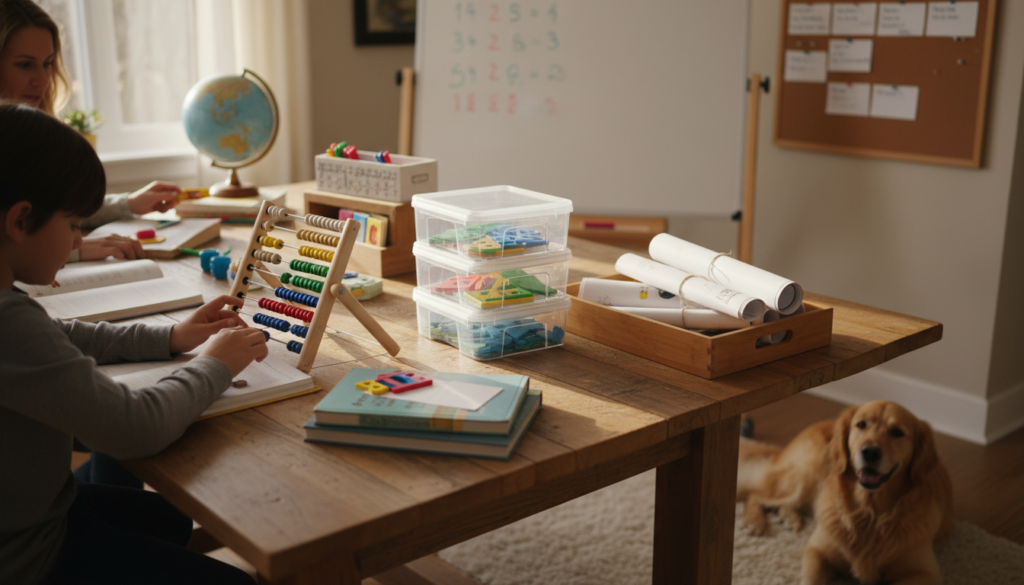
- Keep only current curriculum within reach
- Store extra materials in bins or closets
- Limit supplies to what your kids actually use
Example:
If your child uses the same 5 markers every day, they don’t need access to 40.
Less clutter = clearer thinking for both you and your kids.
Use Weekly Planning Instead Of Daily Panic
Daily planning is one of the fastest ways to feel behind.
Instead, plan your homeschool week in one sitting.
Here’s a simple weekly system:
- Pick 3–5 priorities for the week
- Assign subjects loosely to each day
- Leave 1 “catch-up” day open
Example Weekly Plan:
- Monday: Math + Reading + Science
- Tuesday: Math + Writing + History
- Wednesday: Light day + Projects
- Thursday: Repeat core subjects
- Friday: Catch-up or field trip
This removes the pressure of “getting everything done today.”
This is where many parents experience a mindset shift that changes everything. Homeschooling doesn’t have to mirror traditional school in order to be successful. In fact, the more you try to recreate a classroom at home, the more friction you’ll feel in your daily routine.
When you begin to see your homeschool as a flexible learning environment rather than a strict system, your stress level drops significantly. Your children also respond better because the atmosphere feels calmer and more natural.
Over time, this approach builds confidence. Instead of second-guessing every decision, you begin to trust your rhythm, your pacing, and your ability to adjust when needed.
Organize Materials So Kids Can Be Independent
If you’re constantly being asked, “Where is my book?”, your system isn’t working yet.
The goal is independence.
Set up simple systems your kids can follow:
- Label bins by subject
- Use folders for each child
- Keep daily materials in one easy-to-access spot
Simple Setup Example:
- “Math bin” with workbook + pencil
- “Reading basket” with current books
- “Art drawer” for creative time
Game-Changer Tip:
Create a “Daily Basket” for each child with everything they need for that day.
This eliminates 90% of interruptions.
Avoid These Common Homeschool Organization Mistakes
Even with the best intentions, certain habits can make homeschooling harder than it needs to be.
Watch out for these:
- Overplanning every minute of the day
- Buying too many curriculum options at once
- Not building in breaks
- Trying to teach all children at the same time
- Constantly switching systems
Reality Check:
The most effective homeschool systems are simple, and repeatable.
If it feels complicated, it probably won’t last.
Build Systems That Save You Time Every Week
The secret to staying organized isn’t working harder, it’s creating repeatable systems.
Here are a few that make a big impact:
1. Sunday Reset
- Prep materials for the week
- Review lesson plans
- Organize supplies
2. End-of-Day Reset
- Put materials back
- Clear workspace
- Prep for tomorrow
3. Monthly Declutter
- Remove unused curriculum
- Rotate books
- Reorganize supplies
These small habits prevent overwhelm from building up.
There’s something powerful about walking into your homeschool space and knowing exactly where everything is. It creates a sense of calm that carries into your teaching and your children’s learning.
When your systems are working, you spend less time managing chaos and more time actually connecting with your kids. That’s where the real value of homeschooling shines through.
And here’s the encouraging part, these systems don’t have to be perfect to work. They just need to be consistent.
Simple Steps You Can Take This Week
If you’re feeling overwhelmed, don’t try to fix everything at once. Start small.
Here’s your action plan:
- Pick ONE area to organize (desk, shelf, or bin)
- Create a simple daily routine
- Plan next week in one sitting
- Remove 25% of unused materials
- Set up one system (like daily baskets)
Progress, not perfection, is what creates momentum.
Many parents hesitate to simplify because they worry they’re not doing enough. But the truth is, simplifying often leads to better results. When your homeschool is manageable, you show up more consistently, and your children learn in a more relaxed environment.
It’s also important to remember that your homeschool will evolve. What works this season may change next year, and that’s completely normal. Flexibility is not failure; it’s part of the process.
The more you give yourself permission to adjust, the more sustainable your homeschool becomes over time.
Homeschool FAQs
FAQ: How do I stay organized while homeschooling multiple children?
The best way to manage homeschooling multiple children is by using shared routines and simple systems like subject bins and daily baskets. Focus on independent work time and rotate your attention. Keeping your homeschool schedule flexible helps reduce stress and keeps everyone on track.
FAQ: What is the best homeschool schedule for beginners?
The best homeschool schedule for beginners is a simple routine with morning core subjects and lighter afternoon activities. Avoid strict time blocks and instead use a flexible homeschool routine. This makes it easier to stay consistent without feeling overwhelmed.
FAQ: How can I reduce homeschool stress quickly?
To reduce homeschool stress quickly, simplify your daily plan, declutter your space, and focus on just a few priorities each day. Using homeschool organization hacks like weekly planning and simple systems can make an immediate difference in how your day feels.
Supporting You Every Step Of The Way
Homeschooling doesn’t have to feel overwhelming or chaotic. With the right organization hacks, you can create a routine that works for your family, and actually enjoy the process along the way.
Start small, stay consistent, and give yourself grace as you build your systems.
At DKM Homeschool Resource, we’re here to support you every step of the way. Explore more of our blog for practical homeschool advice, encouragement, and tools designed to make your journey smoother and more rewarding.