Around the World Unit Study: Geography, Culture, and Food Activities for Homeschool

What if your homeschool could travel the world without ever leaving the kitchen table?

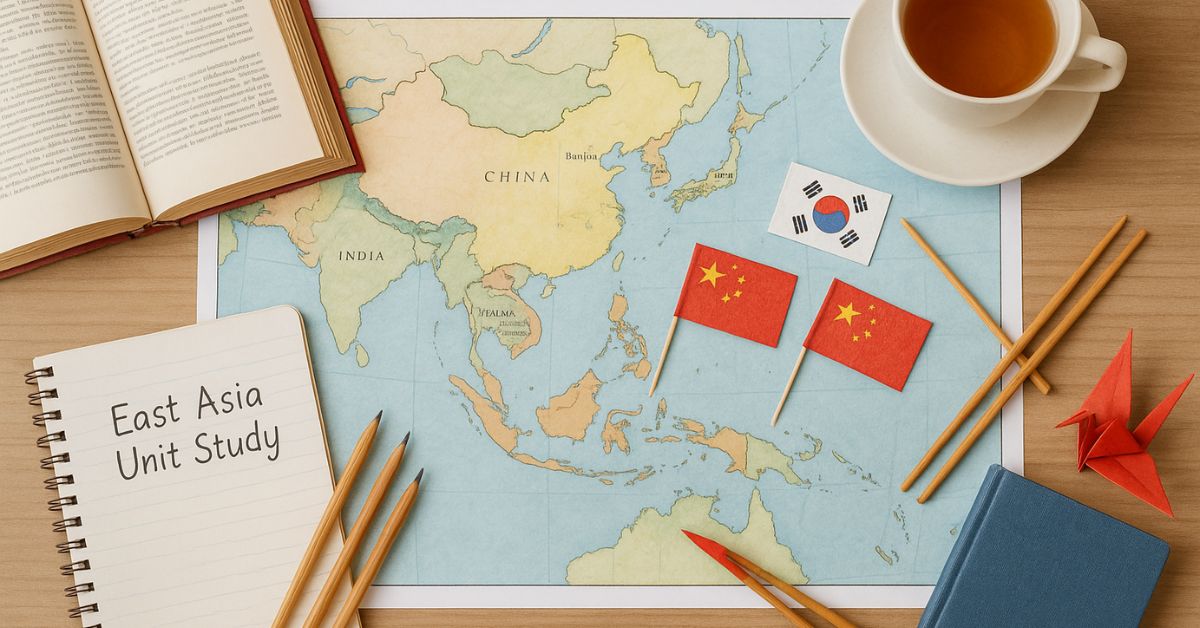
An Around the World unit study is one of the most exciting ways to explore geography, culture, and global traditions together as a family. Instead of simply reading about different countries, children can experience them through maps, food, music, crafts, and storytelling.

This type of learning turns geography into an adventure. One week your homeschool might explore the bustling cities of Japan. The next week you could discover the colourful traditions of Mexico or the historic landmarks of Italy. Each destination brings new opportunities to learn.

For homeschool families, unit studies are especially powerful because they naturally combine multiple subjects into one engaging theme. Geography, history, reading, writing, art, and even math can all connect through the exploration of different countries and cultures.

Children also develop something just as important as academic knowledge: global awareness. Learning about how people live around the world helps kids build curiosity, empathy, and a deeper understanding of cultures beyond their own.

Best of all, these lessons can be incredibly hands-on. Families can cook traditional meals, learn greetings in new languages, create cultural crafts, and track their travels on a world map.

In this guide, you will learn how to create an Around the World unit study in your homeschool, including ideas for geography activities, cultural exploration, and simple international foods your children will love.

Get ready to pack your (imaginary) bags. Your homeschool journey around the globe is about to begin. 

How to Create a Unit Study for Homeschool

Creating a homeschool unit study might sound complicated at first, but it can actually be one of the simplest and most flexible ways to teach multiple subjects at once. The key is choosing a central theme and building different learning activities around it.

For an Around the World unit study, the theme is clear: exploring countries, cultures, and traditions from different parts of the globe.

Start by selecting one country or region to focus on each week (or every few days depending on your schedule). This helps children dive deeper into the culture instead of rushing through many places too quickly.

Next, think about the subjects you want to include. Unit studies work well because they naturally blend different areas of learning together.

You might include activities like:

  • Geography: Locate the country on a map or globe and explore nearby regions.
  • History: Learn about important events, landmarks, or famous people from that country.
  • Culture: Explore traditions, clothing, holidays, or daily life.
  • Food: Cook or taste a simple traditional recipe together.
  • Music and Art: Listen to traditional music or create crafts inspired by the culture.
  • Language: Practice a few basic greetings or words from the local language.

It can also help to create a simple structure for each country you study so children know what to expect each week.

For example, many homeschool families use a pattern like:

  • Day 1: Geography and introduction to the country
  • Day 2: Culture, traditions, and daily life
  • Day 3: Food or cooking activity
  • Day 4: Art, music, or creative project
  • Day 5: Review, storytelling, or presentation

The beauty of homeschool unit studies is flexibility. You can spend more time on the topics that spark your child’s curiosity and adjust activities based on their age and interests.

Choosing Countries and Themes for Your Around the World Unit Study

Choosing Countries and Themes for Your Around the World Unit Study

Once you understand how a unit study works, the next step is deciding which countries or regions to explore. This is where the learning really becomes exciting for homeschool families.

A good approach is to choose places that offer variety in culture, geography, and traditions. When children explore different foods, music, languages, and environments, they gain a much broader understanding of the world.

You might start by selecting one country per week or one region per month, depending on how in-depth you want the study to be. Some families like to follow a map and move across continents, while others choose countries based on interest.

For example, if your child enjoys animals, you might explore countries known for unique wildlife. If they enjoy cooking, you might focus on places with interesting cuisine.

Here are some simple ways to organize your country choices:

1. Travel by Continent

This approach helps children understand world geography in a logical order.

  • Africa
  • Europe
  • Asia
  • North America
  • South America
  • Australia and Oceania
  • Antarctica (for a science-focused mini unit)

2. Travel by Theme

Instead of continents, you can organize countries by interesting cultural connections.

  • Countries known for famous landmarks
  • Countries with unique traditional foods
  • Countries known for music and dance
  • Countries with fascinating wildlife

3. Let Kids Help Choose

One of the best parts of homeschooling is flexibility. Allowing children to help select countries often increases engagement and curiosity.

You might:

  • Let them pick a country from a globe
  • Draw country names from a jar
  • Choose places related to books or movies they enjoy

When children feel involved in the planning, they are much more likely to become excited about the learning process.

The goal is not to study every country in the world, but to help children build curiosity about different cultures, places, and traditions. Even exploring 10–15 countries in depth can create meaningful global awareness.

Bringing Geography to Life in Your Around the World Unit Study

Geography is the foundation of any Around the World homeschool unit study. Before children can truly understand cultures and traditions, they first need to know where a country is located and what the land looks like.

Instead of relying only on worksheets or textbooks, try to make geography interactive and visual. When children can see, touch, and explore maps, the learning becomes much more memorable.

Start by using a world map or globe during every lesson. Each time you introduce a new country, locate it together and talk about the surrounding areas.

You might discuss questions such as:

  • What continent is the country on?
  • What countries border it?
  • Is it close to oceans, mountains, or deserts?
  • How far is it from where you live?

These simple discussions help children develop map-reading skills and spatial awareness.

Hands-on geography activities can also make lessons more engaging.

Some homeschool-friendly ideas include:

  • Map pinning: Add a pin or sticker to every country you study.
  • Create a travel passport: Stamp or mark each location your child “visits.”
  • Salt dough maps: Build raised maps that show mountains and rivers.
  • Label the continents: Practice identifying continents and major oceans.

You can also explore how geography affects daily life in each country. For example, mountainous regions may influence architecture, transportation, and food traditions.

Children might discover that:

  • Coastal regions often feature seafood-based dishes.
  • Desert climates require different building styles.
  • Cold climates influence clothing and seasonal traditions.

These connections help children understand that geography is not just about maps. It plays a major role in how people live around the world.

create their own world travel notebook

To make learning even more immersive, you can encourage children to create their own world travel notebook. Each time you study a country, they can add:

  • A small map or drawing
  • The country’s flag
  • Interesting geography facts
  • Notes about climate or landscape

Over time, this notebook becomes a personalized record of their global journey.

Cooking Around the World: Food as a Cultural Adventure

One of the most engaging ways to explore different countries in a homeschool unit study is through food. Cooking traditional dishes lets children experience a culture with all their senses—taste, smell, sight, and even touch.

Food activities naturally tie into multiple learning areas. Measuring ingredients reinforces math skills, following a recipe improves reading and comprehension, and preparing dishes together encourages teamwork and problem-solving. Beyond academics, children gain cultural awareness, learning why certain foods are important in different regions.

Here are some ways to make cooking part of your Around the World unit study:

  • Simple Recipes: Choose easy, age-appropriate recipes that children can help prepare.
  • Ingredient Exploration: Introduce new spices, fruits, or grains and discuss their origins.
  • Cultural Stories: Talk about when and why a dish is traditionally eaten, such as during festivals or holidays.
  • Hands-On Practice: Let children mix, knead, or shape dough, roll sushi, or assemble tacos—activities that also improve fine motor skills.
  • Food Journals: Encourage children to record recipes, write about the taste, and note what they learned about the culture.

Examples of dishes to try by region:

  • Italy: Pasta with simple sauces or focaccia bread
  • Japan: Rice dishes, sushi rolls, or miso soup
  • Mexico: Tacos, quesadillas, or guacamole
  • India: Vegetable curry or flatbreads
  • France: Crepes or baguettes

Food activities also provide natural opportunities for conversation and reflection. Ask children which flavors were new or surprising, what they liked best, and how the food connects to the country’s culture and geography.

When cooking becomes part of your unit study, lessons are no longer just academic—they’re memorable, fun, and immersive. Children leave with a stronger understanding of the country, hands-on skills, and, of course, a satisfied appetite.

Creating a Weekly Travel Plan for Your Unit Study

A well-structured weekly plan keeps your Around the World unit study organized, balanced, and engaging. It helps children know what to expect while making sure geography, culture, and food activities all get time and attention.

Using a weekly schedule or “travel plan” also makes it easier to track progress and ensures that no part of the unit is rushed. A clear plan gives structure while leaving room for creativity and flexibility.

Here’s an example of how a weekly travel plan might look:

DayFocusExample Activities
MondayGeographyLocate country on a map, identify landmarks, explore climate
TuesdayCultureLearn about traditions, clothing, music, or festivals
WednesdayLanguagePractice greetings or simple words from the local language
ThursdayFoodCook or prepare a traditional recipe
FridayReflection & Creative ProjectsJournal about what was learned, create crafts, or present findings

This chart can be adapted based on your homeschool schedule. For younger children, keep sessions short and hands-on. Older children might enjoy more in-depth research or longer cooking projects.

Tips for using the weekly plan effectively:

  • Mix high-energy and calm activities: Combine active learning like dance or movement with quieter tasks such as journaling or map labeling.
  • Adjust to interest: If a child shows excitement about a certain country, spend extra time exploring its culture or cooking additional dishes.
  • Document progress: Use a travel notebook, passport, or checklist so children can see what they’ve accomplished.

Having a weekly plan transforms your Around the World unit study from a series of random activities into a cohesive learning journey. It ensures that children are exposed to geography, culture, and food in a way that’s memorable, structured, and fun.

Integrating Art, Music, and Language

To make an Around the World unit study truly immersive, it’s important to include art, music, and language alongside geography, culture, and food. These elements bring each country to life, allowing children to experience its traditions in a multi-sensory way.

Art activities can include drawing or painting traditional patterns, creating crafts inspired by local customs, or designing flags and landmarks. For example, children might paint Japanese cherry blossoms, make Mexican papel picado, or craft African masks. These projects strengthen fine motor skills while reinforcing cultural knowledge.

Music is another engaging way to explore culture. Listening to traditional songs, drumming patterns, or folk instruments helps children understand rhythm, expression, and storytelling in different countries. You can even combine music with movement, letting children dance or create choreography inspired by the culture.

Language activities can be simple yet impactful. Learning greetings, common phrases, or song lyrics in the local language enhances memory, listening skills, and pronunciation. For older children, you can introduce short stories, poems, or basic reading exercises in the native language.

Tips for integrating these elements:

  • Connect art projects to the country being studied that week.
  • Play traditional music during cooking, movement, or craft activities.
  • Encourage children to say new words or phrases aloud while completing tasks.
  • Incorporate reflection by asking children how the art, music, or language connects to the culture.

By combining art, music, and language with geography and food, children gain a well-rounded understanding of each country. Lessons become memorable and interactive, offering multiple ways to engage with the material.

Reflection and Travel Journals

Reflection is a key part of an Around the World unit study. It helps children process what they’ve learned, make connections between geography, culture, and food, and develop critical thinking skills. A travel journal is an ideal tool for this purpose.

Each time a country is studied, children can add entries to their journal. They might include:

  • Maps and Flags: Draw the country or add a printed map and flag.
  • Cultural Notes: Record interesting facts about traditions, holidays, or daily life.
  • Food Experiences: Write about dishes they cooked or tasted, favorite flavors, and what they learned about local ingredients.
  • Language Practice: Note greetings, words, or song lyrics they learned.
  • Creative Projects: Attach sketches, crafts, or photos from art and music activities.

Journals encourage children to reflect on their learning rather than just moving from activity to activity. After each session, ask open-ended questions like:

  • What did you enjoy most about this country?
  • What surprised you about its culture or food?
  • How is life there different from where we live?

This practice also develops writing, observation, and analytical skills. Children see their progress over time and gain a sense of accomplishment as the journal fills up with entries from multiple countries.

For younger children, travel journals can be mostly visual, with drawings, stickers, and simple labels. Older children can include longer reflections, comparisons between cultures, and more detailed notes.

By combining reflection with a travel journal, you create a personalized record of your child’s global journey. It turns learning into a keepsake, reinforces memory retention, and motivates children to continue exploring the world.

Hosting an Around the World Celebration

An Around the World celebration is a fun and meaningful way to wrap up your homeschool unit study. It gives children a chance to share what they’ve learned, show off their skills, and celebrate the cultures they’ve explored.

Start by inviting family members or close friends to join. This creates an audience for children to present their work, boosting confidence and motivation. The celebration can include a mix of activities from the unit study, such as:

  • Food Tasting: Prepare small dishes from each country studied and let guests sample them. Children can explain the recipe and its cultural significance.
  • Cultural Displays: Showcase crafts, artwork, or posters highlighting traditions, festivals, and landmarks.
  • Music and Dance: Perform songs, dances, or rhythms learned during the unit. Even simple group performances can be exciting and educational.
  • Language Demonstrations: Children can teach greetings, short phrases, or songs in the native language of each country.

You can also incorporate a “passport ceremony” where children receive stickers or stamps for each country they explored, giving them a tangible sense of accomplishment.

Celebrations provide a natural opportunity for reflection and discussion. Ask children questions like:

  • Which country did you enjoy learning about the most?
  • What new food or tradition surprised you?
  • How did geography or climate affect daily life in each country?

Hosting a celebration reinforces everything children learned throughout the unit and makes the experience memorable. It also encourages them to take pride in their hard work and see learning as a joyful, shared experience.

Encouraging Lifelong Curiosity and Global Awareness

One of the most valuable outcomes of an Around the World unit study is fostering lifelong curiosity about different cultures, people, and places. When children explore geography, traditions, food, music, and language, they begin to see the world as a connected and fascinating place.

Encouraging global awareness can be as simple as building on the interests sparked during the unit study. For example, if a child loved learning about Japanese culture, they might explore Japanese art, literature, or festivals further. If they were excited by Mexican cuisine, they might research other Latin American countries or try new recipes at home.

Practical ways to cultivate curiosity include:

  • Cultural Festivals: Attend local international festivals or cultural events.
  • Global Literature: Read books, folktales, or biographies from around the world.
  • International Pen Pals: Connect with children from other countries through safe, age-appropriate pen pal programs.
  • Travel and Virtual Tours: Explore museums, landmarks, and cities online or in person when possible.
  • Cooking Adventures: Continue experimenting with recipes from different countries.

It’s also important to discuss empathy and understanding during these activities. Ask children questions like:

  • How is life similar or different from ours?
  • What can we learn from the way people live in other countries?
  • How can understanding different cultures help us in our own community?

By consistently connecting lessons to curiosity, exploration, and empathy, children develop skills and perspectives that extend far beyond the homeschool classroom. They learn that learning about the world is not just academic—it’s a lifelong adventure that inspires respect, understanding, and a sense of global citizenship.

Exploring the World From Home

An Around the World unit study transforms homeschool into an adventure. By combining geography, culture, food, art, music, and language, children experience learning that is hands-on, engaging, and memorable. Each country explored becomes a doorway to understanding the world, its people, and their traditions.

From cooking international dishes to mapping countries, creating crafts, and learning new words, children develop skills in multiple subjects while building curiosity, empathy, and global awareness. With thoughtful planning, reflection, and family participation, your homeschool can travel the globe without ever leaving home—turning learning into a lifelong journey of discovery.

How to Turn Nature Walks Into a Full PE Credit (Unit Study Style)

Nature walks can absolutely count as a full PE credit in your homeschool when you track physical activity, add simple learning components, and build consistent routines. With a unit study approach, walking outdoors becomes exercise, science, observation practice, and even journaling—all wrapped into one simple, enjoyable homeschool habit.

You can turn nature walks into a full homeschool PE credit by scheduling regular walks, tracking active minutes, and adding simple educational elements like observation, journaling, or nature study. Using a unit study approach allows walking to combine physical fitness with science, geography, and mindfulness while meeting homeschool physical education requirements.

Homeschool parents often assume PE has to look like organized sports or formal fitness programs. But the truth is, movement in nature can be one of the most effective—and enjoyable—ways to meet physical education goals.

At DKM Homeschool Resource, we often encourage families to think outside the traditional classroom model. When learning connects to real life and the environment, children stay curious, active, and motivated.

Let’s look at how a simple nature walk can become one of the easiest homeschool credits you’ll ever teach.

How Can You Use The Environment To Support Children’s Learning?

The environment is one of the most powerful teaching tools available to homeschool families. Parks, trails, neighborhoods, and nature preserves provide endless opportunities for movement, observation, and discovery.

When children walk outdoors regularly, they naturally develop:

  • endurance
  • coordination
  • balance
  • curiosity about the world

Instead of separating PE, science, and outdoor play, you can combine them into a unit study experience.

For example, during a nature walk your child might:

  • climb hills or uneven terrain (strength and endurance)
  • observe bird species (science)
  • measure distance walked (math)
  • write about what they saw (language arts)

This approach mirrors how children learn naturally—through exploration and movement.

And the best part? It requires very little planning.

Why Nature Walks Make an Excellent Homeschool PE Credit

Physical education is about developing healthy movement habits, not just structured workouts. Walking regularly outdoors can easily meet those goals.

A typical homeschool PE credit often equals 120–150 hours of physical activity per year. That sounds like a lot, but nature walks make it surprisingly manageable.

For example:

  • 30 minutes a day
  • 4–5 days per week
  • throughout the school year

That adds up quickly.

Nature walks also provide benefits traditional PE sometimes misses.

Physical benefits

  • cardiovascular endurance
  • muscle development from uneven terrain
  • improved posture and balance
  • overall stamina

Mental and emotional benefits

  • stress reduction
  • improved focus for later schoolwork
  • connection to nature
  • creativity and curiosity

Many homeschool parents notice something interesting: kids who walk before lessons often focus better during math and reading.

Movement wakes up the brain.

Creating A Simple Nature Walk Unit Study Plan

Creating A Simple Nature Walk Unit Study Plan

Turning nature walks into a homeschool PE credit doesn’t require a complicated curriculum or detailed lesson plans. In fact, the simpler your system is, the more likely your family will stick with it. The key is building a routine that blends movement, observation, and a little bit of reflection so that each walk supports both physical activity and learning.

Start by choosing a consistent walking schedule that fits naturally into your homeschool rhythm. Many families find that three days a week works well, such as Monday, Wednesday, and Friday mornings. Others prefer shorter walks four days a week. The specific schedule matters less than the consistency. When nature walks become a normal part of the week—just like math or reading—kids begin to expect and enjoy that time outdoors.

Next, decide how long your walks should be. Younger children usually do well with 20–25 minutes of walking, especially if there are interesting things to see along the way. Older elementary and middle school students can easily handle 30–45 minutes, particularly if the trail includes hills, uneven paths, or places to explore. If your child is new to regular walking, start small and gradually build up. Over time, their stamina will increase naturally.

It’s also helpful to keep a simple activity log. This doesn’t have to be complicated or time-consuming. A notebook, spreadsheet, or printable PE tracker works perfectly. After each walk, write down the date, location, and how long your child walked. You might also jot down one or two things they noticed during the walk, such as a bird they spotted or an interesting plant along the trail. These small observations reinforce the learning aspect of the unit study while also giving you documentation for your homeschool records.

Example PE log:

DateLocationMinutes WalkedObservations
Sept 5Local park35Saw ducks and frogs
Sept 7Neighborhood trail30Leaves changing color

Another helpful strategy is adding a gentle weekly focus to your walks. This is what turns the activity into a unit study rather than just exercise. For example, one week you might encourage your child to notice different types of trees. Another week you could focus on insects, weather patterns, or the sounds they hear while walking. The goal isn’t to lecture or turn the walk into a science class. Instead, it simply encourages children to observe the world around them more closely.

Location variety can also make a big difference in keeping nature walks interesting. If possible, rotate between a few nearby spots such as a neighborhood loop, a local park, a wooded trail, or even a school playground after hours. Different environments provide different physical challenges and new things to discover. Walking on dirt paths, hills, gravel trails, or grassy fields naturally strengthens different muscles and keeps kids more engaged than the same flat sidewalk every day.

It can also be helpful to build a short reflection time into your routine after each walk. This doesn’t need to take more than five or ten minutes. Some children enjoy drawing something they saw during the walk, while others prefer writing a few sentences about their favorite moment. Younger children might simply tell you what they noticed while you record it for them. These quick reflections reinforce observation skills and help kids connect physical activity with learning.

One of the best parts of using a nature walk unit study is how easily it adapts to different ages. Younger children might focus on spotting animals or collecting interesting leaves, while older students can track distances, identify plant species, or record weather conditions. This flexibility makes nature walks an ideal activity for families homeschooling multiple children at once.

Most importantly, keep the experience relaxed and enjoyable. Nature walks work best when they feel like an adventure rather than another assignment. When children feel free to explore, ask questions, and move at a comfortable pace, they stay engaged and curious. Over time, those simple walks become a powerful combination of exercise, observation, and meaningful learning—exactly what a homeschool PE unit study is meant to provide.

Activities That Turn a Walk Into a Full Learning Experience

This section is where nature walks really shine. With just a few creative ideas, you can transform a simple walk into a meaningful homeschool activity.

Here are some easy add-ons families love.

1. Nature observation challenge

Ask kids to find:

  • 3 different leaves
  • 2 birds
  • something red in nature
  • something that moves

This keeps children engaged while walking.

2. Distance and mapping

Older students can:

  • track distance with a phone or smartwatch
  • map trails
  • calculate pace

That quietly introduces math skills.

3. Nature journaling

After the walk, spend 5–10 minutes recording observations.

Kids can:

  • draw plants or animals
  • write short descriptions
  • record weather

4. Terrain exploration

Walking on different surfaces builds strength.

Try exploring:

  • wooded trails
  • beaches
  • hills
  • gravel paths

Different terrain engages different muscles.

Insert In-Content Image https://drive.google.com/drive/u/2/folders/1yWaYlYlzGz3njNs4D4UYmRPSGZA80FKf

Common Mistakes Homeschool Parents Make With Outdoor PE

Many families start strong with nature walks but struggle to keep them consistent. Usually it’s because they overcomplicate the process.

One common mistake is turning every walk into a structured lesson. Kids quickly lose interest if every outing requires worksheets, quizzes, or long explanations. Nature walks should feel relaxed and exploratory, with learning happening naturally through conversation and observation.

Another issue is scheduling walks too far away from home. Driving 30 minutes to a park every time quickly becomes exhausting for busy homeschool parents. Instead, rotate between nearby locations like neighborhood loops, local parks, or even schoolyard-style walks around your block.

Finally, some parents underestimate how much walking actually counts toward physical education. A child who walks briskly for 30 minutes through varied terrain is engaging in legitimate cardiovascular exercise. When those minutes are tracked consistently, they absolutely meet homeschool PE requirements.

Simple Ways to Keep Nature Walks Interesting All Year

One reason nature walks work so well in homeschooling is that they change naturally with the seasons. The same trail can offer completely different learning opportunities throughout the year.

In the fall, children notice leaves changing colors, cooler air, migrating birds, and falling acorns. Winter walks may focus on animal tracks, frost patterns, and quiet landscapes. Spring brings wildflowers, insects, and new plant growth, while summer offers longer walks, creek exploration, and early morning adventures before the heat.

Parents often find that children begin to look forward to these seasonal changes. A familiar path becomes a place where kids notice subtle differences from week to week. This kind of observation strengthens attention skills and builds a genuine connection to the natural world.

Nature walks also give homeschool families something incredibly valuable—space to talk. Many parents say their best conversations with their kids happen while walking side by side on a trail. Without the pressure of a desk or worksheet, kids open up, ask questions, and share ideas they might not mention during formal lessons.

Common FAQs

FAQ: Can nature walks really count as homeschool PE?
Yes, nature walks absolutely count toward homeschool physical education when they involve consistent physical activity and are tracked in a PE log. Many homeschool curriculum guidelines allow walking, hiking, and outdoor exploration to count toward a homeschool PE credit.

FAQ: How often should homeschoolers do nature walks for PE?
Most homeschool families aim for 3–5 walks per week lasting 20–45 minutes each. When tracked across the school year, this easily contributes toward the 120–150 hours commonly used for a homeschool PE credit requirement.

FAQ: What should kids learn during a homeschool nature walk?
Nature walks can include light nature study, observation skills, journaling, and basic science topics like plants, insects, or weather patterns. This unit study approach combines physical education with outdoor learning while keeping homeschool lessons engaging.

Making Homeschool Work In Real Life

Homeschooling doesn’t have to feel complicated. Sometimes the best learning experiences happen when families step outside, take a walk, and pay attention to the world around them.

Nature walks offer something special that traditional lessons often miss. They combine movement, curiosity, and discovery in a way that feels natural to children. When used consistently, they can easily become a reliable homeschool PE credit while also supporting science learning, observation skills, and family connection.

At DKM Homeschool Resource, we love helping parents find simple ways to make homeschooling work in real life. Whether you’re just getting started or looking for fresh ideas, there are countless ways to turn everyday activities into meaningful learning experiences.

If you enjoyed this guide, explore more articles on DKM Homeschool Resource for practical homeschool tips, creative unit study ideas, and encouragement for your homeschool journey.

When Unit Studies Feel Like Too Much: How To Simplify

Unit studies are a homeschool approach where multiple subjects are taught around one central theme or topic. Instead of separating history, science, language arts, and art into isolated blocks, they’re integrated into one cohesive study.

For example, a unit study on oceans might include:

  • Marine biology (science)
  • Mapping oceans (geography)
  • Writing about sea creatures (language arts)
  • Studying explorers (history)
  • Creating ocean art (fine arts)

The beauty of unit studies lies in connection. Children see how ideas relate rather than learning in isolated silos. Concepts stick because they are explored from multiple angles.

However, that same integration can become overwhelming when parents feel pressure to “cover everything.” What starts as creative quickly becomes complicated.

Why Unit Studies Start To Feel Overwhelming

Unit studies often grow beyond their original intention. Parents begin with one topic and gradually add more layers. Before long, the plan includes multiple books, crafts, field trips, worksheets, documentaries, experiments, and writing assignments—all for a single week.

This overload usually comes from good intentions. You want your child to experience depth. You want learning to feel rich and memorable. But too many moving pieces create stress for both parent and child.

Another factor is comparison. Online homeschool communities showcase beautifully curated unit study setups. It’s easy to believe your homeschool must look equally elaborate to be effective.

The truth is simpler: learning does not require elaborate preparation. Children remember connection, discussion, and experience more than perfect planning.

When you simplify, you preserve the heart of unit studies without drowning in logistics.

How To Simplify Your Homeschool Unit Study

Let’s move into practical steps you can apply immediately. Simplifying does not mean lowering standards. It means clarifying focus.

1. Choose One Core Resource

Pick one strong anchor:

  • One main book
  • One spine text
  • One documentary
  • One audiobook

Everything else supports that anchor, not competes with it.

2. Limit to One Hands-On Activity Per Week

You don’t need daily crafts. Choose:

  • One experiment
  • One art project
  • One model build
  • One field experience

Quality beats quantity.

Define One Clear Learning Goal

3. Define One Clear Learning Goal

Ask:

  • What is the main takeaway this week?
  • What should my child understand by Friday?

Clarity reduces clutter.

4. Simplify Outputs

Instead of multiple projects, choose one:

  • A short summary paragraph
  • A labeled diagram
  • A verbal narration
  • A mini-presentation
  • A one-page notebook entry

Keep it manageable.

5. Trim Your Resource List

If you have more than three books or links per week, cut back. Abundance can dilute focus.

These small shifts dramatically reduce overwhelm.

What Simplified Unit Studies Look Like In Real Life

In many homes, simplified unit studies feel calmer immediately. Imagine studying Ancient Egypt. Instead of juggling five different books and three crafts, you select one engaging read-aloud and one nonfiction resource.

You spend the week reading together, discussing daily life along the Nile, and building a simple pyramid model out of household materials. At the end of the week, your child draws a labeled diagram of a pyramid and explains its purpose.

That’s it. No elaborate timeline notebook. No multi-page research paper. Just focused, connected learning.

In another home, a space unit includes one library book, one documentary episode, and a backyard night sky observation. The child records three interesting facts and shares them with family over dinner.

Learning still happens deeply. Stress decreases significantly.

Simplified unit studies are sustainable long term. And sustainability is what keeps homeschooling joyful.

Common Mistakes That Make Unit Studies Harder Than They Need To Be

Even experienced homeschoolers can slip into complexity.

Here are common pitfalls to avoid:

  • Trying to cover every subject equally every week.
  • Over-scheduling activities.
  • Printing excessive worksheets.
  • Planning weeks too far in advance.
  • Comparing your plans to others.

Another mistake is thinking integration requires perfection. A unit study does not need to tie every subject seamlessly into the theme. Math can remain separate. Spelling can remain separate. Integration is a tool, not a requirement.

Perfectionism often disguises itself as thoroughness. But thoroughness without simplicity leads to burnout.

If your child seems overwhelmed or resistant, it may not be the topic—it may be the volume of expectations.

A 3-Step Reset Plan You Can Start This Week

If your current unit study feels chaotic, pause and simplify.

Step 1: Identify the Core Topic
Write it down in one sentence. If you can’t summarize it clearly, it’s too broad.

Step 2: Eliminate Extras
Remove any activity that doesn’t directly support your core goal.

Step 3: Shorten the Timeline
Instead of a six-week deep dive, try two focused weeks.

You can also:

  • Move some subjects back to independent study.
  • Replace projects with discussions.
  • Use library resources instead of purchasing new materials.

Free and low-cost tools that simplify:

  • Local library book bundles.
  • Free documentaries.
  • Printable notebook pages.
  • Public domain literature.
  • Nature walks tied to the theme.

Remember, unit studies are meant to create connection—not exhaustion.

Balancing Depth Without Burnout

One of the strengths of a homeschool unit study approach is depth. But depth does not require endless activity. Depth comes from discussion, reflection, and revisiting ideas.

If your child can explain what they learned, ask thoughtful questions, and connect concepts, depth has been achieved.

You do not need daily crafts to prove engagement. Sometimes sitting on the couch reading and talking is enough.

Parents often underestimate how much children absorb through conversation alone. Meaningful dialogue strengthens retention far more than extra worksheets.

Keep asking yourself:
Is this adding clarity—or just adding work?

That question alone prevents overwhelm.

Common FAQs About Unit Studies

FAQ: How long should a homeschool unit study last?
Most homeschool unit studies work well between two and four weeks. Longer studies can lead to burnout if not carefully structured. Shorter, focused themes maintain enthusiasm and prevent overload.

FAQ: Can I mix unit studies with a traditional curriculum?
Yes, many families use a hybrid homeschool curriculum. Math and language arts can remain textbook-based while history and science follow unit studies. This balance often reduces stress while preserving creativity.

FAQ: What if my child loses interest mid-unit?
It’s okay to pivot. Homeschool flexibility is a strength. If engagement drops, shorten the unit or adjust activities rather than pushing through unnecessarily.

Keep Learning With DKM Homeschool Resource

Unit studies are meant to inspire—not exhaust. When they start to feel like too much, simplification restores balance. Focus on one topic, one anchor resource, and one meaningful output. That alone can transform your homeschool rhythm.

Homeschooling works best when it’s sustainable. You don’t need elaborate plans to create rich learning experiences. You need clarity, flexibility, and realistic expectations.

For more practical homeschool advice and encouragement, explore additional resources here at DKM Homeschool Resource. We’re here to help you simplify, refocus, and build a homeschool that truly works for your family.

Olympics Unit Study: PE, Geography, and Culture Together

The Olympics make the perfect homeschool unit study because they naturally combine physical education, geography, history, and culture into one exciting theme. With a little planning, you can turn Olympic season into weeks of meaningful learning your kids will actually remember.

At DKM Homeschool Resource, we love unit studies that make learning feel connected instead of scattered. If you’re feeling overwhelmed trying to “cover everything,” this is your permission to simplify. The Olympics can bring multiple subjects together in a way that feels organized and exciting instead of stressful.

What Grades Should Study The Olympics?

Every grade can study the Olympics. From preschoolers learning about countries and movement to high schoolers exploring global politics and cultural impact, an Olympics unit study can be adapted to any level. The key is adjusting expectations, depth, and assignments—not the theme itself.

For younger students (PreK–2nd grade), focus on:

  • Learning about flags and countries
  • Basic map skills
  • Simple Olympic sports
  • Movement-based activities
  • Reading picture books about athletes

For upper elementary (3rd–5th grade):

  • Researching host countries
  • Creating country fact sheets
  • Learning about ancient Greece
  • Tracking medal counts with basic math
  • Writing short reports

For middle school:

  • Studying the history of the modern Olympics
  • Comparing ancient and modern Games
  • Exploring global cultures
  • Calculating statistics and percentages
  • Writing opinion essays about sportsmanship

For high school:

  • Researching global politics and Olympic boycotts
  • Studying economics of hosting the Games
  • Writing research papers
  • Analyzing media coverage
  • Exploring international relations

One of the biggest mistakes parents make is thinking unit studies are only for younger kids. They’re not. The Olympics provide layered learning opportunities that grow with your child. You simply deepen the research, add more writing, and raise expectations as your student matures.

How To Turn The Olympics Into A Complete Homeschool Unit Study

How To Turn The Olympics Into A Complete Homeschool Unit Study

The beauty of an Olympics homeschool unit study is that it naturally covers multiple subjects without feeling forced. Instead of planning separate lessons for PE, geography, and social studies, you wrap them around one theme.

Here’s how to structure it in a simple, manageable way:

1. Choose a Time Frame

Keep it realistic.

  • One week (quick and fun)
  • Two weeks (balanced and meaningful)
  • Four weeks (deep dive)

If you’re new to homeschooling, start small. You can always extend it next time.

2. Pick 3 Core Focus Areas

We recommend:

That’s it. You don’t need 12 subjects. Keep it focused.

3. Create a Weekly Rhythm

Example:

  • Monday: Geography focus
  • Tuesday: Culture study
  • Wednesday: PE challenge
  • Thursday: Writing or research
  • Friday: Family Olympic event

This kind of rhythm helps busy homeschool parents stay organized without overplanning.

The most important thing to remember is that this doesn’t need to look like school. Some of the best learning happens during conversations at the dinner table, while watching an event together, or while your kids try to invent their own backyard “sport.” Give yourself room to enjoy it with them instead of turning it into a checklist.

Geography Through The Olympic Lens

The Olympics are a geography goldmine.

Start with the current host country. Locate it on a world map. Then expand outward.

Practical geography activities:

  • Label the host country on a printable map
  • Identify neighboring countries
  • Learn the capital city
  • Study the flag and its meaning
  • Compare climate to where you live

For older students, go deeper:

  • Research population size
  • Compare GDP statistics
  • Study regional conflicts
  • Examine cultural diversity

You can also track medal counts by country. Have your child:

  • Graph daily medal counts
  • Calculate totals
  • Identify which continents are winning the most medals

Free/low-cost resources:

  • Printable world maps (many free online)
  • Library books about host countries
  • Official Olympic website country profiles
  • YouTube travel documentaries

One common mistake? Overloading your child with too many countries. Instead of studying 25 nations, choose 3–5 and explore them well. Depth beats overload every time.

Physical Education At Home: Olympic-Style

You don’t need professional equipment to bring Olympic PE into your homeschool.

Simple at-home Olympic events:

  • Backyard relay races
  • Long jump (mark distances with chalk)
  • Shot put (use a soft ball)
  • Balance beam (tape line on the floor)
  • Timed obstacle courses

Create scorecards. Let siblings compete or compete against personal bests.

You can also study:

  • Training routines of real athletes
  • Nutrition basics
  • Goal-setting strategies
  • Sportsmanship principles

Instead of just saying “Go run outside,” give it structure. For example:

  1. Warm-up (5 minutes)
  2. Skill practice (15 minutes)
  3. Event challenge (10 minutes)
  4. Cool down and discussion

Ask questions like:

  • What was hardest today?
  • How did you improve?
  • What strategy worked best?

When PE becomes intentional, it stops feeling like filler and starts becoming real education.

There is something powerful about watching your child push through frustration during a timed race or balance challenge. You see resilience forming in real time. Those lessons about perseverance and discipline often stick longer than a worksheet ever could. That’s the quiet strength of combining physical education with meaningful conversation.

Exploring Culture And History Through The Olympics

Exploring Culture And History Through The Olympics

This is where your unit study becomes rich and memorable.

Start with ancient Greece.

Study:

  • The original Olympic Games
  • Greek city-states
  • Mythology connections
  • Ancient athletic events

Then move to the modern Olympic revival.

Learn about:

  • Pierre de Coubertin
  • The Olympic rings and their meaning
  • The opening ceremony traditions
  • The Olympic torch

From there, explore culture through food, music, and traditions.

Try this:

  • Cook a simple dish from the host country
  • Listen to traditional music
  • Watch short documentaries
  • Learn a few basic phrases in the language

For middle and high schoolers, discuss bigger ideas:

  • National pride
  • Political controversies
  • Doping scandals
  • Gender equality in sports

This is where real-world conversations happen naturally.

One practical idea you can implement this week: assign each child a country. Have them create a simple presentation that includes:

  • Flag
  • Map location
  • Famous athlete
  • Traditional food
  • Cultural fact

Keep expectations age-appropriate.

Avoid turning it into a research paper for a 7-year-old. Keep it simple and fun.

A common mistake we see at DKM Homeschool Resource is trying to make every activity “academic.” It’s okay if part of your Olympic study is simply watching an event together and discussing it. Conversations build critical thinking. Not every lesson needs a worksheet attached to it.

Simple Steps To Start Your Olympics Unit Study This Week

If you’re feeling overwhelmed, here’s your simple starting plan:

Step 1: Print a world map.
Hang it somewhere visible.

Step 2: Choose 3 countries to focus on.
Let your kids help choose.

Step 3: Plan one PE challenge.
Keep it easy and fun.

Step 4: Visit the library.
Grab 3–5 books about the Olympics or host country.

Step 5: Watch one Olympic event together.
Pause and discuss.

That’s it. You’re officially doing an Olympics homeschool unit study.

You don’t need fancy curriculum. You don’t need a big budget. You need intention and consistency.

The magic of a themed unit like this is how it brings your family together. Instead of everyone scattered doing separate assignments, you’re sharing experiences. You’re cheering for athletes together. You’re talking about countries you may never have discussed otherwise. That shared excitement builds connection, and connection strengthens your homeschool foundation.

FAQ: How long should an Olympics unit study last in homeschool?
An Olympics unit study can last anywhere from one to four weeks depending on your homeschool schedule. Many families prefer two weeks for a balanced approach that includes physical education, geography lessons, and cultural studies without feeling rushed. Adjust the length based on your child’s age and interest level.

FAQ: Can I use the Olympics unit study for multiple ages at once?
Yes, this is one of the best multi-age homeschool unit studies available. Younger students can focus on maps, flags, and simple PE activities, while older students dive into research, writing assignments, and global history. The theme stays the same, but expectations increase with grade level.

FAQ: What subjects does an Olympics homeschool unit study cover?
An Olympics homeschool unit study can cover physical education, world geography, history, cultural studies, writing, math (through medal statistics), and even economics for older students. It’s a flexible way to combine multiple subjects into one engaging learning experience without overwhelming parents.

Keep Learning With DKM Homeschool Resource

An Olympics unit study is more than a fun seasonal theme. It’s a practical way to combine PE, geography, and culture into something cohesive and memorable. It helps you simplify your planning while giving your children rich, connected learning.

If you’re new to homeschooling or just feeling stretched thin, start small. Choose one country. Plan one activity. Build from there. Progress matters more than perfection.

At DKM Homeschool Resource, we’re here to help you create homeschool days that feel purposeful instead of chaotic. Explore more of our practical guides, encouragement posts, and low-cost resource ideas to keep building confidence in your homeschool journey. You don’t have to figure this out alone—we’re cheering you on every step of the way.

How To Blend Unit Studies With A Traditional Curriculum

If you’ve ever felt torn between the flexibility of unit studies and the clarity of textbooks, you’re not alone. Many homeschool parents love the depth, creativity, and real-world connections of unit studies but still feel more confident when there’s a clear scope, sequence, and spine to follow. This is where unit studies with textbooks can become a powerful solution instead of a compromise. You don’t have to choose between interest-led learning and academic structure—you can thoughtfully blend the two.

A hybrid approach is especially appealing to families who want both inspiration and reassurance. Textbooks can provide consistency, skill progression, and benchmarks, while unit studies bring subjects to life and help children see how everything connects. When done well, this blend creates a homeschool rhythm that feels both grounded and engaging, without burning you out or overwhelming your child.

Unit Studies With Textbooks: Rethinking The “Either / Or” Mindset

One of the biggest hurdles homeschool parents face is the belief that they must pick a side: either a traditional textbook-based homeschool or a fully unit-study-driven one. In reality, most successful long-term homeschoolers end up somewhere in the middle. Unit studies with textbooks work best when you stop thinking of them as competing approaches and start viewing them as complementary tools.

Textbooks excel at teaching incremental skills. Math, grammar, spelling, and sometimes science benefit from systematic practice and review. Unit studies, on the other hand, shine when it comes to context, integration, and motivation. They help children understand why they’re learning something and how it connects to the real world.

When you combine unit studies and traditional homeschool methods, you’re essentially separating skills from context. Skills can be taught through textbooks, while understanding, application, and curiosity are nurtured through unit studies. This division alone often brings a huge sense of relief to parents who have felt stuck trying to force one method to do everything.

It’s also important to note that a hybrid homeschool curriculum doesn’t have to look the same every year. Some seasons of life call for more structure; others allow more flexibility. Blending approaches gives you room to adapt without feeling like you’re constantly starting over.

How To Combine Unit Studies And Traditional Homeschool Subjects

This is where things get practical. Blending unit studies with a traditional curriculum works best when each approach has a clear role. Instead of trying to merge everything into one giant plan, think in layers.

Here are effective, realistic ways to combine unit studies and traditional homeschool methods:

  • Use textbooks for core skill subjects
    Math, phonics, grammar, and spelling are often best taught with structured programs that build sequentially.
  • Use unit studies for content-heavy subjects
    History, geography, science, literature, art, and music lend themselves beautifully to thematic learning.
  • Let textbooks confirm coverage, not drive curiosity
    Use them as a checklist or reference rather than the centerpiece of learning.
  • Anchor unit studies to textbook topics
    If the science textbook covers ecosystems, build a unit study around forests, oceans, or deserts.
  • Allow unit studies to replace, not add to, busywork
    A strong unit study can replace worksheets, not pile on top of them.

Another helpful strategy is to think in terms of time blocks. Many families do textbook-based work in the morning when focus is highest and unit studies later in the day when creativity flows more easily. This natural rhythm reduces resistance and keeps the day balanced.

You can also rotate emphasis by subject. For example, you might follow a traditional math and language arts program all year, but alternate between textbook science one semester and a deep science unit study the next. This keeps learning fresh while maintaining academic confidence.

What A Hybrid Homeschool Curriculum Looks Like Day To Day

What A Hybrid Homeschool Curriculum Looks Like Day To Day

A hybrid homeschool curriculum often feels calmer than either extreme. Instead of trying to make unit studies carry the weight of every subject, or forcing textbooks to engage reluctant learners, each method does what it does best. This clarity alone reduces decision fatigue for parents and frustration for kids.

A typical day might start with clearly defined expectations: math lesson, short grammar or writing practice, and independent reading. These tasks are predictable and finite, which helps children settle in and focus. Once core skills are complete, the day opens up into richer learning through a unit study—reading aloud, hands-on projects, discussions, and creative work.

This structure is especially helpful for children who crave routine but still enjoy exploration. They know the “must-do” work has an endpoint, and that the more open-ended learning comes afterward. That predictability often improves cooperation and emotional regulation.

Over time, many parents notice that unit studies actually strengthen textbook learning. Vocabulary improves because children encounter words in context. Writing improves because kids have something meaningful to write about. Science concepts stick because they’ve been explored from multiple angles.

A hybrid approach also makes it easier to document learning. Textbooks provide clear records of progress, while unit studies create rich portfolios of projects, writing, and discussions. This combination is especially helpful for families in states with reporting or evaluation requirements.

Common Pitfalls (And How To Avoid Them)

Blending approaches works beautifully—but only if you avoid a few common traps. Most problems arise not from the methods themselves, but from trying to do too much at once.

Here are pitfalls to watch for, along with simple fixes:

  • Trying to do full textbooks and full unit studies in every subject
    Fix: Assign each approach a role instead of doubling up.
  • Letting textbooks dictate pacing for unit studies
    Fix: Use textbooks as references, not deadlines.
  • Turning unit studies into extra work
    Fix: Replace assignments instead of adding more.
  • Feeling guilty for not finishing everything
    Fix: Remember that learning is cumulative, not checklist-based.
  • Constantly switching systems
    Fix: Commit to a plan for at least a term before reassessing.

Another common challenge is perfectionism. Some parents worry that if learning doesn’t look cohesive on paper, it must not be working. In reality, children often make connections internally long before they show up in neat summaries or tests. Trust the process and give learning time to settle.

It’s also okay if your hybrid homeschool curriculum looks different from others’. Some families lean more traditional, others more unit-based. The goal isn’t balance for balance’s sake—it’s effectiveness for your child.

When Unit Studies Support, Not Replace, Traditional Learning

Unit studies don’t need to replace textbooks to be valuable. In many homes, they function best as enrichment and integration rather than the main instructional tool. A unit study can deepen understanding, spark interest, and provide context without carrying the pressure of full content delivery.

For example, a history textbook might provide a timeline and key facts, while a unit study brings that era to life through biographies, historical fiction, primary sources, and projects. The textbook ensures coverage; the unit study ensures meaning. Together, they create a much richer learning experience than either could alone.

This approach is also reassuring for parents who worry about “gaps.” Textbooks act as a safety net, while unit studies allow children to dive deeply into what captures their interest. Over time, this combination often produces learners who are both knowledgeable and curious.

Read More Homeschool Curriculum Tips at DKM Homeschool Resource

Blending unit studies with a traditional curriculum doesn’t mean watering either one down. When done thoughtfully, unit studies with textbooks create a homeschool experience that is both structured and inspiring. You gain the confidence of clear academic progression alongside the joy of meaningful, connected learning. That balance is often what makes homeschooling sustainable long-term.

If you’d like more guidance on creating a hybrid homeschool curriculum that truly works, be sure to read more of our blogs here at DKM Homeschool Resource. We share practical strategies, honest encouragement, and adaptable ideas to help you build a homeschool that fits your family—not someone else’s ideal.

Using Unit Studies for Writing Projects

If writing feels like one of the most challenging parts of your homeschool, you’re definitely not alone—and unit studies writing can be a game changer. Writing often becomes frustrating when it feels disconnected from what children are learning or interested in. Unit studies naturally solve that problem by giving kids rich topics to explore deeply, which leads to real ideas worth writing about. Instead of asking children to write just to practice writing, you’re inviting them to write because they have something meaningful to say.

Unit studies also take a lot of pressure off parents. You don’t need a separate writing curriculum for every child or a stack of prompts that never quite land. Writing grows out of reading, discussion, projects, and curiosity. Over time, homeschool writing projects feel less forced and more like a natural extension of learning.

Another huge benefit is flexibility. Unit studies allow children of different ages and abilities to work from the same topic while producing very different kinds of writing. One child might dictate a paragraph, another might write a page, and an older student might create a multi-paragraph report. Everyone is learning, and no one is overwhelmed.

Why Unit Studies Writing Works So Well

Writing is hardest when children don’t know what to write about. Unit studies remove that obstacle by immersing kids in a topic long enough for understanding and interest to develop. When children are familiar with a subject, ideas come more easily, and writing feels less intimidating. They aren’t scrambling to invent content while also trying to form sentences.

Another reason writing with unit studies works so well is that it reduces cognitive overload. Children aren’t trying to learn brand-new information and writing mechanics at the same time. The content becomes familiar through books, videos, hands-on activities, and discussion. That familiarity frees up mental energy for organizing thoughts and putting words on paper.

Emotional buy-in also plays a major role. Kids care more about writing when it’s connected to something they chose or enjoyed. Unit studies give children a sense of ownership over their learning, which often leads to better effort and stronger engagement. Writing becomes a way to communicate ideas rather than a task to endure.

Over time, this approach builds real confidence. Children begin to see themselves as capable writers because writing is connected to success and understanding, not constant correction. That confidence becomes especially important as writing expectations increase in later grades.

Practical Ways To Use Unit Studies For Homeschool Writing Projects

One of the biggest strengths of unit studies is how naturally writing fits into the learning flow. Writing doesn’t need to sit in its own box or happen at a specific time every day. Instead, it becomes part of how children interact with what they’re learning.

A great place to start is with oral writing. Before expecting children to write anything down, encourage them to talk about the topic. Ask open-ended questions, invite them to explain ideas in their own words, and let them tell stories related to what they’re studying. For younger children especially, writing down their spoken words and reading them back builds a powerful bridge between oral and written language.

Practical Ways To Use Unit Studies For Homeschool Writing Projects

Matching writing types to the unit study topic also makes writing feel purposeful and engaging. Different subjects naturally lend themselves to different kinds of writing, which keeps things fresh and interesting.

Examples of homeschool writing projects that work especially well with unit studies include:

  • Science units: observation journals, experiment write-ups, explanations of how things work
  • History units: diary entries from historical perspectives, letters, timelines with written descriptions
  • Geography units: travel journals, country reports, postcards, brochures
  • Literature-based units: retellings, character diaries, alternate endings, reflections

Breaking writing into manageable pieces is another key strategy. Long assignments can feel overwhelming when they’re presented all at once. Instead, guide children through the process step by step so writing feels achievable.

A simple, supportive writing process might look like this:

  1. Talk about the topic together
  2. Brainstorm ideas verbally
  3. Jot down a short outline or list
  4. Write one section or paragraph at a time
  5. Revisit the writing later for gentle revision

This approach helps children build skills without feeling buried under expectations.

It’s also helpful to remember that writing doesn’t always need to be the final product. Sometimes writing is simply a tool for thinking. Short responses, notes, captions, and rough drafts all count as valuable writing practice. These low-pressure opportunities often lead to better writing over time than infrequent, high-stakes assignments.

Writing With Unit Studies Across Ages And Skill Levels

For early elementary students, writing within unit studies is mostly about confidence and exposure. Dictation, labeling drawings, copywork, and short sentences connected to the unit topic are more than enough. At this stage, the goal is helping children see themselves as writers and communicators. Frequent, low-pressure practice builds a strong foundation without frustration.

Upper elementary students are usually ready for more structure, and unit studies make that transition smoother. Children can write summaries, short reports, and simple narratives related to what they’re studying. This is a great time to introduce paragraph structure, outlining, and light editing, always tied to content they understand well. Writing skills tend to grow faster when they’re applied to familiar ideas.

Middle school students often thrive with unit studies writing because it finally feels purposeful. They’re ready to research deeper questions, compare viewpoints, and form opinions. Writing with unit studies at this stage prepares students for more formal academic writing later without overwhelming them too early. Research projects, essays, and creative responses all fit naturally into unit-based learning.

Teaching writing skills within unit studies works best when it’s done gently and in context. Grammar, spelling, and sentence structure still matter, but they don’t need to dominate the experience. Short mini-lessons based on what shows up in a child’s writing are often far more effective than isolated drills. Applying skills immediately helps children see their value.

There are also a few common pitfalls to watch for. Assigning writing before children have enough background knowledge often leads to frustration. Expecting polished work too early can discourage effort, and correcting every mistake at once can overwhelm young writers. Focusing on one improvement at a time keeps writing encouraging and sustainable.

If your child dislikes writing, unit studies can be especially helpful. Many kids resist writing because of pressure, perfectionism, or boredom—not because they lack ability. Writing with unit studies removes much of that pressure by grounding writing in curiosity and conversation. Starting small and staying consistent often leads to surprising progress.

Keep Building Confident Writers With Unit Studies

Using unit studies for writing projects allows homeschool families to blend content learning and skill development in a way that feels natural, flexible, and effective. Writing becomes connected to real learning instead of feeling like an isolated requirement. Over time, these small, consistent writing experiences add up to strong communication skills and confident writers.

If you’d like more homeschool ideas like this, be sure to read more of our blogs here at DKM Homeschool Resource. We share practical strategies, encouragement, and real-life guidance to help you build a homeschool that supports both learning and confidence—one unit study at a time.

Why Unit Studies Work for Multiple Ages

Homeschooling usually starts with a simple, dreamy vision: happy children gathered around a wooden table, eagerly absorbing knowledge. Then reality hits. You have a kindergartner who wants to finger paint, a fourth grader grappling with fractions, and a moody middle schooler who just wants to read in a corner. How do you teach them all without losing your mind? This is where unit studies for homeschool families come in to save the day. Instead of juggling three different history curriculums and three different science textbooks, you can bring everyone together to learn about the same topic, just at different levels. It sounds too good to be true, right? But it’s actually one of the most practical ways to regain your sanity and build family connections.

In this post, we’re going to dive into why this method is a total game-changer for families with multiple kids. We’ll look at how it works, why it stops the “teacher burnout,” and give you some concrete ways to get started.

What Is Unit Study Homeschooling Anyway?

If you are new to this whole concept, don’t worry. A unit study is basically taking one topic—let’s say, Ancient Egypt—and building all your school subjects around it for a set period. Instead of opening a grammar book, then closing it to open a science book, you blend it all together.

Here is what that looks like in practice for a family with kids aged 6, 10, and 13:

  • History: Everyone listens to a read-aloud about the pyramids.
  • Science: You discuss simple machines (pulleys and levers) used to build them.
  • Math: The 6-year-old counts sugar cubes, the 10-year-old calculates the perimeter of a pyramid base, and the 13-year-old calculates volume and surface area.
  • Language Arts: The youngest copies a sentence about mummies, the middle child writes a paragraph summarizing the reading, and the teen writes a persuasive essay on whether the pyramids were built by aliens (hey, whatever gets them writing!).

The beauty is that you aren’t switching gears constantly. You are staying in one lane—Ancient Egypt—but driving different cars. It creates a cohesive learning environment where the whole house is buzzing about the same thing. You aren’t frantically trying to remember where you left off in three different teacher guides. You have one main focus, and everyone is along for the ride.

The Magic Of Multi-Age Homeschooling

One of the biggest lies we tell ourselves as homeschool parents is that every child needs a completely individualized, separate education for every single subject. While math and reading skills often need individual attention, subjects like history, science, art, and music are fantastic for group learning.

The Magic Of Multi-Age Homeschooling

When you group your kids together, amazing things happen that go beyond just saving time.

Why grouping works:

  1. Collaboration over competition: Older kids naturally help the younger ones. Your teen might explain a concept to the first grader, which reinforces their own understanding. As the saying goes, the best way to learn is to teach.
  2. Shared family culture: You build inside jokes and shared memories. When you all study the Civil War together, you can all appreciate the battlefield visit or the documentary you watch on Friday night. It becomes a family event, not just “school.”
  3. Efficiency: This is the big one. Teaching one science lesson takes 30 minutes. Teaching three separate science lessons takes an hour and a half. By combining them, you just bought yourself an extra hour of free time (or laundry time, let’s be real).
  4. Modeling learning: Younger siblings watch how older siblings take notes, ask questions, or conduct experiments. They pick up on study habits simply by being in the room.

It transforms the atmosphere of your home. Instead of everyone retreating to their separate corners to “do school,” learning becomes a communal activity. It feels less like a classroom and more like a lifestyle.

How To Implement Unit Studies For Homeschool Success

Okay, so you are sold on the idea. But how do you actually do it without it becoming a chaotic free-for-all? The key is planning with flexibility. You need a spine—a main book or guide—but you also need room to breathe.

Here is a simple step-by-step process to get started:

  1. Pick a Topic: Ask your kids what they are interested in. Space? The Ocean? The Middle Ages? Birds? Start with something that excites them. If they are excited, half the battle is already won.
  2. Choose a “Spine”: Find a good non-fiction book that covers the topic broadly. This will be your main guide. You will read this aloud to everyone.
  3. Gather Resources: Go to the library and check out a basket full of books on the topic at different reading levels. Get picture books for the little ones and detailed reference books for the older ones.
  4. Assign Activities by Level: This is where you differentiate.
  • Little ones: focus on hands-on play, coloring, and oral narration (telling you back what they learned).
  • Middle kids: focus on short written summaries, diagrams, and simple projects.
  • Older kids: focus on deeper research, essays, and complex experiments.
  1. Add the Extras: Look for documentaries, YouTube videos, recipes, or field trips that match your topic.

Don’t overcomplicate it. You don’t need a Pinterest-perfect craft for every lesson. Sometimes, sitting on the couch reading a good book together is enough. The goal is connection and learning, not exhaustion.

Making It Work For The High Schooler

I know what you are thinking. “This sounds cute for elementary kids, but what about my high schooler who needs credits for transcripts?” This is a valid concern. High school is high stakes, and we don’t want to shortchange our teens. However, unit studies can be incredibly rigorous.

For a high schooler, a unit study on the Great Depression isn’t just reading a picture book. It can become a full credit in American History or Economics if you structure it right.

Here is how to beef it up for the teen crowd:

Add Primary Sources: Have them read actual letters, speeches, or newspaper articles from the time period. This develops critical thinking and analysis skills that colleges love.

Assign Literature: Pair the history topic with classic literature. If you are studying the 1920s, have them read The Great Gatsby. If you are studying the Industrial Revolution, try Hard Times by Dickens. This knocks out History and English credits simultaneously.

require Output: Instead of a simple worksheet, require a research paper, a presentation, or a multimedia project. Have them debate a controversial topic related to the study.

Let Them Lead: Ask your teen to teach a lesson to the younger siblings. They could design a science experiment for the 5-year-old or create a map activity for the 10-year-old. This counts as leadership and reinforces their knowledge.

You can absolutely include your high schooler in the family learning time. They might drift in and out—listening to the read-aloud and then heading to their room to do the heavier reading—but they are still part of the unit.

The Mental Load Relief For Parents

Let’s talk about you for a minute. The parent. The teacher. The principal. The cafeteria lady. Homeschooling is exhausting. Decision fatigue is real. When you are managing multiple curriculums, you are making hundreds of small decisions every day. “Did he do page 45?” “Where is the answer key for Biology?” “I forgot to reserve the book for Ancient Rome.”

Unit studies streamline your mental load. You have one topic on the brain. When you go to the library, you aren’t hunting for books on ten different subjects; you are hunting for “Ocean” books. When you plan your week, you are planning one main flow.

It allows you to immerse yourself in the learning, too. You aren’t just a proctor checking boxes; you are a fellow learner. You get to discover things alongside your kids. Did you know that octopuses have three hearts? You will learn that right along with your first grader. That spark of curiosity is contagious. If you are bored with the curriculum, your kids will be too. If you are interested, they will perk up. Unit studies often reignite the parent’s love for learning, which is the best fuel for a homeschool.

Also, it makes the day feel less fragmented. Instead of chopping the day into 45-minute blocks controlled by a timer, you have a natural flow. You read, you discuss, you do an activity. It feels more organic and less like a factory assembly line.

Overcoming The “Gaps” Fear

One of the biggest hurdles parents face when switching to unit studies is the fear of “gaps.” We worry that if we don’t follow a standard textbook, our kids will miss something crucial. “What if we study the Civil War but never talk about the War of 1812?”

Here is the truth: Gaps are inevitable. No matter what curriculum you use, no matter how rigorous you are, your child will not learn everything there is to know about everything. It is impossible. Even public schools with strict standards leave things out.

The goal of education isn’t to fill a bucket with every possible fact. The goal is to light a fire. You want to teach your children how to learn. You want them to be curious, to know how to find information, and to love reading.

Unit studies excel at this because they go deep rather than wide. Textbooks often skim the surface of a hundred topics, leaving kids with a vague memory of names and dates. Unit studies dive deep into one topic, creating lasting memories and genuine understanding.

  • Depth over breadth: Understanding one historical period deeply teaches kids to analyze cause and effect, human nature, and societal changes better than memorizing a timeline of 2000 years.
  • Skill building: Focus on the skills—reading, writing, researching, analyzing. If they have the skills, they can fill in the content gaps themselves later in life.
  • Passion-led learning: When kids enjoy what they are learning, they retain it. Unit studies allow you to follow rabbit trails and spend extra time on things that spark interest.

So, let go of the fear of gaps. Trust the process. Trust that raising curious, capable learners is more important than checking off every single box on a state standard list.

More Resources for Your Journey

We hope this gives you the confidence to try combining your kids for some subjects! It really can bring a fresh wind into a stale homeschool routine. Remember, there is no “right” way to do this. You can do unit studies for just science, or just history, or go all in. Start small, see how it feels, and adjust as you go.

Unit Studies: Winter Traditions Around The World

As the days get shorter and the temperature drops, it feels like the perfect time to cozy up with some hot cocoa and dive into new learning adventures. Winter is honestly one of my favorite seasons for homeschooling because it naturally lends itself to exploring different cultures and celebrations. If you are looking for fresh ideas to keep the kids engaged during those long indoor months, winter unit studies for homeschool are an absolute lifesaver. 

They offer a magical way to travel the globe without ever leaving your living room, teaching your kids about the rich tapestry of human traditions while ticking off those geography and social studies boxes.

Why Choose Winter Unit Studies For Homeschool?

Let’s be real for a second—homeschool burnout is a thing, especially mid-year. Sometimes you just need to shake things up. Unit studies are fantastic because they allow you to deep-dive into a specific topic across multiple subjects. When you focus on winter traditions, you aren’t just learning about holidays; you’re covering history, geography, sociology, and even culinary arts.

I love using this season to broaden my kids’ horizons. It’s easy to get stuck in our own bubbles, celebrating only what we know. But when we open the door to how other families celebrate the season of light and cold, we teach empathy and curiosity. Plus, it’s just plain fun to learn why people in Sweden wear wreaths of candles on their heads or why radishes are carved in Mexico.

When you incorporate these cultural studies for kids, you get to move away from dry textbooks and into living, breathing history. You can craft, cook, read, and explore together. It transforms “school” into a shared family experience. And let’s be honest, we could all use a little more wonder and connection during the gloomy winter months.

Planning Your World Traditions Homeschool Unit

Planning Your World Traditions Homeschool Unit

Okay, so where do you even start? The world is a big place, and the internet is a black hole of Pinterest ideas that can quickly become overwhelming. The key to a successful unit study is keeping it simple and manageable. You don’t need to cover every single country. Instead, pick a few that spark your interest or perhaps relate to your family heritage.

Here is a simple roadmap to get your planning started:

  1. Choose Your Destinations: Pick 3-5 countries or regions to focus on. Good variety might include Scandinavia, East Asia, and South America to show how winter is (or isn’t!) celebrated in different climates.
  2. Gather Your Resources: Hit up the library. Picture books are gold for this. Look for titles that tell stories about specific traditions rather than just factual encyclopedias.
  3. Plan One Activity Per Country: Don’t overdo it. One recipe, one craft, or one song is enough to make the lesson stick.
  4. Create a Passport: Make a simple paper passport for your kids. Every time you “visit” a new country, they get a stamp or sticker. It’s a small touch that adds a ton of excitement.
  5. Set the Scene: If you’re studying Germany, maybe play some German folk music in the background. If it’s Japan, maybe try a tea tasting. Sensory details make memories.

It is also helpful to think about the common threads. Light festivals are a huge theme globally during winter. You can compare and contrast how different cultures use light to combat the darkness of winter. It’s a beautiful metaphor and a great discussion starter for older kids.

Exploring Unique Celebrations: Beyond The Basics

We all know about Christmas and Hanukkah, and those are wonderful to study, but a world traditions homeschool unit shines when you explore the lesser-known celebrations. This is where the real learning happens—when a child realizes that “winter” means something totally different to a child in the Southern Hemisphere, or that New Year’s isn’t always on January 1st.

Here are a few fascinating traditions to include in your rotation:

  • St. Lucia Day (Sweden): Celebrated on December 13th, this festival of light honors St. Lucia. The eldest daughter typically dresses in a white robe with a red sash and wears a crown of candles.
  • Activity: Bake “Lussekatter” (saffron buns) and have a breakfast by candlelight.
  • Dongzhi Festival (China): This “Winter Solstice” festival celebrates the return of longer days. It’s a time for family reunions and balance (yin and yang).
  • Activity: Make and eat “Tangyuan,” sweet glutinous rice balls that symbolize reunion.
  • Night of the Radishes (Mexico): On December 23rd in Oaxaca, people carve incredible scenes out of giant radishes. Yes, radishes!
  • Activity: Get some large radishes or potatoes and have a carving contest. It’s messy, silly, and unforgettable.
  • Soyal (Hopi Tribe, USA): This is a winter solstice ceremony that brings the sun back from its winter slumber. It involves kachina dances and prayer sticks.
  • Activity: Create nature-based crafts like “pahos” (prayer sticks) using feathers and yarn (respectfully researching the meaning first).
  • Junkanoo (Bahamas): A vibrant street parade with music, dance, and costumes held on Boxing Day (Dec 26) and New Year’s Day.
  • Activity: Make colorful masks using cardboard, feathers, and sequins, then have a loud, rhythmic parade around the house.

Mixing these up keeps the kids guessing. One day you are quiet and reflective with candles in Sweden, and the next you are dancing to drums in the Bahamas. It keeps the energy high and the boredom low.

Bringing It All Together With Hands-On Projects

Reading about these traditions is great, but doing them is better. Hands-on learning is the bread and butter of homeschooling, especially for younger kids who need to move and create to understand. When we engage our hands, our brains engage differently. We remember the smell of the spices, the sticky glue on our fingers, and the sound of the music.

Here is a list of practical, low-stress project ideas to round out your unit study:

  • Cook a “Global Feast”: At the end of your unit, pick one dish from each country you studied and have a potluck dinner.
  • Create a Giant World Map: Put a big map on the wall. Pin photos or drawings of the traditions you learned about to their respective locations.
  • Compare and Contrast Venn Diagram: For the analytical kiddos, draw a Venn diagram comparing two festivals (e.g., Diwali and Hanukkah). How are they similar? How are they different?

Remember, the goal isn’t perfection. If your saffron buns turn out like rocks or your paper lanterns look a bit squashed, it doesn’t matter. What matters is the conversation you had while making them. Did your kids ask questions? Did they express surprise? Did they learn that the world is bigger and more beautiful than they thought? Then you nailed it.

Winter doesn’t have to be a time of hibernation for your homeschool. It can be a season of vibrant exploration. By using winter unit studies for homeschool, you bring the world into your home, fostering a global mindset and creating cozy memories that will last long after the snow melts. So grab your passport (even the pretend one), pick a country, and start your journey!

Ready for More Homeschool Inspiration?

We know that homeschooling is a journey that changes with every season. If you loved these ideas for winter unit studies, we have plenty more where that came from! Check out our other blog posts for curriculum reviews, organizational hacks, and creative lesson plans designed to make your life easier and your kids’ learning more exciting. Dive into our archives and find your next great idea today.

Unit Study: South America

Are you ready to trade in your textbooks for a trip to the Amazon, a trek through the Andes, and a taste of vibrant cultures, all from the comfort of your homeschool classroom? A journey to South America might be just what your lesson plan needs! This continent is a treasure trove of incredible biodiversity, ancient history, and rich traditions. We’ve packed this guide with fun and educational South America unit study ideas to help you build a memorable and engaging experience for your kids. 

Let’s dive in and explore the wonders of this amazing continent together.

Bringing Geography To Life

Forget staring at a flat map. Let’s make the geography of South America a hands-on adventure! This continent is home to the world’s largest rainforest, longest mountain range, and driest desert. These extremes offer a fantastic opportunity to teach geography in a way that truly sticks. Instead of just memorizing country names and capitals, you can explore the physical landscapes that have shaped the continent’s history and culture.

A great starting point is creating a large, interactive map. You can use a big sheet of poster board or butcher paper. As you learn about different geographical features, add them to your map. Use blue yarn for rivers like the Amazon, crumpled brown paper for the Andes Mountains, and green paint for the vast rainforest. This tactile approach helps children visualize the scale and diversity of the continent. You can even add little flags for each country as you “visit” them in your studies.

Here are some activities to make geography exciting:

  • Salt Dough Map: This is a classic for a reason! Mix up a batch of salt dough (2 cups flour, 1 cup salt, 1 cup water) and let your kids sculpt the continent of South America. They can form the Andes mountains, carve out the Amazon River basin, and paint the finished, dried map. It’s a messy, creative way to learn topography.
  • Landform and Biome Exploration: Focus on one key feature each day or week.
    1. The Amazon Rainforest: Watch documentaries about its incredible biodiversity. Create a diorama in a shoebox showcasing different layers of the rainforest (forest floor, understory, canopy, emergent layer) and the animals that live in each.
    2. The Andes Mountains: Learn about mountain formation and study the unique animals that live at high altitudes, like llamas and alpacas. You could even build a model volcano to represent the many active volcanoes in the range.
    3. The Atacama Desert: Discuss how plants and animals adapt to one of the driest places on Earth. Compare it to the wet environment of the rainforest.
    4. The Galápagos Islands: This is a perfect tie-in for a science lesson on Charles Darwin and the theory of evolution. Each child can choose an animal from the islands to research and present on.
  • Country Deep Dive: Assign each child (or work together on) a different South American country. Have them create a “travel brochure” that highlights its capital city, major landmarks, official language, and a fun fact.

Awesome South America Unit Study Ideas: History & Culture

Awesome South America Unit Study Ideas: History & Culture

South America’s history is a compelling story of ancient empires, European exploration, and struggles for independence. These historical narratives are deeply intertwined with the continent’s vibrant cultural tapestry, which is a blend of Indigenous, European, and African influences. This section is all about creating meaningful cultural studies for kids, moving beyond stereotypes to foster genuine appreciation and understanding.

Start with the great civilizations that existed long before Columbus arrived. The Inca Empire is a fantastic topic, with its impressive city of Machu Picchu, intricate road systems, and unique quipu counting system. You can explore Incan mythology, build a model of their famous rope bridges, or even try weaving activities inspired by their textiles. Don’t forget other important cultures like the Nazca, famous for their giant geoglyphs in the desert, or the Muisca, whose connection to gold fueled the legend of El Dorado.

From there, you can transition into the age of exploration and colonization, discussing figures like Francisco Pizarro and the impact of Spanish and Portuguese rule. This is a great opportunity to have thoughtful conversations about colonization and its lasting effects on the continent’s people and languages. Finally, you can cover the wars for independence led by visionaries like Simón Bolívar and José de San Martín, which shaped the modern nations of South America.

Here are some ways to immerse your kids in the culture:

  1. Art & Music:
    • Listen to the Music: Create a playlist featuring different South American genres. Try the tango from Argentina, the samba from Brazil, and traditional Andean flute music. You can even find tutorials for basic samba or salsa steps online for a fun P.E. lesson!
    • Explore Folk Art: Look at pictures of arpilleras from Chile, which are brightly colored fabric pictures depicting daily life. Your kids can create their own versions using felt and fabric scraps to tell a story.
  2. Food, Glorious Food!:
    • Cook Together: Cooking is a delicious way to experience culture. Try making arepas from Venezuela, brigadeiros (chocolate truffles) from Brazil, or a simple batch of empanadas. You can find many kid-friendly recipes online.
    • “Taste Test” Day: Visit an international market to find fruits native to South America, like passion fruit, guava, or cherimoya.
  3. Festivals and Celebrations:
    • Carnival: Research the world-famous Carnival celebration in Rio de Janeiro, Brazil. Look at the colorful costumes and floats, and have your kids design their own Carnival masks using feathers, glitter, and craft jewels.
    • Inti Raymi: Learn about the Inca Festival of the Sun, which is still celebrated in Peru. This connects your history and cultural lessons beautifully.

Science, Literature, And Math Connections

A great unit study connects to multiple subjects, and a South America theme is perfect for this. The continent’s unique ecosystems and history provide rich material for science, literature, and even math lessons. This interdisciplinary approach helps children see how subjects are connected in the real world, making learning more relevant and engaging. By weaving these threads together, you create a holistic educational experience rather than a series of disconnected facts.

For science, the Amazon rainforest is an obvious and exciting focus. You can study the water cycle and the rainforest’s role as the “lungs of the planet.” Explore the concepts of camouflage by looking at animals like sloths and poison dart frogs. The Galápagos Islands offer a living laboratory for lessons on adaptation and evolution. You could create a chart comparing the different finches Darwin observed and discuss how their beaks were adapted for different food sources.

Literature opens a window into the soul of a place. You can find many folktales and myths from different South American Indigenous groups. Reading these stories is a wonderful way to understand cultural values and beliefs. For older students, you might introduce them to excerpts from famous authors like Gabriel García Márquez or Pablo Neruda. Picture books are perfect for younger learners; “The Great Kapok Tree” by Lynne Cherry is a wonderful choice for an Amazon unit, while “Love and Roast Chicken” by Barbara Knutson is a fun Peruvian folktale.

Even math can be part of your South American adventure! You can use real-world scenarios for word problems. For example, calculate the distance between major cities, convert currencies, or figure out the time difference between your home and various South American capitals. For a history tie-in, you can study the Incan quipu, a fascinating system of knotted cords used for record-keeping. Your kids could try creating their own simple quipus to record numbers, like how many pets they have or the number of books they’ve read.

Find More Homeschool Inspiration Here!

Your South American unit study can be as simple or as elaborate as you want it to be. The most important thing is to have fun and spark your child’s curiosity about the world. Let their questions guide your lessons, and don’t be afraid to go down a rabbit hole researching an interesting animal or a fascinating piece of history. These are the moments where real, lasting learning happens.

We hope these ideas give you a great starting point for your adventure. Remember, every unit study is a chance to create memories while you learn together. For more tips on homeschooling, creative lesson plans, and resources to make your journey easier and more joyful, keep exploring our blog. We’re here to support you every step of the way.

Unit Study: East Asian Theme

Ready to shake up your homeschool routine? Sometimes, breaking away from the standard curriculum is the best way to spark curiosity and bring learning to life. If you’re looking for a fresh, engaging, and deeply educational experience for the whole family, we have some fantastic East Asia unit study ideas for you. This theme offers a vibrant journey through history, culture, art, and literature that can be adapted for learners of all ages, from your youngest kids to your high schoolers needing to log credit hours.

A unit study is a wonderful way to practice integrated learning. Instead of teaching subjects like history, art, and literature in separate blocks, you weave them all together around a central theme. This approach helps children see the connections between different fields of knowledge, making the lessons more meaningful and memorable. 

An East Asian theme is particularly rich, covering the diverse and fascinating cultures of countries like China, Japan, and South Korea. Let’s dive into how you can build an unforgettable homeschool lesson on East Asia.

Goals for Your East Asian Unit Study

Before you start gathering materials, it’s helpful to set some goals. What do you want your children to take away from this experience? A well-planned unit study can do more than just fill a few weeks on your calendar; it can broaden horizons and build a foundation for lifelong learning.

The main objective is to give your family a dynamic overview of the geography, culture, and literature of East Asia. This isn’t about memorizing dates and facts, but about fostering a genuine appreciation for different ways of life.

Your goals might include:

  • Building Awareness: Introduce your kids to the history and cultural significance of China, Japan, and South Korea.
  • Deepening Understanding: Help them grow in their knowledge of the unique histories that have shaped each nation.
  • Enriching Your Curriculum: Add color and interest to your regular homeschool schedule, especially for social studies.
  • Creating Credit Opportunities: For high schoolers, this unit study can be a fantastic way to earn elective credits or level up a World History course by logging hours for reading, projects, and research.

Gathering Your Resources

Gathering Your Resources

You don’t need to buy a whole new curriculum to make this happen. With a mix of library books, online resources, and a few key study guides, you can create a comprehensive unit study. A great starting point is a resource bundle like “Young Nomads: East Asia” from Learn in Color, which provides activities and book lists for various age groups. For older students, consider adding literature study guides for specific novels and poetry collections.

For high school students, you might supplement with more rigorous materials. For example, reading a classic novel set in the region, like Pearl S. Buck’s The Good Earth, and using a corresponding literature study guide can provide a deep literary analysis. Likewise, a world poetry guide can introduce them to specific forms like Korean Sijo or Japanese Haiku. The key is to find resources that work for your family’s unique learning style and can be adapted for multiple ages.

Structuring Your Unit Study

The beauty of a unit study is its flexibility. You can make it as short as one week or extend it over a month, depending on your family’s interest and schedule. For a multi-age homeschool, you can structure activities so everyone can participate together, with supplemental, age-appropriate assignments for older students.

Here’s a possible structure focusing on one country per week:

Week 1: Exploring China

For the whole family:

  1. Geography and Culture: Start by locating China on a map. Read an introductory article about its geography, major landmarks like the Great Wall, and cultural basics.
  2. Read-Alouds: Choose a family-friendly book set in China. Picture books about Chinese folktales or legends are great for younger kids.
  3. Hands-On Activities: Get creative! Try Chinese calligraphy with ink and brushes, make paper lanterns, or learn a few basic Mandarin phrases.
  4. Cooking: Make a simple dish together, like fried rice or dumplings. Cooking is a delicious way to experience culture.

For high schoolers:

  • Literature: Begin reading The Good Earth and work through a study guide, focusing on themes of family, land, and cultural change.
  • Writing: Assign a daily journal prompt. For instance: “What are the biggest differences you see between historic Chinese culture and modern American culture?” or “Research a Chinese dynasty and write a short report on its major accomplishments.”
  • History: Watch a documentary about a specific period in Chinese history, such as the rise of the Qin Dynasty or the building of the Forbidden City.

Week 2: Journey to Japan

Japan’s rich history of samurai, intricate art forms, and modern innovations provides a wealth of material for your unit study. This week can focus on the beautiful balance between ancient tradition and futuristic technology that defines Japanese culture.

For the whole family:

  1. Geography and Culture: Find Japan on the map and discuss its unique geography as an archipelago. Talk about iconic symbols like Mount Fuji, cherry blossoms, and Shinto shrines.
  2. Read-Alouds: Select a book with a Japanese theme. Stories about samurai or folktales featuring spirits (yokai) are often captivating for all ages.
  3. Hands-On Activities: This is the perfect week for art projects. Try origami (the art of paper folding), practice drawing in a manga style, or create your own Zen garden in a small tray with sand and rocks.
  4. Movies: Watch an animated film from Studio Ghibli, like My Neighbor Totoro or Spirited Away, which are filled with Japanese culture and mythology.

For high schoolers:

  • Literature: Read a book like Hiroshima by John Hersey or a classic Japanese novel.
  • Writing: Focus on Japanese poetry. Use a world poetry guide to learn about Haiku, Senryu, and Tanka. Have your teen write original poems in each style.
  • History: Explore the feudal period of Japan, learning about shogun, samurai, and daimyo. A documentary on this era can provide excellent context.

Week 3: Discovering South Korea

South Korea is a country of dynamic contrasts, from its ancient palaces to its global dominance in pop culture and technology. This part of your unit study allows you to explore both the historical roots and the modern pulse of a nation that has captured the world’s attention. Cultural studies for homeschoolers become especially exciting when they connect to current trends your kids might already be familiar with.

This is a fantastic opportunity to discuss how a country’s traditions and history influence its contemporary arts and media. You can explore the concept of “Hallyu” (the Korean Wave) and talk about how K-pop and K-dramas have become global phenomena. By linking historical studies to things your children see and hear today, you make the past feel relevant and alive.

Awesome East Asia Unit Study Ideas

This section provides a mix of activities that can be applied to any of the countries or used as a grab-bag of fun ideas to sprinkle throughout your study.

  • Host a Film Festival:
  • China: Mulan (the animated version), Kung Fu Panda
  • Japan: Any Studio Ghibli film, The Last Samurai (for older teens)
  • South Korea: Watch clips from popular K-dramas (parent-approved, of course!) or listen to K-pop music videos and discuss the artistry.
  • Create a Culinary Tour:
    • Dedicate one night a week to a meal from the country you are studying.
    • Try making sushi rolls (Japan), bibimbap (Korea), or spring rolls (China).
    • Visit a local Asian market to find authentic ingredients.
    • Art and Craft Showcase:
  • China: Practice calligraphy or paint landscapes inspired by traditional Chinese art.
  • Japan: Learn the art of block printing or make your own koinobori (carp streamers).
  • South Korea: Create fans decorated with Korean symbols or try your hand at traditional knot-tying (Maedeup).
  • Language Exploration:
    • Learn to say “hello,” “thank you,” and “goodbye” in Mandarin, Japanese, and Korean.
    • Use language-learning apps or YouTube channels to practice pronunciation.
    • Try writing your name using the different character systems.

This unit study is more than just an academic exercise; it’s a chance to create lasting memories with your children. By exploring the world together from your own home, you are teaching them to be curious, open-minded, and engaged global citizens. You are showing them that learning is not confined to textbooks but is a grand adventure that can be found anywhere.

Keep the Homeschool Adventure Going

Exploring East Asia is just one of countless ways to make homeschooling a rich and rewarding experience. Unit studies are a powerful tool for igniting passion and making deep connections across subjects. For more advice, resources, and creative ideas to support your homeschool journey, be sure to explore more of our blog posts here at DKM Homeschool Resource.