
How Much Physical Activity Do Kids Really Need?

Kids need at least 60 minutes of physical activity every day—that’s the widely recommended baseline from health experts. The good news? It doesn’t have to look like traditional gym class. As homeschooling parents, you have flexibility to build movement naturally into your day.

How Long Should Gym Class Be?

If you’re trying to replicate a “school-style” gym class at home, aim for 30–60 minutes, 3–5 days per week. But here’s the truth most parents don’t realize: you don’t need a formal gym class every day to meet your child’s physical activity needs.

Instead, think in terms of total daily movement.

Here’s a simple way to break it down:

  • Structured activity (20–40 minutes)
    Think: planned exercise, sports, or a “gym class” block. 
  • Unstructured play (20–40 minutes)
    Think: backyard play, biking, climbing, imaginative games. 
  • Light activity throughout the day
    Think: walking, chores, movement breaks between lessons. 

This flexible approach works especially well for homeschooling families because it fits naturally into your routine without adding pressure.

Why Physical Activity Matters More Than You Think

Physical activity isn’t just about burning energy—it directly impacts your child’s brain, mood, and learning ability. Many parents notice better focus after their kids have had time to move, even if it’s just 15 minutes outside.

Regular movement helps:

  • Improve concentration during lessons 
  • Reduce stress and anxiety 
  • Support healthy growth and development 
  • Build confidence and social skills 
  • Improve sleep (which makes everything easier) 

When kids don’t get enough movement, you’ll often see the opposite: restlessness, lack of focus, and frustration during school time.

One of the biggest mindset shifts for homeschooling parents is realizing that physical activity isn’t “extra.” It’s a core part of learning, just like reading or math.

There’s a moment most homeschooling parents experience at some point: your child is bouncing in their seat, staring out the window, or melting down over a simple worksheet. It’s easy to assume it’s a discipline or attention issue, but often it’s something much simpler—they need to move. Movement resets their brain in a way sitting still never will. When you start seeing physical activity as a learning tool instead of a break from learning, your entire homeschool day begins to flow more smoothly.

How To Build Physical Activity Into Your Homeschool Day

The easiest way to meet the 60-minute goal is to spread activity throughout the day instead of trying to cram it into one block.

Here’s a simple framework you can start using this week:

1. Start the Day With Movement

Before jumping into academics, try:

  • A short walk 
  • Stretching or yoga 
  • A quick backyard game 

Even 10–15 minutes can make a big difference in focus.

2. Add Movement Breaks Between Subjects

Instead of going straight from math to reading:

  • Do jumping jacks 
  • Have a quick dance break 
  • Walk around the block 

3. Schedule a Midday “Gym Time”

This can be your structured activity window:

  • Sports practice 
  • Workout videos 
  • Bike rides 
  • Park time 

4. Use Active Learning

Sneak movement into lessons:

  • Spell words while tossing a ball 
  • Practice math facts while hopping or pacing 
  • Read aloud while walking 

5. End With Free Play

Let kids unwind naturally:

  • Backyard play 
  • Neighborhood games 
  • Creative movement 

This approach keeps kids engaged without feeling like they’re stuck in a rigid schedule.

Child wearing jeans and tan sneakers climbs a wooden playground ladder on a sunny autumn day.

Easy Physical Activities For Homeschool Families

You don’t need expensive equipment or a full gym setup to keep your kids active. Some of the best activities are simple, free, and easy to repeat.

Here are practical ideas you can rotate:

Outdoor Activities

  • Bike riding 
  • Nature walks or hikes 
  • Playing tag 
  • Jump rope 
  • Obstacle courses using household items 

Indoor Options (Rainy Days)

  • Dance parties 
  • YouTube kids’ workout videos 
  • Yoga for kids 
  • Balloon volleyball 
  • Hallway races 

Structured Activities

  • Local sports leagues 
  • Martial arts classes 
  • Swimming lessons 
  • Homeschool co-op PE classes 

Chores That Count as Exercise

  • Raking leaves 
  • Sweeping 
  • Carrying groceries 
  • Gardening 

Yes—chores absolutely count as physical activity. It all adds up.

One homeschooling mom told us she stopped stressing about “gym class” entirely when she realized her kids were already moving constantly throughout the day. Between helping in the yard, riding bikes, and playing outside with neighbors, they were easily hitting the recommended activity levels. What changed wasn’t their routine—it was her perspective. Sometimes the problem isn’t that kids aren’t active enough, but that we’re trying to force movement into a box it doesn’t need to fit in.

Common Mistakes Parents Make (And How To Fix Them)

Even with the best intentions, it’s easy to overcomplicate physical activity in your homeschool.

Here are a few common pitfalls:

1. Treating Gym Like a Formal Subject

You don’t need:

Fix: Focus on consistency, not perfection.

2. Expecting Long Attention Spans

Younger kids especially won’t stick with 45 minutes of structured exercise.

Fix: Break it into smaller chunks throughout the day.

3. Relying Too Much on Screens

While workout videos are helpful, they shouldn’t be the only activity.

Fix: Prioritize outdoor and hands-on movement when possible.

4. Skipping Activity on Busy Days

This happens often when school runs long.

Fix: Use quick 10-minute movement bursts instead of skipping entirely.

5. Comparing to Traditional Schools

Homeschool doesn’t need to mirror public school schedules.

Fix: Use your flexibility as an advantage.

Simple Steps You Can Take This Week

If you’re feeling overwhelmed, don’t worry—you don’t need a complete overhaul. Start small.

Here’s a realistic plan:

  1. Pick one daily movement habit
    Example: 15-minute walk after breakfast. 
  2. Add one fun activity
    Example: family dance party or backyard game. 
  3. Set a reminder for movement breaks
    Even 5 minutes between lessons helps. 
  4. Get outside once per day
    Fresh air makes everything easier. 
  5. Let go of perfection
    Some days will be more active than others—and that’s okay. 

The goal is consistency, not a perfect schedule.

Some days will look amazing—you’ll get a full hour of activity, sunshine, and happy, energized kids. Other days will fall apart, and you’ll be lucky if anyone leaves the couch. That’s normal. Homeschooling isn’t about perfect days; it’s about building rhythms over time. When movement becomes a natural part of your routine instead of a checklist item, it sticks in a way that feels sustainable for the long haul.


FAQ: How much exercise do kids need each day for homeschooling?
Children need at least 60 minutes of daily physical activity, including a mix of active play, exercise, and movement. Homeschooling makes this easier by allowing flexibility—short bursts throughout the day can fully meet physical activity requirements.

FAQ: What counts as physical activity for homeschool PE?
Physical activity includes anything that gets kids moving—sports, outdoor play, chores, dancing, and even active learning. You don’t need a formal homeschool PE curriculum as long as your child stays active consistently.

FAQ: Do homeschoolers need a structured gym class?
No, homeschoolers don’t need a formal gym class to meet physical activity goals. A combination of structured exercise and unstructured play works just as well, and often better, for maintaining healthy movement habits.


Keep Learning With DKM Homeschool Resource

Finding the right balance between academics and physical activity can feel overwhelming at first, but it becomes second nature with time. Your kids don’t need a perfect gym schedule—they need consistent opportunities to move, play, and grow.

The beauty of homeschooling is flexibility. You can create a rhythm that works for your family, your space, and your child’s energy levels. Start small, stay consistent, and adjust as you go.

If you’re looking for more practical homeschool tips, encouragement, and simple strategies that actually work in real life, explore more articles here at DKM Homeschool Resource. We’re here to help you build a homeschool life that feels doable—and even enjoyable.
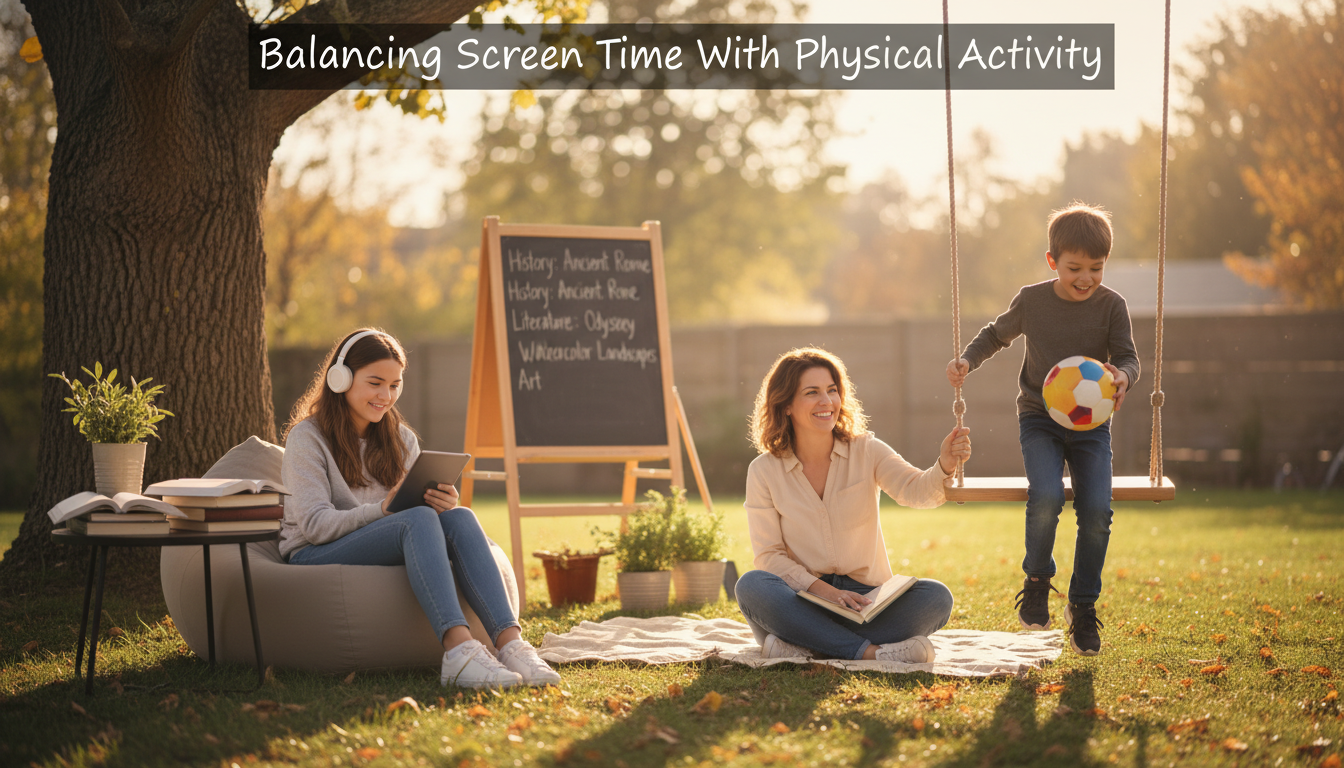
Balancing Screen Time With Physical Activity

Homeschool organization hacks can completely transform your day, and your sanity. When your homeschool runs smoothly, everything from lesson time to cleanup becomes easier and more enjoyable.

At DKM Homeschool Resource, we’ve worked with countless families who felt overwhelmed at first, but found that a few simple systems made all the difference. Let’s walk through the practical strategies that actually work.

What Causes Burnout In Homeschooling Parents?

Burnout in homeschooling parents is usually caused by trying to do too much without clear systems in place. Many parents feel pressure to replicate traditional school at home, leading to long days, cluttered schedules, and constant frustration.

Other common causes include:

  • Lack of structure or inconsistent routines 
  • Trying to manage every subject, grade, and child alone 
  • Overloaded curriculum choices 
  • No clear boundaries between school and home life 
  • Constant comparison to other homeschool families 

When everything feels chaotic, even simple tasks become exhausting. That’s why organization isn’t just helpful, it’s essential.

Here’s the key truth: you don’t need to do more, you need to organize better.

Create A Simple Homeschool Routine (Not A Rigid Schedule)

One of the biggest mistakes we see is parents creating overly detailed schedules that fall apart within days. Life with kids is unpredictable, and rigid plans often lead to frustration.

Instead, focus on a flexible daily rhythm.

Try this simple structure:

  1. Morning Block (Core Subjects)
    • Math, reading, writing 
  2. Midday Break
    • Lunch, outdoor time, free play 
  3. Afternoon Block (Light Learning)
    • Science, history, art, or projects 

This gives your day direction without locking you into exact times.

Quick Tip:
Use anchor points instead of exact hours. For example:

  • “Math happens after breakfast” 
  • “Reading happens before lunch” 

This keeps your day moving, even when things don’t go perfectly.

Declutter Your Homeschool Space (Yes, It Matters)

You don’t need a Pinterest-perfect homeschool room. But you do need a space that isn’t overwhelming.

Too much stuff creates:

  • Decision fatigue 
  • Lost materials 
  • Constant cleanup stress 

Start with a simple reset:

  • Keep only current curriculum within reach 
  • Store extra materials in bins or closets 
  • Limit supplies to what your kids actually use 

Example:
If your child uses the same 5 markers every day, they don’t need access to 40.

Less clutter = clearer thinking for both you and your kids.

Use Weekly Planning Instead Of Daily Panic

Use Weekly Planning Instead Of Daily Panic

Daily planning is one of the fastest ways to feel behind.

Instead, plan your homeschool week in one sitting.

Here’s a simple weekly system:

  • Pick 3–5 priorities for the week 
  • Assign subjects loosely to each day 
  • Leave 1 “catch-up” day open 

Example Weekly Plan:

This removes the pressure of “getting everything done today.”

This is where many parents experience a mindset shift that changes everything. Homeschooling doesn’t have to mirror traditional school in order to be successful. In fact, the more you try to recreate a classroom at home, the more friction you’ll feel in your daily routine.

When you begin to see your homeschool as a flexible learning environment rather than a strict system, your stress level drops significantly. Your children also respond better because the atmosphere feels calmer and more natural.

Over time, this approach builds confidence. Instead of second-guessing every decision, you begin to trust your rhythm, your pacing, and your ability to adjust when needed.

Organize Materials So Kids Can Be Independent

If you’re constantly being asked, “Where is my book?”, your system isn’t working yet.

The goal is independence.

Set up simple systems your kids can follow:

  • Label bins by subject 
  • Use folders for each child 
  • Keep daily materials in one easy-to-access spot 

Simple Setup Example:

  • “Math bin” with workbook + pencil 
  • “Reading basket” with current books 
  • “Art drawer” for creative time 

Game-Changer Tip:
Create a “Daily Basket” for each child with everything they need for that day.

This eliminates 90% of interruptions.

Avoid These Common Homeschool Organization Mistakes

Even with the best intentions, certain habits can make homeschooling harder than it needs to be.

Watch out for these:

  • Overplanning every minute of the day 
  • Buying too many curriculum options at once 
  • Not building in breaks 
  • Trying to teach all children at the same time 
  • Constantly switching systems 

Reality Check:
The most effective homeschool systems are simple, and repeatable.

If it feels complicated, it probably won’t last.

Build Systems That Save You Time Every Week

The secret to staying organized isn’t working harder, it’s creating repeatable systems.

Here are a few that make a big impact:

1. Sunday Reset

  • Prep materials for the week 
  • Review lesson plans 
  • Organize supplies 

2. End-of-Day Reset

  • Put materials back 
  • Clear workspace 
  • Prep for tomorrow 

3. Monthly Declutter

  • Remove unused curriculum 
  • Rotate books 
  • Reorganize supplies 

These small habits prevent overwhelm from building up.

There’s something powerful about walking into your homeschool space and knowing exactly where everything is. It creates a sense of calm that carries into your teaching and your children’s learning.

When your systems are working, you spend less time managing chaos and more time actually connecting with your kids. That’s where the real value of homeschooling shines through.

And here’s the encouraging part, these systems don’t have to be perfect to work. They just need to be consistent.

Simple Steps You Can Take This Week

If you’re feeling overwhelmed, don’t try to fix everything at once. Start small.

Here’s your action plan:

  • Pick ONE area to organize (desk, shelf, or bin) 
  • Create a simple daily routine 
  • Plan next week in one sitting 
  • Remove 25% of unused materials 
  • Set up one system (like daily baskets) 

Progress, not perfection, is what creates momentum.

Many parents hesitate to simplify because they worry they’re not doing enough. But the truth is, simplifying often leads to better results. When your homeschool is manageable, you show up more consistently, and your children learn in a more relaxed environment.

It’s also important to remember that your homeschool will evolve. What works this season may change next year, and that’s completely normal. Flexibility is not failure; it’s part of the process.

The more you give yourself permission to adjust, the more sustainable your homeschool becomes over time.

Homeschool FAQs

FAQ: How do I stay organized while homeschooling multiple children?
The best way to manage homeschooling multiple children is by using shared routines and simple systems like subject bins and daily baskets. Focus on independent work time and rotate your attention. Keeping your homeschool schedule flexible helps reduce stress and keeps everyone on track.

FAQ: What is the best homeschool schedule for beginners?
The best homeschool schedule for beginners is a simple routine with morning core subjects and lighter afternoon activities. Avoid strict time blocks and instead use a flexible homeschool routine. This makes it easier to stay consistent without feeling overwhelmed.

FAQ: How can I reduce homeschool stress quickly?
To reduce homeschool stress quickly, simplify your daily plan, declutter your space, and focus on just a few priorities each day. Using homeschool organization hacks like weekly planning and simple systems can make an immediate difference in how your day feels.

Supporting You Every Step Of The Way

Homeschooling doesn’t have to feel overwhelming or chaotic. With the right organization hacks, you can create a routine that works for your family, and actually enjoy the process along the way.

Start small, stay consistent, and give yourself grace as you build your systems.

At DKM Homeschool Resource, we’re here to support you every step of the way. Explore more of our blog for practical homeschool advice, encouragement, and tools designed to make your journey smoother and more rewarding.

How to Turn Nature Walks Into a Full PE Credit (Unit Study Style)

Nature walks can absolutely count as a full PE credit in your homeschool when you track physical activity, add simple learning components, and build consistent routines. With a unit study approach, walking outdoors becomes exercise, science, observation practice, and even journaling—all wrapped into one simple, enjoyable homeschool habit.

You can turn nature walks into a full homeschool PE credit by scheduling regular walks, tracking active minutes, and adding simple educational elements like observation, journaling, or nature study. Using a unit study approach allows walking to combine physical fitness with science, geography, and mindfulness while meeting homeschool physical education requirements.

Homeschool parents often assume PE has to look like organized sports or formal fitness programs. But the truth is, movement in nature can be one of the most effective—and enjoyable—ways to meet physical education goals.

At DKM Homeschool Resource, we often encourage families to think outside the traditional classroom model. When learning connects to real life and the environment, children stay curious, active, and motivated.

Let’s look at how a simple nature walk can become one of the easiest homeschool credits you’ll ever teach.

How Can You Use The Environment To Support Children’s Learning?

The environment is one of the most powerful teaching tools available to homeschool families. Parks, trails, neighborhoods, and nature preserves provide endless opportunities for movement, observation, and discovery.

When children walk outdoors regularly, they naturally develop:

  • endurance
  • coordination
  • balance
  • curiosity about the world

Instead of separating PE, science, and outdoor play, you can combine them into a unit study experience.

For example, during a nature walk your child might:

  • climb hills or uneven terrain (strength and endurance)
  • observe bird species (science)
  • measure distance walked (math)
  • write about what they saw (language arts)

This approach mirrors how children learn naturally—through exploration and movement.

And the best part? It requires very little planning.

Why Nature Walks Make an Excellent Homeschool PE Credit

Physical education is about developing healthy movement habits, not just structured workouts. Walking regularly outdoors can easily meet those goals.

A typical homeschool PE credit often equals 120–150 hours of physical activity per year. That sounds like a lot, but nature walks make it surprisingly manageable.

For example:

  • 30 minutes a day
  • 4–5 days per week
  • throughout the school year

That adds up quickly.

Nature walks also provide benefits traditional PE sometimes misses.

Physical benefits

  • cardiovascular endurance
  • muscle development from uneven terrain
  • improved posture and balance
  • overall stamina

Mental and emotional benefits

  • stress reduction
  • improved focus for later schoolwork
  • connection to nature
  • creativity and curiosity

Many homeschool parents notice something interesting: kids who walk before lessons often focus better during math and reading.

Movement wakes up the brain.

Creating A Simple Nature Walk Unit Study Plan

Creating A Simple Nature Walk Unit Study Plan

Turning nature walks into a homeschool PE credit doesn’t require a complicated curriculum or detailed lesson plans. In fact, the simpler your system is, the more likely your family will stick with it. The key is building a routine that blends movement, observation, and a little bit of reflection so that each walk supports both physical activity and learning.

Start by choosing a consistent walking schedule that fits naturally into your homeschool rhythm. Many families find that three days a week works well, such as Monday, Wednesday, and Friday mornings. Others prefer shorter walks four days a week. The specific schedule matters less than the consistency. When nature walks become a normal part of the week—just like math or reading—kids begin to expect and enjoy that time outdoors.

Next, decide how long your walks should be. Younger children usually do well with 20–25 minutes of walking, especially if there are interesting things to see along the way. Older elementary and middle school students can easily handle 30–45 minutes, particularly if the trail includes hills, uneven paths, or places to explore. If your child is new to regular walking, start small and gradually build up. Over time, their stamina will increase naturally.

It’s also helpful to keep a simple activity log. This doesn’t have to be complicated or time-consuming. A notebook, spreadsheet, or printable PE tracker works perfectly. After each walk, write down the date, location, and how long your child walked. You might also jot down one or two things they noticed during the walk, such as a bird they spotted or an interesting plant along the trail. These small observations reinforce the learning aspect of the unit study while also giving you documentation for your homeschool records.

Example PE log:

DateLocationMinutes WalkedObservations
Sept 5Local park35Saw ducks and frogs
Sept 7Neighborhood trail30Leaves changing color

Another helpful strategy is adding a gentle weekly focus to your walks. This is what turns the activity into a unit study rather than just exercise. For example, one week you might encourage your child to notice different types of trees. Another week you could focus on insects, weather patterns, or the sounds they hear while walking. The goal isn’t to lecture or turn the walk into a science class. Instead, it simply encourages children to observe the world around them more closely.

Location variety can also make a big difference in keeping nature walks interesting. If possible, rotate between a few nearby spots such as a neighborhood loop, a local park, a wooded trail, or even a school playground after hours. Different environments provide different physical challenges and new things to discover. Walking on dirt paths, hills, gravel trails, or grassy fields naturally strengthens different muscles and keeps kids more engaged than the same flat sidewalk every day.

It can also be helpful to build a short reflection time into your routine after each walk. This doesn’t need to take more than five or ten minutes. Some children enjoy drawing something they saw during the walk, while others prefer writing a few sentences about their favorite moment. Younger children might simply tell you what they noticed while you record it for them. These quick reflections reinforce observation skills and help kids connect physical activity with learning.

One of the best parts of using a nature walk unit study is how easily it adapts to different ages. Younger children might focus on spotting animals or collecting interesting leaves, while older students can track distances, identify plant species, or record weather conditions. This flexibility makes nature walks an ideal activity for families homeschooling multiple children at once.

Most importantly, keep the experience relaxed and enjoyable. Nature walks work best when they feel like an adventure rather than another assignment. When children feel free to explore, ask questions, and move at a comfortable pace, they stay engaged and curious. Over time, those simple walks become a powerful combination of exercise, observation, and meaningful learning—exactly what a homeschool PE unit study is meant to provide.

Activities That Turn a Walk Into a Full Learning Experience

This section is where nature walks really shine. With just a few creative ideas, you can transform a simple walk into a meaningful homeschool activity.

Here are some easy add-ons families love.

1. Nature observation challenge

Ask kids to find:

  • 3 different leaves
  • 2 birds
  • something red in nature
  • something that moves

This keeps children engaged while walking.

2. Distance and mapping

Older students can:

  • track distance with a phone or smartwatch
  • map trails
  • calculate pace

That quietly introduces math skills.

3. Nature journaling

After the walk, spend 5–10 minutes recording observations.

Kids can:

  • draw plants or animals
  • write short descriptions
  • record weather

4. Terrain exploration

Walking on different surfaces builds strength.

Try exploring:

  • wooded trails
  • beaches
  • hills
  • gravel paths

Different terrain engages different muscles.

Insert In-Content Image https://drive.google.com/drive/u/2/folders/1yWaYlYlzGz3njNs4D4UYmRPSGZA80FKf

Common Mistakes Homeschool Parents Make With Outdoor PE

Many families start strong with nature walks but struggle to keep them consistent. Usually it’s because they overcomplicate the process.

One common mistake is turning every walk into a structured lesson. Kids quickly lose interest if every outing requires worksheets, quizzes, or long explanations. Nature walks should feel relaxed and exploratory, with learning happening naturally through conversation and observation.

Another issue is scheduling walks too far away from home. Driving 30 minutes to a park every time quickly becomes exhausting for busy homeschool parents. Instead, rotate between nearby locations like neighborhood loops, local parks, or even schoolyard-style walks around your block.

Finally, some parents underestimate how much walking actually counts toward physical education. A child who walks briskly for 30 minutes through varied terrain is engaging in legitimate cardiovascular exercise. When those minutes are tracked consistently, they absolutely meet homeschool PE requirements.

Simple Ways to Keep Nature Walks Interesting All Year

One reason nature walks work so well in homeschooling is that they change naturally with the seasons. The same trail can offer completely different learning opportunities throughout the year.

In the fall, children notice leaves changing colors, cooler air, migrating birds, and falling acorns. Winter walks may focus on animal tracks, frost patterns, and quiet landscapes. Spring brings wildflowers, insects, and new plant growth, while summer offers longer walks, creek exploration, and early morning adventures before the heat.

Parents often find that children begin to look forward to these seasonal changes. A familiar path becomes a place where kids notice subtle differences from week to week. This kind of observation strengthens attention skills and builds a genuine connection to the natural world.

Nature walks also give homeschool families something incredibly valuable—space to talk. Many parents say their best conversations with their kids happen while walking side by side on a trail. Without the pressure of a desk or worksheet, kids open up, ask questions, and share ideas they might not mention during formal lessons.

Common FAQs

FAQ: Can nature walks really count as homeschool PE?
Yes, nature walks absolutely count toward homeschool physical education when they involve consistent physical activity and are tracked in a PE log. Many homeschool curriculum guidelines allow walking, hiking, and outdoor exploration to count toward a homeschool PE credit.

FAQ: How often should homeschoolers do nature walks for PE?
Most homeschool families aim for 3–5 walks per week lasting 20–45 minutes each. When tracked across the school year, this easily contributes toward the 120–150 hours commonly used for a homeschool PE credit requirement.

FAQ: What should kids learn during a homeschool nature walk?
Nature walks can include light nature study, observation skills, journaling, and basic science topics like plants, insects, or weather patterns. This unit study approach combines physical education with outdoor learning while keeping homeschool lessons engaging.

Making Homeschool Work In Real Life

Homeschooling doesn’t have to feel complicated. Sometimes the best learning experiences happen when families step outside, take a walk, and pay attention to the world around them.

Nature walks offer something special that traditional lessons often miss. They combine movement, curiosity, and discovery in a way that feels natural to children. When used consistently, they can easily become a reliable homeschool PE credit while also supporting science learning, observation skills, and family connection.

At DKM Homeschool Resource, we love helping parents find simple ways to make homeschooling work in real life. Whether you’re just getting started or looking for fresh ideas, there are countless ways to turn everyday activities into meaningful learning experiences.

If you enjoyed this guide, explore more articles on DKM Homeschool Resource for practical homeschool tips, creative unit study ideas, and encouragement for your homeschool journey.