How Waldorf Supports Emotional Development

Waldorf homeschooling supports emotional development by focusing on creativity, imagination, routine, and meaningful human connection. Instead of pushing early academics, it prioritizes emotional maturity, resilience, empathy, and a strong sense of self. For many families, this approach creates calmer homes, happier learners, and children who feel secure exploring the world.

Parents often come to us at DKM Homeschool Resource feeling overwhelmed by the many homeschool philosophies available. Waldorf stands out because it recognizes something many parents instinctively know: emotional development is just as important as academic progress.

Let’s walk through how Waldorf homeschooling nurtures emotional growth and which children tend to thrive most in this learning style.

What Types Of Kids Are Best In Waldorf Homeschooling?

Waldorf homeschooling tends to work beautifully for children who thrive in creative, hands-on environments and who benefit from slower, emotionally grounded learning. Kids who enjoy storytelling, art, nature, movement, and imaginative play often flourish in Waldorf settings.

Children who typically do well in Waldorf homeschooling include:

This doesn’t mean only certain children can succeed in Waldorf. Many families adapt the approach to meet different learning needs.

However, the Waldorf philosophy shines particularly bright for children who:

One parent recently shared with us that her son struggled in traditional schooling because worksheets drained his motivation. Once she introduced Waldorf storytelling and hands-on lessons, his confidence blossomed almost immediately.

Sometimes the difference is simply giving a child the emotional space to grow.

Why Emotional Development Is The Heart Of Waldorf Education

Waldorf education begins with a simple belief: children learn best when they feel emotionally secure.

Many traditional academic systems emphasize memorization and performance early. Waldorf takes a different approach. It focuses on emotional foundations first so children can develop curiosity, confidence, and resilience naturally.

In the early years, Waldorf homeschooling emphasizes:

  • Imaginative play
  • Storytelling
  • Creative expression
  • Daily rhythm and routine
  • Connection with nature

These elements work together to support emotional growth.

For example, storytelling isn’t just entertainment in Waldorf education. Stories help children process emotions, understand relationships, and explore moral ideas safely.

Through stories, children experience:

  • courage
  • kindness
  • perseverance
  • empathy

Those lessons stay with them far longer than worksheets.

Parents often tell us they notice emotional changes quickly once they begin using Waldorf-inspired methods at home. Children who previously resisted learning become curious again when lessons involve movement, art, and imagination instead of rigid structure. Emotional safety creates the mental space kids need to explore and take risks.

When children feel pressured or anxious, their brains shift into survival mode. Learning becomes much harder. Waldorf homeschooling gently removes that pressure and replaces it with rhythm, creativity, and connection.

The result is often calmer learning environments where both parent and child feel more relaxed.

Simple Waldorf Practices That Build Emotional Intelligence

Simple Waldorf Practices That Build Emotional Intelligence

The beauty of Waldorf homeschooling is that parents can begin incorporating it immediately. You don’t need expensive curriculum or complicated schedules.

Here are simple practices that support emotional development right away.

1. Establish a daily rhythm

Children feel emotionally secure when their days have predictable patterns.

A simple Waldorf-inspired rhythm might look like:

Morning rhythm example:

  1. Breakfast together
  2. Morning walk outside
  3. Storytime or read-aloud
  4. Main lesson activity
  5. Creative play

The goal isn’t strict scheduling. The goal is creating a gentle flow children can rely on.

2. Replace lectures with storytelling

Instead of explaining concepts academically, introduce ideas through stories.

Examples:

  • History → tell historical stories
  • Science → nature observation stories
  • Character lessons → fairy tales or fables

Stories speak directly to a child’s emotions.

3. Encourage open-ended creativity

Creative activities help children process feelings and build confidence.

Great Waldorf-style options include:

  • watercolor painting
  • beeswax modeling
  • drawing nature journals
  • simple crafts

You don’t need fancy materials.

Low-cost supplies include:

  • basic watercolor sets
  • colored pencils
  • recycled craft materials
  • homemade play dough

4. Spend time in nature every day

Nature play helps children regulate emotions naturally.

Try:

  • forest walks
  • backyard gardening
  • nature scavenger hunts
  • outdoor journaling

Even 20 minutes outdoors can reset a child’s mood and attention.

Common Mistakes Parents Make When Trying Waldorf Homeschooling

When parents first discover Waldorf education, it’s easy to overcomplicate things.

We see several common mistakes among new homeschool families.

Mistake 1: Trying to recreate a classroom

Waldorf homeschooling is meant to feel natural and home-centered.

You don’t need:

  • desks in rows
  • rigid schedules
  • formal grading

Instead focus on connection and rhythm.

Mistake 2: Buying too many expensive materials

Social media sometimes makes Waldorf look expensive.

But many authentic Waldorf activities use:

  • natural materials
  • handmade items
  • simple supplies

A nature walk and a sketchbook can teach more than a $200 curriculum kit.

Mistake 3: Pushing academics too early

Waldorf delays formal academics intentionally.

Young children benefit more from:

  • movement
  • storytelling
  • imaginative play

Academic learning becomes easier later when emotional readiness is strong.

Mistake 4: Ignoring emotional signals

If a child is overwhelmed, pause the lesson.

Waldorf homeschooling encourages parents to observe their child closely and adjust learning accordingly.

Many parents discover that Waldorf homeschooling transforms their relationship with their children. When learning shifts from performance to connection, children often feel more understood and supported. Instead of battles over worksheets, families begin sharing stories, creative projects, and outdoor adventures together.

This emotional shift can ripple through the entire household. Parents frequently report that their homes feel calmer and more cooperative once they adopt a rhythm-based approach to learning. Emotional development becomes something the whole family experiences together.

Homeschooling suddenly feels less like managing schoolwork and more like living and learning as a family.

Practical Steps To Try Waldorf Homeschooling This Week

If you’re curious about Waldorf but unsure where to start, try these simple steps this week.

Step 1: Introduce a morning story

Choose a simple fairy tale or folk story and read it aloud each morning.

Recommended free resources:

  • local library fairy tale collections
  • Project Gutenberg folk tales
  • classic Grimm stories

Repeat the same story for several days. Children love repetition.

Step 2: Start a nature observation habit

Take a short daily walk and ask your child:

  • What do you notice today?
  • What changed since yesterday?

Encourage drawing observations afterward.

Step 3: Create a simple weekly rhythm

Example beginner rhythm:

  • Monday → nature walk
  • Tuesday → watercolor painting
  • Wednesday → baking together
  • Thursday → storytelling & drawing
  • Friday → outdoor exploration

Consistency helps children feel secure.

Step 4: Reduce unnecessary pressure

If a lesson isn’t working, take a break.

Try:

  • going outside
  • reading together
  • doing a hands-on activity

Learning will still happen.

Step 5: Keep lessons short

Especially for younger children.

Helpful rule of thumb:

  • Ages 6–8 → 20–30 minutes
  • Ages 9–12 → 30–45 minutes

After that, movement and play help reset focus.

Waldorf FAQs 

FAQ: What age works best for Waldorf homeschooling?
Waldorf homeschooling is especially popular for preschool and elementary years because emotional development and imagination are emphasized. Many families begin using Waldorf-inspired homeschooling methods between ages 3–10. However, the philosophy can adapt well to middle school homeschool and even high school homeschool planning.

FAQ: Is Waldorf homeschooling good for sensitive or anxious children?
Yes. Waldorf homeschooling often works extremely well for sensitive children because it reduces academic pressure and focuses on emotional development, creativity, and rhythm. Many homeschool parents find Waldorf methods help anxious learners feel calmer, more confident, and more connected to learning.

FAQ: Do children still learn strong academics with Waldorf homeschooling?
Absolutely. Waldorf homeschooling simply delays formal academics slightly to prioritize emotional readiness. Once children are developmentally ready, academic skills often develop quickly and deeply. Many Waldorf homeschool families find their children retain knowledge better because learning is connected to stories, art, and hands-on experiences.

One Beautiful Path

Every homeschool family’s journey looks a little different, and that’s okay. Waldorf homeschooling is simply one beautiful path that helps nurture emotionally strong, curious, and creative children.

At DKM Homeschool Resource, we believe homeschooling should feel encouraging rather than overwhelming. Small shifts—like adding storytelling, daily rhythm, or nature exploration—can transform the emotional atmosphere of learning in your home.

If you’re exploring Waldorf education or just looking for practical homeschooling tips, we invite you to continue exploring our blog. You’ll find step-by-step guides, creative homeschool ideas, and real-life encouragement from families walking the same path.

Homeschooling doesn’t have to be perfect to be powerful.

And sometimes, the most meaningful learning happens in the quiet moments between lessons.

Circle Time Songs: A Waldorf Homeschool Music Routine for Little Ones

Circle time songs are one of the simplest ways to create a warm, rhythmic Waldorf homeschool routine for young children. Through music, movement, and repetition, you can gently guide your little ones into learning without pressure or worksheets. In just 10–20 minutes a day, circle time builds memory, coordination, and joy.

If you’re feeling overwhelmed trying to “do enough” in your homeschool, take a deep breath. A simple music routine might be exactly what your mornings need.

What Is The Waldorf Method Of Homeschooling?

The Waldorf method of homeschooling is a holistic, developmentally aligned approach to education based on the work of Rudolf Steiner. It emphasizes rhythm, imagination, storytelling, nature, creativity, and delayed academics in the early years.

In practical terms for homeschooling parents, this means:

  • Less early academics and more play-based learning
  • A strong daily rhythm (predictable routines)
  • Storytelling instead of textbooks for young children
  • Art, music, and handwork woven into everyday lessons
  • Seasonal themes connected to nature

At DKM Homeschool Resource, we often tell parents this: Waldorf isn’t about fancy materials. It’s about atmosphere. And circle time songs are one of the easiest ways to create that atmosphere in your home.

Instead of starting your day with worksheets or a rushed transition from breakfast to “school mode,” Waldorf homeschooling invites children into learning through beauty and repetition. Music acts like a bridge between home life and focused activity. It signals that something special is beginning without needing a lecture or a timer. For little ones especially, this gentle transition matters more than any curriculum purchase.

Why Circle Time Songs Matter In A Waldorf Homeschool

Circle time songs are not just “cute activities.” They serve a developmental purpose.

Young children learn through imitation, movement, and repetition. When you sing the same seasonal songs each day, your child:

  • Builds memory naturally
  • Strengthens language development
  • Develops rhythm and coordination
  • Feels secure through predictability
  • Connects emotionally with you

The power of repetition is often underestimated. But in early childhood education, repetition builds mastery.

Imagine this scenario:
Your four-year-old resists math worksheets. But when you sing a counting song while clapping and marching in a circle, they participate happily. That’s Waldorf learning in action.

Music allows concepts to be absorbed without pressure. And circle time songs create consistency — something little ones crave.

Here’s something many new homeschoolers don’t realize: children behave better when they know what comes next. A daily circle time routine becomes an anchor point in the day. Even on chaotic mornings, you can reset the atmosphere by lighting a candle, gathering together, and beginning your familiar song sequence. That predictability lowers stress for both parent and child.

How To Create A Simple Waldorf Circle Time Routine

How To Create A Simple Waldorf Circle Time Routine

Good news: you do NOT need musical talent.

You need consistency.

A Waldorf circle time routine can be as short as 10–15 minutes. The key is keeping it simple and seasonal.

Here’s a basic structure you can use this week:

  1. Opening verse or welcome song
  2. Seasonal fingerplay or movement rhyme
  3. 2–3 themed songs (weather, nature, animals, counting)
  4. Simple movement activity (marching, clapping, swaying)
  5. Closing verse

That’s it.

Practical Tips for Busy Parents

  • Use the same songs for 3–4 weeks before changing them.
  • Choose 5 songs total — not 20.
  • Keep a printed sheet in a binder so you’re not scrambling.
  • Sing even if you feel awkward. Your child doesn’t care.

A sample fall circle time might include:

  • “Good Morning Dear Earth”
  • A leaf fingerplay
  • A harvest counting song
  • Marching like woodland animals
  • A gratitude closing verse

If you’re new, start with just three songs. Add more later.

One common mistake we see? Parents change songs too often. When you rotate weekly, children never fully internalize the material. Let the repetition do the heavy lifting. Familiarity builds confidence.

Seasonal Circle Time Song Ideas For Little Ones

Waldorf homeschooling strongly follows the rhythm of the seasons. Your circle time songs should reflect that.

Fall Song Themes

  • Harvest songs
  • Leaf and wind rhymes
  • Squirrel or pumpkin songs
  • Apple counting songs

Winter Song Themes

  • Snowflake fingerplays
  • Gentle lullaby-style songs
  • Candle or light verses
  • Animal hibernation songs

Spring Song Themes

  • Bird songs
  • Rain rhythm chants
  • Garden planting songs
  • Counting flowers

Summer Song Themes

  • Sunshine songs
  • Water play rhymes
  • Picnic movement songs
  • Bug-themed fingerplays

You don’t need expensive materials. Many beautiful Waldorf-inspired songs are available:

  • Free YouTube recordings (search “Waldorf circle time songs”)
  • Local library children’s music CDs
  • Pinterest seasonal verse collections
  • Affordable Waldorf homeschooling books

Keep it low-cost and simple. The magic is in your presence — not the playlist.

Another beautiful aspect of seasonal circle time is how it connects your homeschool rhythm to the natural world. Children begin to anticipate changes outside because they experience them through song first. When you sing about falling leaves for several weeks, the first crisp breeze feels meaningful. Music becomes a way to mark time in a child-centered, gentle way.

Common Mistakes Parents Make With Circle Time

Let’s save you frustration.

Here are mistakes we frequently see beginner homeschooling parents make:

  • Making circle time too long
  • Overcomplicating it with props and instruments
  • Expecting perfect behavior
  • Quitting after a week

Little ones have short attention spans. If your preschooler melts down at minute 18, that’s not failure. It’s feedback.

Keep it short.

Another mistake? Turning circle time into performance mode. Waldorf homeschooling is about relationship, not presentation. You don’t need elaborate felt boards or Pinterest-perfect setups. Your steady voice and calm tone are enough.

Children may wander at first. That’s okay. Keep singing. Over time, they will join in naturally.

And please hear this clearly: it is normal to feel silly singing alone in your living room. Almost every homeschooling parent does at first. But within days, the rhythm feels natural.

When parents stick with it for two to three weeks, something shifts. The children begin to anticipate their favorite songs. They start filling in the words. They request the squirrel verse again. That’s when you know it’s working. Circle time stops feeling like an activity and starts feeling like part of your family culture.

Simple Steps To Start This Week

If you’re feeling inspired but unsure where to begin, here’s your action plan:

Step 1: Choose 3 songs today.
Don’t overthink it. Pick simple, repetitive songs.

Step 2: Print the lyrics.
Keep them in one binder labeled “Circle Time.”

Step 3: Pick a consistent time.
After breakfast works well for most families.

Step 4: Set the atmosphere.
Light a candle or ring a small bell to signal the start.

Step 5: Commit to 2 weeks.
Do not change songs during that time.

That’s manageable, even for overwhelmed parents.

If you have multiple ages, involve older siblings as helpers. They can model gestures and help lead motions. This builds leadership skills naturally.

You’ll likely notice benefits beyond academics:

  • Smoother transitions
  • Fewer morning power struggles
  • Stronger family connection
  • A calmer start to your homeschool day

And that ripple effect matters.

FAQ: How long should Waldorf circle time be for preschoolers?
For preschoolers in a Waldorf homeschool, circle time should last 10–15 minutes. Young children thrive on short, rhythmic routines rather than long lessons. Consistency matters more than duration, especially when building a gentle homeschool rhythm with music and movement.

FAQ: Do I need instruments for Waldorf circle time songs?
No, instruments are optional. Many Waldorf homeschooling families use simple items like a wooden xylophone, rhythm sticks, or a bell, but your voice is enough. The focus is on connection, seasonal songs, and repetition — not performance or equipment.

FAQ: Can circle time songs count as part of my homeschool curriculum?
Absolutely. Circle time songs support early literacy, counting skills, memory, motor development, and social-emotional learning. In a Waldorf homeschool, music is not extra — it’s foundational to the daily rhythm and early childhood education experience.

Keep Learning With DKM Homeschool Resource

Circle time songs may seem small, but they create powerful shifts in your homeschool atmosphere. Through music, repetition, and seasonal rhythm, you’re building security, confidence, and joy in your little ones. And you’re doing it in a way that feels gentle and sustainable.

If you’re just starting your homeschooling journey, remember: you don’t need to replicate anyone else’s setup. Start small. Keep it simple. Stay consistent.

At DKM Homeschool Resource, we’re here to help you create a homeschool rhythm that works in real life — not just on Instagram. Explore more of our blogs for practical homeschooling help, encouragement, and easy-to-implement resources. Your homeschool can feel calm, connected, and joyful — and we’ll walk alongside you every step of the way.

How to Teach Poetry: Charlotte Mason vs Waldorf vs Traditional

Poetry is more than just pretty words on a page—it’s a way for children to explore language, emotions, and imagination. When taught thoughtfully, it can spark a lifelong love of reading, writing, and creative expression. For homeschool families, teaching poetry offers a unique opportunity to connect learning with everyday life, making verses come alive rather than staying stuck in a textbook.

Different educational philosophies approach poetry in very different ways, and understanding these methods can help you choose what works best for your child. Charlotte Mason emphasizes rich literature, narration, and thoughtful reflection, while Waldorf encourages creativity, rhythm, and artistic expression. Traditional approaches, on the other hand, often focus on literary devices, structure, and analysis. Each has its strengths, and knowing the differences can make your poetry lessons both fun and meaningful.

In this blog, we’ll dive into how Charlotte Mason, Waldorf, and Traditional methods teach poetry, including practical examples, age-appropriate strategies, and tips for parents. Whether you’re looking to inspire imagination, build analytical skills, or simply make poetry a joyful part of your homeschool day, this guide will help you find the approach—or combination of approaches—that fits your family best.

What is the Difference Between Waldorf and Charlotte Mason?

Charlotte Mason and Waldorf education both celebrate a child’s natural curiosity and love of learning, but they approach poetry in very different ways.

Charlotte Mason focuses on connecting children with “living books” and meaningful literature. Poetry lessons often include:

  • Reading short, carefully chosen poems aloud.
  • Having children narrate the poem in their own words.
  • Encouraging thoughtful reflection and discussion.
  • Using copywork to help children notice word choice and rhythm.

This method helps children internalize meaning, build comprehension skills, and develop a personal connection to the words. For example, a child might read Robert Louis Stevenson’s “The Swing”, then retell it in their own words, noticing the imagery and flow of the poem.

Waldorf education takes a more creative, hands-on approach. Poetry is often combined with art, music, and movement. Activities might include:

The goal in Waldorf is to make poetry a living, sensory experience that engages the mind, body, and emotions. A single poem can become a full creative project, turning reading into an imaginative experience.

Key differences at a glance:

  • Charlotte Mason: Emphasizes comprehension, reflection, narration, and discussion.
  • Waldorf: Emphasizes imagination, artistic expression, rhythm, and sensory engagement.
  • Charlotte Mason focuses on understanding the poem, while Waldorf focuses on experiencing it.

Understanding these differences can help you decide which method fits your child best—or even combine elements of both for a richer poetry experience.

Approach to Teaching Poetry

Traditional Approach to Teaching Poetry

The traditional approach to teaching poetry is often what many people remember from their own school days. It emphasizes analysis, structure, and literary techniques, helping students understand the mechanics of language and the building blocks of a poem. Unlike Charlotte Mason, which focuses on living books, or Waldorf, which emphasizes creativity and sensory experiences, the traditional method tends to be more structured and academic.

In a traditional poetry lesson, students might focus on:

  • Memorization: Learning poems by heart to appreciate rhythm, rhyme, and sound patterns.
  • Literary devices: Identifying metaphors, similes, alliteration, imagery, and other poetic tools.
  • Analysis: Breaking down the poem’s structure, meaning, and themes.
  • Written responses: Answering questions about the poem’s content, style, or emotional impact.

This approach is particularly useful for older children who are ready to explore deeper literary concepts. It builds strong analytical skills and a clear understanding of how poetry works. For example, when reading William Wordsworth’s “I Wandered Lonely as a Cloud”, a student might:

  • Identify the rhyme scheme and meter.
  • Highlight literary devices, like similes and personification.
  • Write a short paragraph explaining how the imagery conveys the poet’s emotions.

While this method can sometimes feel rigid, it provides valuable skills that help students engage with poetry on a more technical level. It also complements other learning styles—for instance, a Charlotte Mason approach can be combined with traditional analysis for older students who are ready to reflect critically after enjoying a poem creatively.

Practical strategies for teaching poetry the traditional way include:

  • Start with short poems: Choose accessible poems before moving on to longer or more complex works.
  • Discuss vocabulary: Make sure students understand unusual words or phrases before analyzing.
  • Encourage comparison: Compare two poems to see how different poets approach similar themes.
  • Incorporate writing: Have students try writing their own poems using the same structure or literary devices.
  • Use guided questions: Ask questions like, “What feelings does this poem evoke?” or “Which words create imagery?”

The traditional method also helps students develop strong reading comprehension, critical thinking, and writing skills. When combined with more creative approaches, it can give children a well-rounded understanding of poetry—from appreciating its beauty to understanding its craft.

Ultimately, the traditional approach provides a solid foundation for analyzing and understanding poetry, while still allowing room for creativity. By balancing structure with imagination, parents can help their children not only enjoy poetry but also master its deeper meaning and technical artistry.

Age-Appropriate Poetry Teaching

One of the most important considerations when teaching poetry is choosing poems that fit your child’s age and developmental stage. Children experience language and imagination differently as they grow, and tailoring poetry lessons to their level helps them connect with the material without feeling frustrated or bored. Both Charlotte Mason and Waldorf approaches, as well as traditional methods, recognize the value of age-appropriate content—but they approach it in unique ways.

Early Childhood (Ages 3–7):

  • Focus on rhythm, rhyme, and repetition to build language skills.
  • Choose short, playful poems or nursery rhymes that are easy to memorize.
  • Encourage dramatic reading, singing, or movement to bring poems to life.
  • Examples: Robert Louis Stevenson’s “The Swing” or classic Mother Goose rhymes.

At this stage, Waldorf-inspired activities shine because young children learn best through sensory experiences. Acting out a poem, drawing scenes inspired by verses, or clapping to a rhythmic chant can make poetry exciting and memorable. Charlotte Mason’s narration may be introduced gently, such as asking the child to retell a short poem in their own words after hearing it read aloud.

Middle Childhood (Ages 8–12):

  • Introduce slightly longer poems with more complex imagery.
  • Encourage children to reflect on meaning and emotions, using narration or discussion.
  • Begin to point out simple literary devices, like alliteration or similes.
  • Examples: Emily Dickinson’s short poems or A.A. Milne’s “When We Were Very Young”.

Charlotte Mason’s method works well here, helping children analyze and reflect on poems while still enjoying the story or imagery. Traditional methods can also be incorporated, like identifying literary devices or practicing copywork, but it’s important to keep lessons engaging rather than overly technical.

Adolescence (Ages 13+):

  • Introduce longer, more challenging poems with advanced themes.
  • Focus on literary analysis, symbolism, and style, alongside personal reflection.
  • Encourage creative responses, like writing original poems or performing dramatic readings.
  • Examples: William Wordsworth, Robert Frost, or Shakespeare’s sonnets.

At this age, combining approaches can be particularly effective. Waldorf activities keep creativity alive, Charlotte Mason methods build comprehension and reflection, and traditional approaches develop analytical skills and technical understanding.

Tips for All Ages:

  • Let the child’s interests guide poem selection.
  • Read aloud daily to build familiarity and enjoyment.
  • Mix methods—visual, auditory, and written activities keep lessons dynamic.
  • Celebrate effort, not just memorization or analysis, to foster a lifelong love of poetry.

By choosing age-appropriate poems and activities, parents can help children feel confident, inspired, and connected to poetry at every stage of their learning.

Methods of Engaging Students with Poetry

Methods of Engaging Students with Poetry

Teaching poetry isn’t just about reading words on a page—it’s about helping children experience the rhythm, meaning, and beauty of language. Different educational philosophies offer unique ways to make poetry engaging, and parents can mix and match methods to suit their child’s learning style. Charlotte Mason, Waldorf, and traditional approaches each provide tools to spark interest and deepen understanding.

Charlotte Mason: Reflection and Narration

Charlotte Mason’s approach emphasizes thoughtful engagement and comprehension. She believed that children learn best by interacting with “living books” and retelling ideas in their own words. Methods include:

  • Narration: After reading a poem aloud, ask your child to retell it in their own words. This encourages careful listening, attention to detail, and personal interpretation.
  • Copywork: Have children copy the poem neatly into a notebook. This helps them notice word choice, punctuation, and rhythm.
  • Discussion: Ask open-ended questions, like “What feelings does this poem give you?” or “Which words paint the clearest picture?”
  • Reading aloud: Regularly read poetry aloud together to model expression, tone, and pacing.

For example, after reading A.A. Milne’s “Now We Are Six”, your child might narrate the story of a favorite poem, then copy their favorite lines and explain why they like them. This method encourages comprehension and connection to the words.

Waldorf: Creativity and Sensory Experience

Waldorf education focuses on imagination, movement, and artistic expression. Poetry lessons are hands-on and multi-sensory, helping children experience the poem fully. Activities can include:

  • Dramatization: Act out the poem as a short skit or puppet play.
  • Art integration: Draw or paint scenes inspired by the poem’s imagery.
  • Rhythm and song: Recite poems with clapping, movement, or musical accompaniment to emphasize cadence.
  • Storytelling games: Transform the poem into a story to be acted out or illustrated in a creative notebook.

For example, after reading “The Swing” by Robert Louis Stevenson, a child could paint themselves swinging through the clouds, recite the poem while moving like a swing, or even create a short song inspired by the verses. This approach helps poetry feel alive and fun.

Traditional: Analysis and Structure

The traditional approach focuses on literary skills, encouraging children to understand the craft behind the poem. Methods include:

  • Identifying literary devices: Point out metaphors, similes, imagery, and rhyme.
  • Structural analysis: Examine stanza patterns, meter, or rhyme schemes.
  • Written responses: Have children answer questions or write short reflections on the poem.
  • Comparisons: Compare two poems to discuss theme, tone, or style.

For instance, while studying Robert Frost’s “Stopping by Woods on a Snowy Evening”, students might identify the ABAB rhyme scheme, discuss the symbolism of the woods, and write a short paragraph about how the poem’s imagery makes them feel.

Combining Approaches

Many parents find that blending methods works best. You might start with a Waldorf-style dramatization to spark excitement, then use Charlotte Mason narration to reflect on meaning, and finish with a brief traditional analysis to explore literary devices. The key is keeping lessons dynamic, interactive, and enjoyable, while encouraging a love of poetry alongside skill development.

By engaging students through multiple methods—creative, reflective, and analytical—parents can help children connect to poetry in a meaningful way, making it both enjoyable and educational.

Benefits of Each Approach

Teaching poetry can be both joyful and educational, but each method—Charlotte Mason, Waldorf, and traditional—offers unique benefits. Understanding what children gain from each approach can help parents decide which style, or combination of styles, works best for their homeschool.

Charlotte Mason: Thoughtful Reflection and Love of Literature

Charlotte Mason’s approach emphasizes comprehension, narration, and personal connection to poems. Key benefits include:

  • Deep understanding: Children learn to think critically about language, meaning, and imagery.
  • Retention and memory: Narration and copywork help internalize poems naturally.
  • Love of reading: Exposure to rich, “living” poems fosters a lifelong appreciation for literature.
  • Vocabulary development: Engaging with carefully chosen words helps expand language skills.

For example, a child narrating Emily Dickinson’s short poems not only recalls the story but also reflects on the emotions behind the words, making the lesson both intellectually and emotionally engaging.

Waldorf: Creativity, Imagination, and Sensory Learning

Waldorf’s creative approach makes poetry a multisensory experience, which benefits children in several ways:

  • Enhanced imagination: Acting, drawing, and movement allow children to connect with poetry in unique ways.
  • Emotional expression: Engaging with poetry through art or dramatization helps children express feelings safely.
  • Memory and rhythm: Repetition, songs, and gestures help children remember poems naturally.
  • Holistic learning: Combines mind, body, and emotions, making learning more immersive.

For instance, reciting a poem while creating a watercolor illustration helps a child see the words visually, hear them aloud, and feel the movement, reinforcing learning in multiple ways.

Traditional: Analytical Skills and Literary Knowledge

Traditional poetry instruction focuses on structure and literary analysis, which builds strong academic skills:

  • Critical thinking: Children learn to interpret meaning, identify symbols, and examine poetic techniques.
  • Understanding of literary devices: Helps children recognize metaphors, rhyme schemes, and meter.
  • Writing skills: Analyzing and responding to poetry improves composition and articulation.
  • Preparation for advanced studies: Builds a strong foundation for high school literature or standardized testing.

For example, analyzing Robert Frost’s “The Road Not Taken” teaches children about symbolism, metaphor, and the poet’s intention, giving them tools to discuss and write about literature confidently.

Combining the Approaches

Many homeschool parents find that a balanced mix of all three approaches offers the best results:

  • Start with a Waldorf activity to spark excitement.
  • Follow with Charlotte Mason narration to encourage reflection.
  • Finish with traditional analysis to explore structure and devices.

This combination allows children to enjoy poetry creatively, understand it deeply, and develop analytical skills—all while maintaining a love for language and literature.

By recognizing the unique benefits of each method, parents can create a poetry learning experience that is both educational and enjoyable, helping children develop a lifelong connection to the beauty and power of words.

Challenges and Considerations

While teaching poetry can be rewarding, each educational approach comes with its own set of challenges. Understanding these potential obstacles can help parents plan lessons that are engaging, effective, and appropriate for their child’s learning style.

Charlotte Mason: Potential Challenges

Charlotte Mason’s focus on narration, reflection, and living books has many benefits, but there are a few things to keep in mind:

  • Limited formal analysis: Children may not naturally learn about literary devices like rhyme, meter, or symbolism unless parents introduce them deliberately.
  • Short attention span required: Narration works best with shorter poems, so longer or more complex works may need extra support.
  • Preparation time: Choosing high-quality, meaningful poems and planning narration activities can require more preparation than just using a textbook.

Tip: Supplement Charlotte Mason poetry lessons with brief discussions about literary devices or occasional copywork exercises to strengthen technical understanding.

Waldorf: Potential Challenges

Waldorf education emphasizes creativity and sensory experiences, which can be incredibly engaging but also comes with considerations:

  • Less focus on analysis: Children may enjoy acting out or illustrating poems but might not always develop strong analytical skills.
  • Requires active involvement: Parents or teachers need to guide dramatizations, art projects, and movement activities, which can be time-consuming.
  • Limited exposure to written poetry skills: Without intentional instruction, children may have less experience with reading comprehension, copywork, or written responses.

Tip: Balance Waldorf-inspired lessons with short reflection questions or narration to ensure children connect the creative experience with comprehension.

Traditional: Potential Challenges

Traditional poetry teaching emphasizes structure, literary devices, and analysis. While academically strong, it can have some drawbacks:

  • Can feel rigid or boring: A focus on worksheets, memorization, and analysis may feel dry or overwhelming for younger learners.
  • Less imaginative engagement: Children may struggle to connect emotionally or creatively with poems if lessons are too structured.
  • May discourage reluctant readers: Some students may feel frustrated if they don’t enjoy analytical work or find it difficult.

Tip: Incorporate creative or playful elements alongside structured analysis, like acting out stanzas, drawing scenes, or using music to reinforce rhythm and imagery.

Finding the Right Balance

The key is flexibility. Parents can mix elements from different approaches to address challenges while keeping lessons engaging and meaningful. For example:

  • Combine Waldorf creativity with Charlotte Mason narration to encourage both imagination and reflection.
  • Add short traditional analysis exercises for older children to strengthen literary skills.
  • Adjust activities based on your child’s interests, attention span, and learning style.

By being mindful of each approach’s challenges, parents can create a poetry learning experience that is both enjoyable and effective, helping children develop a lifelong appreciation for language, expression, and creativity.

Practical Tips for Parents

Teaching poetry at home can feel intimidating at first, but with a few simple strategies, you can make lessons enjoyable, meaningful, and tailored to your child’s learning style. Whether you follow Charlotte Mason, Waldorf, traditional methods, or a mix of all three, these tips will help you get the most out of your poetry time.

Choose Poems That Match Your Child’s Age and Interests

  • Young children (ages 3–7): Focus on rhymes, rhythm, and playful language. Nursery rhymes and short, lively poems work best.
  • Middle childhood (ages 8–12): Introduce slightly longer poems with clear imagery and gentle themes. Ask questions to spark reflection.
  • Adolescents (ages 13+): Explore more complex works with symbolism, emotion, and advanced literary techniques. Encourage independent reading and analysis.

Choosing poems your child finds interesting makes lessons feel natural, not forced.

Mix Learning Methods

  • Combine Charlotte Mason narration with Waldorf creative activities and traditional analysis.
  • For example, read a poem aloud, let your child act it out, then discuss its meaning and identify literary devices.
  • Mixing approaches keeps lessons dynamic and engages different learning styles.

Make Poetry Interactive

  • Use movement, such as acting out lines, clapping rhythms, or marching to meter.
  • Encourage artistic expression, like drawing scenes inspired by the poem or creating simple illustrations.
  • Incorporate music, singing, or chanting to reinforce rhythm and memory.

Interactive activities help children connect emotionally and physically with the poem, making it more memorable.

Incorporate Reflection and Discussion

  • Ask open-ended questions: “What do you picture when you read this?” or “How does this poem make you feel?”
  • Encourage children to narrate the poem in their own words or write a short reflection.
  • Reflection builds comprehension, empathy, and critical thinking.

Use Repetition and Memorization Strategically

  • Encourage short poems or favorite stanzas to be memorized gradually.
  • Recitation helps children internalize rhythm, rhyme, and language patterns.
  • Make memorization fun with games, contests, or performances for family members.

Celebrate Creativity and Effort

  • Focus on enjoyment and personal connection rather than just “getting it right.”
  • Praise creativity, expression, and thoughtful reflections.
  • Let children choose poems that speak to them and share their interpretations.

Keep a Poetry Journal

  • Collect poems, reflections, drawings, or memorized stanzas in one notebook.
  • Revisiting past entries allows children to see growth, remember favorites, and feel proud of their work.

By combining these practical tips, parents can create a poetry learning experience that is engaging, balanced, and effective. Children will not only develop literacy and analytical skills but also gain a lifelong love for the beauty and rhythm of words.

Examples of Lesson Plans

Sometimes the best way to understand different approaches to teaching poetry is to see them in action. Here are three sample lesson plans—Charlotte Mason, Waldorf, and Traditional—that you can adapt for different ages. You can also mix elements from each for a richer experience.

Charlotte Mason Poetry Lesson

Charlotte Mason emphasizes reflection and narration. A great poem to try is Robert Louis Stevenson’s “The Swing.” Start by reading the poem aloud slowly, paying attention to rhythm and tone.

Next, have your child retell the poem in their own words. Ask them to describe the images or emotions it brings to mind. You can follow up with a short discussion, such as “Which words make the swinging feel real?” or “What picture do you see in your mind?”

Finally, encourage copywork. Writing the poem carefully in a notebook helps your child notice punctuation, spelling, and rhythm. For an extra creative twist, they can draw a picture of the scene or write a sentence about what it feels like to swing like the child in the poem.

Waldorf Poetry Lesson

Waldorf lessons make poetry a sensory and imaginative experience. A.A. Milne’s “Now We Are Six” works perfectly. Begin by reading the poem aloud with gestures or expressive tone.

Next, have your child act out the verses, use simple props, or perform a puppet show. Then, invite them to illustrate the poem with drawings or watercolors, focusing on the mood and imagery.

To reinforce rhythm, try reciting the poem together with clapping, tapping, or gentle movement. For a creative extension, your child can write a short verse inspired by the poem. This approach engages imagination, movement, and emotion, making poetry fun and memorable.

Traditional Poetry Lesson

The traditional approach emphasizes structure, literary devices, and analysis. Robert Frost’s “Stopping by Woods on a Snowy Evening” is an ideal example. Start by reading the poem aloud and discussing its tone and imagery.

Help your child identify literary techniques, like metaphor, simile, and rhyme. Then, ask them to write a short reflection about how the poem makes them feel or what they think the poet means. Older students can compare this poem with another on a similar theme to explore differences in style, tone, and technique.

Combining Approaches

Blending these approaches often works best. For example, start with a Waldorf dramatization to spark creativity, follow with Charlotte Mason narration to reflect on meaning, and finish with a traditional analysis to explore structure.

This way, children experience poetry in multiple ways: creatively, thoughtfully, and analytically. They build a love for language while developing the skills to understand it deeply.

Bringing Poetry to Life in Your Homeschool

Teaching poetry at home can be both joyful and meaningful. Charlotte Mason, Waldorf, and traditional approaches each offer unique ways to help children connect with language, rhythm, and imagination. Charlotte Mason encourages reflection, narration, and careful attention to words. Waldorf brings poetry to life through movement, art, and creative expression. Traditional methods build analytical skills and a deeper understanding of literary structure.

The beauty of homeschooling is that you don’t have to stick to just one approach. Many parents find that blending methods works best. You might start with a playful, Waldorf-inspired dramatization, follow with a Charlotte Mason-style discussion, and finish with a traditional analysis of literary devices. This combination keeps lessons engaging, fun, and educational.

Remember, the goal isn’t just memorizing poems or completing worksheets—it’s helping your child experience poetry in ways that spark curiosity, creativity, and a love of language. Let their interests guide the lessons, celebrate their efforts, and keep the experience positive.

By thoughtfully choosing poems, adjusting activities for age and skill level, and mixing approaches, you can create a poetry-rich homeschool environment. Your child will not only enjoy the beauty of words but also develop skills in comprehension, imagination, and critical thinking.

Poetry doesn’t have to be intimidating or rigid. With the right balance of creativity, reflection, and structure, it can become a joyful part of your homeschool day—one that your child carries with them for a lifetime.

What To Do If You Love Waldorf But Your Child Needs Structure

If you’re drawn to Waldorf education but keep thinking, “This is beautiful… and also not working for my child,” you’re not alone. Many parents who feel called to Waldorf ideals eventually realize that structured Waldorf homeschooling may be the missing bridge between inspiration and day-to-day reality. You might love the stories, the art, the nature focus, and the gentle rhythms—yet your child melts down without clear expectations, predictable lessons, or firm boundaries. That tension can feel confusing, especially when you’re trying to honor your child and your educational values.

This is an especially common experience for families homeschooling children who are neurodivergent, highly energetic, anxious, or simply wired to need clarity. Loving Waldorf doesn’t mean you have to choose chaos. It also doesn’t mean you’ve failed if your child needs more structure than traditional Waldorf models suggest. In fact, many families thrive when they adapt Waldorf principles to include clearer scaffolding, stronger routines, and more explicit guidance.

Structured Waldorf Homeschooling: Reframing What “Structure” Really Means

One of the biggest misconceptions about Waldorf education is that structure and freedom are opposites. In reality, Waldorf philosophy has always relied on structure—just not the kind that looks like schedules, checklists, and academic benchmarks. When we talk about structured Waldorf homeschooling, we’re not talking about abandoning imagination or creativity. We’re talking about making the invisible supports visible for children who need them.

Some children intuitively absorb rhythm and expectations without much explanation. Others need those rhythms spelled out, repeated consistently, and reinforced with clear boundaries. This is not a failure of Waldorf—it’s simply a mismatch between method and learner. When parents recognize this early, they can adapt without losing the heart of what they love.

Structure, in this context, means predictability and clarity. It means your child knows what comes next, what is expected, and how long something will last. It doesn’t mean rigid academics or pressure-filled lessons. In fact, for many children—especially those with ADHD—structure reduces stress and increases emotional regulation.

A Waldorf homeschool for ADHD often works best when rhythm is paired with explicit cues. Instead of assuming the child will “feel” the flow of the day, you show it. You name it. You repeat it. You anchor it in physical routines. This actually frees the child to engage more deeply with imaginative work because they’re not constantly trying to figure out what’s happening next.

When Waldorf Feels Right But Daily Life Feels Hard

Many parents describe a deep emotional connection to Waldorf education. The stories feel meaningful. The seasonal festivals feel grounding. The emphasis on beauty, handwork, and nature feels like an antidote to modern overstimulation. And yet, daily homeschool life can feel exhausting when your child resists transitions, avoids tasks, or becomes dysregulated without clear limits.

Children who struggle with attention, executive functioning, or emotional regulation often want to cooperate but can’t without support. A lack of structure doesn’t feel freeing to them—it feels unsafe. This is why some children appear to “push back” against Waldorf-inspired homeschooling when, in reality, they’re asking for clearer signals.

It’s important to remember that needing structure does not mean your child is “too academic” for Waldorf. It means they need stronger outer structure so their inner world can relax. Once that happens, imagination and creativity often increase, not decrease.

How To Add Structure Without Losing The Waldorf Heart

This is where many parents get stuck, so let’s get practical. Waldorf with more structure is not about layering on worksheets or abandoning artistic work. It’s about strengthening the container so your child can thrive inside it.

How To Add Structure Without Losing The Waldorf Heart

Here are concrete ways to do that:

  • Make the daily rhythm visible
    Instead of relying on an unspoken flow, show the rhythm with pictures, a chalkboard drawing, or a simple daily chart. This helps children who struggle with transitions feel grounded.
  • Name transitions clearly and consistently
    Use the same words every day: “First circle time, then main lesson, then snack.” Predictable language builds security.
  • Shorten lesson blocks but keep them consistent
    A 20–30 minute focused lesson done daily is far more effective than a long, loosely defined block that varies each day.
  • Use strong opening and closing rituals
    Songs, verses, candles, or movement cues signal when learning begins and ends. These boundaries are deeply regulating for many children.
  • Add gentle time boundaries
    Sand timers, visual timers, or songs with a known length help children understand duration without pressure.
  • Be explicit about expectations
    Instead of assuming imitation will happen naturally, calmly explain what participation looks like. Clarity is not anti-Waldorf—it’s supportive.

These adjustments don’t dilute Waldorf education. They translate it into a language your child can understand.

Waldorf Homeschool For ADHD And High-Needs Learners

A Waldorf homeschool for ADHD can be deeply healing when adapted thoughtfully. Children with ADHD often thrive with movement, rhythm, sensory input, and imaginative learning—all core Waldorf strengths. The challenge arises when structure is too subtle for their nervous system to hold onto.

For these children, external structure creates internal freedom. Clear routines reduce anxiety. Predictable lessons reduce resistance. Consistent expectations reduce power struggles. Once the child feels safe in the structure, creativity can emerge naturally.

It’s also helpful to release the idea that your homeschool needs to look like a textbook Waldorf classroom. Your child’s needs matter more than aesthetic purity. Waldorf principles were never meant to override the real child in front of you.

Many parents find success by blending Waldorf elements with gentle executive-function supports. This might include checklists, visual schedules, or explicit modeling—used quietly and respectfully. When done well, these tools don’t disrupt the Waldorf feel; they support it.

What Structured Waldorf Homeschooling Can Look Like Day To Day

Let’s zoom in on what this might look like in real life, not theory.

A structured Waldorf homeschool day might still begin with a verse, movement, or song. The difference is that this happens at the same time every day, in the same place, with the same expectations. The main lesson follows a familiar pattern, even if the content changes. Handwork, outdoor time, and artistic work are protected, not squeezed out.

Here are examples of how structure can support the flow:

  • A consistent weekly rhythm
    Baking day, painting day, nature walk day—predictable weekly anchors reduce decision fatigue.
  • Clear lesson patterns
    For example: review → story → activity → closing verse. The child learns the shape of learning.
  • Built-in movement breaks
    Especially important for ADHD learners, planned movement prevents constant disruption.
  • Defined start and stop points
    Children know when something will end, which makes it easier to stay engaged.
  • One clear focus per lesson
    Simplicity reduces overwhelm and supports mastery.

This kind of structure doesn’t make homeschooling rigid. It makes it humane.

Read More Homeschool Support and Encouragement at DKM Homeschool Resource

Loving Waldorf while recognizing your child’s need for structure is not a contradiction. It’s a sign that you’re paying attention. Structured Waldorf homeschooling allows you to hold onto the beauty, imagination, and depth you value while giving your child the clarity and support they need to thrive. When structure and warmth work together, homeschooling becomes calmer, more sustainable, and far more joyful.

If this resonated with you, be sure to read more of our blogs here at DKM Homeschool Resource. We share practical homeschool strategies, gentle adaptations, and real-life encouragement to help you create a homeschool that truly fits your child—not just a philosophy.

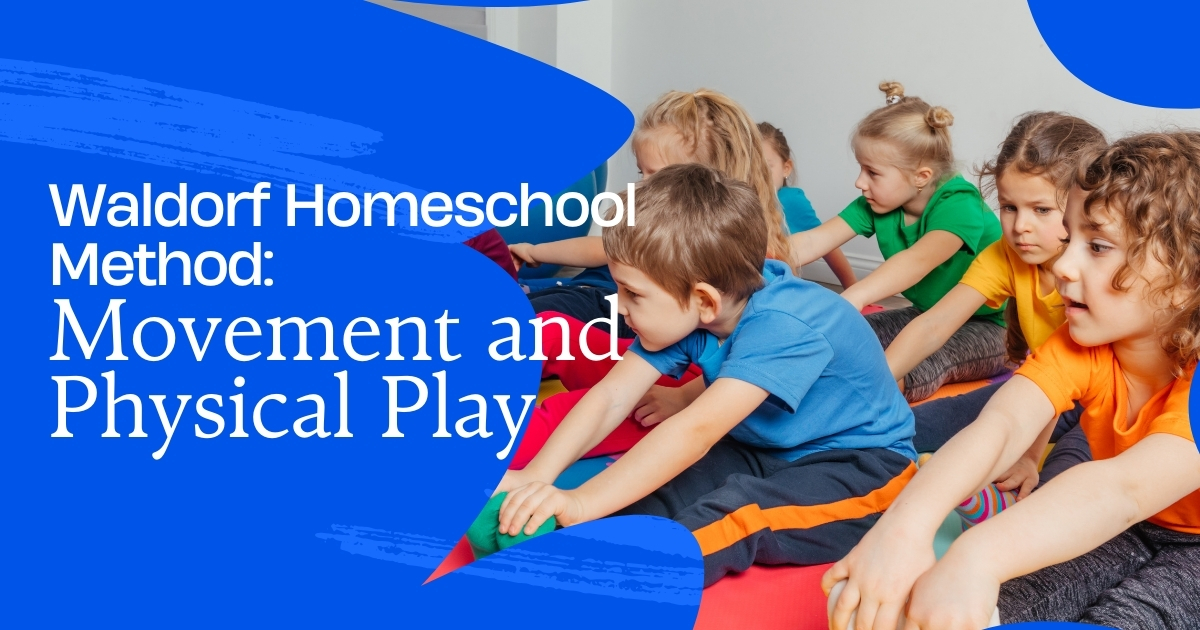
Movement and Circle Time for Waldorf Homeschoolers

When learning about bringing rhythm and movement into your homeschool day, you may picture yourself gracefully leading your children in serene verses while birds chirped on your windowsill. The reality? Often a bit more chaotic, with someone usually tripping over the dog. But through the mess and the giggles, you will find that gathering together for movement is the single best way to start your learning day. 

If you are hunting for practical Waldorf circle time ideas to bring that same sense of connection and energy into your home, you have come to the right place. We are going to explore how getting bodies moving can wake up sleepy brains and set a positive tone for everything that follows.

Why Movement Matters Before Math

It might seem counterintuitive to spend twenty minutes singing, clapping, and stomping around the living room when you have a pile of math worksheets staring you down. You may think you need to rush straight to the “serious” work to make sure you are being productive. However, you will quickly learn that asking a child to sit still and focus immediately after breakfast is like trying to start a car in fourth gear. It just stalls out.

Movement acts as the bridge between sleep (or morning cartoons) and focused academic work. When children engage in rhythmic movement, they are not just burning off excess energy; they are actually organizing their nervous systems. Cross-lateral movements, like touching your right hand to your left knee, help integrate the left and right hemispheres of the brain. This integration is crucial for reading, writing, and problem-solving. By dedicating time to movement first, you aren’t delaying the learning process; you are priming the engine so the learning can actually stick.

Think of it as setting the table before you serve the meal. You wouldn’t just throw spaghetti on a bare table, right? Circle time prepares the “table” of the mind. It allows children to transition from their inner world of play and dreams into a shared space of learning and attention. Plus, it creates a dedicated container for the day—a clear signal that says, “We are together now, and we are ready to begin.”

Crafting Your Rhythm: Waldorf Circle Time Ideas

Crafting Your Rhythm: Waldorf Circle Time Ideas

Building a circle time that actually works for your family doesn’t require a degree in eurhythmy or a perfect singing voice. It just requires consistency and a little bit of creativity. The goal isn’t performance; it’s participation. Here are some concrete ways to structure your circle time to include movement and seasonal connection.

Start with a Verse or Song
Begin every circle time the same way. This signals to your children that school is starting.

  • Morning Verse: Recite a traditional Waldorf morning verse or choose a poem that resonates with your family’s values.
  • Candle Lighting: Many families light a beeswax candle to mark the beginning of the circle. The act of striking the match and watching the flame grow brings immediate focus to the room.
  • Seasonal Songs: Choose one or two songs that reflect the current season. In autumn, sing about falling leaves and squirrels; in spring, focus on sprouting seeds and rain.

Incorporate Rhythmic Movement
This is where the “Waldorf” magic really happens. Use rhythm to get bodies moving in sync.

  1. Bean Bag Tossing: Use small bean bags for passing games. Start simple—pass to the right on the beat. As they get older, introduce patterns (toss, clap, catch). This builds hand-eye coordination and rhythm.
  2. Stomping and Clapping: create patterns with your body. Stomp-stomp-clap, stomp-stomp-clap. Have your children echo the rhythm back to you.
  3. Balance Beam Walks: If you have space, lay down a piece of masking tape or a wooden plank. Have children walk across it while reciting a poem. Walking backward or sideways adds difficulty for older kids.

Finger Plays and Fine Motor Work
After the big, whole-body movements, bring the energy down slightly with finger plays. These are excellent for younger children but can be adapted for older ones with more complex dexterity games.

  • Nursery Rhymes: Use classic rhymes like “Itsy Bitsy Spider” but emphasize the finger movements.
  • String Games: Cat’s cradle isn’t just a pastime; it’s brilliant for developing fine motor skills and spatial awareness.
  • Counting Rhymes: Use fingers to count up and down, integrating early math concepts into the physical body.

Active Math and Language Games
Circle time is the perfect place to practice academic skills without looking at a piece of paper.

  • Times Tables Stomp: Recite multiplication tables while stomping or jumping rope. The rhythm helps memorize the facts.
  • Spelling Toss: Toss a ball back and forth. With each catch, the person adds the next letter to spell a word.
  • Mental Math: Ask simple math questions while balancing on one foot. If the foot goes down, they have to answer quickly!

Movement Activities For Homeschool When You Have No Space

Movement Activities For Homeschool When You Have No Space

Let’s be honest—not everyone has a dedicated schoolroom with ample floor space for a grand circle. I have done circle time in a tiny kitchen, a cramped living room, and even outside on the porch when the house was just too messy to function. The beauty of movement is that it is adaptable. You don’t need a gymnasium to get the benefits of physical integration.

If you are working in a small space, focus on vertical movements and “heavy work.” Heavy work involves pushing or pulling against resistance, which is incredibly regulating for the sensory system. Wall push-ups are a great example. Have your children stand arm’s length from a wall and do push-ups against it while reciting a poem. It takes up zero floor space but provides deep proprioceptive input.

You can also utilize “chair yoga” or seated movements. Simple stretches where you reach for the sky and then touch your toes can be done right at the kitchen table. Hand-clapping games are another fantastic low-space option. They require intense focus, cross the midline of the body, and build rhythm, all while sitting knee-to-knee. Don’t let a lack of square footage become an excuse to skip movement. Even just marching in place behind a chair can reset a child’s focus.

The Power Of Seasonal Connection In Circle Time

One of the pillars of Waldorf education is a deep connection to the natural world and the changing seasons. Circle time is your daily opportunity to anchor your family in the present moment of the year. This prevents the days from blurring together and gives your children a sense of time and progression that is grounded in nature rather than just dates on a calendar.

When you align your circle time with the seasons, the content stays fresh. You aren’t doing the same songs and verses for 180 days straight (which would drive any parent crazy). Instead, you shift every four to six weeks. In October, your movement might mimic the swirling wind or heavy pumpkins. In December, you might focus on stillness, stars, and light.

This connection helps children feel secure. They know what to expect from the rhythm of the year. It also provides endless inspiration for your activities. If you are stuck on what to do, just look outside. Is it raining? Do a rain dance where you tap your fingers on the floor (light rain) and then stomp your feet (thunder). Is it blooming? Act out the life cycle of a seed, curling up tight on the floor and slowly stretching upward to the sun. Nature does the planning for you.

Keep Reading for More Homeschool Advice and Resources

Bringing movement and a dedicated circle time into your homeschool isn’t about perfection; it’s about presence. It is about taking fifteen minutes to look your children in the eye, laugh together, and sync up your rhythms before tackling the hard stuff.

If you found these ideas helpful, we have plenty more waiting for you. Dive deeper into our blog archives at DKM Homeschool Resource to find curriculum reviews, organizational tips, and more strategies to make your homeschooling journey smoother and more joyful. Whether you are a Waldorf veteran or just dipping your toes in, we are here to support you every step of the way.

Waldorf Parenting vs. Waldorf Schooling

So, you’ve stumbled upon the magical, whimsical world of Waldorf. Maybe you saw a picture of a wooden rainbow stacker on Instagram, or perhaps you walked past a classroom that smelled faintly of beeswax and freshly baked bread. Suddenly, you’re asking yourself the big question: how does this all work at home? When you start digging into Waldorf parenting vs homeschooling, it can feel a bit like trying to explain the difference between a homemade apple pie and an apple orchard. They are related, sure, but they are definitely different beasts.

Let’s be real for a second—Waldorf has a bit of a reputation. It’s often seen as the domain of parents who ban plastic toys, knit their own socks, and only serve soup made from vegetables grown in their backyard. While that aesthetic is certainly a vibe, the core of Waldorf is much deeper (and luckily, much more forgiving). 

Whether you are looking to adopt the parenting style or go full-tilt into the educational curriculum, understanding the nuances can save you a lot of stress—and probably a lot of money on felted wool.

The Rhythm Of The Home: Understanding Waldorf Parenting

Before we even touch textbooks or lesson plans, we have to talk about the parenting side of things. Waldorf parenting isn’t about teaching academics; it’s about cultivating a specific atmosphere. It is the soil in which your family grows. Think of it less as a curriculum and more as a lifestyle shift that emphasizes connection, rhythm, and simplicity.

When you embrace Waldorf parenting principles, you aren’t necessarily “doing school.” You are creating a container for childhood to unfold slowly.

Slowing Down and Simplifying

The biggest shock to the system for many modern parents is the speed at which Waldorf operates. It is slow. Like, really slow. In a world that screams “hurry up and achieve,” Waldorf whispers, “go play in the mud.”

Here is what this looks like in practice:

  • Limiting Media: Screen time is generally kept to a minimum, especially for younger kids. The idea is to protect their developing senses from being overwhelmed.
  • Open-Ended Toys: You swap out the battery-operated dog that barks the alphabet for blocks, silks, and items from nature. The less the toy does, the more the child has to do.
  • Warmth and Protection: This isn’t just about wearing wool vests (though they do love those). It’s about emotional warmth—creating a safe, predictable environment where a child doesn’t have to worry about adult problems.

Establishing Rhythm Over Schedule

This is my absolute favorite takeaway from Waldorf philosophy. A schedule is rigid: “Lunch is at 12:00.” A rhythm is fluid: “Lunch happens after we come inside from the garden.” Rhythm breathes. It follows the natural energy of the day—expansion (going out, playing, running) and contraction (coming in, eating, resting).

If you are just focusing on parenting, your rhythm might look like this:

  1. Morning: Wake up, cuddle, breakfast, chores.
  2. Mid-morning: Outdoor play or a walk (Expansion).
  3. Lunch: Coming together to eat (Contraction).
  4. Afternoon: Nap or quiet time (Rest).
  5. Evening: Dinner, bath, story, sleep.

You aren’t teaching reading here; you are teaching life. You are teaching that there is a time for activity and a time for rest, which is honestly a skill most adults (myself included) are still trying to master.

Waldorf Parenting Vs Homeschooling: Where The Lines Blur

Waldorf Parenting Vs Homeschooling: Where The Lines Blur

Now, let’s get into the nitty-gritty of the keyword: Waldorf parenting vs homeschooling. If you are just parenting with a Waldorf influence, your goal is a harmonious home life. But when you decide to homeschool using Waldorf methods, you are taking on the role of the teacher, and that adds a whole new layer of responsibility.

The parenting aspect is the foundation, but the schooling aspect is the structure you build on top of it. You can be a Waldorf parent and send your kid to public school (though it might be a bit of a culture shock for them). But you cannot effectively be a Waldorf homeschooler without embracing the parenting principles. The curriculum just won’t work if the home environment is chaotic and media-saturated.

The Developmental Mirror

Waldorf education is strictly developmental. It’s based on the idea that children go through distinct phases of consciousness. You don’t teach reading at age four because, according to Rudolf Steiner (the founder), the child’s energy is needed for building their physical body.

When you shift from parenting to schooling, you have to become a student of your child. You have to ask yourself:

  • Is my child ready for this? Not “are they smart enough,” but “is this developmentally appropriate?”
  • How do I present this artistically? You don’t just hand out a worksheet. You draw, you paint, you tell stories.
  • Where is the beauty? Waldorf schooling demands that lessons be beautiful. Your chalkboard drawings don’t have to be masterpieces, but they should show care and effort.

This transition from “parent” to “parent-teacher” can be tricky. In the parenting role, you are the protector and the guide. In the teaching role, you are the authority on the subject matter, but you are presenting it in a way that sparks the child’s imagination. It requires a lot more preparation than just living rhythmically. You need a plan.

The Academic Approach: What Waldorf Homeschooling Actually Looks Like

Okay, so you’ve got the rhythm down, you’ve hidden the iPad, and you’ve bought some beeswax crayons. Now what? How do you actually teach math or history the Waldorf way? It’s completely different from the standard educational model, and honestly, it’s a lot more fun.

Waldorf homeschooling uses “Main Lesson Blocks.” Instead of jumping from math to history to science every 45 minutes like a frantic grasshopper, you spend 3 to 6 weeks diving deep into one subject. You immerse yourself in it.

The Three-Day Rhythm of Learning

One of the coolest tools in the Waldorf schooling kit is the three-day learning cycle. It helps information sink deep into long-term memory.

  • Day 1: Encounter. You introduce a new topic, usually through a story or an experience. No explaining, just experiencing.
  • Day 2: Recall. The next day, you ask the child to tell you what they remember. You discuss it, process it, and maybe do an artistic activity related to it.
  • Day 3: Concept. Finally, you distill the concept. You write down the rule, solve the math problem, or summarize the history lesson in a Main Lesson Book.

The Main Lesson Book

Forget textbooks. In Waldorf schooling, the child creates their own textbook. It’s called a Main Lesson Book. It’s a big sketchbook where they write summaries, draw illustrations, and solve problems. It is a record of their learning journey, and it is something they will treasure forever (or at least until they are teenagers and too cool for everything).

Here is why this approach rocks:

  1. Ownership: The child takes pride in their work because they created the book.
  2. Creativity: It combines art with academics seamlessly.
  3. Review: To create a page, they have to truly understand the material.

If you are just doing Waldorf parenting, you might do crafts, but you aren’t creating a systematic academic record. That is the distinct shift into schooling.

Practical Steps To Blend Both Worlds

Can you do a mix? Absolutely. In fact, most of us are “Waldorf-inspired” rather than purists. Being a purist is exhausting and requires a level of dedication that most modern families find impossible. The goal is to find the sweet spot that works for your unique family dynamic.

We don’t need to stress about doing it perfectly. Steiner himself said something along the lines of “ideals are great, but you have to work with reality.” Your reality might include a tight budget, a small apartment, or a kid who really, really loves LEGOs (which are technically plastic, gasp).

Here is how you can blend the parenting vibes with the schooling structure without losing your mind:

Start with Morning Time

Use the Waldorf concept of “Circle Time” or “Morning Time” to bridge the gap.

  • Light a candle (safely!).
  • Sing a song or recite a verse.
  • Do some light movement or bean bag tossing (great for brain integration).
  • Read a story.

This sets the tone for the day. It’s parenting because it connects you, and it’s schooling because it prepares the brain for learning.

Use Stories for Everything

Waldorf relies heavily on oral storytelling.

  • Math: Numbers have personalities. King Equals keeps the balance!
  • Science: Nature stories explain how plants grow.
  • Behavior: Instead of lecturing, tell a story about a squirrel who forgot to share his nuts.

This is a parenting hack that doubles as an educational tool. It engages the imagination and bypasses the defensiveness that kids often feel when being corrected or lectured.

Embrace the Arts

You don’t have to be an artist. You just have to be willing to try.

  • Wet-on-wet watercolor painting: It’s messy, it’s beautiful, and it teaches color theory intuitively.
  • Modeling with beeswax: Great for fine motor skills and warming up the hands before writing.
  • Form drawing: These are specific geometric patterns that help with handwriting and focus.

Incorporating these into your week brings the Waldorf flavor into your homeschool without requiring you to buy an entire expensive curriculum package immediately.

Finding Your Unique Homeschool Groove

Ultimately, the debate of Waldorf parenting vs homeschooling isn’t about choosing one or the other. It is about understanding that they are two sides of the same coin. The parenting principles provide the emotional and physical environment, while the schooling methods provide the intellectual nourishment.

You can be a gentle, rhythmic parent without ever teaching a main lesson block. But if you choose to homeschool using Waldorf, you will find it infinitely easier if you adopt the parenting lifestyle that supports it. A child used to quick-cut cartoons and flashing lights will struggle to sit through a 20-minute oral story about Norse mythology. A child who is used to playing in the woods and listening to wind in the trees will be primed and ready for it.

Don’t let the perfectionism of the “Waldorf aesthetic” scare you off. You don’t need a pristine nature table or a wardrobe full of hand-dyed silks. You just need a willingness to slow down, a desire to connect with your child, and maybe a little bit of patience for watercolor spills.

Take what resonates with you and leave the rest. Maybe you love the rhythm but hate the idea of delaying reading. That’s okay! Maybe you love the Main Lesson Books but can’t give up your Saturday morning cartoons. Also okay! Your homeschool is yours to design. The best curriculum is the one that gets done and leaves both you and your child feeling happy and whole.

Ready to Dive Deeper?

We hope this breakdown helped clarify the fuzzy line between living the lifestyle and teaching the curriculum! If you are hungry for more tips on how to craft a homeschool life that feels good for the whole family, check out more of our blogs here at DKM Homeschool Resource. We have guides on curriculum reviews, daily rhythms, and how to keep your sanity while teaching math. Happy homeschooling!

Gardening as Curriculum in Waldorf Education

Have you ever noticed how children are naturally drawn to the earth? Give a toddler a patch of dirt and a spoon, and you have a recipe for at least an hour of focused, joyful play. The Waldorf philosophy understands this innate connection and masterfully weaves it into its educational approach. Instead of just reading about nature in a book, students get their hands dirty, cultivating a deep and lasting relationship with the world around them. For homeschooling families, adopting a Waldorf gardening curriculum offers a beautiful, hands-on way to teach everything from science and math to responsibility and patience. It’s about more than just growing carrots; it’s about growing curious, capable, and connected human beings.

Gardening isn’t just an “extra” activity in Waldorf education; it’s a core component that breathes life into the entire curriculum. It’s the living, breathing textbook that changes with the seasons. Rudolf Steiner, the founder of Waldorf education, emphasized that learning should engage the whole child—the head, heart, and hands. Gardening is the perfect embodiment of this principle. The “head” is engaged in planning the garden, understanding plant life cycles, and observing the intricate web of insects and soil. The “heart” is nurtured through the care and reverence for living things and the joy of seeing a tiny seed sprout into a vibrant plant. The “hands” are busy with the practical work of digging, planting, watering, and harvesting. This holistic approach ensures that learning isn’t just an intellectual exercise but a deeply felt, experiential journey.

This connection to the earth provides a rhythm to the year that screens and indoor schedules simply cannot replicate. Children learn to work with the natural cycles of seasons, understanding that there is a time for planting, a time for tending, and a time for harvesting. This rhythmic work helps develop patience and an appreciation for process. They learn that good things take time and consistent effort, a valuable lesson in a world of instant gratification. 

This nature-based learning fosters a sense of stewardship and responsibility, not just for their small garden plot but for the planet as a whole.

Crafting Your Waldorf Gardening Curriculum At Home

Creating your own Waldorf-inspired gardening plan doesn’t require a huge backyard or a degree in horticulture. It’s about intention and embracing the process. The beauty of a Waldorf gardening curriculum is its adaptability to your child’s age and your specific environment. It can be a few pots on a sunny balcony or a dedicated plot in the yard. The key is to integrate the experience into your homeschooling rhythm.

Crafting Your Waldorf Gardening Curriculum At Home

Here’s a breakdown of how gardening activities can align with different age groups, following the Waldorf developmental model:

Early Childhood (Ages 3-6): The Garden of Wonder
At this age, it’s all about sensory experience and joyful imitation. The garden is a magical place, not a place for formal lessons.

  • Focus on imitation: Let your little one work alongside you. Give them child-sized tools, a small watering can, and simple tasks. They will learn by watching and doing.
  • Sensory exploration: Encourage them to touch the soil, smell the flowers and herbs, and taste the ripe berries. Talk about the fuzzy leaves of a lamb’s ear or the smooth skin of a tomato.
  • Simple, rewarding tasks: Planting large seeds like beans, pumpkins, or sunflowers is perfect for little hands. Watering is another favorite and teaches gentle care.
  • Storytelling: Weave tales about garden fairies, helpful gnomes, and the secret life of plants to enrich their imaginative world.

Lower Grades (Ages 7-10): The Practical Gardener
As children develop, their capacity for practical work and understanding cause and effect grows. The garden becomes a place for purposeful activity.

  • Planning and preparation: Involve them in the process. Look at seed catalogs together, draw a simple map of the garden, and help prepare the soil by clearing weeds and adding compost.
  • Understanding cycles: This is a great time to introduce the concept of the plant life cycle, from seed to sprout to flower to fruit and back to seed. Observe the process and document it in a main lesson book.
  • Integrated learning:
  1. Math: Measure the distance between rows, count seeds, and track the growth of plants in charts.
  2. Language Arts: Write poems about the garden, keep a simple gardening journal, or learn the names of different plants and tools.
  3. Science: Start a compost pile to learn about decomposition. Observe which insects are helpful (pollinators, ladybugs) and which are pests.

Middle Grades (Ages 11-14): The Steward of the Earth
In these years, students are ready for more responsibility and a deeper understanding of the scientific and ecological principles at play.

  • Independent projects: Assign them their own garden bed or a specific set of crops to manage from start to finish. This builds a strong sense of ownership and responsibility.
  • Scientific observation: Introduce more complex concepts. Study soil composition, learn about companion planting, and explore natural pest control methods. A main lesson block on botany would fit perfectly here.
  • Cooking and preserving: The connection from garden to table becomes central. Teach them how to cook with the food they’ve grown. Explore methods of preserving the harvest, like canning, drying herbs, or making pickles.
  • Community connection: Consider sharing the bounty with neighbors or donating to a local food pantry. This extends the lesson of stewardship to the wider community.

The Rhythms Of Nature-Based Learning

One of the most profound aspects of Waldorf education is its emphasis on rhythm. This includes the rhythm of the day, the week, and the year. Gardening is the ultimate teacher of seasonal rhythm. It provides a tangible, living calendar that connects your homeschool to the cycles of the earth. Instead of just noting that it’s the first day of spring, you are actively participating in it by turning the soil and planting the first cool-weather crops.

This alignment with nature helps ground children and provides a sense of security and predictability. They learn to anticipate the hard work of spring planting, the patient tending of summer, the joyful abundance of the fall harvest, and the quiet rest of winter. This rhythm teaches them that effort is followed by reward and that periods of rest are just as important as periods of activity. It’s a lesson that extends far beyond the garden gate, helping them navigate the rhythms of their own lives with greater balance and understanding. By observing and working with these natural cycles, children develop a deep-seated resilience and an intuitive understanding of the world’s unfolding processes.

Read More From Our Homeschooling Hub

We hope this glimpse into the world of Waldorf-inspired gardening has planted a few seeds of inspiration for your own homeschool journey. Bringing these practices into your home can enrich your curriculum in countless ways, fostering a love for learning and a profound respect for the natural world.

The adventure doesn’t have to stop here! Our blog is filled with practical advice, creative ideas, and supportive resources for homeschooling families like yours. Whether you’re curious about different educational philosophies, looking for curriculum reviews, or just need some encouragement for the day-to-day, we’re here to help. Dive into our other posts and discover more ways to make your homeschooling experience vibrant, joyful, and effective.

How Waldorf Approaches Grammar

Does the thought of teaching grammar make you break out in a cold sweat? Visions of red pens, complex sentence diagrams, and bored children might be dancing in your head. If you’re dreading this part of your homeschool journey, I have some wonderfully refreshing news for you. The Waldorf approach transforms what is often a dry, rule-based subject into a vibrant, creative, and deeply intuitive experience. Instead of memorizing abstract rules, children discover the living, breathing nature of language. These aren’t your typical, worksheet-heavy Waldorf grammar lessons; they are an adventure into the heart of communication, story, and human expression.

The entire philosophy of Waldorf education is centered on meeting the child at their specific developmental stage. Grammar is no exception. It’s not about pushing advanced concepts onto a first-grader who is still living in a world of fairy tales and imagination. Instead, the introduction to grammar is a gradual, artistic, and story-filled process that unfolds over years. It’s less about “what” a noun is and more about “who” a noun is. 

This method ensures that when formal rules are eventually introduced, the child already has a rich, experiential foundation to connect them to. It makes the “why” behind the rules click into place beautifully.

The Foundation: Living Language In The Early Grades

In the early elementary years (grades 1-3), formal grammar instruction as we know it is nowhere to be found. The focus is entirely on immersing the child in rich, beautiful language. This is the heart of Waldorf language arts. The goal is to cultivate a love for words and stories, building a strong inner sense of language rhythm and structure long before any technical terms are mentioned.

This foundational stage is built through several key practices:

  • Storytelling and Recitation: The teacher (that’s you!) tells fairy tales, fables, and myths from around the world. These stories are told, not read, allowing for a direct and engaging connection. Children then retell these stories, naturally absorbing sentence structure, vocabulary, and the flow of narrative.
  • Poetry and Verse: Daily recitation of poems and verses helps children internalize the music of language. They develop an ear for rhythm, rhyme, and meter. This isn’t about analysis; it’s about feeling the language in their bodies through speech and movement.
  • Movement and Action: Language is connected to doing. Verses are often accompanied by gestures, and stories are acted out in simple plays. This kinesthetic learning helps anchor language concepts in a physical, memorable way.

Think of this period as preparing the soil. You aren’t planting the seeds of grammar rules yet. You are creating a rich, fertile environment where those seeds will eventually sprout with understanding and enthusiasm rather than resistance. The child learns what good, strong language feels like, which is a far more powerful lesson than simply being told the rules that govern it.

Creative Waldorf Grammar Lessons

The Four Temperaments Of Grammar: Creative Waldorf Grammar Lessons

Around fourth grade, the first formal steps into grammar begin, and this is where the magic really happens. Waldorf education introduces the parts of speech by personifying them, often linking them to the four classic temperaments. This transforms abstract concepts into living characters that children can relate to. It’s a brilliant way to make grammar engaging and memorable. These creative Waldorf grammar lessons bring the parts of speech to life.

  1. Nouns (The Sanguine King or Queen): Nouns are introduced as the “naming words.” They are like the rulers of the sentence, the important figures who point to things and say, “This is a castle,” “This is a horse,” “This is a sword.” They are solid, dependable, and name everything in the kingdom of language. You can have your child go on a “noun hunt” around the house or in the yard, finding and naming all the “things.”
  2. Verbs (The Choleric Doer): Verbs are the action words, full of energy and movement. They are the fiery, choleric characters who are always doing something. They run, jump, build, fight, and sing. To teach verbs, get active! Act out different verbs. Say a verb and have your child perform the action. This connects the concept of a verb directly to the physical experience of doing.
  3. Adjectives (The Phlegmatic Painter): Adjectives are the “describing words.” They are like the calm, observant phlegmatic character who notices all the details and paints a picture with words. They don’t act, but they describe how things are. The castle isn’t just a castle; it’s a huge, stone castle. The horse isn’t just a horse; it’s a swift, black horse. A fun activity is to take a simple noun, like “cat,” and see how many different adjectives you can use to describe it: the fluffy cat, the sleepy cat, the mischievous cat.
  4. Adverbs (The Melancholic Worrier): Adverbs describe the verbs, often with a touch of feeling or concern, like the thoughtful melancholic temperament. They tell how an action is done. The knight doesn’t just fight; he fights bravely. The child doesn’t just whisper; she whispers quietly. Adverbs add nuance and detail to the action, often answering the questions of how, when, where, or why.

By introducing grammar through these archetypal characters, you bypass the dry, technical definitions. Children learn the function of each part of speech through story and imagination. They create their own sentences and stories featuring these “word characters,” making grammar a creative writing exercise, not a chore.

Building The Structure: Grammar In The Upper Grades

As children move into the upper elementary and middle school years (grades 5-8), the approach to grammar becomes more analytical, but it never loses its connection to the living language. The foundation laid in the earlier years now supports a more conscious understanding of sentence structure, punctuation, and complex grammatical concepts. The “why” behind the rules becomes the focus.

The initial work with the personified parts of speech expands. Children begin to explore the relationships between them. They learn how the steady noun needs the energetic verb to create a complete thought. They discover how adjectives and adverbs add color and life to this basic structure. This is when sentence diagramming might be introduced, but in a uniquely Waldorf way. It’s often presented visually and artistically, showing the sentence as a living organism with a core (subject and predicate) and supporting limbs (phrases and clauses). The focus remains on understanding the function and logic of the sentence, not just on following a rigid diagramming formula.

This phase is also when the study of language deepens. Students might explore the moods of verbs (indicative, imperative, subjunctive) by writing different types of sentences—statements of fact, commands, and wishes. They learn how punctuation serves as the “breathing marks” of a sentence, guiding the reader and adding clarity and emotion. The lessons are always tied back to practical application in the child’s own writing and speech. The goal is for them to become conscious, skillful communicators, not just grammar experts.

Find More Homeschooling Gold Here

The Waldorf approach to grammar is a perfect example of how homeschooling allows you to tailor education to be meaningful, engaging, and developmentally appropriate. By trading rote memorization for living stories and artistic expression, you can cultivate a genuine appreciation for language in your child. You can show them that grammar isn’t a set of restrictive rules, but a fascinating system that gives power and beauty to our words.

If this creative and holistic approach resonates with you, we have so much more to share. Our blog is filled with practical advice, resource recommendations, and inspiration for every step of your homeschooling journey. Browse our other posts to discover new ways to bring learning to life in your home.

Waldorf Math: Teaching Through Story and Movement

Does the thought of teaching math make you want to hide under a blanket? You aren’t alone. For many of us, math class brings back memories of endless worksheets, timed drills, and that sinking feeling of just not getting it. But what if math could be different? Imagine if learning multiplication felt like a game of hopscotch, or if division was taught through a fable about a generous king sharing his treasure. This isn’t a fantasy—it’s the heart of the Waldorf math curriculum

This approach transforms dry numbers into living concepts that kids can feel, move with, and truly understand. If you are tired of the tears at the kitchen table, it might be time to shake things up.

Why Storytelling Is The Secret Sauce Of Math

Let’s be real for a second: numbers can feel incredibly abstract to a six-year-old. When we write “2 + 2 = 4” on a whiteboard, it’s just symbols. But when we wrap those numbers in a narrative, they suddenly have personality and purpose. In the Waldorf tradition, we don’t just memorize facts; we meet characters who embody mathematical qualities.

For the younger grades (1st through 3rd), math often begins with a story. You might introduce the “Four Processes” not as cold operations, but as distinct gnomes or characters living in a magical kingdom:

  • Plus (Addition): Often depicted as a chubby, green gnome who loves to gather things. He has big pockets and is always collecting berries or gems to add to his pile.
  • Minus (Subtraction): A ragged, blue gnome with a hole in his pocket. He is a bit clumsy and always losing things as he walks along the path.
  • Times (Multiplication): A speedy, yellow gnome who does things fast! Why add one apple at a time when you can stack them in baskets of five?
  • Divide (Division): A noble, red gnome (or sometimes a King/Queen) who insists on fairness. They have a sword to cut things perfectly in half and ensure everyone gets an equal share.

These stories create an emotional connection to the math. When a child is solving a problem, they aren’t just manipulating digits; they are helping the green gnome fill his pockets or helping the red gnome share the loot fairly. This emotional hook engages the limbic system, which helps solidify memory far better than rote memorization ever could.

This narrative approach doesn’t stop at the early grades, either. As students get older, the stories evolve. In middle school, geometry isn’t just about angles; it’s about the history of how Egyptians surveyed land after the Nile flooded. Algebra becomes a detective story about finding the unknown. By anchoring abstract concepts in human experience, we make math less intimidating and infinitely more relatable.

Get Up And Move: Movement-Based Math Learning

Sit still. Stop fidgeting. Focus on your paper.

If you’ve ever said these things during a homeschool lesson, raise your hand. (I’m raising mine!). We often think that “real work” happens when we are sitting quietly at a desk. But Waldorf philosophy flips this idea on its head. It recognizes that children—especially young ones—learn with their whole bodies.

Movement-Based Math Learning

Rhythmic movement is a cornerstone of how math facts are internalized in this method. It’s about getting the math into the body before it gets into the brain. Here is how you can bring movement into your math block:

  1. Clapping and Stomping: When learning times tables, don’t just recite them. Clap on the multiples! For the 3s table, you might whisper “1, 2” and then CLAP and shout “3!” Whisper “4, 5,” CLAP “6!” This rhythm helps the brain predict the pattern.
  2. Bean Bag Toss: Grab a few bean bags. Stand across from your child. As you toss the bag, say a problem (“4 times 5!”). They catch it, shout the answer (“20!”), and toss it back with a new problem for you.
  3. Circle Skipping: Draw a large circle with chalk on the driveway and write numbers 0-9 around the edge like a clock face. Have your child jump from number to number to “physically” solve addition or subtraction problems.
  4. Jump Rope Math: Nothing beats the classic jump rope for rhythm. Count by 2s, 5s, or 10s with every jump. It builds stamina, coordination, and mathematical fluency all at once.

This isn’t just “playtime.” Neuroscience backs this up. Movement activates the cerebellum and helps build neural pathways. When a child associates the number “24” not just with a flashcard but with a specific rhythm or movement, the memory is stored in multiple areas of the brain. Plus, it burns off that wiggles energy that usually derails lessons anyway. It’s a win-win.

Bringing Art Into The Equation

Okay, we’ve covered stories and movement, but we can’t ignore the visual aspect. If you browse Instagram for Waldorf homeschooling, you will inevitably see gorgeous, colorful “Main Lesson Books.” These aren’t just for show. The artistic presentation of math is crucial for deep learning.

In a typical math curriculum, a worksheet is something to be filled out and thrown away. In Waldorf, the student creates their own textbook. They use high-quality block crayons and colored pencils to illustrate the concepts they are learning. This requires the child to slow down and really process the information.

Consider the difference between circling an answer on a photocopy versus drawing a beautiful, symmetrical star to represent the number 5.

  • Geometric Drawings: Students spend time drawing freehand geometry forms. They explore symmetry, balance, and precision. This trains the hand-eye coordination and spatial awareness needed for higher-level math later on.
  • Number Quality: In first grade, children might spend a whole day or two just exploring the “quality” of the number 1. They draw one sun, one world, one me. It’s a philosophical and artistic exploration, not just a counting exercise.
  • Pattern Making: Math is essentially the study of patterns. Children create elaborate, colorful borders and number wheels that reveal the beauty inherent in mathematical relationships.

This artistic work serves a practical purpose for parents, too. It acts as a portfolio of their learning. Instead of a stack of graded tests, you have a beautiful book that chronicles their journey through the world of numbers. It gives the child a sense of pride and ownership over their work that a workbook simply can’t match.

How To Adapt The Waldorf Math Curriculum For Your Home

You might be thinking, “This sounds great, but I’m not a Waldorf teacher. I don’t know any gnome stories, and I can barely draw a stick figure.” Don’t panic! The beauty of homeschooling is that you can take what works and leave what doesn’t. You don’t need to buy expensive wooden toys or silk scarves to use these methods.

Here is a practical roadmap for integrating these ideas into your existing routine, even if you are using a more traditional curriculum:

  1. Start with a Warm-up: Before you open the workbook, spend 5-10 minutes doing rhythmic movement. Skip count while tossing a ball or stomping around the living room. It wakes up the brain.
  2. Create Your Own Characters: If gnomes aren’t your thing, use what your kids love. maybe “Plus” is a squirrel gathering acorns, and “Minus” is a hungry bird eating them. The specific character matters less than the narrative structure.
  3. Ditch the Drills occasionally: Once a week, replace the timed drill sheet with a game or an art project. Have them draw a “number city” or bake cookies to learn fractions.
  4. Use Manipulatives from Nature: Waldorf emphasizes natural materials. Instead of plastic counting bears, use acorns, polished stones, or seashells. The tactile experience creates a grounding effect that helps with focus.
  5. Focus on the Process, Not just the Answer: Ask “How did you get there?” frequently. Encourage your child to draw a picture of the word problem before they try to solve it with numbers.

The goal isn’t to be a perfect Waldorf purist. The goal is to make math a living, breathing subject that your child actually enjoys engaging with. It is about shifting the focus from “getting it done” to “understanding it deeply.”

Math doesn’t have to be the enemy. It is the language of the universe, hidden in the petals of a flower, the rhythm of a song, and the architecture of our homes. By bringing in stories, movement, and art, we invite our children to see that beauty for themselves. We give them tools that go beyond the calculator—tools like imagination, rhythm, and creativity.

So, the next time you sit down for math time, maybe leave the pencils on the table for a minute. Stand up, tell a story about a clumsy gnome, and see where the numbers take you. You might just find that math is a lot more magical than you remember.

Stick Around for More Homeschool Magic

We know that homeschooling is a wild, wonderful, and sometimes exhausting journey. You are doing important work, and you don’t have to do it alone. Whether you are looking for tips on teaching reading, reviews of science kits, or just a little encouragement on the hard days, we’ve got you covered. Check out our other blog posts for more down-to-earth advice, curriculum hacks, and resources designed to make your homeschool days brighter and easier. Happy teaching!

Why Art Is Central in Waldorf Education

Have you ever wondered what makes the Waldorf approach to education so unique? If you peek into a Waldorf-inspired homeschool or classroom, you won’t see kids just sitting at desks staring at a whiteboard. Instead, you’ll find a vibrant world of color, movement, and creativity. From painting and sculpting to music and drama, art isn’t just a subject—it’s woven into the very fabric of learning. The connection between Waldorf education and art is fundamental, creating an environment where children don’t just learn facts, but experience them with their whole being. It’s about educating the head, heart, and hands in unison.

This approach believes that engaging a child’s artistic senses is key to unlocking their full potential. Instead of memorizing multiplication tables through rote drills, a child might learn them by clapping rhythmic patterns or creating colorful geometric drawings. History isn’t just a series of dates in a textbook; it’s brought to life through storytelling, plays, and drawings that capture the spirit of an era. By integrating art into every subject, Waldorf education makes learning a joyful, meaningful, and deeply personal journey. 

This method nurtures not just academic knowledge, but also emotional intelligence, imagination, and a lifelong love for discovery.

The Role Of Art In A Child’s Development

In a Waldorf setting, art is far more than a fun Friday afternoon activity. It’s seen as an essential tool for holistic development, touching every aspect of a child’s growth—intellectually, emotionally, and physically. The focus is less on producing a perfect, frame-worthy masterpiece and more on the process of creation itself. This “process over product” philosophy is liberating for children, as it removes the pressure to perform and frees them to explore, experiment, and express themselves authentically.

This creative journey helps children develop crucial skills that extend far beyond the art table. When a child works with clay, they are not just making a sculpture; they are developing fine motor skills, learning about cause and effect, and experiencing the physical properties of the material. When they paint with watercolors, they learn about color theory, harmony, and how to work with fluidity and unpredictability. It’s a hands-on, sensory-rich way to understand the world.

Here are a few ways art supports a child’s development in a Waldorf framework:

  • Emotional Expression: Art provides a safe and healthy outlet for feelings that children may not have the words to express. A stormy painting or a gentle melody can communicate joy, frustration, or sadness, helping children process their inner world.
  • Sensory Integration: Activities like finger painting, working with beeswax, and knitting engage multiple senses. This sensory input helps build neural pathways in the brain, which is fundamental for all other learning.
  • Building Will and Perseverance: Completing an artistic project, whether it’s a simple drawing or a complex woodworking piece, requires focus and determination. Children learn to stick with a task, work through challenges, and experience the satisfaction of bringing an idea to life. This cultivates what Waldorf educators call “will.”
  • Developing Imagination: Waldorf education places immense value on nurturing a child’s imagination. Through storytelling, dramatic play, and visual arts, children are encouraged to create their own mental images rather than being given pre-packaged ones. This is the foundation for abstract thinking and problem-solving later in life.
Waldorf Education And Art: A Practical Approach

Waldorf Education And Art: A Practical Approach

So, how does this integration of Waldorf education and art look in a practical, day-to-day homeschool setting? It’s about seeing the artistic potential in every subject. Instead of teaching subjects in isolated blocks, the Waldorf method connects them through a central, thematic story or concept, with art as the bridge. This creates a cohesive and immersive learning experience.

For example, a main lesson block on ancient Greece wouldn’t just involve reading myths and memorizing names. It would be a multi-sensory exploration. A child might listen to the epic tales of gods and heroes, then draw them in their main lesson book. They might learn about Greek architecture by modeling a temple out of clay or create their own version of an Olympic games event through movement and eurythmy. The learning is active, not passive.

Here’s a breakdown of how you can integrate art across different subjects in your homeschool:

  1. Mathematics: Instead of just worksheets, use art to explore mathematical concepts.
  • Form Drawing: Practice symmetrical and geometric forms to improve handwriting and understand spatial relationships.
  • Number Gnomes: Create charming gnome characters for each number to help young children build a personal connection to them.
  • Geometric String Art: Explore angles, polygons, and patterns by creating beautiful string art on a board with nails.
  1. Language Arts: Bring stories and letters to life through artistic expression.
  • Pictorial Letters: Introduce letters of the alphabet by telling a story where the shape of the letter emerges from an image (e.g., ‘S’ from a slithering snake).
  • Main Lesson Books: Instead of notebooks, children create their own beautiful textbooks. They write summaries of lessons and create detailed illustrations to accompany them.
  • Puppetry and Drama: Act out stories, poems, or historical events to deepen comprehension and develop public speaking skills.
  1. Science: Experience the natural world through observation and artistic rendering.
  • Nature Journaling: Go on nature walks and have your child draw or paint the plants, animals, and weather they observe. This hones their observation skills.
  • Wet-on-Wet Watercolor Painting: Explore the properties of water and color while painting landscapes, seasons, or scientific phenomena like the water cycle.
  • Beeswax Modeling: Model animals, plants, or the planets out of warm, pliable beeswax to connect with the subject in a tactile way.

Creative Learning: Fostering Imagination And Intellect

The goal of creative learning in the Waldorf philosophy is not to train every child to become a professional artist. Rather, it is to use the artistic process to cultivate flexible thinking, emotional resilience, and a deep connection to the subject matter. When a child learns through creative engagement, the knowledge becomes part of them. They don’t just know that a plant needs sunlight; they have felt the warmth of the sun while painting a flower and observed its petals opening. This kind of embodied knowledge sticks.

This approach directly counters the trend toward standardized testing and rote memorization, which can stifle a child’s natural curiosity. Creative learning encourages children to ask “what if?” and to find multiple solutions to a problem. It teaches them that there is more than one right answer and that mistakes are valuable opportunities for discovery. By fostering this imaginative capacity, we are preparing them for a future that will require innovation, adaptability, and creative problem-solving.

This method also honors the different developmental stages of childhood. In the early years, the focus is on imitation and imaginative play. As children grow, the curriculum introduces more complex artistic techniques and challenges that meet their budding intellectual and emotional capacities. For instance, a third grader might learn about building shelters by constructing a small model, while a middle schooler studying the Renaissance might try their hand at perspective drawing. The art always evolves with the child, providing the right challenge at the right time to nurture their growth.

Explore More Homeschooling Resources

Embracing the Waldorf philosophy of art and creativity can transform your homeschool from a simple place of instruction into a vibrant hub of discovery and joy. By weaving art into every lesson, you provide your child with a rich, multi-sensory education that nurtures their head, heart, and hands. You are not just teaching them subjects; you are helping them develop into well-rounded, imaginative, and engaged human beings.

If you are inspired to learn more about holistic homeschooling methods and find practical resources for your family, we invite you to explore more of our articles. Our blog is filled with advice, inspiration, and support to help you on your homeschooling journey.