Learning About the Great Depression Through Annie

Learning about the Great Depression can feel like a big, heavy topic, especially when you’re trying to explain it to your kids in a way they’ll actually understand. The good news? You don’t need to rely on dry textbooks or complicated lesson plans. One of the most effective (and surprisingly fun) ways to introduce this period is through a story your kids may already know: Annie.

Was Little Orphan Annie A Real Person?

No, Little Orphan Annie was not a real person. She was created by Harold Gray in 1924 as part of a comic strip. However, her story is deeply rooted in the real-life struggles of families during the Great Depression.

That’s what makes Annie so valuable in your homeschool.

While Annie herself is fictional, the situations she faced were very real for millions of Americans. Families lost jobs, children experienced hunger, and many people had to rely on others just to survive. Annie’s story brings these realities into a form that children can understand without feeling overwhelmed.

Instead of abstract ideas like “economic collapse,” kids see:

  • A child trying to find stability 
  • Adults struggling to make ends meet 
  • Communities helping one another 
  • Hope in difficult circumstances 

This makes Annie a bridge between history and real life, a way to humanize something that might otherwise feel distant or confusing.

Why Annie Is A Powerful Way To Teach The Great Depression

One of the biggest challenges in homeschooling is keeping your child engaged, especially with topics that feel serious or unfamiliar. The Great Depression is one of those topics. It’s important, but it’s not always easy to teach.

This is where Annie changes everything.

When children follow Annie’s story, they begin to understand what it felt like to live during that time. They see what it meant to not have enough food, to worry about where you’ll sleep, or to depend on kindness from others. These are powerful lessons, but they’re delivered through storytelling instead of lectures.

That emotional connection matters more than most parents realize.

When kids care about a character, they naturally start asking deeper questions:

  • “Why didn’t people have jobs?” 
  • “Why couldn’t they just buy food?” 
  • “What happened to families who lost everything?” 

These questions open the door to real learning. And the best part? You don’t have to force it.

Story-based learning also helps reduce overwhelm, for both you and your child. You don’t need to cover everything in one lesson. You can take it one piece at a time, letting curiosity guide the process.

Simple Ways To Use Annie In Your Homeschool This Week

You don’t need a full curriculum overhaul to make this work. In fact, the simpler you keep it, the more effective it will be.

Here are practical ways to start immediately:

1. Start with a Movie Night

Watch Annie together.

Afterward, ask a few simple questions:

  • What problems did Annie face? 
  • Who helped her? 
  • What would you have done differently? 

Keep it relaxed. This is about conversation, not testing.

2. Create a “Then vs. Now” Comparison

Sit down together and compare life during the Great Depression with today.

You can talk about:

  • Jobs 
  • Food availability 
  • Housing 
  • School life 

This helps children understand how different life was, and why people had to adapt.

3. Read a Little Each Day

Even 10 minutes of reading can go a long way.

Look for:

  • Annie comic strips (many are available online) 
  • Library books about the Great Depression 
  • Short stories or biographies 

Consistency matters more than length.

Why Annie Is A Powerful Way To Teach The Great Depression

4. Try a “Simple Living” Day

This is one of the most memorable activities you can do.

For one day:

  • Eat simple meals (like soup, bread, or beans) 
  • Limit electricity or screen time 
  • Talk about how families entertained themselves 

Kids often remember this experience more than anything else.

5. Write Like Annie

Ask your child to imagine they are Annie and write a short journal entry.

Prompt ideas:

  • “Today I had to…” 
  • “I felt worried because…” 
  • “Something good happened when…” 

This builds empathy and strengthens writing skills at the same time.

When children step into Annie’s shoes, even briefly, they begin to understand history on a deeper level. It stops being something that happened “a long time ago” and starts feeling real and relevant. That’s the kind of learning that lasts.

Common Mistakes Parents Make (And How To Avoid Them)

Homeschooling doesn’t have to be complicated, but it’s easy to overthink things. Here are some common mistakes to watch for.

Mistake #1: Trying to Teach Everything at Once

There’s a lot to cover in the Great Depression, but you don’t need to do it all.

Better approach:
Focus on a few key ideas:

  • Jobs were lost 
  • Money was limited 
  • Families had to adjust 

Mistake #2: Skipping the Human Side

Facts alone won’t stick.

Better approach:
Ask questions that encourage empathy:

  • “How would you feel in this situation?” 
  • “What would be hardest for you?” 

Mistake #3: Making It Too Complicated

You don’t need elaborate lesson plans.

Better approach:
Use what you already have:

  • Books 
  • Movies 
  • Conversations 

Mistake #4: Avoiding the Topic Entirely

Some parents worry the topic is too heavy.

Better approach:
Simplify it, but don’t skip it. Kids can handle more than we think when it’s explained in a thoughtful way.

When you keep things simple and focus on connection, teaching history becomes much less stressful. You’re not trying to create a perfect lesson, you’re creating meaningful understanding.

Turning This Into A Full Learning Unit (Without Burnout)

If your child is interested and you want to go a bit deeper, you can easily turn this into a short unit study.

Here’s a simple plan:

Day 1: Introduction

  • Watch Annie 
  • Talk about what life looked like 

Day 2: Understanding the Great Depression

  • Read a short explanation 
  • Discuss why jobs disappeared 

Day 3: Daily Life Back Then

  • Compare food, housing, and routines 
  • Try a simple living activity 

Day 4: Writing and Reflection

  • Journal as Annie 
  • Write a short story 

Day 5: Final Project

  • Create a poster 
  • Act out a scene 
  • Share what they learned 

Keep each day short, 30 to 45 minutes is plenty.

The goal isn’t perfection. It’s progress.

Helpful Resources (Free And Low-Cost)

You don’t need to spend a lot to teach this well.

Here are some simple options:

Free Resources

  • Local library books 
  • Online Annie comics 
  • Educational videos (preview first) 

Low-Cost Options

Hands-On Ideas

  • Cook a Depression-era meal 
  • Visit a museum 
  • Talk to older family members about history 

Using a mix of resources helps keep things interesting without overwhelming your schedule or your budget. It also allows you to adjust based on your child’s learning style, which is one of the biggest advantages of homeschooling.

FAQs

FAQ: Is Annie a good way to teach the Great Depression in homeschool?
Yes, Annie is a great starting point because it makes the Great Depression relatable for children. While it’s fictional, it reflects real struggles and can be paired with homeschool history resources for a well-rounded understanding.

FAQ: How do I explain the Great Depression to younger children?
Keep it simple and focus on everyday life changes, like people losing jobs and having less money for food. Using stories like Annie in your homeschool lessons helps make these concepts easier for younger kids to grasp.

FAQ: What are the best activities for teaching the Great Depression at home?
Hands-on activities like journaling, simple living days, and storytelling are highly effective. Combining these with reading and discussion makes homeschool history more engaging and memorable for children.

Keep Exploring DKM

Teaching your kids about the Great Depression doesn’t have to feel overwhelming or complicated. When you use stories like Annie, you’re giving your child a way to understand history that feels real, meaningful, and even a little inspiring.

Start small. Pick one activity. Have one conversation. That’s how great homeschooling happens.

If you’re looking for more practical ideas, encouragement, and easy-to-follow guidance, keep exploring the DKM Homeschool Resource blog. We’re here to support you every step of the way as you build a homeschool experience that truly works for your family.

What Grade Should You Start Teaching History?

Starting history doesn’t have to wait for a specific grade, most kids can begin learning history in simple, story-based ways as early as kindergarten or even preschool. The key isn’t when you start, but how you introduce it in a way that fits your child’s age and attention span.

What Is The Best Way To Teach History?

The best way to teach history is to make it come alive through stories, discussions, and real-life connections instead of memorizing dates and facts.

For younger kids, history should feel like story time, not a textbook. For older kids, it becomes about understanding cause and effect, timelines, and perspectives.

Here’s a simple framework that works for almost every homeschool:

  1. Start with stories
    • Read biographies, legends, and historical fiction 
    • Focus on people, not just events 
  2. Add visuals
    • Maps, timelines, and pictures help kids “see” history 
    • Even simple drawings work 
  3. Talk about it
    • Ask: “Why do you think that happened?” 
    • Encourage opinions and curiosity 
  4. Connect to today
    • Compare past and present 
    • Relate history to your child’s life 
  5. Keep it short
    • 10–20 minutes is enough for younger kids 
    • Build gradually as they grow 

Quick tip: If your child is bored, it’s not a motivation issue, it’s usually a method issue.

When Should You Start Teaching History In Homeschool?

There’s a lot of pressure around “getting it right,” but here’s the truth: history doesn’t need to start with a formal curriculum in early grades.

Instead, think of history in stages:

Ages 3–5 (Preschool–Kindergarten):

  • Focus: Stories, people, and simple ideas 
  • No memorization required 
  • Think: “Long ago…” conversations 

Grades 1–3:

  • Begin light structure 
  • Introduce timelines loosely 
  • Use lots of read-alouds 

Grades 4–6:

  • Add more detail and sequencing 
  • Start connecting events and causes 
  • Introduce basic note-taking 

Middle school and up:

  • Deeper analysis 
  • Writing assignments 
  • Comparing viewpoints 

A common mistake is waiting too long because you think your child “isn’t ready.” If they can listen to a story, they can start learning history.

A Simple Plan To Start Teaching History This Week

You don’t need to overhaul your homeschool schedule. You can start with just a few small steps.

Here’s a beginner-friendly plan:

Day 1: Pick a topic

  • Choose something interesting: Ancient Egypt, pioneers, or a famous person 

Day 2: Read together

  • Use a library book or free online resource 
  • Keep it under 15 minutes 

Day 3: Talk about it

  • Ask 2–3 simple questions:
    • “What surprised you?” 
    • “Would you want to live then?” 

Day 4: Do a small activity

Day 5: Review casually

  • Bring it up during lunch or a car ride 

That’s it. You’ve just started history.

Quick win: Consistency matters more than depth at the beginning.

Woman and young boy study a vintage map on a wooden table, the boy holding a brass compass.

Common Mistakes Parents Make (And How To Avoid Them)

Many parents unintentionally make history harder than it needs to be.

Here are the most common pitfalls:

1. Starting too formally too soon
Jumping straight into textbooks can overwhelm younger kids. Start with stories instead.

2. Focusing on memorization
Dates and names matter later. Early on, understanding the story matters more.

3. Trying to cover everything
You don’t need to teach all of history in one year. Slow down and go deeper.

4. Skipping discussion
History sticks when kids talk about it, not just hear it.

5. Being inconsistent
A little history 2–3 times per week is better than long, irregular sessions.

History doesn’t have to feel like a checklist of facts. When you shift your mindset from “covering material” to “building understanding,” everything becomes easier. Kids naturally connect with stories, especially when they can imagine themselves in the past. That emotional connection is what makes history stick long-term.

You’ll also find that your confidence grows quickly once you begin. Many parents hesitate because they feel unprepared, but you don’t need to be a history expert. You just need curiosity and a willingness to explore alongside your child. That shared learning experience often becomes one of the most rewarding parts of homeschooling.

How To Make History Fun (Even If Your Child Resists It)

If your child groans when you say “history,” don’t worry, you’re not alone.

Here are simple ways to turn things around:

Make it hands-on

  • Cook a recipe from another time period 
  • Build a model (pyramids, cabins, ships) 

Use storytelling voice

  • Change your tone when reading 
  • Add a little drama or humor 

Let them choose topics

  • Knights? Dinosaurs? Explorers? 
  • Interest drives engagement 

Use media wisely

  • Short documentaries 
  • Educational YouTube channels 
  • Audiobooks 

Act it out

  • Reenact simple scenes 
  • Use costumes or props 

Example:
Instead of saying, “Today we’re learning about the American Revolution,” try:
“Did you know there was a time when people dumped tea into the ocean to protest taxes?”

Same topic. Completely different reaction.

There’s something powerful about seeing your child suddenly “get it.” Maybe it happens when they connect a story to something in their own life, or when they ask a question you didn’t expect. Those moments don’t come from perfect lesson plans, they come from engagement and curiosity. When history feels alive, kids naturally lean in instead of pulling away.

It’s also worth remembering that learning styles vary widely. Some kids love listening, others need movement, and some prefer visuals. Adjusting your approach doesn’t mean you’re doing something wrong, it means you’re paying attention. The flexibility of homeschooling is what allows history to become meaningful instead of mechanical.

Affordable And Free History Resources For Homeschoolers

You don’t need an expensive curriculum to teach history well.

Here are some budget-friendly options:

Free resources:

  • Local library books (your best friend) 
  • PBS documentaries 
  • National Park Service website 
  • YouTube educational channels 

Low-cost ideas:

DIY options:

  • Create your own timeline on a wall 
  • Print coloring pages related to history topics 
  • Keep a “history notebook” with drawings and notes 

Quick tip: One good book is better than five unused resources.

FAQs About History

FAQ: What grade should I start a formal history curriculum?
You can begin a formal history curriculum around 1st–3rd grade, depending on your child’s readiness. Many homeschooling families start informally earlier and transition into structured lessons later. The key is keeping lessons age-appropriate and engaging so your child builds interest rather than frustration.

FAQ: Is it okay to delay teaching history in homeschool?
Yes, but only if your child is still getting exposure through stories and conversations. Delaying formal history lessons is common, but children benefit from early exposure to historical thinking. Even simple discussions about “long ago” help build a strong foundation for later learning.

FAQ: What is the easiest way to teach history at home?
The easiest way to teach history at home is through read-aloud books, discussions, and simple activities. This approach works especially well for beginners and younger children. It keeps history enjoyable while still building knowledge and understanding over time.

Keeping Things Simple

Teaching history doesn’t have to be complicated or intimidating. You don’t need the perfect curriculum, the perfect schedule, or even the perfect starting grade. What matters most is showing up consistently, keeping things simple, and making history feel meaningful for your child.

Start small, stay flexible, and let curiosity lead the way. You’ll be surprised how quickly history becomes one of your favorite subjects to teach.

If you’re looking for more practical homeschool tips, encouragement, and easy-to-use resources, keep exploring the DKM Homeschool Resource blog. We’re here to help you build a homeschool you actually enjoy.

Homeschool History Curriculum: How To Choose The Best For Your Family

Choosing the best homeschool history curriculum can feel like a monumental task when faced with the wide range of choices available. Parents want a curriculum that not only aligns with their educational goals but also holds their child’s attention and fosters a genuine interest in history. With so many factors to consider—learning styles, historical perspectives, budget, and more—it can be hard to know where to begin.

This guide will provide practical insights to help you make an informed decision and explore some popular homeschool history curriculum options. Whether you’re homeschooling a curious kindergartener or a high schooler preparing for college, these tips will help you choose a program that complements your family’s unique needs.

Understand Your Family’s Needs And Goals 

Before you start comparing programs, it’s essential to understand what you’re looking for in a history curriculum. Homeschooling offers incredible flexibility, and your choice of curriculum can reflect your values, priorities, and your child’s learning style. Consider these factors when evaluating your family’s needs:

  1. Your Educational Philosophy
  • Ask yourself what kind of approach you prefer for homeschooling.
  • Do you favor a traditional, textbook-based method that closely resembles public school? 
  • Are you more interested in creating a relaxed, interest-led learning environment? 
  • Do you follow philosophies like Charlotte Mason, classical education, or unit studies? 

Each philosophy may align better with certain types of history programs, and clarifying your approach can help narrow your search.

  1. Grade Level and Comprehension Ability
  • Choose programs that match not just your child’s age but also their current comprehension level.
  • Younger children often benefit from engaging storytelling and broad historical overviews. 
  • Older students can handle more complex themes, primary source materials, and in-depth analysis of historical events. 

Many curricula come with suggested grade ranges, which is a helpful starting point.

  1. Your Child’s Learning Style

Homeschool history programs vary widely in the way they approach learning. Consider how your child learns best:

  • Visual learners may benefit from curricula with maps, timelines, and illustrations. 
  • Auditory learners might enjoy lectures, audiobooks, or group discussions. 
  • Hands-on learners will likely engage more with projects like recreating artifacts, conducting experiments, or building dioramas. 
  1. Time Commitment
  • Some programs are thoroughly planned and require a parent or teacher to guide each lesson. 
  • Other options focus on independent study, offering self-paced materials for busy parents or older children. 

Evaluate how much time you can personally dedicate to teaching.

  1. Budget
  • Decide what fits your budget while providing a robust learning experience. 

Many homeschool parents find creative ways to mix free resources like library books with paid curriculum for a balanced experience.

Tips for Getting Started:

  • Check reviews from other homeschool parents before purchasing. 
  • Look for sample lessons or trial versions to get a feel for each program. 
  • Don’t be afraid to adapt materials to suit your needs—homeschooling allows for customization! 

Popular Styles Of Homeschool History Curriculums 

Popular Styles Of Homeschool History Curriculums 

Homeschool history curriculums come in a variety of formats, each with unique strengths. Deciding which format works best depends on your child’s preferences and your teaching style. Below are some of the most popular approaches:

Textbook-Based Curriculums

Textbook-based programs offer a structured, comprehensive approach that many parents find reassuring. These programs often include:

  • Chronological timelines to give kids a sequential understanding of history. 
  • Suggested student activities like chapter quizzes and written assignments. 
  • Teacher guides with discussion questions and assessment tools for parents. 

Examples: Notgrass History, Story of the World, and Harcourt Horizons

These materials are ideal for families who value consistency and a clear progression through historical events.

Literature-Based Curriculums

For families following the Charlotte Mason or classical approach, literature-based curriculums weave historical narratives through engaging books. Instead of focusing solely on textbooks, this method uses:

  • Historical fiction or biographies. 
  • Companion guides with discussion questions and project ideas. 
  • Integration with other subjects like geography, art, and writing. 

Examples: Sonlight, Beautiful Feet Books, and Build Your Library.

This style appeals to children who connect with history through storytelling and character-driven narratives.

Unit Studies

Unit studies focus on in-depth exploration of a specific topic, such as the American Revolution or Ancient Egypt. These programs typically include:

  • Projects that combine history with science, art, and math
  • Hands-on activities like crafting, reenactments, and primary source studies. 
  • Flexibility in tailoring lessons to different ages within the same unit. 

Examples: Konos and Trail Guide to Learning.

Unit studies offer an excellent solution for large families teaching multiple children at the same time.

Online and Audiovisual Programs

Digital history curriculums often include engaging media to bring history to life. These options work well for tech-savvy learners and parents looking for self-guided resources. Features include:

  • Video lectures, animations, and interactive timelines. 
  • Quizzes and assignments hosted online. 
  • Digital resources that allow mobile learning. 

Examples: The Good and the Beautiful (History) and Compass Classroom’s Modern History.

This method is especially helpful for visual and auditory learners.

Religious vs. Secular Options

Decide whether your curriculum should include a religious perspective. Some of the most popular programs, such as Notgrass History and My Father’s World, incorporate religious teachings alongside historical content. Secular options like Curiosity Chronicles or History Quest focus on facts and cultural diversity.

How To Evaluate History Curriculum Reviews

Once you’ve narrowed down potential options, reading reviews helps ensure you’re making the best choice. Experienced homeschoolers share invaluable feedback on what works and what doesn’t. Here’s how to dig into reviews effectively:

  • Look for Detailed Experiences 

Skip overly general testimonials. Instead, seek out reviewers who clearly explain how the curriculum worked in their household. 

  • Pay Attention to Challenges 

Note what issues families encountered, whether it’s heavy teacher preparation, gaps in content, or an overly fast pace. This feedback can help you decide if the program complements your family’s preferences. 

  • Pay Attention to Learning Outcomes 

Look for indications that children retained knowledge, developed critical thinking, or gained enthusiasm for history.

  • Find Reliable Sources 

Trust user forums, homeschooling blogs, and Facebook groups, which often have more nuanced insights than product descriptions on retail sites. 

Making The Right Choice For Your Family 

The key to selecting the best homeschool history curriculum is finding one that supports your family’s unique goals while fostering curiosity and critical thinking. Whether your child thrives on literature, hands-on projects, or digital resources, there’s a curriculum out there that can turn history class into an engaging and inspirational experience.

By carefully evaluating your family’s needs, exploring different styles of curriculums, and seeking feedback from experienced homeschool parents, you can chart a course through history that you and your children will love. Transitioning to homeschooling or revamping your approach feels far easier when you’ve done your homework—pun intended!

Remember, the right curriculum isn’t necessarily the flashiest or most expensive; it’s the one that works for your family.
How To Make Middle School History Meaningful

For many homeschooling families, historical study can feel like a difficult balancing act—combining facts, dates, and events with storytelling that actually sticks with students. However, history doesn’t have to be a dry retelling of facts. It can be vibrant, emotional, and even fun. By using engaging middle school history lessons that spark curiosity and encourage critical thinking, you can transform the subject into an enjoyable and meaningful experience. 

Whether you’re homeschooling your tween or looking for ways to enhance their understanding, here are practical strategies for teaching history effectively.

Bring History To Life Through Storytelling 

History becomes far more interesting when it’s taught as a story rather than a boring list of facts. Narratives, complete with relatable characters, plot twists, and compelling conflicts, resonate deeply with middle school learners. At this age, students are primed to engage with rich stories that create emotional connections. Here are ways to build impactful history lessons into an exciting storytelling experience. 

  1. Share the stories of real people: 

Focus on the lives of individuals who experienced the events you’re teaching. Highlight figures like Anne Frank, Harriet Tubman, or Joan of Arc to humanize historical eras and add depth to what might otherwise feel abstract. 

1. Integrate historical fiction: 

Incorporating novels or short stories that reflect the time period you’re teaching can expand your child’s sense of the past. For example, Number the Stars by Lois Lowry offers a glimpse into World War II through an accessible lens for middle school readers. 

2. Use multimedia to tell stories: 

Immersive documentaries, historical dramas, or podcasts on history engage kids in ways textbooks often can’t. Resources like the “Liberty’s Kids” animated series or episodes from history-focused YouTube channels bring the past alive right at home. 

3. Encourage imaginative thinking: 

Ask questions like, “What would it have been like to live during this era?” or “How would you have approached this challenge?” These questions prompt your child to put themselves in the shoes of historical figures. 

4. Explore multicultural perspectives: 

Historical narratives often exclude diverse experiences. Make an effort to incorporate stories from other cultures, countries, and social groups to provide a balanced view of world events. 

Through storytelling, your child will absorb lessons in empathy, learn critical thinking, and foster a much deeper personal connection to history. 

Incorporate Hands-On History Activities 

Incorporate Hands-On History Activities 

History becomes even more meaningful when students experience it on an interactive level. Tactile, hands-on learning not only brings lessons to life but also helps middle schoolers process and retain information better. 

  • Design creative timelines: 

A timeline can visually map out important periods and events while exercising creative expression. Use online tools or physical resources like colored pens and poster boards to design a living representation of historical progress. 

  • Recreate historical artifacts: 

Explore the material culture of history by recreating items like ancient pottery, medieval shields, or handmade journals inspired by early explorers. This kind of activity blends art into your history lesson. 

  • Build dioramas or models: 

Encourage your child to create scale models of historical landmarks, such as the Roman Colosseum, pyramids of Giza, or castles of Europe. These projects solidify a physical understanding of history’s architectural achievements. 

  • Plan historical recipe sessions: 

Cooking can transport you to the past. Bake traditional breads, make stews inspired by early settlers, or look up recipes from historical cookbooks. Discuss how food was tied to economics, agriculture, and trade during different periods. 

  • Engage in heritage crafts: 

Recreate crafts that were central to the livelihood of specific time periods, like weaving, quilting, or woodcarving. 

  • Visit historical locations or museums: 

Field trips to history museums, battleground sites, or reconstructed villages can make history tangible. Many museums even offer virtual tours, which makes it accessible from anywhere. 

By involving multiple senses in the learning process, hands-on activities break through the monotony of lessons built solely on reading and writing. 

Intertwine History With Other Subjects 

Breaking down barriers between subjects allows students to see how interconnected the humanities really are. History meshes naturally with literature, science, art, and even math. Incorporating an interdisciplinary approach enhances understanding and creates well-rounded learners. 

  • History and art: 

Teach art history alongside major historical movements. When studying the Renaissance era, guide your child to recreate simple sketches inspired by Leonardo da Vinci. 

  • History and science: 

Discuss how science impacts historical outcomes. You could examine how advancements during the Industrial Revolution transformed societies or how medical breakthroughs changed the course of wars. 

  • History and economics: 

Compare economic systems across history, from feudalism to capitalism. Look into events like the stock market crash of 1929 to better understand the relationship between financial policies and societal shifts. 

  • History and math: 

Numbers can tell their own historical stories. Use statistical data for population growth, economic trends, or military projections. For example, you might analyze how the metric system influenced global trade. 

  • History and literature: 

Adapt your child’s reading list to include works written during or about the historical eras you study. Novels, speeches, and autobiographies give history a powerful narrative context. 

Making these connections reinforces the idea that history isn’t isolated—it’s part of a broader tapestry of human achievement and experience. 

Foster Independent Historical Exploration 

Middle school marks the transitional period where students crave some autonomy, and this is a golden opportunity to foster independent learning. Giving your child the freedom to pursue history at their own pace not only builds confidence but also deepens their curiosity. 

Encourage them to choose a point in history that intrigues them and develop a special project around that interest. For example, they might create a PowerPoint on the Age of Exploration, build a model Viking boat, or write an essay about women’s roles during the Civil War. 

Here are a few creative project ideas based on independent exploration for middle school historians:

  • Digital presentations: Design a slideshow or mini-documentary featuring images, statistics, and personal commentary.
  • Creative storytelling: Write a fictional diary entry from the point of view of a child during the American Revolution or a passenger on the Titanic.
  • Mapping history: Research and design an interactive map showcasing trade routes, migration paths, or territorial expansion during different eras. 

Provide resources like online tools, local libraries, and history-based board games that will ignite their interest further. When kids engage with history in ways that feel open-ended, they’ll gain confidence in self-directed learning. 

Encourage Reflection And Application 

History means more when students take the time to reflect and apply what they’ve learned to the world around them. Discussions based on major themes, comparing historical struggles to modern events, or debating historical decisions can expand a student’s world view. 

  • Encourage debates: Present a historical controversy or dilemma and challenge your child to discuss possible outcomes. What is their opinion on decisions made through history? How would they have chosen to act differently? 
  • Compare and contrast eras: What has remained constant, and what has changed? Discuss examples such as the evolution of civil rights or technological advancements. 

Reflection ensures history lessons don’t end in a vacuum. Instead, they become tools for critical thinking and a source of empathy toward different cultures and experiences. 

By implementing these strategies, you’ll help your child discover that history is more than just dates and events. It’s a layered exploration of humanity’s successes, struggles, and ongoing evolution. Engaging middle school history lessons aren’t just about the past—they’re about empowering students to connect that past to their present and future.

Exploring World History Through Literature: A Reading List

For homeschooling families, incorporating world history into your curriculum can feel like a challenge. How do you make it more engaging than memorizing dates and events? One answer lies in a literature-based history curriculum. By using historical fiction and nonfiction, you can transport your children to distant times and places, helping them experience history in a personal and meaningful way. This post will guide you through the benefits of teaching world history through literature and provide a curated reading list to support your homeschool.

Why Choose Historical Fiction For Teaching World History?

Historical fiction combines storytelling with factual events, making it an excellent tool for teaching history. It allows students to connect with historical figures and grasp the complexities of different eras by seeing them through the eyes of relatable characters.

Here are some reasons historical fiction works so well for homeschoolers:

  • Brings history to life: This genre humanizes history by showing the thoughts, fears, and dreams of people who lived through significant events.
  • Builds empathy: By seeing events from different perspectives, students can understand the social, cultural, and political factors that influenced historic decisions.
  • Encourages critical thinking: Talk with your kids about what parts of the story are factual and which are fictionalized. This learning activity helps develop research and analysis skills.
  • Piques interest in new topics: Stories set during pivotal periods often spark curiosity. Your child might want to learn more about ancient Egypt after reading a novel about pharaohs, for instance.

If you’re crafting a literature-based history curriculum, focusing on historical fiction is an excellent way to begin. Once they’re hooked on narratives, learning the factual context and timeline becomes much easier.

Tips For Using Literature In World History Lessons

To maximize the benefits of literature-based learning, keep these tips in mind:

  • Match reading levels: Choose books that align with your child’s age and comprehension level. Struggling readers may get discouraged with dense narratives, while advanced readers might crave more detail or complexity.
  • Use discussion questions: After finishing a book, pose questions about the characters, setting, and historical events. Why did certain characters act as they did? How did the historical setting impact their choices?
  • Pair fiction with nonfiction: For a rounded understanding, consider using nonfiction resources to back up what you’ve read in fiction. For instance, if you’re reading about World War II, complement it with maps, primary source documents, or biographies about key figures.
  • Encourage creative projects: Ask your child to illustrate scenes, create timelines, or write letters as if they were a character in the story.
  • Diversify perspectives: World history is rich with stories from different cultures and regions. Use books that show voices from a variety of backgrounds to give your child a more inclusive view of history.

A World History Reading List

A World History Reading List

Here’s a curated reading list to help you begin exploring world history with a literature-based approach. It includes historical fiction and nonfiction selections from different time periods and regions, perfect for homeschooling families:

Ancient Civilizations

  • “The Golden Goblet” by Eloise Jarvis McGraw
    This novel immerses readers in ancient Egypt through the eyes of Ranofer, a young boy dreaming of becoming a goldsmith while uncovering a surprising mystery.
  • “The Eagle of the Ninth” by Rosemary Sutcliff
    Set in Roman Britain, this timeless story follows a young Roman officer as he tries to recover his family’s lost honor.
  • “Gilgamesh the Hero” by Geraldine McCaughrean
    Introduce your children to one of the oldest recorded stories in history. This retelling of the classic epic makes ancient Mesopotamia come alive.

Middle Ages

  • “The Door in the Wall” by Marguerite de Angeli
    This story captures life in medieval England with the story of a young boy learning to adapt to life’s challenges.
  • “Good Masters! Sweet Ladies!” by Laura Amy Schlitz
    A collection of monologues that vividly portray medieval village life through various characters, from peasant children to nobleman’s sons.
  • “The King’s Fifth” by Scott O’Dell
    Exploring the Spanish conquest of the Americas, this novel follows a young mapmaker and the moral dilemmas he faces.

Renaissance and Exploration

  • “The Shakespeare Stealer” by Gary Blackwood
    This entertaining story follows a boy tasked with stealing one of William Shakespeare’s plays, offering a glimpse into Renaissance England’s theatrical world.
  • “I, Juan de Pareja” by Elizabeth Borton de Treviño
    Set in 17th-century Spain, the story captures the bond between the famous artist Diego Velázquez and his enslaved assistant Juan.
  • “Girl with a Pearl Earring” by Tracy Chevalier
    Although aimed at slightly older students, this imaginative work captures life in 17th-century Holland while exploring the art world.

Revolutionary Periods

  • “Chains” by Laurie Halse Anderson
    This gripping tale of a young enslaved girl during the American Revolution provides a unique look at the period through her struggles for freedom.
  • “A Tale of Two Cities” by Charles Dickens
    A literary classic suitable for dedicated readers, this novel dives into the French Revolution and its personal and collective costs.
  • “Sophia’s War” by Avi
    Set in revolutionary New York, the story follows a young girl’s daring work as a spy.

20th Century Conflicts

  • “All Quiet on the Western Front” by Erich Maria Remarque
    A profound story of World War I, giving readers insight into the experiences of German soldiers. Suitable for older teens.
  • “Number the Stars” by Lois Lowry
    Perfect for younger readers, this story follows a Danish family’s efforts to protect their Jewish friends during World War II.
  • “The Diary of a Young Girl” by Anne Frank
    An essential personal narrative chronicling life as a Jewish girl hiding during the Holocaust.

Diverse Global Perspectives

  • “Long Walk to Water” by Linda Sue Park
    Set in Sudan, this dual-perspective novel captures the struggles of a boy fleeing civil war and the determination of a young girl securing water for her family.
  • “When My Name Was Keoko” by Linda Sue Park
    Focusing on Japanese-occupied Korea during World War II, this novel highlights themes of resistance and resilience.
  • “Inside Out and Back Again” by Thanhha Lai
    This touching story in verse chronicles a Vietnamese girl’s experience fleeing to the U.S. after the fall of Saigon.

How To Build A Well-Rounded Curriculum Around Literature

Building a literature-based history curriculum goes beyond just assigning books. Thoughtful planning and integration are key. For a complete approach, consider the following strategies:

Combine Different Perspectives

Choose books representing various cultures, ethnicities, and ideologies. For example, learning about World War II? Pair “The Diary of a Young Girl” with “When My Name Was Keoko” to explore both European and Asian perspectives. Similarly, contrasting works like “Chains” (focused on the American Revolution) with stories from Britain or indigenous cultures of the same period will provide a fuller understanding.

Incorporate Hands-On Activities

Enrich your child’s learning with interactive elements. While reading about the Middle Ages, try building a model castle or preparing a medieval recipe with your child. For the Renaissance, have them create art inspired by the era’s techniques.

Leverage Audiobooks and Read-Alouds

Audiobooks are an excellent alternative for reluctant readers or families with busy schedules. Listening together also opens up opportunities for family discussions about the narrative and historical themes.

Keep a History Journal

Encourage your child to document historical timelines, reflections, and insights based on the books they read. This can include sketches, journal-style entries, or even responses written as if they were a character living at the time. Over time, this journal becomes a treasured record of their historical exploration.

Why Literature Fosters Lifelong Learning

Studying world history through literature doesn’t just teach dates and events; it builds a foundational understanding of humanity’s stories. These books shape compassionate, curious learners who approach the modern world with a deeper appreciation for its complexity. 

By integrating historical fiction into your homeschooling routine, you’re not just teaching curriculum standards; you’re nurturing a lifelong love for storytelling, understanding, and exploration. Engage your child with these compelling stories and watch as the past takes on a vivid, unforgettable life.

History Lessons: How To Tie in Recent Events to Important Times Throughout History

Teaching history doesn’t have to be about memorizing endless dates and names. It’s about understanding the human experience, the decisions people have made, and the ripple effects that shaped the world we live in today. That’s why connecting current events to history is such a powerful tool—it helps students see history as alive, relevant, and interconnected with their everyday lives.

If you’re a homeschooling parent or instructor, weaving modern-day events into past occurrences can spark curiosity and make lessons stick. Students naturally grasp concepts better when they can relate them to something familiar. Here’s how to teach history through a modern lens, with actionable tips to connect current events to historical parallels.

Why Connecting Current Events to History Matters

By relating past events to what’s happening now, you create a bridge between abstract concepts and real-world understanding. Here’s what makes this approach essential:

  • It builds critical thinking skills. Students learn to analyze patterns, spot recurring themes, and question the motivations and outcomes of events across eras.
  • It shows the relevance of history today. This method answers the perennial question, “Why does this matter to me?” It makes history personal and meaningful.
  • It deepens understanding. Examining parallels helps students see cause and effect, understand complex systems, and appreciate how history shapes the present and the future.

Plus, this approach turns history from a dry list of facts into a dynamic story—one they’re a part of.

Start With Themes and Patterns

The easiest way to connect modern events to historical periods is by identifying recurring themes. Here are a few ideas to get you started, based on timeless patterns that pop up throughout history:

  1. Leadership and Power Struggles
    • Compare controversial leaders from history with modern figures. For instance, discuss how Julius Caesar’s rise to power mirrors certain political movements today.
    • Study revolts, like the American Revolution, alongside contemporary protests or large movements for change.
  2. Technological Advancements and Societal Change
    • Look at technological leaps like the Industrial Revolution and discuss how today’s AI boom might have similar impacts on labor and society.
    • Connect the introduction of the printing press to how social media shapes public discourse now.
  3. Social Justice Movements
    • Link the Civil Rights Movement to recent conversations about equity and inclusion.
    • Compare women’s suffrage efforts to modern debates around gender equality.
  4. Pandemics and Public Response
    • Use the 2020 COVID-19 pandemic to explore earlier pandemics like the Spanish Flu in 1918, and look for patterns in how society reacts to health crises.

By framing history through topics students can relate to, you make it easier for them to engage and see patterns themselves.

Use Today’s News to Spark Discussion

When news breaks, seize the opportunity to make connections. Here’s how to use current events as a doorway into history:

  • Find news stories that resonate. Look for issues like climate change, global conflicts, or economic shifts. These stories are ripe for drawing comparisons to similar events in history.
  • Ask the right questions. Encourage students to think critically with questions like:
    • What does this remind you of from the past?
    • What decisions are being made today that might mirror past choices?
    • What were the outcomes of similar situations in history? Did they succeed or fail?

Example Idea: When discussing global conflicts, compare a modern crisis (such as the war in Ukraine) to earlier conflicts, like World War I or the Cold War. Highlight similar causes, turning points, and attempts at resolution.

Pro Tip: Keep resources handy, like a reliable history timeline or database, to quickly connect events. High-quality news summaries and historical timelines can work wonders for making quick connections.

Help Students Identify Historical Echoes

Help Students Identify Historical Echoes

To solidify those connections, show students how to spot “echoes” of history in the present. This method teaches them to notice patterns, even outside of formal lesson time. Here’s how to approach it:

Step 1. Break Down Events

Teach students to dissect events into their components:

  • Who are the main players?
  • What are the goals, conflicts, or turning points?
  • What systems or values are at play?

Step 2. Find the Context

Discuss what was happening globally or locally during a historical era and ask:

  • How might societal factors affect the decisions made then? How does that compare to today?

Step 3. Examine Outcomes

  • Did the choices of the past work out well or not? Why?
  • How are similar decisions playing out today?

This process turns students into detectives, giving them the tools to explore both history and current events critically.

Focus on Storytelling to Make it Stick

History is all about stories, and so are modern events. Highlighting the human elements behind events can make these connections more vivid and relatable. For example:

  • Follow a specific individual or group. Compare historical figures to their modern counterparts. This could mean looking at activism by Martin Luther King Jr. alongside today’s social activists.
  • Use personal stories or narratives. Discuss how average people lived through significant historical times, like the Great Depression, and relate it to financial hardships today.

When you frame history as a collection of people’s stories instead of abstract facts, it becomes much more relatable and engaging.

Use Visual Aids to Deepen Understanding

Visuals can make a world of difference when connecting past events to present ones. Try these tools:

  • Timelines. Build parallel timelines that show overlapping events from history and modern times side by side.
  • News clippings. Compare historic newspaper headlines to online news today.
  • Maps. Show how territorial changes or border disputes in history compare to modern conflicts.

Interactive tools like drawing charts or graphs together can also reinforce the connections you’re making. You don’t need anything fancy—simple pen-and-paper activities work just as well as digital tools.

Tap Into Pop Culture

Modern TV shows, movies, and music are brimming with historical references. By tapping into pop culture, you can put historical concepts into a format that students are already enthusiastic about. For instance:

  • Compare the political intrigue of popular shows (like The Crown or Hamilton) with actual historical events they’re based on.
  • Discuss dystopian movies or books, like The Hunger Games, and relate them to historical protests or authoritarian regimes.
  • Bring up current songs or social media trends that reflect ongoing social or political movements, and trace those themes back in time.

Pop culture makes history more tangible while tying lessons into students’ daily lives.

Practical Tips for Homeschooling Parents

If you’re ready to bring history lessons to life, here’s a quick roadmap for making meaningful connections between past and present:

  1. Stay flexible. Adjust lesson plans as new events unfold. Use breaking news as a jumping-off point for discussions.
  2. Encourage conversation. Instead of lecturing, spark debates and open-ended questions to help students think for themselves.
  3. Create projects. Assign tasks like comparing historical and modern speeches, charting timelines, or even creating mock debate scenarios based on historical dilemmas.
  4. Leverage local history. Look at how your community has changed over time, and use it to connect with national or global events.

When you give students hands-on ways to explore historical themes, their learning becomes even more personal and impactful.

The Bigger Picture

Connecting current events to history turns abstract lessons into something vibrant, relatable, and deeply meaningful. It helps students see the big picture of humanity—our struggles, triumphs, and lessons learned (or sometimes ignored). History isn’t just about the past; it’s a lens to understand where we’ve been and where we might be headed.

By weaving today’s events into yesterday’s narratives, you’re not just teaching history. You’re giving students the framework to think critically, empathize, and engage with the world around them—an invaluable skillset that will serve them far beyond the classroom.

Top 10 US History Homeschool Curriculum

Homeschooling provides the freedom to design an education that fits your child’s unique needs. When it comes to US history, the choices are endless, and picking the right one can feel overwhelming. Finding the best US history curriculum for homeschool means looking for a program that combines accurate historical content, engaging resources, and a format that appeals to your child’s learning style.

Below, we’ll walk through ten excellent options to consider, along with tips for choosing the right fit for your family.

How to Choose the Best US History Curriculum for Homeschool

Before jumping into specific recommendations, it helps to have a game plan for evaluating your options. Here’s what to keep in mind:

Understand Your Child’s Learning Style

  • Visual learners might prefer programs with vibrant images, videos, or timelines.
  • Hands-on learners often thrive with interactive or project-based activities.
  • Auditory learners could benefit from narrations, read-alouds, or discussions.

Tailoring a curriculum to your child’s learning preferences ensures the material resonates and keeps them engaged. For example, storytelling-based curriculums may be perfect for kids who enjoy narratives, while others may need a more straightforward, fact-focused approach.

Look for Interdisciplinary Opportunities

Some curriculums incorporate literature, geography, or even art into their history lessons. This holistic approach can bring historical events to life and make them more relatable. For instance, reading historical fiction alongside a traditional history text provides emotional context while reinforcing factual knowledge.

Align With Your Goals and Values

Think about what you want your child to take away from history studies. Are you looking for a curriculum with a faith-based perspective or a secular approach? Is it essential for the program to include critical thinking exercises, primary source analysis, or discussions about cultural context?

Explore Reviews and Community Insights

Other homeschoolers’ experiences can be a goldmine of information. Check forums, testimonials, and homeschool groups online. Hearing firsthand what worked and didn’t for other families can save you time and frustration. With this groundwork in mind, you’re ready to explore some of the top options available.

Top 10 Best US History Curriculum for Homeschool

Here’s a look at ten of the best US history curriculums for homeschool, each offering unique strengths to suit different learning styles and family needs.

1. Story of the World

This popular curriculum takes a narrative approach to history, weaving stories that capture children’s imaginations. While it covers world history, it integrates US history into a global context. It’s ideal for younger children who will appreciate the storytelling format, while activity books provide maps, crafts, and project ideas to enrich the learning experience.

2. Notgrass History

For families who want to incorporate biblical principles into their lessons, Notgrass is a solid choice. It blends textbooks with literature-based learning and primary sources, offering a well-rounded foundation in American history. This curriculum appeals to middle and high schoolers, with options to earn credits in history, Bible, and literature simultaneously.

3. Sonlight

Sonlight is all about making history come alive through books. Using a literature-based approach, the program includes historical fiction, biographies, and narrative history, helping students connect personally with historical figures and events. Sonlight also offers flexible schedules, letting parents tailor the program to match their children’s pacing and interests.

4. Beautiful Feet Books – The American History Series

This curriculum combines excellent literature with historical insight to immerse students in US history. Beautiful Feet Books emphasizes storytelling and primary source analysis. Through reading classic novels and biographies, children gain a richer understanding of people and events while engaging their imaginations. It’s an inspiring option for both elementary and middle school students.

5. A History of Us by Joy Hakim

Designed for middle to high school students, “A History of Us” offers a series of lively, narrative-based books. Joy Hakim’s engaging writing style ensures history isn’t just a list of dates and facts but a collection of fascinating stories. Photos, illustrations, and a balanced take on historical events make this series a favorite for older students.

6. Time Travelers American History Study Series

This curriculum is a dream for hands-on learners. Time Travelers combines unit studies with engaging activities like lapbooks, crafts, and projects. Each module focuses on a specific period in US history, giving students a tactile, memorable way to explore topics like westward expansion or the Revolutionary War.

7. My Father’s World

My Father’s World integrates biblical principles and history into its thematic units. It blends subjects such as geography, science, and art, creating a multidisciplinary learning environment. My Father’s World works well for families who want a faith-based curriculum that connects history to broader world developments.

8. MasterBooks’ America’s Story

Geared toward elementary students, this curriculum uses captivating illustrations and stories to simplify complex events for young learners. America’s Story encourages students to see history as a collection of personal stories, making it more relatable and easier to remember. It’s perfect for families who want a gentle, engaging introduction to US history.

9. The Good and the Beautiful History Curriculum

This option is another excellent faith-based resource, blending beautiful artwork, timelines, and literature to teach American history. The Good and the Beautiful integrates subjects like art, philosophy, and science to provide context and a deeper understanding of cultural history.

10. BJU Press Heritage Studies

If you’re looking for a program with a strong academic slant, BJU Press Heritage Studies could be the answer. Designed from a Christian worldview, this curriculum balances historical content with critical thinking exercises. It also offers detailed teacher guides and online resources to make planning and teaching a breeze.

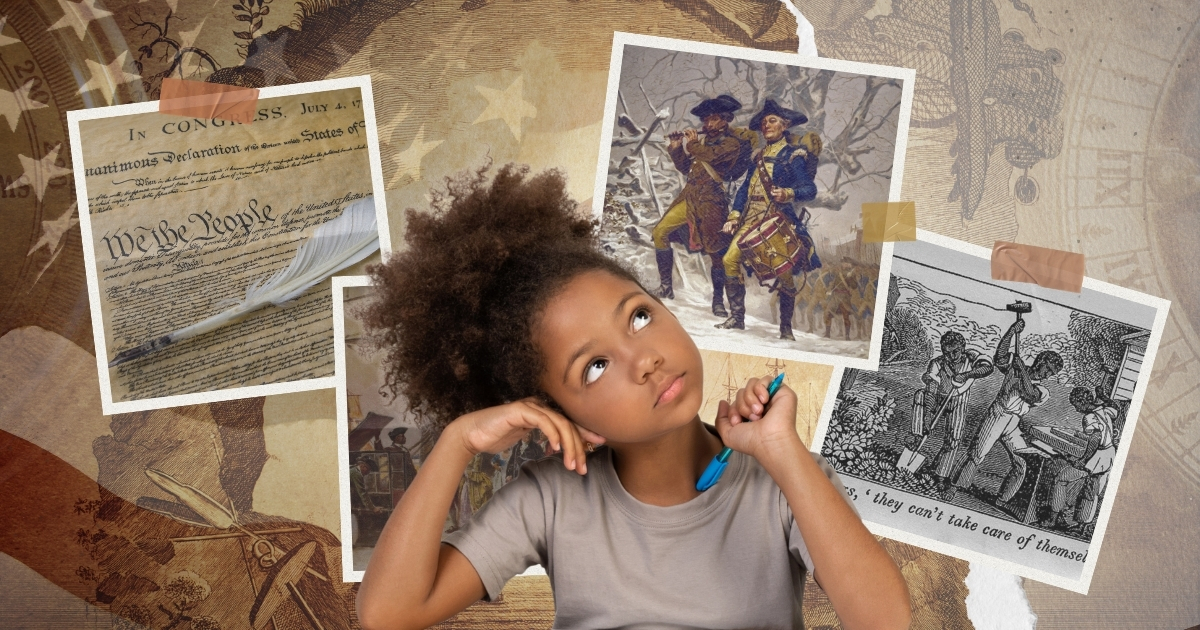
Rolled parchment of the U.S. Constitution displaying 'We the People' on top of an American flag. A symbol of U.S. history, government, and patriotic education.

Are There Free US History Curriculums for Homeschoolers?

If you’re working with a tight budget, free resources can be a lifesaver. While not always as comprehensive, many free programs can serve as solid standalone curriculums or supplements. Here are some excellent options:

Khan Academy

Khan Academy provides in-depth video lessons and practice exercises on US history for middle and high school students. Topics range from colonial America to contemporary history, and the content is easily accessible and well-organized. Though not a full curriculum, it’s an excellent tool to fill in gaps or review key concepts.

CK-12 Foundation

The CK-12 platform offers customizable digital textbooks and interactive resources. You can adapt the materials to your child’s needs while covering everything from early America to modern US history. Their adaptive learning technology tracks progress and pinpoints areas needing improvement.

Smithsonian’s History Explorer

This robust resource hub includes primary sources, project ideas, and interactive activities. Whether analyzing historical documents or exploring virtual exhibitions, the Smithsonian’s tools offer hands-on ways to deepen your child’s knowledge.

The Library of Congress

The Library of Congress provides access to an enormous digital collection of historical documents, photographs, and teaching resources. It’s perfect for in-depth research projects or teaching students how to analyze primary sources.

National Geographic Education

National Geographic’s Education portal offers maps, articles, and videos covering significant events in US history. It’s especially valuable when linking American history to global cultural themes and geography.

Final Thoughts

Finding the best US history curriculum for homeschool is a balancing act between academic rigor, engagement, and suitability for your child’s learning style. Whether you choose a literature-based approach like Sonlight, a hands-on style like Time Travelers, or supplement with free resources like Khan Academy, the key is to remain flexible.

Build a program that sparks curiosity, encourages critical thinking, and helps your child appreciate the rich tapestry of American history.

Using HIstorical Costumes To Teach Your Homeschool Child

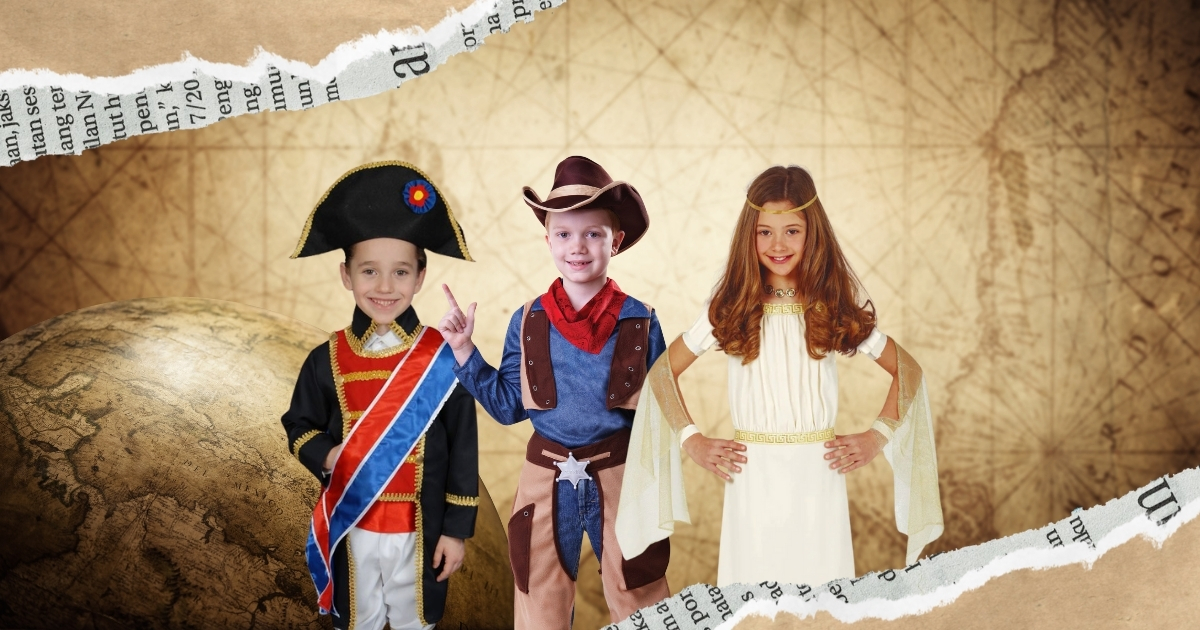
Imagine transforming a typical history lesson into an exciting, hands-on adventure. Historical costumes don’t just bring the past to life—they immerse your child in it. Through dressing up and role-playing, children can step into historical moments, better understand characters from history, and create lasting learning memories. Here’s how you can use historical costumes to enhance homeschool learning, along with practical tips to get started.

Why Use Historical Costumes in Homeschooling?

Historical costumes offer many benefits that go beyond traditional textbooks and worksheets:

  • Deeper Engagement: Wearing a costume grabs a child’s attention immediately. When they dress as a knight or an ancient Roman, they become part of the history they’re studying. It feels less like “school” and more like play, which opens the door for active learning.
  • Supports Different Learning Styles: Costumes cater to visual and kinesthetic learners. Children who thrive on hands-on experiences or seeing things visually will benefit greatly from this approach.
  • Boosts Retention: Immersive activities make information stick. Dressing up lets kids actively experience history instead of just passively hearing about it. They’re more likely to remember lessons when they’ve “lived” them through costumes.
  • Develops Empathy: Putting themselves in the shoes of people from a different era fosters understanding and compassion for other cultures and perspectives. This creates a connection to history that textbooks alone can’t deliver.
  • Encourages Creativity: Whether role-playing historical figures or designing costumes, kids flex their creative muscles while learning. Creativity developed through hands-on learning can transfer to other school subjects.
  • Makes Tough Topics Accessible: Dressing up can help simplify complicated topics. For example, wearing a colonial costume may make the concepts of early American government easier to grasp.

By helping children connect on a personal level with historical events and figures, costumes make the past vivid, relatable, and exciting.

Steps to Incorporate Costumes in Homeschool Learning

Adding costumes to your homeschool routine doesn’t have to be overwhelming or expensive. Here’s how you can get started:

  1. Pick Your Focus
    • Start with the historical period, event, or figure you’d like to study.
    • Look for eras that naturally capture your child’s interest, such as Ancient Greece, Medieval Europe, or the American Revolution.
    • Align the costume activity with your current curriculum for a seamless connection.
  2. Create Budget-Friendly Costumes
    • You don’t need museum-quality outfits. Focus on the essentials—a few key accessories or basic clothing items are often enough.
    • Use what you already have at home. For example:
      • A bedsheet can become a Roman toga.
      • Paper hats or cardboard shields are simple to craft.
    • Check thrift stores or online marketplaces for inexpensive costume pieces.
    • Explore DIY tutorials for homemade costumes. Not only are these cost-effective, but creating them can also be part of the learning process.
  3. Schedule Costume Time Regularly
    • Dedicate a specific day or lesson to dressing up. Knowing costume days are coming can motivate your child and keep them excited about history.
    • Rotate through different figures, events, or time periods to introduce variety.
  4. Encourage Historical Reenactments
    • Have your child act out significant events, such as the signing of the Declaration of Independence or a famous debate.
    • Create scripts based on actual historical texts whenever possible.
    • Role-playing not only reinforces history but also builds presentation and critical thinking skills.
  5. Pair Costumes With Activities
    • Plan activities that complement the costumes. For example, dress as a medieval artisan and try a simple craft like weaving, or dress as an Ancient Egyptian and write in hieroglyphs.
    • Use costumes to inspire writing assignments. Ask your child to write a diary entry from the perspective of their historical character.
  6. Include the Whole Family
    • Encourage parents or siblings to join in by dressing up as additional characters.
    • Turn costume days into group activities to make them even more engaging.

Creative Ideas for Bringing History to Life with Costumes

There are countless ways to use costumes to create fun and educational experiences for your child. Here are some ideas to inspire you:

  • Host a Living History Museum
    • Have your child choose a historical figure to represent.
    • Create “exhibits” in different parts of your home where your child stands “in character” and explains their figure’s life and significance.
    • Invite family members or homeschool friends to visit your museum.
  • Themed History Days
    • Dedicate an entire day to immersing yourselves in a particular era.
    • Plan costumes, food, and hands-on activities to reflect that time period. For instance:
      • Ancient Egypt: Wear a pharaoh’s headdress, build a small pyramid with sugar cubes, and write names in hieroglyphs.
      • Victorian Era: Dress up in lace or top hats, enjoy tea and biscuits, and discuss famous Victorian inventors.
      • Revolutionary War Era: Dress as soldiers or civilians, learn a colonial-era dance, and discuss major events like the Boston Tea Party.
  • Storytelling in Costume
    • Create a storyline around a historical event. Your child can play a character, and you can narrate the scene.
    • Add props like maps or period-appropriate tools to make the reenactments even more engaging.
    • Encourage children to share their character’s perspective and emotions, building empathy and understanding.
  • Debates or Speeches
    • Assign your child the role of a historical figure and host a debate or discussion about an event they were involved in.
    • Costumes will help set the tone and make the experience memorable.

How Costumes Build Lifelong Skills

Using historical costumes goes beyond simply teaching the past. It equips children with skills they’ll carry through life:

  • Critical Thinking and Analysis: Acting as a character from history requires children to consider motivations, challenges, and outcomes from that person’s perspective.
  • Presentation Skills: Whether presenting as a historical figure or narrating events, being “in costume” gives children a platform to practice speaking and storytelling.
  • Collaboration and Problem-Solving: Working on costume projects or reenactments teaches children to work as part of a team, develop creative solutions, and think outside the box.

Costumes also encourage curiosity. Asking questions like “Why did people dress this way?” or “Why were these tools important?” can inspire deeper research. This natural interest can help children explore a topic far beyond what’s covered in a lesson.

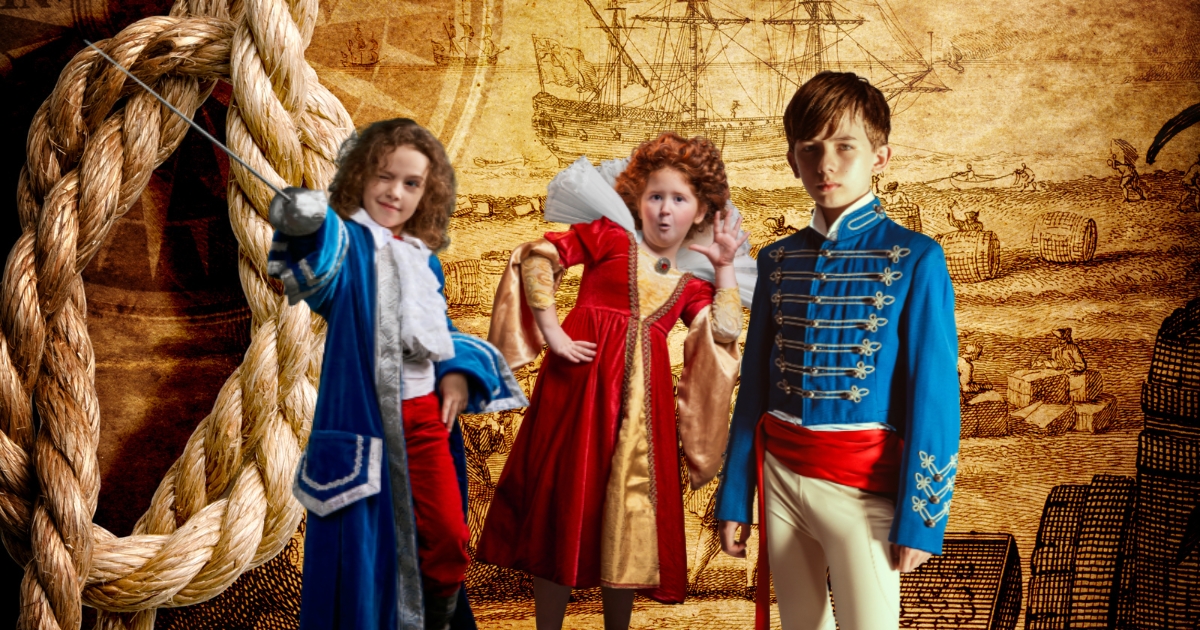
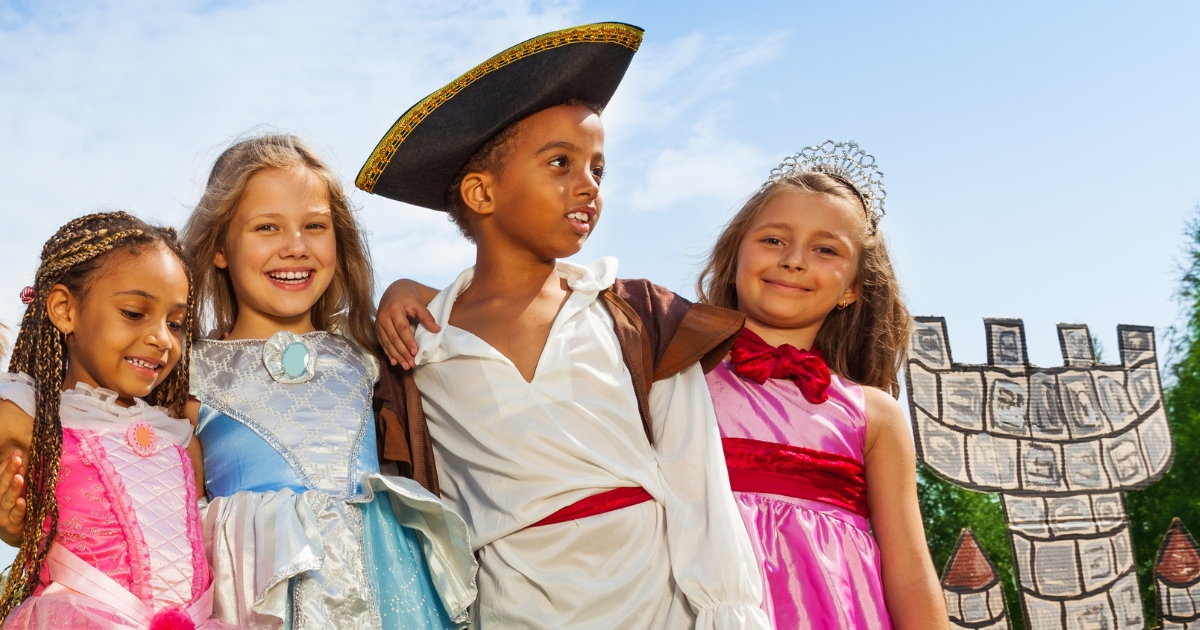
Group of happy children dressed in historical costumes, including a pirate and princesses, standing outdoors with a castle backdrop. A fun and engaging homeschool history lesson using role-playing and dress-up.

Tips for Managing Common Challenges

Some parents may worry about the time, effort, or cost involved in incorporating costumes. Here are practical solutions to overcome common concerns:

  • Limited Budget:
    • Focus on simplicity. A single accessory, like a hat or sash, can set the tone without requiring a full outfit.
    • Use recyclables or fabric scraps to craft costumes.
  • Time Constraints:
    • Plan easy activities and costumes for busy weeks. Small steps, like wearing a hat or scarf, can still create excitement.
    • Make costumes ahead of time and reuse them for multiple lessons.
  • Finding Age-Appropriate Content:
    • For younger learners, stick to simple and positive aspects of history, such as everyday life, clothing, and celebrations.
    • Gradually introduce more complex topics as your child’s maturity and understanding grow.

By starting small and building on your efforts, you can turn costume-based learning into an effective and sustainable part of your homeschool routine.

Making History Come Alive

Historical costumes are tools that make history lessons memorable, engaging, and meaningful. They promote greater understanding, foster creativity, and equip children with lifelong skills. Whether through living history museums, themed days, or role-playing, costumes turn a typical homeschool day into an adventure your child will remember.

Dive into different eras, experiment with new teaching techniques, and have fun exploring history together. By unlocking your child’s creativity and curiosity, you’ll inspire a lifelong love of learning in a way textbooks can’t match. The possibilities for exciting, costume-enhanced lessons are endless.

American History Resources To Help You Teach Your Child

Teaching American history at home can be one of the most fulfilling aspects of homeschooling. It allows you to guide your child through the rich and complex story of America’s past, but it can also come with challenges. With so many resources available, you might wonder where to start or how to keep lessons engaging. The good news is that there are plenty of effective, affordable, and even free options to suit any homeschool approach.

Here, we’ll cover the best resources to teach American history at home and share practical strategies for creating an interactive and rewarding learning experience.

Tailor Your Approach to Your Child’s Learning Style

Before jumping into specific resources, it’s helpful to start by understanding your child’s learning preferences. A personalized approach can go a long way in making history lessons enjoyable and effective.

  • Visual learners: Use maps, timelines, and illustrations to help them visualize historical events. Color-coded timelines or videos are especially useful.
  • Auditory learners: Use podcasts, audiobooks, and discussions. Storytelling podcasts or documentaries with narration are great options.
  • Kinesthetic learners: Incorporate hands-on activities such as building models of historical landmarks, crafting projects, or reenacting historical events.

Once you know how your child learns best, it becomes easier to customize lessons and choose the right tools.

Use Storytelling to Bring History to Life

History can sometimes feel like a jumble of dates and facts, but storytelling can transform these details into meaningful narratives. Focus on the experiences of real people who shaped or lived through historical moments.

  • Biographies and historical novels: Books like The Signers by Dennis Fradin or Carry On, Mr. Bowditch by Jean Lee Latham offer personal stories that resonate with young readers.
  • Documentaries and movies: Choose family-appropriate films or series that showcase key events or figures. For example, Ken Burns’ The Civil War is an excellent way to immerse older children in that time period.
  • Historical journals and letters: Read excerpts from figures such as Abigail Adams, Frederick Douglass, or soldiers from the Revolutionary or Civil Wars to bring a human perspective to history lessons.

This method encourages your child to make emotional connections to the past and fosters critical thinking about motivations, decisions, and consequences.

Explore Primary Sources

Engaging directly with primary sources allows students to step into history as it happened. These firsthand accounts and artifacts reveal the personal experiences and challenges of past generations.

  • Digital archives: The Library of Congress and National Archives websites provide access to photos, letters, speeches, and government documents.
  • Interactive lessons: Use specific examples, such as Martin Luther King Jr.’s “I Have a Dream” speech or diary entries from westward expansion pioneers.
  • Critical thinking exercises: Encourage students to ask questions like, “Who created this document? How might their perspective influence the story it tells?”

Using primary sources not only brings history to life but also helps develop analytical skills, a valuable tool for both historical studies and everyday decision-making.

Books of American History Resources To Help You Teach Your Child

Leverage Technology for Interactive Lessons

Technology can be a powerful ally when homeschooling. Many online platforms make history fun, engaging, and accessible.

  • Khan Academy: Offers free American history courses with video lessons, quizzes, and activities. It’s great for structured learning and easy to follow.
  • iCivics: Founded by former Supreme Court Justice Sandra Day O’Connor, this platform offers games and lesson plans focused on U.S. history and government.
  • Virtual field trips: Explore sites like Independence Hall, the Smithsonian Museums, and Mount Rushmore digitally. Many historical institutions host virtual tours that bring major landmarks into your living room.
  • CrashCourse on YouTube: Tackles U.S. history in digestible, 15-minute segments filled with humor and thought-provoking insights.

By blending traditional resources with technology, you’ll keep your child engaged and excited about learning.

Make Learning Hands-On

For many children, hands-on projects are one of the most impactful ways to deepen their understanding of history.

  • Model-building: Create replicas of historical landmarks like the White House, Liberty Bell, or a Native American longhouse.
  • History-themed crafts: Design colonial-style quilts, paint Revolutionary War flags, or assemble family trees to connect personal history to America’s broader timeline.
  • Mini-documentaries or presentations: Ask your child to research a historical event or figure and present their findings through a short video or a homemade poster.
  • Cooking through history: Prepare dishes that were popular in specific eras, such as Revolutionary War hoecakes or Great Depression-era recipes, for a sensory way to explore the past.

These activities make history tangible while helping develop research, creativity, and problem-solving skills.

Build Community Through Homeschooling

Homeschooling doesn’t have to be a solo adventure. Engaging with other homeschool families or communities can add variety and enrich your child’s experience.

  • Join local homeschool groups: Many groups organize history fairs, debates, or reenactments. Collaborating with other students often sparks different perspectives and deeper discussions.
  • Plan group activities: Consider creating a timeline project or hosting a historical dress-up day to encourage interactive learning.
  • Visit historical sites together: Organize group field trips to local landmarks and museums. Many sites include educators who deliver talks or help organize activities for young learners.

Learning alongside peers can add a layer of fun to history while building social and communication skills.

Top Resources to Teach American History at Home

When it comes to specific tools and materials, there’s no shortage of options. The key is to choose resources that fit your goals, teaching style, and budget. Here are some standouts to consider:

  1. A History of US by Joy Hakim
    • A comprehensive ten-volume series written in a unique narrative style that appeals to young readers.
    • Covers everything from colonization to modern times in storybook form.
  2. Howard Zinn’s A Young People’s History of the United States
  3. Khan Academy
    • Free, flexible lessons that include video lectures, quizzes, and interactive content on U.S. history.
  4. CrashCourse YouTube Channel
    • Engaging, fast-paced video lessons for middle and high school students.
  5. Historical fiction books:
    • Look for titles like Number the Stars by Lois Lowry (World War II) or Bud, Not Buddy by Christopher Paul Curtis (Great Depression).
  6. iCivics:
    • Offers games and activities that explore foundational American government concepts and historical milestones.

These resources span a variety of formats, making it easier to adapt your curriculum to suit your child’s interests and needs.

Connect With Local and Free Resources

Don’t overlook the value of local opportunities and free materials. Libraries, historical societies, and community centers can be treasure troves of American history content.

  • Libraries: Borrow books, documentaries, and access online learning databases for free.
  • Local historical societies: Many are open to homeschool groups and offer tours, lectures, or unique resources about local history.
  • Free public lectures and events: Check if nearby museums or universities host events to commemorate key historical anniversaries.

Connecting learning to your local area can foster a personal sense of how history impacts daily life.

Teaching American history at home isn’t just about covering dates and names; it’s about exploring the ideas, conflicts, and choices that shaped the nation. By using creative tools and tailoring your lessons to fit your child’s needs, you’ll inspire curiosity and critical thinking, laying a strong foundation for lifelong learning. The right resources make all the difference, so mix and match until you find the perfect fit for your family.

Homeschool HIstory: How To Teach Your Child About The Renaissance

The Renaissance was an extraordinary period of cultural, intellectual, and artistic awakening that forever changed the course of history. Teaching your child about it at home offers a unique opportunity to ignite their curiosity and creativity while providing a window into one of history’s most fascinating eras.

If you’re looking for the best ways to teach Renaissance history at home, there are plenty of creative, engaging, and practical methods to make this period come alive in your homeschool curriculum.

Understanding The Renaissance Through Stories And Context

Before jumping into the complexities of Renaissance art and science, it’s helpful to first set the scene. Explain to your child that the Renaissance, which means “rebirth,” spanned approximately from the 14th to the 17th century and marked a shift from medieval times to the early modern world. It was a time of renewed interest in the classical ideas of ancient Greece and Rome, and it brought advancements in literature, arts, science, and exploration.

To lay this foundation, you can:

  • Discuss key historical events that led to the Renaissance, such as the fall of Constantinople in 1453 or the invention of the printing press by Johannes Gutenberg.
  • Explain why cities like Florence, Italy became hubs of culture and innovation.
  • Highlight influential patrons like the Medici family, who played a key role in funding and supporting Renaissance artists and thinkers.

Stories are a powerful tool for connecting children to history. Share engaging narratives about Renaissance figures, such as:

  • Leonardo da Vinci, the celebrated polymath whose notebooks contained sketches of flying machines and detailed studies of anatomy.
  • Michelangelo, who spent years painting the Sistine Chapel ceiling and carving masterpieces like the statue of David.
  • Galileo Galilei, whose telescope helped challenge centuries-old views of the universe.

Using interactive resources can make this introduction even more engaging. Look for books like DK Eyewitness Books or the Horrible Histories series for an age-appropriate, fun introduction to the Renaissance. Documentaries and online videos from educational platforms can also visually illustrate the timeline and major figures of the era.

By immersing your child in the stories and context of the Renaissance, you establish a solid base of understanding that will make exploring its various elements more exciting and meaningful.

Exploring Renaissance Art And Activities

Art was one of the most defining features of the Renaissance, and it’s a fantastic way to involve your child in hands-on learning. A look at famous works can reveal not just artistic talent, but fascinating insights about the culture, religion, and science of the time.

Introduce Iconic Renaissance Artworks

Start by giving your child a virtual tour of some of the most iconic pieces of Renaissance art. Discuss the significance behind these works:

  • The Mona Lisa by Leonardo da Vinci, known for its groundbreaking use of perspective and lifelike detail.
  • Michelangelo’s David, a masterpiece of sculpture that showcases the Renaissance focus on human anatomy.
  • Botticelli’s The Birth of Venus, celebrating mythology and the beauty of the natural world.

Talk about the techniques Renaissance artists used, such as:

  • Perspective to give paintings depth and realism.
  • Chiaroscuro (the use of light and shadow) to create dramatic effects.
  • A focus on human anatomy, which made their work more lifelike than anything seen before.

Engage Through Artistic Activities

Turn art exploration into hands-on learning with these ideas:

  • Encourage your child to try sketching with charcoal like a Renaissance artist.
  • Experiment with making simple tempera paint (a popular medium at the time) using egg yolks and natural pigments.
  • Have your child recreate a famous artwork or develop their own story-inspired piece.

For added fun, bring the Renaissance to life with a family activity:

  • Host a mini Renaissance fair at home. Dress up in costumes, whip up traditional foods, and stage performances of Renaissance music or simple plays.

Online tools can enrich your lessons further. Many museums, like the Uffizi Gallery in Florence or The Louvre, offer virtual tours where your child can explore Renaissance art collections right from your living room.

Art not only enriches your child’s understanding of Renaissance culture but also inspires creativity and provides a deeper emotional connection to the material.

Historical reenactment of a Renaissance-era scene with people in period costumes, engaging in a dramatic role-playing activity with candlelight and medieval decor.

Engaging With Renaissance Science And Innovation

While the Renaissance is often celebrated for its art, it was also a time of groundbreaking scientific discovery and invention. This is a great opportunity to show your child how the pursuit of knowledge and curiosity reshaped the way people understood the world.

Explore Revolutionary Thinkers

Introduce your child to key scientists of the Renaissance, such as:

  • Nicolaus Copernicus, who proposed the heliocentric model that placed the sun, not Earth, at the center of the universe.
  • Galileo Galilei, who revolutionized astronomy with his improved telescope and bold ideas that defied long-held beliefs.
  • Johannes Gutenberg, whose invention of the printing press changed how ideas traveled and spread knowledge throughout Europe.

Pair these lessons with tangible comparisons to modern-day technology. For example, discuss how books are mass-produced today and what reading might have been like before the printing press.

Hands-On Experiments

Bring scientific concepts to life with fun, simple projects:

  • Create a small hand-cranked printing press with everyday materials to demonstrate how Gutenberg’s design worked.
  • Experiment with gravity by dropping objects of different weights, replicating Galileo’s ideas about the force of gravity.
  • Chart the movements of the planets as Copernicus described to give your child a visual understanding of heliocentrism.

Working together on science-themed activities encourages curiosity and deepens their appreciation for how Renaissance thinkers shaped the modern world.

Online learning tools can also provide interactive experiences. Virtual museums like the Science Museum in London often feature exhibits on the Renaissance’s scientific achievements. These resources can help explain big ideas in an accessible way.

Applying Renaissance Lessons To Modern Learning

The ideals that emerged during the Renaissance can go beyond history lessons—they can also inspire your child’s approach to learning in general.

Here’s how you can apply Renaissance themes to your homeschool routine:

  1. Foster a love of learning: Renaissance humanism celebrated education, exploration, and improvement. Encourage your child to explore various subjects—not just history, but art, math, science, and more.
  2. Encourage creativity and innovation: Like Renaissance thinkers, support your child’s efforts to create and innovate. Whether they love drawing, writing stories, coding, or inventing gadgets, find ways that fit their interests.
  3. Balance the subjects: Borrow from the Renaissance’s interdisciplinary approach by connecting subjects. For instance:
    • Discuss the math behind perspective in art.
    • Link scientific discoveries from the Renaissance to philosophical or religious debates of the time.
  4. Collaborate and build community: Learning during the Renaissance thrived on collaboration. Engage with other homeschooling families or online groups for joint projects. Team environments can invigorate your child’s enthusiasm and teach them the value of diverse ideas.
  5. Celebrate individuality: The Renaissance was heavily driven by personal achievement and self-expression. Let your child pursue independent study projects where they can explore topics they’re passionate about.

By weaving Renaissance ideals into your approach, your child gains more than academic knowledge—they build skills and mindsets that will serve them for life.

Teaching Renaissance history at home is an enriching experience that combines exploration, creativity, and discovery. Whether you’re studying famous art, replicating scientific experiments, or drawing lessons from Renaissance values, this era offers endless opportunities for fun and insightful learning. By using these best ways to teach Renaissance history at home, you’ll be engaging your child in an exciting educational adventure they’ll never forget.