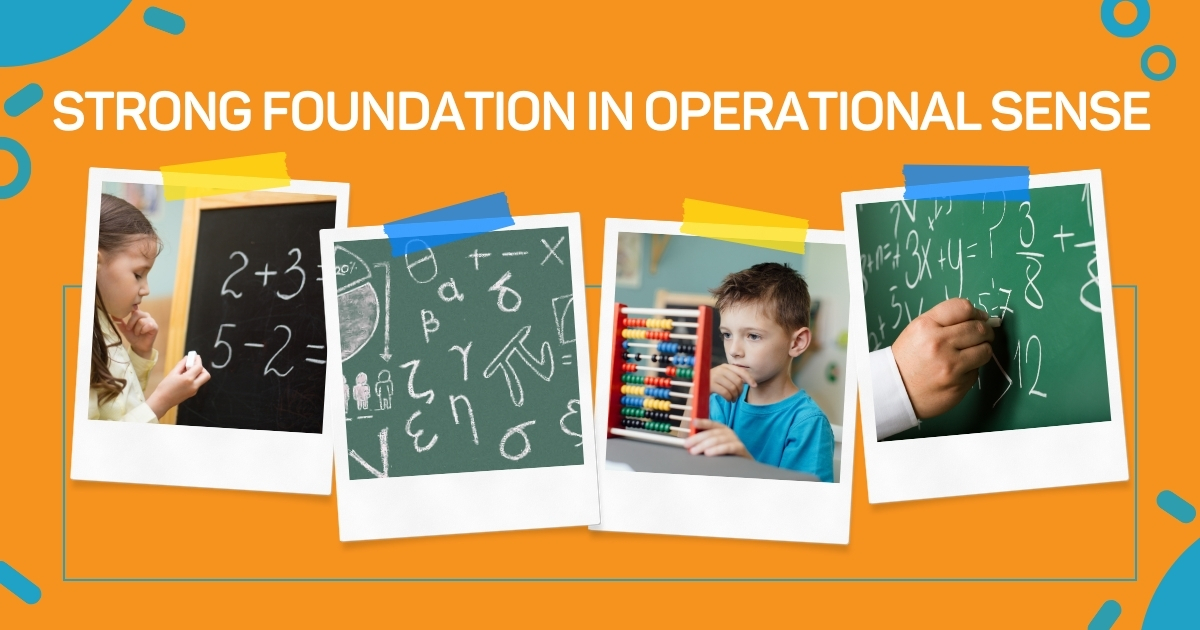
Building a Strong Foundation in Operational Sense

Understanding math goes beyond memorizing formulas or crunching numbers. At its core, math is about reasoning and problem-solving. One of the most essential skills to master in early math education is operational sense.

But what exactly is operational sense? It’s your ability to understand and use mathematical operations like addition, subtraction, multiplication, and division. Operational sense helps learners break down complex problems into manageable steps and apply math confidently in daily life, from budgeting to decision-making.

For homeschool parents, teaching operational sense in math is a key building block for your child’s success. When taught early, it lays a foundation for tackling advanced mathematical concepts, such as algebra and geometry. But where do you start?

Here, we’ll explore six actionable strategies to develop operational sense, ensuring your homeschooler is equipped with math fundamentals for young learners. By integrating these methods, you’ll also support the broader goal of developing number sense skills that stick with your child for life.

Understanding the Four Basic Operations

At the heart of operational sense are the four basic operations: addition, subtraction, multiplication, and division. Think of these as the building blocks of all math concepts. Without a proper understanding of these operations, tackling higher-level math becomes significantly harder.

How can you ensure a strong foundation? Practice is key. Here are some ideas to make learning more engaging:

  • Hands-on Activities: Use manipulatives like beads or counting blocks to solidify early addition and subtraction concepts.
  • Daily Scenarios: Practice multiplication while grocery shopping (e.g., “If apples are $3 each, how much does a dozen cost?”).
  • Math Games: Interactive games add a fun twist to learning. Look for apps or printable games centered around these operations.

When kids see how these operations play out in their lives, they’re more likely to retain what they’ve learned.

Mastering the Order of Operations

Have you heard of PEMDAS or BODMAS? These acronyms stand for Parentheses, Exponents, Multiplication/Division (from left to right), and Addition/Subtraction (from left to right). The order of operations is a critical concept because it ensures accuracy when solving equations. Without it, you could end up with wildly different answers to the same problem!

Here’s an example. What’s the answer to 3 + 5 × 2? If you add first, you’ll get 16. But if you follow the order of operations and multiply first, the correct answer is 13.

Children often struggle with this concept early on. To help avoid confusion:

  • Encourage consistent practice with worksheets or online tools.
  • Provide step-by-step examples that show how to approach problems correctly.
  • Point out common mistakes, like forgetting to resolve parentheses first, so they know what to watch for.

Mastering the order of operations ensures that your homeschooler approaches problems with confidence and accuracy.

Building Mental Math Agility

Building Mental Math Agility

Have you noticed how powerful it is to calculate something quickly in your head? Mental math isn’t just a handy skill; it boosts speed, accuracy, and confidence. It allows learners to process numbers flexibly, which is a hallmark of strong operational sense.

A few ways to sharpen mental math include:

  • Number Talks: Pick a problem and discuss different approaches to solve it mentally. For example, ask, “What’s 72 divided by 9?” and talk through shortcuts like recognizing that 72 is 9 times 8.
  • Estimation Challenges: Challenge your child to estimate totals during activities like shopping or meal prep. Asking, “How much will lunch cost for three people?” encourages quick thinking.
  • Daily Practice: Dedicate 5-10 minutes a day to practicing mental math.
    Research shows that consistent math practice improves efficiency; even five extra minutes a day can make a difference.

By integrating these strategies into daily routines, you can help your child build confidence and proficiency in mental math. Consistent, practical application not only reinforces core skills but also fosters a positive attitude toward mathematics, preparing them for future challenges in an increasingly data-driven world.

Making Connections Between Operations

A key aspect of teaching operational sense in math is showing how each operation connects to others. For instance, addition and subtraction are opposites, just as multiplication and division are. Recognizing these relationships helps students approach problems logically rather than memorizing rules in isolation.

Visual aids are great for demonstrating these connections:

  • Number Lines: Use these to show how addition moves forward and subtraction moves backward.
  • Fact Families: Group related facts together (e.g., 3 + 5 = 8, so 8 – 5 = 3). These help children see that operations are interrelated.

When learners understand the “why” behind their work, they build deeper comprehension and practical problem-solving skills.

Solving Real-World Problems

Math is everywhere, from cooking and shopping to building a budget. Applying operational sense in real-world scenarios not only makes learning relatable but also gives students a sense of accomplishment.

Here’s how to incorporate real-world problem-solving into homeschooling:

  • Budgeting: Teach your child how to manage a small allowance, track expenses, and calculate savings.
  • Cooking: Scale recipes up or down and calculate ingredient quantities using multiplication and division.
  • Word Problems: Create scenarios like calculating the cost of tickets for a family outing, and have your child figure out which operations to use.

When children see how math plays a role in everyday life, they develop an appreciation for its usefulness.

Encouraging Critical Thinking in Math

Math isn’t just about getting the right answer; it’s about understanding why methods work. This is where critical thinking comes into play. Critical thinking strengthens operational sense by encouraging students to question and analyze their work rather than apply rules blindly.

Here’s how to foster critical thinking:

  • Ask “Why?” Questions: When your child solves a problem, ask them to explain their reasoning.
  • Reflection Time: After completing a problem set, have your child review their work and discuss what strategies were effective.
  • Collaborative Discussions: Talk through challenging problems together, comparing approaches.

This approach helps homeschoolers become independent thinkers who feel confident tackling new math challenges.

Building a Strong Foundation for Lifelong Math Success

Operational sense serves as the framework for solving math problems and making sense of numbers in everyday life. From the basics of addition and subtraction to the complexities of real-world problem-solving, teaching operational sense in math gives students the power to think critically and flexibly.

By focusing on math fundamentals for young learners, parents can lay the groundwork for success. The six strategies we’ve covered—understanding basic operations, mastering the order of operations, sharpening mental math, connecting mathematical ideas, solving real-world problems, and fostering critical thinking—not only build operational sense but also nurture a lifelong appreciation for math.

Above all, be patient and consistent. Learning math is a process, not a race. Celebrate small victories, and inspire curiosity in every lesson. If you’re ready to explore more resources that make homeschooling math engaging and effective, visit Dropkick Homeschool Resource. We’re here to help transform the way your family experiences math.
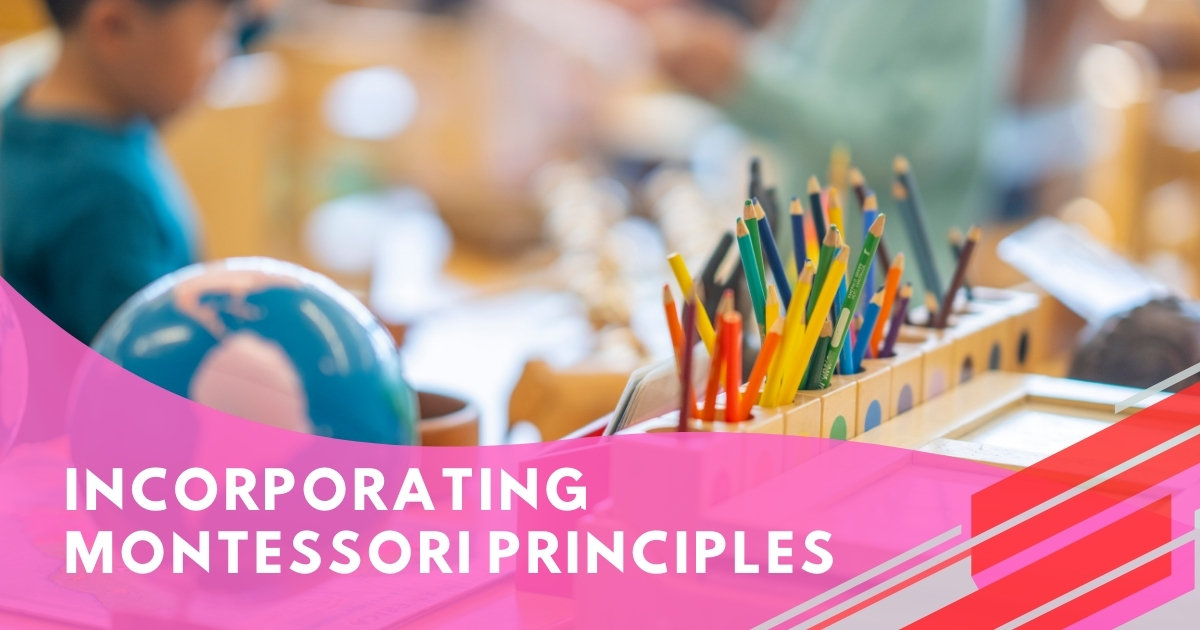

Incorporating Montessori Principles into Your Homeschool

If you are looking to enrich your homeschool experience, Montessori homeschool methods might be the perfect fit. Montessori education focuses on fostering independence, hands-on learning, and encouraging a love for exploration. These principles can transform your homeschool into a more engaging and dynamic space.

By incorporating Montessori principles, you encourage self-directed learning while creating a child-centered environment. This approach helps children develop critical thinking, problem-solving skills, and a sense of responsibility. And the best part? You don’t need to replicate an entire Montessori classroom. Any homeschooling family can integrate these ideas into their teaching style, regardless of their resources or setup.

This blog will guide you through actionable steps to bring Montessori-inspired learning at home, empowering your child to thrive academically and personally.

Create a Prepared Environment

One of the core elements of Montessori education is creating a prepared environment. This means setting up your homeschool space to encourage independence and curiosity. Imagine a space where your child can easily access materials, select activities on their own, and put things back without needing constant help.

Here are some tips to design a Montessori-inspired homeschool environment:

  • Use child-sized furniture, such as small tables and chairs. This allows your child to work comfortably.
  • Keep materials accessible. Store math manipulatives in baskets, place books on low shelves, or arrange science activities on trays.
  • Maintain order. Organizing supplies in bins and labeling them encourages kids to tidy up after themselves.

A well-organized space signals to your child that learning is both important and enjoyable. Research shows that an organized environment enhances focus and productivity in children, making it an essential starting point for Montessori homeschool methods.

Follow the Child

At the heart of Montessori homeschool methods is the concept of “following the child.” This practice revolves around observing your child’s interests and using them as a foundation for learning. Instead of rigidly sticking to a pre-set schedule, you create opportunities for your child to explore subjects that genuinely excite them.

For example:

  • If your child loves animals, consider tailoring lessons around biology, ecosystems, or writing stories about wildlife.
  • Allow flexibility by giving your child time to dig deeper into topics they find fascinating.

Striking a balance between structure and freedom ensures your child stays engaged while meeting academic goals. Studies have demonstrated that child-led education techniques lead to higher motivation and deeper understanding compared to one-size-fits-all teaching methods.

Use Hands-On Learning Materials

Montessori-inspired learning at home focuses on engaging the senses with hands-on materials that make abstract concepts easier to understand. Instead of just reading or listening, children can see, touch, and manipulate objects to truly grasp what they are learning.

Math concepts can become exciting with tools like number beads, counting blocks, or fraction circles. For science, household items can double as learning tools—try using 3D models, magnifying glasses, or simple materials for easy experiments. Language arts can be explored through letter tiles or storytelling prompts, helping kids develop literacy skills in a fun, interactive way.

If you’re on a budget, there’s no need to worry. DIY materials or repurposing items from around the house, like dried beans for counting, work just as well. Hands-on activities not only make learning enjoyable but also engage multiple senses, which helps improve memory retention and comprehension.

Encourage Independence and Responsibility

Encourage Independence and Responsibility

Montessori principles place great emphasis on fostering independence in children. Learning becomes more meaningful when kids are encouraged to take ownership of it. You can build independence by giving your child choices in their daily routine or assignments.

Consider these strategies:

  • Create a checklist of daily tasks so your child knows what needs to be accomplished, giving them a sense of responsibility.
  • Provide options for the order of activities, letting them decide whether they want to tackle math or writing first.
  • Incorporate life skills, like organizing their workspace, meal preparation, or folding laundry, alongside academic lessons.

Even small steps, like letting a younger child pour their own drink or an older one set goals for the day, build confidence and decision-making skills. Research highlights that children who practice independence early often develop better problem-solving and organizational abilities as they grow.

Integrate Nature and Real-Life Experiences

A key principle of Montessori homeschool methods is connecting learning to the real world. Nature and practical life experiences play a central role in this approach, turning everyday activities into powerful teaching opportunities.

One way to integrate nature into learning is to take lessons outdoors. Go on nature walks to explore ecosystems, plant a garden to study botany, or observe weather patterns firsthand. These hands-on experiences make learning engaging and memorable.

Practical life activities are another valuable tool. Teaching skills like meal preparation, community service, or household chores not only develops responsibility but also gives children a sense of accomplishment. These tasks tie learning to real-world applications.

Using materials from nature adds another layer of creativity. Pinecones, leaves, and rocks can be transformed into tools for science lessons or art projects, making education both fun and meaningful.

Time spent outdoors has been shown to improve children’s focus, creativity, and mood. Combining real-life experiences with academics not only makes learning feel purposeful but also helps kids connect concepts to the world around them.

Focus on Grace and Courtesy

Montessori education emphasizes grace and courtesy, fostering essential social skills that are just as important as academic achievements. These teachings promote kindness, respect, and collaboration, which benefit children in all areas of life.

Ways to incorporate grace and courtesy include:

  • Model positive behavior like resolving conflicts calmly or showing gratitude.
  • Practice polite conversation during group activities, even if it’s just with siblings.
  • Encourage group learning moments where siblings or homeschool co-op peers can work collaboratively on a project or task.

Teaching social skills this way not only helps children interact positively with others but also builds emotional intelligence. Child-led education techniques that emphasize collaboration often lead to stronger communication and teamwork abilities over time.

Start Your Montessori Homeschool Journey Today

Integrating Montessori homeschool methods into your routine can transform the way your child learns and grows. This approach nurtures independence, curiosity, and practical skills that go beyond the classroom. By creating a prepared environment, using hands-on materials, and following your child’s interests, you’re fostering a love for learning that can last a lifetime.

Remember, you don’t need to overhaul your homeschool setup overnight. Start small. Try creating an organized workspace or introducing one hands-on activity. Watch how your child responds and gradually incorporate more ideas as you feel comfortable.

If you’re ready to explore more resources, tips, and guides to enhance your homeschooling experience, visit Dropkick Homeschool Resource today. Whether you’re new to Montessori-inspired learning at home or a seasoned pro, there’s something here to support every step of your homeschooling adventure!

Mastering Geometry: Hands-On Activities for Visual Learners

Learning geometry can be challenging, especially for visual learners who struggle with traditional teaching methods. Memorizing formulas or staring at abstract diagrams doesn’t always help these students make meaningful connections with the material. Instead, they benefit from seeing, touching, and interacting with shapes and concepts to truly grasp them.

Hands-on learning is a powerful approach for these learners. By actively engaging with lessons, they can explore geometry in a way that feels intuitive and fun. In fact, research shows that hands-on learning improves retention rates by up to 75% compared to passive methods. Engaging geometry activities designed for kids can make mastering geometry both effective and enjoyable, helping visual learners thrive.

Building 3D Shapes with Everyday Materials

One of the best ways to teach geometry is to make it tangible. For younger learners, building 3D shapes using everyday materials like toothpicks, marshmallows, straws, or clay is an excellent starting point.

Here’s why it works:

  • Creating shapes helps kids visualize edges, faces, and vertices.
  • It reinforces concepts like the difference between 2D and 3D objects.
  • It connects geometry to real-life objects.

For instance, ask kids to build a cube using toothpicks and marshmallows. Encourage them to count the edges (12), faces (6 squares), and vertices (8 corners). Once they’ve mastered the basics, challenge them to create more complex shapes like pyramids or prisms.

To take the activity further, connect it to concepts like volume and surface area. For example, once kids build a rectangular prism, have them measure the dimensions to calculate its volume. Using hands-on geometry lessons like this can simplify abstract math while boosting comprehension.

Paper Folding for Understanding Angles and Symmetry

Paper folding, or origami, is another fantastic way to teach geometry. This activity combines creativity with important geometry concepts like angles, symmetry, and geometric transformations. Best of all, it doesn’t require expensive materials—just paper and imagination.

Here’s how to use paper folding for visual learning in math:

  • Teach symmetry by folding a square in half and showing where the folds match.
  • Explore angles by folding triangles and bisecting them to show how smaller angles form a larger whole.
  • Encourage transformations by folding paper into complex designs like cranes or stars, demonstrating how shapes change through rotation, reflection, and translation.

For example, fold a piece of paper in half to create a triangle. Repeat this process to make smaller triangles. Students can then identify acute, obtuse, and right angles at each fold. These hands-on activities help students internalize key geometry concepts while boosting their creativity.

Interactive Graphing with Coordinate Planes

Interactive Graphing with Coordinate Planes

A coordinate plane often intimidates students when it’s presented in a textbook. However, turning it into a physical and interactive experience can change that.

Start by using large-scale graph paper or creating a grid on the classroom floor with tape. Students can then “walk the graph” by physically plotting points or drawing lines. Here are some activity ideas:

  • Have students walk between plotted points to explore slope and direction.
  • Use colored tape to connect points, forming shapes like triangles or rectangles.
  • Challenge students to recreate geometric graphs by walking specific coordinates.

This method helps students connect graphing to real-world applications, such as designing maps or understanding blueprints. By making graphing physical, kids can grasp abstract concepts like slopes and quadrants in an engaging and memorable way.

Tangram Exploration for Problem-Solving

Tangrams are an age-old tool for turning geometry into an interactive puzzle. A tangram consists of seven geometric shapes that can be arranged to form larger images or designs.

Here’s how tangrams support hands-on geometry lessons:

  • They develop spatial reasoning by encouraging students to visualize how smaller shapes work together.
  • They teach transformations as students rotate and flip pieces to fit them together.
  • They connect problem-solving to geometry concepts like congruence, area, and perimeter.

Give students a specific shape (like a square or a cat) to form using their tangram pieces. Alternatively, have them create their own design and calculate the total area they used. This activity builds critical thinking skills while reinforcing fundamental geometry ideas.

Geometry Scavenger Hunts in Everyday Life

Sometimes, the best learning happens away from paper and desks. Geometry is all around us, and encouraging kids to look for it in their surroundings can create powerful “aha” moments.

Set up a scavenger hunt for students to find geometry in everyday life. Here are some examples of what they can look for:

  • Shapes in architecture (triangles in roofs, circles in windows).
  • Angles in furniture (right angles in tables, obtuse angles in chairs).
  • Patterns in art and nature (symmetry in butterflies or fractals in shells).

Turn it into an exciting challenge by giving participants a checklist of geometric items to find. For example:

  • A right triangle
  • A tessellation pattern
  • A circle and its diameter

Afterward, bring the class together to discuss what they found. Connecting geometry concepts to the real world makes the subject relevant and exciting, ensuring those lessons stick.

Why Hands-On Geometry Works

Students need a variety of tools to succeed in math, and hands-on activities are some of the most effective. These activities allow learners to move beyond abstract concepts and connect with math in a tangible way. For visual learners, studies show that hands-on methods can boost retention and understanding by up to 50%, making math feel more accessible and less intimidating.

Activities like building 3D shapes, folding paper, or using physical objects to solve problems engage multiple senses at once. This improves comprehension and builds students’ confidence as they see concepts come to life. By making math interactive and fun, hands-on learning helps students develop a stronger foundation for applying skills in real-world situations.

Try These Geometry Activities for Kids Today!

Mastering geometry doesn’t have to feel overwhelming. By using hands-on activities tailored for visual learners, parents and educators can make math both accessible and fun. These geometry activities for kids cater to different learning styles, giving students the opportunity to see, touch, and truly understand key concepts.

Whether it’s creating 3D models, folding paper, or hunting for shapes in their environment, kids will enjoy the experience of bringing geometry to life. Visual learning in math is about more than just helping kids pass tests. It’s about giving them the tools and confidence to see how math plays a role in the world around them.

If you’re looking for more resources or ideas to support your homeschooling, Dropkick Homeschool Resource is here to help. Head over to our website to discover more tips, tools, and activities designed to make learning engaging and effective!

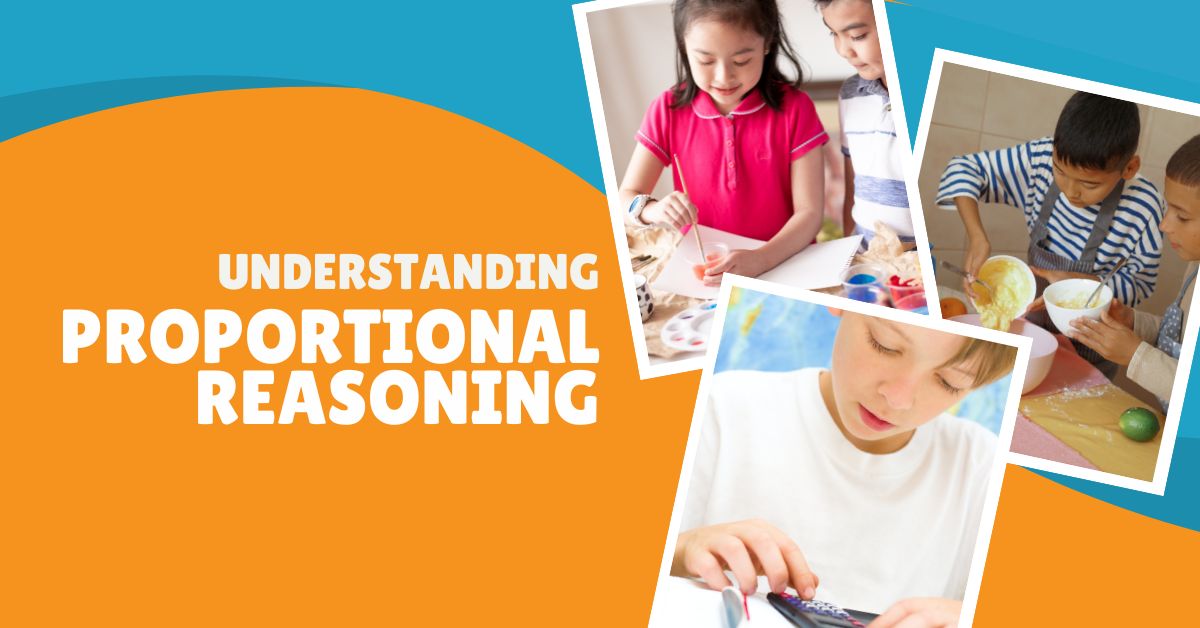
Understanding Proportional Reasoning Real-World Applications

Math can often feel abstract to children, making it challenging for them to connect concepts to their daily lives. Teaching math with real-world problems not only helps make the subject more relatable but also builds critical thinking and problem-solving skills they’ll use for a lifetime. By incorporating proportional reasoning and everyday examples of proportions, homeschooling parents can make math truly engaging and practical.

The Importance Of Real-World Math Applications

Math isn’t just for the classroom; it’s embedded in tasks we do every day. From measuring ingredients while baking to calculating discounts while shopping, real-world applications of math make it clear why these skills matter. When children see math as something they use in their daily routines, they’re more likely to be motivated and invested in learning.

Teaching math with real-world problems allows students to explore concepts hands-on. This approach not only improves their understanding but also helps them apply what they’ve learned in meaningful ways. By focusing on proportional reasoning and daily uses of proportions, you can help your child develop stronger problem-solving skills, and they’ll truly see the value of math.

What Is Proportional Reasoning?

Proportional reasoning involves understanding ratios and making comparisons. This can include identifying how two quantities relate to each other or predicting one quantity when another changes. It’s foundational for mastering fractions, percentages, scaling, and even higher-level math.

For example, suppose a recipe calls for 2 cups of flour to make 1 batch of muffins. If you want to make 3 batches, proportional reasoning helps you determine that you’ll need 6 cups of flour. This kind of reasoning is critical not just for cooking, but for tackling more complex problems related to engineering, science, and finances as well.

Everyday Proportional Reasoning Examples

To help your child get comfortable with proportional reasoning, incorporate these everyday scenarios:

Cooking and Baking

Kitchen math is one of the easiest and most natural ways to teach proportional reasoning. Try these activities:

  • Doubling or tripling recipes: If a cookie recipe calls for 1.5 cups of sugar, ask your child how much sugar they would need if you doubled the recipe.
  • Scaling down recipes: Turn it into a challenge by saying, “This makes enough for 10 and we only need enough for 5 people. How much of each ingredient should we use?”
  • Comparing measurements: Discuss questions like, “If it takes 2 eggs to make a dozen cookies, how many do we need for 18 cookies?”

Grocery Shopping

Shopping trips can offer a multitude of opportunities for proportional reasoning:

  • Unit pricing: Look at the cost per ounce of different sizes of peanut butter to determine the best value.
  • Bulk purchases: If one pack of juice boxes has 8 boxes and costs $4, ask your child how much it would cost to buy enough for 32 boxes.
  • Estimating discounts: If there’s a 25% off sale, ask your child to calculate the final price of an item.

Travel and Distance

Teach proportions by incorporating real-life travel examples:

  • Maps and scales: Use a map with a scale (e.g., 1 inch = 10 miles) to calculate how far apart two destinations are.
  • Speed and time: Discuss, “If it takes 2 hours to drive 120 miles, how long would it take to drive 60 miles?”
  • Fuel efficiency: Show them how to calculate gas usage. For example, if your car drives 30 miles per gallon, how many gallons do you need for a 150-mile trip?

Teaching Proportions in Everyday Life

Teaching Proportions in Everyday Life

Life is filled with proportions that can help homeschooling parents teach math in engaging ways. Consider these scenarios to make math lessons feel more applicable:

  • Weather reports: Discuss how temperatures are reported in different units (Celsius vs. Fahrenheit). Compare the two to see how equivalent measurements work.
  • artwork or design: If your child enjoys creativity, proportions apply when scaling drawings or creating digital art. Try tasks like enlarging a design while keeping all dimensions proportional.
  • Building projects: Simple woodworking or LEGO projects provide opportunities to measure dimensions and calculate scaled-down versions of real structures.
  • Financial literacy: Introduce your child to basic budgeting concepts, such as saving portions of allowances. For example, teach them to save 20% of their earnings and calculate how much that is in different scenarios.

Practical Activities For Teaching Proportional Reasoning

To help you get started, here are some hands-on math activities to include in your homeschool routine:

Create Ratio Tables

Ratio tables help kids visualize relationships between quantities. Here’s how to try it:

  1. Use an example like comparing apples to oranges in a fruit salad. If a fruit salad has a 2-to-3 ratio of apples to oranges, ask your child to extend those ratios to a bigger batch (e.g., for 4 apples, 6 oranges; for 6 apples, 9 oranges, etc.).
  2. Ask questions like, “What patterns do you see? Can you predict how many oranges we’ll need for 10 apples?”

Mix Paint Colors

If your child loves art, teaching proportions through paint mixing is a fun option. For instance:

  • Start with a mixture of 2 parts blue paint to 1 part yellow paint for green.
  • Then challenge your child to calculate the ratios needed for larger batches, such as mixing enough paint to cover a poster board.

DIY Crafts with Measurements

Use proportions to guide crafts that require measuring. For instance:

  • Sew a pillow of specific dimensions. If you double the size of the pillow, ask how much fabric will be needed.
  • Build a birdhouse with a scaled-down blueprint. Have your child calculate measurements to enlarge the dimensions.

Sports Simulations

If your child is into sports, you can leverage this to teach proportional reasoning. For example:

  • Create a scoring system for a game based on proportional contributions. For instance, if one point represents 10 yards in a race, what’s the proportional value of 15 yards?
  • Use statistics from their favorite sport to discuss percentages. If a player scores on 3 out of every 10 shots, what’s their scoring rate?

Building a Math Routine with Real-World Contexts

Teaching math through real-world problems isn’t just about practicing proportions or solving equations. It’s an approach that makes math lessons more meaningful. To build this into your homeschool routine, keep the following in mind:

  • Start small: Try incorporating one real-world problem a week into your lessons and increase as your confidence grows.
  • Encourage discussions: Ask your child to explain their reasoning. Why does dividing a recipe in half mean halving all the ingredients? How does doubling a recipe impact the outcome?
  • Celebrate errors: Mistakes are part of learning. If your child forgets to adjust one of the numbers proportionally, use it as an opportunity to talk about why consistency is important.

Real-world math problems also reinforce other essential skills, such as communication, creativity, and critical thinking. These lessons help your child learn to explain their reasoning, collaborate on solutions, and think outside of the box.

Why Proportions Are More Than Just Numbers

Proportions might seem like a small part of the math curriculum, but they hold immense carryover value to various aspects of life. By teaching kids how to compare, scale, and predict, you’re giving them the tools to tackle practical challenges—from doubling a recipe to building a doghouse to understanding how interest on a savings account works.

Because proportional reasoning is so integral to real life, it creates a seamless transition between abstract math and concrete experiences. This makes math less intimidating for kids and more aligned with their everyday reality.

By blending proportional reasoning with creative real-world applications, parents can make math feel accessible and enjoyable for their homeschoolers. Math is no longer just numbers on a page; it’s the building block of problem-solving in daily life.

Integrating Physical Education into Your Homeschool Routine

For many homeschooling families, academics often take center stage, but physical education (PE) is just as important. It boosts not only physical health but also mental well-being, focus, and social skills. One of the best parts of being a homeschooler is having the flexibility to tailor PE lessons to your children’s needs and interests. 

Below, you’ll find actionable advice and homeschool PE ideas to keep your kids moving, engaged, and healthy.

Why Physical Education Matters In Homeschooling

Physical education isn’t just about keeping kids active. It’s also a great opportunity to teach them life-long habits related to health and fitness. When kids exercise, they develop better motor skills, improve their coordination, and strengthen their cardiovascular systems. Furthermore, studies show that regular physical activity can reduce anxiety, improve mood, and promote better sleep patterns, all of which are essential for learning.

For homeschoolers, PE adds variety to the day, provides a much-needed break from sitting at a desk, and offers plenty of chances to spend time as a family. Plus, it encourages kids to explore sports, physical challenges, and teamwork on their own terms.

Setting Up a PE Routine at Home

The key to successful PE in a homeschool setting is to make it part of your daily or weekly schedule. Here are some practical tips to get started:

  • Schedule it like any other subject: Dedicate a specific time in your weekly routine for physical activities. It could be daily, two to three times a week, or whatever works best for your family.
  • Set goals: Work with your kids to create specific goals such as running a mile without stopping, mastering a new sport, or simply being active for 30 minutes every day.
  • Track progress: Use a chart or checklist to track your children’s activities and achievements. Seeing their progress will encourage consistency.
  • Provide choices: Engage your kids by offering options for activities. Let them choose between doing a yoga session, riding their bikes, or kicking a soccer ball.

Keep in mind that kids will be more likely to participate if the activities are fun and age-appropriate.

Homeschool P.E. Ideas For All Ages

Indoors Activities

Not every physical activity requires a large backyard or outdoor space. These indoor ideas are great for rainy days or small living areas:

  • Yoga for kids: Yoga enhances flexibility and focus. Use kid-friendly YouTube videos or apps for guidance.
  • Obstacle courses: Set up a simple course using pillows, chairs, and household items. Challenge kids to complete the course as fast or as creatively as possible.
  • Dance parties: Put on your child’s favorite music and have a dance-off in the living room. This is not only a workout but also tons of fun.
  • Exercise videos: Short, engaging workout videos for kids, such as jump rope routines or beginner aerobics, are perfect for burning energy indoors.
  • Fitness challenges: Set goals like doing 10 push-ups or planking for 30 seconds, and increase the challenge gradually over time.

Outdoor Activities

When the weather allows, getting outside enhances both play and physical fitness. Here are some ideas to try in your yard, park, or local community:

  • Backyard sports: Play basketball, soccer, or badminton. These sports develop coordination, teamwork, and endurance.
  • Nature hikes: Walks in parks or nature preserves are great for physical activity and an opportunity to study biology or geography.
  • Biking or scootering: Create a safe route and challenge your kids with timed laps or distant goals.
  • Water play: On warm days, turn on the sprinkler, play with water balloons, or set up an inflatable pool for splashing and swimming.
  • Treasure hunts: Organize a backyard scavenger hunt. Hide objects and provide clues that require running, hopping, or climbing to find them.

Team And Social Activities

Team And Social Activities

Even if you homeschool, physical education can still foster connection with others. Consider these options:

  • Join local sports leagues: Many communities offer youth soccer, basketball, or swim teams. Ask other homeschoolers in your area for recommendations.
  • Meet-ups with other homeschool families: Organize group PE sessions where kids can play relay races, capture the flag, or kickball.
  • Classes at your local gym or recreation center: Yoga, martial arts, or gymnastics are great options for kids who want to learn new skills.

Incorporating Fitness Into Daily Life

Not all physical education has to be a planned session. Sometimes, you can encourage movement simply by weaving fitness into everyday routines. For example, take short walks after lunch, have a family clean-up race where everyone runs to put items back in their place, or set a timer to remind kids to stretch during long study sessions.

Remember, building everyday activity doesn’t have to be complicated. Even small actions like climbing stairs or walking the dog help create an active lifestyle.

Creating a DIY PE Curriculum

Designing your own PE curriculum is easier than it sounds. First, decide on the skills or topics you want to focus on, such as strength, coordination, endurance, or sports techniques. Then, pick activities that build those skills.

For example, if you want to focus on coordination, you could include activities like juggling scarves, balancing on a beam, and bouncing a tennis ball against a wall. If your focus is on cardiovascular fitness, you might schedule jogging, jumping rope, or aerobics. Rotate through these areas to keep things diverse and engaging.

You can also mix in lessons about health and fitness. Take time to teach kids about how their muscles work, the importance of hydration, or eating a balanced diet for energy. Knowledge enhances their motivation to stay healthy.

Making PE Fun with Games and Challenges

Kids love games, and turning physical activity into a fun challenge can keep them invigorated. Here are a few ideas to amp up the fun factor:

  • Relay races: Create a variety of tasks for each “leg” of the race, such as hopping on one foot, balancing a ball on a spoon, or crawling.
  • Animal movements: Challenge your kids to race while pretending to be different animals such as jumping like a frog, waddling like a duck, or crawling like a crab.
  • Minute to win it: Set timers for quick exercise challenges. See how many jumping jacks, sit-ups, or sprints they can do in just 60 seconds.
  • Capture the flag: If you have multiple children or play with another family, this game is an excellent way to combine strategy and movement.
  • Fitness bingo: Create a bingo card with activities like run a lap, do 10 squats, or stretch for five minutes. Kids can check off boxes as they complete them.

By framing activities as games, you encourage kids to participate without feeling like they’re “exercising.”

The Role of Parents in Homeschool PE

Children often look to their parents for guidance, even when it comes to fitness. You can set the tone by being their partner in physical activity. Join in on the yoga session, go for a jog with them, or compete in a push-up challenge. Your involvement not only builds a stronger connection but also sends the message that fitness is for all ages.

It’s also a chance to show them how to set realistic goals, celebrate small wins, and build persistence. Lead by example, and your kids are likely to follow your enthusiasm for staying active.

Your Homeschool PE Journey

Physical education doesn’t have to be complicated or costly. With a little imagination and planning, you can integrate PE into your homeschool routine in a way that promotes health, learning, and fun. Whether it’s a structured curriculum tailored to learning goals or spontaneous backyard activities, the key is to provide consistent opportunities for movement.

With these homeschool PE ideas, you’ll not only keep your kids active but also help them build healthy habits that last a lifetime. Grab your sneakers and start moving!

How to Foster a Love for Literature in Your Homeschooler

Helping your child fall in love with literature is one of the greatest gifts you can give as a homeschooling parent. A love for books not only provides lifelong entertainment but also strengthens critical thinking, imagination, and communication skills. With the right homeschool literature activities and strategies, you can make reading an inspiring, enjoyable, and natural part of your homeschool days.

Cultivating A Reading-Friendly Environment

Creating a space where your child feels comfortable and excited about books is the first step to fostering a love for literature. Here’s how you can build that environment in your homeschool:

  • Create a cozy reading nook
    Dedicate a corner of your home as a reading space. Add comfy cushions, a small bookshelf within your child’s reach, and good lighting to make it inviting.
  • Keep books accessible
    Place books in places where your child spends time, such as the living room, kitchen, or even the car. A basket of books by the sofa or a few fun titles on the breakfast table can subtly encourage daily reading.
  • Build a home library
    Regularly add new titles to your collection, including both fiction and non-fiction. Include classics, graphic novels, poetry, and age-appropriate chapter books.
  • Limit digital distractions
    Schedule dedicated times for reading by minimizing screen time during those periods. Create a balance where technology doesn’t overshadow books.
  • Lead by example
    Show your child that you value reading by letting them see you engaged in a book or talking about something interesting you read recently.

Encouraging Reading with Fun Homeschool Literature Activities

Not every child will naturally gravitate toward books, and that’s okay! The key is to make literature fun and engaging. Here are several homeschool literature activities to try with your child:

  • Act out scenes from books
    Choose a favorite story and act out scenes as a family. This brings the text to life and helps children connect with characters in a deeper way.
  • Create book-inspired art
    After finishing a book, ask your child to draw or paint their favorite character, scene, or moment. Creative expression can help them process and enjoy what they’ve read.
  • Host a “book tasting”
    Set up a “reading café” at home, where you display a selection of short story collections or first chapters of different books. Your child can sample a bit of each to find what piques their interest.
  • Start a family book club
    Pick a book for everyone in the family to read and discuss weekly. Exploring different perspectives on the same story can be a meaningful bonding experience.
  • Introduce ‘reading challenges’
    Set fun goals, like finishing a book by the end of the month or reading books from a specific genre. Rewards like stickers or a special outing can keep motivation high.
  • Pair books with activities
    Reading doesn’t have to end when the last page turns. If your child reads a mystery, create a treasure hunt. After finishing a nature-themed book, head outdoors for a scavenger hunt based on what they learned.

Integrating Books into Other Subjects

One of the advantages of homeschooling is the freedom to cross boundaries between subjects. Using literature to teach other topics helps demonstrate how reading enriches all areas of life.

  • History through historical fiction
    If you’re studying a specific time period, find novels set during that time to help your child better understand the people and culture of that era.
  • Science and nature exploration
    Combine non-fiction books about ecosystems, weather, or animals with hands-on experiments or outdoor activities. For example, reading about butterflies can lead to observing caterpillars and their transformation in real life.
  • Math in literature
    Use books to reinforce math concepts. Titles like The Doorbell Rang by Pat Hutchins introduce counting and division in a story format.
  • Character study and values
    Discuss themes of kindness, courage, and empathy by analyzing characters from classic and contemporary stories. Relating these to real-life situations helps children form their own moral compass.

Building A Love For Books Through Storytime

Building A Love For Books Through Storytime

One of the simplest, yet most effective ways to build a love for literature is through regular read-aloud sessions. Storytime never gets old, no matter your child’s age.

When you read aloud, you’re modeling fluent reading while creating special moments your child will treasure. Select books that align with their age, interests, and reading level. Mix up your library with picture books, chapter books, poetry, and even plays.

Pay attention to your child’s preferences. If they love adventure, try books like The Hobbit. If they’re into humor, consider Diary of a Wimpy Kid. By showing respect for their tastes, you encourage them to take ownership of their reading choices.

Storytime is also an opportunity to share books they might not pick up independently. By reading together, you can expose them to a wider variety of literature while sharing discussions about themes, plot, and characters.

Nurturing Independent Readers

Helping your child transition from read-aloud sessions to independent reading can feel tricky, but it’s an important step in fostering lifelong learners. Here’s how to make that process easier:

  • Offer choice
    Allow your child to choose their books, even if it’s not what you’d prefer. Whether it’s a comic book, fantasy story, or an animal adventure, the fact that they’re reading is what counts.
  • Use audiobooks
    Listening to books can improve vocabulary and comprehension. Audiobooks are particularly helpful for growing readers or those with learning differences.
  • Set realistic reading goals
    Avoid overwhelming your child with long or challenging books. Start with shorter stories and gradually encourage longer ones as their confidence grows.
  • Celebrate progress
    Recognize milestones to keep your child motivated. Praise them for finishing a book or mastering a new genre.
  • Be patient
    Every reader develops at their own pace. Resist the urge to compare your child’s reading level or speed with others, and focus instead on their individual progress.

Using Community Resources to Inspire Reading

You don’t have to tackle this alone. Local libraries, bookstores, and online resources can be your best allies for homeschool literature activities.

  • Join library programs
    Many libraries offer free storytime sessions, summer reading challenges, or craft activities based on books. These events encourage community and excitement around reading.
  • Visit library or bookstore story hours
    Listening to stories read by professional storytellers can bring books to life for your child in new and exciting ways.
  • Explore authors online
    Many authors host virtual events, Q&A sessions, or even give behind-the-scenes glimpses into how books are created. Such connections can make reading feel personal and engaging.
  • Swap books with other homeschoolers
    Start a mini lending library with other homeschooling families. Not only will this give you more book options, but it also fosters a sense of sharing and collaboration in your homeschool community.

Kindling A Lifelong Relationship With Literature

Above everything, remember that building a love for books doesn’t happen overnight. It’s not about how fast your child reads or how many books they finish but about cultivating a lasting relationship with literature.

The goal isn’t to create a perfect reader but a curious and thoughtful one. Even small moments, like laughing over a silly story or discussing a character’s choice, plant the seeds for a lifetime of learning and exploration. Make books a natural, enjoyable part of your homeschool, and most importantly, have fun along the way!

With the tips and homeschool literature activities shared here, you’re well on your way to inspiring a love of reading that will grow with your child, opening doors to endless adventures and opportunities.

Developing Strong Algebraic Reasoning Skills in Middle School

Helping your middle schooler develop strong algebraic reasoning skills is an essential part of their math education. Algebra forms the foundation for higher-level math, problem-solving, and critical thinking, all of which are valuable in academic and real-world situations. If you’re homeschooling, teaching algebra might feel like a daunting task, but with the right strategies, resources, and mindset, you can make it a rewarding experience for both you and your child. 

This post will walk you through practical ways to teach algebraic reasoning and provide actionable middle school math strategies to help your child succeed.

Why Algebra Skills Matter For Middle School Students

Middle school is when children move from arithmetic to abstract thinking in math. Developing algebra skills helps students learn how to think logically, identify patterns, and break down complex problems into manageable parts. These reasoning skills go beyond solving equations and are critical for success in subjects like geometry and calculus, as well as in everyday problem-solving.

For homeschool parents, teaching algebra provides the opportunity to build these skills in a one-on-one setting. Beyond just solving for x, algebraic reasoning involves understanding relationships between numbers, variables, and operations. This focus on reasoning, rather than rote memorization, equips students with the tools to tackle math challenges confidently.

Here’s how you can help your child excel in algebra and develop solid reasoning skills that will serve them for years to come.

Build Algebraic Thinking Little By Little

Algebra isn’t just about equations; it’s about learning to think in new ways. By introducing algebraic concepts early and incrementally, you can help your child build confidence and understanding before jumping into complex topics.

Here are some practical steps to get started:

  • Introduce Variables Gradually
    Start by using small puzzles or real-life examples where letters or symbols replace numbers. For instance, “If x + 3 = 7, what is x?” makes variables approachable without overwhelming your child. You can even tie it to everyday activities, like calculating how many apples you need if you’ve already bought three but want a total of seven.
  • Practice Pattern Recognition
    Algebra relies heavily on recognizing patterns, so look for opportunities to practice this skill. Use sequences like 2, 4, 6, 8… and ask your child what comes next. Once they’re comfortable, you can challenge them to find the formula behind the sequence, such as “2n for even numbers.”
  • Use Visual Models
    Visual aids, such as algebra tiles or number lines, help children understand abstract concepts more clearly. For example, use tiles to model equations like “2x + 3 = 7” by visually representing each component, then work toward solving it step by step.
  • Focus on Real-World Applications
    Show your child how algebra is useful in everyday life. Work on projects like budgeting, calculating discounts, or crafting recipes. When students see the purpose behind what they’re learning, it feels more relevant and less intimidating.

Prioritize Problem-Solving Over Memorization

Prioritize Problem-Solving Over Memorization

It’s easy to fall into the trap of teaching formulas and mechanical steps without context. However, focusing on problem-solving develops critical thinking, teaching your child how to approach a question rather than just giving them steps to follow.

Here’s how to implement this in your teaching approach:

  • Encourage Logical Thinking
    Ask your child open-ended questions to challenge their reasoning. Instead of just asking for the answer, try this approach: “Explain how you got that answer,” or “What if we changed this number? How would the solution change?”
  • Make Mistakes Part of Learning
    Normalize making mistakes and use them as teaching moments. When you work through an error together, your child sees how to identify and correct mistakes, which is an essential part of algebraic reasoning.
  • Offer Multi-Step Challenges
    Introduce multi-step problems that require combining different skills, such as solving equations, working with fractions, and interpreting graphs. These challenges encourage your child to think holistically and apply everything they’ve learned so far.

Teaching Algebraic Reasoning Through Word Problems

One of the best ways to help your child develop algebraic reasoning skills is by working through word problems. These problems show how algebra applies to real-world situations while encouraging critical thinking.

When tackling word problems, start by teaching these strategies:

  • Break Down the Problem
    Teach your child to identify what the question is asking, what information they’ve been given, and which operations they’ll need to use. For example, in the problem “Sarah has 20 apples and gives x apples away. If she has 12 left, how many did she give away?” the key is to translate the word problem into an equation like “20 – x = 12.”
  • Draw It Out
    Visual representations like diagrams, drawings, or graphs can simplify complex word problems. If the problem involves distance, for instance, a simple visual can help your child understand relationships between speed, distance, and time.
  • Solve in Steps
    Break the problem into smaller pieces, solving each step sequentially. For example, if a multi-step problem involves calculating a percentage and then subtracting it from a total, show them how to tackle one part at a time.

Regular practice with word problems strengthens algebraic reasoning and builds your child’s confidence in applying algebra to practical situations.

Incorporate Fun and Engaging Activities

Math doesn’t have to feel like a chore. Fun, hands-on activities can spark your child’s curiosity and help them develop algebra skills naturally. Gamifying lessons or using interactive resources makes abstract concepts like variables and equations come to life.

Here are some engaging activity ideas for practicing algebra:

  • Math Games and Apps
    Invest in math-based games or apps that focus on algebraic reasoning. Many educational platforms offer activities that blend play with learning, such as solving equations to unlock rewards or participating in time-bound challenges.
  • Card and Board Games
    Games like Uno, Set, or even custom-designed algebra flashcards are great for practicing math thinking. Create a game where each card represents an equation, and solving it allows your child to advance a space or collect a prize.
  • DIY Algebra Projects
    Encourage your child to explore algebra through projects like measuring and cutting materials for DIY crafts, building logic puzzles, or even designing a simple budget for a pretend trip. These activities apply algebra concepts in unique and creative ways.
  • Interactive Online Resources
    Platforms such as Khan Academy, IXL, or Purplemath offer video lessons, exercises, and quizzes tailored to middle school math. These can supplement your efforts and provide additional practice for tricky topics like inequalities or graphing.

Fitting Algebra Practice Into A Homeschool Routine

For busy homeschooling parents, fitting regular algebra practice into your already-packed schedule doesn’t have to be overwhelming. Developing strong algebraic reasoning skills doesn’t require hours of daily practice; consistency is what matters most.

  • Set Aside Short, Focused Sessions
    Rather than long, drawn-out lessons, aim for 20-30 minute algebra sessions a few times a week. Breaking concepts into digestible chunks helps your child absorb information without becoming frustrated.
  • Use Spiral Review
    Revisit previous topics regularly to reinforce learning and make connections between old and new material. For example, if you’re introducing quadratic equations, review basic arithmetic or linear equations to show the progression.
  • Adapt to Your Child’s Learning Style
    Every child learns differently, so tailor lessons to their needs. If they learn through movement, try a hands-on approach with physical objects. If they prefer visual learning, rely on graphs, illustrations, and diagrams. Stay flexible and adjust your teaching strategies as needed.
  • Mix Independent and Guided Practice
    Alternate between working through problems with your child and allowing them to solve on their own. Guided practice helps them learn in the moment, while independent work builds confidence.

Teaching algebra skills for middle school at home gives you the unique chance to foster a deeper understanding of math in your child’s learning environment. By focusing on problem-solving, incorporating engaging activities, and practicing consistently, you’ll help your child develop the reasoning skills they need not only for algebra but for the challenges that lie ahead. With time, patience, and the right strategies, you’ll empower them to approach algebra with confidence.

The Benefits of Learning a Foreign Language in Homeschool

When you think about the advantages of homeschooling, customization often comes to mind. One area where this flexibility shines is foreign language instruction. Language learning for homeschoolers not only meets academic benchmarks but also opens the door to a lifetime of benefits. From boosting cognitive abilities to fostering cultural appreciation, teaching a second language at home is a gift that keeps on giving. 

Let’s explore how you can implement effective practices and make language learning a cherished part of your homeschool routine.

Why Learning A Foreign Language Matters

Foreign language instruction goes beyond just memorizing new vocabulary. Bilingual education helps children develop mental and social skills that serve them in nearly every field of life. For homeschoolers, these lessons can extend far beyond the classroom.

Cognitive Benefits of Being Bilingual

  • Improved Memory: Studies show that learning a second language strengthens the brain’s memory capabilities. Children practicing vocabulary, sounds, and grammar engage their brains in unique ways.
  • Enhanced Problem-Solving Skills: Switching between languages encourages mental flexibility, making bilingual students better at solving complex problems.
  • Better Academic Performance: Research has consistently found that bilingual children perform better in areas like reading comprehension, math, and standardized testing.
  • Delayed Brain Aging: Speaking more than one language has been shown to slow cognitive decline later in life, offering a long-term benefit.

Social and Cultural Advantages

  • Cultural Awareness: Learning a new language often involves learning about the culture where it’s spoken, promoting empathy and broadening your child’s worldview.
  • Communication Skills: Being bilingual makes it easier to connect with a wider range of people. This can lead to fulfilling friendships or professional advantages later in life.
  • Confidence Boost: Accomplishing the challenge of becoming conversational in another language builds self-esteem and motivation in children.

For homeschoolers, these perks represent a significant opportunity to educate beyond the basics. Adding a foreign language to your curriculum introduces subjects like geography, literature, and global history from fresh perspectives.

How To Teach Foreign Language In Your Homeschool

How To Teach Foreign Language In Your Homeschool

If foreign language learning feels intimidating, you’re not alone. Many parents worry they lack the expertise or resources to teach languages. However, there are plenty of tools and strategies available to make the process manageable and enjoyable for your family.

Homeschool Foreign Language Tips

  1. Start Young
    Younger children absorb languages more easily because their brains are primed for language learning. Even if your kids are older, beginning as soon as possible will set them up for progress.
  2. Choose the Right Language
    Consider which language will benefit your child the most. Spanish, French, and Mandarin are popular options because of their widespread use. Your family’s cultural background or personal interest can also help narrow down the decision.
  3. Use Multiple Learning Tools
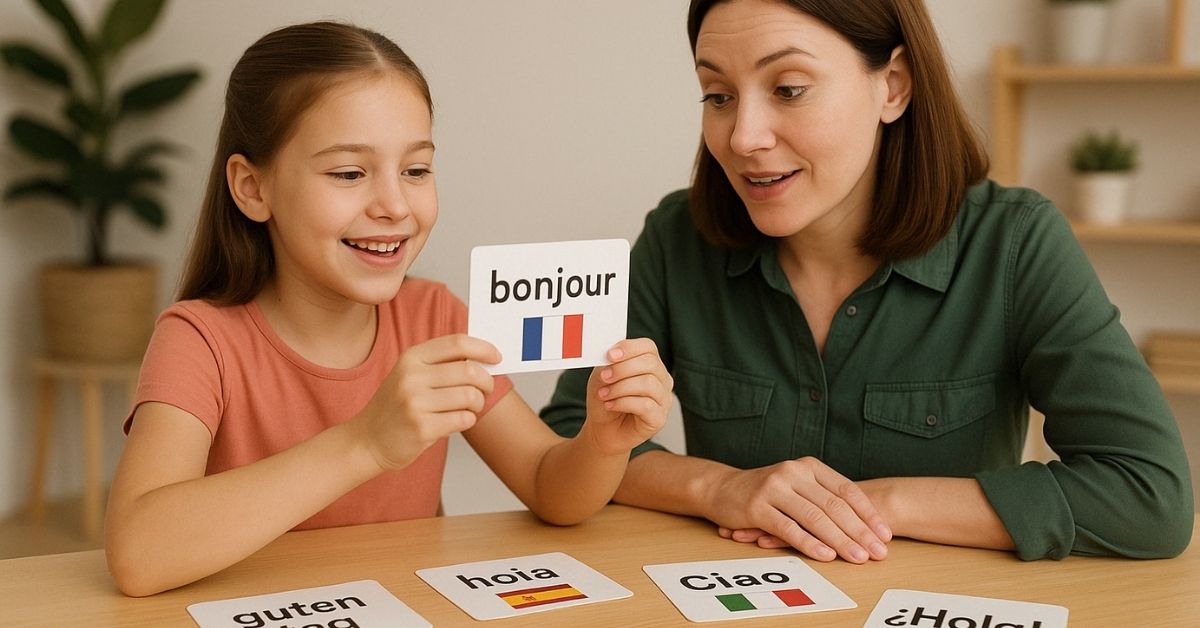
    Keep the lessons engaging by mixing resources. Combine textbooks with apps like Duolingo or Rosetta Stone. Use storybooks, flashcards, or even YouTube channels for interactive activities. Tailor the materials to your child’s learning style.
  4. Immerse Your Child in the Language
    Immersion creates the most effective language-learning environment. Try incorporating the target language into everyday life:

    • Label household items in the language.
    • Watch cartoons, movies, or TV shows in the language with subtitles.
    • Listen to songs or audiobooks.
    • Host “language days” where you only speak and write in the foreign language for a few hours.
  5. Set Realistic Goals
    Break down your child’s progress into achievable steps. Whether it’s learning 10 new vocabulary words a week or mastering key phrases, realistic goals make the process less overwhelming.
  6. Practice Daily
    Consistency is key to language acquisition. Dedicate 15–30 minutes each day to learning. Encourage regular speaking and listening practice to build fluency over time.
  7. Leverage Online Community Classes
    Platforms like Outschool or iTalki offer affordable classes taught by native speakers. These are helpful for building pronunciation and conversational skills.
  8. Make It Fun
    Gamify the process. Create challenges, quizzes, or vocabulary scavenger hunts. Turning learning into play keeps kids engaged and motivated.

Flexibility Is Your Advantage

Homeschooling allows for the ultimate tailored education. If something isn’t working, change directions. Some children thrive with structured curricula, while others prefer using games or informal conversation.

The Benefits Of Bilingual Education In Homeschool

Bilingual education provides a unique edge when compared to traditional single-language instruction. For homeschool families especially, it becomes a tool for enriching both academic and personal growth.

Opens Career Possibilities

Globalization has made fluency in multiple languages a valuable professional asset. Whether your child grows up to work in international business, travel, healthcare, or the arts, knowing a second language can provide a distinct advantage. Employers are often more eager to hire bilingual candidates due to their communication skills and proven ability to learn.

Enriches Family Education

Homeschooling a language doesn’t mean only the student learns. Parents often end up brushing up their skills or learning alongside their children. This collaborative approach deepens family bonds and creates shared goals. For families with diverse ethnic or cultural backgrounds, teaching a heritage language is an opportunity to connect with family traditions.

Adapts to Diverse Learning Styles

Some children are visual learners, while others excel through auditory or kinesthetic instructions. Language learning has the flexibility to cater to every preference. Flashcards appeal to visual learners, while audiobooks can support auditory learners. Kinesthetic learners might find drama or role-play exercises especially helpful.

Encourages Lifelong Learning

Once children master the mindset and methods for learning a new language, they tend to apply those habits to other areas of study. This fosters an intrinsic love for learning that lasts a lifetime. Bilingual education doesn’t only teach grammar or pronunciation; it develops discipline and adaptability.

Making Language Learning a Family Affair

One of the most rewarding aspects of teaching a language at home is how the experience can bring the whole family together. Younger kids, teens, and even parents can participate. There’s no need for formal fluency either. Simply practicing greetings, songs, or basic phrases as a family helps to reinforce lessons in an organic, low-pressure way.

By scheduling family “language nights,” you can:

  • Cook a traditional meal from a country where the language is spoken.
  • Watch family movies with subtitles in the second language.
  • Play games with translated vocabulary cards or storytelling prompts.

These activities create a fun, shared environment where children can see the practical joys of speaking another language. They emphasize how even small steps toward fluency can be rewarding.

Overcoming Common Challenges

Homeschooling a foreign language isn’t without its hurdles, but most challenges can be addressed with planning and creativity.

  • Parent Confidence: If you’re unsure of your own language skills, lean on resources like online tutors or apps to fill the gaps.
  • Retaining Motivation: When kids lose interest, mix up the routine with new formats like games or multimedia tools.
  • Time Management: A busy homeschool schedule can make daily language practice difficult, but even short bursts of practice are effective if done consistently.

The goal isn’t perfection. It’s progress. Keep that in mind as you tailor your approach to fit your family’s needs.

Teaching a foreign language in your homeschool isn’t just about academics. It’s a way to foster open-mindedness, creativity, and personal growth in your child. Language learning for homeschoolers is an opportunity to go beyond books and textbooks, exploring the world from home. With a little patience and consistent effort, these lessons can transform your children’s education and provide them with skills that will last a lifetime.

Try it out with your family. Start simple, stay consistent, and watch as a whole new world of communication and connection opens for your homeschoolers.

Exploring World History Through Literature: A Reading List

For homeschooling families, incorporating world history into your curriculum can feel like a challenge. How do you make it more engaging than memorizing dates and events? One answer lies in a literature-based history curriculum. By using historical fiction and nonfiction, you can transport your children to distant times and places, helping them experience history in a personal and meaningful way. This post will guide you through the benefits of teaching world history through literature and provide a curated reading list to support your homeschool.

Why Choose Historical Fiction For Teaching World History?

Historical fiction combines storytelling with factual events, making it an excellent tool for teaching history. It allows students to connect with historical figures and grasp the complexities of different eras by seeing them through the eyes of relatable characters.

Here are some reasons historical fiction works so well for homeschoolers:

  • Brings history to life: This genre humanizes history by showing the thoughts, fears, and dreams of people who lived through significant events.
  • Builds empathy: By seeing events from different perspectives, students can understand the social, cultural, and political factors that influenced historic decisions.
  • Encourages critical thinking: Talk with your kids about what parts of the story are factual and which are fictionalized. This learning activity helps develop research and analysis skills.
  • Piques interest in new topics: Stories set during pivotal periods often spark curiosity. Your child might want to learn more about ancient Egypt after reading a novel about pharaohs, for instance.

If you’re crafting a literature-based history curriculum, focusing on historical fiction is an excellent way to begin. Once they’re hooked on narratives, learning the factual context and timeline becomes much easier.

Tips For Using Literature In World History Lessons

To maximize the benefits of literature-based learning, keep these tips in mind:

  • Match reading levels: Choose books that align with your child’s age and comprehension level. Struggling readers may get discouraged with dense narratives, while advanced readers might crave more detail or complexity.
  • Use discussion questions: After finishing a book, pose questions about the characters, setting, and historical events. Why did certain characters act as they did? How did the historical setting impact their choices?
  • Pair fiction with nonfiction: For a rounded understanding, consider using nonfiction resources to back up what you’ve read in fiction. For instance, if you’re reading about World War II, complement it with maps, primary source documents, or biographies about key figures.
  • Encourage creative projects: Ask your child to illustrate scenes, create timelines, or write letters as if they were a character in the story.
  • Diversify perspectives: World history is rich with stories from different cultures and regions. Use books that show voices from a variety of backgrounds to give your child a more inclusive view of history.

A World History Reading List

A World History Reading List

Here’s a curated reading list to help you begin exploring world history with a literature-based approach. It includes historical fiction and nonfiction selections from different time periods and regions, perfect for homeschooling families:

Ancient Civilizations

  • “The Golden Goblet” by Eloise Jarvis McGraw
    This novel immerses readers in ancient Egypt through the eyes of Ranofer, a young boy dreaming of becoming a goldsmith while uncovering a surprising mystery.
  • “The Eagle of the Ninth” by Rosemary Sutcliff
    Set in Roman Britain, this timeless story follows a young Roman officer as he tries to recover his family’s lost honor.
  • “Gilgamesh the Hero” by Geraldine McCaughrean
    Introduce your children to one of the oldest recorded stories in history. This retelling of the classic epic makes ancient Mesopotamia come alive.

Middle Ages

  • “The Door in the Wall” by Marguerite de Angeli
    This story captures life in medieval England with the story of a young boy learning to adapt to life’s challenges.
  • “Good Masters! Sweet Ladies!” by Laura Amy Schlitz
    A collection of monologues that vividly portray medieval village life through various characters, from peasant children to nobleman’s sons.
  • “The King’s Fifth” by Scott O’Dell
    Exploring the Spanish conquest of the Americas, this novel follows a young mapmaker and the moral dilemmas he faces.

Renaissance and Exploration

  • “The Shakespeare Stealer” by Gary Blackwood
    This entertaining story follows a boy tasked with stealing one of William Shakespeare’s plays, offering a glimpse into Renaissance England’s theatrical world.
  • “I, Juan de Pareja” by Elizabeth Borton de Treviño
    Set in 17th-century Spain, the story captures the bond between the famous artist Diego Velázquez and his enslaved assistant Juan.
  • “Girl with a Pearl Earring” by Tracy Chevalier
    Although aimed at slightly older students, this imaginative work captures life in 17th-century Holland while exploring the art world.

Revolutionary Periods

  • “Chains” by Laurie Halse Anderson
    This gripping tale of a young enslaved girl during the American Revolution provides a unique look at the period through her struggles for freedom.
  • “A Tale of Two Cities” by Charles Dickens
    A literary classic suitable for dedicated readers, this novel dives into the French Revolution and its personal and collective costs.
  • “Sophia’s War” by Avi
    Set in revolutionary New York, the story follows a young girl’s daring work as a spy.

20th Century Conflicts

  • “All Quiet on the Western Front” by Erich Maria Remarque
    A profound story of World War I, giving readers insight into the experiences of German soldiers. Suitable for older teens.
  • “Number the Stars” by Lois Lowry
    Perfect for younger readers, this story follows a Danish family’s efforts to protect their Jewish friends during World War II.
  • “The Diary of a Young Girl” by Anne Frank
    An essential personal narrative chronicling life as a Jewish girl hiding during the Holocaust.

Diverse Global Perspectives

  • “Long Walk to Water” by Linda Sue Park
    Set in Sudan, this dual-perspective novel captures the struggles of a boy fleeing civil war and the determination of a young girl securing water for her family.
  • “When My Name Was Keoko” by Linda Sue Park
    Focusing on Japanese-occupied Korea during World War II, this novel highlights themes of resistance and resilience.
  • “Inside Out and Back Again” by Thanhha Lai
    This touching story in verse chronicles a Vietnamese girl’s experience fleeing to the U.S. after the fall of Saigon.

How To Build A Well-Rounded Curriculum Around Literature

Building a literature-based history curriculum goes beyond just assigning books. Thoughtful planning and integration are key. For a complete approach, consider the following strategies:

Combine Different Perspectives

Choose books representing various cultures, ethnicities, and ideologies. For example, learning about World War II? Pair “The Diary of a Young Girl” with “When My Name Was Keoko” to explore both European and Asian perspectives. Similarly, contrasting works like “Chains” (focused on the American Revolution) with stories from Britain or indigenous cultures of the same period will provide a fuller understanding.

Incorporate Hands-On Activities

Enrich your child’s learning with interactive elements. While reading about the Middle Ages, try building a model castle or preparing a medieval recipe with your child. For the Renaissance, have them create art inspired by the era’s techniques.

Leverage Audiobooks and Read-Alouds

Audiobooks are an excellent alternative for reluctant readers or families with busy schedules. Listening together also opens up opportunities for family discussions about the narrative and historical themes.

Keep a History Journal

Encourage your child to document historical timelines, reflections, and insights based on the books they read. This can include sketches, journal-style entries, or even responses written as if they were a character living at the time. Over time, this journal becomes a treasured record of their historical exploration.

Why Literature Fosters Lifelong Learning

Studying world history through literature doesn’t just teach dates and events; it builds a foundational understanding of humanity’s stories. These books shape compassionate, curious learners who approach the modern world with a deeper appreciation for its complexity. 

By integrating historical fiction into your homeschooling routine, you’re not just teaching curriculum standards; you’re nurturing a lifelong love for storytelling, understanding, and exploration. Engage your child with these compelling stories and watch as the past takes on a vivid, unforgettable life.

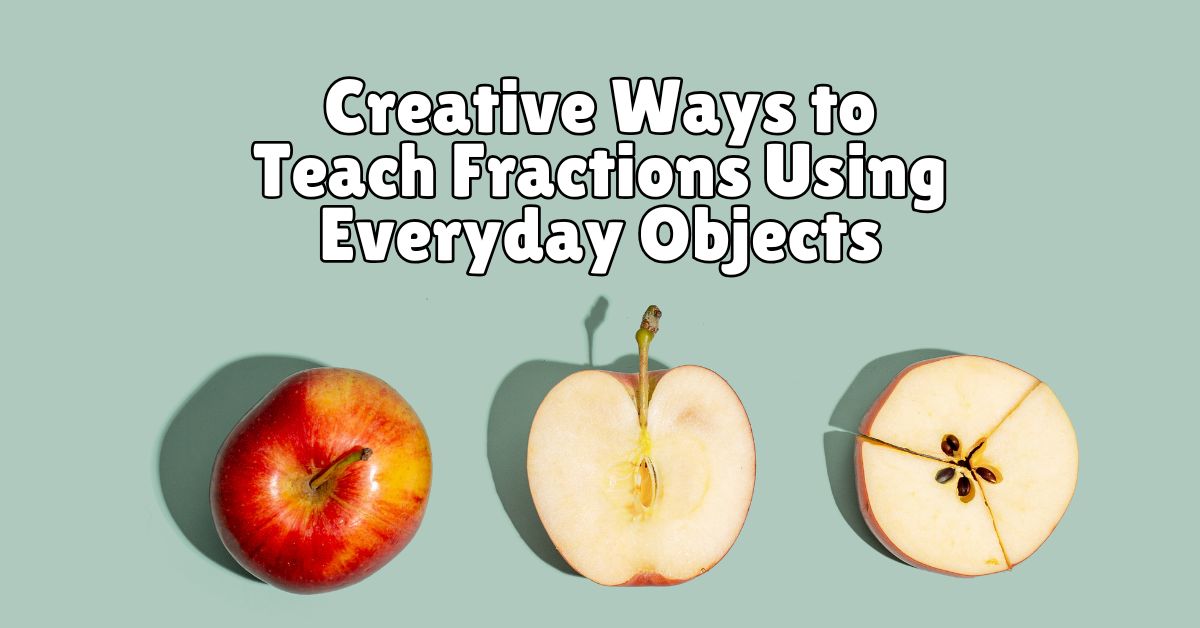
Creative Ways to Teach Fractions Using Everyday Objects

Fractions can be a tricky concept for kids at first, but with the right approaches, they can become fun and engaging. One of the best ways to teach fractions creatively is by using everyday objects you already have at home. These hands-on activities not only make fractions easier to understand but also turn math lessons into memorable experiences. 

Below, we’ll explore practical ways to teach fractions that parents homeschooling their kids can immediately put to use.

Why Everyday Objects Are Perfect for Teaching Fractions

Using items from your daily life helps bring abstract math concepts into the real world. Kids often find it easier to grasp fractions when they can see and touch what they’re dividing or measuring. Everyday objects also make math lessons feel less like work and more like play. Whether it’s slicing a sandwich or measuring ingredients for a recipe, fractions come alive when they’re tied to real activities.

Everyday objects also help kids build a stronger connection between math and the world around them. This approach prevents fractions from being isolated, “textbook-only” concepts and instead turns them into something kids can use in life. Here are some practical ways to get started using items you already have.

Everyday Objects for Teaching Fractions

With a little creativity, almost any item in your home can become a tool for learning fractions. Here are a few ideas to get you started:

  1. Kitchen Tools

The kitchen is an ideal classroom for fractions.

  • Measuring Cups
    Use measuring cups to teach how different fractions add up to a whole. For instance, show that two half-cups equal one cup and discuss how four quarter-cups make up the same amount. Ask questions like, “How many 1/3 cups do we need to make 1 whole cup?”
  • Cutlery and Plates
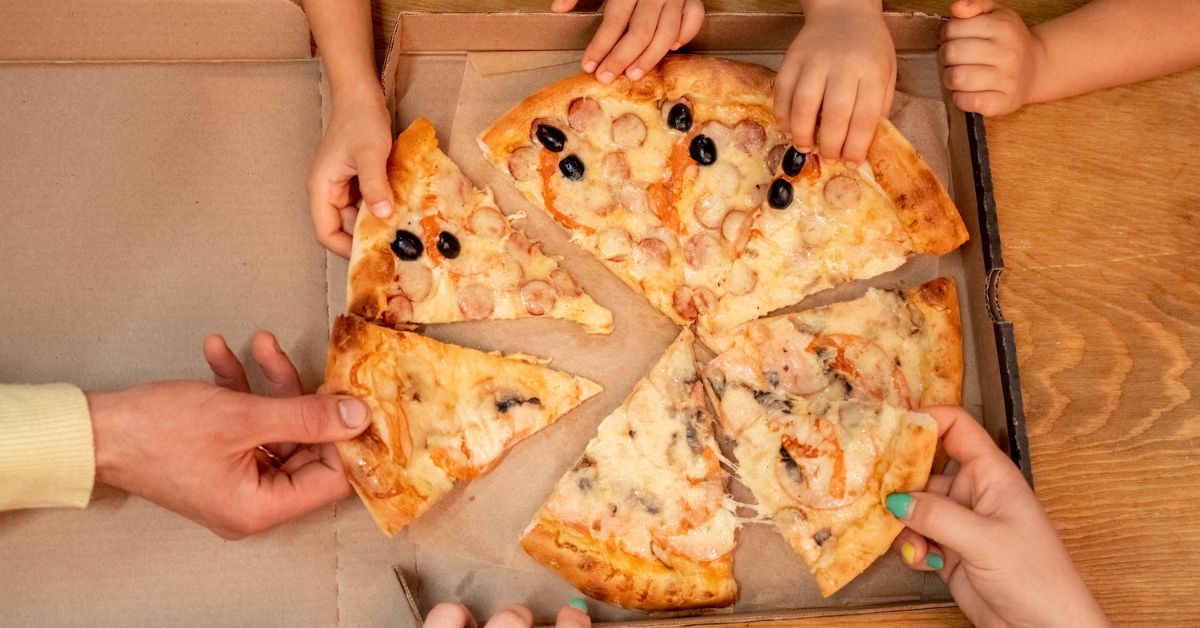
    Divide portions like pizza slices, pies, or servings of cake to demonstrate fractions. You could cut a sandwich into two, four, or eight parts and discuss which part equals 1/2 or 1/8 of the whole sandwich.
  • Recipes
    Cooking and baking require following fractional measurements like 1/4 teaspoon or 2/3 cup. Ask your child to help you double or halve a recipe, which reinforces their understanding of equivalent fractions.

Everyday Objects for Teaching Fractions

  1. Legos and Building Blocks

Legos are excellent for demonstrating fractions visually.

  • Assign different Lego bricks to represent fractions of a whole. For instance, a 2×4 brick can be the “whole,” while 2×2 or 1×2 bricks can represent halves or quarters.
  • You can build a structure and then break it into smaller pieces, asking your child to identify what fraction of the whole each section represents.
  • Use Lego graphs to compare fractions by stacking blocks of different “sizes” to represent 1/2, 1/3, and 1/4.
  1. Paper and Scissors

Using paper is a hands-on way to break fractions down visually.

  • Fold a piece of paper into equal sections. For instance, fold it in half for 1/2, then into quarters, eighths, and so on. Unfold it and label each section with the corresponding fractional part.
  • Cut shapes or pictures into equal parts. For example, cut a circle into six wedges or a square into nine smaller squares. Challenge your child to color or pick specific fractions of the shape (e.g., “Color 1/3 of the circle”).
  1. Coins and Money

Money introduces fractions in a way that feels relevant and practical to kids.

  • Use coins to represent fractions of a dollar. A quarter is 1/4 of a dollar, and a dime is 1/10. Line them up and practice combining amounts to make sense of fractional values.
  • Create problems like “If we have 3 quarters, what part of a dollar is that?” Discuss equivalent fractions using examples like “two 50-cent coins are the same as one dollar, which is represented as 1/1.”
  1. Toys and Games

Turn learning into playtime by involving toys.

  • Use toy cars, action figures, or stuffed animals to divide groups into fractions. For example, if you have eight toy cars, separate them into two groups to demonstrate halves or into four groups for quarters.
  • Board games with fraction elements, like Fraction Dominoes or fraction puzzles, also make math entertaining while reinforcing concepts.
  1. Fruit and Veggies

Snacks double as effective math tools.

  • Slice fruit like apples, oranges, or bananas into halves, thirds, or quarters. Ask your child to identify what portion of the fruit you’ve eaten or what’s left.
  • Grapes or carrot sticks can be grouped and divided into fractions. For example, “You have 12 grapes; if you eat 4, what fraction of the total is gone?”

Fun Fraction Teaching Ideas

Along with using everyday objects, there are several creative ways to make fractions engaging and meaningful.

Story Problems With Fractions

Kids often enjoy solving real-world stories. Create simple fraction-based scenarios they can relate to, such as dividing a group of friends into teams or sharing a treat. For example, “If 3 out of 5 friends share a pizza, what fraction of the group ate pizza?” These scenarios sharpen their reasoning and problem-solving skills.

Fraction Art Projects

Art is an invaluable tool for learning fractions. Provide your child with colored paper, scissors, and glue, and have them create fraction-themed artwork. They can cut out shapes, like circles or squares, and divide them into fractional parts for a collage.

Another idea is to create a fraction pie chart using colors. Draw a large circle and have your child shade specific sections according to instructions like “Color 1/3 blue, 1/4 red, and 3/12 green.”

Fraction Scavenger Hunt

Turn your home or yard into a fraction scavenger hunt. Write clues involving fractions, such as “Find something that is 1/2 empty” or “Look for an object that is divided into 4 equal parts.” This activity combines math with problem-solving and exploration.

Compare Fractions with Rulers

Use a ruler or a measuring tape to show fractional inches or centimeters. Have your child measure everyday objects, like books or toys, and identify fractions of measurements. For instance, if an object measures 3 1/2 inches, discuss what the fractional part represents.

Engaging Kids Through Interactive Learning

Interactive activities help kids stay engaged while learning fractions. It’s essential to keep the mood light and enjoyable so they associate fractions with fun, not frustration. By involving them in playful tasks or meaningful chores, you also improve retention.

For example, working together to solve fraction puzzles or challenges creates opportunities for collaboration and conversation. Kids are more likely to stay focused and curious compared to working through worksheets alone.

Finally, encouraging your child to explain their thinking out loud reinforces math concepts for them and gives you insight into how they’re grasping the material. By being patient and showing enthusiasm for their progress, you’ll make fractions less intimidating and more inviting.

Everyday Math Makes Lifelong Learners

Fractions don’t exist in isolation; they are part of everyday math. By teaching fractions creatively, you’re not only helping your child master important skills but also preparing them to think critically and make connections throughout their lives. Everyday items like measuring cups, toys, and fruit turn lessons into adventures, while creative activities like scavenger hunts and artwork inspire problem-solving and creativity.

Homeschooling gives you the freedom to tailor teaching in a way that works best for your child. With a little effort and imagination, you can transform a potentially challenging topic into something your kids look forward to learning about. By using everyday objects and fun activities, fractions can go from a dreaded subject to one of the highlights of math at home.