
Integrating Coding and Computer Science into Your Homeschool

Coding and computer science have become indispensable skills in today’s world. For homeschooling parents, adding these topics to your curriculum not only equips your child with future-ready skills but also cultivates creativity and critical thinking. Coding for homeschool students doesn’t have to be an overwhelming endeavor. With the right tools, strategies, and guidance, you can make teaching coding an enjoyable and enlightening experience for both parent and child. 

Below, we’ll explore practical ways to incorporate coding and computer science into your homeschool curriculum, along with useful tips and resources to get started.

Why Teach Coding To Homeschool Students?

Why is coding a valuable addition to your homeschool curriculum? First, technology impacts virtually every aspect of life and work—from medicine to agriculture, from entertainment to engineering. Understanding how to code opens doors to career paths and opportunities amid evolving technology. Coding teaches students more than just technical skills; it nurtures problem-solving, logical thinking, and innovation.

Homeschooling provides a unique setting to explore these benefits. Coding projects transform screen time into creative time, giving kids the chance to produce something meaningful. Furthermore, coding can develop confidence. When children solve problems or complete coding challenges, it boosts their resilience and determination, skills vital for lifelong learning.

For parents, homeschooling also allows for flexibility to adapt computer science lessons to suit your child’s learning pace and interests. Whether you want to foster a love for programming or introduce them to the basics, coding is a versatile and engaging subject to teach.

Designing A Homeschool Coding Curriculum

Designing A Homeschool Coding Curriculum

Developing a coding curriculum for your homeschool may seem daunting at first, but it doesn’t have to be. There are countless tools and resources to ensure creating a curriculum is both manageable and rewarding. Here’s how you can build a personalized plan tailored to your child’s unique needs and learning style.

Begin with Your Child’s Interests

Every child has different interests, and coding can be a gateway to pursue them. Use their hobbies as a starting point to make lessons captivating.

  • If they love video games, introduce game design platforms like Scratch or Roblox Studio.
  • If storytelling excites them, try website-building tools that involve HTML, CSS, and JavaScript.
  • Interested in robotics? Incorporate platforms that combine electronics and coding such as Arduino or Raspberry Pi.

Matching lessons to interests keeps students motivated and curious, as they can immediately see how coding relates to what they already enjoy.

Focus on Age and Skill Level

Tailor your coding curriculum to fit your student’s current abilities and age group. Here are some recommendations based on age and experience:

  • Early Elementary (Ages 5–8)
    At this stage, introduce coding basics using visual tools. Platforms like Scratch Jr. employ simple drag-and-drop interfaces that teach core concepts such as sequences and loops without overwhelming them with syntax. Unplugged coding activities, like creating patterns or solving mazes, also work well.
  • Upper Elementary (Ages 9–12)
    Expand their knowledge with more detailed platforms such as Scratch, Blockly, or beginner coding tutorials in languages like JavaScript or Python. Practical projects, like programming a mini game or app, help them see the real-world applications of coding.
  • Middle and High School (Ages 13 and Up)
    Older homeschoolers can tackle more advanced topics like Java, Python, or even app development. Encourage exploration of coding boot camps or structured courses on platforms like Codecademy, Udemy, or Khan Academy. High school students might also benefit from collaborative challenges, such as hackathons or coding competitions.

Use Pre-Made Curriculums

If you’re pressed for time or unsure where to begin, you can rely on pre-made curriculums specifically designed for students learning from home:

  • Code.org provides free and comprehensive courses for all levels, including introductory computer science lessons and high school fundamentals.
  • Tynker offers interactive coding experiences for younger students, using fun games and step-by-step challenges designed to build coding knowledge gradually.
  • Robotics Kits like Lego Mindstorms or Sphero make coding hands-on and exciting for kids who love building and experimenting.

Combine Theory and Practice

While coding is inherently a hands-on activity, incorporating some theory is valuable to give context and shape their understanding. Spend time on topics like how computers process information, the history of programming, and essential security concepts like encryption. Balancing these topics with coding exercises ensures students aren’t just following instructions but also deeply understanding the “why” behind their projects.

Teaching Computer Science at Home

One of the biggest challenges for parents is teaching a subject they may not feel familiar with. However, teaching computer science at home is more accessible than you might think. With resources tailored to beginners and homeschooling families, you can confidently guide your child through their coding education.

Tools To Help Parents Succeed

You don’t have to be a tech genius to teach coding. Here are some beginner-friendly tools and resources to support your teaching efforts:

  • Scratch makes coding fun and approachable for kids (and parents). It uses block-based programming to help create games, interactive art, and animations.
  • CodeCombat teaches real-world programming languages like JavaScript and Python through role-playing game strategies.
  • Khan Academy offers free computer programming courses complete with interactive exercises and video guides.

For parents eager to deepen their knowledge, many online courses, like those on Treehouse, allow you to learn coding basics alongside your child. Sharing this experience not only strengthens your knowledge but also fosters teamwork and encouragement during the learning process.

Coding naturally lends itself to self-paced learning. Allow your child the freedom to experiment through projects such as creating their own game or coding a small application. With coding platforms providing feedback and project-based learning, homeschoolers can often discover and learn at their own speed. Encourage them to explore their creativity; the sense of accomplishment from completing a project builds confidence and independence.

Coding for homeschool students can be incredibly rewarding, but it’s not without its hurdles. Here’s how to tackle common challenges:

  • Dealing with Errors: Debugging is a major part of programming, and errors are inevitable. Teach patience by framing mistakes as opportunities to learn problem-solving.
  • Monitoring Screen Time: Too much screen time can lead to fatigue, so mix coding activities with offline learning. For instance, use binary code to create artwork or teach algorithms through physical games.
  • Flexibility: If a coding concept proves challenging, pause and revisit it later or break it into smaller, manageable lessons.

Collaborative Opportunities in Coding

Learning to code often conjures images of solitary work behind a computer, but coding offers opportunities for collaboration. Even in a homeschool setting, students can build connections by sharing their work or joining collaborative projects.

Introduce your child to online coding communities where they can pair program, seek advice, or share personal projects. Platforms like GitHub encourage teamwork and provide real-world experience in building and collaborating on coding repositories. Additionally, local hackathons or virtual programming challenges give homeschoolers a chance to connect with peers while refining their skills.

Encouraging collaboration not only enhances coding knowledge but also soft skills like teamwork and communication. These are vital complements to the other technical and problem-solving aspects of the discipline.

Cultivating a Love for Coding

While mastery of coding concepts is an obvious long-term goal, it’s just as important to help your child enjoy the process. Coding for homeschool students should prioritize exploration and creativity over perfection.

Encourage your child to take charge of their projects. These don’t need to follow rigid lesson plans; they can be passion projects driven by your child’s imagination. Whether designing a game, building a website, or creating an animated story, give them the tools and space to experiment.

You can also celebrate progress regularly, no matter how small. Debugging an error, completing an interactive lesson, or simply experimenting with new tools are all milestones worth recognizing. This mindset reinforces a positive, curious approach to learning.

Making Computer Science Accessible

For parents without a background in technology, coding and computer science may sound intimidating. However, with patience and step-by-step tools, these subjects are highly accessible. Starting small with manageable goals can ease the learning curve for both you and your child.

The benefits go far beyond coding skills. By integrating computer science into your homeschooling routine, you’re preparing your child for an increasingly tech-driven world. Beyond professional opportunities, they’ll develop resilience, ingenuity, and the ability to adapt to challenges.

Ultimately, coding for homeschool students is about equipping children not only with in-demand skills but also with confidence, creativity, and critical thinking. With the abundance of resources available and the flexibility of homeschooling, you can tailor a program that inspires a lifelong passion for learning and problem-solving.

The Role of Play in Mathematical Learning

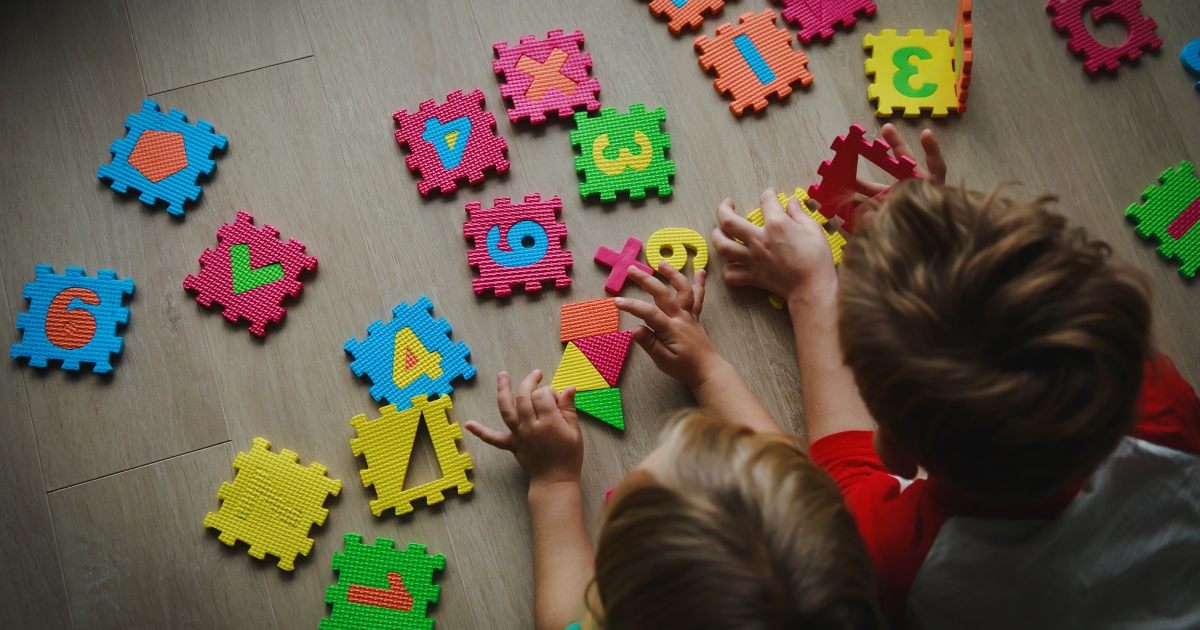
Math is often regarded as a challenging subject by both kids and parents. However, it doesn’t have to be that way. By incorporating play-based math activities into your homeschool curriculum, you can transform math into an enjoyable, hands-on learning experience. This approach not only encourages a love for numbers but also strengthens understanding and retention of mathematical concepts.

Why Play Matters In Mathematical Learning

Children naturally engage with the world through play. It’s how they explore, experiment, and make sense of new ideas. When math is taught through structured lessons alone, it can sometimes feel abstract or disconnected from daily life. Play, however, bridges the gap. It turns math into an interactive, visual, and practical experience, making even complex ideas easier to grasp.

Research supports the benefits of play in education. Studies show that activities involving problem-solving, creativity, and collaboration help children build critical thinking skills while fostering a growth mindset. Play-based math activities tap into curiosity and offer children a safe space to make mistakes, discover patterns, and develop confidence in their math abilities.

Benefits of Play-Based Math Activities

  • Natural Engagement
    Kids are naturally drawn to play. By embedding math within games or hands-on activities, engagement levels soar. They’re not just solving problems; they’re having fun.
  • Practical Application
    Games often situate numbers within real-world contexts. Whether it’s measuring for a craft project or keeping score in a game, kids see how math is used in everyday scenarios.
  • Encourages Critical Thinking
    Many math games are rooted in problem-solving and logic. These activities challenge children to think strategically and come up with creative solutions to win or progress.
  • Reduces Anxiety
    Math anxiety is real, and it often starts at a young age. Introducing math play creates a relaxed environment where children can explore without fear of failure.

Easy-To-Implement Play-Based Math Activities

You don’t need fancy tools or expensive resources to incorporate play-based math into your homeschooling routine. Here are some simple, creative ideas:

Easy-To-Implement Play-Based Math Activities

  1. Building Blocks and Geometry
  • Use building blocks, such as LEGO, to explore geometry and symmetry.
  • Ask your child to create a structure using a specific number of blocks. Count the blocks used, discuss shapes, or calculate area and perimeter.
  • Challenge them with tasks like making patterns or recreating 3D objects based on visual instructions.
  1. Number Bingo
  • Create bingo cards using numbers instead of letters. You can customize this activity to match your child’s skill level.
  • For younger kids, focus on number recognition. Simply call out the numbers, and they mark them off.
  • For more advanced learners, use simple math problems, such as “What’s 5 + 8?” The child finds the answer and marks it on their card.
  1. Baking to Learn Fractions
  • Baking is full of math opportunities! Ask your child to measure ingredients, talk about fractions (e.g., “We need 1/2 a cup of sugar.”), and double or halve recipes to strengthen their understanding of proportions.
  • After the baking is complete, discuss division as they cut and share the treats. It’s delicious math at work!
  1. Outdoor Math Treasure Hunt
  • Write math problems on small sheets of paper and hide them around your yard or living room.
  • Each solved problem unlocks a clue to the next location. Include basic arithmetic, counting challenges, or even geometry questions to make it a full adventure.

Fun Math Games for Kids

Games are a fantastic way to teach math skills while keeping kids entertained. They add structure to playful learning but maintain a lighthearted tone that keeps young learners engaged.

Board Games with a Math Twist

Some classic board games incorporate math skills naturally:

  • Monopoly: Great for practicing addition, subtraction, budgeting, and multiplication.
  • Yahtzee: Encourages pattern recognition and strategic addition.
  • Sum Swamp: A fantastic and fun board game targeted toward early learners to practice addition and subtraction.

Online Math Games

If you’re open to screen time, educational math games are another option:

  • Khan Academy Kids: Offers interactive math games tailored to different grade levels.
  • Prodigy: A role-playing game where kids solve math problems to progress.
  • CoolMath Games: Packed with logic puzzles, strategy games, and classic math challenges.

Deck of Cards Fun

  • War with a Twist: Split a deck of cards between two players. Each person flips over the top card, and instead of simply comparing the two numbers, the first person to add or multiply them correctly wins the round.
  • Memory Match: Write down math problems on one set of cards and answers on another. Mix them up, lay them face down, and have your child find matching pairs.

Play Beyond Formal Activities

Independent play also strengthens math skills. Toys like puzzles, construction sets, and even action figures can become math tools with a slight nudge. Encourage children to count pieces, measure distances, or explore patterns during their free play. Open-ended opportunities allow them to initiate their own math adventures without feeling pressured.

For instance:

  • When building with blocks, try discussing symmetry or balance.
  • Ask your child to count the wheels on toy cars and make groups based on different colors or sizes.
  • Include everyday conversations about time, such as estimating how long it will take to tidy up toys.

Overcoming Resistance to Math Through Play

Not every child will instantly warm to math, and that’s okay. For children who feel hesitant about numbers, easing into the subject via games can help shift their perspective.

Start slow. Introduce activities that align with their interests. If they love drawing, try a math-related art project like creating mosaics or measuring lines. If they’re a fan of sports, consider using scorekeeping as an opportunity to discuss simple statistics or addition. The goal is to show kids that math doesn’t exist in isolation. It’s all around them, and it can even blend with their favorite hobbies.

Games become a medium for dialogue, patience, and encouragement. Celebrate small wins during these play sessions, such as successfully solving a single problem or mastering a new fraction. Positive reinforcement during games teaches kids that math isn’t about right or wrong. Instead, it’s about growth and exploration.

Structuring Play-Based Math Into Your Homeschooling Routine

When integrating play-based learning into your schedule, it helps to strike a balance between guided activities and child-led play. Consider the following tips:

  • Start with a Goal
    Decide which skills you’d like to prioritize. Whether it’s understanding multiplication or building number sense, having a focus will guide your choice of games and activities.
  • Dedicate Time Daily
    Aim for a short, focused play session each day. Even 15–20 minutes of math play can reinforce skills and keep concepts fresh.
  • Encourage Variety
    Rotate between game types. For instance, one day might focus on board games, while another swaps in outdoor scavenger hunts or baking activities. This variety helps kids stay engaged.
  • Be Flexible
    Follow your child’s curiosity. If they’re especially invested in one type of game, spend extra time on it. Allow room for their preferences while still introducing new ideas regularly.

Play Builds Confidence and Positive Attitudes Toward Math

When kids learn math through play, their relationship with the subject transforms. Instead of seeing numbers as intimidating, they start to view math as a tool for solving puzzles, making things, and uncovering patterns in everyday life. Building confidence is central to success—not only in math but across all areas of learning.

Play gives children the freedom to experiment and problem-solve without fear of “failing.” Each game becomes another opportunity to grow and discover. For homeschooling parents, embedding play into math lessons offers a win-win situation. Kids gain essential skills, all while having fun and developing a can-do attitude that will serve them well into the future.

Make math part of your family’s everyday life through play, and you might be surprised to find yourself having just as much fun as your kids! By fostering a relaxed and creative environment, you’ll not only nurture a love of learning but also give your child the foundation they need to tackle math challenges with confidence and enthusiasm.

The Importance of Social Sciences in Homeschool Education

Have you ever wondered how studying topics like history, sociology, or geography can shape your child’s future? For homeschool educators, these areas of study, often grouped under the umbrella of social sciences, are essential. They don’t just help students learn about dates or maps; they foster a deeper understanding of the world and how it works.

Including social sciences in your homeschool curriculum is not just about meeting academic requirements. It’s about giving your child the skills they need to think critically, engage with others, and approach real-life challenges with confidence. From mastering critical thinking to understanding cultural diversity and even preparing for careers, social studies for homeschoolers offers endless benefits.

This blog will explore these advantages in detail, highlighting why teaching subjects like history, civics, and sociology at home is crucial for your child’s personal growth and future success.

Building Critical Thinking Skills

Social sciences are a powerful tool for building critical thinking skills in homeschoolers. These subjects encourage students to go beyond memorizing facts and instead analyze information, recognize patterns, and draw logical conclusions. 

By teaching children to think critically, you’re preparing them to navigate both schoolwork and the challenges of everyday life.

  • Discuss major historical events, like the American Revolution, to help children understand cause-and-effect relationships. 
  • Use discussion questions to encourage thoughtful engagement with topics. 
  • Watch documentaries or read articles together to analyze different perspectives. 
  • Practice solving real-world problems, like budgeting or interpreting current events, to apply critical thinking practically.

By incorporating these strategies into your homeschool curriculum, you can nurture learners who approach challenges with curiosity and confidence. Over time, this mindset helps children engage deeply with the world around them, giving them tools to solve problems thoughtfully and effectively.

Understanding Society and Cultural Diversity

The social sciences open doors to understanding the many cultures, traditions, and histories that make up our world. This understanding fosters empathy and enhances social awareness, which is essential in today’s interconnected society.

Take geography or sociology as an example. Through these subjects, homeschoolers can explore what life looks like in different parts of the world. They can examine diverse ways of living, learn about global challenges, and develop respect for varying traditions and beliefs.

A great way to make this learning exciting is through interactive experiences. Virtual field trips, videos, or global pen pals can bring these lessons to life. For example, a project mapping cultural festivals around the world encourages students to engage directly with diversity.

By teaching social sciences at home in creative ways, you’re helping your child become not just an informed individual but also a compassionate global citizen.

Quick Ideas to Teach Cultural Diversity at Home

Quick Ideas to Teach Cultural Diversity at Home

  • Watch documentaries about global traditions.
  • Create a “culture week” where you cook foods from different countries.
  • Use online platforms to connect with homeschool families worldwide.

Preparing for Civic Responsibility

Understanding the structures of government, economics, and society isn’t just for future politicians. It’s for every informed citizen. Social sciences nurture an awareness of how these systems work and why active participation matters.

For instance, a civics lesson may cover the importance of voting, how laws are passed, or the roles of local and federal governments. Through these lessons, homeschoolers can learn the importance of their role in shaping society. This knowledge empowers students to become informed voters, volunteers, or even future leaders.

For parents, introducing civic education aligns with the goal of raising responsible, engaged individuals. Homeschool-friendly tools like online civics games or printable worksheets can simplify these concepts. By including these lessons, you’re helping your learner understand not only their community but their ability to make a difference within it.

Developing Communication and Collaboration Skills

Homeschooling doesn’t have to feel isolating. Teaching interactive social science topics is a great way to foster collaboration and boost communication skills while diving into meaningful learning experiences. Social sciences naturally encourage open discussions, debates, and group projects that help students connect and grow.

  • Discussing ethical dilemmas in psychology or global issues teaches students to express their ideas clearly and thoughtfully. 
  • Engaging in conversations sharpens critical listening and speaking skills. 
  • Exploring opposing viewpoints promotes respectful dialogue and understanding. 
  • Working on team projects builds confidence in sharing ideas and strengthens problem-solving abilities. 

Homeschoolers have unique opportunities to make the most of these lessons. Joining local co-op groups or online forums can create collaborative learning spaces. Activities like designing a fictional government system or participating in virtual debates provide hands-on experiences that bring lessons to life, helping students develop essential skills for both education and life.

Preparing for Future Careers

Another important benefit of teaching social sciences at home is career preparation. Fields like history, economics, law, and sociology serve as springboards for many career paths. Whether your child dreams of becoming a lawyer, teacher, social worker, or public policy maker, early exposure to these topics lays the foundation.

For instance, a student intrigued by economics might explore concepts like supply and demand, potentially sparking an interest in business or policymaking. Similarly, a sociology project on social issues could lead to a passion for nonprofit work or public advocacy.

For parents, incorporating career-focused lessons into the homeschool day adds a sense of practical purpose to education. It connects academic concepts to real-world applications, giving your child a clearer sense of the possibilities that lie ahead. Encourage your child to explore their interests and research careers that align with the social science topics they love most.

Careers Tied to Social Science Education

  • Economist or financial advisor
  • Teacher or professor
  • Urban planner
  • Diplomat or international relations specialist
  • Social worker or policy analyst

Why Include Social Studies for Homeschoolers in Your Curriculum?

Social sciences offer a broad range of benefits of social science education, including critical thinking, empathy, civic awareness, and communication skills. These are not just academic advantages; they are lessons for life. Homeschoolers equipped with this knowledge become confident learners and future-ready adults.

By teaching social sciences at home, you give your child the tools to succeed both personally and professionally while nurturing moral and compassionate individuals. Whether your approach involves textbooks, online resources, or hands-on projects, social studies creates opportunities for meaningful and engaging education.

Empower Your Homeschooler with Social Studies

When you think of subjects that prepare a student for life, social studies might not always come to mind, but it should. This field of study offers a unique mix of academic knowledge and practical skills. It equips homeschoolers to think critically, communicate effectively, understand cultural differences, and even prepare for exciting future careers.

Including social studies for homeschoolers in your curriculum doesn’t have to be overwhelming. Take it step by step, using creative teaching methods like virtual field trips, interactive debates, or hands-on projects. Platforms like Dropkick Homeschool Resource can make the process even easier by offering tools and guidance tailored to your homeschooling needs.

Remember, as a homeschool parent, you have the power to craft an education that truly prepares your child for the future. Social sciences are a fantastic way to do just that. Start exploring today, and watch your child’s curiosity and skills soar!

Incorporating STEM Activities Across the Curriculum

In today’s rapidly evolving world, the importance of STEM—Science, Technology, Engineering, and Mathematics—cannot be overstated. These fields form the backbone of countless innovations and industries, making STEM education essential for preparing students for future challenges and opportunities. For parents, incorporating STEM activities into the homeschool curriculum can be a game-changer, offering unique opportunities to engage children in hands-on learning and real-world problem-solving.

Homeschooling provides flexibility and the freedom to tailor educational experiences to a child’s pace and interests. This makes it an ideal environment to integrate STEM activities naturally and seamlessly across different subjects. By doing so, homeschooling parents can create a rich, interdisciplinary learning experience that not only covers traditional academic bases but also ignites curiosity and passion for discovery. Through this blog post, we’ll explore the numerous benefits of integrating STEM across the curriculum, practical strategies for implementation, and how reading plays a pivotal role in supporting STEM education at home.

Benefits Of STEM Across The Curriculum

Incorporating STEM across the curriculum offers numerous advantages that extend beyond traditional educational boundaries. First and foremost, it significantly enhances critical thinking and problem-solving skills. When students engage in STEM activities, they learn to approach problems methodically, evaluate evidence, and develop solutions. This process encourages a mindset of inquiry and analysis, crucial competencies in both academic and real-world contexts. Furthermore, STEM education fosters improved literacy and numeracy skills. Engaging with STEM subjects requires students to interpret data, comprehend technical texts, and communicate their findings effectively.

These activities naturally enhance their reading and writing abilities while reinforcing mathematical concepts in an applied setting. By incorporating STEM into daily routines, homeschooling parents can help their children make meaningful connections between abstract concepts and practical applications, resulting in a well-rounded education.

Finally, integrating STEM across the curriculum prepares students for the future. With technology advancing at an unprecedented rate, STEM-related skills are in high demand. By nurturing these skills early on, homeschooling parents equip their children with the tools needed to thrive in a dynamic world. This educational approach not only opens doors to diverse career paths but also instills confidence and adaptability in learners, empowering them to pursue lifelong learning and innovation.

Practical Ways To Incorporate STEM In Homeschooling

Incorporating STEM into a homeschool curriculum can be both exciting and rewarding for parents and students alike. One effective strategy is to integrate STEM into daily routines and traditional subjects. For example, math lessons can be made more engaging by incorporating real-life scenarios where students apply mathematical concepts to solve problems. Similarly, homeschool science activities can be conducted using everyday household items, sparking curiosity and demonstrating scientific principles in action. Additionally, homeschooling parents can explore a wide range of engaging STEM activities tailored to different age groups. Younger children might enjoy building simple machines with LEGO bricks, while older students can experiment with coding through online platforms designed for beginners. By offering age-appropriate activities, parents can maintain their children’s interests and gradually increase the complexity of tasks as their skills develop.

Homeschooling parents can also leverage the power of technology to enhance STEM learning at home. There are numerous online resources, apps, and virtual labs available that facilitate interactive and immersive learning experiences. Virtual reality (VR) and augmented reality (AR) tools, for instance, can transport students to faraway places, allowing them to explore ecosystems, architecture, and more without leaving their homes. These technologies not only make learning fun but also offer unique perspectives and insights that traditional classroom settings might not provide. Moreover, collaborative projects can be a great way to integrate STEM into homeschooling.

Encouraging students to work together on group projects, either with siblings or through virtual partnerships with other homeschooling families, helps build teamwork and collaborative skills. Projects can range from creating a simple robot to tackling environmental challenges in a local community. Collaboration allows students to share ideas, learn from one another, and achieve more complex objectives than they might individually, all while reinforcing STEM principles and practices.

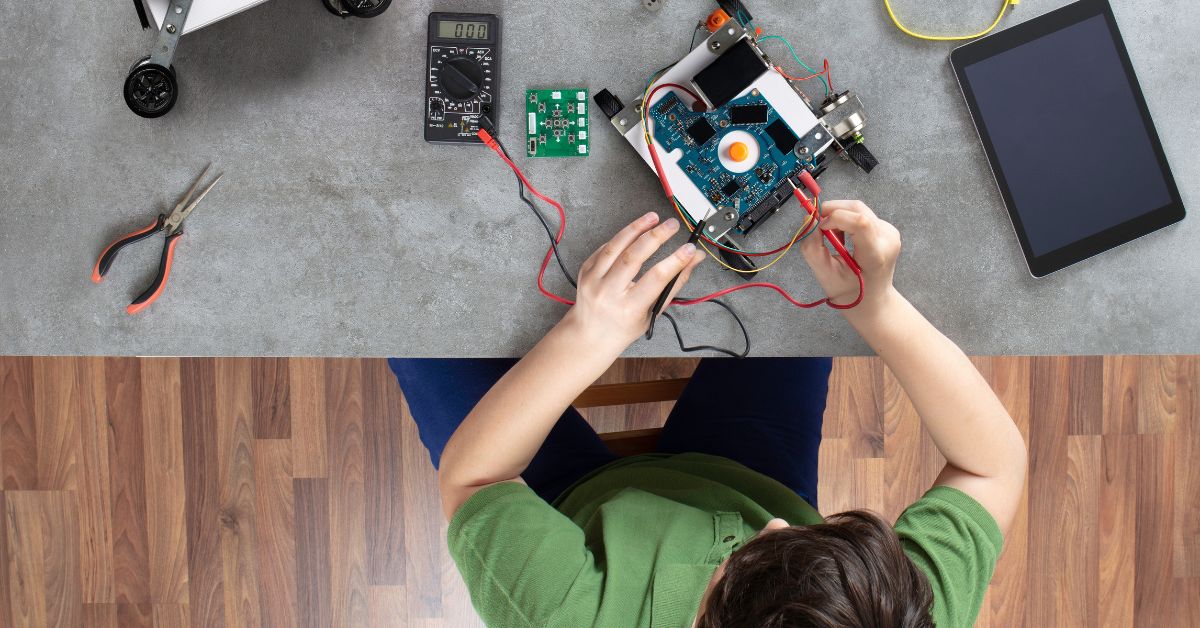
A young student wearing a green shirt working on an electronics project at a table, using a multimeter to test circuits on a robotics or engineering board. Various tools, wires, and a tablet are also on the table, representing hands-on STEM learning.

Finally, encouraging a growth mindset in children can significantly enhance their STEM learning journey. By teaching students to view challenges as opportunities for growth and learning, homeschooling parents can nurture resilience and persistence. Celebrating small victories and embracing failures as part of the learning process helps students develop a positive attitude toward STEM and learning in general. This mindset is crucial not only for mastering STEM subjects but also for thriving in an ever-evolving world filled with constant innovation and change.

To further enhance the learning experience, parents can create interdisciplinary projects that combine multiple STEM elements. For instance, designing and constructing a model bridge can involve engineering principles, mathematical calculations, and scientific experimentation. These projects encourage collaboration, creativity, and problem-solving, providing a comprehensive approach to learning that mirrors real-world challenges.

The Role Of Reading In A STEM-Integrated Curriculum

While STEM subjects often involve hands-on activities and technical exploration, reading remains a crucial component of a well-rounded education. Reading enhances comprehension, vocabulary, and critical thinking skills, all of which are essential for success in STEM fields. By incorporating reading materials that support STEM learning, homeschooling parents can reinforce their children’s understanding of complex concepts and foster a deeper appreciation for the subjects. There are numerous resources available that cater to different age groups and interests. For younger children, picture books that introduce scientific concepts and technological wonders can be both entertaining and educational. For older students, biographies of influential scientists, engineers, and mathematicians offer inspiration and valuable insights into the world of STEM.

Additionally, parents can encourage students to explore non-fiction texts related to current scientific discoveries, technological advancements, and engineering marvels. Reading such materials broadens their horizons and helps them connect classroom learning to real-world applications, fostering a lifelong passion for exploration and innovation. Incorporating fiction into a STEM-integrated curriculum also holds value. Well-crafted science fiction novels can ignite a student’s imagination, prompting them to think creatively about the possibilities of future technologies and advancements. These stories not only entertain but also challenge students to consider ethical implications, societal impacts, and the boundaries of scientific exploration.

Discussions following such readings can deepen understanding and lead to thought-provoking debates, encouraging students to articulate their perspectives and refine their critical thinking skills.

Furthermore, reading and writing go hand in hand. Encouraging students to articulate their thoughts through writing allows them to process information more thoroughly and express their understanding of STEM subjects. Creative writing assignments that ask students to invent and describe new technologies or scientific concepts enhance their ability to convey complex ideas clearly and effectively. This practice strengthens communication skills, an essential competence in any field, particularly in STEM, where collaboration and information sharing are crucial.

Ultimately, blending reading and writing with STEM education creates a holistic learning experience. By broadening the scope beyond mere technical skills, homeschooling parents can nurture well-rounded individuals who are prepared to tackle the multifaceted challenges of the future. This integrated approach not only cultivates a passion for learning but also equips students with the skills and mindset necessary to thrive in a rapidly evolving world.

The Benefits Of STEM Are Far-Reaching

Incorporating STEM activities across the curriculum offers homeschooling parents a powerful tool to cultivate curiosity, critical thinking, and problem-solving skills in their children. By seamlessly blending STEM into daily routines and traditional subjects, parents can create an engaging and flexible learning environment that adapts to their children’s unique needs and interests. The benefits of a STEM-integrated curriculum are far-reaching, enhancing literacy, numeracy, and future preparedness. By encouraging students to explore interdisciplinary projects and providing access to quality reading materials, parents can nurture well-rounded learners who are equipped for the challenges and opportunities of tomorrow. We invite homeschooling parents to explore the exciting world of STEM activities and consider incorporating them into their teaching strategies. By doing so, they can provide their children with a holistic and enriching educational experience that fosters a lifelong love of learning and innovation. For those interested in deepening their understanding of STEM integration, numerous resources and communities are available to support this rewarding educational journey.

Making Math Fun: Interactive Games and Activities to Boost Skills

Math doesn’t have to be a dreaded subject, especially when it’s taught in a fun and engaging way. For homeschooling parents, making math enjoyable can be a game-changer in their educational approach. Interactive learning not only boosts math skills but also fosters a love for numbers and problem-solving. In this blog post, we’ll explore various strategies and activities that can make math lessons exciting and effective for your child. By the end, you’ll have a toolkit filled with games, DIY projects, and tech resources to create memorable math moments at home.

The Challenge Of Math Homeschooling

Homeschooling presents its own unique set of challenges, especially when it comes to teaching subjects like math. Many parents struggle with keeping lessons engaging and ensuring their children understand core concepts. Math can sometimes seem abstract and disconnected from daily life, making it difficult for children to see its relevance. This can lead to frustration for both the parent and the child. Overcoming these hurdles requires a shift in perspective—seeing math not just as numbers and equations but as an opportunity for creativity and exploration. Creating a fun homeschool math curriculum is essential. By incorporating interactive elements into lessons, parents can capture their child’s interest and make the learning process more dynamic. This approach not only aids in understanding but also helps children develop critical thinking skills.

Making math fun isn’t just beneficial for the child; it also makes teaching more enjoyable for parents. When you see your child’s eyes light up with understanding, the joy is contagious. One of the most effective ways to tackle these challenges is through hands-on learning. Engaging with math through games and activities allows children to experiment and learn at their own pace. By turning lessons into play, parents can help children build confidence in their abilities and instill a lasting appreciation for math.

Interactive Games, DIY Activities, & Incorporating Technology

Interactive games are an excellent way to make math engaging. They combine learning with play, allowing children to absorb concepts without realizing they’re studying. Whether digital or analog, games provide a dynamic environment for math exploration. One popular option is “Math Bingo,” which uses bingo cards filled with math problems. Children solve equations to mark spots, turning problem-solving into a competitive game. Another great game is “Sum Swamp,” which focuses on addition and subtraction within a board game format. Children roll dice to move through a swamp, solving math equations along the way. This interactive approach helps reinforce basic arithmetic skills while keeping the game light and fun. Digital games like “Prodigy Math” offer an online platform where children can tackle math challenges in a fantasy world setting, earning rewards and advancing levels as they progress. For parents looking for more options, websites like Coolmath Games offer a wide range of free math games tailored to different age groups and skill levels. These games encourage strategic thinking and problem-solving in a playful setting. By incorporating these interactive games into your math curriculum, you can create a lively learning atmosphere that motivates children to engage with math concepts.

DIY math activities provide a hands-on approach that can solidify understanding and make learning more tangible. Using everyday items, parents can create activities that reinforce math concepts in a practical manner. One simple activity involves using measuring cups and water to teach fractions. By filling and pouring different quantities, children gain a concrete understanding of fractions and volume. Another DIY project is the “Math Scavenger Hunt,” where children search for items around the house that match certain mathematical criteria, such as shapes or measurements. This activity encourages children to apply math concepts to their surroundings, making learning more contextual and meaningful.

Using crafts can also be an effective teaching tool. For example, creating a “Geometry Art Project” with paper shapes helps children understand geometric concepts. They can explore symmetry, angles, and properties of shapes while expressing their creativity. These DIY activities not only make math fun but also nurture curiosity and innovation.

In today’s digital age, technology offers endless possibilities for enhancing math education. Educational apps and online resources provide interactive and personalized learning experiences. Apps like “Khan Academy” and “IXL” offer comprehensive math lessons that adapt to the child’s pace and level, providing instant feedback and progress tracking. For younger children, apps like “Moose Math” introduce basic concepts through colorful and engaging activities. These apps make learning accessible and enjoyable, offering a variety of exercises that cover different math areas.

Parents can also utilize platforms like “YouTube,” where math educators share creative tutorials and lessons that can supplement homeschooling efforts. Integrating technology into your math curriculum not only keeps lessons current but also helps children become tech-savvy. It provides access to a wealth of resources and learning opportunities that can enhance understanding and offer diverse approaches to problem-solving.

Real-World Applications & Tracking Progress

Connecting math concepts to real-world scenarios helps children understand the practical value of what they’re learning. Integrating math into everyday activities makes lessons more relevant and easier to grasp. For example, cooking is a fantastic way to teach measurements, fractions, and ratios. Involve your child in cooking or baking by having them measure ingredients, which reinforces these concepts in a fun and tasty way. Shopping trips also present opportunities for applied math. Encourage your child to calculate totals, compare prices, or manage a budget. These tasks develop important skills like addition, subtraction, and percentage calculations in a real-world setting. Creating a family budget together can also teach valuable lessons in financial literacy and responsibility. By demonstrating how math is used in daily life, children see its importance beyond the classroom. This connection fosters an appreciation for math as a useful tool, not just an academic subject.

A smiling mother and daughter in a grocery store engaging in a learning activity. The mother, pushing a shopping cart filled with groceries, holds a box while the daughter excitedly writes in a notebook with a pencil. They appear to be enjoying a fun and interactive math or budgeting lesson while shopping.

Monitoring your child’s progress in math is crucial for identifying strengths and areas that need improvement. It also provides an opportunity to celebrate achievements, boosting confidence and motivation. Use a combination of assessments and informal observations to gauge understanding and skill development. Keep track of your child’s progress by maintaining a portfolio of completed work, such as worksheets, projects, and assessments. Regularly review this work together to discuss achievements and set new goals. Consider using tracking tools like progress charts or journals, where children can reflect on their learning and document milestones.

Celebrating successes, both big and small, encourages a positive attitude towards math. Acknowledge achievements with rewards or recognition, such as certificates or a special treat. By creating a supportive environment that values progress, you help your child develop a growth mindset and a love for learning.

Fostering A Lifelong Love Of Learning

Making math fun is not just a strategy; it’s a necessity for fostering a lifelong love of learning. By incorporating interactive games, DIY activities, technology, and real-world applications into your math curriculum, you can transform the way your child experiences math. These approaches not only improve understanding but also make learning a joyful and rewarding experience. Remember, the goal is to create “making math moments” that spark curiosity and engagement. Each interactive element builds a stronger connection to math, empowering your child to explore and excel.

For homeschooling parents, this approach not only enhances education but also strengthens the bond between parent and child as they learn and discover together. Encourage your child to explore the suggested games and activities, and watch as their confidence and skills grow. Your support and involvement are key to their success, making math a magical part of their everyday life.

Exploring Science Through Hands-On Experiments: Engaging Activities for Kids

Homeschooling has been rapidly growing in popularity, particularly in recent years. More parents are choosing to take control of their children’s education, tailoring it to fit their unique needs and interests. One crucial aspect of a science homeschool curriculum is finding engaging activities that not only educate but also inspire. Among the many subject areas, science stands out as an exciting field where hands-on experiments can significantly enhance learning.

The aim of this blog post is to explore various ways to integrate hands-on science experiments into your homeschooling routine. We’ll discuss the benefits of these activities, offer practical tips, and share some inspiring stories from other homeschooling families. By the end of this post, you’ll have a treasure trove of ideas to make science not just educational but also captivating for your kids.

Homeschool Science Resources: Science Experiments At Home

Choosing the right science experiments for your home setting is the first step. It’s important to select activities that are both educational and feasible within your space. Start with simple experiments such as the classic baking soda and vinegar volcano, which teaches chemical reactions in a fun way. Water displacement with different objects can explain the basic principles of buoyancy and density. Another great option is growing crystals using salt and sugar to introduce kids to the concept of solubility and crystallization.

Selecting age-appropriate activities is key. For younger children, focus on experiments that are visually stimulating and straightforward. Older kids might enjoy more complex projects like building simple circuits or exploring the properties of magnets. The goal is to keep the experiments challenging yet achievable, fostering a sense of accomplishment.

Easy volcano science experiment for kids using baking soda and vinegar, with step-by-step instructions.

Integrating science experiments into your homeschool curriculum can be seamless. Dedicate specific days of the week to hands-on science. This consistency helps build anticipation and makes science a regular part of your child’s learning experience. Align experiments with your existing science topics to reinforce theoretical knowledge with practical application.

For example, if you’re teaching about states of matter, an experiment such as creating homemade slime can illustrate changes between solid and liquid states. Use the experiments as a springboard for further discussion and exploration. Encourage kids to ask questions, form hypotheses, and record their observations.

A top-down view of a child's hands kneading pink slime in a bowl, surrounded by various slime-making ingredients and tools, including glue, food coloring, shaving cream, measuring spoons, and mixing bowls containing blue and white mixtures. A fun and colorful hands-on science experiment in progress.

Parents play a crucial role in the success of homeschool science experiments. Your enthusiasm and involvement can significantly impact your child’s engagement. Be prepared to guide the experiments, but also allow your kids to take the lead where possible. This balance fosters independence and critical thinking. Create a supportive environment where mistakes are seen as learning opportunities. Celebrate successes and encourage curiosity.

Use your own knowledge and resources to answer questions or research together to find solutions. Your active participation shows your children that learning is a lifelong pursuit.

Engaging Your Kids In Science

Making science exciting for kids is all about sparking curiosity and creating connections. When children experience science as fun and meaningful, they naturally want to learn more. Here are some practical tips for transforming science into an adventure your kids will love:

Use Storytelling to Bring Experiments to Life

Frame experiments with a creative twist. Introduce characters, challenges, or scenarios that the experiment can help solve. For instance, pretend you’re chemists developing a potion or engineers solving a pressing environmental problem. Adding a narrative makes the activity feel like a story unfolding, pulling kids right into the action.

Make Learning Interactive and Fun

  • Use multimedia tools: Videos, apps, and interactive games are great for complementing hands-on activities and capturing their attention.
  • Turn it into a challenge: Create friendly competitions or collaborative projects with siblings or homeschooling buddies. For example, who can design the tallest tower or find the quickest way to make ice melt?
  • Let them choose: When kids help pick the experiments, they’re more invested in the outcome. This small responsibility fuels their excitement and sense of ownership.

Find Science in Everyday Life

Science is everywhere—including your daily routine!

  • Cooking: Talk about chemical reactions when baking cookies or boiling water.
  • Gardening: Turn planting seeds into a lesson about photosynthesis and plant growth.
  • Cleaning: Show how different materials interact and explain why vinegar works so well against tough stains.
    Using these everyday scenarios makes science relatable and shows how it’s woven into the world around us.

The Power of Hands-On Learning

Hands-on activities immerse children in the learning experience. Instead of simply reading facts, they can feel the process, observe results, and draw their own conclusions. Here’s why it works so well:

  • Builds critical thinking and problem-solving skills as they figure out why and how things happen.
  • Appeals to different learning styles:
    • Visual learners thrive when they see experiments in action.
    • Kinesthetic learners engage through physical involvement.
    • Auditory learners benefit from discussions about what’s happening and why.
  • Encourages deeper understanding and better retention of scientific concepts.

By rolling up their sleeves and testing ideas, kids experience the magic of discovery firsthand.

Foster a Curious Mindset

Curiosity fuels science, so encourage your child to ask questions and explore fascinating topics. You can support this mindset by:

  • Providing access to resources like books, documentaries, museums, and online lessons.
  • Creating a home environment that values exploration and celebrates discovery.
  • Modeling curiosity yourself. Get excited about your own science-related learning and projects. When kids see your enthusiasm, they’ll be more likely to share it.

Be patient with their pace and make space for their wonder. Every question they ask is a step toward deeper understanding.

Connect Science to the Real World

Help your kids see how science shapes the world by bridging experiments with real-life applications:

  • Explain how chemical reactions power baking or how engineers rely on buoyancy principles to design ships.
  • Visit science centers, botanical gardens, or factories to see scientific concepts in action.
    These connections make learning more relevant and open their eyes to the endless possibilities science has to offer.

Learn From Other Families

Hearing success stories from other homeschooling families can inspire and reassure you. Many parents have found that incorporating science experiments transformed their homeschooling experience. Some highlights include:

  • Children who once found science boring became excited for weekly experiments.
  • Experiments created opportunities for family bonding and teamwork.
  • Kids developed confidence in science and often took up science-related hobbies or started dreaming about careers in STEM.

When you approach science with curiosity, creativity, and fun, the results can be truly transformative—for you and your kids alike. With a little effort, you’ll not only teach essential skills but also foster a lifelong love for exploration and discovery.

Evaluating Progress And Enhancing Learning

Evaluating progress is an essential aspect of homeschooling. It helps you understand your child’s learning trajectory and identify areas that may need additional attention. Regular assessments ensure that your child is meeting educational milestones and progressing at a healthy pace.

Science experiments can be an effective tool for evaluating progress. They offer tangible evidence of your child’s understanding and application of scientific concepts. Use observation checklists during experiments to assess skills such as following procedures, making predictions, and recording results. Encourage your child to maintain a science journal where they document their experiments, observations, and reflections. Reviewing these journals can provide insights into their thought processes and growth over time.

Incorporate science experiments into your homeschooling progress reports. Highlight significant experiments and note any advancements in scientific understanding. Include photos, diagrams, and samples of your child’s work to create a comprehensive record. Evaluation tests can also be used to assess knowledge retention and application. Design quizzes or practical tests based on the experiments conducted.

These assessments can be both fun and informative, providing a well-rounded view of your child’s progress.

Transforming The Way Your Child Learns

Incorporating hands-on science experiments into your homeschooling routine can transform the way your child learns and engages with science. These activities not only make learning fun but also foster critical thinking, creativity, and a lifelong love for discovery.

Remember, the key to successful science education is enthusiasm and curiosity. By providing a supportive and stimulating environment, you can ignite your child’s passion for science and set them on a path to endless exploration.