
Why Play Time Is Important For Homeschooling

Homeschooling often brings unique challenges and opportunities. One of the biggest advantages is the ability to integrate play into learning. Play-based learning in homeschooling allows children to engage deeply, explore their interests, and experience joy while building essential skills. 

Offering both intentional play and free play during the homeschooling day can transform education for kids of all ages and abilities.

The Benefits Of Play For Homeschool Education

Play isn’t just about having fun; it’s a critical part of a child’s development. When integrated into homeschooling, it supports emotional, physical, and cognitive growth. Here’s why play is essential for homeschoolers:

  • Boosts Cognitive Development
    During play, children encounter challenges, solve problems, and test new ideas. Whether building with blocks or acting out a story, these activities promote creativity, critical thinking, and decision-making.
  • Encourages Social Skills
    Playing with siblings or peers helps children learn to communicate, share, negotiate, and cooperate. These skills are vital for relationships and future success in group settings.
  • Supports Emotional Well-Being
    Through imaginative play, children express emotions, practice self-regulation, and work through fears or anxieties. Play provides a safe space for them to explore their feelings and develop confidence.
  • Enhances Physical Health
    Active play improves motor skills, builds strength, and boosts cardiovascular health. Learning through movement, like games or outdoor scavenger hunts, also helps kids expend energy and stay focused during quieter study times.
  • Strengthens Parent-Child Relationships
    Shared playtime creates joyful moments of connection. When homeschooling parents participate in play, they build trust and foster a positive learning environment.
  • Fosters Long-Term Learning
    Children are more likely to retain information when they actively engage with it. For example, playing a game about world geography is more memorable than passively reading a textbook.
How Play-Based Learning Works in Homeschooling

How Play-Based Learning Works in Homeschooling

Play-based learning integrates playful activities with educational objectives. This approach doesn’t set play and learning as opposites; instead, it weaves them together to create meaningful learning experiences. Here are some examples:

  • Imaginative Role-Playing
    A lesson on history can come alive when children dress as historical figures and reenact key events.
  • Building Challenges
    Use building blocks or household materials to solve math or engineering problems, like constructing a bridge or designing a small-scale house.
  • Story-Play
    After reading a book, kids can act out the story or create alternative endings, building language skills and comprehension.
  • Games for Learning Basics
    Use board games or online games to teach math, spelling, or geography. Bingo, card games, and trivia quizzes can combine competition with learning.

Ways to Incorporate Play in Homeschooling

Bringing more play into your homeschool doesn’t require an overhaul of your current routines. Here are practical and easy-to-apply strategies to make play-based learning an integral part of your day:

  • Start with Free Play
    Allow time for unstructured play each day. This could mean playing outside, painting, building with blocks, or engaging in imaginative games. Giving your children this space fosters creativity and lets them lead their own learning.
  • Theme Your Lessons Around Play
    Organize play around subjects or themes. For instance, a study unit on space can include creating model rockets, building constellations out of string and pins, or role-playing as astronauts on a mission.
  • Set Up Learning Stations
    Dedicate corners of your homeschool area to different kinds of play. For example, one corner might host sensory play materials like sand or dough, while another focuses on puzzles and strategic games.
  • Rotate Educational Toys and Resources
    To keep play engaging, periodically switch out the toys and materials you use. This keeps resources fresh and prevents boredom.
  • Integrate Nature Play
    Outdoor play is excellent for both physical and cognitive development. Turn a science lesson into a nature walk, exploring plants, insects, or weather. Build outdoor forts, or host water balloon math games in the yard.
  • Create Collaborative Play Activities
    Encourage teamwork by planning group tasks, like building a giant LEGO structure as a family or organizing a scavenger hunt.
  • Use Story-Based Play for Writing
    Have children create their own storylines or plays and perform them. This combines creative writing with public speaking and teamwork.
  • Turn Chores into Fun Activities
    Household tasks can also become play-based learning activities. Turn cooking into a math lesson by measuring ingredients or washing dishes into a race against a timer.

Creating A Good Balance Between Structured And Free Play 

Striking the right balance between guided play and free play ensures your children benefit fully. Structured play activities are led by parents or educators with specific learning goals in mind, while free play is directed by children themselves.

Structured play, like a math-based board game, helps kids focus on learning objectives. At the same time, free play allows children to explore their interests, practice independence, and recharge emotionally. Both forms of play are valuable, and alternating between them can keep your homeschool day dynamic and engaging.

For example, you might start your morning with a structured language game, such as a word hunt, and then offer space for your kids to play creatively with their toys or dress-up clothes. Sprinkle structured activities throughout the day but always leave room for unscheduled, open-ended play.

Common Obstacles to Play-Based Homeschooling

Homeschooling parents sometimes feel pressure to focus on formal academics at the expense of play. However, integrating play doesn’t have to detract from your core curriculum. Addressing these common concerns can help homeschool parents feel more confident making time for play:

  • Time Management
    It may seem like there’s not enough time in the day to balance academics and play. The key is to combine them. Turn spelling drills into scrabble games or add math problems to a game of hopscotch.
  • Feeling Unequipped
    Some parents worry they don’t have enough tools or experience to create meaningful play opportunities. Get started with simple activities like hide-and-seek with flashcards or storytelling with puppets.
  • Mess and Chaos
    Play can sometimes get messy, especially with younger kids. Set up easy-to-clean areas for messy play or keep an arsenal of quick clean-up supplies to make the aftermath manageable.
  • Older Kids Refusing to Play
    Teenagers may resist playful activities, viewing them as “kid stuff.” Appeal to their interests by incorporating themes like strategy games, design challenges, or collaborative debates into their play.

The Role Of Parents In Play-Based Learning 

For play-based learning to succeed, parents play a crucial guiding role. While kids lead during free play, structured play relies on parents to set the stage, provide materials, and offer encouragement. By observing your child’s play, you can also gain insight into their interests and learning styles, helping you shape future activities.

Parents also model behaviors like creative problem-solving, teamwork, or critical thinking during shared play. For example, in a family board game, pausing the game to strategize or talk through decision-making can show children how to think critically. Lastly, participating in play yourself demonstrates that you value it, encouraging kids to see it as an essential part of their homeschooling.

Useful Tools and Resources for Play-Based Homeschooling

Simplify your planning and maximize play opportunities with these tools and resources:

  • Online Edutainment Platforms
    Websites offering interactive educational games, quizzes, and activities make structured play easy to integrate.
  • STEM Kits and Sets
    Invest in science, technology, engineering, and math kits to bring hands-on activities into your learning space.
  • Art Supplies
    Keep an assortment of markers, paint, clay, and crafting tools for creative free play.
  • Printable Game Templates
    Find and download templates for bingo, scavenger hunts, or flashcard games.
  • Parks and Nature Centers
    Safe outdoor spaces are perfect for exploration, discovery, and movement-based learning.
  • DIY Play Ideas
    Craft your own play activities with everyday household materials. For example, create an obstacle course with furniture, string, and tape.

Play-based learning in homeschooling is a gift to children and parents alike. It transforms education into an experience that’s not just academic, but joyful, memorable, and family-centered.


Homeschool Crafts: How To Use Creativity To Enhance Mindfulness

Homeschooling is a beautiful opportunity to tailor your child’s education to fit their needs, interests, and personal growth. Part of this can involve helping kids develop mindfulness—a skill that promotes focus, emotional regulation, and calmness. One of the best ways to teach mindfulness in a fun and accessible way? Through art! Mindfulness crafts for kids combine creativity and focus, allowing them to express themselves while becoming more present in the moment.

Whether you’re a homeschooling parent or just looking for ways to slow down and connect with your child, these ideas for mindful art activities and exercises can help bring a sense of peace and focus into your day.

What Is Mindfulness and Why Does It Matter?

Mindfulness is the practice of being fully present in the moment. For kids, this means learning how to slow down, focus on one thing at a time, and notice what’s happening around them without judgment. The benefits are huge. Studies have shown that practicing mindfulness can improve concentration, boost emotional resilience, and lower anxiety—even for children.

But here’s the challenge. Teaching mindfulness to kids can feel a bit abstract, especially when their minds are racing from one thought (or activity) to the next. That’s where mindful art activities come in. Arts and crafts encourage kids to be present and engaged, using their senses and creativity to stay in the here and now.

Incorporating Mindfulness Crafts Into Your Homeschool Routine

Adding mindfulness crafts to your homeschool schedule doesn’t have to be complicated. The key is to create a welcoming, relaxing environment where your child can explore without pressure or a need for perfection. Set aside 20–30 minutes a few times a week as “Creative Quiet Time.” This can be a break from academics while still being a valuable learning experience.

You don’t need fancy supplies! Simple materials like paper, crayons, glue, and paint can work wonders. Before starting a craft, take a couple of deep breaths together to set a calming tone. You could also play soft instrumental music in the background to enhance the experience.


Mindful Art Activities Kids Will Love

Here are some easy, hands-on activities you can try at home. Each one promotes mindfulness while letting your child’s creativity shine.

  1. Nature Mandalas

Ask your child to step outside and collect natural items like leaves, flowers, sticks, or stones. Once they’re back inside, have them arrange the materials into a circular mandala pattern. Mandalas are a traditional symbol of mindfulness because of their repetitive and calming nature.

Encourage your child to focus on the textures, colors, and shapes of the items as they work. Discuss with them how nature makes them feel, and ask them to notice how their minds and bodies relax as they create.

  1. Gratitude Collages

For this activity, gather old magazines, newspapers, or even printed photos. Ask your child to cut out pictures or words that represent things they’re grateful for—family, favorite foods, fun hobbies, pets, or anything else.

Once they’ve collected their images, they can glue them onto a piece of construction paper to create a gratitude collage. While crafting, have a conversation about why those things are meaningful to them. This activity nurtures a sense of thankfulness and helps kids focus on the good in their lives.

  1. Mindful Doodling

Mindful doodling is perfect for kids who think they’re “not good” at art—because there’s no right or wrong way to do it! Provide your child with paper and markers or pens, and encourage them to draw repetitive patterns, shapes, or even random swirls. This repetitive motion can be very soothing.

If they feel frustrated or stuck, remind them that mindfulness is about being in the moment—not creating something perfect. You can make it a family activity by sitting down with your own paper and doodling alongside them.

  1. Paint Your Feelings

This activity is all about emotional awareness. Give your child a blank sheet of paper and some watercolor or acrylic paints. Ask them to pause for a moment and notice how they’re feeling. Are they happy, excited, nervous, or tired? Then, encourage them to express those feelings through colors, shapes, or abstract designs.

Don’t worry about creating a masterpiece. The goal is for them to connect with their emotions and learn how to communicate them through art.

Child painting a bird on canvas as part of a homeschool mindfulness art activity.

  1. Sensory Play With Clay

Working with clay or playdough has a natural, calming effect on kids. The tactile experience of rolling, squishing, and molding the material helps them stay grounded and present. Encourage them to create simple shapes, figures, or even imaginary creatures.

While working with clay, ask open-ended questions like, “What does the clay feel like?” or “What color/style/shape will you make next?” This helps them stay focused on the process instead of the final product.

Mindfulness Exercises to Pair With Crafts

Combining art activities with mindfulness exercises can deepen your child’s experience. Here are a few simple practices you can weave into your homeschool day.

  1. Breathing Break

Before starting a craft project, take a couple of minutes to do a short breathing exercise. Have your child sit comfortably and close their eyes. Together, take slow breaths in through your nose for a count of four, and then exhale through your mouth for a count of six. This helps settle their mind and prepare them for a focused activity.

  1. Mindful Observation

During an art project, encourage your child to notice the little details. If they’re painting, ask them to observe the way the colors mix. If they’re working with natural items, have them explore the textures and scents. This practice builds their attention to detail while grounding them in the present.

  1. Body Scan Exercise

After finishing a craft, guide your child through a quick body scan. Ask them to close their eyes and slowly “check in” with different parts of their body. How do their hands feel after gluing and painting? Do their shoulders feel relaxed? This simple practice connects them to their body and helps them recognize how creative activities can promote relaxation.

Mindfulness Benefits for You, Too!

Mindfulness isn’t just great for kids—it’s helpful for parents, too. If homeschooling has felt overwhelming (hello, lesson plans and endless to-do lists), slowing down for an art activity can bring you some much-needed peace. Join in on the crafts! Allow yourself to doodle, paint, or sculpt without judgment. It’s a wonderful way to model mindfulness for your child while taking a break from the daily hustle.

Sometimes, the best homeschool lessons don’t come from textbooks or worksheets. They happen in those small, quiet moments you share together.

A Tool For Homeschoolers

Mindfulness and creativity go hand in hand, making art a fantastic tool for homeschoolers. Mindfulness crafts for kids teach them how to slow down, focus, and connect with the world around them, all while having fun with paint, glue, and paper.

From nature mandalas to gratitude collages, these activities aren’t just about being creative. They’re a way for your child to develop emotional resilience and learn how to handle stress—all while building memories together as a family.

You don’t need hours of prep or fancy materials to bring mindfulness into your homeschool routine. You just need a little time, an open mind, and a willingness to get creative. And who knows? You might find that crafting together helps you both feel a little calmer, happier, and more connected. Now, doesn’t that sound like a lesson worth teaching?

How To Use Social Media In Your Homeschool Plan

Homeschooling offers families the freedom to create tailor-made educational experiences. Pairing this flexibility with innovative tools can elevate the learning process. One tool gaining popularity among homeschoolers is social media. Once seen strictly as a distraction, it’s now recognized as a treasure trove of educational resources and opportunities. When used thoughtfully, social media can enhance learning, foster community, and prepare children for a tech-savvy world.

Here’s how to use social media for homeschooling effectively while maintaining a balance that supports your child’s overall development.

Why Use Social Media in Homeschooling?

Social media can enrich your homeschool plan in several ways, from providing access to free educational content to connecting with a broad community of learners. Here’s how it can benefit your family:

  • Access to Free Learning Resources
    Platforms like YouTube, Instagram, and TikTok are filled with tutorials, lesson ideas, and projects. Educators, influencers, and organizations share a wealth of knowledge on topics like science experiments, history lessons, book recommendations, and more.
    Example: For hands-on science experiments, search for video demonstrations by educators or science enthusiasts and try them together at home.
  • Build Community and Get Support
    Social media connects you with the larger homeschooling community. Groups on Facebook or hashtags on Instagram like #homeschoollife provide spaces to share advice, resources, and encouragement. If you’re new to homeschooling, these communities can help you feel supported while offering practical tips.
  • Teach Digital Literacy
    Including social media in your teaching gives kids early exposure to responsible digital habits. With guided use, it’s possible to teach critical life skills like media literacy, digital etiquette, and online safety. These skills are increasingly vital in today’s tech-driven world.

By incorporating social media thoughtfully, you can enrich your homeschool plan and foster both academic and life skills.

Choosing the Best Platforms for Homeschooling

Each social media platform brings something unique to the table. Selecting the right one will depend on your child’s learning style and your teaching goals. Here’s a breakdown of popular platforms to consider:

  • YouTube
    Best for visual and auditory learners. You’ll find high-quality content on any topic imaginable—from math hacks to geography documentaries. Some popular channels include National Geographic Kids, TED-Ed, and CrashCourse.
  • Pinterest
    Perfect for curriculum planning and discovering creative projects. Save ideas for crafts, printable worksheets, or lesson plans organized by subject or theme. It’s a go-to for arts, DIY experiments, and hands-on activities.
  • Facebook
    Excellent for finding support. Homeschooling groups allow parents to share resources, participate in discussions, and coordinate local events. Look for groups tailored to your teaching style, curriculum preferences, or your child’s age and interests.
  • Instagram
    Offers visual inspiration and bite-sized lessons. Many educators share engaging posts with book recommendations, quick science facts, or educational challenges. Use hashtags like #homeschoolresources or #learningathome to explore new ideas.
  • TikTok
    Great for short, fun lessons. If used wisely, TikTok can be a surprising source of learning. Many creators post quick videos on history, science, art, and language tips. You can curate your child’s feed by selecting verified educational accounts and enabling parental controls.

By understanding what each platform offers, you can curate a mix of resources that align with your homeschooling goals.

Close-up of a person holding a smartphone with the Instagram login screen, illustrating the use of social media platforms in educational or homeschooling contexts.

Creative Ways to Utilize Social Media in Homeschooling

Once you’ve chosen platforms that suit your needs, it’s time to get creative. Here are actionable ways to integrate social media into your child’s learning experience:

  1. Supplement Textbook Lessons with Videos
    Use YouTube to add depth to lessons. If your child is studying ancient history, watch documentaries or reenactments. For STEM topics, find science experiments to replicate at home or watch demonstrations of complex concepts.
  2. Participate in Educational Challenges
    Keep learning fun by joining social media challenges. These could be reading challenges on Instagram, building STEM projects shared on TikTok, or creative writing prompts launched by online communities. Challenges add an element of play to lessons and can motivate kids to stay engaged.
  3. Collaborate with Other Homeschoolers
    Use Facebook groups or Instagram direct messaging to organize group activities, whether they’re virtual or in-person. For example:

    • Host a virtual book club discussion.
    • Plan a group science fair.
    • Work on a collaborative art project.
  4. Group efforts strengthen teamwork and communication skills while fostering connections.
  5. Take Virtual Field Trips
    Follow museums, zoos, or cultural institutions on platforms like Instagram and Facebook. Many host live tours or share video walkthroughs. This gives children access to places they might not otherwise visit, such as international museums or historic landmarks.
  6. Learn Practical Digital Skills
    Teach older students how social media works as a professional tool. Assign a project where they create a presentation or manage a mock “business page.” Skills like writing captions, analyzing metrics, or designing graphics can teach entrepreneurship and modern marketing.
  7. Discover New Educational Apps
    Many apps integrated with social media offer interactive learning tools. For example:

    • Kahoot! for quizzes and trivia.
    • Duolingo for sharpening language skills.
    • Trello for organizing assignments and project timelines.
      Explore educational apps that align with your goals and discover how other parents use them through shared posts.

These strategies will help you bring variety to lessons and keep learning dynamic.

Using Social Media Safely and Responsibly

While social media has its advantages, using it responsibly is essential when incorporating it into homeschooling. Here’s how to ensure a safe and productive experience for your child:

  • Set Boundaries
    Limit screen time and balance digital learning with offline activities like outdoor play, reading, or family projects. Establish clear rules about tech use and take breaks to prevent burnout.
  • Curate Content
    Use parental controls and account settings to filter age-appropriate content. Regularly review educational accounts to ensure your child is exposed to high-quality and relevant material.
  • Teach Digital Hygiene
    Guide your child on safe online interactions. Discuss the importance of fact-checking information, recognizing ads or scams, and respecting others’ opinions online.
  • Monitor Participation
    Stay involved when your child uses social media in their learning. Whether they’re watching tutorials or participating in challenges, your presence reinforces safety and focus.

Setting these guidelines not only ensures safety but also instills healthy social media habits for the future.

Unlocking the Potential of Social Media in Homeschooling

Social media opens doors to limitless educational opportunities. By actively incorporating it into your homeschool plan, you can access diverse content, build meaningful connections with other families, and teach essential tech skills. When approached strategically and responsibly, social media becomes more than just a digital space; it becomes a learning hub that complements traditional teaching methods.

Explore the possibilities, try new ideas, and don’t hesitate to adjust your approach as needed. Homeschooling with social media is a creative process that can truly enrich your child’s educational experience.

How Many Hours A Day Should You Homeschool?

When starting your homeschooling adventure, one of the first questions that often comes up is, “How many hours a day should my child be learning?” Without the rigid structure of a traditional school day, it’s natural for parents to wonder how they can find the right balance. The truth is that homeschooling offers a rare and beautiful freedom. You’re not bound to the 9-to-3 classroom routine. Instead, you can design a schedule that works for your family and supports your child’s individual needs.

This post will walk you through the main factors to consider when determining homeschool hours, including state requirements for homeschool hours, strategies for flexible homeschool schedules, and tips on how to structure homeschool time effectively. By the end, you’ll feel confident in creating a routine that works for both you and your child.

Understanding Your State Requirements for Homeschool Hours

Before crafting a perfect homeschool plan, you’ll need to familiarize yourself with your state’s homeschool laws. Each state has different regulations regarding the number of hours or days you need to commit to schooling. Some are more structured, while others offer more freedom.

States with Specific Time Guidelines

  • States like New York and Pennsylvania might require you to log a set number of instructional hours or days per academic year (e.g., 180 days or around 4–6 hours per day).
  • These requirements sometimes include details such as submitting lesson plans to local school boards.

States with Flexible or Minimal Standards

  • States like Texas and Illinois are highly flexible and do not set specific time requirements, trusting parents to ensure their child receives a quality education.

How to Stay on Track

  • Research your local laws on homeschooling by visiting your state’s Department of Education website.
  • Keep a homeschool planner or journal to document hours and activities for peace of mind and compliance.
  • Remember, “instructional time” doesn’t have to resemble a block schedule. Teaching through cooking, nature walks, or even family budgeting counts too!

The key takeaway? Even if your state mandates hours, the beauty of homeschooling is the freedom to customize how those hours are spent.

Wall clock showing 3:00 above a wooden shelf with potted plants, symbolizing time management in a homeschool or minimalist home setting.

Crafting Flexible Homeschool Schedules

One of homeschooling’s greatest strengths is its flexibility. You can build days that suit your child’s natural energy levels, learning style, and interests. But flexibility doesn’t mean chaos; a gentle structure can keep you both focused and stress-free.

Why You Don’t Need Six Hours a Day

The one-on-one nature of homeschooling allows for much more efficient learning than a traditional classroom. For example, a math concept that takes 50 minutes in a classroom filled with 25 kids might only take 20 minutes with individual attention. Here’s a general idea of how much time homeschooling typically requires by age group:

  • Kindergarten to 2nd Grade: 1–2 hours daily.
  • 3rd to 6th Grade: 2–4 hours daily.
  • Middle and High School: 4–6 hours depending on subjects, projects, and extracurricular activities.

Sample Flexible Homeschool Schedule

Morning:

  • Math and Language Arts: These core subjects are perfect for when your child feels fresh and focused.
    Break:
  • Have a snack, stretch, or run around before returning to tasks.
    Late Morning:
  • Explore science experiments or history discussions that may require creativity or critical thinking.
    Afternoon:
  • Hands-on projects, art activities, or physical education. These are great for energy dips and keep learning dynamic.
    Evening:
  • Independent reading, journal writing, or quiet research for older kids.

This type of structure provides a rhythm without rigidity, leaving room for spontaneity and organic learning moments.

How to Tailor Schedules to Your Child

  • Morning Learners: Start with heavier academic subjects while energy and focus are high.
  • Afternoon Thrivers: Use mornings for low-pressure tasks like reading, then tackle academics after lunch.
  • Eager Explorers: Base your day around project-based or interest-led learning.

Homeschool scheduling isn’t about being locked into a rigid format; it’s about finding the right structure that aligns with your child’s needs.

How to Structure Homeschool Time Effectively

Rather than being fixated on hours, focus on creating an effective and well-rounded learning experience. It’s not about quantity but the depth and quality of what your child learns.

Core Subjects Come First

Aim to prioritize essential areas like math, reading, and writing daily. These foundations are crucial and often require consistent practice.

Integrate Learning Across Activities

Remember, education doesn’t only happen at a desk. Activities like cooking, gardening, or even grocery shopping can teach valuable lessons:

  • Math: Budgeting, cooking measurements, or calculating discounts.
  • Language Arts: Writing grocery lists, journaling about a science experiment, or storytelling.
  • Science: Exploring plant life while gardening or measuring ingredients for a baking reaction.

The Power of Breaks and Active Learning

Research shows that kids (and adults!) focus better with regular breaks. A simple “Pomodoro” style schedule of 30 minutes of work followed by 5–10 minutes of rest can keep energy high throughout the day. Encourage movement during breaks through stretching, a quick game, or outdoor play.

The Role of Unstructured Time

One of the joys of homeschooling is having unstructured time to follow your child’s curiosity. These moments are where real-world skills and creative thinking often shine.

For example:

  • Your child pulls out an old map and wants to know about world explorers. Spend an afternoon learning geography!
  • They express interest in the kitchen. Turn dinner prep into a cross-learning moment involving math, chemistry, and life skills.

By blending structure and spontaneity, you encourage a love of learning that extends beyond formal lessons.

Homeschooling Isn’t About the Clock

At the heart of homeschooling is the principle that learning happens everywhere, not just during structured hours. A 40-minute math lesson tailored to your child’s abilities could accomplish what takes two hours in a traditional schoolroom. Similarly, lessons learned through hands-on projects or family discussions often stick longer than those taught from a textbook.

Is It Working for Your Family?

Regularly evaluate whether your schedule feels manageable and effective. Ask yourself:

  • Is my child engaged and thriving?
  • Are we maintaining a healthy balance between academics and creativity/play?
  • Do I have built-in flexibility to revisit tricky subjects or explore passions?

Adjust as needed and remember that no single schedule works for everyone. Some days might be longer, others shorter—that’s okay!

The Perfect Homeschool Day Is Yours to Create

There’s no universal rule about how many hours a day you “should” homeschool. Some families thrive with 2–3 concentrated hours of study, while others enjoy a full day of exploration and lessons. What matters most is finding a rhythm that fits your family, complies with state requirements for homeschool hours, and nurtures a love for learning.

Focus on flexibility, quality over quantity, and preserving the joy of discovery. Homeschooling is a deeply personal experience, and your perfect day is the one that helps your child learn, grow, and thrive!

Incorporating STEM Activities Across the Curriculum

In today’s rapidly evolving world, the importance of STEM—Science, Technology, Engineering, and Mathematics—cannot be overstated. These fields form the backbone of countless innovations and industries, making STEM education essential for preparing students for future challenges and opportunities. For parents, incorporating STEM activities into the homeschool curriculum can be a game-changer, offering unique opportunities to engage children in hands-on learning and real-world problem-solving.

Homeschooling provides flexibility and the freedom to tailor educational experiences to a child’s pace and interests. This makes it an ideal environment to integrate STEM activities naturally and seamlessly across different subjects. By doing so, homeschooling parents can create a rich, interdisciplinary learning experience that not only covers traditional academic bases but also ignites curiosity and passion for discovery. Through this blog post, we’ll explore the numerous benefits of integrating STEM across the curriculum, practical strategies for implementation, and how reading plays a pivotal role in supporting STEM education at home.

Benefits Of STEM Across The Curriculum

Incorporating STEM across the curriculum offers numerous advantages that extend beyond traditional educational boundaries. First and foremost, it significantly enhances critical thinking and problem-solving skills. When students engage in STEM activities, they learn to approach problems methodically, evaluate evidence, and develop solutions. This process encourages a mindset of inquiry and analysis, crucial competencies in both academic and real-world contexts. Furthermore, STEM education fosters improved literacy and numeracy skills. Engaging with STEM subjects requires students to interpret data, comprehend technical texts, and communicate their findings effectively.

These activities naturally enhance their reading and writing abilities while reinforcing mathematical concepts in an applied setting. By incorporating STEM into daily routines, homeschooling parents can help their children make meaningful connections between abstract concepts and practical applications, resulting in a well-rounded education.

Finally, integrating STEM across the curriculum prepares students for the future. With technology advancing at an unprecedented rate, STEM-related skills are in high demand. By nurturing these skills early on, homeschooling parents equip their children with the tools needed to thrive in a dynamic world. This educational approach not only opens doors to diverse career paths but also instills confidence and adaptability in learners, empowering them to pursue lifelong learning and innovation.

Practical Ways To Incorporate STEM In Homeschooling

Incorporating STEM into a homeschool curriculum can be both exciting and rewarding for parents and students alike. One effective strategy is to integrate STEM into daily routines and traditional subjects. For example, math lessons can be made more engaging by incorporating real-life scenarios where students apply mathematical concepts to solve problems. Similarly, homeschool science activities can be conducted using everyday household items, sparking curiosity and demonstrating scientific principles in action. Additionally, homeschooling parents can explore a wide range of engaging STEM activities tailored to different age groups. Younger children might enjoy building simple machines with LEGO bricks, while older students can experiment with coding through online platforms designed for beginners. By offering age-appropriate activities, parents can maintain their children’s interests and gradually increase the complexity of tasks as their skills develop.

Homeschooling parents can also leverage the power of technology to enhance STEM learning at home. There are numerous online resources, apps, and virtual labs available that facilitate interactive and immersive learning experiences. Virtual reality (VR) and augmented reality (AR) tools, for instance, can transport students to faraway places, allowing them to explore ecosystems, architecture, and more without leaving their homes. These technologies not only make learning fun but also offer unique perspectives and insights that traditional classroom settings might not provide. Moreover, collaborative projects can be a great way to integrate STEM into homeschooling.

Encouraging students to work together on group projects, either with siblings or through virtual partnerships with other homeschooling families, helps build teamwork and collaborative skills. Projects can range from creating a simple robot to tackling environmental challenges in a local community. Collaboration allows students to share ideas, learn from one another, and achieve more complex objectives than they might individually, all while reinforcing STEM principles and practices.

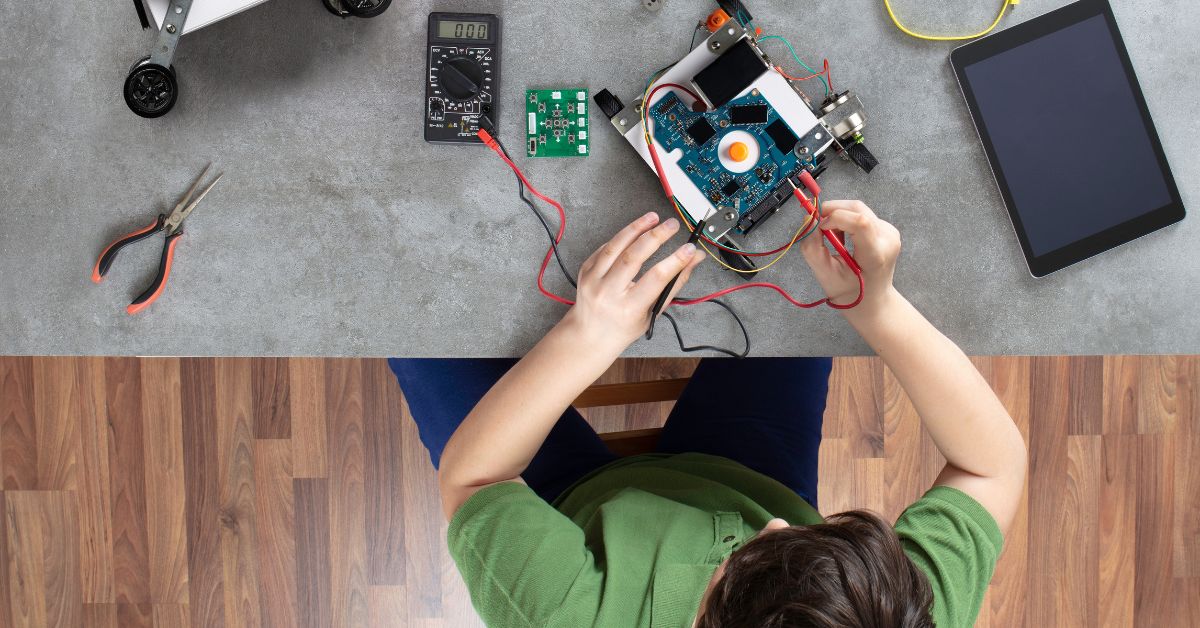
A young student wearing a green shirt working on an electronics project at a table, using a multimeter to test circuits on a robotics or engineering board. Various tools, wires, and a tablet are also on the table, representing hands-on STEM learning.

Finally, encouraging a growth mindset in children can significantly enhance their STEM learning journey. By teaching students to view challenges as opportunities for growth and learning, homeschooling parents can nurture resilience and persistence. Celebrating small victories and embracing failures as part of the learning process helps students develop a positive attitude toward STEM and learning in general. This mindset is crucial not only for mastering STEM subjects but also for thriving in an ever-evolving world filled with constant innovation and change.

To further enhance the learning experience, parents can create interdisciplinary projects that combine multiple STEM elements. For instance, designing and constructing a model bridge can involve engineering principles, mathematical calculations, and scientific experimentation. These projects encourage collaboration, creativity, and problem-solving, providing a comprehensive approach to learning that mirrors real-world challenges.

The Role Of Reading In A STEM-Integrated Curriculum

While STEM subjects often involve hands-on activities and technical exploration, reading remains a crucial component of a well-rounded education. Reading enhances comprehension, vocabulary, and critical thinking skills, all of which are essential for success in STEM fields. By incorporating reading materials that support STEM learning, homeschooling parents can reinforce their children’s understanding of complex concepts and foster a deeper appreciation for the subjects. There are numerous resources available that cater to different age groups and interests. For younger children, picture books that introduce scientific concepts and technological wonders can be both entertaining and educational. For older students, biographies of influential scientists, engineers, and mathematicians offer inspiration and valuable insights into the world of STEM.

Additionally, parents can encourage students to explore non-fiction texts related to current scientific discoveries, technological advancements, and engineering marvels. Reading such materials broadens their horizons and helps them connect classroom learning to real-world applications, fostering a lifelong passion for exploration and innovation. Incorporating fiction into a STEM-integrated curriculum also holds value. Well-crafted science fiction novels can ignite a student’s imagination, prompting them to think creatively about the possibilities of future technologies and advancements. These stories not only entertain but also challenge students to consider ethical implications, societal impacts, and the boundaries of scientific exploration.

Discussions following such readings can deepen understanding and lead to thought-provoking debates, encouraging students to articulate their perspectives and refine their critical thinking skills.

Furthermore, reading and writing go hand in hand. Encouraging students to articulate their thoughts through writing allows them to process information more thoroughly and express their understanding of STEM subjects. Creative writing assignments that ask students to invent and describe new technologies or scientific concepts enhance their ability to convey complex ideas clearly and effectively. This practice strengthens communication skills, an essential competence in any field, particularly in STEM, where collaboration and information sharing are crucial.

Ultimately, blending reading and writing with STEM education creates a holistic learning experience. By broadening the scope beyond mere technical skills, homeschooling parents can nurture well-rounded individuals who are prepared to tackle the multifaceted challenges of the future. This integrated approach not only cultivates a passion for learning but also equips students with the skills and mindset necessary to thrive in a rapidly evolving world.

The Benefits Of STEM Are Far-Reaching

Incorporating STEM activities across the curriculum offers homeschooling parents a powerful tool to cultivate curiosity, critical thinking, and problem-solving skills in their children. By seamlessly blending STEM into daily routines and traditional subjects, parents can create an engaging and flexible learning environment that adapts to their children’s unique needs and interests. The benefits of a STEM-integrated curriculum are far-reaching, enhancing literacy, numeracy, and future preparedness. By encouraging students to explore interdisciplinary projects and providing access to quality reading materials, parents can nurture well-rounded learners who are equipped for the challenges and opportunities of tomorrow. We invite homeschooling parents to explore the exciting world of STEM activities and consider incorporating them into their teaching strategies. By doing so, they can provide their children with a holistic and enriching educational experience that fosters a lifelong love of learning and innovation. For those interested in deepening their understanding of STEM integration, numerous resources and communities are available to support this rewarding educational journey.

Building a Love for Reading: Techniques for Encouraging Bookworm Habits

Reading is a gateway to knowledge, creativity, and lifelong learning. For homeschooling parents, instilling a love for reading in their children is crucial. It not only enriches their homeschool reading curriculum but also sets the foundation for academic success and personal growth. This blog post explores effective strategies for fostering bookworm habits and helping your children develop a deep appreciation for the written word.

The Importance Of Developing A Love For Reading In Children

Children with a passion for reading often excel in various areas of life. They tend to have better language skills, increased empathy, and enhanced imagination. However, many homeschooling parents face challenges when encouraging their children to pick up a book willingly. Understanding these challenges and addressing them head-on can make all the difference. Homeschooling provides a unique opportunity to tailor education to a child’s individual needs, yet some parents struggle to integrate reading into their daily routines.

The absence of a traditional classroom setting can lead to difficulties in encouraging consistent reading habits. Additionally, the distraction of technology and the abundance of other educational responsibilities can make it challenging to prioritize reading. Thankfully, there are ways to overcome these obstacles and create an environment where reading becomes an enjoyable and integral part of your homeschooling curriculum.

Techniques For Building A Love For Reading

The first step in fostering a love for reading is to create an inviting environment. Designate a cozy reading nook with comfortable seating, good lighting, and easy access to books. Having a dedicated space for reading can make it feel like a special activity rather than a chore. Fill your home with a diverse range of books, including fiction, non-fiction, picture books, and chapter books. Encourage your children to explore different genres and topics, allowing them to discover what truly interests them. Consider setting up a mini-library in your home, where they can choose their next adventure. Involve your children in organizing and personalizing their reading space. Allow them to decorate it with posters or artwork related to their favorite stories. This sense of ownership can motivate them to spend more time in their reading haven.

A young boy wearing a black and white striped shirt, deeply focused on reading a book, with his finger following the text. The book has colorful sticky notes, suggesting active learning and engagement.

Children often mimic the behaviors of their parents. If they see you reading regularly and enjoying it, they are more likely to develop similar habits. Set aside time each day for family reading sessions, where everyone gathers to read silently or take turns reading aloud. Discuss the books you’re reading with your children, sharing your thoughts and insights. Ask them about their reading experiences and engage in conversations that stimulate their curiosity. This interaction not only enhances their understanding but also strengthens your bond as you explore stories together. Make reading a shared experience by participating in book clubs or attending library events as a family. Being part of a community that values reading can reinforce the idea that books are an integral part of life.

Technology, when used wisely, can be a valuable tool for encouraging reading. E-books and audiobooks provide flexibility and convenience, allowing your children to enjoy stories on the go. These digital formats can be especially helpful for reluctant readers or those who benefit from multisensory learning experiences. There are numerous educational apps and websites that offer interactive reading experiences, quizzes, and comprehension activities. These can make reading more engaging and fun, particularly for tech-savvy children. However, it’s essential to strike a balance and ensure that screen time doesn’t replace traditional books entirely.

Encourage your children to explore online resources that complement their reading. For example, they can research the author of a book they’re reading or watch videos related to the story’s themes. This integration of technology can enrich their understanding and make reading a more dynamic experience.

Consistency is key to building any habit, and reading is no exception. Integrate reading into your daily homeschooling schedule by setting aside dedicated time for it. Create a routine that incorporates independent reading, guided reading, and family reading sessions. Consider using reading as a tool to support other subjects in your curriculum. For instance, assign books that align with your history, science, or social studies lessons. This interdisciplinary approach reinforces the relevance of reading and demonstrates how it connects to various aspects of knowledge. You can also encourage your children to keep reading journals, where they jot down thoughts, summaries, and questions about the books they read. This practice enhances comprehension and critical thinking skills while providing a record of their progress over time.

Selecting the right books for your children’s age and interests is crucial for fostering a love for reading. Compile a list of recommended books for each age group, catering to their developmental stage and preferences. For younger children, focus on books with vibrant illustrations, engaging characters, and simple plots. Classic picture books like “Where the Wild Things Are” by Maurice Sendak and “The Very Hungry Caterpillar” by Eric Carle are excellent choices. For middle-grade readers, consider popular series like “Harry Potter” by J.K. Rowling or “Percy Jackson & The Olympians” by Rick Riordan. These series captivate young imaginations with their magical and adventurous narratives.

Teenagers may enjoy more complex themes and genres. Encourage them to explore contemporary young adult novels like “The Hunger Games” by Suzanne Collins or thought-provoking classics like “To Kill a Mockingbird” by Harper Lee.

A reading challenge can be a fun and effective way to motivate your family to read more. Set achievable goals, such as reading a certain number of books in a month or exploring specific genres. Offer rewards or incentives for reaching milestones to keep the excitement alive. Participate in community reading challenges or create your family’s version with personalized themes and categories. Consider involving extended family or friends to foster a sense of camaraderie and friendly competition. Keep track of your progress on a visual chart or bulletin board, celebrating each book completed. This tangible representation of achievement can boost morale and inspire everyone to keep reading.

It’s not uncommon for children to resist reading, but there are strategies to address this reluctance. Begin by identifying the root cause of their aversion. Is it difficulty with reading skills, lack of interest, or feeling overwhelmed by the material? Once you’ve pinpointed the issue, tailor your approach accordingly. If reading skills are a concern, provide additional support through tutoring or online resources. If interest is lacking, explore new genres or themes that align with their hobbies or passions. Encourage choice and autonomy by allowing your child to select their reading materials. When they have control over what they read, they’re more likely to engage with the content and develop a sense of ownership.

Encouraging A Lifelong Love For Reading In Your Homeschooling Journey

Incorporating a love for reading into your homeschooling curriculum is an investment in your child’s future. By creating a reading-friendly environment, setting a positive example, utilizing technology wisely, and incorporating reading into daily routines, you can nurture a lifelong passion for books. Remember that every child is unique, and their reading preferences and pace may vary. Be patient and flexible in your approach, adapting to their needs as they grow.

Building a love for reading is a rewarding and ongoing process. It opens doors to endless possibilities, empowering your children to explore new worlds, gain knowledge, and become lifelong learners. By fostering bookworm habits, you’re equipping them with a valuable skill that will enrich their lives for years to come.

Study Tips for Different Learning Styles Across All Subjects

In the world of homeschooling, understanding your child’s unique learning style is a game-changer. It’s not just about delivering information but doing so in a way that resonates with how they naturally process and retain knowledge. This blog post uncovers the secrets to enhancing education by aligning teaching methods with the three primary learning styles—visual, auditory, and kinesthetic. We will provide practical study tips for each type, ensuring your child excels across all subjects. Homeschooling parents will gain insights into customizing lessons and creating an enriching learning environment that nurtures their children’s strengths.

Identifying Learning Styles For Effective Homeschooling

Learning styles refer to the preferred way a person absorbs, processes, and retains information. The three primary styles are visual, auditory, and kinesthetic. Recognizing these can significantly impact a homeschooling parent’s approach, making lessons more effective and enjoyable. Visual learners thrive on images, diagrams, and written instructions. They understand concepts better when they can see them, making visuals a powerful tool in their learning arsenal.

Auditory learners, on the other hand, benefit from listening. They excel in environments where they can hear information, discuss ideas, and engage in verbal exchanges. Kinesthetic learners prefer a hands-on approach. They learn best through doing, moving, and touching—activities that involve direct interaction with materials.

By identifying your child’s homeschooling learning style, you can create a more tailored educational experience. This personalization can lead to higher engagement levels, better knowledge retention, and a deeper love for learning. Observing how your child reacts in different scenarios can offer clues to their preferred style, allowing you to adjust your methods accordingly.

A young boy sitting at a table writing in a notebook while his father, smiling, looks at a laptop. The mother stands nearby eating a salad, creating a warm homeschooling environment in a modern kitchen.

Implementing learning style-based strategies benefits not only the child but also the educator. It fosters a supportive and adaptive environment where both parent and child feel confident in the homeschooling process. Ultimately, understanding learning styles serves as a foundation for a more effective and fulfilling educational experience.

Crafting Study Tips For Visual, Auditory, And Kinesthetic Learners

Study Tips for Visual Learners:

Visual learners absorb information best through sight. They appreciate order and clarity in their learning materials, often finding visual aids instrumental in grasping complex concepts. In homeschooling, visual learners can benefit greatly from strategies that incorporate strong visual elements. For subjects like history, maps and timelines can be particularly effective. These learners can visualize events spatially and chronologically, which helps them see the bigger picture. Creating colorful mind maps and charts to summarize key points encourages them to organize information methodically. Using color-coded notes, highlighters, and flashcards also enhances their learning by making it easier for them to categorize and recall information.

Incorporating technology can further enhance a visual learner’s experience. Educational videos and interactive software offer dynamic ways to engage with the material, providing a rich tapestry of visual stimuli. These resources can make abstract concepts more tangible, particularly in subjects like science or mathematics, where visual demonstrations can clarify complex ideas. Creating a visually appealing study space can also support a visual learner’s focus. A tidy, well-organized area with minimal distractions allows them to concentrate better on their tasks. Incorporating a whiteboard or bulletin board where they can display important information or artwork can also inspire creativity and reinforce learning.

Study Tips for Auditory Learners: 

Auditory learners excel when they can hear and discuss information. These learners benefit from strategies that emphasize listening and speaking, making auditory engagement a crucial part of their homeschooling experience. One effective technique for auditory learners is reading aloud. Whether it’s a textbook or a story, hearing the words spoken helps them process and retain information. Audiobooks and recorded lectures provide additional opportunities to absorb content through listening. Engaging in group discussions, even if it’s just with family members, can help reinforce learning as they articulate their thoughts and hear others’ perspectives. Music and rhymes can also play a significant role in an auditory learner’s education. Incorporating songs or melodies related to the subject matter can aid memorization and understanding. For instance, using mnemonics set to music can help them remember formulas or facts more easily.

Encouraging auditory learners to teach back what they’ve learned can further solidify their understanding. This technique not only boosts their confidence but also reinforces their knowledge as they verbalize concepts in their own words. Recording themselves speaking or explaining subjects can also be a useful tool for review and reflection.

Study Tips for Kinesthetic Learners:

Kinesthetic learners learn best through movement and hands-on activities. They thrive in environments where they can physically interact with materials, making active engagement essential for their educational success. In homeschooling, incorporating interactive projects and experiments can captivate kinesthetic learners. For instance, in science subjects, conducting experiments or building models allows them to explore concepts in a tangible way. Field trips and outdoor activities provide real-world experiences that enhance their understanding and retention of information. Creating a dynamic learning environment is key for these learners. Allowing them to move around while studying, like using standing desks or taking short breaks to stretch or walk, can help maintain their focus and energy levels.

Incorporating physical objects, such as manipulatives or craft supplies, in lessons can also facilitate a more hands-on approach. Kinesthetic learners often benefit from role-playing or dramatizations. Acting out historical events or scientific processes can turn abstract ideas into memorable experiences. Encouraging them to use gestures or movements while explaining concepts can also help reinforce their learning.

Adapting Learning Styles To Various Subjects In Homeschooling

Applying these strategies across different homeschool subjects can enhance the educational experience for all types of learners. By integrating visual, auditory, and kinesthetic techniques, homeschooling parents can create a versatile and inclusive curriculum. In subjects like language arts, visual learners can benefit from graphic organizers to outline essays or stories, while auditory learners might prefer discussing plot developments or listening to literature. Kinesthetic learners could engage in writing through interactive activities, such as storytelling through playdough or acting out scenes. Mathematics offers unique opportunities to tailor learning styles. Visual learners can use diagrams and visual aids to understand geometric concepts, while auditory learners might benefit from verbal problem-solving discussions. Kinesthetic learners can use physical objects to represent numbers or engage in activities that involve measuring or constructing.

Science subjects can be enriched through experiments and hands-on projects. Visual learners can benefit from detailed diagrams and videos, auditory learners from recorded explanations or discussions, and kinesthetic learners from conducting experiments or building models. These methods ensure a comprehensive understanding of scientific principles. In social studies, visual learners can create visual timelines of historical events, auditory learners can listen to historical podcasts or engage in debates, and kinesthetic learners can reenact historical scenes or visit relevant sites. By adapting teaching methods to each learning style, homeschooling parents can equip their children with a well-rounded education.

Empowering Homeschooling Success Through Understanding Learning Styles

Understanding and applying different learning styles in homeschooling can significantly impact a child’s educational experience. By tailoring study tips to visual, auditory, and kinesthetic learners, parents can create a more engaging and effective learning environment. Recognizing and catering to individual preferences allows children to thrive academically and develop a lifelong love for learning. The key is observing your child’s natural inclinations and adapting lessons to suit their style. By doing so, you’ll foster a deeper connection to the material and create a positive, supportive atmosphere for their growth. Remember, there is no one-size-fits-all approach in education—embracing diversity in learning styles ensures that every child has the opportunity to shine.

We encourage you to explore these strategies and observe the transformation in your child’s learning experience. With dedication and creativity, homeschooling can become a rewarding and successful endeavor for both parent and child. If you’re eager to learn more or seek personalized guidance, consider reaching out to homeschooling communities and resources for additional support.

Understanding Historical Events: Creative Projects for Comprehensive Learning

In the diverse world of homeschooling, understanding historical events is a crucial part of a child’s education. It provides them with the context needed to comprehend the complexities of today’s world and fosters a sense of identity and cultural awareness. However, making history come alive for young learners can be challenging. Enter creative projects, a dynamic tool for homeschooling parents to enhance their history lessons.

By engaging children in activities that go beyond rote memorization, these projects can transform the homeschool history curriculum into an exciting adventure through time.

The Benefits Of Creative Projects For Comprehensive Learning

Engaging students in creative projects offers numerous educational advantages, stretching far beyond the confines of traditional learning. First, these projects enhance critical thinking. When students participate in activities like historical reenactments or creative writing, they learn to analyze information, evaluate different viewpoints, and synthesize new ideas. This kind of thinking is essential not only for understanding history but for lifelong learning. Creative projects also hone research skills.

To accurately portray a historical event or write a historically accurate story, students must dig deep into various sources of information. This process teaches them how to gather, assess, and interpret data—a skill that is valuable across all subjects and future careers.

Additionally, such projects foster a deeper connection to the past, helping students relate historical events to their own experiences and the world around them. By involving students in the creation process, homeschool educators can promote active learning. This engagement often leads to stronger retention of information compared to passive learning methods like lectures or textbook reading.

Creative projects encourage students to explore topics that interest them, which can ignite a passion for learning and make history a favorite subject.

Understanding Historical Events Through Creative Projects

History is more than just memorizing dates and names; it’s an intricate story that shapes the world we live in today. Engaging students with creative projects helps bring this story to life, fostering deeper understanding and empathy. Below are some dynamic ways you can explore history through hands-on learning activities.

  • Historical Reenactments
    Step into the shoes of historical figures through reenactments.

    • Act out key events, from famous battles to everyday life in the past.
    • Small-scale productions or simple role-plays help students connect emotionally with history.
    • This approach builds empathy and provides a tangible link to the events that shaped the world.

A young girl dressed in a traditional historical outfit with intricate lace and embroidery, adorned with gold hair accessories, standing against a rustic brick wall with colorful graffiti.

  • Timeline Construction
    Map out history visually with timelines to explore cause-and-effect relationships.

    • Use paper and pencil, digital apps, or interactive boards to adapt to available resources.
    • Timelines bring clarity to the sequence of events and how they influence one another.
  • Writing Historical Fiction
    • Encourage students to write stories set in specific historical periods.
    • Blending facts with creativity deepens their understanding of social, economic, and political contexts.
    • Bonus? It also enhances their writing skills and vocabulary.
  • Art Projects with a Historical Twist
    Get creative with art to explore key historical events or figures.

    • Paint scenes from famous events or craft sculptures of historical leaders.
    • Use vibrant colors and forms to express interpretations of history.
  • Historical Cooking
    Travel back in time through your taste buds.

    • Prepare and taste recipes from various historical eras or regions.
    • Discuss trade, agriculture, and daily life while connecting to cultural and economic factors.
  • Music and Dance from the Past
    Experience history through its rhythms and melodies.

    • Learn traditional songs or dances from different eras.
    • Performing a medieval dance or colonial tune brings cultural heritage alive while teaching about societal traditions.
  • Model Building
    Recreate historical architecture to explore the past hands-on.

    • Build models of landmarks like pyramids, the Colosseum, or medieval castles.
    • This activity merges historical research with planning and critical thinking.
  • Creating Historical Board Games
    • Design board games based on historical eras or events.
    • Students explore strategies, decisions, and societal dynamics while reinforcing their learning through play.
  • Scrapbooking
    • Compile an artistic scrapbook of a specific time period.
    • Include imagery, artifacts, newspaper clippings, and more.
    • This approach allows students to visualize historical lifestyles and trends creatively.
  • Ancestry Exploration
    Make history personal with a deep dive into family heritage.

    • Research family trees, interview relatives, and create a family history journal.
    • This personalizes learning, showcasing how large events impacted individual lives.
  • Digital Storytelling
    Modernize history lessons with collaborative digital narratives.

    • Use online tools to create stories incorporating images, audio, and video.
    • This interactive method blends technology with historical exploration for a fresh perspective.
  • Diorama Construction
    Visualize history by building three-dimensional scenes.

    • Recreate pivotal moments like ancient cities or treaty signings.
    • Dioramas provide a tactile way to understand spatial and societal contexts.

Whether through hands-on projects or creative storytelling, these activities help students actively engage with the past, making history more relatable and memorable. Through creativity, the past comes alive and offers lessons that resonate far into the future.

Implementing Creative Projects In The Homeschool Curriculum

Incorporating creative projects into the homeschool history curriculum requires thoughtful planning and flexibility. Start by identifying topics within the curriculum that could benefit from a hands-on approach. Consider the interests and strengths of your child when selecting projects, as this can increase their motivation and involvement. For instance, a child interested in art might enjoy creating illustrated timelines, while a child who loves performing arts might thrive in historical reenactments. Time management is another critical factor.

Allocate specific times in your schedule for project work, ensuring that it doesn’t overwhelm other areas of study. Depending on the project’s complexity, it may be spread over several days or weeks. Set realistic deadlines and be open to extending them if necessary to accommodate deeper exploration or unexpected challenges. Evaluation is also an essential aspect of project-based learning. Establish clear criteria for success based on effort, creativity, and adherence to historical accuracy.

Providing constructive feedback fosters improvement and can guide future projects. Encourage your child to reflect on their learning experience and share their projects with family or a broader community, which can further enrich the educational experience.

Understanding historical events through creative projects can significantly enrich a homeschooling curriculum. These projects not only make learning history more engaging but also develop essential skills such as critical thinking, research, and creativity. For homeschooling parents, integrating these strategies offers an opportunity to transform history lessons into memorable and meaningful experiences. We encourage you to explore these creative approaches in your homeschool history curriculum. Share your experiences and insights with fellow homeschooling parents or communities, as collaboration can lead to more innovative methods and ideas.

Fostering A Love For History

By fostering a love for history through innovative projects, you’re not only teaching your child about the past but also preparing them for a future filled with curiosity and discovery. For those interested in additional support, consider joining online forums or local homeschooling groups where resources and project ideas are regularly shared. Engaging with a community of like-minded educators can provide valuable tips and inspiration to keep your homeschool history curriculum both comprehensive and exciting.

Developing Critical Thinking in English: Discussion and Debate Activities

Critical thinking is a crucial skill for navigating the complexities of today’s world. It helps children analyze information, make informed decisions, and solve problems effectively. For homeschooling parents, nurturing these skills is a top priority, as it sets the foundation for lifelong learning and adaptability. But how can you effectively develop critical thinking in your child, especially when your classroom is your living room? Fortunately, the English language and its vast literary heritage offer a treasure trove of opportunities to cultivate critical thinking skills.

This blog post will explore how you can harness the power of English discussion and debate activities to transform your homeschooling curriculum. By the end of this read, you’ll have practical insights into creating an environment that challenges your child’s mind and encourages intellectual curiosity.

How English Fuels Critical Thinking Skills

The English language, with its rich literary tapestry, offers more than just communication skills. It is a gateway to deeper understanding and reflection. By engaging with a wide range of texts, from classic literature to contemporary articles, children learn to interpret, analyze, and evaluate different perspectives. This process naturally fosters critical thinking. When students read, they encounter diverse viewpoints and contexts, encouraging them to question assumptions and draw connections between ideas. For example, while studying a novel, a child might explore the motivations behind a character’s actions or the impact of historical events on the plot.

These exercises sharpen analytical skills and cultivate a habit of critical inquiry. Furthermore, literature exposes students to complex ethical dilemmas and moral questions. Discussions about these themes encourage children to think critically about values, ethics, and societal issues. By analyzing characters’ choices and consequences, students begin to develop their own ethical frameworks and learn to articulate and defend their beliefs.

Engaging in Discussion Activities To Stimulate Critical Thought

To truly harness the potential of English for fostering critical thinking, consider incorporating structured discussion activities into your homeschooling routine. Activities like Socratic seminars and fishbowl discussions can provide a dynamic platform for intellectual exploration. 

Socratic Seminars are a powerful tool for engaging students in thoughtful dialogue. In this format, students are encouraged to ask open-ended questions, explore multiple viewpoints, and engage in respectful discourse. The teacher, or parent in this case, acts as a facilitator, guiding the conversation while allowing students to lead the discussion. This approach not only enhances critical thinking skills but also builds confidence in articulating ideas. 

Fishbowl Discussions offer another engaging method for stimulating critical thought. In this setup, a small group of students (the “fish”) discusses a topic while the rest of the class observes. The observers take notes and later join the conversation, providing additional perspectives. This format encourages active listening, thoughtful questioning, and the consideration of diverse viewpoints. Both Socratic seminars and fishbowl discussions require preparation. Encourage your child to research the topic, formulate critical thinking questions, and come prepared with evidence-based arguments. By emphasizing evidence and analysis, these activities teach students the value of well-reasoned arguments and the importance of considering multiple perspectives.

A group of young girls sitting in a circle engaging in a discussion with a smiling female teacher or mentor. The children appear happy and engaged, while the teacher encourages participation. The setting is a bright and welcoming indoor learning environment with bookshelves and natural light in the background.

Debate Activities To Hone Critical Thinking And Argumentative Skills

You may be wondering: “How does debate help critical thinking?”. Debate activities are an excellent way to further develop critical thinking and argumentative skills in homeschooling environments. Structured debates teach students to construct logical arguments, anticipate counterarguments, and defend their positions effectively. 

Traditional Debates allow students to immerse themselves in a formalized structure where they argue for or against a specific proposition. This format requires thorough research and preparation, enabling students to develop a comprehensive understanding of the topic. By presenting well-reasoned arguments and countering opposing views, students learn how debate helps in critical thinking and bolsters their persuasive skills.

 Impromptu Debates, on the other hand, offer a more spontaneous approach. In this format, students are given a topic on the spot and must quickly develop arguments and respond to their opponents. This exercise sharpens their ability to think on their feet, analyze information swiftly, and express their ideas clearly and concisely.

To incorporate debate into your homeschooling curriculum, consider choosing topics that resonate with your child’s interests and experiences. Research relevant critical thinking debate topics together, ensuring a balance between challenging and accessible subjects. Encourage your child to practice active listening and note-taking during debates, as these skills are essential for constructing effective rebuttals.

Practical Tips For Homeschooling Parents

  1. Establish a Routine: Scheduling regular discussion and debate sessions can create a sense of anticipation and commitment, making these activities a staple of your child’s educational routine. It helps in establishing discipline and makes the learning process habitual, encouraging students to prepare and research ahead of time.
  1. Utilize Resources: Diversifying resources can keep the learning experience fresh and engaging for your child. Beyond traditional reading materials, consider integrating interactive content such as online courses, virtual discussions with subject-matter experts, and participation in educational competitions. These varied resources can stimulate different aspects of critical thinking and provide real-world context to theoretical knowledge.
  1. Create a Safe Environment: A nurturing and supportive atmosphere can significantly enhance your child’s willingness to participate and express themselves freely. Use positive reinforcement to build self-confidence and set clear guidelines for constructive feedback. Emphasizing respectful dialogue and active listening will teach your child the value of empathy and understanding in diverse conversations.
  1. Encourage Critical Thinking Questions: Engage your child in activities that promote curiosity and inquiry. Challenge them to question assumptions and investigate the ‘why’ and ‘how’ of their topics. Incorporate exercises like brainstorming sessions or mind maps to visually explore ideas and their interconnections, fostering a deeper exploration of issues.
  1. Provide Feedback and Guidance: Feedback should be specific, fair, and geared towards helping your child grow. Highlight examples of strong arguments they’ve made, as well as areas where their reasoning could be improved or expanded. Introduce them to techniques for effective argumentation, such as Toulmin’s model of argumentation, and practice these techniques through role-playing exercises to encourage application and retention.
  1. Promote Reflective Practice: Encourage your child to reflect on each discussion or debate session. This can involve writing a journal entry or discussing what they felt went well, what challenges they encountered, and areas they would like to improve. Reflection helps consolidate learning and provides insights into their progress over time.
  1. Foster a Growth Mindset: Instill the belief that abilities can be developed through dedication and hard work. Praise effort rather than innate ability and help your child view challenges as opportunities for growth. By embracing a growth mindset, students become more resilient and open to learning from criticism and setbacks.
  1. Introduce Diverse Perspectives: Encourage your child to explore a range of sources and viewpoints to broaden their understanding of various topics. Engage with literature, documentaries, podcasts, and interviews that present multiple sides of an issue. This exposure not only enriches their perspective but also teaches the importance of considering different cultural and societal contexts.
  1. Incorporate Creative Expression: Use creative forms of expression, such as role-playing, storytelling, or digital presentations, to explore ideas. This approach can make discussions and debates more engaging and helps students articulate their thoughts in innovative ways. Creative expression also nurtures imagination and supports diverse learning styles.
  1. Set Realistic Goals: Goal-setting can help maintain motivation and provide a clear purpose to your child’s learning journey. Work together to establish specific, measurable, achievable, relevant, and time-bound (SMART) goals for their discussion and debate skills. These goals can focus on mastering particular techniques, improving confidence, or exploring new topics, providing a roadmap for both short-term achievements and long-term development.

Nurturing Critical Thinking Skills

Incorporating discussion and debate activities into your homeschooling curriculum is a powerful way to nurture critical thinking skills in your child. By leveraging the richness of the English language and its literary heritage, you can create an engaging and intellectually stimulating environment that encourages curiosity and exploration. Remember, critical thinking is not a skill that can be developed overnight. It requires consistent practice, patience, and a willingness to challenge assumptions. By prioritizing critical thinking in your homeschooling approach, you equip your child with the tools they need to thrive in an increasingly complex world. If you’re eager to explore more, numerous online courses and resources focus on developing critical thinking skills. These can provide additional support and guidance as you continue your homeschooling journey.

Personalized Learning: Tailoring Homeschooling to Fit Your Child’s Needs

Homeschooling is becoming an increasingly popular choice for parents who want to take a more active role in their child’s education. One of the main advantages of homeschooling is its flexibility, which allows for personalized learning tailored to each child’s unique needs and interests. Personalized learning in homeschooling means adapting teaching methods, schedules, and curricula to fit a child’s specific learning style, pace, and preferences.

In this blog post, we’ll explore the importance of personalized learning in homeschooling and how it can significantly benefit your child. We’ll also provide practical advice for homeschooling, tips for setting up an efficient homeschool environment, and guidance on creating custom homeschooling plans. By the end of this post, you’ll have a comprehensive understanding of how to tailor your child’s education to ensure they thrive academically and personally.

Understanding Your Child’s Learning Style & Incorporating Hands-On Learning Experiences

Every child learns differently, and understanding your child’s learning style is crucial to providing effective, personalized learning. Some children are visual learners who process information best through images and diagrams, while others are auditory learners who benefit from listening to explanations and discussions. There are also kinesthetic learners who need hands-on activities to grasp concepts fully. Observing your child’s behavior during learning activities can give you valuable insights into their preferred learning style. Pay attention to how they respond to different types of instruction and which activities they engage with the most. This understanding will help you choose the right teaching methods and materials that cater to their strengths and preferences.

Once you have identified your child’s learning style, you can tailor your homeschooling approach accordingly. For visual learners, incorporate visual aids like charts, videos, and flashcards. For auditory learners, consider using audiobooks, podcasts, and interactive discussions. For kinesthetic learners, prioritize hands-on activities, experiments, and physical movement. By aligning your teaching methods with your child’s learning style, you can enhance their engagement and retention of information.

Hands-on learning experiences are a powerful way to engage your child’s curiosity and creativity while reinforcing academic concepts. These activities allow children to explore, experiment, and apply their knowledge in practical ways. By incorporating hands-on learning into your homeschooling routine, you can make education more dynamic and enjoyable. There are countless opportunities for hands-on learning, regardless of the subject. For science, consider conducting simple experiments at home or creating a small garden to study plant growth. For math, use everyday objects like cooking ingredients or building blocks to teach concepts like measurement and geometry. For history, encourage your child to create dioramas or timelines to visualize historical events.

An elderly man and two children engaged in a hands-on gardening activity in a lush green park, using small tools to plant and nurture plants together.

Art and crafts are also excellent avenues for hands-on learning. Projects like painting, sculpting, and crafting can help develop fine motor skills and creativity. Additionally, involving your child in household tasks like cooking, sewing, or woodworking can teach valuable life skills while reinforcing concepts learned in other subjects. The key is to make learning interactive and immersive. Encourage your child to ask questions, make predictions, and draw conclusions based on their observations. Hands-on learning not only enhances understanding but also fosters a love for discovery and exploration.

Designing A Dedicated Homeschool Setup Space

Creating a dedicated homeschooling space is essential for maintaining focus and organization. While homeschooling allows for flexibility, having a designated area for learning can help establish a routine and minimize distractions. Choose a quiet and well-lit space where your child can concentrate without interruptions. A spare room, a corner of the living room, or even a section of their bedroom can work well. Ensure that the area is equipped with comfortable seating, a sturdy desk, and adequate storage for books, supplies, and materials.

Personalize the space to make it inviting and conducive to learning. Decorate with educational posters, artwork, and motivational quotes. Organize supplies and materials in labeled bins or shelves for easy access. Keep the area tidy and clutter-free to create a positive and productive learning environment. Incorporate elements that reflect your child’s interests and learning style. For example, if your child is a visual learner, include a whiteboard or corkboard for displaying charts, diagrams, and visual aids. If they enjoy hands-on activities, set up a designated area for experiments, crafts, and projects. By designing a space that caters to their needs, you can enhance their learning experience and make homeschooling more enjoyable.

Keeping your homeschool area organized is essential for maintaining a productive and stress-free learning environment. Clutter and disorganization can lead to distractions and make it challenging to find materials and resources when needed. Here are some tips to keep your homeschool area tidy and efficient. First, invest in storage solutions that work for your space and needs. Use shelves, bins, and baskets to store books, supplies, and materials. Label containers clearly so that everything has a designated place, and encourage your child to put items back where they belong after use. This will help prevent clutter from accumulating and make it easier to find what you need. Create a filing system for organizing paperwork, assignments, and important documents. Use folders or binders to keep everything in order and easily accessible. Consider color-coding or labeling different subjects or categories to simplify retrieval. Establish a routine for regularly sorting and filing papers to prevent them from piling up. Establish a daily or weekly cleaning routine to maintain tidiness. Encourage your child to take responsibility for keeping their homeschool area clean and organized. Set aside a few minutes each day to tidy up, put away materials, and wipe down surfaces. Regular maintenance will help prevent clutter from becoming overwhelming and create a pleasant learning environment. Lastly, declutter regularly and get rid of items that are no longer needed. Donate or recycle materials that are no longer relevant or have been outgrown. By keeping only what is necessary and useful, you can create a streamlined and efficient homeschool space that supports your child’s learning.

How To Develop A Curriculum & Evaluating And Adjusting The Plan

One of the significant advantages of homeschooling is the ability to customize the curriculum to meet your child’s interests and pace. Unlike traditional schooling, where a one-size-fits-all approach is often used, homeschooling allows you to tailor the content and delivery to suit your child’s unique needs and preferences. Start by identifying your child’s interests and passions. Consider their hobbies, favorite subjects, and areas where they excel. Use this information to guide your curriculum planning and incorporate topics that will engage and motivate them. For example, if your child loves animals, integrate animal-related themes into science, reading, and art lessons. Next, determine your child’s learning pace and adjust the curriculum accordingly. Some children may need more time to grasp certain concepts, while others may be ready to move ahead quickly. Flexibility is key to ensuring that your child remains challenged and engaged without feeling overwhelmed. Use a combination of structured lessons and self-directed learning to accommodate their pace.

Utilize a variety of resources to create a well-rounded curriculum. Combine textbooks, online courses, educational videos, and hands-on activities to provide a diverse and engaging learning experience. Take advantage of local libraries, museums, and community resources to supplement your curriculum and provide real-world learning opportunities. Regularly evaluate and adjust the curriculum to meet your child’s evolving needs and interests. As they grow and develop, their preferences and learning styles may change. Stay attuned to their feedback and progress, and be willing to make modifications as necessary. This ongoing flexibility will ensure that your child’s education remains relevant and meaningful.

Homeschooling is a dynamic and evolving process that requires regular evaluation and adjustment. As your child grows and learns, their needs, interests, and abilities will change. It’s essential to continuously assess your custom homeschooling plan and make necessary modifications to ensure it remains effective and relevant. Start by establishing a routine for evaluating your child’s progress. Set aside regular intervals—such as monthly or quarterly—to review their academic achievements, strengths, and areas for improvement. Use a combination of assessments, observations, and feedback to gain a comprehensive understanding of their development. Encourage your child to be an active participant in the evaluation process. Ask them about their learning experiences, what they enjoy, and what challenges they face. Their input can provide valuable insights into their needs and preferences. Use this information to make informed decisions about adjusting the curriculum, teaching methods, and learning activities.

Be open to experimenting with new approaches and resources. If a particular method or material isn’t working, don’t be afraid to try something different. Flexibility is one of the key advantages of homeschooling, so take advantage of it. Explore alternative teaching strategies, incorporate new subjects, or introduce innovative tools and technologies to keep learning fresh and engaging. Finally, celebrate your child’s achievements and milestones. Recognize their hard work and progress, and acknowledge the unique strengths and talents they bring to their learning journey. Celebrating successes can boost their confidence and motivation, making learning a positive and rewarding experience.

A Unique Opportunity

Personalized learning in homeschooling offers a unique opportunity to tailor education to fit your child’s individual needs, interests, and pace. By understanding their learning style, creating a flexible schedule, incorporating hands-on experiences, and designing a dedicated homeschooling space, you can create an enriching and enjoyable learning environment. Developing a custom curriculum that aligns with your child’s passions and utilizing resources and support from the homeschool community can further enhance their educational experience. Regularly evaluating and adjusting the custom plan ensures that your child’s education remains relevant and effective as they grow and learn.

Homeschooling is a dynamic and rewarding journey that allows you to be actively involved in your child’s education. By embracing personalized learning, you can help your child thrive academically, personally, and creatively. Share your experiences and advice within the homeschool community to inspire and support fellow homeschool parents. Your insights and stories can make a meaningful difference in the lives of others on this incredible educational adventure.