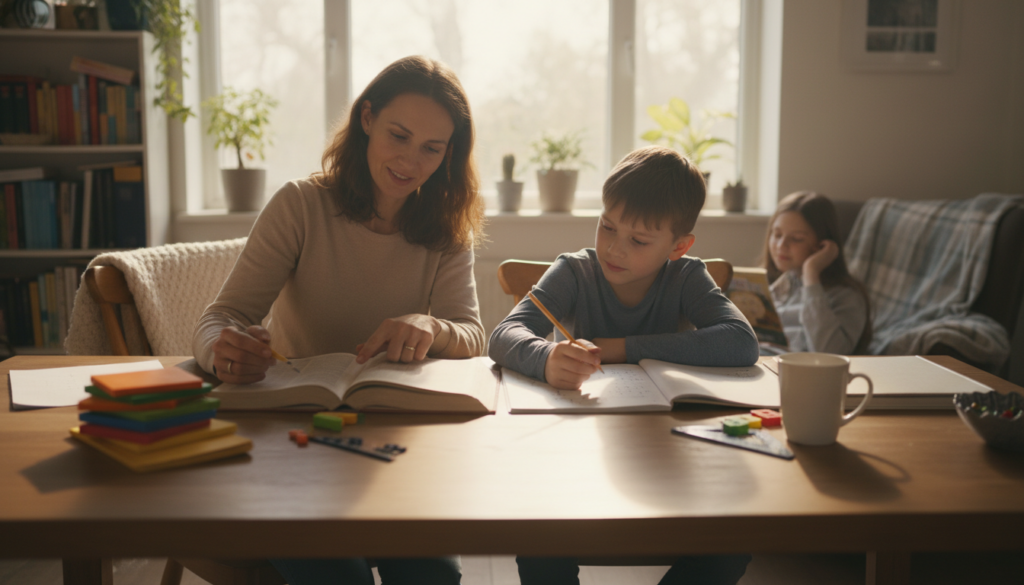
Simple Ways to Incorporate Mindfulness into Homeschool

Homeschooling and mindfulness go hand in hand. When you intentionally slow things down, create calm moments, and help your child become aware of their thoughts and emotions, learning becomes more focused and meaningful.

Can Music Improve Memory And Focus In Kids?

Yes, music can significantly improve memory and focus in kids when used intentionally. Background music, rhythm-based learning, and calming soundtracks can help regulate emotions, reduce distractions, and enhance concentration. The key is choosing the right type of music and using it consistently during learning times.

Music works because it engages multiple parts of the brain at once. When children listen to or interact with music, they activate areas tied to memory, attention, and emotional processing. This creates stronger neural connections, which can help information “stick” more effectively.

Here are a few simple ways to use music in your homeschool:

  • Play instrumental music during independent work time 
  • Use songs to memorize facts (like multiplication or spelling rules) 
  • Start the day with calming music to set the tone 
  • Try nature sounds or soft piano music during reading time 

Quick Tip: Avoid music with lyrics during focus-heavy tasks, it can compete with your child’s thinking process.

What Mindfulness Really Looks Like In A Homeschool Day

Mindfulness doesn’t mean sitting cross-legged in silence for 30 minutes (unless your kids actually enjoy that, which most don’t). It’s about bringing awareness and intention into everyday moments.

In a homeschool setting, mindfulness can be woven naturally into what you’re already doing. It’s less about adding something new and more about shifting how you approach your day.

For example:

  • Pausing before a lesson to take three deep breaths together 
  • Noticing how your child feels when they get frustrated 
  • Slowing down instead of rushing from subject to subject 
  • Encouraging your child to reflect on what they learned 

A mindful homeschool feels calmer, more flexible, and less reactive. Instead of constantly pushing through resistance, you start working with your child’s natural rhythms.

Simple Mindfulness Habits You Can Start This Week

If you’re feeling overwhelmed already, don’t worry, this doesn’t require a full schedule overhaul. Start small. Really small.

Here are easy habits you can implement immediately:

1. Start with a 2-minute reset
Before beginning lessons, sit together and take slow breaths.

  • Inhale for 4 seconds 
  • Hold for 2 seconds 
  • Exhale for 4 seconds 

2. Create a calm-down corner
Designate a small space with:

  • A soft pillow or chair 
  • A few calming objects (stress ball, stuffed animal) 
  • Optional: headphones with soft music 

3. Use mindful transitions
Instead of jumping between subjects, pause for:

  • Stretching 
  • A quick walk 
  • A drink of water 

4. Add “quiet time” daily
This doesn’t mean silence, it means independent, calm activity like:

  • Reading 
  • Drawing 
  • Listening to soft music 

5. Reflect at the end of the day
Ask simple questions:

  • What was your favorite part of today? 
  • What felt hard? 
  • What are you proud of? 

Common Mistake to Avoid: Trying to do all of this at once. Start with one habit and build from there.

Child’s hands arrange letter stones on a table while tracing letters in a workbook; berries and a candle nearby by a window.

Homeschooling can feel like a constant balancing act, especially when you’re trying to cover academics, manage behavior, and keep your child engaged. Mindfulness offers a way to step out of that reactive cycle and into something more intentional. It allows both you and your child to slow down, notice what’s working, and gently adjust what isn’t without frustration taking over.

When you consistently practice small moments of awareness, you’ll begin to notice subtle changes. Your child may transition between subjects more easily, handle challenges with less resistance, and even retain information better. These changes don’t happen overnight, but they build steadily with consistency and patience.

The biggest shift often happens in the parent. As you model calm responses, thoughtful pauses, and emotional awareness, your child learns by watching you. That’s one of the most powerful aspects of homeschooling, you’re not just teaching subjects, you’re shaping habits and life skills in real time.

Using Everyday Moments To Build Mindfulness Naturally

One of the best parts about mindfulness is that it doesn’t require extra curriculum or expensive resources. You can build it into what you’re already doing.

Here are some practical examples:

During reading time:

  • Ask your child to picture the scene in their mind 
  • Pause and talk about how a character feels 

During math:

  • Encourage slow, focused problem-solving 
  • Take breaks if frustration builds 

During outdoor time:

  • Notice sounds, smells, and surroundings 
  • Walk slowly and observe details 

During meals:

  • Eat without screens 
  • Talk about the day with intention 

Low-Cost Resource Ideas:

  • Free mindfulness videos on YouTube (kid-friendly guided breathing) 
  • Nature walks (completely free and highly effective) 
  • Printable gratitude journals 

Mindfulness isn’t something separate from learning, it enhances learning.

Common Mistakes Parents Make (And How To Avoid Them)

Even with the best intentions, it’s easy to overcomplicate mindfulness.

Here are a few common pitfalls:

1. Expecting instant results
Mindfulness is a long-term habit, not a quick fix.

2. Forcing it
If your child resists, adjust the approach instead of pushing harder.

3. Making it too structured
Keep it flexible and natural. Over-scheduling defeats the purpose.

4. Skipping consistency
Small daily habits are more effective than occasional long sessions.

5. Ignoring your own mindset
Your calm presence matters more than any technique.

Simple Fix: Focus on consistency over perfection.

There’s also a tendency to think mindfulness needs to look a certain way, quiet, still, and perfectly calm. But for many kids, especially younger ones, mindfulness can be active and engaging. It might look like swinging slowly while noticing the breeze, building something quietly with full focus, or even listening deeply to a piece of music.

When you release the idea that mindfulness has to be “perfect,” it becomes much easier to integrate into your homeschool. You start seeing opportunities everywhere instead of feeling like you need to create them. This shift alone can reduce stress and make your days feel more manageable.

Over time, these small mindful moments build emotional resilience. Your child learns how to pause before reacting, how to refocus after distraction, and how to handle challenges with more confidence. These are skills that go far beyond academics, and they’re some of the most valuable lessons homeschooling can offer.

Helping To Simplify The Process

Adding mindfulness to your homeschool doesn’t require a major overhaul, just a willingness to slow down and be intentional. Whether you start with music, breathing, or simple daily reflections, each small step makes a difference.

You don’t have to get it perfect. You just have to get started.

At DKM Homeschool Resource, we’re here to help you simplify the process, reduce overwhelm, and create a homeschool environment that actually works for your family. If this topic resonated with you, explore more of our blog for practical homeschool tips, encouragement, and real-life strategies you can use right away.

Homeschool FAQs

FAQ: How do I add mindfulness to a busy homeschool schedule?
Start small by adding 2–5 minute activities like breathing exercises or quiet reflection. You don’t need to restructure your entire homeschool routine, just build mindfulness into transitions and daily habits.

FAQ: Does mindfulness really improve focus in kids?
Yes, mindfulness helps children regulate emotions and reduce distractions, which leads to better concentration. Simple techniques like music for focus and breathing exercises can noticeably improve learning outcomes.

FAQ: What are the best mindfulness activities for younger children?
Younger kids respond well to active mindfulness like listening to calming music, nature walks, and simple guided breathing. These activities support emotional regulation while fitting naturally into your homeschool environment.

Using Music and Movement in Your Homeschool Routine

Using music and movement in your homeschool routine is one of the easiest ways to boost focus, improve memory, and make learning enjoyable. Even a few minutes of singing, dancing, or rhythm-based activities can turn a stressful day into a productive one. It’s simple, effective, and works for all ages.

Can Picture Books Teach Older Children?

Absolutely. Picture books can be powerful learning tools for older children because they combine visuals, storytelling, and emotional depth in a way that enhances comprehension. When paired with music and movement, they become even more engaging and help reinforce concepts through multiple learning styles.

Many parents assume picture books are only for little kids, but that’s a missed opportunity. Older children benefit from visual storytelling, especially when tackling complex topics like history, science, or social-emotional learning. Adding music or movement—like acting out scenes or creating rhythm patterns tied to the story—helps cement understanding.

Think of it this way: if your child can see it, hear it, and move with it, they are far more likely to remember it.

Why Music And Movement Work So Well In Homeschooling

Music and movement tap into how the brain naturally learns. Kids aren’t designed to sit still for hours, and when we try to force that, learning often becomes frustrating—for both of you.

Instead, when you bring in movement and sound, you activate multiple parts of the brain at once. This leads to stronger memory connections and better retention.

Here’s what happens when you incorporate music and movement:

  • Improved focus: Short movement breaks reset attention spans 
  • Better memory: Songs and rhythm act like “memory hooks” 
  • Reduced resistance: Learning feels like play, not pressure 
  • Higher engagement: Kids participate instead of zoning out 

For example, instead of memorizing multiplication tables silently, try clapping or stepping to a rhythm while saying them out loud. You’ll likely see faster recall within days.

Simple Ways To Add Music And Movement This Week

You don’t need special training, expensive tools, or a complicated plan. Start small and build from there.

Here are easy ways to begin immediately:

  1. Morning Energy Boost (5–10 minutes)
    • Play an upbeat song 
    • Let kids dance freely or follow simple moves 
    • Use it as a transition into learning time 
  2. Subject-Based Songs
    • Use songs for:
      • Alphabet and phonics 
      • Math facts 
      • History timelines 
    • YouTube and Spotify have countless free options 
  3. Movement Breaks Every 30–45 Minutes
    • Jumping jacks 
    • Stretching 
    • Quick dance breaks 
  4. Act It Out
    • Reading a story? Turn it into a mini play 
    • Studying history? Reenact events 
    • Science lesson? Move like the water cycle 
  5. Rhythm Learning
    • Clap syllables for spelling words 
    • Tap beats while counting 
    • Use a simple drum or even the table 

Quick tip: If your child starts getting restless, that’s your cue—not a discipline issue, but a movement need.

There’s a moment many homeschool parents recognize: your child starts sliding out of their chair, staring into space, or suddenly needing a snack every five minutes. It feels like they’re avoiding work, but often it’s just mental fatigue. When you add music or a quick movement activity, their energy resets almost instantly, and learning can continue without frustration.

Child balances on a colorful wobble board in a cozy living room while friends clap, an abacus nearby and a guitar nearby on the floor.

Real-Life Homeschool Examples That Actually Work

Let’s look at how this plays out in real homes—not just theory.

Example 1: Math + Movement
A parent struggling with multiplication drills started using a jump rope. Each jump = one number in the sequence. Within a week, their child memorized tables faster than with worksheets alone.

Example 2: History + Music
Instead of reading a dry textbook, a family created a simple chant about key events. They added claps and stomps. The child could recall dates and events days later without reviewing notes.

Example 3: Reading + Acting
A reluctant reader became engaged by acting out scenes from books. Adding background music made it even more fun and helped with comprehension.

These aren’t complicated strategies. They’re small shifts that make a big difference.

Common Mistakes Parents Make (And How To Avoid Them)

Even great ideas can fall flat if they’re overcomplicated or misused. Here are a few pitfalls to watch for:

  • Trying to do too much at once
    Start with one or two activities. Keep it simple. 
  • Using music as background noise only
    Passive listening isn’t as effective. Make it interactive. 
  • Skipping structure entirely
    Movement doesn’t mean chaos. Set clear start and stop points. 
  • Expecting perfection immediately
    It may feel awkward at first—that’s normal. Stick with it. 
  • Forgetting older kids benefit too
    Teens may not want to “dance,” but they can still use rhythm, pacing, or active learning methods. 

Quick reset rule: If it feels stressful, simplify. This should make your homeschool easier, not harder.

Sometimes parents hesitate to use music and movement because they worry it will lead to chaos or lack of discipline. In reality, when used intentionally, these tools create more structure, not less. Children know when it’s time to move and when it’s time to focus, and that rhythm actually strengthens your daily routine.

Low-Cost Resources To Get Started

You don’t need to spend money to make this work. There are plenty of free and affordable options:

  • YouTube Channels
    • Educational songs (math, phonics, science) 
    • Movement-based learning videos 
  • Spotify Playlists
    • Search “kids learning songs” or “brain breaks” 
  • DIY Tools
    • Pots and pans as drums 
    • Homemade flashcards with rhythm games 
    • Printed lyrics for sing-alongs 
  • Library Resources
    • Music CDs 
    • Storytime recordings 
    • Picture books to pair with movement 
  • Apps (Free or Low-Cost)

Pro tip: Save a small “go-to” playlist so you’re not searching every time you need a reset.

There’s something powerful about seeing your child laugh while learning. It shifts the entire atmosphere of your homeschool day. Instead of feeling like you’re pushing through lessons, you start moving together through them, and that connection often becomes just as valuable as the content itself.

A Simple Weekly Plan To Try Right Away

If you’re wondering how to actually implement this, here’s a realistic plan:

Day 1–2:

  • Add a 5-minute dance break in the morning 
  • Use one subject-based song 

Day 3–4:

  • Introduce a movement-based learning activity (clapping, jumping, etc.) 
  • Try acting out a reading lesson 

Day 5:

  • Combine it all:
    • Music warm-up 
    • Movement during one lesson 
    • End-of-day dance break 

That’s it. No overwhelm, no complicated systems.

FAQs About Music And Movement

FAQ: How often should I use music and movement in my homeschool routine?
Using music and movement daily—even in short bursts—is ideal. A few minutes every 30–45 minutes helps maintain focus and improves homeschool engagement. Consistency matters more than duration.

FAQ: Can music and movement help children who struggle with attention?
Yes, especially for kids with shorter attention spans. Movement breaks and rhythm-based learning improve focus, making homeschool routines more effective and less stressful for both parent and child.

FAQ: What subjects work best with music and movement?
Nearly all subjects can benefit, including math, reading, and history. Homeschool activities like memorization, storytelling, and review sessions are especially effective when paired with rhythm, songs, or movement.

Supporting Your Every Step Of The Way

Adding music and movement to your homeschool routine doesn’t require a complete overhaul—it just takes a willingness to try something new. These small changes can transform your day from stressful to enjoyable, helping your child learn more effectively while actually having fun.

If you’re feeling overwhelmed, remember: you don’t need to do everything at once. Start small, stay consistent, and watch how quickly things improve.

At DKM Homeschool Resource, we’re here to support you every step of the way. Explore more of our blog for practical tips, encouragement, and simple strategies to make homeschooling work for your family.

How to Handle the ‘Am I Doing Enough?’ Homeschool Mom Guilt

Homeschool mom guilt is real—and yes, most parents feel it at some point. The good news? You are probably doing far more than you think. Feeling like you’re not doing enough often comes from comparison, unrealistic expectations, or simply not seeing the full picture of your child’s growth.

Can Storytelling Help Kids Learn History Better?

Absolutely—storytelling is one of the most powerful tools you can use in your homeschool, especially when you’re feeling like you’re not doing enough. Instead of relying solely on textbooks, telling stories brings subjects like history to life and helps your child actually remember what they learn.

When you shift from “covering material” to “creating understanding,” something changes. Your homeschool becomes more engaging, and your confidence grows.

Here’s why storytelling works so well:

  • It connects emotions to facts (which boosts memory) 
  • It keeps kids interested longer 
  • It simplifies complex topics 
  • It encourages curiosity and questions 

Example:
Instead of saying, “The American Revolution started in 1775,” you might say:
“Imagine being a colonist who is suddenly told you must pay taxes—but you don’t get a say. How would you feel?”

That simple shift turns learning into an experience—not a checklist.

And here’s the key: when your child is engaged and understanding the material, you are doing enough.

Why “Am I Doing Enough?” Happens (And Why It’s Misleading)

This feeling usually doesn’t come from your child falling behind. It comes from what you think homeschooling is supposed to look like.

Most parents picture:

  • Full school days (like public school hours) 
  • Structured lesson plans every minute 
  • Perfect curriculum execution 
  • Kids always focused and cooperative 

But real homeschooling? It rarely looks like that.

You might spend 20 minutes reading, 15 minutes discussing, and then go grocery shopping while your child practices math with real-life budgeting. And that counts.

The problem is, it doesn’t feel like enough—because it doesn’t look like traditional school.

That’s where guilt creeps in.

There was a mom we worked with who felt completely overwhelmed after just two weeks of homeschooling. She had printed schedules, bought multiple curriculums, and tried to follow a full 6-hour school day. By week three, she was exhausted and convinced she was failing her child.

When we asked her what her child had actually learned, she paused. Her son could read new words, explain a science concept about plants, and had started asking thoughtful questions about the world. He was thriving—but because it didn’t match her expectations, she felt like she wasn’t doing enough.

This is the trap many homeschooling parents fall into. You measure success by output instead of growth, and structure instead of understanding. The reality is that learning is happening in ways that don’t always show up on a checklist, but they matter just as much—if not more.

Signs You Are Actually Doing Enough (Even If It Doesn’t Feel Like It)

If you’re unsure, look for these indicators instead of measuring hours or worksheets.

Your homeschool is working if:

  • Your child is asking questions 
  • They can explain things in their own words 
  • They show curiosity about topics 
  • You’re consistently doing something (even small) 
  • Learning happens naturally throughout the day 

Notice what’s not on this list: perfection.

Quick reality check:
A focused 2–3 hours of homeschool learning is often more effective than a distracted 6-hour school day.

Practical Ways To Quiet The Guilt

Practical Ways To Quiet The Guilt (Starting This Week)

You don’t need a complete overhaul. Small changes can make a huge difference.

1. Define What “Enough” Means for YOUR Family

Instead of copying public school standards, ask:

  • What skills matter most to us right now? 
  • What pace works for my child? 
  • What kind of learner is my child? 

Write down 3–5 priorities. That becomes your version of “enough.”

2. Use a Simple Daily Framework (Not a Rigid Schedule)

Try this structure:

  1. Core learning (reading, math) 
  2. One subject focus (science, history, etc.) 
  3. Real-life learning (cooking, errands, conversation) 

That’s it.

If you hit those three things—even lightly—you’ve had a successful day.

3. Track Wins Instead of Tasks

At the end of the day, write down:

  • One thing your child learned 
  • One moment of connection 
  • One small win 

This shifts your focus from “What didn’t we do?” to “Look what we accomplished.”

4. Stop Comparing (This One Matters Most)

Comparison is one of the biggest triggers for homeschool mom guilt.

You might see:

  • Perfect homeschool rooms online 
  • Kids doing advanced academics 
  • Structured schedules that look flawless 

But you’re not seeing:

  • Burnout 
  • Struggles behind the scenes 
  • Kids who are disengaged 

Your homeschool doesn’t need to look like anyone else’s to be successful.

There’s something important to remember here: your child doesn’t need a perfect teacher. They need a present one. When you’re constantly questioning yourself, adjusting plans, and trying to meet their needs, you are already showing up in the most meaningful way possible.

Confidence doesn’t come from doing everything right. It comes from recognizing that learning is happening—even when it feels messy. Some days will feel productive, others will feel scattered, but both types of days contribute to growth. The long-term consistency matters far more than any single “perfect” day.

Common Mistakes That Make The Guilt Worse

Sometimes the problem isn’t what you’re doing—it’s what you’re expecting.

Watch out for these:

Overloading the Curriculum

Buying too many resources leads to overwhelm and unfinished work.

Fix:
Stick to 1–2 core resources per subject.

Trying to Replicate School at Home

Homeschool is not school-at-home.

Fix:
Shorter, focused sessions work better.

Ignoring Your Child’s Learning Style

If your child learns best through movement or conversation, worksheets won’t feel effective.

Fix:
Adapt learning methods to your child, not the other way around.

Not Counting Real-Life Learning

Cooking, budgeting, conversations, and even car rides are learning opportunities.

Fix:
Start recognizing these moments as part of your homeschool day.

Simple Weekly Reset Plan To Stay Confident

If things feel off, use this reset system:

Step 1: Reflect (10 minutes)

  • What worked last week? 
  • What felt stressful? 

Step 2: Adjust (10 minutes)

  • Remove one thing that isn’t working 
  • Simplify one subject 

Step 3: Plan Lightly (15 minutes)

  • Pick 3 priorities for the week 
  • Leave room for flexibility 

Step 4: Start Small (Monday)

  • Begin with just reading + math 
  • Add more only if it feels manageable 

This keeps you grounded and prevents burnout.

It’s easy to forget that homeschooling is a long-term journey, not a daily performance review. When you zoom out, you’ll see patterns of growth that aren’t visible in a single day or even a single week. Children learn in layers, revisiting ideas and building understanding over time.

Many experienced homeschool families will tell you the same thing: the most impactful learning often doesn’t come from rigid plans, but from consistent exposure, curiosity, and connection. The days that feel “light” are often the ones where deeper learning is quietly taking place beneath the surface.

Frequently Asked Questions

FAQ: How do I know if my homeschool curriculum is enough?
If your child is understanding concepts, progressing at their pace, and staying engaged, your homeschool curriculum is likely enough. You don’t need to cover every topic—focus on mastery and comprehension rather than volume.

FAQ: Is it normal to feel homeschool mom guilt every day?
Yes, especially in the beginning. Many parents experience daily doubt as they adjust. Over time, as you see your child grow and learn, that homeschool doubt tends to decrease and confidence builds naturally.

FAQ: What is the best way to stay confident in homeschooling long-term?
Track progress, not perfection. Keep simple records of what your child learns, revisit your goals regularly, and stay connected to supportive homeschool communities or resources for encouragement and practical ideas.

Explore More Of Our Blogs

You are doing more than you think—and your child is learning more than you realize. Homeschooling isn’t about checking every box or following a perfect plan. It’s about building a learning environment that works for your family, one day at a time.

When doubt creeps in, come back to what matters: connection, consistency, and progress.

At DKM Homeschool Resource, we’re here to support you with practical strategies, real-life examples, and encouragement that actually helps. If this topic resonated with you, explore more of our blog for simple tools, fresh ideas, and honest guidance to make your homeschool journey feel lighter—and a lot more confident.

10 Tips for Homeschooling Multiple Ages at Once

Homeschooling multiple ages at once is absolutely possible, and many families do it successfully every day. The key is not trying to run your homeschool like a traditional classroom, but instead creating a flexible, family-centered rhythm that works for everyone.

Can You Teach Different Subjects To Multiple Ages At The Same Time?

Yes, and not only is it possible, it’s often more efficient than trying to teach each child separately all day long. The secret is to blend subjects when you can and separate them when you must.

Think of your homeschool as a family learning environment rather than individual classrooms. Subjects like history, science, read-alouds, and even art can easily be done together. Meanwhile, math and language arts can be handled at each child’s level.

Instead of asking, “How do I teach everything separately?” try asking, “What can we do together today?”

1. Combine Subjects Whenever Possible

This is one of the biggest time-savers, and stress reducers.

Subjects that work well together:

  • History 
  • Science 
  • Geography 
  • Bible or character studies 
  • Read-aloud time 

Example:
You can read one history lesson aloud, then:

  • Your younger child draws a picture 
  • Your middle child narrates what they learned 
  • Your older child writes a short summary or research extension 

Quick tip: One lesson, multiple expectations.

2. Use Independent Work Strategically

Independent work is your best friend when homeschooling multiple ages.

Train your kids (yes, even young ones!) to do simple tasks on their own:

  • Worksheets 
  • Reading time 
  • Educational apps 
  • Handwriting practice 

This gives you uninterrupted time with another child.

Example daily flow:

  • Work 1-on-1 with your youngest 
  • Older child completes math independently 
  • Then switch 

Common mistake to avoid:
Expecting independence too early without training it. Start small and build up.

3. Stagger Your Schedule (Not Everything At Once)

You do NOT need to teach everyone at the same time.

Instead, rotate:

  • One child works independently 
  • One child works with you 
  • One child is doing a quiet activity 

This keeps things moving without chaos.

Simple rotation example:

  1. Child A: math with parent 
  2. Child B: reading independently 
  3. Child C: quiet play or learning bin 

Then rotate every 20–30 minutes.

Homeschooling multiple ages often feels overwhelming in the beginning because most parents try to replicate a traditional school system at home. But your homeschool doesn’t need to look like a classroom with strict schedules and separate lessons for every subject. When you shift your mindset toward flexibility and family learning, everything starts to feel lighter and more doable.

Homeschooling Multiple Ages at Once

It’s also important to remember that learning doesn’t happen only during “lesson time.” Younger children learn a tremendous amount just by being present during older siblings’ lessons. They pick up vocabulary, ideas, and curiosity naturally. This means you’re often teaching more than you realize, even when it feels messy or unstructured.

4. Create A Simple Daily Rhythm

Forget rigid schedules. What you need is a predictable rhythm.

Example:

  • Morning: group subjects 
  • Midday: independent work + 1-on-1 time 
  • Afternoon: hands-on activities or free learning 

Kids thrive on knowing what comes next, even if the exact timing changes.

Quick tip:
Consistency matters more than perfection.

5. Give Each Child “Just Right” Work

Trying to keep everyone at the same level is a recipe for frustration.

Instead:

  • Let each child work at their level 
  • Adjust expectations, not the lesson 

Example:
Same science lesson, but:

  • Young child: colors a diagram 
  • Middle child: answers simple questions 
  • Older child: writes a paragraph or does research 

This keeps everyone engaged without overwhelming anyone.

6. Use Open-And-Go Or Family-Style Curriculum

You don’t need a complicated setup.

Look for:

  • Open-and-go programs 
  • Family-style curriculum 
  • Unit studies 

These reduce planning time and help you teach multiple kids together.

Low-cost resource ideas:

  • Library books 
  • Free printable unit studies 
  • YouTube educational channels (with supervision) 
  • Public domain audiobooks 

One of the most powerful things you can do as a homeschool parent is simplify your expectations. You don’t need the perfect curriculum, the perfect schedule, or the perfect day. What your children need most is consistency, connection, and a parent who is willing to adapt as needed.

There will be days when things feel chaotic, when someone is crying, another is distracted, and nothing goes according to plan. That’s normal. Homeschooling multiple ages isn’t about perfection; it’s about progress over time. When you give yourself permission to adjust and try again tomorrow, you create a much healthier learning environment for everyone.

7. Embrace “Together Time” (Even If It’s Messy)

Group learning might feel chaotic, but it’s worth it.

Benefits:

  • Builds family connection 
  • Saves time 
  • Encourages discussion across ages 

Try:

  • Read-aloud books 
  • Nature walks 
  • Science experiments 
  • Documentaries 

Example:
Watch a short educational video together, then:

  • Ask simple questions for younger kids 
  • Let older kids lead discussion 

8. Prepare “Busy Bins” For Younger Kids

Younger children often need something to do while you teach older ones.

Create simple activity bins:

  • Coloring pages 
  • Puzzles 
  • Building toys 
  • Sensory items 

Rotate them weekly to keep interest high.

Quick tip:
Only bring these out during school time, so they feel special.

9. Keep Lessons Short And Focused

Long lessons don’t work well with multiple ages.

Aim for:

  • 10–20 minutes for younger kids 
  • 20–30 minutes for older kids 

Short bursts = better focus.

Common mistake to avoid:
Trying to “cover everything” in one sitting. You don’t need to.

10. Lower The Pressure (This Is Big)

You don’t need to do everything every day.

Focus on:

  • Math 
  • Reading 
  • One group subject 

Everything else can rotate.

Simple weekly idea:

  • Science: 2–3 days a week 
  • History: 2–3 days a week 
  • Art/music: once a week 

That’s enough.

Many parents feel like they are “behind” when homeschooling multiple children at different levels, but the truth is that learning isn’t a race. Each child is on their own timeline, and homeschooling gives you the freedom to honor that. When you let go of comparison, whether to public school standards or other homeschool families, you’ll start to notice how much your children are actually growing.

Over time, you’ll also see something incredible happen: your children begin to support each other. Older kids help younger ones, younger kids stay curious by watching older siblings, and learning becomes a shared experience instead of an isolated task. That’s one of the biggest hidden advantages of homeschooling multiple ages.

FAQs About Homeschooling At Any Age

FAQ: How do I manage homeschooling multiple grade levels without burnout?
Start by simplifying your schedule and focusing on core subjects first. Use independent work and group learning to reduce your workload. Many homeschool tips for beginners emphasize building routines slowly rather than trying to do everything at once.

FAQ: What is the best homeschool schedule for multiple kids?
The best homeschool schedule for multiple kids is flexible and built around a daily rhythm instead of strict times. Rotate your attention, use group subjects in the morning, and allow independent work blocks throughout the day.

FAQ: Can younger kids learn while I teach older ones?
Yes, younger children absorb a lot just by listening and observing. This is one of the benefits of homeschooling multiple ages, as it naturally creates a layered learning environment where everyone gains something.

Resources To Make Your Days Easier

Homeschooling multiple ages at once may feel overwhelming at first, but with the right approach, it becomes one of the most rewarding parts of your journey. By combining subjects, using independent work, and keeping your expectations realistic, you can create a homeschool that works for your whole family, not against you.

Give yourself permission to start simple this week. Try just one or two of these tips and build from there. You don’t need to figure it all out today.

At DKM Homeschool Resource, we’re here to help you every step of the way with practical advice, encouragement, and real-life strategies that actually work. Be sure to explore more of our blog posts for homeschool ideas, schedules, and resources designed to make your days easier, and your homeschool stronger.

Juggling Homeschooling and Housework: Time-Saving Tips for Busy Moms

Homeschooling and housework can absolutely coexist, but not without a plan. The key is simplifying your routines, sharing responsibilities, and letting go of perfection. When you align your homeschool schedule with your home rhythms, both become more manageable, and even enjoyable.

Should Kids Help With Household Responsibilities?

Yes, kids should absolutely help with household responsibilities, especially in a homeschooling household.

When your home doubles as your classroom, everyone shares the responsibility of keeping it functional. Giving kids age-appropriate chores not only lightens your load but also teaches life skills, independence, and teamwork.

Here’s how to approach it:

Start simple and age-appropriate:

  • Toddlers: Pick up toys, wipe small spills 
  • Elementary: Make beds, unload dishwasher, fold laundry 
  • Teens: Cook simple meals, vacuum, manage their own schedules 

Make it part of the school day:

  • Chores = life skills (count it as learning!) 
  • Set a “morning reset” and “afternoon reset” 

Use a routine, not reminders:

  • Kids thrive on consistency 
  • A simple chart or checklist works wonders 

Quick example:
Instead of starting math at 9:00 sharp, your morning might look like:

  1. Breakfast 
  2. 10-minute cleanup 
  3. Quick chore rotation 
  4. Start school 

This small shift can prevent your house from spiraling into chaos by noon.

Create A Realistic Daily Rhythm (Not A Strict Schedule)

One of the biggest mistakes homeschooling moms make is trying to run their day like a traditional school and a perfectly managed home. That’s a fast track to burnout.

A rhythm is flexible. It bends with real life.

Think in blocks instead of hours:

  • Morning: Chores + core subjects 
  • Midday: Lunch + independent work 
  • Afternoon: Light learning + home reset 

Here’s a simple rhythm you can try this week:

  • Morning Block (2–3 hours):
    • Breakfast + tidy up 
    • Core subjects (math, reading) 
    • One load of laundry started 
  • Midday Block:
    • Lunch (keep it simple!) 
    • Quiet reading or independent work 
    • Switch laundry 
  • Afternoon Block:
    • Science, history, or hands-on learning 
    • 15-minute house reset 
    • Prep dinner 

Quick tip:
Stack habits together. For example:

  • Listen to audiobooks while folding laundry 
  • Practice spelling words while cooking 

This is where homeschooling shines, you can blend learning and life.

Time-Saving Systems That Actually Work

Time-Saving Systems That Actually Work

Let’s talk about systems, the secret weapon of every less-stressed homeschool mom.

You don’t need complicated planners. You need repeatable systems.

1. The 10-Minute Tidy Rule

  • Set a timer 
  • Everyone cleans fast 
  • Done is better than perfect 

You’ll be shocked how much gets done in 10 minutes.

2. Loop Scheduling for Homeschool
Instead of assigning subjects to strict days, rotate them:

  • Day 1: Science 
  • Day 2: History 
  • Day 3: Art 

If you miss a day, you just pick up where you left off. No guilt.

3. Meal Simplification

  • Rotate 7–10 easy meals 
  • Use “theme nights” (Taco Tuesday, Pasta Night) 
  • Double recipes and freeze leftovers 

4. Laundry Rhythm

  • One load per day 
  • Assign folding help to kids 
  • No more laundry pileups 

5. Basket System
Keep a basket in main areas:

  • Living room 
  • Kitchen 
  • Bedrooms 

Toss items in throughout the day, then return them all at once.

Let Go Of “Perfect” (This Changes Everything)

This is where many moms get stuck, and overwhelmed.

You may feel like:

  • The house must stay clean 
  • School must be structured 
  • Meals must be homemade 

But trying to do all of that perfectly at the same time is unrealistic. Homeschooling already requires energy, attention, and flexibility. When you layer perfection on top of that, it creates constant pressure that never really goes away.

Instead, shift your mindset:

  • A clean enough house is okay 
  • A shorter school day is still effective 
  • Frozen pizza nights are survival tools 

When you release the pressure to do everything perfectly, you actually create space to do what matters well. Your kids won’t remember spotless floors, but they will remember a calmer, happier home where learning felt natural.

Common Mistakes That Make Everything Harder

Sometimes the issue isn’t lack of effort, it’s doing things that quietly sabotage your day.

Watch out for these common traps:

1. Doing everything yourself

  • You are not the only capable person in your home 
  • Delegating is not failing, it’s leading 

2. Overloading your homeschool plan

  • Too many subjects = unfinished days 
  • Focus on core learning first 

3. Ignoring transitions

  • Mess builds up when there’s no reset time 
  • Add mini cleanups between activities 

4. Trying to multitask constantly

  • Teaching math while scrubbing dishes rarely works well 
  • Batch tasks instead 

5. Not planning meals ahead

  • Decision fatigue hits hard at 5 PM 
  • Even a basic plan helps 

Simple fix you can start this week:

  • Pick ONE system (like 10-minute tidy) 
  • Add ONE chore routine for kids 
  • Simplify ONE part of your homeschool day 

Small changes compound quickly.

Simple Weekly Plan To Reset Your Routine

If things feel chaotic right now, don’t overhaul everything overnight. Start with a simple reset plan.

Day 1: Declutter key areas

Day 2: Create a basic rhythm

  • Morning, midday, afternoon blocks 
  • Keep it loose and realistic 

Day 3: Assign chores

  • Give each child 1–2 daily responsibilities 
  • Write it down 

Day 4: Simplify meals

  • Choose 5 easy dinners 
  • Make a grocery list 

Day 5: Try a full day with your new system

  • Expect imperfection 
  • Adjust what doesn’t work 

Day 6–7: Observe and tweak

  • What felt easier? 
  • What caused stress? 

Consistency matters more than perfection here.

There will be days when everything clicks, the house feels under control, lessons flow smoothly, and everyone is in a good mood. And then there will be days when nothing seems to work, the laundry piles up, and homeschool feels like a struggle. Both are completely normal.

What matters is building a system that supports you on both types of days. A simple rhythm, shared responsibilities, and realistic expectations create stability even when things aren’t going perfectly. Over time, these small habits reduce stress and make your homeschool environment feel more manageable.

You’re not just teaching academics, you’re creating a home where learning and life happen together.

FAQs About Homeschool And Housework

FAQ: How do homeschool moms stay organized with housework?
Homeschool moms stay organized by using simple routines, not rigid schedules. Systems like daily chore charts, time-blocking, and the 10-minute tidy help keep housework manageable. Many also combine homeschooling and housework by involving kids in daily tasks.

FAQ: How can I balance homeschooling and cleaning without burnout?
Focus on priorities instead of perfection. Use flexible homeschool schedules, delegate chores to kids, and simplify meals and cleaning routines. Homeschool time management improves when you build repeatable systems rather than trying to do everything at once.

FAQ: What is the best homeschool schedule for busy moms?
The best homeschool schedule is a flexible daily rhythm with morning core subjects and lighter afternoons. Many busy moms use block scheduling or loop scheduling to stay consistent without stress. This approach supports both homeschooling and household management.

Practical Homeschool Tips

Balancing homeschooling and housework isn’t about doing more, it’s about doing things smarter and together. With a few simple systems, shared responsibilities, and realistic expectations, your days can feel calmer and far more manageable.

Give yourself grace as you figure out what works for your family. Every home is different, and your rhythm will evolve over time.

If you’re looking for more practical homeschool tips, encouragement, and real-life strategies, explore more articles here at DKM Homeschool Resource. We’re here to help you build a homeschool life that actually works for you.

Outdoor Games That Build Fitness and Coordination

Outdoor games are one of the easiest and most effective ways to build fitness and coordination in kids—especially in a homeschool setting. They combine movement, fun, and skill-building in a way that doesn’t feel like “exercise,” making it easier for children to stay active consistently.

At What Age Should My Child Start Learning About Fitness?

Children can begin learning about fitness as early as toddlerhood through play-based movement. There’s no need for structured workouts—simple activities like running, climbing, and throwing naturally build strength and coordination.

The key is to focus on movement, not performance. Young children benefit most from:

  • Free play outdoors 
  • Simple games with clear rules 
  • Activities that encourage balance, jumping, and coordination 

As they grow, you can gradually introduce more structured games and challenges.

Quick tip: If your child can walk, they can start building fitness through play.

Why Outdoor Games Are Essential For Homeschool Families

When you homeschool, physical activity doesn’t happen automatically like it might in a traditional school setting. That means you have a unique opportunity—and responsibility—to intentionally build it into your day.

Outdoor games do more than burn energy. They help children:

Many homeschool parents notice that after just 20–30 minutes of outdoor play, their child is calmer and more ready to learn.

It also creates a natural rhythm in your day. For example:

  • Morning: academics 
  • Midday: outdoor play 
  • Afternoon: lighter learning or creative work 

This balance keeps both parents and kids from feeling overwhelmed.

10 Outdoor Games That Build Fitness And Coordination

Here are practical, low-prep games you can start using this week:

1. Obstacle Course Adventure

Set up a simple course using cones, sticks, or household items.

Include:

  • Jumping over objects 
  • Crawling under ropes 
  • Balancing on a line 

2. Freeze Tag

A classic game that builds speed and reaction time.

Variation: Add exercises (like 5 jumping jacks) to “unfreeze.”

Assorted children's outdoor toys on grass: frisbees, a multicolor hoop, a worn soccer ball, a jump rope, shovels, a badminton racket, and a wooden beam.

3. Relay Races

Perfect for siblings or small groups.

Ideas:

  • Sack races 
  • Backward running 
  • Carrying objects carefully 

4. Ball Toss Challenge

Use a bucket or target.

Skills built:

  • Hand-eye coordination 
  • Focus 
  • Arm strength 

5. Hopscotch

Great for balance and coordination.

Draw it with chalk and adjust difficulty based on age.

6. Simon Says (Movement Edition)

Give commands like:

  • “Simon says hop on one foot” 
  • “Simon says spin and jump” 

7. Nature Scavenger Hunt

Combine movement with exploration.

Example list:

  • Find something red 
  • Collect 3 different leaves 
  • Spot a bird 

8. Balance Beam Walk

Use a curb, log, or chalk line.

Challenge kids to:

  • Walk forward and backward 
  • Carry an object while balancing 

9. Kickball or Soccer Drills

Simple kicking games build coordination and endurance.

10. Jump Rope Games

Even beginners can start with basic jumps.

How To Easily Fit Outdoor Play Into Your Homeschool Routine

One of the biggest struggles parents share is finding time. The good news? You don’t need hours.

Here’s a simple framework:

Option 1: Scheduled Play Block

  • 20–30 minutes daily 
  • Same time each day (builds habit) 

Option 2: Movement Breaks

  • 10-minute outdoor bursts between subjects 

Option 3: Learning Through Play

Combine subjects with movement:

  • Math hopscotch (solve before jumping) 
  • Spelling relay races 

Simple weekly plan:

  1. Choose 3–5 go-to games 
  2. Rotate them throughout the week 
  3. Keep setup minimal 

Quick win: Start with just one outdoor session per day. Consistency matters more than duration.

Common Mistakes Parents Make (And How To Avoid Them)

Even with the best intentions, it’s easy to overcomplicate things.

Here are common pitfalls:

1. Over-structuring play

Kids don’t need constant rules. Leave room for creativity.

2. Focusing too much on “exercise”

If it feels like a workout, kids may resist. Keep it playful.

3. Skipping it on busy days

Those are the days it’s needed most.

4. Comparing kids’ abilities

Every child develops coordination at their own pace.

5. Making it equipment-heavy

You don’t need expensive gear. Many of the best games use:

  • Chalk 
  • Balls 
  • Household items 

Better approach: Keep it simple, fun, and flexible.

Some of the most meaningful moments in homeschooling happen outside, not at the kitchen table. When kids are running, laughing, and figuring things out on their own, they’re developing skills that no worksheet can teach. It’s in these unstructured moments that confidence grows, coordination improves, and a love for movement begins to form naturally.

Parents often worry they aren’t “doing enough” when it comes to fitness, but the truth is, consistent outdoor play goes a long way. You don’t need a perfect plan or special training. What matters most is showing up, encouraging movement, and making it part of your family’s daily rhythm.

Over time, these small, simple games build stronger bodies and more resilient kids. They also create shared memories that make homeschooling feel less like a checklist and more like a lifestyle. That’s where the real magic happens.

Simple Steps To Get Started This Week

If you’re feeling overwhelmed, start here:

  1. Pick 2 games from the list above 
  2. Set a daily 20-minute outdoor time 
  3. Keep supplies in one easy-to-grab bin 
  4. Let your child help choose the activity 

Low-cost resource ideas:

  • Dollar store balls and cones 
  • Sidewalk chalk 
  • Recycled household items 

Bonus tip: Invite another homeschool family once a week for group play.

Another thing many parents don’t realize is how much outdoor play supports emotional regulation. Children who move their bodies regularly tend to handle frustration better and recover more quickly from difficult moments. Physical activity helps release built-up energy and tension, making it easier for kids to stay calm and cooperative throughout the day.

It also strengthens the parent-child relationship. When you step outside and play together, even for a short time, you’re connecting in a way that feels natural and enjoyable. You’re no longer just the teacher—you’re a teammate, a play partner, and a source of encouragement.

These shared experiences build trust and create a positive atmosphere in your homeschool. Over time, that connection makes everything else—from academics to discipline—run more smoothly.

FAQ: What are the best outdoor games for improving coordination?
Games like obstacle courses, hopscotch, and ball toss activities are excellent for improving coordination in kids. These outdoor fitness activities help develop balance, timing, and motor skills while keeping children engaged and active in a homeschool environment.
FAQ: How much outdoor play do homeschool kids need each day?
Most children benefit from at least 30–60 minutes of outdoor physical activity daily. Even shorter sessions of homeschool outdoor play can improve focus, energy levels, and overall fitness when done consistently.

FAQ: Can outdoor games replace structured physical education?
Yes, outdoor games can effectively replace traditional physical education when done regularly. Activities that include running, jumping, balancing, and coordination exercises provide the same benefits as structured PE while being more enjoyable and flexible for homeschool families.

Explore More Homeschool Articles

Building fitness and coordination doesn’t have to be complicated. With a few simple outdoor games, you can create a routine that keeps your child active, engaged, and growing stronger every day.

Start small, stay consistent, and remember—you’re doing better than you think. Homeschooling isn’t about perfection; it’s about creating a lifestyle that works for your family.

If you found this helpful, explore more articles from DKM Homeschool Resource for practical tips, encouragement, and ideas to make your homeschool journey smoother and more enjoyable.

Ways to Encourage Independent Learning in Homeschoolers

Independent learning is one of the greatest gifts homeschooling can offer. When children learn how to work through problems, manage their time, and explore topics on their own, education becomes something they own—not something done to them.

Parents often worry that encouraging independence means stepping back completely, but it really means guiding your child toward confidence and self-direction little by little.

At What Age Should Children Learn Independently?

Children can begin developing independent learning skills as early as age 5 or 6, but true academic independence usually grows gradually between ages 8 and 12. The goal is not to push independence too early but to introduce small responsibilities that grow over time.

Think of independence as a spectrum rather than a switch.

A typical progression might look like this:

Ages 5–7

  • Completing short tasks independently
  • Putting away school materials
  • Reading simple books quietly

Ages 8–10

  • Following a simple checklist for schoolwork
  • Completing worksheets or reading assignments alone
  • Beginning to track their progress

Ages 11–14

  • Managing parts of their daily schedule
  • Working through lessons before asking for help
  • Taking responsibility for long-term projects

Ages 15+

  • Planning study time
  • Researching topics independently
  • Managing assignments and deadlines

Many homeschool parents worry when their child still needs guidance. That’s completely normal. Independence develops through practice and patience, not pressure.

Build Daily Routines That Support Independent Learning

Children thrive on structure. When homeschool days follow predictable patterns, students naturally begin to take ownership of their work.

A simple routine removes the constant question of “What should I do next?”

Try structuring your homeschool day with a consistent rhythm:

Example routine

  1. Morning reading time
  2. Independent workbook or math lesson
  3. Parent-led subject (history, science, etc.)
  4. Independent practice or project
  5. Free reading or creative time

Even younger homeschoolers can begin their day independently when routines are clear.

Quick Tip:
Post a simple daily checklist where children can see it. This allows them to check off tasks without asking you every few minutes.

Some easy tools that help:

  • Whiteboard schedules
  • Printable daily planners
  • Magnetic routine charts
  • Homeschool planning apps

The more predictable the day feels, the easier it is for children to develop independent study habits.

Give Children Ownership Of Their Learning

Give Children Ownership Of Their Learning

Many parents accidentally discourage independence by controlling every step of the learning process. When children have no say in what or how they learn, they tend to wait for instructions instead of thinking for themselves.

A powerful way to encourage independent learning is simply letting children make choices.

These choices don’t need to be huge. Small decisions can create big motivation.

Examples include:

  • Choosing which subject to start first
  • Picking books for reading time
  • Selecting a science topic to explore
  • Deciding how to present a project

Imagine this real-life homeschool moment.

A parent assigns a history project about Ancient Egypt. One child writes a short report. Another builds a pyramid model out of cardboard. A third creates a slideshow with images of hieroglyphics.

Each child learns the same topic—but in their own way.

Choice builds engagement and confidence, which naturally encourages independent learning.

Teach Simple Time Management Skills

Many homeschool parents assume time management comes naturally with age. In reality, it’s a skill that needs to be taught and practiced.

Helping children manage their time builds responsibility and independence at the same time.

Start simple.

Step 1: Break assignments into small tasks

Instead of saying:

“Finish your science project this week.”

Try:

  • Research topic today
  • Write notes tomorrow
  • Create poster on Thursday

Step 2: Use visual timers

Timers help children stay focused without constant reminders.

Some helpful options:

  • Kitchen timers
  • Phone timers
  • Visual countdown clocks

Step 3: Create work blocks

A simple system many homeschool families love is the 30–10 method.

  • 30 minutes focused work
  • 10 minute break

Children often stay productive longer when they know a break is coming soon.

Over time, they begin to manage their work without reminders.

Encourage Curiosity And Self-Directed Learning

Some of the best learning happens when children explore topics they genuinely care about. Homeschooling provides a unique opportunity to let curiosity guide education.

Children naturally want to learn. The key is protecting that curiosity instead of over-structuring every moment of the day.

When a child asks a question, treat it as a learning opportunity.

For example, imagine your child asks why airplanes stay in the air. Instead of quickly explaining lift and aerodynamics, you might respond with curiosity of your own. Suggest watching a short science video, reading a beginner aviation book, or building a simple paper airplane experiment together. That single question could lead to a mini science project that lasts the entire week.

Moments like these teach children something more important than memorizing facts. They learn how to research, test ideas, and follow their interests. Over time, they begin to ask deeper questions and search for answers themselves, which is the heart of independent learning.

Parents who encourage curiosity often discover that children voluntarily dive into books, documentaries, and creative projects. Instead of being pushed toward learning, they are pulled by genuine interest.

Common Mistakes That Can Slow Down Independence

Many homeschool parents want to raise independent learners but unknowingly create habits that make children dependent on constant help.

Here are a few common mistakes to watch for.

1. Helping too quickly

When children struggle, it’s natural to jump in immediately. But sometimes they just need a few minutes to figure things out.

Try saying:

“Give it another try before I help.”

2. Over-scheduling the day

A packed schedule leaves little room for children to explore ideas independently.

Make sure your homeschool routine includes open learning time.

3. Doing the work for them

Correcting mistakes is helpful, but rewriting assignments or giving answers too quickly prevents real learning.

4. Expecting independence overnight

Independent learning develops slowly. Think of it as a long-term goal rather than a daily expectation.

5. Avoiding boredom

Boredom actually encourages creativity and problem-solving. When children have nothing planned, they often invent their own projects.

Allowing quiet, unstructured time is one of the most underrated homeschool strategies.

Homeschooling Can Be A Long Journey

Encouraging independent learning in homeschoolers isn’t about removing guidance, it’s about gradually building confidence. Small habits like routines, choices, and time management help children learn how to take ownership of their education.

Some days independence will look amazing. Other days your child may still ask a hundred questions before lunch. That’s completely normal.

Homeschooling is a long journey, and every small step toward independence matters. Celebrate progress, stay flexible, and remember that confident learners are built through patience and encouragement.

If you’re looking for more practical homeschool tips, curriculum ideas, and encouragement for your homeschool journey, explore more articles here at DKM Homeschool Resource. We’re here to support you every step of the way.

Homeschool Learning FAQs

FAQ: How do I teach my homeschool child to work independently?
Start by giving your child small responsibilities, like completing a reading assignment or following a daily checklist. Gradually increase independence by allowing choices in their homeschool schedule and encouraging self-guided learning activities. Consistent routines and clear expectations make independent homeschool learning much easier.

FAQ: What are good independent learning activities for homeschoolers?
Great independent homeschool activities include silent reading, journaling, educational apps, research projects, and workbook practice. Many parents also use project-based learning and unit studies to encourage children to explore topics on their own while building critical thinking skills.

FAQ: Why is independent learning important in homeschooling?
Independent learning helps homeschool students develop responsibility, problem-solving skills, and confidence. When children learn how to study, research, and complete tasks independently, they become more motivated learners and better prepared for higher education or lifelong learning.

How Many Hours A Day Should You Spend Homeschooling?

You’ve finally made the leap. You bought the curriculum, set up a cute little desk in the corner of the living room (which is currently covered in laundry, but we can dream), and now you’re staring at a blank planner wondering about homeschool hours per day. If you try to replicate the local public school schedule from 8 AM to 3 PM, everyone might be crying by lunchtime—including you. The good news is that homeschooling doesn’t work like institutional schooling, and your schedule is about to get a whole lot more flexible.

When you first start out, the urge to “do school” for six or seven hours is strong. We are conditioned to believe that learning only counts if you are sitting at a desk for a set amount of time. But let’s break that myth right now. Homeschooling is efficiency at its finest. You don’t have roll call, passing periods, assembly, or waiting for twenty-five other kids to finish a math problem before you can move on. You can get a surprising amount done in a fraction of the time.

Understanding Recommended Homeschool Hours Per Day By Grade

One of the biggest questions new homeschoolers ask is whether there is a “right” amount of time. While every state has different legal requirements (and you should definitely check yours!), there are some general guidelines that veteran homeschoolers swear by. These aren’t hard rules, but they serve as a sanity check so you don’t burn out your kindergartner before October.

Think of these timeframes as focused academic time. This is when you are sitting down doing math, writing, or reading specifically for a lesson. It doesn’t include the time they spend building LEGO castles (engineering), helping you bake cookies (chemistry/math), or chasing bugs in the backyard (biology).

Here is a breakdown of typical daily schedules based on grade level:

  • Preschool: 15–30 minutes
    • Focus on play, reading aloud, and curiosity.
    • Keep it very short and sweet.
  • Kindergarten to 1st Grade: 30–60 minutes
    • Reading lessons, basic math games, and handwriting.
    • Lots of breaks are essential here.
  • Elementary (2nd to 3rd Grade): 1–2 hours
    • Slightly more structured work.
    • Introduction of independent reading.
  • Upper Elementary (4th to 5th Grade): 2–3 hours
    • More subjects are introduced like history and science.
    • Kids start taking ownership of their checklist.
  • Middle School (6th to 8th Grade): 3–4 hours
    • Deeper dives into subjects.
    • More independent study and research projects.
  • High School (9th to 12th Grade): 4–6 hours
    • College prep or vocational training intensity.
    • Often involves outside classes or dual enrollment.

It is wild to see those numbers in black and white, isn’t it? A first grader only needs about an hour? Yes! Remember, this is one-on-one tutoring. If you hired a private tutor for math, they wouldn’t sit there for five hours. They would teach the concept, practice it, and be done in twenty minutes. That is exactly what you are doing.

There will be days when a science experiment goes wrong and takes three hours to clean up, or days where a math concept just clicks and you are done in ten minutes. Both of those are successful school days. The goal isn’t to fill the time; the goal is to master the material.

Why Homeschooling Is Faster Than Traditional School

Why Homeschooling Is Faster Than Traditional School

If you have pulled your child out of public school, you might be suffering from “deschooling” panic. You worry that if they aren’t working until the afternoon bus would normally drop them off, they are falling behind. But let’s look at where all that time in a traditional school day actually goes.

I’m not knocking teachers—they are saints who manage classrooms of 30+ kids. But managing that many humans takes logistical time that simply doesn’t exist in your living room.

Consider the time-sucks that disappear when you homeschool:

  1. Administrative Tasks: Taking attendance, collecting permission slips, listening to announcements over the intercom.
  2. Transitions: Lining up to go to the library, walking to the cafeteria, waiting for the bathroom pass, settling down after recess.
  3. Classroom Management: The teacher stopping to correct behavior, waiting for the class to quiet down, or explaining instructions five different times.
  4. Busy Work: Worksheets designed to keep kids occupied while the teacher works with a small group or handles an administrative issue.
  5. Homework: Since you do the work during the “day,” you don’t have hours of homework in the evening. Your evenings are free!

When you strip away the logistics of crowd control, learning is incredibly streamlined. You can move at your child’s pace. If they understand multiplication, you don’t have to do ten more pages of drills just because the rest of the class needs practice. You move on. If they are struggling with fractions, you can stay there for three days without the pressure of the class moving ahead without them.

This efficiency allows for a richer life outside of academics. It leaves room for hobbies, sports, rest, and boredom (which is actually great for creativity!). You aren’t cutting corners; you are just taking the most direct route to learning.

Crafting A Schedule That Actually Fits Your Life

Just because you can finish school by 10 AM doesn’t mean you have to start at 7 AM. One of the perks of this lifestyle is that you can build a routine around your family’s natural rhythms. Are you night owls? Sleep in and start school at 11. Do you have a spouse who works odd shifts? Adjust your schedule so the kids can see them when they are home.

Creating a schedule is less about rigid time slots and more about flow. You want a rhythm that signals to everyone, “Okay, now we are focusing.” But if you try to govern your house with a factory whistle, you’re going to encounter resistance.

Here are some practical ways to structure your day without losing your mind:

  • Loop Scheduling: Instead of assigning specific subjects to specific days (e.g., History only on Tuesdays), make a list of subjects you want to cover. Work down the list for a set amount of time each day. When time is up, stop. The next day, just pick up where you left off.
  • Block Scheduling: Dedicate large chunks of time to one subject. Maybe you do Science for two hours on Monday and don’t touch it again until next Monday. This is great for deep dives and projects that are annoying to set up and tear down.
  • Morning Basket: Put everyone together (regardless of age) first thing in the morning for shared subjects like Bible study, poetry, read-alouds, or memory work. It starts the day with connection before everyone scatters to their individual math torture—I mean, practice.
  • The Four-Day Week: Many homeschoolers work hard Monday through Thursday and take Fridays off for field trips, co-ops, or just catching up on house chores.
  • Year-Round Schooling: By schooling through the summer (usually with a lighter load), you can take frequent breaks throughout the year. Three weeks on, one week off? Six weeks on, two weeks off? You decide.

The most successful schedule is the one that gets done. If you plan a magnificent, color-coded itinerary that requires you to wake up at 5 AM and you are currently hitting snooze until 7:30, that schedule is trash. Be honest about who you are and plan accordingly. It is better to have a modest plan you execute consistently than an ambitious plan you abandon by Wednesday.

Signs You Might Be Doing Too Much (Or Too Little)

Even with guidelines, doubt creeps in. Are we doing enough? Are we doing too much? It’s the Goldilocks dilemma of home education. You need to learn to read your children—and yourself—to find that sweet spot.

Usually, the signs are pretty obvious if you are willing to look for them. If your home feels like a pressure cooker, something needs to change. Conversely, if you feel like you’re just drifting with no direction, that’s a signal too.

Watch out for these red flags that indicate you need to adjust your timing:

Signs you are doing too much:

  1. Tears: If the child is crying, or you are crying, stop. No learning happens when the brain is flooded with stress hormones.
  2. Dread: If your kids start hiding when they see the math book, or you wake up dreading the start of the “school day,” your sessions are likely too long or intense.
  3. Busy Work: If you find yourself assigning pages just to hit a time mark on the clock, cut it out.
  4. No Free Time: If your kids don’t have time to just play or be bored, you are over-scheduling them.

Signs you might be doing too little:

  1. Boredom with a side of chaos: Sometimes behavioral issues stem from a lack of mental stimulation. If the kids are tearing the house apart, they might actually need more structured challenge, not less.
  2. Stagnation: If you notice your child has been stuck on the exact same concept for months without progress, you might need to increase the frequency or intensity of your practice.
  3. Panic: If you look at the calendar and realize you’ve only done math three times this month, you need to tighten the ship.

Adjusting is part of the process. You might have a season where you focus heavily on academics because the weather is terrible and there’s nothing else to do. Then spring hits, and you scale way back to spend hours outside. That ebb and flow is natural. Don’t be a slave to the clock; make the clock work for you.

Want More Homeschooling Hacks?

Figuring out the timing is just the first step in this wild adventure. The beauty of homeschooling is that you can pivot whenever something isn’t working. You aren’t locked into a district policy; you’re the principal, the teacher, and the cafeteria lady all rolled into one. (Though the pay for the cafeteria lady position is terrible).

If you are looking for more tips on curriculum choices, handling socialization questions without rolling your eyes, or just need a digital pat on the back, we have plenty more for you to read.

Check out our other posts for more homeschool advice and resources to keep your journey smooth and successful!

Christmas Classics: How Rudolph And Frosty Could Be A Learning Experience

The holiday season is filled with magic, twinkling lights, and cozy movie nights. As the familiar opening credits of those beloved stop-motion specials begin to roll, it’s easy to get swept up in the nostalgia. But what if those annual viewings of Rudolph the Red-Nosed Reindeer and Frosty the Snowman could be more than just entertainment? For homeschooling families, learning with Christmas classics offers a unique opportunity to blend festive fun with meaningful educational moments. These stories are packed with lessons on science, language arts, social skills, and more, making them the perfect addition to your holiday-themed homeschool lessons.

This year, when you gather the kids for these timeless tales, you can extend the experience long after the credits roll. It’s a chance to see these stories through a new lens—one that reveals the surprising educational value hidden within the enchanting animation and catchy songs. From exploring the physics of a magical snowman to discussing the social dynamics of the Reindeer Games, you can create activities that are both engaging and enriching. This approach transforms passive screen time into an active, hands-on learning adventure that your kids will remember for years to come.

Educational Activities For Rudolph The Red-Nosed Reindeer

Rudolph the Red-Nosed Reindeer is more than just a story about a glowing nose; it’s a powerful tale of overcoming adversity, celebrating differences, and finding your unique purpose. The story provides a fantastic springboard for lessons across multiple subjects.

One of the most prominent themes in Rudolph is the idea of being different and facing exclusion. This opens the door for a heartfelt discussion about empathy, bullying, and acceptance. You can talk with your children about how Rudolph and Hermey the Elf felt when they were made fun of for their unique qualities. Use this as a moment to build social-emotional skills by asking questions like, “How do you think it felt to be left out of the Reindeer Games?” and “What could the other reindeer have done differently?” This conversation can be extended to real-life situations, encouraging children to think about how they treat others and the importance of kindness.

Here are some practical activities you can try after watching the special:

  • Science & Biology: Dive into the world of reindeer (or caribou). Research their natural habitats, diet, and unique adaptations. You can create a diorama of the arctic tundra or draw a diagram of a reindeer, labeling its different body parts. For older children, explore the science of bioluminescence—the phenomenon that makes Rudolph’s nose glow. While a glowing reindeer nose isn’t real, you can study real-life creatures like fireflies and jellyfish that produce their own light.
  • Geography: Get out the globe or a world map and locate the North Pole. Discuss the arctic climate, the concept of the polar ice caps, and the types of animals that live there. You can even track Santa’s (and Rudolph’s) journey on a map, calculating distances and learning about different time zones.
  1. Write a diary entry from the perspective of Rudolph, Hermey, or even Yukon Cornelius. What were they thinking and feeling during their adventure to the Island of Misfit Toys?
  2. Create an alternate ending to the story. What if the fog hadn’t rolled in on Christmas Eve? How else could Rudolph have proven his worth?
  3. Write a short story about a new character who arrives on the Island of Misfit Toys. What makes them a “misfit,” and how do they find their place?
  • Arts & Crafts: Get hands-on with some Rudolph-themed crafts. Make your own reindeer puppets from paper bags, create ornaments using pinecones and googly eyes, or even bake some reindeer-shaped cookies. For a fun sensory activity, make “reindeer food” by mixing oats and edible glitter.

Holiday-Themed Homeschool Lessons From Frosty The Snowman

Holiday-Themed Homeschool Lessons From Frosty The Snowman

Frosty the Snowman is a simple, sweet story about friendship and the fleeting magic of winter. While lighter on complex themes than Rudolph, it offers plenty of opportunities for learning, especially for younger children. The story is a celebration of imaginative play and the simple joys of a snow day.

The narrative itself is a great tool for teaching sequencing and storytelling. After watching, ask your kids to recount the main events of the story in order. What happened first? What happened after the children put the hat on Frosty’s head? Where did they go next? This helps build comprehension and logical thinking skills. You can create story cards with pictures of key scenes and have your children arrange them in the correct order to retell the tale.

Here are a few ways to turn Frosty’s adventure into a lesson:

  • Science Fun: Frosty’s very existence is a science lesson waiting to happen!
    • The Water Cycle: Frosty melting is a perfect, gentle introduction to the states of matter. Explain how the solid snow (ice) turns into liquid water when it gets warm. You can take it a step further by boiling the water to show evaporation (gas) and then collecting the condensation to show how it turns back into a liquid. Create a simple chart to illustrate the water cycle: evaporation, condensation, and precipitation.
    • Weather and Temperature: Talk about why snow forms. Use a thermometer to measure the temperature inside and outside. Discuss what freezing temperature is and why Frosty had to worry about the greenhouse. This can lead to a broader lesson on different seasons and climates.
  • Math & Logic:
    • Counting & Shapes: Build your own Frosty out of cotton balls or playdough and count the pieces. Count his button nose, two eyes made out of coal, and so on. Identify the shapes used to make him—spheres for his body, a cone for his nose, and a cylinder for his hat.
    • Problem-Solving: Professor Hinkle is constantly trying to get Frosty’s hat. Challenge your children to think of clever and kind ways that Karen and her friends could have protected Frosty from him. This encourages creative problem-solving and critical thinking.
    • Music & Movement: The song “Frosty the Snowman” is incredibly catchy and easy to learn. Sing it together! You can add movements for different parts of the song, like marching around the room during the parade through town. Learning the lyrics helps with memory and rhythm. You could even try making your own simple instruments, like shakers made from rice in a plastic bottle, to play along with the music.

Learning With Christmas Classics: Expanding The Universe

Beyond the main characters and plots, these Christmas specials create entire worlds ripe for educational exploration. The settings and secondary characters offer rich material for deeper learning. For instance, the Island of Misfit Toys is a goldmine for discussions about empathy, inclusion, and the value of things (and people) that don’t fit a standard mold. You could have your children invent their own misfit toy, explaining what makes it unique and why it deserves a home. This fosters creativity and reinforces the message that everyone has value.

Similarly, the character of Yukon Cornelius in Rudolph can inspire a mini-unit on economics and geology. He’s a prospector searching for silver and gold. This can lead to a lesson on precious metals, why they are valuable, and the history of prospecting rushes. You could even do a simple “mining” activity by hiding “gold” nuggets (painted rocks or chocolate coins) in a sandbox for your kids to find, count, and “sell” at a pretend market. These extensions take the core story and branch out in exciting new directions, showing how one simple piece of media can fuel a wide range of academic pursuits.

Find More Homeschooling Inspiration Here

Turning holiday traditions into learning opportunities is one of the great joys of homeschooling. It shows children that education isn’t confined to workbooks and scheduled lessons; it’s a dynamic part of everyday life. By weaving lessons into activities they already love, you can foster a genuine passion for learning that lasts well beyond the holiday season. The magic of Rudolph and Frosty isn’t just in their stories, but in the connections and discoveries they inspire.

We are passionate about providing resources that make your homeschooling journey easier and more joyful. If you enjoyed these ideas, be sure to explore our other blog posts for more practical tips, creative lesson plans, and supportive advice. From curriculum reviews to organizational hacks, we are here to help you create an enriching and successful educational experience for your family.

Exciting Outdoor Family Winter Activities for Homeschoolers

When the temperature drops and the days get shorter, it’s tempting to hibernate indoors with endless cups of hot cocoa. But winter offers a unique and magical classroom right outside your door. Finding engaging winter outdoor activities for families can transform a season of potential cabin fever into an exciting chapter of your homeschooling journey. Instead of seeing the cold as a barrier, we can embrace it as an opportunity for new lessons, adventures, and memories.

The key is to blend learning with fun, creating experiences that feel more like play than school. Whether you live in a snowy wonderland or a place with milder winters, nature provides a rich canvas for exploration. From scientific observation to physical education, the great outdoors has it all. This guide will walk you through creative homeschool winter nature ideas and family-friendly winter adventures that will get your kids excited to bundle up and head outside.

Homeschool Winter Nature Ideas: The World Is Your Classroom

Winter provides a fantastic opportunity to study the natural world from a new perspective. The landscape changes, animals adapt, and the science of weather is on full display. These ideas turn a simple walk in the park or a backyard exploration into a hands-on science lesson.

  • Become a Meteorologist for a Day: Set up a simple weather station in your yard. You can buy a kit or make your own tools to measure temperature, precipitation, and wind direction.
    1. Track the Weather: Create a daily weather journal. Each day, have your children record the temperature, note whether it’s sunny, cloudy, or snowing, and draw what the sky looks like.
    2. Learn About Clouds: Winter skies often have distinct cloud formations. Learn the difference between cirrus, stratus, and cumulus clouds and see how many you can identify.
    3. Make a Rain/Snow Gauge: Place a clear, straight-sided container outside to collect rain or snow. Use a ruler to measure the amount of precipitation that falls over a certain period. This is a great, tangible way to understand measurements.
  • Winter Wildlife Detectives: Many people think wildlife disappears in the winter, but there’s still plenty to see if you know where to look. This is a great biology and ecology lesson.
    1. Animal Track Hunt: After a fresh snowfall, head out to a local park or trail to look for animal tracks. Take pictures or make sketches of the tracks you find. When you get home, use a field guide or online resources to identify which animals made them. You can even make plaster casts of the tracks for a cool keepsake.
    2. Bird Watching: Many birds stick around for the winter. Set up a bird feeder near a window and keep a log of the different species you see. You can learn about their feeding habits, behaviors, and what they need to survive the cold.
    3. Build a Shelter: Not for you, but for the critters! Gather fallen sticks, branches, and leaves to build a small brush pile in a corner of your yard. This provides shelter for small mammals, birds, and insects during the cold months.
  • The Science of Ice and Snow: When the world is frozen, it’s the perfect time for some cool science experiments.
    1. Snowflake Study: Catch snowflakes on a piece of dark-colored construction paper and quickly examine them with a magnifying glass. Notice that no two are exactly alike. Discuss symmetry and the molecular structure of water.
    2. Ice Explorations: Fill different-shaped containers with water and leave them outside to freeze. Observe how water expands as it turns to ice. You can also add natural items like pinecones, leaves, or berries to the water to create beautiful ice suncatchers. Hang them from tree branches and watch them sparkle.

Winter Outdoor Activities For Families: Time For Adventure

Winter Outdoor Activities For Families: Time For Adventure

Beyond structured learning, winter is a prime time for pure, exhilarating fun. These family-friendly winter adventures are perfect for physical education, building resilience, and making lasting memories together. They prove that you don’t need a lot of gear or elaborate plans to have a great time. Just bundle up, bring a positive attitude, and let the adventure begin.

One of the simplest and most rewarding activities is a winter hike. Trails that you frequent in the summer look completely different under a blanket of snow or frost. The bare trees open up new views, and the quiet of a winter forest is truly peaceful. It’s a fantastic way to get everyone’s heart rate up and explore your local environment in a new light. For an added layer of fun, turn your hike into a scavenger hunt, looking for things like red berries, a bird’s nest, or an interestingly shaped icicle.

Another wonderful idea is to have a bonfire. There is something deeply primal and comforting about gathering around a fire on a cold day. You can make an afternoon of it by gathering wood together and learning about fire safety. Roast hot dogs for an easy lunch and finish with s’mores for a classic treat. The warmth of the fire and the shared experience create a cozy, memorable adventure for the whole family, blending practical life skills with simple pleasures.

Get Moving: Classic Winter Fun

Sometimes, the best activities are the classics that have been enjoyed for generations. These ideas are all about embracing the season and getting some fantastic physical exercise. You don’t need a formal lesson plan for these—the learning happens naturally through movement, coordination, and teamwork.

  1. Build a Snow Fort or Igloo: This is the ultimate winter engineering project. It requires teamwork, planning, and a lot of physical effort. Use storage bins to pack snow into solid blocks for building walls. See how strong you can make your structure!
  1. Go Sledding: Find a local hill and spend the afternoon racing down. Sledding is not only a blast, but it’s also great exercise. Walking back up the hill is a workout in itself.
  1. Try Ice Skating: Many towns have outdoor ice rinks that open in the winter. Skating is a wonderful way to improve balance and coordination. Even if you just shuffle along the boards, it’s a fun way to spend time together.
  1. Have a Snowball Fight: A friendly snowball fight is a quintessential winter activity. Set up some ground rules (e.g., no aiming for the head) and let the fun begin.
  1. Create Snow Angels: The simplest and most peaceful activity. Lie back in fresh, untouched snow and wave your arms and legs to create beautiful angel shapes. It’s a moment of pure, simple joy.

Find More Homeschooling Resources At DKM

Winter doesn’t have to be a season of being cooped up indoors. With a little creativity and a willingness to embrace the chill, you can provide your children with rich, educational, and fun experiences all season long. From scientific discoveries in your own backyard to thrilling adventures on a snowy hill, these activities prove that learning happens everywhere.

As you continue on your homeschooling path, remember that you are not alone. Finding fresh ideas and connecting with a supportive community can make all the difference. For more practical advice, curriculum reviews, and inspiration for every season, keep exploring our blog at DKM Homeschool Resource. We are here to help you make your family’s educational journey a success.