Are Some Students Just Naturally “Good” At Math?

If you’ve ever been in the position of trying to help your kids with their math homework and feeling completely lost, take heart—you are not alone! Many parents struggle to make sense of even basic equations and seek out math help services for their children. 

Meanwhile, some parents seem to possess an inherent understanding of mathematics that far surpasses what we learned in our pre-algebra classes, making us wonder: Are some people just “naturally good” at math? 

In this blog post, we’ll explore the factors behind why students (and some parents) excel, or don’t, in this critical subject area. So if you’re looking for tips on how to encourage your children’s mathematical learning, read on!

Are You Born With It?

Let’s start out by first saying that everyone can be good at math. However, research from Johns Hopkins University shows that some people may be born with a good inherent of number sense. Researchers have found that preschoolers with good number sense also do better on tests predicting mathematical ability. 

Study researcher Melissa Libertus of Johns Hopkins University said in a statement:

“The relationship between ‘number sense’ and math ability is important and intriguing because we believe that ‘number sense’ is universal, whereas math ability has been thought to be highly dependent on culture and language and takes many years to learn.”

For the study, researchers tested number sense, mathematical ability and verbal ability of 200 4-year-olds. To test their number sense, the children were to look at a computer screen that flashed an image of blue and yellow dots grouped together. The images flashed so quickly that they did not have a chance to count them. The children were then asked to determine if there were more blue or yellow dots. 

All children in the study were also given standardized verbal ability and mathematical tests. This required them to do things like count, read numbers, and compare number values. 

It was found that the children who did the best on the number sense test also scored high on the math ability test. 

Just Give Up?

So, what if you were not born with good number sense? Should you just give up? Of course not! Many educators believe that anyone can be good at math – and now there is a study to prove it!

This new study recently published analyzed 52 adult participants to find out whether honing their number sense could help sharpen their higher math skills. All participants were first required to perform multidigit arithmetic problems. Half the group spent 10 sessions estimating large quantities of dots and performing mental calculations on them. The control group got no practice. All participants were then required to complete arithmetic problems again. 

It was found that the math skills of the participants in the dots exercise group improved significantly compared to those in the control group. 

This study, along with numerous others, demonstrates that number sense and symbolic math ability are intimately linked, so by improving one, you can improve the other. 

Researchers suggest that games which hone number sense for children could have a big effect on math learning. By reinforcing number sense, one of the roots of mathematics, children can be better prepared to learn more complex math operations as they grow. 

What Is Number Sense?

So, now you know why it is essential for your child to have a strong understanding of number sense, but do you really know what number sense is? If you are unsure about number sense, don’t worry. Most parents are unsure as to what exactly we mean when we mention this pillar of math. This is why we encourage parents/guardians to join in and learn alongside their children! By building your understanding of the fundamentals of math and how it is taught, you can help your child learn. 

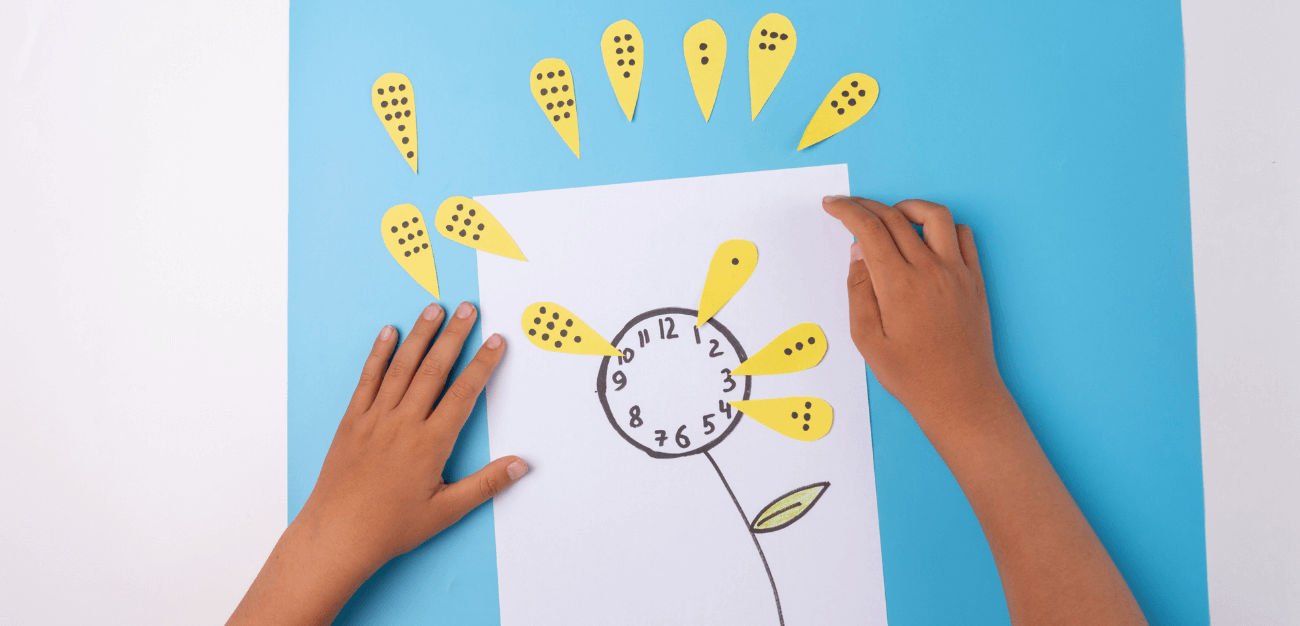
When we talk about number sense, we mean that effortless knack to roughly estimate and compare quantities without counting. Having good number sense means you can walk into a room and quickly recognize approximately how many people are there.

Having number sense is primarily understood as understanding the quantity represented by a number. Primary students start out by exploring the quantities of numbers less than 10 and later learn how to relate quantities to more significant numbers such as 10 and 100. By the end of a student’s primary grades, they should understand quantities associated with two and three-digit whole numbers. During their junior grades, students can develop a sense of multidigit whole numbers, fractions, decimal numbers, and percentages.  

How To Practice Number Sense

As mentioned above, researchers believe one of the best ways to practice number sense for children is through game-based learning. At Dropkick Math Academy, we are an online math tutor that works with parents/guardians and children to fill in any gaps in learning. All of our programs are game-based and offer fun and engaging ways to help children practice and fully understand the four pillars of math (number sense, operational sense, algebraic reasoning and proportional reasoning).

We understand how important it is to properly place your child where they will excel. That is why we offer a free assessment so that your child will be placed in a program that will be sure to fit their specific needs and enhance their educational development. This assessment allows us to match them with an appropriate program that best suits their individual strengths. Our program’s goal is to take your child’s learning experience to the next level, giving them the best chance for success!

Get started today with our FREE assessment and help your child with their number sense, so they have the skills needed for future success!
What Is Algebraic Thinking?

It’s easy to feel daunted when thinking about algebra, with its perplexing symbols and equations that seem like a foreign language. But much of the fear surrounding algebraic thinking is simply due to unfamiliarity; if your child can get to know it better, chances are good they might just find themselves reaching for those numeric symbols more often than you’d expect! Today we will be your algebra tutor and tackle this mysterious branch of mathematics, demystifying the basics so that your child’s first steps into algebra can be taken with confidence.

Understanding Patterns In The World

Algebra is a unique and important branch of mathematics. It involves the manipulation of numbers, symbols, and equations in order to solve multi-variable problems. Algebra helps us determine what a value might be if we are given certain pieces of information or what probability any given event may have. This makes it an extremely useful tool for those wanting better to understand the patterns in the world around them. 

After developing an understanding of algebra’s basic principles, students can then develop these skills further to solve increasingly complex equations, making it an incredibly valuable set of tools for anyone to possess. 

Analytical Problem Solving

Algebraic thinking can be thought of as analytical problem solving, as it is a way of using algebra to look at abstract relationships and solve equations. It involves understanding algebraic rules, comprehending algebraic notation, reasoning algebraically, and connecting algebra with real-world situations. 

In addition, algebraic thinking requires the use of logical deduction to draw conclusions from given information. Ultimately, this type of thinking requires understanding patterns and relationships often hidden beneath the surface. When practiced correctly, algebraic thinking can provide powerful insights into complicated problems that would otherwise remain unknown.

Algebra In Everyday Life

Algebra is a useful tool for carrying out calculations in everyday life. It can help us solve problems such as estimating the cost or duration of something, which can be incredibly helpful when making financial or time-related decisions. For example, algebra can calculate the lowest price possible on a product and determine how long it will take to travel a certain distance. Although algebra may initially seem intimidating, learning how to apply algebraic concepts and equations can be beneficial.  

The first and most important tip to remember is that every student has the capacity to learn how to think algebraically if provided with supportive instruction and helpful tools. To give students the confidence they need to tackle algebraic concepts, teachers and parents should emphasize the importance of problem-solving and explain that algebra is essentially a language made up of symbols used to make sense of our world. 

With this new frame of reference in mind, algebra can become easier for students as they gain more practice working through problems step-by-step. By having a clear plan for introducing algebraic material and providing ample opportunities for practice and feedback, teachers and parents have the power to give children the resources they need to think algebraically confidently.

How To Start Thinking Algebraically

The focus of algebraic thinking should begin with operations and processes rather than numbers and computations. When algebra is studied this way, the rules for manipulating numbers and letters in equations aren’t confusing but are instead a natural extension of what students know about the equation.

The Dynamics of Proportional Reasoning – Uncovering Crucial Connections!

Proportional reasoning is an incredibly valuable math concept that is one of the four pillars of mathematics. It requires students to grasp relative size and ratio and proportional relationships between sets of numbers or objects. It also enables children to understand and make proportional judgments in various situations, which are integral to success in mathematics. 

When proportional reasoning is understood correctly, children can quickly break down complex mathematical problems into simpler parts, helping them form a strong foundation within mathematics and build a deeper comprehension essential for future math challenges. 

However, if a child is struggling in math, they may be missing the basic foundation, including proportional reasoning. As one of the leading math programs in Toronto, Dropkick Math Academy works with students to help repair any misunderstandings or gaps in learning. 

Does Your Child Enjoy Learning About Proportional Reasoning?

If your child enjoys spending time rationalizing and solving puzzles, chances are they enjoy learning about proportional reasoning. As one of the four pillars of math, proportional reasoning offers children the perfect combination of challenges, whether they want to test their problem-solving skills or just strengthen those mental muscles. 

With proportional reasoning paving the way toward understanding fundamental mathematical concepts, it’s no wonder why children must get a firm grasp on the subject. Children can power up their equation-solving abilities by fully understanding how deep relationships work in proportional reasoning.  

The Relationships

Relationships are a key component in mathematics, especially in proportional reasoning, as it relies heavily on comparing quantities and values. These relationships are evident through the study of ratios, rates and rational numbers. 

An example of how relationships work in proportional reasoning is shown when comparing values in a ratio. When children start to understand relationships, they will better understand the concept of the mathematical equation and how to solve it. 

Developing Proportional Reasoning

Students developing proportional reasoning can generally distinguish between additive and multiplicative relationships. They are able to solve problems involving proportional reasoning and can compare ratios. Students should learn proportional reasoning over several years, beginning in younger grades alongside the development of their rational number sense. 

For children who may be struggling with proportional reasoning, Dropkick Math Academy can help! Proportional reasoning is a fundamental component of mathematics and an invaluable asset for students of all ages. This skill can help students tackle any subject that requires arithmetic or mathematical understanding

Students of all academic levels must be equipped with proportional reasoning competencies to successfully get through school and have basic skills beyond their academic years. Employers in various fields may also appreciate workers who possess proportional reasoning abilities, so mastering this important concept should never be overlooked or belittled.

The Four Pillars Of Math

As experienced Ontario teachers, we have seen a lack of confidence and understanding from our students in mathematics over the years. Upon further review, we recognized four key areas that children struggled with when mastering math – Number Sense, Operational Sense, Proportional Reasoning and Algebraic Reasoning. 

We now understand that if students do not possess a strong base in these four pillars of math, they risk struggling to keep up in the classroom setting. Our goal is to improve our students’ foundational skills by incorporating the basic fundamentals in each of our programs to enrich math education for all.

Making Learning Fun

Seeking relationships between mathematical concepts is a key component of learning, particularly when it comes to children. Understanding relationships between the different elements of mathematics can help children learn more efficiently and set them up for greater success beyond basic arithmetic. However, forcing children to uncover relationships before they understand the basics can be detrimental as it can disconnect them from math, causing them to shut down and be unwilling to engage in learning at all. 

Ultimately, introducing relationships into a child’s mathematics learning requires careful and thoughtful implementation; too little and their instruction could suffer, but too much will cause them to become disinterested. This is why we leave the stuffy textbooks must be left behind and learning should be made fun!


How To Know If Your Child Has Number Sense

Knowing if your child has number sense is something every parent/guardian should be concerned about. In this blog post, we will discuss the signs that indicate good number sense. We will also look at how math tutoring can help those with a gap in learning. 

A Daunting Concept

We all want our children to grow up well-rounded and equipped with knowledge, but some skills seem more elusive than others. This can be especially true when it comes to math; while you may know the basics of teaching addition and subtraction, do you really understand how your child is grasping the concepts of number sense? 

As daunting as the concept might be, understanding number sense is an essential part of setting your child up for academic success – so let’s take a look at what it means to have number sense and how we can help our kids develop it!

What Is Number Sense?

Have you ever encountered situations where your children are solving math problems in their heads, and the answer just seems to pop right out? If so, then it’s likely that they have what is known as number sense – a concept which has become increasingly important for parents to recognize.

Plain and simple, number sense is a person’s ability to understand, relate, and connect numbers. It is the sense of what numbers mean. It is an important skill for mathematical learning and competent number problem-solving. It includes the ability to understand number relationships, magnitude, and number representation. Number sense is a building block for later number skills like addition, subtraction, multiplication and division.

How To Tell?

At this point, you may be asking yourself, how do I know if my child has number sense? First, children with trouble with number sense often show signs at an early age. These children will typically tend to struggle with basic operations such as addition and subtraction. They may also exhibit trouble with everyday tasks such as handling money, judging time and measuring quantities. 

As children get older and start learning more complex mathematical concepts and principles, they will be likely to say they “don’t get it,” or that it “doesn’t make sense.” If this sounds familiar, then your child may be missing number sense. 

If this problem continues, a child can increasingly feel lost as they move up through the school grades. Year after year, the gap in learning will grow between what they are being taught and what they truly understand. When older children lack number sense, they need to work harder and longer than they should have to solve math problems. This is a significant reason why so many children may need math tutoring.  

How Can I Teach My Child Number Sense?

If your child has a learning gap and is missing number sense, you are most likely wondering how you can help. There are many things that parents/guardians can do to help their children

According to research, number sense can be developed by providing meaningful activities that allow children to explore number concepts in different engaging ways. At Dropkick Math Academy, we believe that the development of number sense depends on fostering active engagement in number experiences from an early age that promotes the ability to think flexibly about numbers in various contexts.

Teaching number sense to a child involves presenting numbers in a way the child can understand, providing opportunities for number exploration, and guiding their discovery of number relationships. With guided instruction, children can connect number symbols with quantity, associate numbers with specific patterns, recognize numerical sequences and work on basic number problems. 

Fun activities like counting objects out loud or matching numerals to daily activities help children learn number sense quickly. Math manipulatives can be a great tool to help children learn about number sense. 

Engaging with stories about counting or singing number songs can also be inexpensive and entertaining ways to teach number sense to a child. With patience, dedication and encouragement from parents or teachers, any child can develop their number sense faster.

Getting Help From A Professional

In addition to learning at home, many children will need extra help from a professional. At Dropkick Math Academy, we use certified Ontario teachers to ensure our students receive the best quality of math tutoring available. Our certified teachers understand how to teach children at every level and can provide customized strategies tailored to every student’s needs. 

Our tutors are dedicated employees with a proven track record of success in the education field and strive for excellence in all aspects of tutoring – from advising students on the techniques needed to understand complex math problems to helping them understand and reshape their approach to problem-solving. Our certified Ontario teachers are the glue that binds our program together!

Getting The Help They Need

As children begin to learn math, it is vital for them to improve their skills and practice number sense so it does not last into adulthood. Unfortunately, the pandemic caused many students to have a loss in learning over the past couple of years, so it is imperative that children get the help they need before it becomes a bigger problem. 

At Dropkick Math Academy, our programs focus on the four pillars of math (number sense, operational sense, proportional reasoning, algebraic reasoning), which help to ensure a child’s knowledge of mathematics starts at the root. 

Click to learn more about our programs and how we can help get your child back on track while boosting their confidence in math!

Number Sense The Deep Understanding of HOW Numbers Work

If you’ve ever wanted to take an in-depth dive into understanding numbers, then learning about “number sense” is the perfect way to do it. With a focus on developing your own understanding of how numbers work and relate to each other, number sense is not just a key math concept that helps improve mathematical proficiency—it also provides insight into teaching practices and can help unlock deeper levels of problem-solving. This can be invaluable when helping your child learn mathematics. 

Through this blog post, we aim to provide you with both an introduction and a deep exploration of what number sense really means so you can develop your skills around working with numbers efficiently and effectively. At Dropkick Math Academy, our math tutoring services offer programs focused on understanding number sense, and we include the parent/guardian. So, if you are interested in learning with your child, check out our math tutoring programs today!

Understanding Number Sense

Having number sense is an important skill for students to have in order to become competent in math. Number sense involves understanding the number of items in a certain set and being able to interpret that number without actually counting all of the items. It also involves understanding number quantity, comparing and organizing numbers, simple calculations, recognizing mathematical patterns, and problem-solving. 

Students who have strong number sense can quickly solve problems because they understand relationships among quantities and operations without laborious number-crunching. It provides them a deeper level of math intuition which is essential for success with more advanced topics like algebra, calculus, geometry and beyond.

Explaining Number Sense To Your Child

Explaining number sense to a child can be an important part of helping them understand math. To help explain number sense, start by having your child identify the number of items in a group. It could be as simple as counting the number of chairs in the room or counting their fingers. Once they have identified the number, ask questions such as “If I gave you two more chairs, how many would there be?” This helps develop an understanding of addition and subtraction as well as number recognition. 

Providing hands-on activities that involve moving objects like coins, or math manipulatives can help them visualize what different numbers look like. Doing this can give them a better foundation for developing number sense in other areas such as basic operations and fractions.

Number Sense Throughout School

Number sense is important for elementary students to understand and grow with. This can range from counting, number properties and operations, number patterns and relationships, estimation, number comparisons, fractions, and more over the various grades. As they progress through to grades 4 to 9 they learn to extend their understanding of whole numbers to rational numbers such as decimals, percentages and rational fractions, as well as irrational numbers.

Number sense is only going to become increasingly important in our rapidly evolving world, where mathematical knowledge is vital for success. It is, therefore important for young learners to develop a strong number sense foundation early on.

The Importance Of Number Sense

Research has recently found that many students struggle with learning math because they don’t have the underlying foundation of what the numbers really mean. Without having a deep understanding of what number sense means, they do not have the basic foundational skills and will most likely struggle in the future. However, at Dropkick Math Academy, teachers are changing the way mathematics is taught and focusing more on mastering number sense and the automaticity of facts.

Working With Parents And Students

At Dropkick Math, we understand where a student’s understanding of number sense should be. Using concrete and pictorial models and interactive guides, we can help students understand the “howmuchness” of various numbers. We take the time to work with students and their parents walking them through experiences that allow them to interpret symbolic representations of numbers.

Teaching number sense to parents alongside their children can be an invaluable part of helping them understand their student’s homework. Number sense concepts help students make number-based decisions quickly, which can be a great tool for both students and their caregivers. It includes understanding number relationships, mental calculations, and estimation, all of which can help parents more effectively guide their children throughout the learning process. Teaching number sense also allows parents to talk with their kids about the math they are working on and better understand how it relates to everyday life.

The Four Pillars Of Math

Strong number sense can help build a foundation for mathematical understanding as one of the four pillars of math. Number sense, especially in the younger grades, can help build the foundation necessary to compute and solve more complex problems as they go into older grades. 

At Dropkick Math Academy, our programs focus on math’s four pillars.  By mastering these four fundamental concepts,  students will be able to solve any problem they encounter in math. In addition, the four pillars of math provide a strong foundation for students to build upon as they move on to higher grades. By the end of each module, students have a well-rounded foundation in arithmetic and are prepared to move on to more advanced modules.

Signs Of Trouble

Children who have trouble with number sense often show signs at an early age. Unfortunately, the pandemic caused many students to have a loss in learning over the past couple of years. Students in the younger grades have suffered a gap in mathematics as they learn number sense. As one of the four pillars of math, not understanding number sense may leave a child with a weak math pillar and can significantly impact their future math success.

At Dropkick Math Academy, we offer math tutoring that focuses on the four pillars, which get to the root of students’ misunderstandings. Instead of covering up math misunderstandings, we work from the ground up to help foster a full comprehension of number sense. 

Learn more about the four pillars today and how we incorporate them into your various math tutoring programs. Your child will not only learn the math they need, but they will have fun doing it! With game-based learning, our students are eager to attend classes and stay engaged throughout the lesson. Click to learn more today!

How Literature Can Help Make Sense Of Math Operations

Math problems present a unique challenge for many students who are good at computations, as they must bridge the gap between math theory and math application. Comfort with math computations does not necessarily guarantee fluency in math problem-solving – in fact, applying those same skills can require quite different strategies than the ones that capture a calculation.

Understanding the underlying structure of math operations, analyzing an equation’s components, and developing a plan for a solution can be daunting tasks for even technically adept math students. This is one reason why so many parents often head online to search for a “math tutor near me.”  

At Dropkick Math Academy, we understand that tackling math problems one step at a time while breaking down each challenge and understanding the process are great steps toward mastering math application. We are an alternative to math tutoring that makes learning about math concepts and applying them in real-life situations fun and rewarding. We use game-based learning in our programs, but another great way to help your child understand math problem-solving is with literature. 

Gaining A Deeper Understanding

Solving math problems requires more than just memorized formulas and procedures. As we previously mentioned, it requires students to develop a deeper understanding of math operations and recognize the connection between an actual problem and the math needed to solve it. This can often be challenging, especially when students have gaps in understanding particular math concepts. 

However, with proper instruction and guidance, they can learn how to make these connections between contextual math problems and the algorithms needed to solve them. Students who can do this will be better equipped to approach math problems proactively rather than relying solely on memorizing procedures.

Problem-Solving

Through problem-solving, students can develop an operational sense – an understanding of addition, subtraction, multiplication, and division. As they connect relationships and different meanings to these four operations, students can more accurately apply these operations to real-world settings. 

One of the best ways that children can learn about problem-solving is through children’s literature, as it provides an excellent way for students to engage with math in a unique and exciting way. Through reading stories, they can encounter math-related events, characters, and data that bring the subject to life in an accessible, memorable way. 

Not only do these books give young math enthusiasts a chance to explore mathematics through interesting stories and characters, but the context of these stories serves as excellent starting points for math practice. Children’s literature is highly beneficial for math learning, allowing children to develop an appreciation for math and gain experience in understanding math concepts within stimulating environments.

Math-Focused Stories

Math-focused stories can be a great way for students to dive deeper into addition and subtraction operations. These stories, or children’s literature, allow young learners to explore multiple scenarios without the pressure of traditional math activities. Through story time discussions with teachers or parents, students are able to work through solving math problems while being more heavily engaged in their learning by putting math into perspective. 

When math is presented in a meaningful way, such as through storytelling, it allows students to take ownership of their understanding of math concepts, helping them develop a much deeper understanding than ever before.

Utilizing literature to explore math topics doesn’t have to only be reserved for young students. Upper-grade math classes can also benefit from a little narrative structure. Studies show that math becomes far more meaningful and applicable when it’s engaged in through storytelling and reading. Reading aloud important math-related stories to an upper-grade math class can instill a sense of context for math problems and higher-level math concepts. Furthermore, engaging with math via literature also allows students to make connections between the math principles they’re studying with their own lives and experiences, adding an empowering layer to their mathematical journey.

Understanding Over Memorization

Telling a math-related story is an effective way to introduce operations, as it encourages students to understand the operation being discussed rather than simply memorizing how to perform the calculation. By giving the math problem a narrative context, the student can better visualize and comprehend the math task at hand, engaging with it on a more meaningful level. Additionally, this approach connects math concepts to other literature they may be studying in class and is especially useful for students who may not have a natural math talent. Providing students with stories that connect multiple subjects creates opportunities for them to learn the material more quickly and effectively.

Using literature is a creative and effective way to help children visualize math concepts as they are used in real life. For example, in a story, maybe the characters share food. This would cause students to think about division situations. Try reading to your child and asking math questions when appropriate. In this example, If Mr. Patrick brings food in the story, you could ask your child if he brought 24 candies to his 6 friends, how many would each get?

This not only makes reading more interactive but also stimulates their mathematical brain!

Research has shown that giving students a context, a real-world or imaginary situation to help illustrate math operations has real benefits. These include:

  • Increasing engagement 
  • Deepening an understanding of operations
  • Strengthening skills in creating equations to represent problem situations
  • Getting students talking about their math reasoning

Our Favourite Stories

Some of our favourite stories that can help children better understand mathematical ideas include:

The Doorbell Rang

This fun story has a mathematical twist. After reading, children should be encouraged to mathematically represent what happens on each page and then discuss this representation. The story’s final page creates a new math challenge to be represented.

Hutchins, P. 1986. The doorbell rang. New York: Mulberry.

You can name 100 dinosaurs!

This book is a treat for dinosaur lovers! It focuses on exploring dinosaurs by historical periods while using illustrations to help children develop higher-number concepts. It also encourages labelling, categorizing, and scientific investigations.

Chewning, R. 1994. You can name 100 dinosaurs! New York: Scholastic.

One watermelon seed

This entertaining story deals with the concepts of multiples of 10 within the context of gardening. Children can follow along and count how many seeds are planted and how many fruits and vegetables they will harvest as a result.

Lotteridge, C.B. 1986. One watermelon seed. Toronto: Oxford University Press.

Communicating Ideas

Writing and mathematics are both useful ways of communicating ideas and understanding relationships. A mathematician uses special symbols and operations to express a sequence of instructions or to construct a relationship between two values. This type of communication is like the language used to create equations that can be solved for an answer or evaluated for its properties. Meanwhile, a writer might use verbs to describe the same action, expressing how someone might go about fulfilling the process without providing any numerical value. While writers and mathematicians use different tools, their end goal is the same; to provide a clear explanation of an event or relationship.

Making Learning Fun!

Math is much more than just working with figures and solving equations; math is a powerful way to interpret, understand, and describe the world around us. At Dropkick Math Academy, we understand math is much more than boring numbers and equations. We make learning math fun. Just like using literature to learn math concepts, we use game-based learning to make it more enjoyable and interactive. 

Students love our games and continue practicing even outside of class. We flip math around and help students fight back against their fear of math. In our programs, students can earn rewards, making it even more tempting to keep practicing their math skills!

Learn more about our programs today and how your child can boost their confidence in math!

Are Boys Better At Math Than Girls

When it comes to math, there has long been a stereotype that boys are “better” or more adept at the subject than girls. This idea can be traced back to traditional gender roles, where women and men are expected to possess certain skill sets – with mathematics seen as falling within male educational strengths. But is this assumption true? 

Studies show that while female students may struggle in some areas of mathematics, they tend to excel in others – providing an interesting counterpoint to the notion that boys simply have an edge over girls when it comes to numbers. In this blog post, we’ll take a closer look at how performance between genders stacks up – and whether stereotypes about math still hold any weight today. We will also discuss how math intervention programs may be advantageous for boys or girls. 

Girls Are Underrepresented

According to the most recent data compiled by the U.S. Department of Education, a trend of women outstripping men in college enrollment and degree attainment persists, with a single exception: mathematics. Women have gained ground in mathematics education and achieved success as mathematics professionals; however, mathematics is still largely a male-dominated field, both at the university level and professionally. 

Despite their progress in mathematics over the past several decades, women remain underrepresented in mathematics research and occupation positions compared to men, perhaps due to entrenched gender roles or unbalanced access to mathematics resources during childhood. It is essential that all genders are able to pursue mathematics with equal access and opportunity if we wish to achieve parity in mathematics fields.

Results In Different Countries

In 2012, international tests were given to fifteen-year-olds worldwide. They showed that boys achieved higher levels than girls in mathematics in thirty-eight countries. However, in the United States and Canada, the achievement of boys and girls was found to be equal. 

When the research team released further details, their report showed that when anxiety was factored into the analysis, the gap in achievement was only a difference in mathematics confidence levels. It was noted that girls became more anxious when taking individual math tests. This phenomenon is commonly known as math anxiety, and it makes a case for educators to take a closer look before passing decisions regarding test performance. 

Are Boys Better?

A recent groundbreaking study from the University of Chicago, the University of Rochester, and Carnegie Mellon, also set out to find the truth about a gender gap in mathematics. While investigating the early biology of math and gender, researchers were able to conclude that learning math is similar in boys and girls. In the brain, math concepts engage the same neural networks of the brain during the critical years of cognitive development, regardless of gender. 

If boys were better at learning math than girls, their brains would show a biological origin for this strength. This study shows without a doubt that neural activity did not change from boys to girls. 

Researchers used functional magnetic resonance imaging to assess brain activity in 3 – 10-year-old children to compare the neural processes involved in learning math. As both girls and boys interacted with math videos, both drew on the same areas of the brain known for their association with math ability. There was no higher aptitude found in boys for learning math or for processing numbers compared to their female counterparts. 

Girls In STEM

Even though these studies show that girls and boys learn math equally, according to the National Science Foundation, there is still gender inequality in the STEM fields. Although jobs in engineering, physical sciences, mathematics, and computer sciences have the smallest gender pay gaps and have some of the highest areas of job growth in the global economy, the lack of women in these fields could lead to future gender income inequality. 

When females are underrepresented in traditionally male-dominated careers like STEM, entrepreneurship, and politics, their perspective is lost from the conversation. Research has proven that having females in leadership roles yields innovative solutions, yet when females aren’t included, their ideas aren’t heard, and innovation suffers as a result. It’s necessary for females to have an equal seat at the table so that their unique contributions can shape future solutions. Without female voices, needs and desires are left unheard, hindering progress and taking away from potential creative solutions. This ultimately slows the pace of development, leaving females behind in terms of representation and opportunities.

Getting Girls Interested In Math

So, how do we get both girls and boys as equally excited about mathematics and STEM majors throughout their education?

Many people believe that it will take parents and teachers to address the math gender gap and debunk the myth that boys are better at learning math than girls. By taking action to help girls believe they can achieve in math, more will be willing and want to go into the math and science fields. 

When girls are reminded of boys’ dominance in learning math, they tend to perform lower on academic tests. This stereotype can act as a stressor to performance. This is where parents and teachers can step in and help with math anxiety that could be hindering girls from performing at their best during mathematics tests. 

Research shows that girls who have a growth vs. fixed mindset about learning math are likely to believe in their abilities more. So, working on a math mindset may help girls perform better on math tests. 

Now is the time to get girls into a better mindset so they can thrive in mathematics. If your child is struggling with math, you may find that a math intervention program can help. But, before you start searching for “math tutor near me,” learn more about Dropkick Math Academy. We are an alternative to math tutoring that could help your child overcome their math anxiety. 

Our programs are designed to help children who may be experiencing math anxiety and help boost their confidence through fun and engaging game-based learning. Learn more today and get your child on the road to learning!

How To Incorporate Math Into The Holiday Season

Are you looking for ways to get the whole family involved in learning this holiday season? Incorporating math into your festivities can be a great way to make the holidays educational and enjoyable! 

Math activities don’t have to feel like homework – by using creative ideas, math can help create cherished memories. In this blog post, we’ll explore how to use mathematics in fun and engaging ways during the holidays. From making homemade baked goods together as a family to counting coins with little ones at an annual charity event, there are many opportunities to bring a mathematical twist around the holiday season! Having fun and incorporating math operations into your holidays can be easy. 

Making Math Fun!

Math doesn’t have to be a bore! In fact, math lessons can quickly become enjoyable when presented in an interactive and stimulating way – especially over the holidays. Children are more likely to immerse themselves in math exercises when learning is playful – from counting games that use physical objects such as paper clips or coins to board games and apps designed specifically for math practice. 

During the holidays, children will want to participate in holiday-themed games or even chores around the house if they are made to be interesting. Turning math into an entertaining activity will spark curiosity among kids and help improve their math skills while they become engaged in the challenge.

Christmas Baking

Baking is a great way to keep math learning alive during the holidays, especially for kids. It provides an opportunity to reinforce math operations such as measurements, fractions, geometry and more in a fun and stress-free environment. Math skills help in measuring ingredients, but math can also be used to double or halve recipes. Furthermore, math concepts such as fractions, ratios and symmetry can all be practiced when decorating the finished product, from making enough icing for your gingerbread cookies to evenly spacing pieces of fruitcake.

The relationship between the ingredients in a recipe can be easily shown to a child as a ratio. As an example, if a cookie recipe calls for two eggs and one cup of sugar, the ratio of sugar to eggs is 1 to 2. 

Since recipes list ingredients in proportion, you can teach your child that if you increase or decrease the amount of one ingredient, you must increase or decrease the others by the same factor to produce the desired result. 

Cooking a big dinner for family and friends? Ask your child to help you double a recipe to ensure that no one goes hungry. Or, if someone cancels, have them help you decrease the number of ingredients needed to feed everyone. 

Baking/cooking together can also be a great bonding experience that encourages children to practice math topics while creating something delicious with family or friends! It can help boost their confidence when family members comment on their tasty creations and help them understand how math can be fun and rewarding. 

With some careful recipe selection, math practice can easily be integrated into holiday celebrations with little effort.

Wrapping Gifts

During the holidays, when it’s time to wrap presents for family members and friends, take full advantage of the opportunity to help your child improve their math skills. Have your child involved in cutting and measuring wrapping paper, estimating how much each present may require, counting out the number of gifts being wrapped, and carefully following directions. In doing so, kids are applying math concepts such as measurements, addition/subtraction, geometry and problem-solving. Plus, they will feel empowered and proud of helping you! So the next time you tackle those Christmas gifts, consider incorporating math learning with an activity your child will love to be a part of.

The Joy of Gift Giving

Gift-giving can be an excellent way for students to learn math in practice. Allowing children to use their own money for holiday purchases requires them to use various math skills, such as decimals, percentages, and averages. Not only does this help them become better at math, but it also teaches them the vital lesson that in order to get something they want, they have to set a budget and determine what is important enough to buy within it. As parents, it is empowering to witness our children take charge of their finances while learning math along the way!

Playing Games

Instead of only playing traditional board games or video games this year, why not try math-based activities? Math-based games provide a fun way for your kids to practice math concepts such as addition, subtraction, multiplication and division – all while having lots of holiday cheer. Furthermore, math can even be sneakily included in puzzles and other popular games; in this way, math becomes less intimidating but still provides an effective learning opportunity. Playing math-based games over the holidays can be a great way for your children to stay mentally and physically active.

Keep Learning Over The Holidays

The holiday season is a great time to take a break and relax, but that doesn’t mean math should be put on the back burner. During the festive winter holidays, children should take advantage of the time off from school to continue their math learning and practice. With no school days or homework to worry about, math can be incorporated into family activities and daily life in subtle ways, such as baking or playing math-related games with siblings. Math skills remain sharp by keeping problem-solving and number-crunching fresh during the holidays, so nothing is lost over the break.

Classes Starting In January!

Dropkick Math Academy will be taking a short break for the holiday season, but we’re eager to get back into math action in January. Our math programs provide opportunities for kids of all ages to create math mastery that allows them to understand math on a deeper level. Our math intervention programs allow students to better their math skills every day, and we can’t wait to continue our work in the New Year.

If you were planning on searching the web for “math tutor near me” in the new year, look no further. Dropkick Math Academy is an alternative to traditional math tutors that helps children get to the root cause of their math misunderstandings. Learn more about our programs and how we can help boost your child’s confidence in mathematics this year!

How Proportional Reasoning Can Simplify Division Problems

If your child struggles with division problems, don’t worry – they are not alone. But there is a solution: proportional reasoning. Proportional reasoning can simplify division problems and help better understand math concepts. In this blog post, we’ll discuss what proportional reasoning is, how it can help with division problems, and give some examples. We’ll also explain how we use it regularly in our math help services. So read on to learn more!

What Is Proportional Reasoning?

Proportional reasoning is perhaps best described as seeing relationships between numbers and understanding how those relationships can be applied in different situations. In many ways, proportional reasoning is the foundation of mathematics, providing a way to see the world in terms of numbers and to understand proportions and how those numbers work together. By understanding proportional reasoning, we can begin to see mathematics as a tool for solving problems and making predictions rather than simply a set of rules to be memorized. As we develop our proportional reasoning skills, we open up a world of possibilities for mathematical understanding.

Why Is Division So Challenging?

Division is one of the most fundamental operations in mathematics, and it can be one of the most challenging for children to learn. There are a number of reasons why division can be difficult for kids. First, division often requires children to think in terms of fractions and decimals, which can be confusing. Second, division problems can often be lengthy and complicated, making them difficult to solve. Finally, division often requires a high level of abstraction, which can be difficult for young minds to grasp.

Division can also be difficult for children as it is not always taught in a concrete way. For example, many children are first introduced to division by being asked to divide objects into groups. However, this can be difficult to visualize, so children may have difficulty understanding the concept. If children have difficulty with math in general, division (and other math operations), it may be even more challenging, and they may need a math tutor

However, most children can learn to divide effectively with patience and practice. By understanding division’s challenges, parents and teachers can help kids overcome these difficulties and develop a strong foundation in mathematics.

How To Use Proportional Reasoning In Division

As adults, we can talk about how relationships are a key component in mathematics, and proportional reasoning relies heavily on comparisons of quantities and values. However, when helping children with math, giving the formal definition of proportional reasoning may cause their eyes to roll to the back of their heads. So, always remember to try and leave the stuffy mathematical definitions to the textbooks. Here at DKM, we think learning should be fun. So, let’s take a look at how to help children learn division through proportional reasoning in an entertaining way. 

In grade 7, students learn that a fraction can represent division. Just like we can simplify a fraction, we can simplify a division problem by using proportional reasoning to look at common factors. 

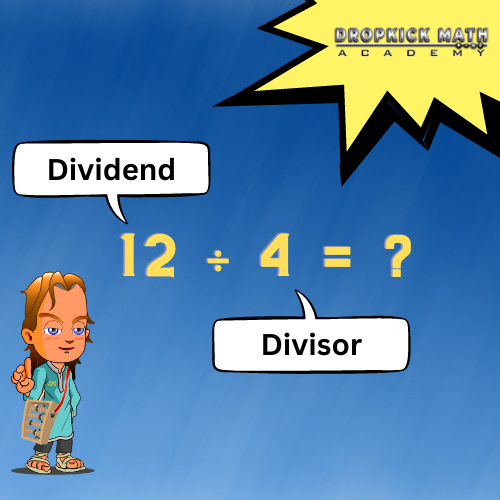
When the dividend and divisor have a common factor, the problem can be simplified. Let’s look at a division problem and see how proportional reasoning can help simplify the process. 

Dividend and Divisor

12 ÷ 4 = ?

If a child is given the question 12 ÷ 4 it may give them anxiety because it is a larger number. However, this can be simplified. Using math manipulatives, show them how to divide 12 pieces into 4 groups of 3 to get the answer.  

Next, you will want to show them how to simplify the problem by finding a common factor between the dividend and the divisor. In this case, the number 2 is a common factor. So, divide the problem by two, changing it to 6 ÷ 2. Is the answer still 3? Yes! Because both amounts were reduced at the same rate, it didn’t change the outcome. It just simplified the problem. 

Now, go one step further and show them how 2 is also a common factor of 6 ÷ 2. So, the problem can now become 3 ÷ 1. The answer is once again 3!

When children face a challenging division problem with larger numbers, they can now check to see if it can be simplified by thinking about proportional reasoning

Another way to look at this is by thinking how proportional reasoning is the ability to understand that two quantities are in proportion if they change at the same rate. For example, if we know that there are 2 apples for every 3 oranges, then we can also say that there are 6 apples for every 9 oranges. This is because both ratios are equivalent (2:3 = 6:9).

Math Manipulatives

By using math manipulatives to help children visualize each group’s proportions, they can better understand the concept at hand. Math manipulatives can also make learning more fun by creating a tactile way of learning. 

Manipulatives allow children to feel, touch and visualize what they can’t yet create on their own. They can enable children to receive immediate feedback about whether their idea makes sense. Using tools, a child can move hands-on objects to investigate and explore a math concept that may be challenging.

Understanding the fundamentals behind the mathematical foundation is critical for a child’s fluency and math development. Using both manipulatives and representations, children can build a deeper understanding of the four pillars of math (number sense, operational sense, algebraic reasoning, and proportional reasoning).

How To Give Children The Best Mathematical Start

One of the most important things you can do for your child is to give them a strong foundation in mathematics. In younger children, teaching them early on how to count, add, subtract, and divide while keeping it fun and entertaining will help set them up for success in future schooling and beyond. Giving older children the gift of a math tutor if they are struggling can also help set them up for a successful future. 

It’s Not About Math Drills!

In order to give your child the mathematical start they deserve, it’s important that you first understand what that entails. Contrary to popular belief, it’s not all about doing endless math drills! Below are some essential tips that should provide parents/guardians with a strong foundation for any child.  

Start with Counting: This one might seem obvious, but teaching children how to count is foundational for understanding basic mathematics. Help them learn their numbers 1-10 as well as counting by 2s, 5s, and 10s. Once they have mastered these, move on to addition and subtraction.

As with anything else in life, making learning fun will encourage children to stick with it! But, to make math fun, you may need to get creative. Try incorporating games or puzzles into your lessons or letting kids use technology gadgets. iPads or apps designed explicitly for elementary-level math practice can help to keep children entertained while learning. Many online resources offer ideas for hands-on activities that help make math concepts easy to understand. These tools can make learning more interactive and enjoyable while still providing a challenge.

Dropkick Math Academy is an online resource that offers an alternative to traditional math tutoring by making learning fun. We focus on the four pillars of math (number sense, operational sense, algebraic reasoning, proportional reasoning) while using game-based learning to boost students’ confidence in mathematics. By boosting a child’s confidence and making math more enjoyable to learn, you will give them one of the best mathematical starts they need for future success.  

How Mathematicians Got Inspired

It is always interesting to learn how others got their start in life and what helped shape their future. Many mathematicians have confessed that their love for math did not come from school teaching but rather from exciting puzzles and games given to them by family members at a young age. We are not suggesting that education does not play a role in inspiration. It can all be part of children getting a deeper understanding and appreciation for math. It is important not to underestimate the role of interactions in the home and the role of games and puzzles for children’s mathematical development and inspiration. 

We can see how inspiration can work in Sarah Flannery, a young woman who won the Europe Young Scientist of the Year award when she was 16. When asked what encouraged her in mathematics, she said that as a child, she was given puzzles to work on at home, which were important to her mathematics development alongside the math she was taught in the classroom. 

Math Manipulatives

When children are beginning to learn a new concept in mathematics, manipulatives can be extremely helpful. These objects allow students to touch and feel blocks, sticks or beads and are extremely helpful when teaching many math concepts like addition and subtraction. They give children a physical representation of what is happening in mental equations, making it easier for them to understand and develops their conceptual understanding.

Math manipulatives intend not to make children forever dependent on them but to use them as they work through complex problems. However, they do have their purpose as students grow through elementary and high school when a new concept is introduced. Older students often find manipulatives helpful when articulating their thought processes when trying to explain a complex concept. When a new concept is introduced, the process of developing understanding strengthens by connecting concrete manipulatives to visual and symbolic representations. When the student is able to connect the different representations to symbolic forms, they should be able to stop using the manipulatives. 

Encouraging Children

All children start off excited about learning mathematics, so parents/guardians must become a resource of encouragement. As adults, many mathematical ideas may seem obvious to us, but they can be fascinating for children. Take the time to marvel, encourage thinking, and challenge your child. This is one of the best ways to develop mathematical interest. By exploring patterns and ideas together, your child will develop a more profound passion for learning. 

At Dropkick Math Academy, parents/guardians are encouraged to join the classes with their children as we believe that great success can be achieved by learning together! Active participation in a child’s education is crucial for their academic success and overall development. Education experts have found that parental involvement leads to higher grades, improved behaviour in school, and greater education aspirations for the child. Additionally, parents play a crucial role in instilling essential values like hard work, determination, and self-discipline. 

Our tailored programs are specifically created for students and their parents/guardians to work together on understanding the building blocks of mathematics. After each class, parents are able to meet with their child’s teacher and get weekly feedback. 

We understand that life can be busy, so if the parent/guardian cannot attend classes with their children, the end goal remains the same: giving children the tools they need to thrive in their education and beyond.

Making It Fun!

Many parents often ask me about the best books to help children learn math. While some great resources are filled with math questions, I believe that children should not be sitting down and given extra math work at home. Math learning at home should be fun and engaging. There are many ways to make math learning fun, such as playing games, cooking with measurement, or going on a math scavenger hunt. Children actively engaged in math learning are more likely to retain the information and enjoy math more. So next time you’re looking for a way to help your child with math, ditch the math homework and find a way to make math learning fun!

For parents who may be looking for math programs in Toronto and the surrounding areas, Dropkick Math Academy has classes taught by certified teachers who can offer differentiated approaches, making it accessible for all learning needs. So, why not use Dropkick Math to make math fun for kids and to support their learning? Get started today by learning more about our programs.