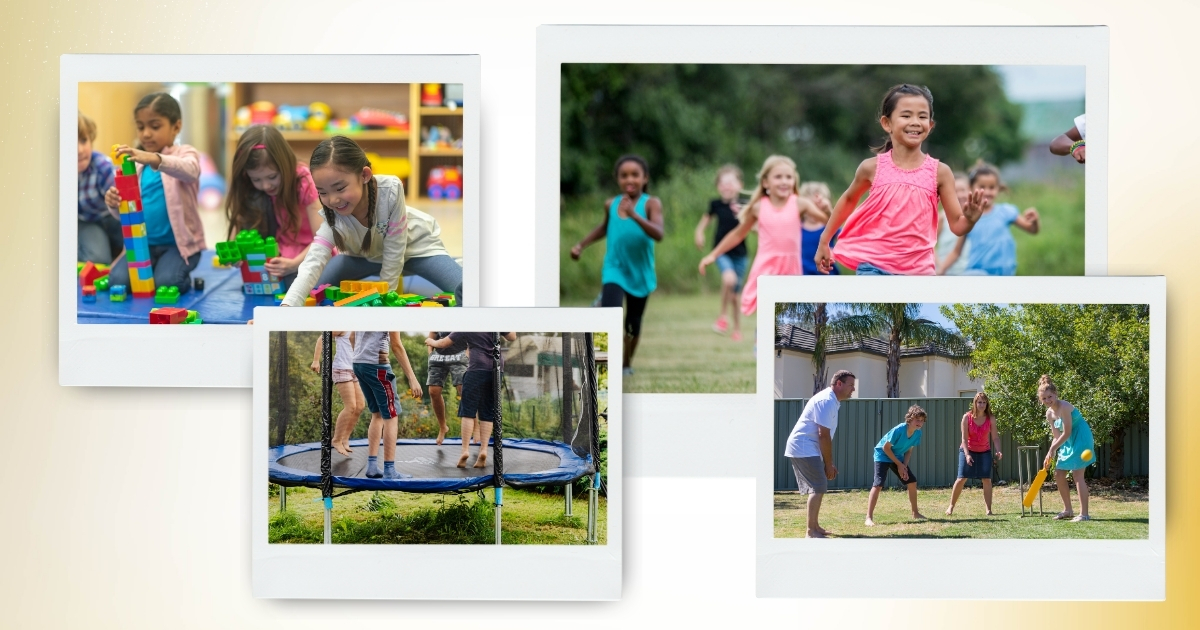
When you first decided to homeschool, you probably pictured a day filled with structured lessons, curriculum books, and maybe even a cute, organized school space. What you might not have pictured is your child building a sprawling LEGO city on the living room floor for three hours straight. But here’s a little secret: that LEGO city is just as important as their math lesson. Embracing the benefits of play in homeschooling is one of the most powerful tools you have. It’s not a distraction from learning; it is learning, in its purest and most joyful form.
Play is the natural work of childhood. It’s how kids make sense of the world, test out theories, and build foundational skills that will serve them for the rest of their lives. When we bring this understanding into our homeschool, we unlock a more holistic, engaging, and effective educational experience. It’s about shifting our perspective from seeing play as a reward for finished work to seeing it as an integral part of the work itself.
So, let’s toss out the guilt that creeps in when the day looks more like a creative mess than a classroom and explore why making time for play is one of the best decisions you can make for your homeschool.
The Real Benefits Of Play In Homeschooling
Integrating play isn’t just about making learning fun; it’s about making it stick. When children are engaged in play, their brains are firing on all cylinders. They are not passively receiving information but actively constructing their own knowledge. This active engagement leads to deeper understanding and better retention. Think about it: will a child better understand the principles of physics by reading a dry textbook chapter or by building a series of elaborate ramps for their toy cars? The hands-on experience of trial and error during play cements concepts in a way that rote memorization simply can’t.
This approach also nurtures a genuine love for learning. When education is tied to curiosity and discovery, children don’t see it as a chore. Instead, they see the world as a fascinating place full of things to explore. This intrinsic motivation is the holy grail of education. A child who learns because they want to will always outperform a child who learns because they have to. Play sparks that desire and keeps it burning bright.
The social and emotional gains are just as significant. Through play, children learn to navigate complex social situations.
- Negotiation: Who gets to be the captain of the spaceship? How do we decide the rules of this new game we just invented?
- Conflict Resolution: What happens when two kids want the same red crayon? Play provides a low-stakes environment to practice solving these problems.
- Empathy: By pretending to be different characters—a doctor, a firefighter, a parent—children learn to see the world from other perspectives.
- Emotional Regulation: That moment a block tower topples over is a lesson in frustration tolerance. Learning to take a deep breath and start again is a skill that will serve them far beyond the playroom.
How To Use Homeschool Play-Based Learning
Play-based learning sounds wonderful in theory, but what does it look like in a practical, day-to-day homeschool setting? It’s less about having a specific “play” block in your schedule and more about weaving a playful mindset into everything you do. It can be structured, with a clear learning objective, or completely child-led. The key is to provide the right environment and materials and then step back and let the magic happen.
You can easily incorporate play-based learning into traditional subjects. For math, you can use board games, cooking, or even a pretend store where kids have to calculate costs and make change. Science becomes a grand adventure with nature walks, kitchen chemistry experiments, and building challenges. History comes alive through creating costumes, acting out historical events, or building models of ancient structures. The possibilities are truly endless once you start seeing the learning opportunities in everyday play.
Here are some practical ways to encourage play-based learning:
- Create “Invitations to Play”: Set out materials that might spark curiosity. This could be as simple as a tray with playdough and some beads, a collection of sticks and rocks from the backyard, or a basket of dress-up clothes. It’s not a demand to play, but a gentle nudge.
- Turn Lessons into Games: Instead of a worksheet on spelling words, try a spelling scavenger hunt around the house. Instead of flashcards for multiplication, play a card game like “War” where players have to multiply the cards they flip.
- Invest in Open-Ended Toys: These are toys that can be used in a multitude of ways. Think building blocks, art supplies, clay, magnetic tiles, and play silks. They encourage creativity and problem-solving far more than toys with a single, defined purpose.
- Embrace the Mess: This can be a tough one for many parents, but creativity is often messy. Designate a space where it’s okay to make a mess with paint, glue, or slime. A cheap plastic tablecloth can be your best friend.
- The Importance Of Free Play For Kids
While structured, play-based learning is fantastic, we must also champion the importance of completely unstructured free play. This is the time when your child is the sole director of their own activities. There is no predetermined goal, no adult guidance, and no expected outcome. It might look like they are “just” running around the yard, staring at clouds, or making up elaborate stories with their action figures, but something profound is happening. Free play is where creativity, independence, and problem-solving skills are born.
During free play, children are forced to rely on their own internal resources. They have to decide what to do, how to do it, and how to solve any problems that arise. This builds executive function skills—the mental processes that enable us to plan, focus attention, remember instructions, and juggle multiple tasks successfully. When a child decides to build a fort, they have to plan the structure, gather materials, troubleshoot when a blanket wall collapses, and negotiate roles with a sibling. That’s a high-level project management exercise disguised as fun.
Furthermore, free play is crucial for mental and emotional health. It gives children a chance to decompress, process their emotions, and work through anxieties in a safe, imaginative space. The imaginary world they create is one they can control, which is incredibly empowering. Boredom, which we often rush to solve, is actually a gift. It’s the quiet space where the brain is nudged to get creative, to invent, to daydream. Resisting the urge to fill every moment of our children’s day with scheduled activities gives them the room they need to grow into resourceful and self-reliant individuals.
Find More Homeschooling Resources
Shifting your homeschool to embrace play isn’t always easy, especially when you’re surrounded by images of traditional schooling. It requires trust—trust in your child and trust in the process. Remember that learning is not a race. By giving your children the gift of play, you are providing them with a rich, fertile ground from which a lifetime of curiosity, creativity, and knowledge can grow. You are building a foundation that is strong, flexible, and deeply rooted in joy.
If you’re looking for more practical advice, curriculum reviews, or just a little encouragement on your homeschooling journey, you’re in the right place. We invite you to explore the other articles on our blog. We’re dedicated to providing you with the insights and resources you need to create a homeschool experience that is effective, fulfilling, and perfectly tailored to your family.