

There’s something magical about ice, isn’t there? Whether it’s the first frost of winter painting the windows or a perfectly chilled drink on a summer day, ice captures the imagination. For elementary-aged kids, that sense of wonder is the perfect gateway to learning. With just a little bit of water and a freezer, you can unlock a whole world of discovery. These ice science experiments for kids are a fantastic way to introduce fundamental scientific concepts in a fun, hands-on way that feels more like play than a lesson.
These activities are not just for filling a cold winter afternoon; they are powerful learning tools. Through these projects, your children will explore concepts like states of matter, density, chemical reactions, and even engineering principles. It’s a chance to bring the scientific method to life right in your kitchen. They will learn to ask questions, form hypotheses, observe results, and draw conclusions. Plus, many of these activities can be easily adapted for different age levels, making them perfect for families with multiple children. Get ready to bundle up and dive into some seriously cool science!
Simple And Fun Ice Science Experiments For Kids
Getting started with ice experiments doesn’t require a fancy lab or expensive equipment. In fact, most of these projects use common household items you probably already have. The beauty of these activities lies in their simplicity and the profound “aha!” moments they create. Let’s explore some easy experiments that are perfect for introducing your young scientists to the wonders of ice.
One of the most classic and visually impressive experiments is the “ice fishing” challenge. For this, you’ll need a bowl of water, a few ice cubes, a piece of string, and some salt. Challenge your child to pick up an ice cube from the water using only the string. They will quickly find it’s impossible. Now, lay the string across the top of an ice cube and sprinkle a little salt over it. Wait about 30-60 seconds and then gently lift the string. The ice cube will come right up with it! This is a fantastic demonstration of how salt lowers the freezing point of water. The salt melts the ice just enough for the string to sink into it, and then the surrounding super-cold water refreezes around the string, trapping it.
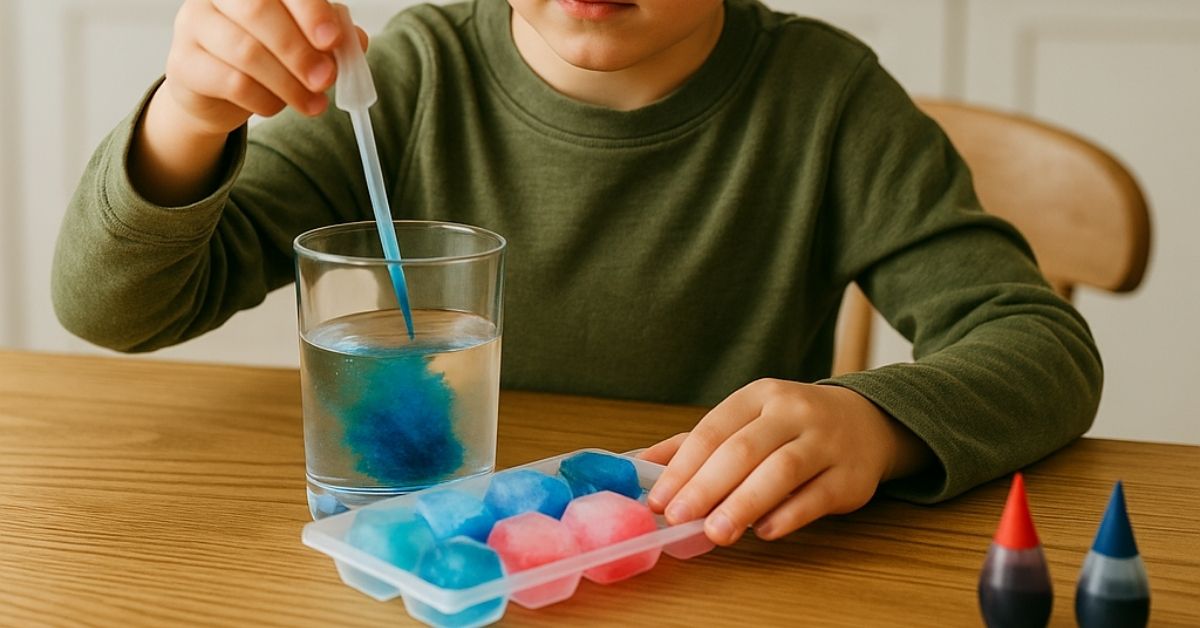
Another engaging activity is creating colorful ice towers. You will need ice cubes, salt, and food coloring. Have your child stack the ice cubes to build a small structure. Once they have a tower, let them sprinkle salt over the top and then add a few drops of different colored food coloring. The salt will create channels and tunnels as it melts the ice, and the food coloring will flow through these new pathways, creating a beautiful and vibrant work of art. This experiment is a creative way to observe the melting process and the effects of salt on ice. It’s part science, part art project, and 100% fun.
Dive Deeper With Winter STEM Activities For Children
When the weather turns colder, it’s the perfect opportunity to embrace winter STEM activities that go beyond simple melting. These projects encourage more complex thinking and engineering skills while sticking with the icy theme. They are perfect for kids who are ready for a bit more of a challenge and want to see science in action on a larger scale.
Building an igloo or ice sculpture is a classic winter pastime that doubles as a brilliant engineering lesson.
- Preparation is Key: Start by creating your building blocks. You can use various containers for this, like rectangular food storage containers, loaf pans, or even old milk cartons. Fill them with water (you can add food coloring for a rainbow effect!) and let them freeze solid.
- Choose Your Location: Find a flat, shady spot in your yard where your structure will last a bit longer.
- Build the Foundation: Arrange the first layer of ice blocks in a circle or your desired shape for the base of the igloo.
- Create “Mortar”: This is the secret to a sturdy structure. Make a slushy mixture of snow and water. Use this “slush mortar” to fill the gaps between your ice blocks. It will freeze and hold the blocks together.
- Build Upwards: Continue adding layers, making each new layer slightly smaller in diameter so the walls curve inward. Use plenty of mortar to secure each block.
- Observe and Learn: Talk about the structural integrity of the igloo. Discuss why a dome shape is so strong and how it can support itself. This is a hands-on lesson in architecture and physics.
Another excellent winter STEM project is investigating how different substances affect the melting rate of ice. Gather several identical ice cubes and place them on separate plates. Keep one ice cube as your control group. Then, cover the other ice cubes with different materials.
- Salt: A common de-icing agent.
- Sugar: Does it work like salt?
- Sand: How does a physical barrier compare?
- A piece of wool or fabric: Explore insulation.
Have your child predict which ice cube will melt the fastest and which will melt the slowest. Time the results and record the observations. This experiment is a perfect real-world application of the scientific method and helps children understand concepts like variables, controls, and insulation. They learn that some substances cause chemical reactions (salt and sugar lowering the freezing point), while others act as insulators, slowing down the transfer of heat.
Awesome Frozen-Themed Science Projects
Is there a child who isn’t captivated by the world of Frozen? You can harness that enthusiasm and channel it directly into some unforgettable science lessons. These Frozen-themed science projects bring the magic of Elsa to life while teaching valuable scientific principles. From creating sparkling ice castles to “freezing” objects with a magical touch, these activities are sure to be a hit with your little fans.
Create your own “Elsa’s Ice Palace” using a simple crystallization experiment. You’ll need Epsom salts, water, food coloring (blue, of course), and a jar. First, make a supersaturated solution. To do this, heat about half a cup of water until it’s very hot (but not boiling) and stir in an equal amount of Epsom salts until no more will dissolve. Add a drop of blue food coloring. Pour this solution into a clean jar and place it in the refrigerator. As the solution cools rapidly, beautiful, needle-like crystals will form, looking just like a magical ice formation. This demonstrates how temperature changes affect solubility and crystal formation.
For another activity straight out of Arendelle, you can make “frozen fractals” or beautiful ice art. Fill a shallow pan or tray with a thin layer of water. Let your child add drops of blue and purple food coloring, along with some silver glitter for that extra magical sparkle. They can use a toothpick to swirl the colors around. Place the tray in the freezer until it’s completely solid. Once frozen, you can take it out and observe the beautiful patterns the ice, colors, and glitter have made. You can even try breaking it to see how the ice shatters, discussing the properties of a solid. This project is a simple yet stunning way to explore states of matter and the unique crystalline structure of water.
Explore More Homeschool Resources
These ice experiments are just the beginning of what you can explore with your children. Science is all around us, waiting to be discovered in the kitchen, the backyard, and beyond. Turning everyday phenomena into learning opportunities is one of the greatest strengths of homeschooling. It allows you to tailor lessons to your child’s interests, creating a deep and lasting love for learning.
We are passionate about providing you with the tools and ideas you need to make your homeschooling journey a success. Our blog is filled with practical advice, creative project ideas, and curriculum resources covering all subjects and age groups. Whether you need inspiration for your next science unit, tips for teaching math, or encouragement for those challenging days, we are here to support you. Continue exploring our articles to find more ways to make learning an adventure.