Creative Ways to Teach Fractions Using Everyday Objects

Fractions can be a tricky concept for kids at first, but with the right approaches, they can become fun and engaging. One of the best ways to teach fractions creatively is by using everyday objects you already have at home. These hands-on activities not only make fractions easier to understand but also turn math lessons into memorable experiences. 

Below, we’ll explore practical ways to teach fractions that parents homeschooling their kids can immediately put to use.

Why Everyday Objects Are Perfect for Teaching Fractions

Using items from your daily life helps bring abstract math concepts into the real world. Kids often find it easier to grasp fractions when they can see and touch what they’re dividing or measuring. Everyday objects also make math lessons feel less like work and more like play. Whether it’s slicing a sandwich or measuring ingredients for a recipe, fractions come alive when they’re tied to real activities.

Everyday objects also help kids build a stronger connection between math and the world around them. This approach prevents fractions from being isolated, “textbook-only” concepts and instead turns them into something kids can use in life. Here are some practical ways to get started using items you already have.

Everyday Objects for Teaching Fractions

With a little creativity, almost any item in your home can become a tool for learning fractions. Here are a few ideas to get you started:

  1. Kitchen Tools

The kitchen is an ideal classroom for fractions.

  • Measuring Cups
    Use measuring cups to teach how different fractions add up to a whole. For instance, show that two half-cups equal one cup and discuss how four quarter-cups make up the same amount. Ask questions like, “How many 1/3 cups do we need to make 1 whole cup?”
  • Cutlery and Plates
    Divide portions like pizza slices, pies, or servings of cake to demonstrate fractions. You could cut a sandwich into two, four, or eight parts and discuss which part equals 1/2 or 1/8 of the whole sandwich.
  • Recipes
    Cooking and baking require following fractional measurements like 1/4 teaspoon or 2/3 cup. Ask your child to help you double or halve a recipe, which reinforces their understanding of equivalent fractions.

Everyday Objects for Teaching Fractions

  1. Legos and Building Blocks

Legos are excellent for demonstrating fractions visually.

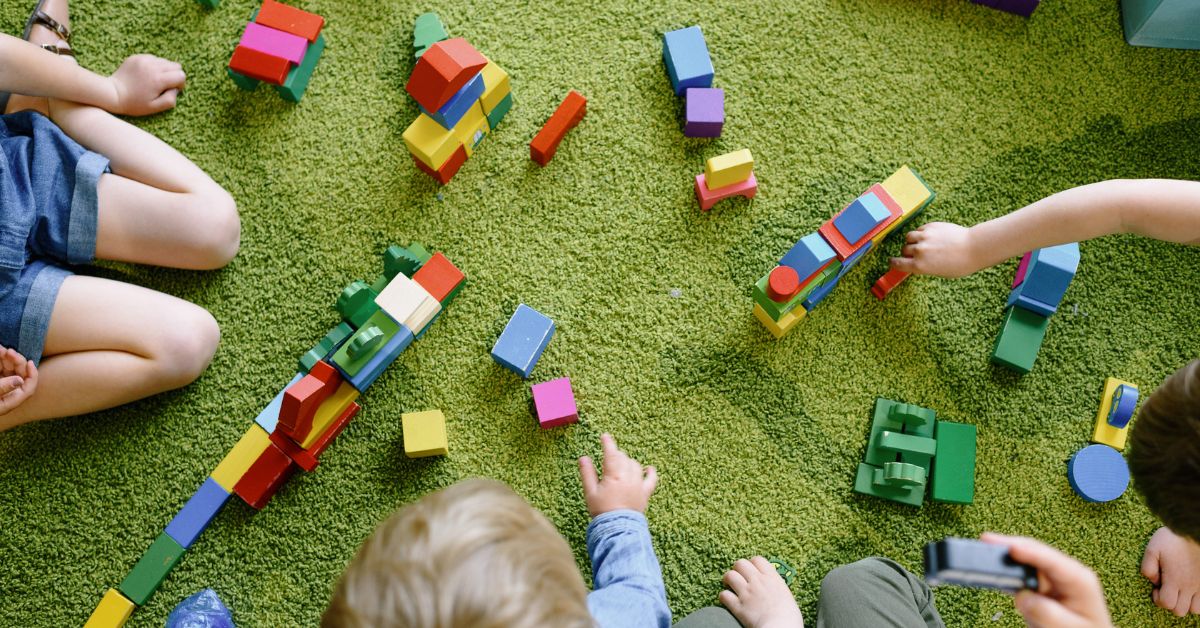
  • Assign different Lego bricks to represent fractions of a whole. For instance, a 2×4 brick can be the “whole,” while 2×2 or 1×2 bricks can represent halves or quarters.
  • You can build a structure and then break it into smaller pieces, asking your child to identify what fraction of the whole each section represents.
  • Use Lego graphs to compare fractions by stacking blocks of different “sizes” to represent 1/2, 1/3, and 1/4.
  1. Paper and Scissors

Using paper is a hands-on way to break fractions down visually.

  • Fold a piece of paper into equal sections. For instance, fold it in half for 1/2, then into quarters, eighths, and so on. Unfold it and label each section with the corresponding fractional part.
  • Cut shapes or pictures into equal parts. For example, cut a circle into six wedges or a square into nine smaller squares. Challenge your child to color or pick specific fractions of the shape (e.g., “Color 1/3 of the circle”).
  1. Coins and Money

Money introduces fractions in a way that feels relevant and practical to kids.

  • Use coins to represent fractions of a dollar. A quarter is 1/4 of a dollar, and a dime is 1/10. Line them up and practice combining amounts to make sense of fractional values.
  • Create problems like “If we have 3 quarters, what part of a dollar is that?” Discuss equivalent fractions using examples like “two 50-cent coins are the same as one dollar, which is represented as 1/1.”
  1. Toys and Games

Turn learning into playtime by involving toys.

  • Use toy cars, action figures, or stuffed animals to divide groups into fractions. For example, if you have eight toy cars, separate them into two groups to demonstrate halves or into four groups for quarters.
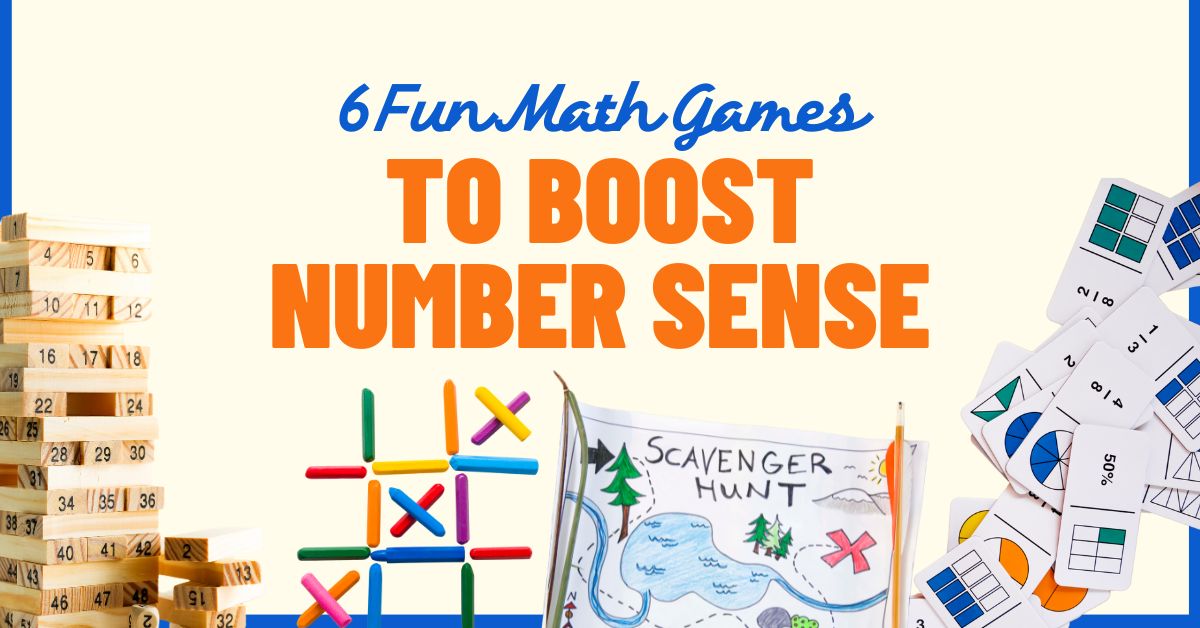
  • Board games with fraction elements, like Fraction Dominoes or fraction puzzles, also make math entertaining while reinforcing concepts.
  1. Fruit and Veggies

Snacks double as effective math tools.

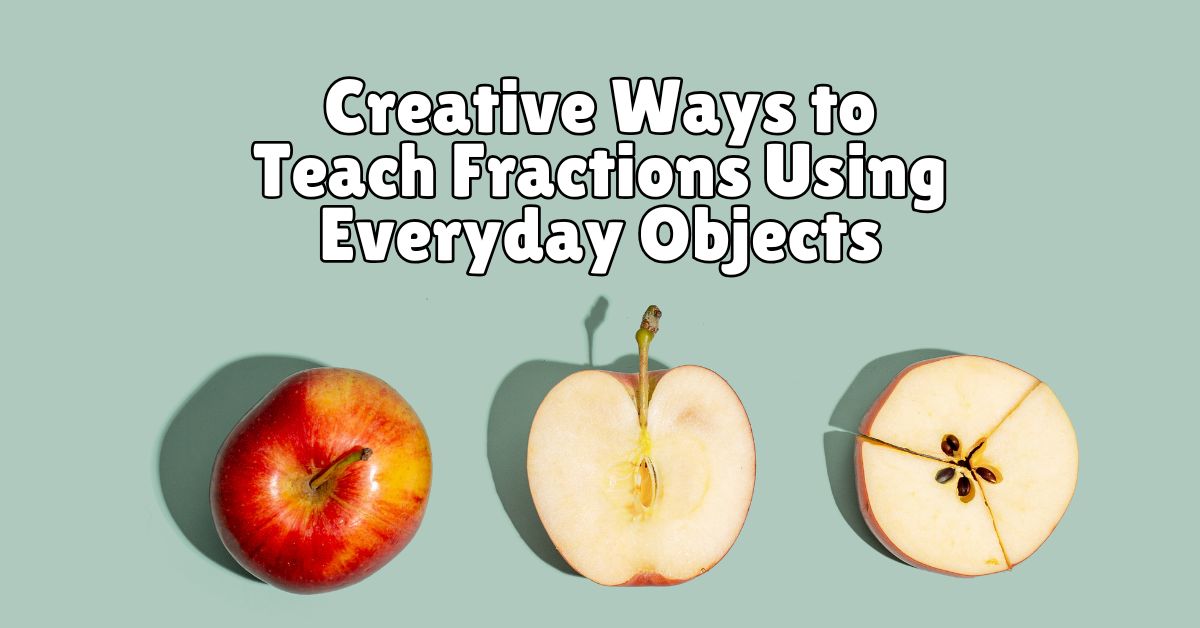
  • Slice fruit like apples, oranges, or bananas into halves, thirds, or quarters. Ask your child to identify what portion of the fruit you’ve eaten or what’s left.
  • Grapes or carrot sticks can be grouped and divided into fractions. For example, “You have 12 grapes; if you eat 4, what fraction of the total is gone?”

Fun Fraction Teaching Ideas

Along with using everyday objects, there are several creative ways to make fractions engaging and meaningful.

Story Problems With Fractions

Kids often enjoy solving real-world stories. Create simple fraction-based scenarios they can relate to, such as dividing a group of friends into teams or sharing a treat. For example, “If 3 out of 5 friends share a pizza, what fraction of the group ate pizza?” These scenarios sharpen their reasoning and problem-solving skills.

Fraction Art Projects

Art is an invaluable tool for learning fractions. Provide your child with colored paper, scissors, and glue, and have them create fraction-themed artwork. They can cut out shapes, like circles or squares, and divide them into fractional parts for a collage.

Another idea is to create a fraction pie chart using colors. Draw a large circle and have your child shade specific sections according to instructions like “Color 1/3 blue, 1/4 red, and 3/12 green.”

Fraction Scavenger Hunt

Turn your home or yard into a fraction scavenger hunt. Write clues involving fractions, such as “Find something that is 1/2 empty” or “Look for an object that is divided into 4 equal parts.” This activity combines math with problem-solving and exploration.

Compare Fractions with Rulers

Use a ruler or a measuring tape to show fractional inches or centimeters. Have your child measure everyday objects, like books or toys, and identify fractions of measurements. For instance, if an object measures 3 1/2 inches, discuss what the fractional part represents.

Engaging Kids Through Interactive Learning

Interactive activities help kids stay engaged while learning fractions. It’s essential to keep the mood light and enjoyable so they associate fractions with fun, not frustration. By involving them in playful tasks or meaningful chores, you also improve retention.

For example, working together to solve fraction puzzles or challenges creates opportunities for collaboration and conversation. Kids are more likely to stay focused and curious compared to working through worksheets alone.

Finally, encouraging your child to explain their thinking out loud reinforces math concepts for them and gives you insight into how they’re grasping the material. By being patient and showing enthusiasm for their progress, you’ll make fractions less intimidating and more inviting.

Everyday Math Makes Lifelong Learners

Fractions don’t exist in isolation; they are part of everyday math. By teaching fractions creatively, you’re not only helping your child master important skills but also preparing them to think critically and make connections throughout their lives. Everyday items like measuring cups, toys, and fruit turn lessons into adventures, while creative activities like scavenger hunts and artwork inspire problem-solving and creativity.

Homeschooling gives you the freedom to tailor teaching in a way that works best for your child. With a little effort and imagination, you can transform a potentially challenging topic into something your kids look forward to learning about. By using everyday objects and fun activities, fractions can go from a dreaded subject to one of the highlights of math at home.

Understanding the 5 Pillars of Math and Their Importance

Math is more than memorizing formulas or solving equations. It’s a way of thinking, reasoning, and solving problems. When teaching your kids math at home, understanding the foundation of what they need to learn can make a significant difference. These foundational ideas can be grouped into what educators call the 5 pillars of math. They are algebraic reasoning, proportional reasoning, number sense, and operational sense. A strong grasp of these pillars equips students with the tools they need to tackle not only math problems but real-world challenges too.

This article will break down these five pillars, explain why they are so important, and help you integrate them into your homeschooling practices effectively.

1. Algebraic Reasoning

Algebraic reasoning is all about recognizing patterns, understanding relationships, and solving problems using equations. It lays the groundwork for advanced math topics like algebra and calculus, but it’s also incredibly practical for everyday life.

Why It Matters:

  • Algebraic reasoning helps kids make connections between numbers and operations.
  • It enables problem-solving by teaching them to use symbols and variables.
  • Skills in this area are critical for careers in STEM fields, but they also offer tools for thinking logically in any field.

How to Build Algebraic Reasoning at Home:

  • Use patterns and sequences: Introduce puzzles, games, or activities that focus on patterns. These can include arranging objects by specific rules or using online algebra games.
  • Focus on real-world examples: Show your kids how algebra applies to their lives. For instance, you can use algebra to calculate savings when items are discounted during shopping.
  • Practice with word problems: Incorporate problems that require setting up and solving equations to develop critical thinking.

2. Proportional Reasoning

Proportional reasoning involves understanding relationships between quantities and using ratios, rates, and proportions to solve problems. This pillar is key to understanding fractions, decimals, percentages, and even scaling recipes in the kitchen.

Why It Matters:

  • Proportional reasoning is foundational for many areas of science, including biology and chemistry.
  • It is essential for practical life skills, such as understanding interest rates or comparing prices at the store.
  • Mastering this concept supports the ability to reason logically in many areas of life.

Activities to Strengthen Proportional Reasoning

Activities to Strengthen Proportional Reasoning:

  • Cook together: Double or halve recipes to teach kids how proportions work in real life.
  • Play unit conversion games: Use gallons, liters, miles, and kilometers to give them practice converting units and understanding ratios.
  • Explore maps: Use map scales to show how real distances are represented proportionally.

Learning proportional reasoning isn’t just about math lessons. It’s also about noticing these relationships in everyday tasks.

3. Number Sense

Number sense involves understanding and working with numbers fluently. It is the foundation for every other area of math and includes skills such as estimating, recognizing number patterns, and performing basic calculations mentally.

Why It Matters:

Developing number sense helps children:

  • Quickly estimate and judge whether an answer makes sense.
  • Grasp the size and role of numbers in their environment.
  • Lay a strong foundation for more complex topics in math, like algebra and geometry.

Unlike rote memorization of math facts, number sense focuses on understanding and intuition.

Building Number Sense in Everyday Life:

  • Encourage mental math exercises; challenge your child to add or multiply numbers in their head during car rides or while shopping.
  • Use visual aids like number lines, counters, and charts to help younger children see how numbers relate to each other.
  • Discuss numbers often. Whether you’re talking about age, time, or money, make conversations about numbers part of your daily routine.

4. Operational Sense

Operational sense is about understanding how basic mathematical operations work together, such as addition, subtraction, multiplication, and division. Just as grammar enables communication in language, operational sense enables children to accurately handle calculations and solve problems.

Unlike simply memorizing math facts, operational sense involves understanding the “why” of math. For example, children learn why subtracting a negative number is the same as adding.

Why It Matters:

  • Builds problem-solving skills.
  • Teaches kids to approach more complex problems with logical steps.
  • Helps them understand different methods to reach the same solution.

Strategies to Develop Operational Sense:

  • Teach strategies, not just answers: Show how to break problems into smaller steps, like splitting 12 x 15 into (12 x 10) + (12 x 5).
  • Explore all operations regularly: While multiplication and division often come later, they’re just as important as addition and subtraction. Integrate all four into practice problems.
  • Reflect on answers: Ask your child to explain their answer to reinforce understanding.

Why Are the 5 Pillars of Math Critical?

Math skills don’t exist in a vacuum. They provide tools to interpret the world, from budgeting household finances to measuring ingredients for a recipe. By focusing on the 5 pillars of math, you’re not just teaching abstract concepts. You’re building problem-solving skills and confidence.

Beyond their immediate application, these pillars prepare students for future learning. For example, algebraic reasoning unlocks paths to advanced math, while number sense sets the stage for performing calculations effortlessly. Likewise, proportional reasoning helps children grow into adults who can assess situations logically and make informed decisions.

Homeschoolers often have the unique opportunity to bring math concepts to life. Instead of sticking strictly to formulas and textbooks, you can use tools like manipulatives, games, and real-world applications to make these pillars tangible and engaging.

How to Make Math Come Alive at Home

Many parents wonder how to make these concepts stick. Teaching math at home offers incredible flexibility to adapt lessons to your child’s interests and pace.

Ideas to Incorporate the 5 Pillars in Daily Life:

  • Create a math corner with physical tools like base-ten blocks, measuring tapes, and graphing paper.
  • Combine math with other subjects. For example, during science experiments, use proportional reasoning to mix chemicals or measure reaction rates.
  • Include board games and apps that encourage problem-solving and reasoning, such as multiplication games or logic puzzles.

When children see math as something they do instead of something they memorize, they are more likely to enjoy it and retain what they learn.

Final Thoughts

When homeschooling, understanding the 5 pillars of math is essential to build a strong foundation for your child’s education. Always remember that these pillars are interconnected. For instance, without strong number sense, proportional reasoning becomes a struggle. Similarly, algebraic reasoning builds on operational sense.

The good news is you don’t need to tackle all of these at once. Focus on building each skill incrementally by incorporating activities they can relate to. With patience, practice, and creativity, your child will gain not just math skills but confidence and curiosity that lasts a lifetime.

6 Fun Math Games to Boost Number Sense

Helping your child develop strong number sense is one of the best ways to set them up for success in math. Number sense is the ability to understand numbers, their relationships, and how they work together. It’s more than just rote memorization of facts; it’s about real comprehension. 

Luckily, incorporating fun math games into your homeschooling routine can make building these skills both engaging and educational. Here are six exciting games that can boost number sense and transform math lessons into fun, interactive experiences.

1. Build-a-Tower with Dice

Dice games are a quick and easy way to make math more hands-on. For this game, all you need are dice, some small building blocks or LEGOs, and a flat surface.

How to Play:

  • Each player rolls two dice.
  • Add the two numbers together to get the sum. This reinforces addition skills and the relationship between numbers.
  • The player builds a tower using the same number of blocks as the sum. For example, if they roll a 5 and a 3, they build an 8-block tower.
  • Take turns adding to your tower. The first person to reach an agreed-upon height wins.

Why It Helps:
This game helps kids visualize quantities and practice addition in a tactile way. It’s also great for showing how numbers combine to make bigger totals. To simplify, use just one die at first. Or, to challenge older kids, have them multiply the dice!

2. Number Line Treasure Hunt

Create an engaging math scavenger hunt that works on number sense and spatial reasoning. You’ll need some paper strips, markers, and small objects like coins or toys to use as “treasures.”

How to Play:

  • Create a large number line on the floor using paper strips. Write numbers (positive, negative, or fractions, depending on your child’s level) on each strip.
  • Hide treasures near certain numbers. For example, “the treasure is at the number that’s 5 more than 8” or “find the number that is half of 20.”
  • Give your child the clues as they search and solve.

Why It Works:
This game encourages kids to think critically about how numbers relate to one another, reinforcing skills like skip counting, addition, subtraction, and even fractions.

3. Estimation Jars Challenge

Estimation is a key part of number sense. Preparing this activity takes just a few minutes and can keep kids entertained for hours.

How to Play:

  • Fill a clear jar with small objects, like marbles, candies, or buttons.
  • Ask your child to estimate how many are inside.
  • For older kids, add more complexity by creating categories like “estimate how many red candies are in the jar” or calculating ratios.
  • After writing down predictions, count the items together for the exact answer.

Why It’s Valuable:
This game hones your child’s ability to visually gauge numbers and refine their guesses. Plus, it introduces concepts like greater-than and less-than in a natural way.

  1. Card Wars

This card game is an excellent way to work on mental math and comparison skills. You’ll need one deck of cards, with face cards removed.

How to Play:

  • Divide the deck equally between players.
  • Each player flips over two cards and adds (or multiplies, for older kids) the numbers together.
  • The player with the higher total keeps all the flipped cards.
  • Continue until the deck is gone, then count cards to determine the winner.

Why It’s Effective:
“Card Wars” reinforces quick mental math with addition, multiplication, and comparison. It’s also endlessly customizable—for example, players could subtract instead or use three cards for more complexity.

5. Guess My Number

This classic game is simple and helps kids think logically about number relationships. Best of all, you don’t need any materials!

How to Play:

  • One person (the “host”) picks a number within a certain range (for instance, 1-100).
  • Players take turns guessing the number.
  • After each guess, the host gives a clue such as “higher” or “lower” to guide them closer to the correct number.

Why It Matters:
“Guess My Number” teaches kids to narrow down possibilities and think strategically. For older children, you can limit the number of guesses, teaching efficiency as well.

A Deeper Look at Number Sense and Math Games

A Deeper Look at Number Sense and Math Games

Playing math games isn’t just about having fun; it’s a vital part of learning. Children often understand math better when they can explore it playfully. Games like these give them the chance to experience numbers in context, rather than seeing them as abstract symbols on a worksheet.

For example, number sense encompasses skills like estimating, recognizing patterns, and mentally manipulating numbers. Whether they’re estimating how many bricks will fill a toy bin or strategizing who will win in “Card Wars,” kids are naturally practicing these skills. Such activities help them feel more comfortable with numbers, making what might otherwise seem intimidating feel approachable and engaging.

Parents might notice that children who play math-focused games often have fewer struggles transitioning to formal mathematical concepts. Games provide opportunities to see math as useful in the real world and encourage persistence—even when problems require multiple steps to solve. With regular practice, kids not only build number sense but also gain the confidence to tackle more advanced concepts down the line.

Customizing Math Games for Different Ages

Not every fun math game is a perfect fit for every child. Younger kids may feel overwhelmed by games with multiple rules or big numbers, while older kids might get bored with overly simple challenges. With some small adjustments, though, these games can work for any age.

For preschoolers, focus on basic skills like counting and identifying numbers. Games like “Building Towers” can be simplified to use just one die instead of two. Children at this stage benefit from seeing and touching objects as they learn to connect numbers to real-life quantities.

For older kids, try introducing higher-level concepts into games they already love. For example, instead of just multiplying numbers in “Card Wars,” challenge them to solve multi-step problems to win a round. You could even incorporate decimals or fractions to make games more advanced.

Adapting games ensures that math feels doable and enjoyable for every child, no matter their starting point.

6. Math Relay Race

Turn math practice into a high-energy activity with a relay race that tests quick number sense and teamwork. You’ll just need a whiteboard, chalk, or even some paper taped to the wall.

How to Play:

  • Write a series of math problems (addition, subtraction, multiplication, or division) on separate sheets of paper. You can mix simpler and harder questions.
  • Divide your family into teams. Each team forms a line.
  • One player from each team races to the board, solves a problem, and runs back to tag the next teammate.
  • The game continues until all problems are solved. The team with the fewest total mistakes wins!

Why It’s a Winner:
A math relay race introduces speed, critical thinking, and collaboration, showing kids that math doesn’t always have to happen at a desk. Additionally, it adds an exciting physical element that some kids thrive on.

An Important Math Skill

Building number sense is one of the most important math skills you can nurture in your homeschooling routine. These fun math games don’t just teach the basics; they encourage deeper understanding while engaging your child in exciting and interactive ways. Whether you’re organizing a number line treasure hunt, competing in “Card Wars,” or solving clues in “Guess My Number,” you’re helping your child connect with math in ways that go beyond rote memorization.

Try rotating these games into your schedule and watch as your child grows more confident, capable, and curious about numbers. Homeschooling math just got a whole lot more fun!

Getting Outside: Science Class in the Backyard

Homeschooling offers the flexibility to make learning engaging, and one of the best ways to combine education with fun is by carrying out outdoor science activities. The backyard is an ideal space for students to observe, experiment, and develop a deep connection with nature while exploring scientific concepts. With just a few supplies and some curiosity, kids can transform ordinary backyard experiments into valuable lessons in biology, physics, chemistry, and more.

Why Outdoor Science Activities Are Valuable

Outdoor science activities go beyond textbooks, encouraging hands-on learning and fostering vital skills such as critical thinking, problem-solving, and creativity. Working outside stimulates the senses, keeps kids physically active, and makes lessons memorable. Plus, children gain an appreciation for the world around them as they explore patterns, cycles, and interactions found in nature.

With minimal preparation, you can turn your backyard into a science lab. Below are practical, easy-to-implement activity ideas to inspire your homeschool science lessons.

Exploring Plant Life

Understanding plant biology becomes exciting when students can see and touch plants in their natural setting.

Leaf Identification

  • Collect leaves from various plants in the backyard.
  • Compare their colors, shapes, edges, and sizes.
  • Use a field guide or app to identify each plant species.
  • Discuss the function of leaves and how they help plants thrive.

Photosynthesis in Action

  • Choose a shady spot and a sunny spot in your backyard.
  • Place two identical plants in each location.
  • Observe for a week to compare how plants grow depending on their exposure to sunlight.
  • Explain the concept of photosynthesis and how light affects growth.

Seed Dissection

  • Gather seeds from fruits, flowers, or trees.
  • Carefully open the seeds to examine their structure.
  • Identify the parts, such as the seed coat, embryo, and endosperm.
  • Discuss how seeds germinate and turn into new plants.

Investigating Nature’s Creatures

Wildlife observation is an exciting way to introduce young learners to ecosystems.

Bug Safari

  • Search for insects around the backyard, like ants, beetles, or butterflies.
  • Use a magnifying glass to observe their body parts and movements.
  • Identify the roles bugs play, such as pollinators, decomposers, or predators.
  • Create a simple insect journal to sketch what you find and jot down observations.

Bird Watching

  • Set up a feeder with seeds to attract local birds.
  • Record their behavior, such as eating habits or interactions with other birds.
  • Use a pair of binoculars to take a closer look.
  • Discuss adaptations like beak shapes and feather types that help birds survive.

Earthworm Experiments

  • Dig gently in damp soil to find earthworms.
  • Observe how they move and react to light or touch.
  • Set up a simple experiment to test their response to different soil conditions (add dry or wet soil to see their preference).
  • Discuss how earthworms contribute to soil health and plant growth.

Hands-On Physics Experiments

Outdoor science activities can also help kids understand basic principles of physics.

Gravity in Action

  • Create a ramp using a plank of wood.
  • Roll items like balls, toy cars, and stones down the ramp.
  • Measure which items roll faster or farther.
  • Discuss how gravity and friction affect motion.

Paper Airplanes

  • Have kids fold paper airplanes in different designs.
  • Test each design to see how they fly.
  • Measure the distance and experiment with adjustments to improve flight.
  • Link the activity to concepts like aerodynamics and thrust.

Water Balloon Drop

  • Fill small balloons with water.
  • Drop them from different heights to see how impact changes.
  • Test this with various surfaces like grass, sand, or concrete.
  • Explain how momentum and surface type influence the outcome.

Chemistry in the Backyard

Chemistry in the Backyard

Simple backyard activities can introduce kids to chemical reactions.

Baking Soda Volcano

  • Build a small “volcano” using dirt or playdough.
  • Pour baking soda into the crater.
  • Add vinegar to simulate an eruption.
  • Explain the reaction between the acid in vinegar and the baking soda base.

Solar-Powered Melting

  • Place an ice cube in sunlight and another in the shade.
  • Track how long each takes to melt.
  • Use a thermometer to measure the temperatures in both areas.
  • Discuss how heat energy works and how it influences the state of matter.

Chalk Art and Erosion

  • Draw with chalk on a sidewalk or driveway.
  • Spray water over the chalk drawings with a hose or spray bottle.
  • Observe how chalk dissolves and spreads.
  • Relate the experiment to natural erosion caused by rain and wind.

Weather Observation

Your backyard is also a perfect setting for studying the weather.

DIY Rain Gauge

  • Cut the top off a plastic bottle and place it upside-down as a funnel inside the base.
  • Mark measurements on the bottle to track rainfall each day.
  • Compare the rain collected each week and chart the results.

Wind Exploration

  • Build a wind vane using a straw, cardboard arrow, and stick or pencil.
  • Use the wind vane to determine wind direction.
  • Discuss how wind is created and its role in weather patterns.

Cloud Spotting

  • Lie on a blanket outdoors and watch the clouds.
  • Identify different types of clouds like cumulus, cirrus, and stratus.
  • Create a cloud diagram or painting after the activity to reinforce learning.

Encourage Creativity and Curiosity

Outdoor science activities often lead to new questions and ideas. Encourage kids to take ownership of experiments by brainstorming their own hypotheses, testing their ideas, or adding creative elements like art and storytelling to their projects.

Keep a science notebook or portfolio for documenting findings, writing reflections, or even sketching objects they discover. Revisiting these notes will not only reinforce learning but also show students their progress over time.

Every backyard is filled with educational potential. With these ideas, science class will move from being a stationary activity to an exciting, hands-on adventure that sparks curiosity and critical thinking. Grab some supplies, head outside, and start exploring!

How Many Subjects Should You Be Teaching in a Day?

Finding the right balance in your homeschool daily schedule can be challenging, especially when deciding how many subjects to cover. Too much, and you risk overwhelming both you and your children. Too little, and you might worry about not meeting educational goals. Here’s a guide to help you create a practical and effective daily routine.

Key Factors to Consider

Before deciding how many subjects to tackle each day, consider the following:

  • Your Child’s Age and Attention Span
    Young children have shorter attention spans and don’t need the same amount of structured learning time as older students. For example:

    • Preschoolers may only need 1-2 subjects a day for short periods of time.
    • Elementary-aged kids might work on 3-4 subjects but in short, engaging sessions.
    • Middle and high schoolers can typically handle 5-6 subjects, with some requiring deeper focus.
  • Family Priorities
    Every family has unique values and goals. Some may emphasize academic rigor, while others prioritize creativity, physical activity, or faith-based studies. Incorporate what matters most to your family into your daily schedule.
  • State Requirements
    Check your state’s homeschooling laws. Some states require a set number of subjects or hours of instruction. These guidelines can help shape your schedule.
  • Individual Learning Styles
    Every child learns differently. Some may thrive on variety and enjoy switching between subjects, while others benefit from focusing on fewer areas each day.

Structuring Your Homeschool Daily Schedule

Creating a flexible yet structured schedule is the key to a successful homeschool day. To determine how many subjects to teach each day, use these strategies:

Group Subjects by Type

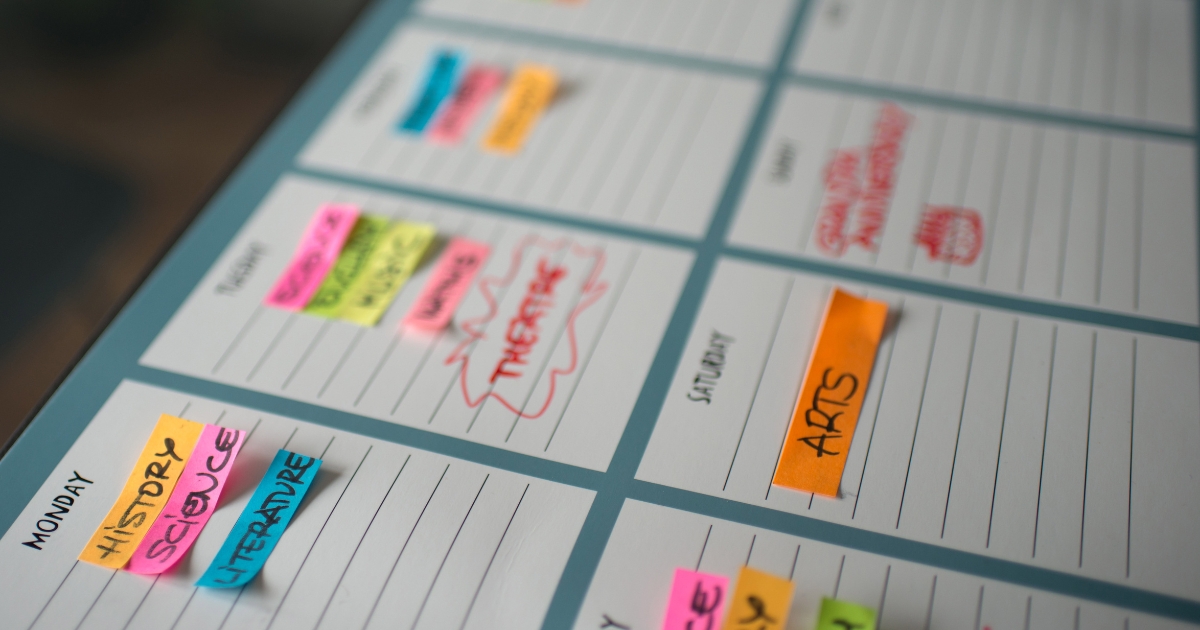
Not all subjects require daily instruction. Break your curriculum into categories and rotate less essential subjects throughout the week. For example:

  • Core Subjects (Daily):
    These are foundational subjects like math, reading, and writing. They usually benefit from consistent daily practice.
  • Ancillary Subjects (Rotate Weekly):
    Subjects like history, science, and geography can be taught a few times a week instead of daily.
  • Enrichment Subjects (Flexible):
    Music, art, physical education, and foreign languages can be rotated or scheduled as once-a-week activities.

Use Multi-Subject Activities

You can combine subjects to save time and make learning more engaging:

  • Literature-based unit studies can cover reading, writing, history, and even art.
  • Science experiments can incorporate math, writing (through lab reports), and research skills.
  • Family read-aloud sessions might introduce history, geography, or character-building discussions.

This integration helps cover more subjects without overloading your schedule.

Assess Core Time Blocks

Look at your available hours each day and allocate blocks for learning, breaks, and family time. For example:

  • Morning sessions (1-2 hours) might focus on math, reading, and writing.
  • Afternoon sessions (1-2 hours) could rotate subjects like history, science, or art.
  • Leave room for breaks, outdoor play, or free reading to keep energy levels up.

Sample Homeschool Daily Schedules

Sample Homeschool Daily Schedules

When deciding how many subjects to teach, the structure of your day matters. Here are sample schedules to guide you:

Preschool and Kindergarten (Ages 3-6)

Focus on short, engaging activities. Kids this age need a lot of play and exploration.

  • Daily Subjects:
    • Reading aloud (15-20 minutes)
    • Early math (15 minutes using hands-on tools)
  • Occasional Subjects (1-2 times weekly):
    • Art, music, sensory activities, science exploration
    • Nature walks for physical activity and curiosity-based learning

Elementary School (Ages 7-11)

At this stage, start building a broader foundation while keeping lessons short and interactive.

  • Daily Subjects:
    • Math (30 minutes)
    • Reading (20-30 minutes)
    • Writing or grammar (20-30 minutes)
  • Rotating Subjects (2-3 times weekly):

Middle School (Ages 12-14)

Older students can handle more structure but still benefit from variety.

  • Daily Subjects:
    • Math (45 minutes)
    • Literature/Reading (30 minutes)
    • Writing or Grammar (30 minutes)
    • Science (30-45 minutes)
  • Rotating Subjects (1-2 times weekly):
    • History or geography
    • Electives like coding, cooking, or art
    • Choose activities that build on their personal interests.

High School (Ages 15-18)

High schoolers need to meet graduation and college prep requirements. Many subjects will require deeper, daily focus.

  • Daily Subjects:
    • Math (1 hour)
    • Literature/English (45 minutes)
    • Writing/Research (30-45 minutes)
    • Sciences like biology or chemistry (1 hour)
  • Rotating Electives:

Adjusting Your Schedule

Be open to making adjustments as you discover what works best for your family. For instance:

  • Shift the heaviest academic subjects to your child’s most alert time of day.
  • Allow for flexibility on days when your child needs more hands-on or outdoor experiences.
  • End the day with something enjoyable like art or storytelling to wind things down.

Avoid Overloading Your Day

Teaching every subject, every day, is neither practical nor beneficial. Here are ways to avoid burnout:

  • Prioritize Active Engagement: Short, focused lessons are more effective than drawn-out sessions.
  • Use Resources Wisely: Consider online courses, co-op classes, or educational apps to supplement your teaching.
  • Establish Mastery over Coverage: Don’t rush through material just to “cover” it. Spend time mastering foundational concepts instead.

Tips for Success

To maintain a regular routine while keeping enthusiasm high, try these tips:

  • Keep lessons short and engaging for younger kids.
  • Incorporate movement and brain breaks to refresh focus.
  • Use a planner or checklist to track daily goals and progress.
  • Include your child in planning to make them feel more involved.
  • Reflect weekly on what’s working and what needs adjustment.

By focusing on key subjects, rotating extras, and including flexibility in your homeschool daily schedule, you can create a plan that suits your child’s needs without overwhelming either of you. A thoughtful, balanced approach will help everyone stay productive and happy while learning.

Making Earth Day Last All Year Long

Environmental education is a beautiful way to blend science, creativity, and outdoor exploration into your homeschooling curriculum. Earth Day is often celebrated with events and activities, but its message can inspire learning and action every day of the year.

By focusing on practical ways to reduce waste, engage with nature, and spark creativity, parents can create an ongoing appreciation for the environment. Here are some ideas to make Earth Day a year-round effort.

Hands-On Science Projects to Reduce Waste

Science projects are a fantastic way to teach children how their actions can make a direct impact on the environment. Here are practical projects that focus on reducing waste while engaging young minds:

  • Composting at Home
    Create a simple indoor or outdoor compost bin. Teach kids how food scraps and yard waste can break down into nutrient-rich soil instead of going to a landfill. They’ll learn about decomposition, the role of microorganisms, and how compost benefits plants. Challenge them to track how much waste is diverted from the trash over a week or month.
  • DIY Recycled Paper
    Show children how to recycle scrap paper into handmade sheets. All you need is shredded paper, water, a blender, and a mesh screen. The process demonstrates how materials can be reused instead of discarded and can lead to beautiful creations like homemade cards.
  • Plastic-Free Experiment
    Task your kids with identifying ways to eliminate single-use plastics in your home. For instance, they can test reusable alternatives like beeswax wraps or silicone bags and document how they hold up. This activity combines scientific observation with sustainability.
  • Upcycling Art Projects
    Encourage kids to turn old or discarded items into something new. For example, they can transform mason jars into planters or create art from bottle caps. This project emphasizes the concept of repurposing waste, making it both educational and fun.

Outdoor Adventures in Your Backyard or Local Park

Nature offers a wealth of learning opportunities that go far beyond a textbook. Outdoor activities not only foster environmental education but also provide kids with fresh air and the chance to observe the natural world up close. Here are some ideas for turning outdoor spaces into living classrooms:

Backyard Exploration

Children gardening.

You don’t need a sprawling forest to teach kids about nature. Start by encouraging them to look for insects, birds, or plant species in your backyard. Create a simple field guide with drawings or notes on what they discover. A magnifying glass can make this even more engaging as they observe small details about leaves, soil, or bugs.

Take the lesson further by starting a small garden. Kids can learn about seed germination, the importance of pollinators like bees, and how soil health impacts plant growth. A garden can also tie back to composting lessons, giving them the full cycle of growth, waste, and renewal.

Park-Based Learning Adventures

Local parks are incredible resources for homeschooling. Pack a backpack with sketchbooks, water bottles, and snacks, and head out for a day of discovery. Here are a few simple activities to plan at the park:

  • Tree Identification Walk
    Bring along a guide to local tree species and help kids identify them by their leaves, bark, or fruit. You can also discuss the role trees play in producing oxygen and absorbing carbon dioxide.
  • Nature Scavenger Hunt
    Create a checklist of items to find, such as pine cones, wildflowers, feathers, or different types of rocks. This activity builds observational skills and connects kids to their surroundings in a fun, interactive way.
  • Stream Study
    If there’s a stream or pond nearby, investigate the water. Look for aquatic life like insects or tadpoles. Explain how clean water impacts ecosystems and discuss simple ways to prevent pollution in waterways.

Writing Prompts That Imagine a Greener Future

Creative writing is a powerful way for children to process and express their thoughts on the environment. It encourages them to think critically about problems and imagine positive solutions. Here are some writing prompts you can use to spark their imaginations:

“Imagine a world where plastic has been replaced by a material that disappears after being used. Write a story about how people invented it and what life is like now.”

“Write a letter to someone living 100 years in the future. Tell them what you’re doing today to protect the planet.”

“If trees could talk, what stories would they tell about the people and animals who live around them? Write a journal-style entry from the perspective of a tree.”

“Create a poem describing how the seasons change in your neighborhood and how animals and plants adapt to each one.”

“Design your own eco-friendly superhero. What kind of powers do they have, and how do they inspire others to protect the planet?”

By encouraging children to write about environmental issues, you help them reflect on their role in creating a greener future. Writing assignments can be as structured or as free-flowing as your child needs, allowing them to express their feelings in their unique way.

Building Eco-Friendly Habits at Home

Beyond special projects and activities, one of the simplest ways to integrate environmental education into your homeschool routine is by modeling eco-friendly habits as a family. These habits can serve as daily reminders of the importance of caring for the Earth.

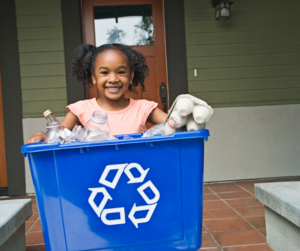
young girl carrying a recycling box.

Start by setting up a recycling station at home. Teach kids how to sort paper, plastic, glass, and metal properly. They can take ownership of maintaining the station and checking what’s recyclable in your community.

Next, focus on energy conservation. Kids can learn about the importance of turning off lights, unplugging devices, and conserving water. Make it a game to see who can find the most ways to save energy around the house.

Another great idea is having a “waste-free lunch” challenge. Task your kids with planning meals that generate zero trash, using containers, cloth napkins, and reusable utensils. This small activity helps reinforce the larger concepts of reducing consumption and being mindful of waste.

Fostering Lifelong Environmental Education Awareness

When children grow up immersed in lessons about sustainability, reducing waste, and protecting nature, they’re more likely to carry these values into adulthood. Environmental education shouldn’t feel like a chore for you or your kids. Instead, it’s a chance to explore the world, spark creativity, and encourage habits that last a lifetime.

By weaving science experiments, outdoor adventures, creative writing, and eco-friendly practices into your homeschool, you can make every day feel like Earth Day. Small, consistent efforts add up over time, and your kids will be well-equipped to imagine and create a brighter, greener future.


How To Get Your Homeschool Child Excited About Math Class

Homeschooling offers a unique chance to create a curriculum tailored to your child’s specific needs and interests. However, math often becomes a roadblock for both kids and parents. Many children see math as challenging or irrelevant to their everyday lives, while some parents feel unsure about teaching a subject they might not feel confident in. The good news is that math doesn’t have to be dreaded. With the right strategies in place, you can make math fun for homeschool kids and turn it into an enjoyable, even exciting, part of your day.

Here’s how you can bring math to life in your homeschool and build a positive experience for both you and your child.

Shift the Way You Approach Math

The first step in making math exciting is to change the way both you and your child view the subject. Often, math feels too abstract or disconnected from real life. That perception leads to frustration and a lack of engagement. To break this cycle:

  • Show real-world applications: Connect math to daily activities like cooking, shopping, or building. For example, ask your child to measure ingredients, calculate discounts during grocery trips, or determine the dimensions of a shelf for their room.
  • Highlight math’s benefits: Explain how math plays a role in their favorite activities, whether it’s sports, video games, or crafting.
  • Lead with enthusiasm: Children absorb your energy. If you approach math with excitement, they’re more likely to mirror that attitude.

By shifting the focus from rote memorization to showing math as a valuable life skill, you’ll foster a more eager mindset.

Homeschool student using a pink calculator while studying math at a desk with notebooks and pencils, representing hands-on learning and problem-solving.

Design Engaging Math Lessons

Creating math lessons that grab your child’s attention doesn’t require advanced expertise. The key is to tap into your child’s interests and make the subject relatable. Here’s how you can make lessons more engaging:

  • Personalize lessons
    Connect math concepts to your child’s hobbies or passions.

    • For sports lovers, track game scores, calculate player stats, or analyze team performance.
    • For budding artists, explore patterns, geometric designs, or the measurements needed to create a masterpiece.
    • For nature enthusiasts, measure plant growth or calculate distances traveled during hikes.
  • Encourage curiosity through questions
    Instead of assigning traditional problems, pose real-world questions that spark critical thinking.

    • “If you saved your weekly allowance, how many weeks would it take to buy that new toy?”
    • “Why do architects use certain shapes in buildings?”
      These questions engage your child’s thinking while showing how math applies to real life.
  • Celebrate small wins
    Whether your child solves a tough problem or masters a new concept, acknowledge their success. Positive reinforcement builds confidence and encourages them to tackle future challenges.
  • Use peer teaching
    Ask your child to explain new math concepts to you. Teaching reinforces their learning and gives them a sense of accomplishment.

Engagement grows when children feel that math connects to their world and gives them something meaningful to explore.

Make Math Fun for Homeschool Kids

Beyond engaging lessons, making math fun requires incorporating creativity and play to create lasting memories. Consider these approaches:

  • Integrate storytelling into math problems
    Turn boring word problems into lively stories where your child plays the hero.

    • Imagine your child as a treasure hunter solving math puzzles to find gold.
    • Craft a story involving a chef measuring ingredients to perfect a recipe.
      Story-driven math sparks imagination and helps concepts stick.
  • Use hands-on tools
    Physical activities help turn abstract math ideas into something kids can see and touch.

    • For younger kids, use toys, building blocks, or snacks like crackers or raisins to practice addition, subtraction, fractions, or patterns.
    • For older children, consider DIY projects like calculating paint for a room or measuring wood for a small building project. These activities show math’s usefulness in everyday problem-solving.
  • Change the setting
    Sometimes just stepping out of your usual learning area can make a lesson exciting.

    • Take a math class outside and use chalk to draw giant graphs on the pavement.
    • Go on a nature walk to count butterflies, measure shadows, or calculate how long the hike took.
    • If you have access to sand or dirt, solve problems by writing numbers with sticks.
      A new environment can re-energize both you and your child, making lessons feel fresh.

By focusing on fun, your child will start to see math as something to enjoy rather than dread.


Explore Interactive Math Games

Interactive games are an excellent way to make math fun for homeschool kids. Games combine learning with elements of play, competition, and achievement, all of which naturally motivate children. Here’s how to use them effectively:

  • Board games that reinforce math skills
    Some popular options include:

    • Monopoly (handles money and financial decisions)
    • Yahtzee (fosters quick mental calculations)
    • Chutes and Ladders (ideal for simple counting)
    • Tangrams (teaches spatial reasoning)
  • Digital math platforms
    Online programs like Prodigy, Reflex Math, and Sumdog are engaging because they use visuals, fun themes, and reward systems. These tools adapt to your child’s skill level and personalize the learning experience.
  • DIY math games at home
    If you prefer non-digital activities, create your own games.

    • Design a scavenger hunt where your child solves math problems to find hidden treasures.
    • Create a card game to practice multiplication or division.
    • Use dominoes or dice to work on addition and subtraction.

Games break up the routine of worksheets and textbooks, introducing an element of fun and excitement into math practice.

Create a Positive Learning Environment

A child’s relationship with math often mirrors the atmosphere in which they learn. A few intentional steps can help you shape that environment:

  • Model excitement
    Your attitude sets the tone. If you approach math positively, even when it’s challenging, your child is more likely to do the same.
  • Make room for mistakes
    Treat errors as learning opportunities. Calmly work through the mistakes together and emphasize that struggles are part of the process.
  • Pace lessons for your child
    One of the biggest advantages of homeschooling is flexibility. Take time to review topics until your child feels confident before moving on. Avoid pushing too fast, which can lead to frustration and burnout.
  • Encourage teamwork
    If you have multiple children, allow them to work together on math activities. Collaboration can make learning more fun and less intimidating.
  • Reward effort
    Praise your child for their persistence, not just their success. Rewards can be as simple as verbal encouragement, stickers, or a fun activity after the lesson.

A supportive learning environment helps build confidence and fosters curiosity, which are essential for making math enjoyable.

Watch Math Become the Favorite Subject

With focused effort and creative strategies, you can transform math from a dreaded chore into a subject your child looks forward to. By connecting lessons to real life, personalizing activities, and incorporating interactive games, you can make math fun for homeschool kids. More importantly, you’re giving them skills and attitudes that extend far beyond the classroom. Playful exploration, curiosity, and persistence all add up to a love for learning that will serve your child for years to come.

Spring Science: Interactive Experiments For Your Homeschooled Child

Spring brings a vibrant mix of blooming flowers, buzzing insects, and warmer weather. It’s also an ideal time to explore science through hands-on activities. For homeschooling families, spring provides endless opportunities to blend nature’s transformations with interactive learning. These activities don’t just fascinate children; they also teach important concepts in biology, chemistry, and physics. The best part? You don’t need a lab or specialist tools—just a bit of creativity and curiosity to turn your environment into a classroom.

Below, you’ll find why spring science experiments are both impactful and practical to include in your curriculum. You’ll also discover fun, step-by-step projects designed to spark curiosity and promote key skills in your homeschooler.

Why Spring Science Experiments Are a Must for Homeschooling

The changing season is a teaching tool in itself. With everything from budding plants to shifting weather patterns, spring is brimming with opportunities to learn through observation and experimentation. Here’s why integrating these activities into your routine is so valuable:

  • Real-World Connections
    Spring science experiments go beyond textbooks and immerse kids in hands-on lessons. Watching seeds sprout highlights biological processes like germination and photosynthesis. Tracking rainfall or temperature introduces weather and water cycle concepts in a tangible way.
  • Interdisciplinary Learning
    Science connects naturally with other subjects. For instance, having your child measure plant growth introduces math skills like graphing. Writing a nature journal sharpens literacy. These experiments bring a cohesive, well-rounded learning experience.
  • Critical Thinking and Problem-Solving
    Interactive projects teach kids to hypothesize, test ideas, and adapt when results differ from expectations. Not every seed will sprout, and not every weather prediction will be right. These “failures” are valuable lessons in resilience and adaptability.
  • Life and Motor Skill Development
    Tasks like planting seeds, mixing solutions, or recording observations build fine motor skills. Group experiments with siblings or friends foster teamwork and communication, preparing kids for collaborative problem-solving in the future.
  • Appreciation for Nature
    By studying the natural world, homeschoolers develop a deeper connection to their environment. Activities like building a mini-ecosystem or tracking weather patterns encourage curiosity and respect for their surroundings.

These benefits make spring the perfect time to turn simple, everyday moments into memorable lessons.

Child in a blue hoodie smelling a red tulip in a colorful spring flower field, representing seasonal learning and nature exploration.

Easy and Educational Spring Science Experiments to Try

To help you kickstart your spring science plans, here are several hands-on experiments designed for homeschoolers. Each activity can be modified for a range of ages and learning levels.

1. Grow a Bean Plant in a Jar

This classic experiment introduces your child to plant biology and the process of germination.

What You’ll Need

  • A clear jar
  • Paper towels
  • Dried beans (like lima or kidney beans)
  • Water

Instructions

  • Line the inside of the jar with a damp paper towel.
  • Gently place a few beans between the paper towel and the jar.
  • Position the jar in a sunny spot, like a windowsill.
  • Check daily to observe root growth and sprouting. Add water as needed to keep the paper towel moist.

What They’ll Learn

  • The stages of plant growth, including roots, stems, and leaves.
  • Key concepts like photosynthesis and water absorption.
  • Math observation when measuring the height of the plant over time.

2. Bubbling Vinegar and Baking Soda Volcano

Introduce your child to chemical reactions with this exciting activity.

What You’ll Need

  • Baking soda
  • Vinegar
  • Dish soap
  • Food coloring
  • A container or clay for shaping the volcano

Instructions

  • Build a small volcano structure with either clay or dirt.
  • Inside the “volcano,” combine baking soda, a few drops of dish soap, and several drops of food coloring.
  • Pour vinegar into the volcano opening and watch the eruption!

What They’ll Learn

  • How acids (vinegar) and bases (baking soda) react to produce carbon dioxide gas.
  • The role of gas formation in bubbling and fizzing reactions.

For older kids, you can dig deeper into the science behind the reaction by having them experiment with different quantities of ingredients to observe varying results.

3. Create a Homemade Weather Station

Weather science becomes interactive with a DIY weather station.

What You’ll Need

  • Clear plastic bottle (for a rain gauge)
  • Ruler
  • Straws
  • Paper cups
  • String

Instructions

  • Build a rain gauge by cutting the top off a plastic bottle, marking measurements in inches or centimeters, and leaving it outside to collect rainfall.
  • Make an anemometer to measure wind speed using a straw frame and paper cups. Mount it so it can spin freely.
  • Use a thermometer to record outdoor temperatures.

What They’ll Learn

  • How to gather and analyze meteorological data such as rainfall and wind speed.
  • Patterns in the weather and how they relate to the water cycle and climate.

4. DIY Rain Cloud in a Jar

Simulate a rain cycle using simple household items.

What You’ll Need

  • A clear glass jar
  • Shaving cream
  • Water
  • Food coloring

Instructions

  • Fill the jar almost to the top with water.
  • Spray a layer of shaving cream on the water’s surface (this represents the cloud).
  • Drizzle dyed water onto the shaving cream and watch as colored “rain” falls into the water below.

What They’ll Learn

  • How condensation leads to precipitation within the water cycle.
  • The relationship between clouds, rainfall, and weather changes.

This experiment is visually stunning and a fantastic way to introduce younger kids to basic atmospheric science.

5. Build a Mini Ecosystem in a Jar

Teach your child the workings of ecosystems by making a sealed terrarium.

What You’ll Need

  • A glass jar with a lid
  • Small plants (ferns or moss work well)
  • Soil
  • Pebbles or small rocks
  • Water

Instructions

  • Place pebbles at the jar’s base for drainage.
  • Add a layer of soil before planting the small plants.
  • Lightly water the setup and seal the jar with the lid.
  • Place in indirect sunlight and watch how the ecosystem sustains itself.

What They’ll Learn

  • Concepts like energy flow, water cycles, and plant respiration.
  • The importance of balance within ecosystems.

For added fun, include tiny critters like earthworms or pill bugs, which contribute to decomposition and nutrient cycling.

6. Static Electricity Butterflies

A playful way to explore the invisible force of static electricity.

What You’ll Need

  • Colored tissue paper
  • A balloon
  • Tape

Instructions

  • Cut a butterfly shape from tissue paper.
  • Tape the butterfly lightly to a flat surface, ensuring the wings can move.
  • Inflate the balloon and rub it on your hair or a piece of fabric to create static electricity.
  • Bring the charged balloon close to the butterfly and watch its wings “flutter.”

What They’ll Learn

  • The basics of static electricity and how opposite charges attract.
  • Connections between everyday phenomena, like clothes sticking together, and scientific principles.


Tips for Making Spring Science Experiments Successful

  • Document Progress
    Encourage your child to keep a notebook or a digital journal to jot observations, draw sketches, or take photos of their experiments.
  • Set Expectations
    Not every experiment will go perfectly, and that’s okay. Use mishaps as an opportunity to teach about perseverance and troubleshooting.
  • Adapt Activities
    Some experiments may require more or less complexity depending on your child’s age and skill. Don’t hesitate to simplify or expand as needed.
  • Make It Fun
    Incorporate creative elements, like adding artistic touches to a weather journal or using photography to record changes over time.

By weaving spring science experiments into your homeschooling curriculum, you’re not just teaching science; you’re instilling excitement and curiosity about the world. The memories of conducting these projects together will stay with your child far beyond the classroom. With nature as your co-teacher, there’s no limit to what you and your homeschooler can discover.

Homeschool Education: What Is STEM?

Homeschooling gives you the freedom to design an education tailored to your child’s interests, strengths, and needs. One educational approach that’s gaining traction is STEM, which stands for Science, Technology, Engineering, and Mathematics. With its focus on exploration and critical thinking, STEM can completely transform your homeschooling curriculum into an exciting, hands-on adventure.

This post dives into the importance of STEM in education, provides ideas for hands-on STEM activities for homeschoolers, and highlights STEM projects for elementary homeschool kids. By the end, you’ll have creative tools and inspiration to create a dynamic learning experience that nurtures your child’s curiosity and love of discovery.

Why Is STEM Important in Education?

STEM is far more than just four academic subjects bundled together. It’s an approach to learning that fosters key skills such as critical thinking, creativity, and problem-solving, preparing children to thrive in a fast-changing, technology-driven world.

Fosters Problem-Solving and Innovation

At its core, STEM is about preparing children to think critically and tackle problems with innovative solutions. Activities like designing a paper bridge or building circuits encourage trial and error, teaching kids that failure is part of the process. This equips children with resilience and adaptability as they learn that every challenge is an opportunity to grow.

Sets the Stage for Future Success

Today’s world is increasingly STEM-oriented, with advances in fields like technology and engineering driving global progress. By exposing your child to STEM early on, you’re equipping them with skills that will keep them competitive in future job markets.

Sparks a Love for Lifelong Learning

STEM is naturally engaging because it’s hands-on and focused on discovering answers to real-world questions. Watching baking soda create a “volcanic eruption” or coding their first simple game makes learning not just understandable, but also unforgettable.

When woven into your homeschool curriculum, STEM encourages curiosity about the world and nurtures a growth mindset, setting a solid foundation for lifelong success.

How to Introduce STEM Into Your Homeschool Curriculum

If you’re ready to make STEM a part of your homeschool routine, the good news is you don’t need specialized tools or a science lab to do it. From building simple machines at home to exploring coding apps, small steps can have a big impact.

  1. Incorporate Project-Based Learning

Project-based STEM activities encourage kids to work on solving real-world problems. For example:

  • Build a Boat: Design and test a boat that can float using different household materials.
  • DIY Weather Station: Teach your child about climate by setting up a rain gauge or DIY anemometer to measure wind speed.

These projects teach kids about engineering, physics, and cooperation while giving them room to experiment and get creative.

  1. Use Everyday Materials for Experiments

One of the easiest ways to integrate STEM is through simple experiments using items you already have:

  • Homemade Lava Lamp: Explore density and chemical reactions using oil, water, and Alka-Seltzer tablets.
  • Egg Drop Challenge: See if your child can create a structure to protect an egg when dropped from a height.
    These hands-on STEM activities for homeschoolers are engaging and take abstract concepts into tangible, exciting experiments.
  1. Incorporate Technology and Coding

You can foster a love for technology and problem-solving with free, kid-friendly platforms for coding like Scratch or Tynker. These programs allow children to create games or animations, blending creativity with the foundational principles of computer science.

  1. Explore the Natural World

Take STEM lessons outdoors with nature-based projects:

  • Create a solar oven to understand renewable energy.
  • Observe biology by charting plant growth in your backyard or setting up a simple bird-watching log.

The world around you provides boundless opportunities to connect STEM learning with real-life applications.

  1. Make Math Active

Integrate math into daily activities like baking, where children can measure ingredients, learn fractions, and even explore chemistry through cooking.

By embedding STEM into everyday life, you’re showing children that education doesn’t just happen at a desk. It happens everywhere.

Child holding a handmade cardboard rocket against a sunset background with the words "STEM Education" overhead, symbolizing creativity and innovation in homeschool learning.

STEM Projects for Elementary Homeschool Kids

STEM projects tailored for young learners should spark creativity and approach complex ideas in fun, playful ways. Here’s a list of STEM projects for elementary homeschool kids:

For Science

  • Candy Chromatography: Use coffee filters and candy to teach kids about separating colors into their basic pigments.
  • Plant Maze: Set up a shoebox maze to see if a plant can “find” the light by growing toward it.

For Technology

  • Stop-Motion Animation Videos: Use a free app like Stop Motion Studio to help children create a short animated film.
  • Simple Coding Games: Start with puzzles or coding challenges available on platforms like Kodable or Lightbot.

For Engineering

  • LEGO Bridge Challenge: Challenge your child to build a bridge out of LEGO that can hold a specific weight.
  • Marble Runs: Create paths for marbles by reusing toilet paper rolls or cardboard to explore gravity and engineering principles.

For Math

  • Math with Dice Games: Roll dice to solve math puzzles or explore probability.
  • Create a Budget: Help your child plan the family’s next grocery trip or design a pretend shopping spree using a set budget.

These interactive ideas turn STEM concepts into exciting, practical activities they’ll love.

Benefits of Hands-On STEM Activities for Homeschoolers

Hands-on STEM activities encourage children to learn by doing, offering unique advantages beyond traditional curricula.

  1. Encourages Deeper Understanding

When children build or experiment, they gain a better grasp of how things work rather than just memorizing facts. For instance, assembling a small circuit board connects abstract theories of electricity to tangible results.

  1. Builds Social and Emotional Skills

By working on group STEM projects or collaborating with siblings, kids develop problem-solving, negotiation, and cooperation skills. These interpersonal experiences are invaluable for long-term growth.

  1. Makes Learning Fun and Relatable

STEM turns education into play and makes lessons unforgettable. Activities like growing crystals or programming a robot transform school into an adventure rather than a chore.

  1. Inspires Critical Thinking and Innovation

STEM fosters a mentality of “thinking outside the box.” Hands-on activities show kids that trial and error is part of the learning process, inspiring resilience and grit.

By prioritizing these activities, homeschooling families can focus on cultivating excitement, creativity, and the joy of discovery in their STEM curriculum.

Build the Future with STEM Homeschooling

STEM isn’t just about preparing kids for science-based careers; it’s about teaching them to approach the world with curiosity, creativity, and confidence. Whether it’s experimenting with household items or designing their own video games, your child takes their first steps toward a love for learning every time they engage with STEM.

With hands-on STEM activities for homeschoolers and STEM projects for elementary homeschool kids, you can build a curriculum that challenges and excites them. Start small, use what you already have, and watch the magic unfold as your child grows into a confident independent thinker.

The importance of STEM in education cannot be overstated. It’s a way to spark imaginations today while preparing children to tackle the challenges of tomorrow. Together, you can create a homeschooling experience that leads them into a bright, inquisitive future.

Fun with Physics: Simple Experiments to Demonstrate Motion and Energy

Are you a homeschooling parent looking to make physics both fun and educational for your children? If so, you’re in the right place! Teaching the concepts of motion and energy doesn’t have to be daunting. In fact, with the right set of experiments, you can transform your homeschool into an exciting, hands-on science lab. This blog post is designed to guide you through simple and engaging experiments that answer the pressing question, “How do I teach motion and energy through experiments?”

You’ll discover what are easy physics experiments for homeschoolers and learn how simple activities can explain physics concepts to children. Get ready to ignite a passion for physics in your child with these fun and educational experiments!

Understanding Motion Through Simple Experiments

Introducing children to the concept of motion doesn’t have to be complicated. With simple materials and fun experiments, you can make physics engaging and easy to understand. Here are three hands-on activities that explore motion, energy, and forces in ways kids will love.

1. Create a Simple Pendulum

A pendulum is an excellent way to demonstrate periodic motion and concepts like amplitude and frequency. Here’s how to set it up:

  • What You Need: A string and a small weight (like a washer or a toy).
  • Steps:
    • Attach the weight to one end of the string.
    • Tie the other end to a fixed point, such as a hook or branch.
    • Pull the weight to one side and release it to watch it swing.

This basic experiment showcases how energy is conserved and transferred. For extra learning, try these variations:

  • Change the string’s length to see how it affects the speed of the swing.
  • Use different weights and compare their impact on the pendulum’s motion.

Kids will observe physics principles in action and grasp how motion behaves in real-world settings.

2. Try the Balloon Rocket Experiment

Teach Newton’s Third Law of Motion, which states that every action has an equal and opposite reaction, using a balloon rocket. This activity is both educational and exciting.

  • What You Need: A balloon, a straw, thread or string, and tape.
  • Steps:
    • Thread a string through the straw and secure the ends to two points, keeping the string taut.
    • Inflate a balloon but don’t tie it. Instead, tape it to the straw.
    • Release the balloon and watch it zoom along the string!

Kids can experiment further by altering the balloon size or adjusting the string’s angle. How do these changes affect the rocket’s speed or distance? This visual demonstration brings physics into focus and encourages children to make observations and draw conclusions.

3. Explore Friction with a Slide and Roll Experiment

This activity introduces the concept of friction and its influence on motion. It’s simple to set up and perfect for understanding how different surfaces affect movement.

  • What You Need: A small toy car or ball and various surfaces like carpet, wood, and tile.
  • Steps:
    • Roll the car or ball across each surface and observe how its speed and distance change.

Encourage kids to make predictions. Will the toy roll farther on the smooth tile or the rough carpet? This exercise promotes critical thinking and shows how everyday textures impact motion.

Why These Experiments Matter

Through activities like these, children can interact with fundamental physics concepts in a hands-on way. They can see motion, energy, and forces in action, setting a strong foundation for future learning. Plus, these simple experiments are easy to conduct at home or in a classroom, making physics fun and accessible for everyone!

Exploring Energy With Engaging Activities

Energy is all around us, and there are plenty of ways to explore this concept in a homeschool setting. Begin with a “Rubber Band Energy” experiment. Stretch a rubber band and ask your child to feel the tension. Release it and observe how energy is stored and then transferred as the rubber band snaps back. This simple demonstration is a fantastic way to answer, “How do I teach motion and energy through experiments?” as it shows potential energy converting into kinetic energy in a very tangible way.

Another engaging experiment involves creating a “Bouncing Ball” activity. Drop different balls (e.g., tennis ball, rubber ball, and marble) from the same height and observe how high they bounce back. This experiment demonstrates energy conservation and transformation, as well as the effects of material properties on energy transfer. By comparing the results, children learn that not all objects store and release energy in the same way, addressing the question, “Can simple activities explain physics concepts to children?”

To explore the concept of thermal energy, try a “Solar Oven” experiment. Using a pizza box, some aluminum foil, and plastic wrap, create a solar oven to cook a simple snack like s’mores. This hands-on activity not only provides an answer to “What are easy physics experiments for homeschoolers?” but also introduces the principles of radiant energy and heat transfer. Children can observe how sunlight is converted into thermal energy, heating up their treats while also learning about renewable energy sources and their practical applications.

Building On Physics Concepts With Advanced Experiments

After exploring motion through simple activities, you can take a step further into advanced physics concepts. These experiments not only deepen understanding but also spark curiosity and problem-solving skills. Below are three engaging activities designed to build on foundational physics principles.

1. Explore Mechanical Advantage with a Pulley System

Pulleys are a fun and interactive way to introduce the concepts of work and mechanical advantage. Here’s how to set it up:

  • What You Need: A spool, some string, and a small weight.
  • Steps:
    • Attach the weight to one end of the string.
    • Run the string through the spool to create a basic pulley system.
    • Have your child lift the weight both directly and using the pulley.

This hands-on demonstration shows how pulleys make work easier. Your child will feel the difference in effort and begin to grasp how simple machines play a vital role in everyday tasks.

2. Build a Miniature Wind Turbine

Wind turbines are an excellent way to explore energy transformation. This activity combines physics with environmental science, offering a multidisciplinary approach.

  • What You Need: Basic household materials, such as cardboard, a small motor, and an LED.
  • Steps:
    • Design and create a small windmill structure.
    • Connect the blades to a motor capable of generating electricity.
    • Use the windmill to power an LED light.

This experiment gives a firsthand look at how wind energy is converted into electrical energy. It’s a creative way to discuss renewable energy while reinforcing physics topics like energy conversion and engineering concepts.

3. Conduct a Catapult Challenge

A catapult isn’t just fun to build and use; it’s an effective tool for teaching potential and kinetic energy, as well as projectile motion.

  • What You Need: Popsicle sticks, rubber bands, a spoon, and small objects for launching.
  • Steps:
    • Construct a simple catapult using the materials.
    • Experiment by launching objects of different sizes and weights.

Encourage your child to explore how changes in the catapult’s design or the launch angle affect the object’s distance and trajectory. This activity brings real-world engineering challenges into play while making physics exciting and tangible.

Why These Experiments Are Beneficial

Experiments like these go beyond basic principles, allowing children to connect real-world applications to what they’ve learned. Whether it’s mechanical advantage, energy conversion, or projectile motion, these advanced activities help deepen their understanding of physics while fostering innovation and creativity. Plus, they’re a great way to spend quality, educational time together!

Fostering A Love For Science With Physics Experiments

Physics experiments are a fantastic way to instill a love for science in children, making complex concepts accessible and enjoyable. Encouraging curiosity and exploration through hands-on activities helps children grasp the principles of motion and energy while also fostering critical thinking and problem-solving skills. By addressing the question, “How do I teach motion and energy through experiments?” you’ll inspire your child to ask questions and seek answers, laying the foundation for a lifelong appreciation of science. These experiments also offer numerous opportunities for interdisciplinary learning.

By connecting physics concepts with math, art, and environmental science, children gain a well-rounded understanding of how the world works. This approach not only answers the question, “What are easy physics experiments for homeschoolers?” but also enriches your child’s educational experience, promoting creativity and collaboration.

Incorporating physics experiments into your homeschooling curriculum can be a fun and rewarding way to engage your child in learning. By providing hands-on experiences that demonstrate the principles of motion and energy, you’ll help your child develop a strong foundation in science. Remember, simple activities can explain physics concepts to children, and by nurturing their curiosity, you’ll empower them to become lifelong learners.

By integrating physics experiments into your homeschooling routine, you’re not only teaching your child important scientific concepts but also helping them develop essential skills for success in life. Critical thinking, problem-solving, and creativity are all cultivated through engaging, hands-on activities that explore motion and energy. By exploring the question, “Can simple activities explain physics concepts to children?” you’ll provide your child with a strong foundation in scientific principles that will serve them well in their future endeavors.

Additionally, physics experiments can inspire your child to pursue further studies or even a career in science, technology, engineering, or mathematics (STEM). By demonstrating the real-world applications of physics, you’ll help your child see the value and relevance of their education. This not only addresses “What are easy physics experiments for homeschoolers?” but also opens doors to exciting opportunities and possibilities. Remember, the key to effective physics education is to make learning enjoyable and relatable.

By providing your child with engaging, hands-on experiments, you’ll encourage a love for science that will last a lifetime. Whether you’re exploring motion and energy through simple activities or tackling more advanced concepts, you’ll be setting your child up for success and fostering a lifelong passion for learning.

Newton’s cradle demonstrating motion and energy transfer with swinging metal balls against a blue background.

A Solid Understanding Of Science

In today’s rapidly changing world, a solid understanding of science is more important than ever. By teaching your child about motion and energy through engaging in physics experiments, you’ll equip them with the knowledge and skills they need to thrive in the 21st century. By answering “How do I teach motion and energy through experiments?” and “Can simple activities explain physics concepts to children?” you’ll provide your child with a strong foundation in scientific principles that will serve them well throughout their lives.

Keep in mind that the best way to teach physics is by making it fun and interactive. By incorporating hands-on activities into your homeschooling curriculum, you’ll create a dynamic learning environment that fosters curiosity and exploration. This approach not only addresses “What are easy physics experiments for homeschoolers?” but also helps your child develop essential skills for success, such as critical thinking, problem-solving, and creativity. The key to successful physics education lies in making learning enjoyable and relatable.

By providing your child with engaging, hands-on experiments that explore motion and energy, you’ll inspire a lifelong passion for science and set them on the path to success. Together, you and your child can discover the wonders of physics and unlock the potential for a bright future filled with endless possibilities.