How To Help Your Child With Multiplication

Math can be a stressful subject for many parents, and multiplication is one of the most feared subjects. When your child comes to you for help with their multiplication, you may feel like simply running away. If this sounds like you, chances are your fear of multiplication all comes down to two reasons. The first was that the procedures you were taught in school didn’t truly teach you the intricacies of the operation. Secondly, multiplication can be complex and has many different manifestations. It is ok to reach for help, so if you are thinking of math help services for your child, contact Dropkick Math today!

Making Math Fun!

Due to the confusion around multiplication, many parents are left wondering if there are any ways of making learning multiplication fun, enjoyable, and easier. Learning multiplication is a vital skill that children must learn before entering high school. Therefore, it is essential that parents try to find different ways to teach their children, so they do not fall behind in their studies.

One solution to helping your child with their multiplication is online math tutoring. But, if you want to engage your child with some offline learning, we can help with some highly effective tips on how to teach multiplication the easy way.

Hang Up A Multiplication Chart

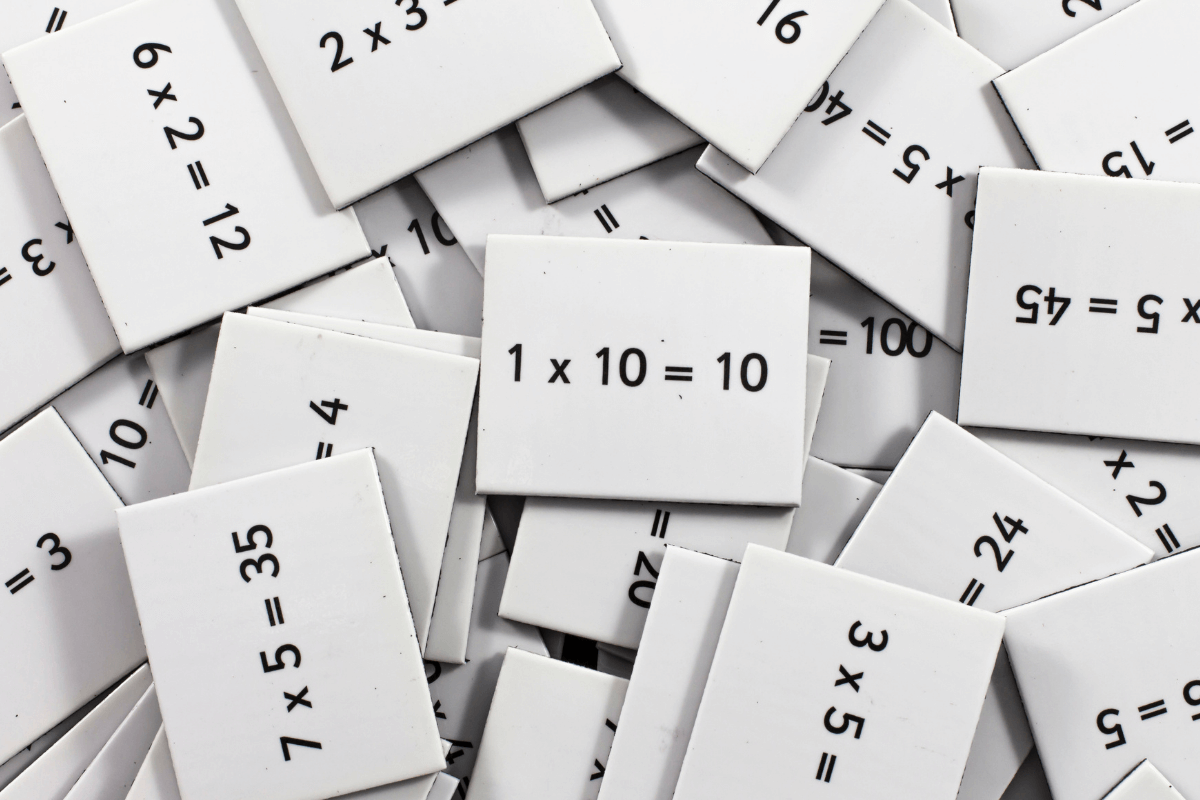
This is an old technique, but it has stood the test of time. Go online and find a multiplication chart that you can download and print. Sit down with your child and go through the multiplication chart, filling in each individual box together. Hang the completed chart up in a place where your child will see it regularly (e.g. the refrigerator door, next to the family computer, or their bedroom door.) Set a regular time for you and your child to sit down and have a casual run through a particular set of multiplications a few times a week. Just keep in mind that the more they see and practice their multiplications, the more likely a child can learn them.

Take One Step At A Time

Teaching multiplication should be like building a house. You need to start with the foundation first, so teach your child the simplest multiplications first and save the harder ones for the end. The two times table is an excellent starting point as they’re pretty straightforward and just involve doubling each number. 10s are simple, too, as they just involve moving the number one place value to the left. Once your child has mastered the basics, their newfound sense of confidence can help them conquer the more complex tables.

Teach Some Multiplication Strategies

One of the great things about mathematics is that it can be full of strategies to help children learn. Some examples of strategies include:

x 0 – always equals zero (6 x 0 = 0) or (100 x 0 = 0)
x 1 – equals that number (1 x 8 = 8) or (9 x 1 = 9)
x 2 – double that number (2 x 4 = 8) or (10 x 2 = 20)
x 3 – double and one more group (3 x 2 = 6) or (3 x 11 = 33)
x 4 – double, double (4 x 2 = 8) or (4 x 20 = 80)
x 5 – count by fives (5 x 10 = 50) or (5 x 8 = 40)

These strategies can be fun, but it is important to encourage your children to understand why these techniques work and the mathematical reasoning behind them.

Check Their Fluency!

Once your child seems to be getting the hang of their multiplication, it’s time to put them to check their fluency. Choose times when there’s nothing else going on and no distractions. This can include walking them to school or while you’re waiting for a bus. Try to make the questions fun and entertaining and normalize these check-ins by allocating a specific time of the week they will happen rather than springing it on them randomly. These quizzes should not be too stressful and should be aimed at building your child’s confidence by praising what they have learned and how far they have come.

Enroll Your Child In Dropkick Math

If your child is struggling with their multiplication or other foundational math skills, Dropkick Math can help. Our custom-tailored programs are specifically created for students, helping them gain confidence in the building blocks of mathematics and develop conceptual understanding. We create a fun and dynamic educational environment through engaging games and interactive learning tools. Our Waterloo math services help children in the area and throughout Ontario. All of our programs are taught online to be accessible to any child anywhere. 

Get your child started today with our FREE assessment!

Understanding Math Tools and Jargon

As discussed in previous blog posts, parents often feel frustrated when speaking with their children about math. Math calculations appear different from when they were in school, and how their child talks about math seems like a new language. This can often create barriers between parents and children in being able to discuss schoolwork. 

Working With Your Child

Being a part of your child’s learning is vital for their success. It is essential that parents work with their children and get involved in their education. However, it can be frustrating if the parent struggles with the topic. This is why at Dropkick Math, we expose the parent to new learning strategies their child may be experiencing in their classroom. Once the parent starts to learn and understand these new ways of engaging with mathematics, they will feel more confident to become more involved in their child’s education. 

Your attitude about learning can directly influence your child’s educational success. Over three decades of research has found that student success is positively impacted by parent involvement regardless of socioeconomic status, background, or parent’s level of education. Dropkick Math provides resources and advice on how to get started learning alongside your child. When you learn alongside your child, you set an example while strengthening your relationship. Your child will see your confidence building in mathematics which will help build them up as well. 

Learning the Language

The first step in being active in your child’s math education is learning about the tools and language of math. By having a foundational understanding of how teachers speak and the tools they use, you can better communicate with your child and their teachers. The following are some of the most common words and sayings that your child or their teacher may use when explaining tools used in mathematics. 

Math Tools

You may envision screwdrivers or a hammer when you first hear the word tools. In the math world, tools refer to devices that help solve a problem. These tools help carry out a particular function and are often referred to as manipulatives. However, in math, tools don’t always have to be physical, some are just representational.

Manipulatives allow children to feel, touch and visualize what they can’t yet create on their own. They can enable children to receive immediate feedback about whether their idea makes sense. Using tools, a child can move hands-on objects to investigate and explore a math concept that may be challenging.

Unifix Cubes

Unifix cubes are manipulatives that are used starting in preschool and can help children understand the foundation of mathematics. Starting from a very young age, children aged 0 – 4 can use these cubes for playtime. Children around age 5 can use the cubes to start practicing counting and represent quantitative measures. As children grow older, unifix cubes can be used to help children draw the connection to multiplication by visually seeing groups organized. These cubes can also be used in older grades to explore patterning and algebraic relationships.

Counters

Counters are a fun, popular manipulative that have many uses throughout your child’s education. Counters come in two forms, either dual-coloured or single-coloured. They are used very similar to unifix cubes; however, they cannot link with each other like cubes can, limiting their use in some ways. Counters are a great way for your child to visualize fractions in different ways, and they can be placed easily to show part-to-whole relationships. As children grow older, counters can help them with the study of percentages, pattering, and algebraic relationships.

Pattern Blocks

Pattern blocks are a type of manipulative that enables children to visually see how shapes can be composed, decomposed, or broken apart. Pattern blocks can be used in many different ways throughout all grades. Common uses for pattern blocks at the early elementary level include identifying and naming shapes, defining attributes, discovering how shapes are composed, and making up other shapes. As children get older, pattern blocks can be used to develop an understanding of fractions, identify angles of shapes through geometry, and recognize visual patterns.

Base-Ten Blocks

Base-ten blocks are also known as multi-base arithmetic blocks or place value blocks. This tool can help children recognize the value of numbers using three-dimensional blocks that come in wood or plastic. In early grades, children can use the units to represent one place or begin to make sense beyond whole numbers as they represent decimals. The blocks can help your child add or subtract whole numbers, focusing on place value. Older children can use the blocks to multiply and divide whole numbers, focusing on place value.

Representational Models

Physical tools are classified as manipulatives or hands-on models. Children can easily manipulate them with their hands, and they act as a great starting tool for many mathematical concepts. These tools can be a great way to help support student learning as they navigate through math concepts. Representational models are tools too, but rather than being tangible like manipulatives, they are representational, or drawn. 

It is important to understand that each representation is not an exact copy of representational models. Young children can sometimes get wrapped up in drawing perfect pictures, and they lose track of the actual math concept. This is an excellent place for parents to support their child learning by asking them questions such as “Can you draw a picture to represent the situation or story?” “How does your picture represent the story?” and “Where in the picture can I see the quantities from the story?”

A Deeper Understanding

Understanding the fundamentals behind the mathematical foundation is critical for a child’s fluency and math development. Using both manipulatives and representations, your child can build a deeper understanding of the four pillars of math (number sense, operational sense, algebraic reasoning, proportional reasoning). When confronted with a problem they have never seen before, children will be able to extend their thinking to the basic operations of addition, subtraction, multiplication and division by using their tools. 

Understanding the language and tools used in your child’s education can help them grow in their studies and give them the practices necessary for future success. At Dropkick Math, we involved the parent/guardian in our programs. We believe that it is essential for a child’s growth to have the guidance of their parent/guardian and that good schools become even better schools when parents are involved. 

As one of the leading math services in Ontario, our certified teachers support learning key math skills by focusing on relationships and engaging the parent/guardian. Don’t waste more time searching for “math tutor near me.” Get started today with Dropkick Math today by learning more about our programs!

Creating A Math Mindset

There is no doubt that the mindset of parents can profoundly impact a child when it comes to learning mathematics. The term mindset refers to your internal beliefs and assumptions and has been coined by Stanford University professor Carol Dweck. Your mindset dictates how situations are handled in daily life, and it can substantially impact mathematics.

Learning Mindsets

When learning, there are two predominant options: a “fixed mindset” and a “growth mindset.” A fixed mindset involves believing that one intelligence does not change from birth. Children with a fixed mindset in mathematics often repeat comments such as “My parents were bad at math and so am I.” Or, “I have never been good at math.” Children can often become very discouraged and buy into the idea that you are either “smart,” “average,” or “dumb” in math.

It isn’t just children that may have this type of mindset. Parents are often also heard using fixed mindset sayings as well. Many times when a child asks a parent for help with their math homework, parents may often say, “I have never been good at math.” The problem is that kids hear what parents are saying and internalize it.

Individuals with a fixed mindset often look for something or someone to blame for their failures. Children with fixed mindsets may say things like, “the teacher picks on me,” or, “You made me angry, so I couldn’t study.” It is important to understand that blaming others does not improve performance. Only a growth mindset can help to improve performance.

A Growth Mindset

In stark contrast to a fixed mindset, a growth mindset is a belief that your intelligence can be continually improved upon. Children with a growth mindset see learning as a great challenge. They also believe that they can improve if they put in enough effort.

Children with a growth mindset in mathematics can often be heard saying things such as “mistakes helped me learn.” Or, “I can’t do this problem yet, but I will persevere through it.” Parents can use a growth mindset when speaking with their children by complimenting a child’s intelligence. They may say phrases such as, “You did a great job working through that problem. Your effort will pay off.”

People with a growth mindset know that hard-working effort will pay off in success. They can think reflectively about the changes they can make to be successful. Children need to understand that growth does not mean earning all A’s in school. It means pushing themselves beyond their current capabilities and always doing their best. Part of having a growth mindset is the want to do better and to take risks. Children should be encouraged to explore possibilities, dream big, and back up those dreams with the tools necessary to succeed.

Fear Of Mathematics

Unfortunately, we live in a world that has become acceptable for people to believe that being bad at math is genetic. It has become socially acceptable to be proud of our fear of mathematics. Parents need to be vigilant and aware of their own mindset as it can significantly influence their children. Children always hear what you say and will mimic your behaviour. Helping your child with their growth mindset can be as easy as letting them know that making mistakes is part of the learning process. By instilling a love of learning in your child, you could help them become better problem solvers to persevere and work through their challenges.

A recent study involving middle school students looked at the impact of fixed versus growth mindsets on achievement in math. Students with a growth mindset were shown to understand math operations better and have higher math grades overall than students with a fixed mindset.

Moulding The Brain

The human brain can be moulded much like plastic. It can shrink or grow depending on how we take care of it. This means the more you train your brain to be open to new ideas, the better the chances are that your brain will actually do so. Rewiring the brain to become more familiar with the growth mindset can be challenging, but it can also be done. A great way to help a child with their growth mindset is to encourage them to spend time at night growing their brain. This could include establishing a time frame in your household where everyone works on a math puzzle. Parents need to provide an environment that values learning, first and foremost.

Children who know that a brain can get smarter will do better in school as they become aware that they can take charge of their own learning. Children with a growth mindset will start to understand that failure is all a part of the learning process. However, children with a fixed mindset may focus on how others perceive them, and they may avoid situations in which they might have to work through a challenge.

Get Involved

Overall, the best way for your child to develop a growth mindset is for you, the parent to model one. At Dropkick Math, our math help services work with the parent and child to help build confidence and overcome any learning gaps in mathematics. Our program offers a unique take on math tutoring by focusing on relationships and engaging the parent/guardian. Visit our website today to learn more about our programs.

How To Notice Math Around You

How To Notice Math Around You

5 Benefits Of Using Online Tutoring Platforms

When it comes to helping children succeed in math, parents have many options. They can hire a tutor to go to their home, send their child to a math learning center, or use an online math tutoring platform. Each of these methods has its own set of benefits and drawbacks. This blog post will discuss the top 5 benefits of using an online math tutoring service. Stay tuned for more information!

The Top 5 Benefits

Whether you are looking for a math tutor for your elementary child or an online math tutor for your high schooler, there are many benefits to using an online tutoring service. The following are the top five reasons you should consider using an online tutoring platform:

Flexibility: One of the best things about online tutoring is the flexibility it offers. You can usually pick what time of day you want to have your sessions and how often you wish to meet. For busy families who have a lot of after-school activities, this can be a game-changer. With Dropkick Math, students can learn when they want. They can log in and access their learning tools at any time.

Tailored programs: With an online tutoring service, your child can choose which study area needs attention. This way of learning is beneficial for students struggling in one particular area or who want to get ahead in a specific section. Dropkick Math addresses deficiencies while correcting any underlying misconceptions about mathematics. All instructors are qualified Ontario Certified Teachers who can offer differentiated approaches, making it accessible for all learning needs.  

Learning At A Student’s Own Pace: Online tutoring platforms often have different difficulty levels so that students can learn at their own pace. Our programs are tailored for each student so they can continue at their preferred pace. This is great for kids who want to move ahead quickly or for those who need a little more time to understand the material. 

Cost-Effective: Hiring a one-on-one tutor can be somewhat costly. A single tutor who works locally can charge as much as they like, especially if there is very little competition and high demand. One of the many benefits of hiring an online tutor is that their prices tend to remain competitive. So, you can rest assured that you will be receiving good value for your money. 

An Abundance of Resources: An online tutor’s amount of resources is incredibly diverse and kept up to date. Technology can help to ensure that students have the best chance of achieving success within their chosen subject. Online tutors rely on video chat, messaging services, online tutorials, and many other learning aids. Dropkick Math’s programs combine various teaching methods, including online quizzes, virtual learning, and instant messaging. 

Overall, online tutoring services offer many benefits that can be tailored to each individual student. If your child is struggling in math, or just wants to get ahead, an online tutoring program can help. With a bit of research and guidance, by choosing the right service for your child’s needs, they can begin to thrive in mathematics. These are just a few reasons you should consider using an online tutoring service for your child. 

How Dropkick Math is Different

At Dropkick Math, we are a different kind of online tutor. We are not just an alternative to hiring a one-on-one tutor. Our programs offer a fun way to help your child thrive in mathematics through self-learning. Our unique programs focus on the fundamental misunderstandings your child may have in math and can provide them with the skills they need to keep advancing. We work with your child to understand the underlying problems rather than just focusing on helping them through the material they are learning at school. 

Dropkick Math is dedicated to helping your child reach their potential in math. By providing support in learning the building blocks of mathematics and engaging through fun and exciting games, your child will begin to thrive. Learn more about our programs today!

Ways To Support Math Learning At Home

Math can be a challenging subject for many students, but there are ways to support math learning at home. Parents can help their children develop strong math skills by providing practice opportunities and offering encouragement. In addition, parents can use resources like online games and apps to supplement at-home learning. By supporting their children’s math education, parents can help them succeed in school and beyond.

For some students and families, math is a topic that can seem intimidating. For adults, math may have been challenging when they were in school, and as a result, some children may feel like they will also be bad at math because of their parent’s history with the subject. However, it is important to remember that everyone learns differently and can improve math skills with practice. There are many resources available to help students of all ages learn math. With a positive attitude and some perseverance, math can be a fun and rewarding subject for everyone.

Problem Solving

Although math is often considered a purely computational subject, today’s math classrooms emphasize problem-solving skills. Rather than simply memorizing formulas and procedures, students are taught to approach math from a more analytical perspective, using logical reasoning, pattern recognition, and heuristics to solve complex math problems. At the same time, however, math teachers still recognize the importance of practicing basic computation skills to prepare students for real-life situations. 

Whether dealing with money, measuring ingredients for a recipe, or working out a budget plan, math can play an essential role in helping us make sense of the world around us. As the old saying goes, “Math is everywhere!” So if you want your child to be a proficient problem solver and truly inspired by math, focus on cultivating their ability to think critically and creatively about math concepts so they can use it in practical ways throughout their lives.

Make Math Fun

Making math fun and available at home is one of the best ways to get a child excited about it. Math is a subject that can be practiced at home to help children be successful students and adults. By adopting a Growth Mindset when it comes to math, children are likely to have greater success academically. This means approaching math with the belief that they can improve with practice and effort. Children will be more likely to persevere when faced with challenging problems with this attitude. They will also be more open to feedback, which can help them learn and grow as math students. So encourage your child to approach math with confidence and watch them succeed.

Helping your child have a growth mindset can help boost their confidence and continue learning new math skills despite school closures and summer breaks. Below are some tips to help support your child’s math education at home. 

Counting – This is one of the most basic skills required to do math, and luckily it is one of the easiest to practice at home. Young children can practise math by counting items around the house. For example, get them to count how many apples are in the kitchen or how many stuffed animals they have in their room. For older children, get them to count objects that have them counting up to 100. Ask them to count the number of straws in a package or books on a bookshelf. Start off small and increase the number of items to build their confidence and skills. 

Adding and Subtracting – After the counting comes addition and subtraction. These are skills that can also be easily practiced at home. Try giving a child four eggs, then six more and ask them to count the total. Similar exercises can be done with subtraction, and once the child understands the concept, they can begin adding and subtracting larger numbers. 

Baking is an excellent way to practice math skills because the right amount of each ingredient is very important. Teach children about the different measurements (teaspoons, tablespoons, cups etc.) and have them measure out ingredients. This can help with their addition and subtraction skills as well as introducing them to fractions and ratios. 

Geometry – Luckily, shapes are everywhere, so it is easy to include learning about geometry at home. Younger children can start by learning to identify shapes in their everyday life and notice what makes these shapes unique. 

For older children, building and creating can be a great activity that requires math skills. Designing shelves to display keepsakes and photos can be a great exercise in geometry and measurements. Other projects such as asking them to imagine designing a new fence for the yard can help them practice addition, subtraction, multiplication, and division to account for the budget needed for the supplies. More complicated projects around the home can help them with more math skills and provide an even greater challenge. 

Play Games

One of the best ways to help a child with their math skills is to make it fun and exciting. Playing games can be a great way to practice math skills while keeping it entertaining and enjoyable for a child. Various board games and online games can help children practice mathematics. 

Set time aside each week as “game time” and make it fun. You will find that your child looks forward to this time and will start to understand math operations better than they did before. 

Math helps children develop important skills such as problem-solving, critical thinking, and perseverance. It also helps children learn to think abstractly and to see relationships between different concepts. By adopting a growth mindset in math, parents can help their children develop a love for learning and a drive to succeed. Math is an essential part of every child’s education, and by making it part of their daily routine, parents can set their children up for success in school and in life. 

If you notice your child is struggling with math learning, Dropkick Math can help! We offer fun and engaging programs that can help your child overcome their math anxiety or any gaps in learning they may have. Our math help services are run by qualified Ontario Certified Teachers who can offer differentiated approaches, making it accessible for all learning needs. We offer a different approach to math tutoring with fun and engaging programs to help your child succeed in math. 

Have your child take this FREE assessment to determine if there are any gaps in understanding. We will then provide you with recommended Dropkick Math programs that target the missing knowledge. This will be the key to remediating common misunderstandings that arise from students being introduced to concepts before they are ready or because the concepts are presented in a developmentally inappropriate way. Get started today on your child’s future math success!

Math is Math! Why Would They Change It?

If your child comes to you for help with their homework, you may be confused when you see how it is being taught. The mathematics that students learn today is most likely highly different from what you learned at school. 

The main thing to keep in mind is that math hasn’t changed. The way it is taught has. Unfortunately, when Ontario shifted mathematics teaching, parents were not informed. This left many frustrated as they realized they did not understand how to help their children in mathematics. 

The shift in the way mathematics is taught was not an overnight decision, although it may seem that way to some parents. Math education had been researched for decades by experts in both the education and mathematics fields, and it was found to be lagging in many areas. 

As society becomes more interconnected and globalized, information and technology are rapidly evolving. Since most information is now readily available through our smartphones or tablets, children need to be better versed in complex decision-making and problem-solving as these are skills that computers are not yet able to help with. 

Major Transformation

We live in a time of significant transformation, which means that children growing up through this period need to receive an education that prepares them for a world of automation and artificial intelligence. According to the 2016 Future of Jobs Report by the World Economic Forum, 65% of children entering primary school today will work end up working in job types and functions that don’t even exist yet. In the 2018 Future of Jobs Report, it was predicted that human skills such as “creativity, originality, initiative, persuasion, negotiation, and critical thinking will be in high demand along with “attention to detail, resilience, flexibility, and complex problem-solving.” This means the education needs to be designed with platforms that mirror what students will meet when they are ready for college or a career. 

The traditional ways of learning are no longer enough to prepare children for the future. There is an urgent need to improve education, particularly in STEM (science, technology, engineering, and mathematics). So, our job as educators and parents is to prepare children for their future by teaching them mathematics that will be useful and applicable in the years to come. 

New Ways Of Thinking

The technological world around us today is forcing students into new ways of thinking, which should be reflected in mathematics instruction. Students need to be both effective and efficient thinkers. Effective thinkers are taught to think long term, which means using longer or more complicated methods for solving problems. This may not always provide an answer at first, but it allows students to develop a foundational understanding of math concepts that will eventually give them the skills to question, critique, and reason to get their answers. 

Efficient thinkers believe that math should be done in steps and procedures that produce an answer as quickly as possible with the least amount of time involved. Parents may remember this type of thinking from the traditional way math was taught by “borrowing,” “carrying,” or “putting a zero.” Many didn’t fully understand the algorithm but did know that it was fast and got them the correct answer. In the past, those who could get an answer quickly were considered good at mathematics.  

Multiple Paths To A Solution

The way that math is taught today prepares children to be creative problem solvers who can find multiple paths to a solution. Students are no longer expected just to get the correct answer; they need to focus on the process. 

Over the past few decades, research has shown that children learn math better when taught through guided discovery. This teaching method provides students with support, but they ultimately develop the math rules themselves, a stark difference from learning them through memorization, as many of us parents experienced. 

Helping Your Child

Dropkick Math is here for you if your child is coming to you for help with their math homework and you don’t understand how it is being taught. We are a type of online math tutor that can help your child understand the fundamentals of mathematics while also educating the parent. By learning alongside your child, we will expose you to new learning strategies your child is experiencing in their classroom

It is a common misconception that it is difficult for parents to contribute to their child’s math education. At Dropkick Math, we believe that by working together, both you and your child can learn the fundamentals of math and gain skills that will translate for years to come. 

Many people simply go online and search “math tutor near me,” but this will only get you traditional tutors who may not give you and your child the support you need. As one of the leading math programs in Toronto, Dropkick Math provides support in learning key math skills by focusing on relationships and engaging the parent/guardian. Get started today by learning more about our programs.

The Meaning Of Fractions

Fractions can often be a source of frustration starting in elementary school. Many times this is because children have not previously been taught algorithms and procedures correctly. They may often confuse methods with others they have learned for whole numbers or have simply not practiced fractions enough to understand them fully. This is precisely why building and understanding the foundation of number sense has been shown to increase student achievement later on.

Parent Involvement

Parents looking to help their children with a better understanding of mathematics also need to develop a more sound understanding of the foundations. This is why we involve parents in our programs at Dropkick Math. Our trained instructors will help build a parent’s mathematics capacity so they can adequately support their child’s journey in elementary math. We believe that success is achieved by learning together.

Understanding Fractions

For students to really understand fractions, it is essential that they learn to view them as numbers. Specifically, numbers that represent different constructs based on the context. In the past, fractions education focused on the outcomes, memorizing procedures so that students could successfully operate with fractions. However, being a good mathematical thinker is no longer based on how quickly a child can produce an answer. It is more important that mathematical thinkers understand the process and have multiple pathways to a solution.

To become a good mathematical thinker, it is essential to understand the meaning of fractions. Fractions represent equal parts of a whole or of a collection.

Fraction of a whole: When a whole is divided into equal parts, each part is a fraction of the whole.

Fraction of a collection: Fractions can also represent parts of a set or a collection.

Fractions have two parts. The number on the top of the line is called the numerator and tells how many equal parts of the whole or collection are taken. The number below the line is called the denominator and shows the total divisible number of equal parts in a whole, or in a collection.

When explaining fractions to a child, some of the most common examples in real life are equal slices of pizza, fruit, cake, or a bar of chocolate. Children may also learn through these foods that when the parts of the whole are unevenly divided, they don’t form fractions.

Using examples of fractions in everyday life can help children understand and visualize the math concept. Some examples you can use for older children include: 

  • splitting a bill at a restaurant into halves, thirds, or quarters
  • working out price comparisons in the grocery store when something is half price
  • looking at a clock and teaching them about half an hour and a quarter past

When it comes to helping a child with their math homework, fractions are probably what you will struggle with the most. The best place to start when explaining fractions to a child is to offer a description such as, “a fraction is any part of a group, number, or whole.” Then, using real-life experiences, fractions can become a little less scary.

Math Anxiety

For children, the world of math can be filled with despair and anxiety if they struggle to understand the concept of fractions truly. Fractions are known to be one of the main contributors to math anxiety and can be one of the most significant barriers to your child’s success in math. However, this can be avoided with the help of Dropkick Math Academy. Our programs are designed specifically to work with children to overcome any learning gaps they may have. Our programs include working with adding and subtracting fractions with like and unlike denominators. Children will also work with multiplying and dividing fractions with whole numbers and gain the ability to add and subtract fractions using mental math.

As children advance through our program, they will connect fractions, percents, and decimals and use each form flexibly. They will strengthen their proportional reasoning skills and develop proficiency with fractions. By the end of our program, children will have developed a solid foundation for secondary mathematics involving linear relationships, radian measures, and trigonometry.

Get Back On Track

If your child is struggling with fractions or other math operations, Dropkick Math can help get them back on track! We focus on the critical gaps in learning where children often show difficulty and provide an exciting way for students to thrive in mathematics by applying newly discovered techniques. By focusing on the foundational concepts (number sense, operational sense, algebraic reasoning, and proportional reasoning), our engaging, innovative programs help students fully understand critical concepts that are the base fundamentals of mathematics.

We also address deficiencies through our innovative, research-based math learning techniques while correcting any underlying misconceptions about mathematics. All instructors are qualified Ontario Certified Teachers who can offer differentiated approaches, making it accessible for all learning needs.  

Show your child that math is fun by enrolling them in Dropkick Math Academy. Start with our FREE assessment today!

5 Ways To Support Your Elementary School Child

5 Ways To Support Your Elementary School Child

5 Ways To Support Your Elementary School Child

When a child struggles in mathematics, parents need to become involved and help support their education. However, many parents aren’t sure where to start or how to properly support their child without being overbearing restricting or interfering. If you feel this way, you are not alone. It can be challenging to find the right balance when trying to support them when struggling.

As a co-founder of Dropkick Math, I spend many days giving back to my community by teaching parents how to become part of the equation in their child’s learning. I firmly believe that the key to a child getting the most out of their education is when a parent gets involved and supports them every step of the way.

How To Support Your Child

At Dropkick Math, we believe relationships are a big part of learning success. The following are the top 5 ways to support your elementary school child if they struggle with their education. 

Meet Your Child’s Teacher

Every parent should meet their child’s teacher, and there are many formal and informal opportunities to do so throughout the year. Attending parent/teacher conferences is a great way to show that you are an active and involved part of your child’s education. If you can’t make it during the scheduled time or date, make sure you reschedule and make it happen. Meeting a teacher is an excellent opportunity to create a positive relationship while understanding the teacher’s goals and learning about your child’s education.

Find The Right Kind Of Extra Help

Many children are experiencing an education gap caused by the pandemic. If your child is experiencing difficulty in the classroom, it may mean that their learning style could benefit from additional or different types of teaching. Dropkick Math help services fill in a child’s education gap and teaches them that math is fun.

Through exciting and educational games and quizzes, our programs offer students the opportunity to get help with their studies while enjoying learning.

Have A Positive Attitude Towards School

Parents often overlook the importance of their attitude towards mathematics. A child can easily pick up on math anxiety from a parent or mirror their lack of enthusiasm for studying math. It is important for parents to always keep a positive attitude towards education even if you believe there are flaws in the system or your own experience with school could have been better. By giving a child a role model, they will follow your lead and reach greater success.

Pay Attention To Report Cards

Currently, too many parents don’t pay attention to report cards the way they should. It is vital to understand how to read a report card so that you can better help your child succeed. Look beyond the letter grades and pay attention to report card comments and key areas your child may need to focus on. It is equally important to note the positive traits that your child is demonstrating in the classroom. Open a discussion with your child and offer praise where it is due and help where it may be needed.

Fun And Engaging Programs

Over the past couple of years, many parents and children have struggled with education. Dropkick Math offers programs that can help a child improve their math skills and get the parent/caregiver involved. With our fun and engaging programs, children will learn to become more at ease with math problems and build their confidence. 

Whether you are looking for help in math for grade 4,5 or 3, we have got you covered! Our team of qualified Ontario Certified Teachers understand the pandemic’s impact on children and can work towards building their confidence, allowing them to thrive in mathematics. 

By understanding the fundamentals of the four pillars of math, students can overcome any misunderstandings they are having and acquire new skills that will set them up for a future of success. To support your child, learn more about our programs today!

Is Your Child A Proportional Thinker?

Is Your Child A Proportional Thinker?


Is Your Child A Proportional ThinkerWhen your child comes to you for math help, you may think they are speaking an entirely different language. The way that math operations are now taught have most likely changed since you were in school and appear completely different. Not only is the representation different, but the way your child speaks about math may also be different. 

We recognize these barriers between parent and child when discussing mathematics, which is why at Dropkick Math, we believe it is so important to educate the child and the parent. When you get involved and upgrade your education on the foundation of math, you can better help your child in their studies. 

The Four Pillars

We focus our programs on the four pillars of math (number sense, operational sense, algebraic reasoning, proportional reasoning). It is vital that every student fully understands each of these four pillars as the foundational concepts because one weak pillar can significantly impact future success. 

Proportional reasoning is often considered the foundation to abstract mathematical understanding as it is a unifying theme throughout mathematics. However, it is estimated that over half of the adult population are not proportional thinkers. So how can you tell if your child is a proportional thinker?

If your child can generally distinguish between additive relationships, (e.g., 8 is 6 more than 2) and multiplicative relationships, (e.g., 8 is 4 times as much as 2) they may be a proportional thinker. If they are able to compare ratios, they also may be a proportional thinker. Overall if your child can describe relationships between two or more things and see groups of items in various ways, they may be a proportional thinker.

Proportional Thinking Education

It is vital for all children to acquire good proportional reasoning skills to take them through school and later in life. The importance of proportional reasoning for students is often focused in junior and intermediate grades. Still, many educators believe it is vital to grasp these skills in kindergarten and primary grades when students begin grouping, unitizing, (e.g., one dime is a unit of 10 pennies) and sharing.

Students begin to use proportional reasoning early in math education. They often start by thinking of groups of numbers rather than whole numbers. For example, they may think of 10 as two groups of 5. Later on in education, proportional reasoning is used slightly differently. An example of this may be thinking how a speed of 50/km an hour is the same speed as 25/km per 30 minutes. Continuing in their education, students will use proportional reasoning when learning about percents, rates of change, and slopes of lines.

How Is Proportional Reasoning Used?

But proportional reasoning isn’t just used for mathematics. Many may be surprised to know that proportional reasoning can be helpful in other subject areas such as music, geography, and science. On a daily basis, people also use proportional reasoning to calculate taxes, find the best deals at a store, or adjust recipes.

From these examples, it is easy to see how thinking proportionally is critical in developing a child’s understanding of mathematics. But young children don’t think proportionately naturally. Proportional thinking must be developed as a foundational skill of our most basic math concepts, which is why many parents explore math tutoring for their children. 

As one of the four main pillars of mathematics, our programs help students learn proportional reasoning and fill in any underlying misconceptions they may have. Our math help services are built to suit each child, offering differentiated approaches, making it accessible for all learning needs.  

Learn more about our programs and how we can help ensure your child becomes a proportional thinker in mathematics and throughout life!

Mathematics is the Key to a STEM Major: Why Students Need to Excel in This Field

Mathematics is the Key to a STEM Major: Why Students Need to Excel in This Field

Mathematics is the Key to a STEM Major

Mathematics is the key to a STEM degree. Without it, students will struggle in these majors and may even decide not to pursue them at all. STEM stands for science, technology, engineering, and mathematics. These are the fields growing the most in our economy right now. And for students to be successful in them, they must have a strong foundation in mathematics. 

Currently, employers are looking for STEM major graduates in the workplace. These types of careers are usually high-paying with lots of opportunities. STEM careers often come with a median wage that is more than double that of non-STEM occupations. But for a student to even have the chance to study these types of majors, they need to have a solid foundation in math. 

STEM Major: A Growing Field Of Opportunity

The STEM field is one of the most rapidly growing and in-demand industries globally. As technology advances, so does the need for qualified individuals to fill STEM positions. Following a STEM major can open up a world of opportunity for students, but they must do well in mathematics at a young age to get into a STEM program. Overall, the importance of mathematics in STEM can’t be over-emphasized. 

There are many reasons why mathematics is essential for students who want to pursue a STEM career. For one, math is the foundation of all scientific and technological advancements. Developing new technologies or advancing existing ones would be impossible without a strong understanding of mathematical concepts. Additionally, math is an essential problem-solving tool. In the STEM field, identifying and solving problems is key to success.

Lastly, employers in the STEM field highly value math skills. Many employers covet a STEM degree, but those with a strong mathematical foundation are especially sought-after. To give your child the best chance at success in STEM, they must excel in mathematics.

Mathematics is the Key to a STEM Major with Parents

How Can Parents Help?

Parents can do a few things to encourage their children to do well in math. First, it is crucial to set a good example. If you are not confident in your math skills, your child will likely pick up on that and develop a similar attitude towards math. Remember that your attitude towards math in STEM learning will profoundly influence your children’s beliefs and ultimately impact their abilities.

Second, be supportive and encouraging. STEM can be challenging, and it is important to let your child know that you are there to support them every step of the way. Teaching them that mistakes are part of learning can help a child build their confidence in mathematics. 

You will also want to make sure your child has access to quality resources. Many great books, websites, and apps can help your child learn and practice math. At Dropkick Math Academy, we offer fun and engaging programs that can help boost a child’s confidence in mathematics. Our tutors are all certified Ontario teachers who can offer guidance to both child and parent throughout the program. 

If you want your child to have a bright future in the STEM field, encourage them to excel in mathematics. With a growth mindset and perseverance, they will be well on their way to success.

When To Start Teaching Children STEM

Many parents have a dilemma raging in their minds about the right age to introduce their child to mathematics in STEM. They also may be battling between how and when to introduce the concepts in their early education process. While there is no stipulated age or time for children to start learning the basics of STEM, it is never too early to start teaching your child. 

Some early educators believe that STEM education should be introduced as early as Kindergarten to enhance a child’s interest, enthusiasm, and exposure. Waiting to motivate students to take up STEM until they reach college will not help boost their confidence levels. Those who have waited and have not been introduced to the concepts until later in life have become disinterested in the field or have not had the same success as their peers. 

However, it is never too late if your child hasn’t been properly introduced to mathematics in STEM until later. There are many STEM activities for high school mathematics that are available online. It is also a great idea to speak with your child’s teacher and request extra work or activities that will help them with an introduction to math in STEM. 

One of the best practices in teaching STEM is letting children be actively engaged in their learning for early STEM education. When they can take their own initiatives, they will reap the benefits long-term. Also, the more actively engaged they are with their environment and surroundings, the faster they will grasp and learn. 

Importance Of Mathematics In STEM

It has been well recorded that children who are introduced to STEM early on set the stage for their college curriculum later in life. Ensuring your child will excel in learning math operations may take some math tutoring. At Dropkick Math, we are more than a math tutoring service. We offer programs suited to your child’s specific needs and offer the guidance they need to build their confidence.

Mathematics can be a challenge for many students of all ages. Dropkick Math aims to break down those challenges and build confidence with a complete understanding of math and its relationship to STEM through a fun and engaging learning environment. 

All of our tutors understand the importance of mathematics in STEM, offering quality instruction and guidance for both children and parents in our programs. We encourage all parents/guardians to join their children as they learn with Dropkick Math. 

We offer programs for children in grades 4 – 9 and place them in appropriate programs according to our Early Indicators Assessment. This ensures every student is placed in the right program according to any learning gaps. 

Learn more about our programs and how they can help set your child up for a future in a STEM major!