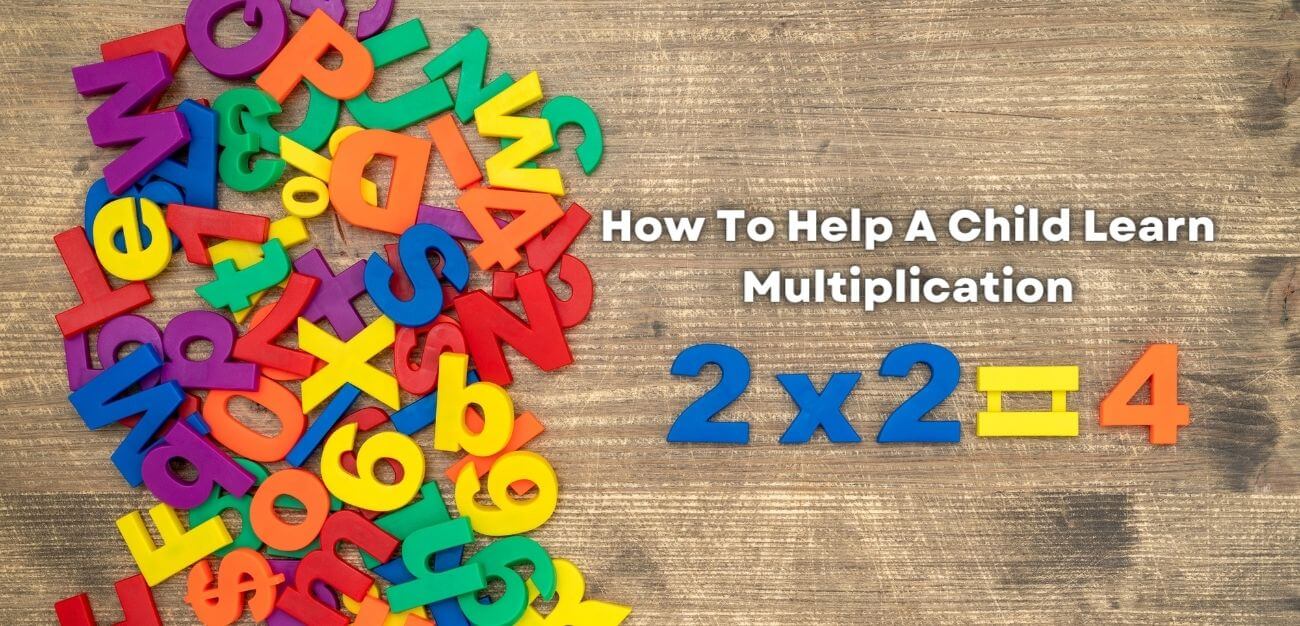
How To Help A Child Learn Multiplication

As a parent, it’s natural to worry about your child’s academic progress, especially when it comes to learning essential skills like multiplication. You want to ensure that they are learning and mastering essential skills that will prove useful throughout their life. However, knowing how to help your child if you notice they are struggling with this crucial subject can be challenging. But, with the right guidance and resources, you can assist your child in becoming proficient at multiplication, giving them the foundation for success in their future academic endeavours.

Today we will go through some effective and engaging techniques to help your child master multiplication with confidence. We will also discuss how math tutoring may be an effective way for your child to fill in any gaps in learning

By understanding how to approach multiplication in a way that suits your child’s learning style and interests, you can make math more enjoyable and less intimidating. There are various strategies that can help your child learn multiplication, including: 

  1. Skip counting
  2. Visual aids
  3. Multiplication games
  4. Real-life situations
  5. Math tutoring

Teaching multiplication to a child can be daunting, but breaking it down into easy-to-understand steps can make the process much more manageable. By following some easy steps, your child can start to grasp the concept of multiplication without feeling overwhelmed. 

Let’s delve into these methods and explore how you can effectively implement them to help your child succeed in their multiplication journey.

How To Use Skip Counting To Help Your Child Learn Multiplication

One of the most effective ways to help your child learn multiplication is by introducing them to the concept of skip counting. Skip counting is simply the process of counting forward by a specific number instead of counting one by one. In this section, we’ll explore how you can use skip counting to make learning multiplication a breeze for your little one. 

Start by familiarizing your child with the concept of skip counting. For instance, if they are learning to multiply by 2’s, have them practice counting by 2’s (2, 4, 6, 8, 10, etc.). Once they’ve grasped the idea, gradually increase the difficulty by introducing higher numbers for skip counting. For example, counting by 3’s, 4’s, or 5’s. Encourage them to practice regularly and offer praise for their efforts. This will help build their confidence and motivation. 

Connecting Skip Counting to Multiplication 

Once your child is comfortable with skip counting, it’s time to connect the dots and help them understand the relationship between skip counting and multiplication. Use real-life examples or simple illustrations to explain how multiplication is essentially repeated addition and how skip counting is a shortcut to adding the same number repeatedly. 

Show them how, for example, skip counting by 3’s (3, 6, 9, 12) is the same as multiplying 3×1, 3×2, 3×3, and 3×4. By making this connection, your child will gain a deeper understanding of multiplication and be better equipped to tackle more complex math problems confidently. 

Teaching your child multiplication through skip counting is an engaging and effective method. By incorporating fun activities and gradually increasing the difficulty, you’ll help your child build a solid foundation in multiplication, setting them up for success in their math journey. 

Using visual aids to help your child grasp multiplication concepts

Visual aids can be a game-changer when helping your child learn multiplication. They provide a concrete representation of abstract concepts, making it easier for young minds to grasp. Let’s explore various visual aids and how to use them effectively. 

  1. Multiplication chart 

A multiplication chart is an excellent visual tool for children to see the relationship between numbers. You can either purchase a chart or create one together with your child. Encourage them to refer to the chart when solving multiplication problems and, as they become more confident, challenge them to fill in the blanks from memory. 

  1. Arrays and grids 

Arrays are arrangements of objects in rows and columns that represent a multiplication problem. For example, a 3×4 array has three rows and four columns, totalling 12 objects. You can use everyday items like buttons and coins or even draw grids on paper. This method helps children visualize the process and understand the concept of repeated addition. 

  1. Number lines 

Number lines are another helpful visual aid for teaching multiplication. Start by drawing a number line on a piece of paper and have your child place markers at equal intervals to represent the multiplication problem. For example, if they’re solving 4×3, they would place markers at 4, 8, and 12. This technique reinforces the idea that multiplication is a series of additions. 

Incorporating visual aids into your child’s learning process can significantly affect their understanding of multiplication. By using tools like multiplication charts, arrays, and number lines, your child will be better equipped to tackle math problems and build a strong foundation in this essential skill.

How Playing Board Games Can Help Your Child Learn Multiplication

Playing board games is one of the most engaging and enjoyable ways for your child to learn multiplication. Board games make learning fun and interactive and provide an opportunity for parents to bond with their children while teaching them important math skills. 

First and foremost, choosing the right board games that focus on multiplication or contain elements that teach multiplication concepts is essential. While playing these board games, it’s important to encourage your child to think critically and solve multiplication problems independently. You can also use these opportunities to demonstrate and explain different multiplication strategies, such as repeated addition, skip counting or using a times table. This will help your child better understand the concepts and build their confidence in solving multiplication problems. 

Additionally, you can create your own multiplication board games using materials you have at home. For example, you can make a simple board game using a sheet of paper and a deck of playing cards. Write multiplication problems on the cards, and have your child move their game piece along the board according to the answers they get. This way, you can customize the game to your child’s needs and interests, making learning multiplication even more enjoyable. 

Playing board games with your child can be an effective and engaging way to help them learn multiplication. By choosing the right games, encouraging critical thinking, and demonstrating various multiplication strategies, you can support your child in their math journey and make learning fun. So, break out the board games and enjoy some quality time with your child while helping them master multiplication!

Incorporating multiplication into everyday activities

One of the most effective ways to teach multiplication to children is by integrating it into their everyday life activities. This helps them grasp the concept better and makes learning fun and engaging. There are various ways to incorporate learning in daily life, but there are a couple of instances where multiplication can be heavily used.  

  1. Cooking and Baking 

Involve your child in cooking and baking activities where they can practice multiplication. For example, ask them to measure ingredients, such as doubling a recipe or figuring out how many cups of flour are needed for multiple batches of cookies. This hands-on experience will make multiplication more relatable and enjoyable for them. 

  1. Grocery Shopping 

Turn your grocery shopping trips into a multiplication lesson. Ask your child to calculate the total cost of items when buying multiples, like three boxes of cereal or four cans of soup. You can also have them figure out the price per unit by dividing the total cost by the number of items. This real-life application will help them understand the practical use of multiplication. 

Incorporating learning multiplication into everyday life activities helps children understand the concept and allows them to see its relevance in their daily lives. By making it a part of their routine, you can ensure that your child becomes more confident and comfortable with multiplication, leading to a stronger foundation in math. 

How Math Tutoring Can Help Your Child Learn Multiplication

One of the most effective ways to help a child struggling with multiplication is through math tutoring. A tutor can provide personalized attention, tailored lesson plans, and the encouragement your child needs to feel confident in their math abilities. 

At Dropkick Math Academy, we make math tutoring fun and engaging through game-based learning. As an alternative to traditional math tutoring, our programs are centred around the four pillars of math (number sense, operational sense, algebraic reasoning, and proportional reasoning). By mastering these four fundamental concepts,  students will be able to solve any problem they encounter in math. In addition, the four pillars of math provide a strong foundation for students to build upon as they move on to more advanced concepts.

Teaching Techniques and Strategies 

Our math tutors at Dropkick Math Academy are experienced professionals with a wealth of teaching techniques and strategies. As certified Ontario teachers, they can introduce your child to different methods of multiplication, such as skip counting, repeated addition, and lattice multiplication. By presenting a variety of approaches, your child is more likely to find one that resonates with their learning style. 

Boosting Confidence and Motivation 

Children who struggle with math often experience a drop in their confidence and motivation. However, our math tutors can help turn this around by celebrating small victories, providing positive reinforcement, and setting achievable goals. As your child starts to see progress in their multiplication skills, their self-esteem and enthusiasm for learning will grow. 

Math tutoring can be an invaluable resource for a child who is struggling with multiplication. It offers a personalized learning experience, a wide array of teaching techniques, and the support needed to boost confidence and motivation. Consider investing in a math tutor to help your child achieve success in this fundamental mathematical skill.

Becoming A Multiplication Master

As adults, we rely on multiplication skills in daily life, from calculating the cost of groceries to figuring out the tip for a restaurant bill. However, helping a child learn multiplication can seem like a daunting task. The good news is that there are many ways to teach this important skill that don’t have to involve tears and frustration. By incorporating visuals, such as multiplication tables or diagrams, along with board games that help cement multiplication facts, children can begin to see the patterns and relationships in the numbers. Real-life examples, like using multiplication to determine how many pieces of candy to divide among friends, can also make the concept more tangible. And if your child continues to struggle, don’t despair – math tutoring can provide additional support and help fill in any gaps in understanding. With patience and creative teaching methods, your child can become a multiplication master in no time.

Learn more about our math tutoring programs today!

How To Speak With Your Child About Their Report Card

As the school year comes to a close, parents and students alike can’t help but anticipate the dreaded report card. While report cards often indicate progress in each subject, it is understandable to worry about how well your child may have performed in certain areas. Math, in particular, is a subject that can make both parents and students nervous. 

Having conversations about grades can be tricky — too much pressure can cause stress and turn learning into something they dread, but not enough guidance and support might not inspire them to do better the next time. 

Remember that report cards are meant to inform and help students improve, not discourage or demotivate them. Use this time to talk with your child about areas that may need more attention and work towards improvement together. If your child seems to be struggling, this may be a perfect time to look into math tutoring. 

Have A Meaningful Discussion

Here we’ll discuss some effective ways you can have meaningful discussions with your child on how to improve their grades without feeling frustrated or overwhelmed.

1. Start the conversation by expressing your love and support for them

As parents, it can be nerve-wracking to sit down with our children and discuss their report cards. We want them to feel loved and supported in everything they do, especially when it comes to their academic performance. It’s important to start off the conversation with uplifting, positive vibes. 

Telling them how proud you are of them and their hard work can go a long way in helping them feel more at ease. When a child feels loved and supported, they may be more open to discussing their grades and any areas where they need improvement. So, take a deep breath, gather your words, and remember that this conversation is all about showing your child your unwavering love and support.

2. Avoid criticism and negative language

When it comes to discussing your child’s report card, it’s essential to choose your words carefully. Using negative language could undermine your child’s confidence and demotivate them. Instead, focus on the positive aspects of their performance and identify areas where they can improve. 

Try to steer clear of criticism or judgmental language – this will only serve to discourage your child and make them less likely to strive for success. Being constructive with your feedback and noting how they can improve sets the tone for your child’s hopeful and tenacious mindset. Using positive and encouraging language during this time can set them on the path to success and motivate them to look to the future.

3. Encourage your child to share their thoughts

When report cards roll around, it’s natural to want to know how our children are feeling about their grades. Instead of jumping straight into discussing the report card, it’s important to start by asking your child how they feel about it. This allows them to share their thoughts and feelings on their academic performance with you and helps them feel heard and validated. 

This approach allows parents to gain valuable insight into their child’s mindset and create a space for open and honest communication about their academic journey. So, next time report cards are handed out, remember to start the conversation with how your child is feeling – it may just make all the difference.

4. Identify areas of improvement together

After your child has shared their thoughts, it’s time to work together to identify areas where they can improve. This can be challenging, but it’s important to involve your child every step of the way. By asking them what they think they could do differently and offering suggestions if needed, you enable them to take ownership of their academic performance. And ultimately, that’s the key to success.

5. Set realistic goals

Once you’ve pinpointed the areas needing work, setting realistic goals with your child is crucial. These goals should be specific and achievable, allowing your child to see their progress. Writing these goals down is also helpful, giving you a clear way to track their progress over time. Celebrating any milestones along the way can make a big difference in keeping your child motivated to continue the hard work. Remember, taking the time to identify areas of improvement and creating realistic goals will ultimately lead to success for your child.

6. Provide resources and support

Every student deserves a chance to succeed in their academic pursuits, but some may need a little extra help along the way. If your child is struggling with math or other subjects, it’s essential to provide them with the resources and support they need to thrive. This might mean enrolling them in a math tutoring program, signing them up for after-school programs or simply providing them with additional study materials. Whatever the case may be, it’s important to let your child know that you’re there to support them every step of the way. 

By offering your help and encouragement, you can help your child achieve their academic goals and develop a love of learning that will continue to serve them well throughout their lives.

7. Celebrate progress and success

As a parent, it’s important to recognize and celebrate your child’s progress and success. Whether it’s achieving a goal or improving their grades, acknowledging their hard work and dedication can go a long way in boosting their self-esteem and motivation. By emphasizing the importance of academic success and creating positive associations with it, you’re setting your child up for a lifetime of learning and self-improvement. 

So, next time your child reaches a milestone, take a moment to celebrate with them and let them know how proud you are of their accomplishment. It might seem like a small gesture, but it can significantly impact their confidence and attitude toward education.

It Can Be Challenging

In conclusion, talking to your child about their report card can be challenging, but it can be a positive and empowering experience with the right approach. Remember to express your love and support, avoid negative language, encourage your child to share their thoughts, identify areas of improvement together, set realistic goals, provide resources and support, and celebrate progress and success. Following these tips can help your child achieve academic success and build a positive attitude toward learning.


Is Your Child Left Brained?

As parents, we all want our children to excel and reach their fullest potential. However, knowing how best to support them can be difficult when each child is unique and has different needs. One way you, as a parent, can better understand your child’s strengths is to recognize whether they are predominantly left-brained or right-brained. Learning more about your child’s learning styles and strengths can also help when looking for an online math tutor. 

In this blog post, we’ll provide insight into what makes someone left-brained, the benefits of being left-brained, and ways you can help your child nurture these characteristics in themself for maximum success in academics and beyond. Read on to find out how YOUR CHILD could be naturally gifted with certain traits!

What is Left-Brain Dominance?

The theory of left-brain dominance suggests that left-brained individuals are more analytical, logical, and sequential in their thinking. They tend to be good at math and science, enjoy problem-solving, and prefer structure and routine.

On the other hand, right-brained individuals are thought to be more creative, intuitive, and holistic in their thinking. They tend to be good at visual-spatial tasks, enjoy art and music, and prefer flexibility and spontaneity.

While this theory may seem straightforward, research has shown that it is not accurate to say that people are either left-brained or right-brained. The brain is a complex organ and both hemispheres work together in most tasks. However, some individuals may have a dominant hemisphere depending on their experiences and environment.

How Can You Tell if Your Child is Left-Brained?

Determining whether your child is left-brained or not can be challenging. While there are no definitive tests or assessments, some clues may suggest left-brain dominance. These include:

  • Strong logical thinking skills
  • A preference for math and science over art and music
  • A tendency to follow routines and rules
  • A love for structured activities, such as puzzles and games
  • An interest in problem-solving and critical-thinking exercises

It’s important to note that these traits are not exclusive to left-brain dominance and that every child is unique. As a parent, it’s essential to avoid labelling your child as left-brained or right-brained and instead focus on their individual strengths and interests.

How Can Left-Brain Dominance Impact Your Child?

If your child exhibits left-brain dominance traits, it’s important to understand how this may impact their development and learning. Some potential effects include:

  • Strong analytical and problem-solving skills: Children with left-brain dominance tend to excel in math and science and may enjoy puzzles and logic games. They may also be good at identifying patterns and making connections between different concepts.
  • Difficulty with creative tasks: Left-brained Children may struggle with creative tasks such as art and music. These activities require a more holistic, open-minded approach that may not come naturally to left-brain dominant individuals. It’s important to provide opportunities for creativity and encourage your child to explore different forms of self-expression.
  • A preference for routine and structure: Left-brain dominant children may appreciate routines and structure in their daily lives. However, balancing this with opportunities for flexibility and spontaneity is important to help them develop a well-rounded skill set.
  • Potential for overthinking and perfectionism: Left-brain dominant individuals tend to be analytical and detail-oriented, which can lead to overthinking and perfectionism. It’s crucial to help your child develop strategies to manage stress and anxiety and promote a healthy work-life balance.

How Can You Support Your Left-Brained Child?

As a parent, there are several things you can do to support your left-brained child. These include:

  • Providing opportunities for problem-solving and critical-thinking exercises
  • Encouraging your child to explore different areas of interest, including creative activities
  • Balancing structure and routine with opportunities for flexibility and spontaneity
  • Helping your child develop stress-management strategies and a healthy work-life balance

At the end of the day, it’s important to remember that every child is unique and that brain dominance is just one aspect of their individuality. By focusing on your child’s strengths and interests, you can help them develop a well-rounded skill set that prepares them for success in life.

Finding The Right Online Math Tutor

Finding the right math tutor near you can be overwhelming, especially when you consider your child’s unique learning style. If your child is more right-brained, they may benefit from a tutor who uses visuals and interactive techniques to teach math concepts. On the contrary, if your child is more left-brained, they may excel in a traditional online tutoring program. 

Identifying your child’s learning style can help you choose the right tutor who can provide an effective and engaging learning experience. By understanding your child’s learning style, you can find the perfect match for them and help them excel in their math studies.

Left-Brained Children in Dropkick Math Academy

At Dropkick Math Academy, we understand that every child is unique and learns differently. That’s why we have designed our programs to cater to the needs of both left-brained and right-brained learners. Our teaching methods are carefully structured to ensure that children who tend to think logically and analytically and those who lean towards creativity and intuition are given a chance to achieve their full potential. 

With our innovative approach, we help children enhance their natural talents and improve their weaknesses. At Dropkick Math Academy, we believe every child deserves the chance to excel, and we strive to ensure that our programs make that goal achievable for all learners.

Certified Ontario Teachers

At Dropkick Math Academy, we take pride in our certified Ontario teachers and their expertise in identifying the nuances of right-brained and left-brained learning styles. Rather than relying on one-size-fits-all approaches, our programs emphasize incorporating a range of teaching styles to meet the individual needs of every child. Our teachers understand that not everyone learns in the same way and are experienced in adapting their methods to help children succeed in their studies. Dropkick Math Academy is the right choice for you if you’re looking for a tutoring experience that caters to your child’s unique learning style.

Learn more about our math programs in Toronto and the surrounding areas, and get started with our FREE assessment to see how your child could benefit from our classes. 

3 Ways Parents Can Instill A Growth Mindset In Their Children

As parents, we all want our children to succeed and thrive in life. We want them to have the tools they need to achieve their goals and be resilient when faced with challenges. One of the key ways we can support our children in this journey is by instilling a growth mindset. A growth mindset is the understanding that our abilities and intelligence can be developed through hard work, dedication, and perseverance. 

Building A Strong Foundation

At Dropkick Math Academy, we understand how important it is for children to build a strong foundation in mathematics. That’s why we’ve created an online math tutor service that teaches math skills and instills a growth mindset in our young learners. 

We believe that by teaching children to embrace challenges, take initiative, and persist in the face of obstacles, we can help them become confident and successful math learners. With our expert tutors and engaging personalized lessons, we’re committed to guiding your child toward math mastery and a lifelong love of learning. So why settle for just any math program in Toronto? Trust Dropkick Math Academy to give your child the tools they need to succeed in math and beyond.

An Exciting Challenge

Children who have a growth mindset view learning as an exciting challenge rather than a daunting task. They understand that their abilities and intelligence are not fixed and that they can improve and grow if they put in enough effort. These children are motivated to learn and embrace their mistakes as opportunities for growth. They know that success isn’t always immediate and that setbacks are a natural part of learning. With a growth mindset, these children are equipped with the resilience and determination needed to reach their full potential. By instilling this mindset in our children, we can help them develop the tools they need to succeed and thrive in any situation.

While we are passionate about teaching a growth mindset in our programs at Dropkick Math Academy, we also hope to give parents the information they need to continue it at home. Our programs are designed for children and parents/caregivers to work together while strengthening their confidence in mathematics. 

3 Steps For Growth Mindset

To help foster a growth mindset in your child at home, three easy steps can be taken.

1. Praise Effort And Persistence, Not Just Achievement

As parents, focusing on our children’s achievements and successes can be tempting. We want to celebrate their accomplishments and show them how proud we are of them. However, this can inadvertently send a message that achievement is the most important thing. Instead, we should emphasize the effort and persistence our children demonstrate in working towards their goals.

For example, if your child brings home a good grade on a test, instead of simply saying, “Great job! You’re so smart!” try saying something like, “I’m so proud of you for working so hard on this test. You put in the time and effort to study, and it paid off.” By praising your child’s effort and persistence, you are helping them to understand that hard work and dedication are the keys to success.

2. Encourage Your Children To Embrace Challenges

It can be easy for children to become discouraged when faced with challenges or obstacles. However, challenges are an important part of the learning and growth process. As parents, we can help our children see challenges as opportunities for growth and learning.

One way to encourage this mindset is by modelling it ourselves. Share stories with your children about times when you faced challenges and how you persevered. Emphasize that mistakes and setbacks are a natural part of the learning process and that it’s important to keep trying even when things get tough.

Another way to encourage your children to embrace challenges is by helping them set goals that are just beyond their current abilities. For example, if your child struggles with fractions, set a goal to work on learning them together over the course of a month. Encourage your child to tackle each question, even if it’s difficult at first, and celebrate their progress along the way.

3. Focus On The Process, Not Just The Outcome

Finally, When parents work with their children to achieve a goal, it’s easy to get caught up in the end result. However, it’s crucial to focus on the process just as much as the outcome. While the end goal is important, it’s the steps along the way that truly build character and develop skills. Helping your child understand and value the process can lead to greater resilience, patience, and determination. Plus, celebrating each small milestone along the way can make the final achievement even sweeter. Whether it’s learning a new skill, completing a project, or reaching a personal milestone, focusing on the process can help set your child up for success both now and in the future.

Developing Crucial Skills

In conclusion, instilling a growth mindset in our children is crucial in helping them develop the skills they need to succeed in life. By praising effort and persistence, encouraging our children to embrace challenges, and focusing on the process rather than just the outcome, we can help our children understand that hard work and dedication are the keys to success. With these tips in mind, we can help our children develop a growth mindset that will serve them well throughout their lives.

At Dropkick Math Academy, we offer online math tutor services that go beyond just helping children with math questions. We focus on the four pillars of math (number sense, operational sense, algebraic reasoning, and proportional reasoning) to help children get to the root of their misunderstanding. 

Our tutors are all Ontario-certified teachers who understand how to help children overcome their fear of mathematics and get the confidence they need to succeed. By encouraging parents to learn alongside their children, we believe that children will achieve success and carry their newfound knowledge into the future. 

Before searching online for a “math tutor near me,” check out our programs and see how we can help your child build their confidence and excel in mathematics!

What Is Positive Math Talk?

Mathematics is one of the subjects that has been stereotyped as difficult and uninteresting, which has resulted in a general dislike for it. This notion is so prevalent that North America has turned into a society of people who think it’s cool, hip, and even trendy to hate math. 

Countless students would rather skip school than attend a math class where they will have to learn math operations or equations. However, math is an essential skill that helps individuals in their everyday lives, from simple activities such as counting change to complex problem-solving skills required in various professions. The hate of math, mainly perpetuated by society, can hinder progress both personally and globally. However, with a better understanding of the importance of math, the fear and hatred of this subject can gradually decrease.

The Good News

The good news is that in recent years, there has been a growing emphasis on the importance of having positive conversations with young mathematicians to help counteract the negative feeling towards mathematics. Positive math talk is an approach to teaching mathematics that emphasizes building a positive attitude towards math and problem-solving by using language that encourages students to think positively and be open to trying new things.

By promoting positive math talk, educators and parents can create an environment where children feel comfortable taking risks and asking questions without fear of being judged or punished. Studies have shown that when teachers use more positive statements in their classrooms, students tend to have better attitudes toward math and experience less anxiety about the subject.

How To Speak Positively

As parents or caregivers, we often unintentionally use language around math that can have negative effects on our children’s attitudes toward the subject. Instead of asking if math homework is difficult or if they hate math, reframing our phrasing to focus on growth and effort can be helpful. 

Positive math talk can come in many forms, including open-ended questioning techniques, encouraging productive dialogue between parent/teacher and student, offering praise for successful attempts at problem-solving, and providing helpful feedback when mistakes are made. 

Asking how a child approached a problem or what strategies they used can encourage a growth mindset, where challenges are seen as opportunities to learn and improve. Using phrases like “math is fun” and “you can do this” can foster a positive attitude towards math and set our children up for success. 

Some easy examples of positive math talk to start with are:

Instead of: I was never good at math. 
Try: Let’s try to learn this together.

Instead of: You will never use this math in real life.
Try: This math is teaching you good problem-solving skills.

Instead of: I hate math.
Try: This isn’t my favourite topic, but I enjoy a good challenge. 

Instead of: You should be getting this.
Try: Let’s take a break and try again. 

The key point of positive math talk is that its goal is not necessarily to make every student a math genius; rather, it is meant to foster a healthy attitude towards mathematics among all students regardless of skill level or interest in the subject. It seeks to make learning enjoyable so that each individual has something valuable he or she can take away from it. 

Positive math talk also helps create an environment where everyone feels free to discuss different approaches and make mistakes without feeling judged or criticized for doing so. This allows for creativity and experimentation, ultimately leading to more meaningful learning experiences.

Children Can Pick Up Parent’s Math Anxiety

For many parents, math can be a touchy subject that brings up feelings of anxiety and stress. However, it’s important to remember that our children often pick up on these emotions and can develop their own negative attitudes toward math. It’s crucial to take deliberate steps to prevent this from happening. 

Whether it’s finding a math tutoring company or attending parent-teacher conferences, investing in our children’s math education can help break the cycle of anxiety and make math a more positive experience for all.

At Dropkick Math Academy, we provide a unique environment for parents to participate actively in their child’s learning experience and encourage them to learn together. 

As a parent, being involved in the learning process helps create a more meaningful experience for your child and encourages them to take ownership of their education. Dropkick Math Academy gives parents the resources to join in along and support their children during the classes and monitor progress throughout the program.

Education experts have found that parental involvement leads to higher grades, improved behaviour in school, and greater education aspirations for the child. Additionally, parents play a crucial role in instilling essential values like hard work, determination, and self-discipline. We also help parents use positive math talk so they can ensure they are not passing on any math anxiety they may have. 

Be Mindful Of The Words Used

By utilizing positive conversations with young mathematicians, educators and parents can help create an environment where everyone feels comfortable attempting challenging problems without fear of failure or negative consequences associated with making mistakes. 

While some degree of structure must still be maintained within this context, such as ensuring accuracy during problem-solving tasks and following directions from the teacher carefully – focusing on building strong relationships through positive interaction provides real advantages when helping children learn mathematics effectively.

At Dropkick Math, we provide programs for students in grades 4 – 9, including all abilities. Our instructors are passionate about making math fun and assisting students in understanding the importance of this subject. Contact us today to learn more about how we can help your child succeed in math with our math learning techniques. 

How Parents Can Help To Reduce Homework Stress

Are you a parent who is concerned about your child’s level of homework stress? It can be difficult for kids to stay motivated when it comes to completing school work, and this can lead to avoidance tactics that create additional stress. Fortunately, there are some simple steps parents can take to help their children manage the anxiety that comes with staying on top of their academic obligations. This blog post will explore tips for reducing homework stress and creating a positive learning environment. 

By being proactive in helping your child understand the importance of doing their homework and providing them with necessary guidance, you can give them an advantage as they tackle projects in class, at home and in their math tutoring sessions.

Your Child’s Workload

As a parent, it is important to be aware of your child’s academic workload to better understand their struggles and frustrations with homework. Familiarizing yourself with the syllabus and testing requirements can give you insight into what your child is expected to learn and the pace at which they are expected to learn it. This information can help you support your child in a more effective and targeted way. 

Additionally, a better understanding of your child’s workload can help you communicate with their teachers and identify areas where your child may need additional support. By gathering this information, you are setting yourself and your child up for success in the long run.

Setting Up A Workspace

Another important step is setting up a comfortable workspace for your child where they can focus on their studies without disruptions or distractions. Consider furnishing this area with notebooks, pens, highlighters and whatever else your child may need for studying. 

It is also wise for parents to limit computer or mobile phone use when children need to focus on homework to minimize digital distractions.

Creating a dedicated workspace for your child can be incredibly helpful in increasing their concentration and reducing frustration. Providing them with a space designated solely for their work gives them a sense of ownership and control over their educational experience. 

It is also essential to involve your child in the set-up process, allowing them to add personal touches and truly make the space their own. This not only helps them feel even more invested in their learning, but it also promotes creativity and individuality. So, whether it’s a small corner of their bedroom or a separate room entirely, a dedicated workspace can do wonders for your child’s productivity and overall satisfaction with their schoolwork.

Breaking Down Tasks

If your child is frustrated with their homework, it may help them break it down into smaller chunks. For example, if there’s an assignment due in two weeks, then break down the project into smaller goals, like outlining today, researching tomorrow and so on, until it’s ready to be submitted at the end of the two-week period. 

Breaking projects down into more manageable steps will help keep your children motivated and on track with their studies since they won’t have to feel overwhelmed by one massive task looming over them all day.

Encourage Healthy Habits

Encouraging healthy habits such as light exercise or meditation before doing their work can also encourage positive physical and mental states, which aid concentration while working on complex assignments or topics that don’t come easily. 

Allowing breaks throughout these sessions helps clear away any built-up tension and refreshes the mind. Adding slight changes in playground activity or going outside for fresh air are both excellent options here.

Acknowledge Small Steps

Acknowledging small successes is crucial regardless of whether completing a chapter faster than anticipated or having all questions answered correctly during tests. Praising kids along the way shows that parents believed in them even when things got tough, encouraging further motivation towards future challenges, no matter how big or small they may seem initially!

Offer Math Tutoring

Mathematics has long been recognized as one of the more challenging subjects that students can encounter, with its many numbers and calculations causing a lot of frustration and anxiety. The situation worsens when students are left to their own devices to solve complex math problems. 

Fortunately, math tutoring is an excellent way to help bridge that gap between students and math. By helping break down complex math operations and concepts, a tutor can build students’ confidence and skill levels, ensuring they’re better equipped to tackle math challenges independently. Ultimately, this can lead to increased understanding and a better appreciation for math as a whole. 

Offering Helpful Guidance

It’s quite normal for kids to run into difficulty trying out certain concepts during their studies. However, with these simple tips, parents can provide helpful guidance. Additionally, regular check-ins with teachers could be beneficial by finding out about overall grades or specific areas requiring extra focus from home.

Helping children manage heavy workloads isn’t easy, but there are several strategies parents can implement in order to lessen stress levels associated with schoolwork while also keeping kids motivated all year round!

How Dropkick Math Academy Can Help

Math can be a challenging subject for many students, but with Dropkick Math Academy, your child can receive the extra support they need to succeed. Our specialized programs are designed to approach math tutoring in a unique and effective way. We believe in creating a fun and engaging learning environment where your child can build their confidence in math and improve their skills. 

At Dropkick Math Academy, we understand that each child learns differently, which is why we use varied approaches in our math help services to meet the individual learning needs of each student. So if your child is struggling with math, let us help them unlock their full potential and excel in the subject!

Click to learn more about our programs and get your child’s FREE assessment today!

Decoding The Language Of Mathematics

Mathematics is often seen as a subject surrounded by mystery and complexity, with its own set of rules that are hard to understand. Parents and children alike often shy away from math because they don’t understand the language used. 

But what if we could crack the code and decode mathematical language? Let’s explore how understanding the language of mathematics can help make parents more informed during homework sessions with their child, help children think more critically, and help both parents and children become better problem-solvers.

Breaking Down The Basics

A strong grasp of vocabulary is essential in comprehending material in various subjects, especially in mathematics. Mathematical concepts are often presented through specialized vocabularies, such as integers, fractions, and geometric shapes. 

Without understanding these terms, students may struggle to comprehend equations and problem-solving techniques. By building a strong foundation of mathematical vocabulary, students can improve their overall comprehension and confidence in the subject. In turn, this can lead to better problem-solving skills and success in future math courses.

To decode the language of math, it’s important to start from the basics – develop an understanding of basic operations like addition, subtraction, division, multiplication and algebra. Once your child has a good grasp on these concepts, they can move on to calculus or other complex areas such as geometry, trigonometry and statistics. Having a firm foundation in math allows for a greater ability to interpret information quickly and accurately – something incredibly useful in everyday life!

As a parent, you want your child to have a strong foundation in mathematics. Understanding the language of math is crucial, but it is just the beginning. The symbols used in mathematics are also important for your child to comprehend. These symbols, such as +, -, x, ÷, and =, are the building blocks of mathematical equations. Your child may struggle to solve even the simplest problems without understanding the symbols. 

By teaching your child the language of math and the symbols used, you are setting them up for success in their future mathematical endeavours. So the next time your child comes home from school with a math worksheet, take the time to review the symbols with them. It could make all the difference in their understanding and love for math.

Of course, it is vital for parents also to understand the language of mathematics so they can help their child succeed in school. If your child comes to you asking for help with homework, it is essential that you know the mathematical language to help them. At Dropkick Math Academy, we involve the parent/guardian to ensure a collective learning experience. 

Thinking Critically About Problems

Math helps children look at problems from different angles; it allows them to go beyond surface-level observations into deeper layers of analysis. Math also teaches children how to think critically about data and analyze it objectively before making decisions. 

With this skill, they can quickly break down complicated problems into their component parts and then apply logical solutions step-by-step until the problem is solved. This process also develops children’s observational skills too!

Additionally, math encourages creativity. Children can create creative ways around tricky tasks by manipulating equations and formulas, just like how artists use colours and shapes when they paint pictures. So, being able to ‘crack’ the language of math means having access to both analytical & creative thinking simultaneously! This is a skill that will allow children to thrive in their future success. 

By understanding that math is the universal language, parents can help their children better understand the world around them. 

Improving Problem-Solving Skills

Deciphering the language of math can give children confidence when tackling difficult situations. It can provide structure and clarity when otherwise there may be chaos – making it easier for them to come up with meaningful answers and solutions that stand strong against criticism from others. 

Understanding mathematics language will not only help children solve problems quickly but also help their resulting solutions be more robust, leading to fewer errors and mistakes

This type of skill is highly sought after by employers today as businesses are always looking for staff members who possess efficient problem-solving capabilities as well as an eye for detail. 

Research shows that when a child understands the language of mathematics, they show improved problem-solving skills. This may be due to increased confidence and a better understanding of what is being asked of them. When children understand the language of math, they can start solving problems quickly and easily. When a child doesn’t understand what they are being asked, it could lead to math anxiety

Mathematical Literacy Is Essential In Our Everyday Lives

In conclusion, understanding the language of mathematics gives children access to analytical and creative thinking capabilities and provides structure when dealing with tough problems where chaos may otherwise reign supreme.

So, mastering the language of math is definitely worth putting time into. After all, mathematical literacy is essential in our everyday lives whether we acknowledge it or not – so why not show your child how to embrace it now?

One of the best ways to get your child interested and learning about mathematical language is by showing them how it is used in everyday life. Start by speaking with them about sales at their favourite stores and mention words such as percentages. Or have a baking day where you use math languages such as measurements and fractions. 

By showing children how math is a universal language used in daily activities, they will be more inclined to engage and be willing to learn more terms. 

How Dropkick Math Can Help Your Child

If your child is struggling with understanding the language of mathematics, Dropkick Math Academy can help! We start with a FREE assessment that allows us to understand where a child is with their learning. From this assessment, we can check on their math language comprehension and understanding of math fundamentals. From this information, we can place the child in an appropriate program where they will gain the confidence and lessons needed to catch up in their math education.  

At Dropkick Math Academy, we believe involving parents/guardians is crucial to a child’s success. So, we encourage all to participate in weekly math tutoring programs where they can create a partnership with their children in learning together. 

For more information about our math tutoring programs, check out our website today!

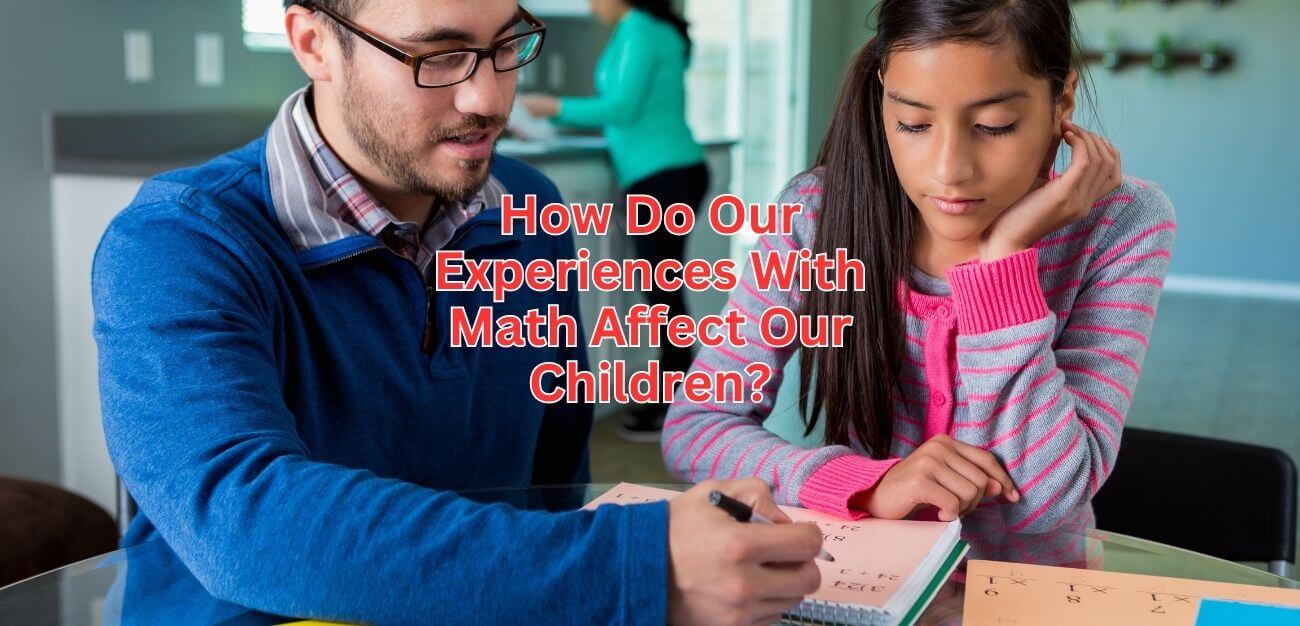
How Do Our Experiences With Math Affect Our Children?

It’s no secret that math is a cornerstone of modern society, but how does our experience with math affect our children? Children learn from their parents and other adults, so it stands to reason that how we relate to math can shape how our children understand and approach the subject.

In today’s post, we’ll explore how our experience with math might impact our children and discuss strategies for promoting a positive attitude towards mathematics within the home. Furthermore, we will take a look at how our math tutoring programs offer an innovative way for parents to learn alongside their children. 

Math Anxiety

Math anxiety is a real and challenging problem for many individuals who have had negative experiences with math in the past. As parents, we don’t often think about how our past experiences could affect our children’s learning, but studies show just how much of an impact it can have. 

While many factors can contribute to math anxiety, one that is often overlooked is a teacher’s engagement level. It’s easy to dismiss a teacher’s behaviour as irrelevant to student success, but studies show that a disengaged teacher can actually cause significant damage to a student’s mindset. 

When a teacher gives off signals that they don’t care about the subject matter or the students, it can lead to a lack of motivation, confusion, and ultimately poor performance. This is particularly true in math, which is already a challenging subject for many students.

Believe it or not, if you had a math teacher in your past that contributed to your math anxiety, it could now be affecting your child’s learning. If you find yourself unmotivated to figure out math concepts or shy away from doing chores that rely on math, such as personal taxes or finances, you are setting a scene for your child to think math may be too difficult for them to learn as well. 

Other than unengaging teachers, math anxiety can also be caused by a lack of resources or simply feeling overwhelmed with complex concepts and not getting the help needed. No matter what led to your math anxiety, it is essential to recognize the impact that math anxiety may have on one’s life and how it may be affecting your child’s relationship with math. 

The Good News

The good news is that math anxiety can be overcome with proper guidance and support, and individuals can develop a newfound confidence in their math abilities. With the right mindset, resources, and practice, anyone can easily become skilled at math and tackle any mathematical problem. This is where Dropkick Math Academy can help! 

Traditionally, math tutoring has been one-on-one sessions or group classes led by a tutor. But at Dropkick Math Academy, we believe learning should be collaborative between parents and children. 

Our approach involves teaching parents how to assist their children in mastering math concepts so that learning becomes a team effort. We provide online resources, including video tutorials and engaging games, to make learning enjoyable and engaging for both parents and children. By working together, we believe that children can achieve academic success, and parents can feel confident in their ability to support their children’s education.

Speaking Of Math…

First, it’s important to remember that when we talk about “math”, we’re talking about much more than just equations or numbers. Math involves problem-solving skills, logical reasoning, creative thinking, and the ability to make connections between different concepts. As such, having a positive attitude towards mathematics can help ensure that kids develop these important skills in a supportive environment.

Keeping in mind that math isn’t all about working out problems on paper, experiencing math can be done throughout our daily lives. By incorporating math learning into daily activities, you can show your child how much math is truly used every day. For example, when going to the grocery store, talk about the prices out loud. Explain discounts on items and have your child help you figure out the best choices of items that may be on sale. 

If you tend to shy away from math concepts and don’t feel that you have the confidence you should have, talking things through with your child may help you understand it more too! Just remember that you use math so much in your daily life that you probably don’t even think about it anymore. 

You use it when checking the change the cashier gives you at the gas station, when figuring out when you need to leave your house to get your kids to hockey on time, and even when whipping up a batch of chocolate chip cookies. Math is around us everywhere, and you use it more than you know!

As parents, we often forget that everything we say or do can have an impact on our children- and that involves how we speak about mathematics. So, next time you encounter a scenario with math, make it a learning experience and talk it through with your child!

Positive Reinforcement

One way to promote enthusiasm for learning math among children is by providing positive reinforcement. You may not have had the positive reinforcement you should have as a child, but it is never too late to start with your child. Whenever they solve a difficult problem or complete an assignment successfully, be sure to recognize their efforts and give them credit for trying. This will help them realize that even though math is sometimes challenging, they can still be successful if they apply themselves. 

Additionally, it’s important not to become frustrated with children if they are struggling with a concept; instead, offer patience and support as they work through more difficult topics. Understanding that mistakes are part of learning ––and nothing to be ashamed of––can go a long way in fostering self-confidence when approaching mathematical problems down the line.

Work On It Together

As parents, we all want to help our children succeed, but when math questions come into the picture, it can feel overwhelming. However, telling your children that you are not good at math is not the answer. Try making an effort to work through it with them. 

This not only shows our support for their learning, but it can also help you brush up on your own math skills. Encourage your child to explain the problem to you, and you can tackle it together. Math may not come naturally to everyone, but with practice and patience, both you and your child can improve.

As we mentioned earlier, our math programs in Toronto and the surrounding area offer an excellent way for you to learn alongside your child. At Dropkick Math, we believe relationships are the primary key to learning success. Our trained instructors offer a fun and engaging way to learn for both parent and child to understand the building blocks of mathematics.  

Show An Interest

Finally, it’s vital that parents show their own interest in mathematics so their kids can do the same! Modelling behaviour such as studying books related to mathematics subjects during spare time or listening attentively during parent-teacher conferences on progress made will demonstrate how seriously you take the importance of mathematical development in your children’s lives, which may encourage them to take more interest as well.

Understanding how our experiences with math shape our children’s attitudes is vital for ensuring lifelong success in this critical subject area. Positive reinforcement and engaging activities centered around mathematics are just two ways parents can foster excitement around mathematics from an early age while helping cultivate core problem-solving skills in preparation for upcoming years. 

Before hitting Google and searching for “math tutor near me,” check out our website and learn how we involve parents in their child’s learning. Our math tutoring programs offer an innovative and engaging way to get parents and children alike excited to learn mathematics!

Unlocking The Power of Mental Math

Are you ready to take your child’s math skills to the next level? Unlocking the power of mental math can give them a competitive edge, allowing them to solve problems quickly and accurately. Mental mathematics improves problem-solving ability and cultivates practical thinking abilities that will serve children in myriad ways throughout their lives. 

Equipping your child with this valuable skill gives them an advantage for success both now and in future years. Keep reading to learn more about how parents can empower learners through mental mathematics!

What Is Mental Math?

Mental math is a type of mental calculation which entails completing mathematical computations using cognitive processes, as opposed to the traditional approach of writing down equations and working them out with pencil and paper. It involves memorizing facts, recalling numerical relationships and understanding the principles behind calculations. In short, it is doing math in your head without using a pencil and paper or a calculator.  

Mental math encompasses simple arithmetic sums, such as addition or subtraction, all the way to problems of more advanced complexity. It includes various mental strategies for finding solutions quickly by employing a variety of mental cues and approaches. People who are proficient at mental math can often do complex mental calculations faster than those who rely on mechanical methods, even though both yield the same result.

How Is Mental Math Used In Everyday Life

While the idea of mental math may cause some to run away in a fit of anxiety, you may be surprised to learn that we use it in everyday life. Anytime math seems scary, it can be helpful to point out how we already use it without even realizing it. 

For example, if your child is anxious about mental math, help them see how they use it daily. Mental math is used in situations such as computing the sale price for an item at a store. Or for working out whether they have enough money to buy something from a store. They also use mental math to ensure they get the correct change from the cashier or even to figure out when they need to leave the house to get to school on time. 

Once children (and some parents!) understand that mental math doesn’t have to be scary, it can help them to understand math concepts better. Practicing mental math regularly can help children improve their number sense. 

To help your child practice their mental math, try giving examples of real-life situations for them to work out without using a pencil, paper, or calculator. For example:

Which is a better deal?

Purchasing a box of 10 packs of gum for $18.00 or buying individual packages for $2.25 each? Help them see that by using mental math, they can quickly estimate that the 10-pack must cost less than $2.00 per package because 10 x 2 = 20. Explain how this is a better deal because, individually, the packages cost more than $2.00.

Getting To The Answer Quickly

Some children may like to hear that mental math can actually get to the answer more quickly. Breaking down numbers into values makes it easier for some children to understand complex equations. 

For example, ask your child:

What is 48 + 66?

Explain to your child that these large numbers may seem daunting at first, but breaking them down can help. It is easier to do in their head if they start by adding 40 + 60 = 100 and then 8 + 6 = 14. They can then add those two numbers together to get the answer of 114. 

With Dropkick Math tutoring, we understand that mental math is an essential skill that needs to be practiced, as repetition is vital. Children need to repeat their multiplication tables and be able to use other data for mathematical computation. 

To learn mental math at home, flashcards can be an excellent learning aid. Brain teasers can also be a clever way to help your child understand how numbers work. Puzzles and riddles such as Sudoku and crosswords can help to improve their mental math ability while providing a fun and engaging activity. 

If all of this is enough to give you, the parent, nightmares, don’t worry. At Dropkick Math Academy, we believe in educating parents and children together. We want parents to learn alongside their children so you are better equipped to help them when they come to you for help with their homework. Working together can help instill confidence and a passion for learning in your child.

Memory Skills Required 

Mental math requires excellent memory skills as math facts and other number concepts must be retrieved from long-term memory. The brain also uses working memory during mental math, which helps keep track of the steps needed to solve a particular problem. 

At this point, you may be wondering why it is important for children to learn mental math since, in this day and age, we all have a calculator handy on our smartphones. Mental math is vital to a child’s development because it helps to stimulate the brain. Math skills exercise the left brain, while mental math can help stimulate the right side. This helps your child grow their creativity. And as an added bonus, as mentioned above, it can also help give their memory a workout. 

Many online activities can help your child practice their mental math skills. Here at Dropkick Math Academy, we teach children mental math strategies for faster calculations. Our virtual programs can engage your child and help to improve their mental math abilities, so they have the foundation needed for future mathematical success. 

If your child is struggling with mental math, it doesn’t mean they are not smart. Children all develop mental math skills at their own pace and may just need more time and practice to catch up. Our certified Ontario teachers understand how children learn and can offer personalized learning thanks to our small class sizes. Our math tutoring programs provide a unique way for students to learn math fundamentals and have fun doing it!

Learn more about our programs and how we use game-based learning to make math fun and engaging for your child. 

Beyond The Classroom: How Math Is Used In The Real World

Most parents consider math a necessary but often unpleasant subject for their children to learn in school. However, mathematics has many applications outside the classroom and is used in everyday life all over the world. In this blog post, we’ll explore how math can be applied to real-world scenarios, helping you show your kids just how applicable (and enjoyable!) learning math can be when it translates into something they care about. 

Whether they’re interested in engineering or fashion design, understanding basic mathematical principles will help them find success both now and in the future! Read on to learn more about why giving your child a broader understanding of mathematics is so important.

Math Can Be Challenging

Mathematics is a subject that many students find challenging and intimidating. Often viewed as an abstract concept that exists only within the confines of a textbook or classroom, math is actually an essential tool used in countless real-world applications.

As parents, many of us remember how hard it was to imagine that we would ever need the algebra equations and geometry formulas drilled into our brains during our school years. We were probably asking ourselves, “when in the world am I ever going to use this?” Little did we know, math permeates our lives, even today! From balancing a budget to ensuring your children get the right amount of candy when they go trick-or-treating with their friends – parents rely on everyday math more often than they realize.

Now that we know how helpful mathematics is in the real world, it is time to teach our children. Knowing the applications of math in the real world can help children understand how crucial it is to learning and to everyday life. Instead of stressing children out over addition and subtraction, explain how many professions use mathematics – engineering, astrophysics, computer science, physics, fashion design, hair stylist, carpenters and even chefs! – in their operations. Then watch the children embrace math!

When children know that the equations of a triangle can be used to build bridges or the movement of planets can be predicted through calculations, they’ll look upon math with new appreciation. This is especially important for older children when deciding what career path to take

Examples Of Math Used In The Real World

We understand it can be challenging to come up with examples of math in the real world when put on the spot by your child, so let’s take a look at some common examples:

Finance

Math has significant applications in finance. Household finances are a great example to show your child. Without proper math education, balancing accounts, estimating expenses, and calculating savings can be difficult.  

Outside of the home, analysts use statistics and probability theory to analyze market trends, evaluate risk, and make investment decisions in the financial world. Actuaries use mathematical models to calculate insurance premiums based on factors such as age, health status, and driving history.

Mathematical tools like calculus are also used in financial modelling to predict future asset values such as stocks or bonds.

Engineering and Technology

Math is also integral to the field of engineering and technology. Engineers use mathematical concepts to design structures, machines, and systems. For example, civil engineers use calculus to design bridges and skyscrapers that can withstand weight and pressure. Electrical engineers use complex numbers to describe electrical circuits and signals. Computer programmers rely on algorithms and logic to create software programs.

Math is also crucial in technological advancements such as artificial intelligence (AI) and machine learning (ML). These fields involve complex mathematical models that enable computers to learn from data sets and make predictions.

Medicine

Math plays an essential role in medicine, helping medical professionals and researchers take on many of their most complex tasks. In medical school, math is taught as part of the curriculum so students can understand basic concepts like frequency and probability while learning more specialized medical knowledge topics. 

For example, math can be used to understand disease progression better, help diagnose illnesses, and optimize treatment protocols. Additionally, math allows researchers to understand how different drugs interact with the body and develop equations to create lifesaving medications. With the application of math increasing across all aspects of the healthcare industry, it’s clear that math is an indispensable part of modern medicine.

Architecture

Architects use geometry extensively when designing buildings. Math helps architects determine construction project angles, lengths, and proportions. They also utilize computer-aided design (CAD) software which requires knowledge of algebraic concepts like matrices.

Sports Analytics

Sports teams have started using analytics more widely over recent years, with mathematicians playing a key role behind the scenes. By analyzing large datasets containing information about players’ performances, teams can identify strategies needed for success. This way, they can optimize player performance by identifying key metrics that lead to wins.

Significant Applications

In conclusion, mathematics has significant applications beyond textbooks or classrooms. From engineering, finance, medicine, and analytics, it plays an integral part in real-world scenarios enabling us to solve complex problems we face every day. 

It’s critical we teach our children to understand its importance beyond academic settings so they can appreciate how mathematics shapes their daily lives. It may also drive them to succeed at math class, knowing they will need it for a future career. So next time your child is faced with a challenging math problem, remind them that it could be their gateway towards understanding something new about an exhilarating career in their future!

Our Programs

At Dropkick Math Academy, we know the importance of teaching children about math in everyday life and in the workplace. Our programs focus on the four pillars of math (number sense, operational sense, proportional reasoning, and algebraic reasoning), which ensure that all students understand the fundamentals of mathematics. Our programs also offer a view of how math is used in the real world. 

So, if your child comes to you asking, “how do we use math outside of school?” you are now equipped with some solid answers. Nothing is worse than a student deciding on their educational path after high school only to learn that they need extra math credit to begin their journey. By understanding how math is used in the real world, they will be better equipped to make decisions when continuing their math education.  

Learn more about our programs today, and start your child on their path to success!