Understanding Relationships Among Operational Sense

Understanding Relationships Among Operational Sense

Understanding Relationships Among Operational Sense

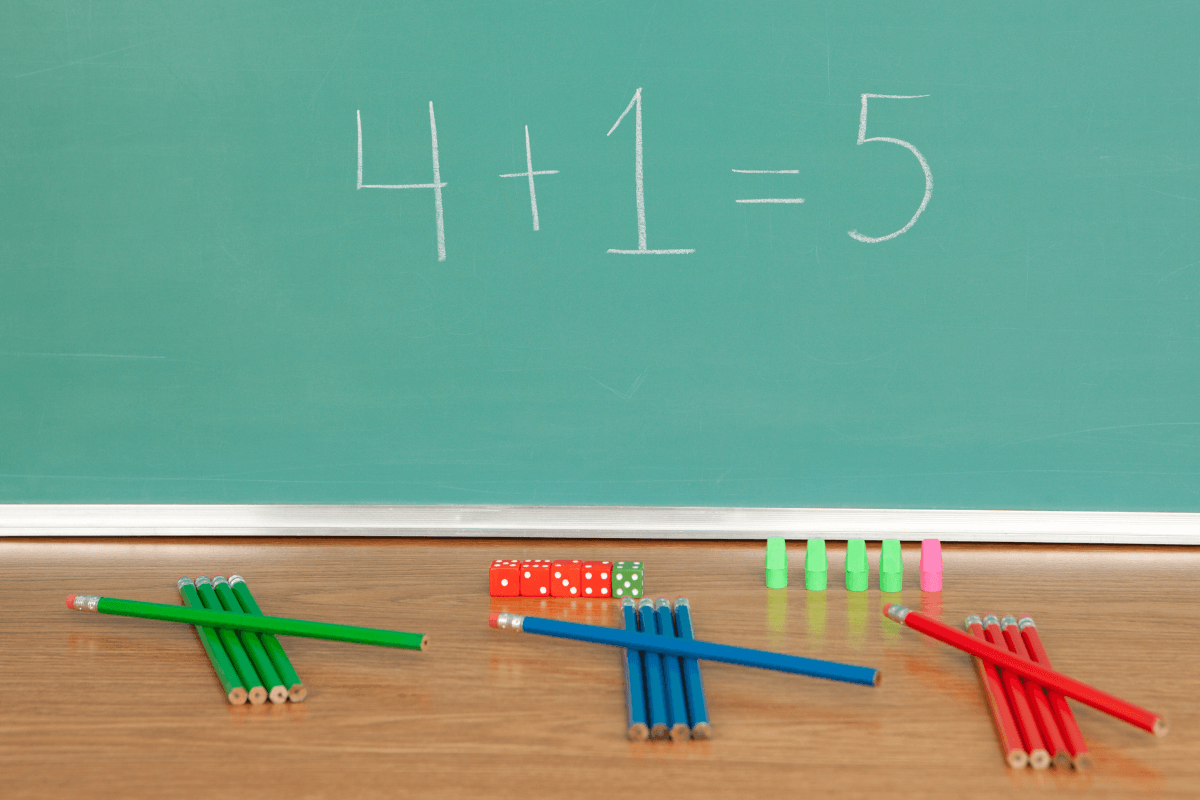
In order for elementary school children to be successful in mathematics, they need to develop operational sense. Operational sense is the ability to understand and use addition, subtraction, multiplication, and division in problem-solving situations. When children can develop a strong understanding of the operations, they can recognize the relationships among them and develop systems for computing numbers. This starts for students in primary grades where they use counting strategies, combining and partitioning numbers to learn addition and subtraction. This blog post will describe operational sense in more detail and provide examples of how it can be learned at home. 

Math Education Has Changed

As a parent and teacher, I understand how parents can become frustrated when their child comes to them for help with their math homework. Chances are, you have never heard of the terms they are using to describe mathematics, and the calculations are completely different compared to when you learned math. While math itself hasn’t changed, the way it is taught to students has. 

By taking a step into the world of mathematics and learning more about the four pillars of math and how your child is being taught, you will be able to help them succeed in their studies. At Dropkick Math, our specialized programs create an environment where both parent and child can better understand the fundamentals, creating a fun and engaging learning environment. 

Operational Sense In Action

Operational sense is a critical part of early mathematics learning. It allows children to make connections between the numbers they are working with and the world around them. It also helps them develop a sense of number relationships and understand how numbers work together. When a student understands the operations and how to perform calculations, they will have an understanding of part-whole relationships. 

To better understand this concept, let’s look at an example of operational sense in action:

  • A child figures out that if they have four toy cars and two friends also have four toy cars, then they have a total of 12 toy cars between the three of them.

I understand that because I know that division can be thought of as “how many times one number fits into another” and I can see that fits into 3 wholes 9 times.

This understanding of relationships is essential for elementary school children because it lays the foundation for more complex mathematical concepts that will be learned in later grades. 

How To Develop Operational Sense At Home

Operational sense can be developed in the classroom and at home through various activities and games that help children understand how numbers work together. Here are a few examples of operational sense activities that can be easily used at home to help children develop a better understanding of operational sense:

  • Use games to provide opportunities for their children to practice their multiplication facts. 
  • Use real-life experiences to ask a child to perform some calculations and encourage them to explain how they calculated it. (e.g. asking a child if they have enough money to pay for something. 
  • Provide children with an opportunity to use measuring cups marked in fractions so they can learn how to combine fractional quantities.  
  • Give children newspaper flyers and challenge them to find various ways to spend a set amount of money, such as $30.

Through operational sense activities, children can develop a strong understanding of the operations and begin to see how they are used in the world around them. These activities will help them to be successful in mathematics as they move into more complex concepts. Operational sense is an important part of early mathematics learning, and through these activities, children can develop a strong foundation on which to build more complex understandings.

Understanding Relationships

At Dropkick Math, we teach students how to approach math concepts and understand their relationships so they can overcome problems more efficiently on their own. As one of the four pillars of math, our programs focus heavily on operational sense. We rely on problem solving and models as key instructional components to help students understand the subject.

If your child struggles with operational sense, don’t just Google “math tutor near me.” We are an alternative to conventional tutors and offer personalized programs designed to help your child conquer his or her unique math problems in a learning environment that is fun and engaging. Our trained instructors will also provide you with the tools to support your child in math moving forward. So, contact us today and learn more about our programs. 

How COVID Changed Your Child’s Math Education

How COVID Changed Your Child’s Math Education

How COVID Changed Your Child's Math Education

It’s now been two years since the pandemic started, and schools made the switch to online learning. For parents, this has meant helping their children with schoolwork from home. And for many, this has brought on new challenges – especially when it comes to math. In this blog post, we’ll explore how COVID has changed your child’s math education and what type of math tutoring you can do to help them at home.

Disrupted Education

It’s no secret that the COVID pandemic has disrupted education in unprecedented ways. According to estimates, students have fallen behind by four to five months on average, and the gap between high- and low-achieving students is widening. 

Math and reading have been the most affected areas of education through the pandemic, and COVID has even changed the way children are learning these subjects. They have been forced to take in more information virtually instead of learning in groups surrounded by their peers. 

Learning Online

With schools closed and parents working remotely, more and more students are using technology for their education. This can be a great opportunity for your child to explore new interests or delve deeper into topics that they are passionate about.

But online learning is not without its challenges. It can be difficult for students to stay focused and motivated in a virtual classroom, and there is a greater risk of distraction from friends or siblings. If your child is enrolled in an online course, be sure to establish rules and expectations for how they will complete their work. 

COVID has also changed the way children learn by social distancing. When students could no longer gather in person, schools started turning to online platforms like Google Hangouts and Zoom to allow for virtual collaboration. While this was an excellent way for your child to stay connected with their classmates, it often means that they are no longer getting one-on-one attention from their teacher. During virtual learning, educators can no longer go over to a student with a hand raised who has asked for help. And forget calling a small group to a back table for extra support. Simply put, without well-developed one-on-one teaching, young children will struggle with basic math concepts. 

Limitations Of Teachers

With the new virtual classrooms, teachers were expected to interact with students at a distance and provide feedback in a virtual world. Many teachers felt frustrated at the technology itself and the change in the learning environment. Unfortunately, it was the students who were suffering the most as the educators tried to navigate the new virtual teaching world.

After the first year of virtual classrooms, some teachers were able to move forward and use tools to help them teach their students. Some used Google Slides as a presentation platform and incorporated the use of virtual manipulatives, the zoom annotation tool, online games, and Google Docs. But, many younger students still found this way of learning exceptionally difficult.

How To Help Your Child

Learning math takes a lot of concentration and trial and error. But when students are trying to learn mathematics virtually, there may be an endless amount of distractions in their home to divert their attention. Many students have been left frustrated over the past couple of years which has caused a great educational gap in math learning.

If you are concerned about your child’s math education, there are a number of steps you can take to help them stay on track. First, be sure to talk to your child’s teacher about their progress. They may be able to provide you with specific resources or guidance on how to help your child succeed. You can also find online math tutoring and programs that are tailored to your child’s needs, such as Dropkick Math Academy. And finally, don’t forget to encourage your child to stay positive and motivated – things could be a lot worse!

If your child is exhibiting signs of falling behind in math, don’t panic, but do take it seriously. There can be any number of reasons why a child might be performing poorly. It could be pandemic related, or it could be that they are having a health issue. Whatever has cropped up, it is important to get them the help they need. 

At Dropkick Math, we understand that COVID has put students in unusual situations, which may have caused a gap in their learning. We offer math programs that focus on the four pillars of math, through fun and engaging programs that can help your child understand math fundamentals. By the end of the program, your child will be able to persevere through challenging math concepts, ask questions for clarification, and learn from valuable mistakes.

Learn more about Dropkick Math’s programs and how they can help your child advance in mathematics.  Contact us today to get started on determining your child’s needs with our free early indicators quiz.

How To Prevent Passing On Your Math Anxiety To Your Child

How To Prevent Passing On Your Math Anxiety To Your Child

How To Prevent Passing On Your Math Anxiety To Your Child

Do you remember how you felt in math class? Were you anxious every time the teacher called on you? Do you cringe when you think about math homework? If so, you aren’t alone. Millions of people feel this way about math. The trick is not to pass these feelings onto your child as they begin to learn mathematics.

Math anxiety can be passed down from generation to generation, starting in first grade. If you feel uncomfortable with math, it may increase your child’s own anxieties and lower their achievement or confidence when they complete a project that requires solving complex equations.

One of the best things that parents can do to help their children is to overcome their own math anxiety. It’s not easy, but it’s worth it! In this blog post, we will discuss some tips for preventing passing math anxiety on to your child.

Understanding Math Anxiety

Parents need to have a general understanding of math anxiety. This will help you be better equipped when it comes time to help your child with their math homework and if they experience math anxiety in the future.

Math anxiety is the feeling of excessive worry or fear that can prevent students from being successful in mathematics. It manifests differently in different students, but some common symptoms include feeling overwhelmed, avoiding math altogether, or feeling like you can’t do math.

For some people, math anxiety is so severe that it interferes with their daily lives. It can cause problems at work and make it difficult to manage finances. In extreme cases, math anxiety can lead to math-related phobias.

Positive Attitude

One of the most important things you can do to help your child is to have a positive attitude toward math yourself. If you express how much you hate math, you could be passing your mindset to your child. Instead, try to engage your child with enjoyable math activities.

Success is achieved by learning together! At Dropkick Math, we understand the importance of parental involvement. Our certified Ontario College of Teachers instructors will help build a parent’s mathematics capacity in our math programs so they can adequately support their child’s journey in elementary math. 

Be Supportive and Encouraging

Another way to prevent math anxiety from passing on to your child is to be supportive and encouraging. If your child struggles with math, offer help and encouragement instead of criticism. It is crucial to let your children know that making mistakes is normal whenever they’re learning something new, no matter how old they are.

When students understand that mistakes are part of the learning process, it can help them to understand that making a mistake is something to embrace rather than avoid. This can eventually lead them to learn that mistakes are not just OK but also expected. This will help build a child’s confidence and allow them to keep trying and help avoid math anxiety.

It can be easy for parents to shy away from their child’s math homework, but this will only frustrate your child even more. Encourage them to try and work through the problems as they were shown in class. If they hit a roadblock, and you are not sure how to figure out the problem, our instructors at Dropkick Math can help!

How You Pass On Your Mindset

Kids are always listening and watching, so you must use the correct language when conversing with your children. You may not even realize how you are showing your math anxiety, but you can be assured that your child is watching whenever you do! It may be something as simple as having a conversation with your spouse about how much tip to add on a bill during a family dinner. You may say something along the lines of “I hate adding a tip! I can never figure out the right amount to give!” This shows your child that math is frustrating even in real life situations.

It is also important to be mindful of how you pass on your mindset. Avoiding math or saying things like “I’m just not a math person” can quickly become a self-fulfilling prophecy for your child. If you don’t feel confident in math, your child will likely pick up on these cues and begin to show signs of math anxiety.

As a parent, you want to be sure that the math skills your child develops will last throughout their lifetime. That’s why it is so essential for them not just to understand but embrace all aspects of this subject from any development level- even if it might seem like an impossible task right now!

A Math Playground

At Dropkick Math, we provide a math playground for children of all ages and abilities. We want to help build your child’s confidence in math, so they can approach any challenge with excitement! Our instructors are passionate about making math fun and assisting students in understanding the importance of this subject. Contact us today to learn more about how we can help your child succeed in math with our math learning techniques. 

Mathematics should be a subject that children enjoy and look forward to, not one that they dread. Let us help you create a positive math environment for your family today!

Recent Posts

Understanding Algebraic Reasoning

Understanding Algebraic Reasoning

Understanding Algebraic Reasoning

Algebraic reasoning focuses on patterns, functions, and the ability to analyze situations with the help of symbols. It involves generalizing, representing, and formalizing patterns and regularity in all aspects of mathematics.

Algebraic reasoning is introduced in the early grades and can help children develop the ability to learn proficiency using equations, functions, and variables. This can be done by assisting them in exploring different concepts through fun, simple, but thought-stimulating activities. It is never too early to begin teaching the foundations of algebraic reasoning for young learners.

How Children Explore Algebra

Much of math, especially algebra, is based on patterns. Younger students can begin looking for patterns all around them as a great introduction to algebraic reasoning. Many teachers like to give students exercises that include manipulatives such as pattern blocks, buttons, keys, and coloured cubes so that students can create patterns on their desks with these materials.

Functions are also a big part of algebra. Younger students start by learning functions with input and output. An excellent way for children to learn about function is with a calculator. Teachers will show students how to turn a simple calculator into a function machine. Students are often asked to program their calculators with a function and see if classmates can guess it by viewing the outputs.

In algebra, x is often used to represent an unknown. Younger students start to work with a symbol (like a box or open square) for a variable (x), and letters representing the variable are introduced in grade 6. Algebraic reasoning becomes easier for many students to understand by making fun and interactive games. For example, students may be given three clues to help figure out the mysterious “x.” x+1=3, x+0=2, and 4-x=2. What is x? (answer: x=2)

In algebraic reasoning, students need to learn that the equal sign means “the same as”  when reading number sentences and later algebraic equations. Younger students often get confused and think that the “=” means “the answer is.” By learning the proper use of the = in algebraic reasoning, students will have a reinforced idea of balancing equations because each side has the same quantity. It can also develop their understanding of equality which is a BIG IDEA in algebraic reasoning.

Algebraic Symbols

Using algebraic symbols is a large part of becoming proficient in applying algebra to solve problems. But, understanding abstract symbolism without a foundation of the operational sense is likely to lead to frustration and failure. Children have a natural love of mathematics at an early age, and it is vital to foster this admiration. Their curiosity is a strong motivator as they try to describe and extend patterns of shapes, sounds, colours, and eventually letters and numbers. Children can begin to make generalizations about patterns that seem to be the same or different, and this kind of categorizing and generalizing is an essential developmental step on the journey towards algebraic thinking.

Recognizing Patterns

Through elementary grades, patterns are not only the subject of study but can also be used as a tool. Students can use patterns to help them recognize numbers as they develop their understanding of mathematics. As they explore and understand addition, subtraction, multiplication, and division, they can look for patterns that help them learn procedures and facts. Patterns in rows and columns of objects or patterns within multiplication tables are interesting to children and can help them discover their facts and understand relationships among facts.

The Development of Algebraic Reasoning

The development of algebraic reasoning is a process, not an event. It is something that can be part of a motivating, positive, and enriching school mathematics experience if appropriately taught. At Dropkick Math, we understand that algebraic reasoning is part of exploring the structure of mathematics. The ability to reason and think proportionately is a critical factor in developing a student’s ability to understand mathematics. However, many students do not seem to grasp any real sense of algebra and often give up understanding it fully.

Due to this education gap, it has been suggested that students be given meaningful experiences in algebraic learning. But before you start thinking, “is there a math tutor near me?” it is essential to understand the way that children learn. Many students struggle with algebraic reasoning and realizing that this may be a result of the way it is being taught to them. With Dropkick Math, we use interactive tools that allow students to learn algebra easily and help them fully understand it as one of the four main pillars of mathematics.

The ability for everyone to enjoy math is why Dropkick Math doesn’t just want to tutor your child. We want to help the family better understand how math works and fill in any educational gaps in learning. Get started today by learning more about our programs and if they are the right fit for your child.

What Are The STEM Majors?

What Are The STEM Majors?

What Are The STEM Majors

When your child looks to their future, what do they see? If they see themselves in a career that requires math and science skills, they will most likely focus on a STEM major in higher education. A STEM major is a field of study in Science, Technology, Engineering, and Math. These programs are designed to give students the skills they need to succeed in high-demand fields. In this blog post, we will discuss math concepts that are important for students who want to pursue a STEM major in university. We will also talk about how our math intervention program can help prepare your child for success!

The Buzz Around STEM

Recently in elementary education, there has been a buzz around science, technology, engineering, and mathematics. It is well known that our country needs to produce students skilled in the STEM fields to fill jobs and continue our country’s tradition of innovation. However, understanding that we need more children to get excited about stem majors and actually growing the number who go into that field are very different matters.

The STEM majors list includes:

  • Astronomy
  • Biology
  • Chemistry
  • Computer science
  • Engineering
  • Earth sciences
  • Health Sciences
  • Information technology
  • Mathematics
  • Physics

There are numerous branches of study within these individual disciplines leading to various career paths. 

Skills Built From An Early Age

Evidence is mounting to show that STEM skills built from early learning can help students to develop the habits and knowledge that will last them a lifetime of understanding and proficiency. Children naturally learn by exploring, asking questions, and discussing their findings, so it is important to encourage STEM learning early in school.

Early childhood education teachers are currently trying innovative new models to include more STEM education in their classrooms. In elementary school, creative teachers have managed to find STEM-related activities so that children can develop their math, science and technology skills.

In early education, children have the gift for exploration and experimentation already in place. When those natural impulses are matched with math concepts, students can gain a solid foundation to help them move forward throughout school. At Dropkick Math, we offer innovative, online, engaging activities and hands-on offline games to guide students’ exploration while building a solid foundation in mathematical skills.

Math Foundation

It is never too early to get your child interested in a chosen career path. But if that career choice includes math and your child struggles with the subject, our program may be able to help. If you have been wondering, “Is there a math tutor near me?” Dropkick Math can offer a solution. Our programs differ from a traditional math tutor in many ways, including providing your child with the foundation of mathematics in a fun and engaging way. 

The Transfer Of Knowledge

Evidence suggests that basic addition and subtraction math concepts can be used to build upon later in education to accomplish more complicated skills. The “transfer of learning” can often help a child understand a different principle. Transfer of learning has been demonstrated repeatedly in early education studies. For example, early understanding of a mathematical skill can set the stage to incorporate that knowledge later as math processes expand into more complex questions. This is one reason why it is important for children to understand the basic principles of math at an early age. Dropkick Math can help students build on these skills at an early age to help with their math comprehension and overall academic performance throughout their learning years.

The Four Pillars Of Math

At Dropkick Math, we offer fun and engaging programs that involve the parent/caregiver while learning the four pillars of math. The four pillars of math include algebraic reasoning, proportional reasoning, operational sense, and number sense. The approach we use provides alternative studies that allow for conceptual understanding. We recognize common areas of difficulty in mathematics that students may have, and provide instructional practices for addressing these areas of difficulty.

Your child will need to excel in mathematics to continue to a STEM major. But we know that a weak pillar can significantly impact future math success. The gap in learning caused by the pandemic has also affected some children in math. So, we have built our programs so that your child gains a conceptual understanding of mathematics and can get caught up with any missed learning caused by COVID. Contact us today to learn more about our programs and how they can help your child stay on track with their education for the future.

What Is Number Sense? A Guide For Parents

What Is Number Sense? A Guide For Parents

What is Number Sense A Guide For Parents

Plain and simple, number sense is a person’s ability to understand, relate, and connect numbers. It is the sense of what numbers mean. 

What value does a number represent? Which number is bigger or smaller? Children with the ability to answer these questions have a firm grasp on number sense. They can perform mental mathematics and look at the world and make comparisons.

Number sense is a group of skills that allows people to work with numbers in math and many other tasks. Students who have a strong understanding of number sense can represent quantities using diagrams and materials explaining how they get the quantity of numbers.They should also be able to decompose and compose number fluently. These children also understand the base 10 relationships in the number system and can compare whole numbers with decimal numbers, considering the value of the numbers. They will be able to visualize and talk about numbers comfortably and solve math problems in their head without the use of a pencil and paper. 

Over the past few decades, teachers have solely concentrated on math facts and calculations, not about the number themselves. However, educators have now found that students may struggle with learning math because they don’t have the underlying foundation of what the numbers really mean. Their lack of understanding of number sense means they do not have the basic foundational skills and will struggle in the future. But, with this new information, teachers are changing the way mathematics is being taught, and focusing more time on mastering number sense and automaticity of facts.

Create A Relationship With Numbers

Number sense is essential for elementary school children because it can promote confidence and encourages flexible thinking. It can allow a child to create a relationship with numbers, so they are able to talk about math concepts as a language.

Strong number sense can help build a foundation for mathematical understanding as one of the four pillars of math. Number sense, especially in the younger grades, can help build the foundation necessary to compute and solve more complex problems as they go into older grades.

In grades 4 to 9, children extend their understanding of whole numbers to rational numbers and are introduced to irrational numbers. Without a solid foundation of this education in early years, students may struggle as math problems become more complex.

Signs At An Early Age

Children who have trouble with number sense often show signs at an early age. Students that struggle with math typically don’t have a good sense of numbers. As one of the foundational concepts that holds them back from becoming fluid in math, children may struggle with basic operations such as addition and multiplication. They can also have trouble with everyday tasks and skills such as handling money, measuring, and judging time.

As children begin to learn math, it is vital for them to improve their skills and practice number sense, so it does not last into adulthood. Unfortunately, the pandemic caused many students to have a loss in learning over the past couple of years. Students in the younger grades have suffered a gap in mathematics as they learn number sense. As one of the four pillars of math, not understanding number sense will leave a child with a weak math pillar and can significantly impact their future math success.

Fundamentals In the Four Pillars

At Dropkick Math, we understand children need to encounter math in everyday life to help develop their fundamentals in the four pillars of math. Our programs focus on number sense, operational sense, algebraic reasoning, and proportional reasoning. Our math help services provide personalized number sense programs while pinpointing their individual math needs. These programs are beneficial to children because they offer an interactive learning service that provides clear goals and measurement tools to keep track of your child’s progress.

Our fun and engaging learning environment creates a math playground that can help your child build on their math skills and gain the confidence they need to excel in mathematics. Learn more about our programs today!

5 Signs Your Child Needs Help In Math

5 Signs Your Child Needs Help In Math

5 Signs Your Child Needs Help In Math

Does your child need help with their math?

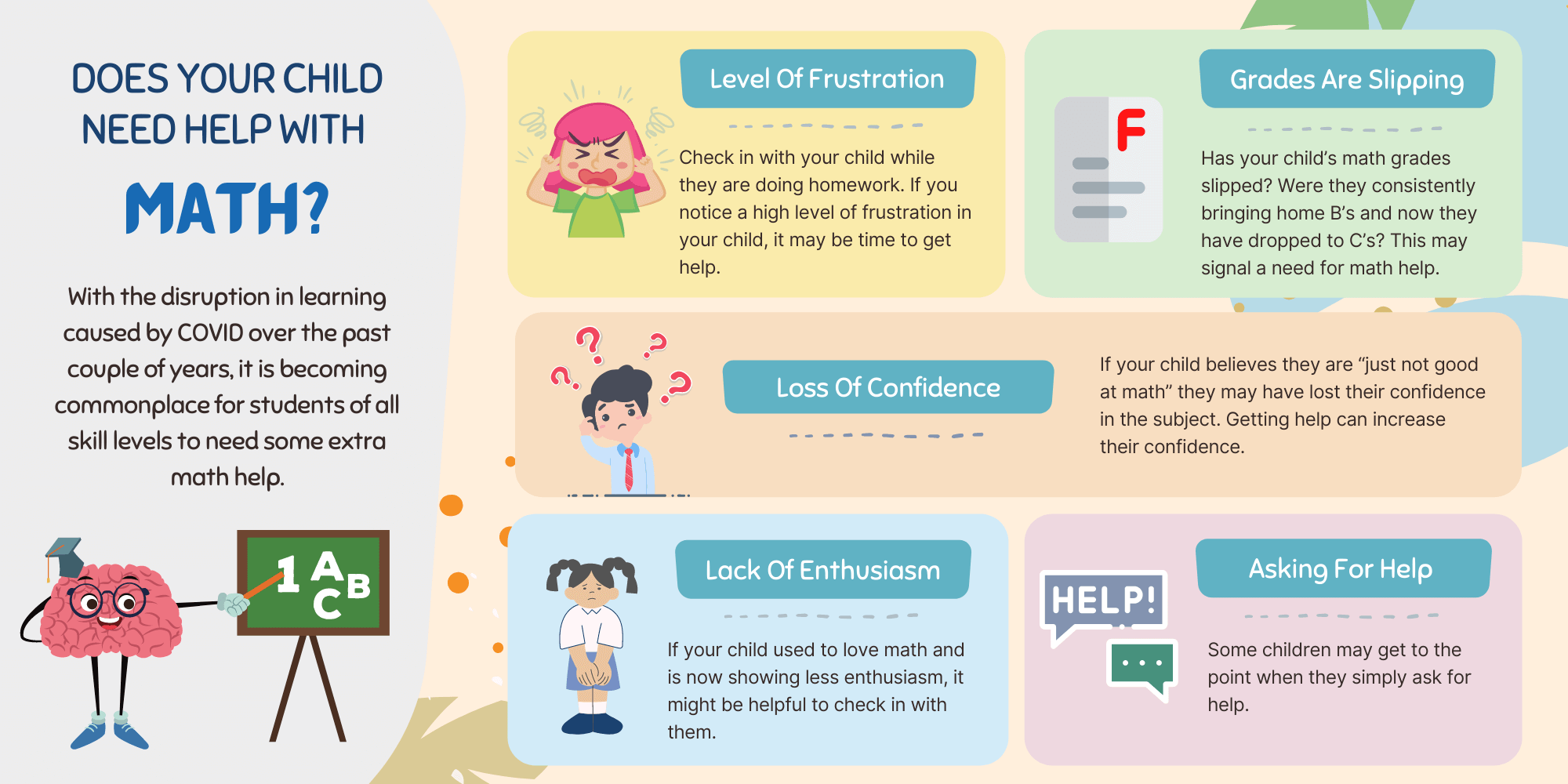
Believe it or not, sometimes it’s difficult to tell. Many parents often believe their child only needs math tutoring if they struggle in school. However, with the disruption in learning caused by COVID over the past couple of years, it is becoming commonplace for students of all skill levels to get math help services.

But, at-home tutors can be costly, and they often only go over immediate concepts that the student is having trouble with. They can help students get through the task at hand, but tutoring only helps in a Band-Aid style format. It doesn’t always allow the student to learn the root of the concept they were initially struggling with and won’t set them up with the skills needed for their future. This is why many students prefer Dropkick Math programs over traditional math tutoring. Our programs address the immediate issues a student may be having and sets them up for future success in learning. 

If a child needs help with their math studies, signs often signal they are struggling. The following are some of the most common warning signs that your child may need some extra help this year. 

Level Of Frustration

Even if your child is able to figure out answers to a math problem, one thing to look out for is their level of frustration when doing their homework. Did it take a long time for them to complete it? Were they vocal in saying they didn’t understand it? If your child’s homework becomes a long, frustrating task, it may be time for help.

Frustration is often a result of your child not having mastered the basic foundations in math. This can cause them to struggle with a topic or lesson as it becomes more challenging. You might find that they understand some of the concepts, but they start facing difficulty when required to perform more advanced skills on their own.

Unfortunately, your child’s math class will move on to the next topic regardless of whether all the students have mastered what is being taught. So, a sign of frustration may mean your child has not comprehended what has been taught in the classroom.

5 Signs Your Child Needs Help In Math

Your Child’s Grades Are Slipping

Your child’s grades can slip without moving to the point of extreme concern. For example, your child may have previously excelled in math, mainly earning A’s on their assignments, but you may start to realize that they have slipped into Bs. It may not seem like too big of a deal as your child may still be excelling in performing better than some of his or her peers. While this may be true, if your child’s grades are slipping, this may mean they’re losing confidence or haven’t fully grasped the concepts being taught.

If your child’s grades are starting to slip, it is essential to act on them before hitting an alarming point. Offering your child math help when they are still making decent grades is far easier than pulling up a failing grade to passing.

Lack Of Enthusiasm

Not every child will be a cheerleader for every subject in school, but if your child once loved mathematics and doesn’t anymore, it may be time to check in with them to see what’s going on. Their loss of enthusiasm for math may mean that they are struggling with the topic they are currently learning in school. It may mean it just isn’t as fun as it used to be to them.

If this is the case, reaching out for help to Dropkick Math may definitely help remedy the problem. Our programs will work with your child to understand the concepts and present the strategies in a fun and engaging way to help inspire their love of math again.

Loss Of Confidence

It may be time to take action if your former math-loving child starts saying things like, “I’m just not good at math.” This loss of confidence may mean that your child is finding the math concepts that are now being taught more confusing.

If your child is showing signs that they are lacking confidence in themselves when learning math, it may be time to look into math help services.

Your Child Asks For Help

Nothing can be more of a warning sign than if your child asks for help. While not every student is straightforward and will ask their parents for a tutor, some may recognize when they need additional help and support.

If your child reaches out to you and expresses that they may need math help, it is important to listen to their requests and open the conversation about why they feel they need the help. This can help you better understand their situation so you can assess how much help they may need and how they may be falling behind in their education.

How We Can Help

Math tutoring and support come in many forms and are no longer limited to hiring a local high school or college student to sit with your child at home or in the library. While that model may work for some, many students are eager for a more interactive and convenient approach that focuses on building relationships.

At Dropkick Math, we offer online Waterloo math services to help your child build solid foundations and improve their math skills and grades. Our programs focus on the four pillars of math and can help your child no matter how much they are struggling.

For more information on our programs or to learn if they are suitable for your child, contact us today.

How A Positive Attitude Towards Mathematics Can Improve Skills

How A Positive Attitude Towards Mathematics Can Improve Skills

How A Positive Attitude Towards Mathematics Can Improve Skills

For the first time, scientists have identified a pathway in the brain that links a positive attitude towards math and achievement in the subject. The study of elementary school students performed by the Stanford University School of Medicine found that having a positive attitude about math was connected to better function of the hippocampus. This part of the brain is an important memory center during the performance of arithmetic problems.

Children’s higher math scores have long been observed in those who show more interest in math and perceive themselves as being better at it. And this study shows that even once IQ and other confounding factors are accounted for, a positive attitude towards math can still predict stronger students’ performance.

Researchers had previously hypothesized that the brain’s reward centers might drive the link between achievement and attitude. The belief was that children with better attitudes were better at math because they found it more motivating or rewarding. But, this new study helps to show precisely how a positive attitude can open the door for children to do well.

From brain imaging results, researchers found that when a child was solving a math problem, their positive attitude scores correlated with activation in the hippocampus. The brain’s activity in the reward center, including the amygdala and the ventral striatum, was not linked to a positive attitude towards math. The brain imaging results suggest that the hippocampus mediates the link between positive attitude and the retrieval effects from memory, which is associated with better problem-solving skills. In short, having a positive attitude can act directly on your memory and learning system.

Foster A Positive Attitude

Fostering a positive attitude towards math can prepare children for academic success from a very young age. Every child can succeed in math with good practice, teaching, encouragement, and motivation.

Parents are children’s first teachers, and their attitude and behaviour towards math can influence their child’s perspective. Parents need to motivate and encourage a positive attitude towards math outside of school starting at a very young age. 

Children need to realize that math is connected to everyday life. Parents can help children by including them in daily activities that require math, such as cooking, keeping track of time, finding symmetry in nature, in comparing prices at the grocery store.

In fostering a positive attitude, it is also essential to teach a child that it is OK to be confused by a problem and all part of learning. Practicing is the first step to building problem-solving resilience in students. Try to encourage your child to experiment with different approaches when solving problems. There is often more than one way to solve a math problem, and teaching them different strategies can help them tackle different types of issues.

Make Learning Fun

At Dropkick Math, we believe that learning should be fun. Repeated math practice can often become tedious and tiring, so give children assignments in chunks and keep them short. Try different ways of practicing, such as digital games, board games, worksheets, and even physically active games. Our programs offer a fun and interactive way of learning the four pillars of math.

Try to make time for games that can enhance mathematical skills such as algebraic reasoning, number sense, proportional reasoning, and operational sense. 

Praise and Rewards

Giving children constructive and honest feedback should be paired with praise and reward for putting in all the effort despite their results. Let the child know how proud you are of them for working hard and show them that you believe in them. Always start with simple problems and move slowly to the more complicated ones while encouraging them to retry challenging problems they failed to solve. This way, their confidence in math increases and any math anxiety may disappear.

Fostering a positive attitude towards math means making every mathematical experience positive. Whether it is homework, practice, or a test, it means supporting and encouraging children, so they stay motivated and feel confident about their mathematical skills. For more information on our programs, contact us today.

How To Easily Apply Mathematics In Everyday Life

How To Easily Apply Mathematics In Everyday Life

How To Easily Apply Mathematics In Everyday Life

If you take a quick look around your home or out on the street, you will quickly come to realize that numbers are everywhere! From the numbers and minutes displayed on a clock to the sequences of numbers on the license plate, there are various opportunities for children to apply their mathematical skills in everyday situations, whatever their age.

Making real-life connections to numbers can help children with their counting, estimating, adding and subtracting skills. Many don’t even realize they’re using math as they count the number of seconds before they hunt for a friend in a game of hide and seek or play hopscotch on numbered squares in the school ground.

There are many opportunities to demonstrate to children how the need to use mathematical skills is all around us. In the supermarket, while cooking dinner, or on the walk to school all offer many chances to speak about math. And with a bit of nudging, it’s also a chance for children to show you what they already know and how they can work problems out by themselves. This can help build the child’s confidence based on what they’ve previously learned.

In The Supermarket

Taking your child to the supermarket can provide a wealth of opportunities to use their mathematical knowledge. Start by looking at price labels, special offers, and ask them to help calculate a discount on reduced items. Show them how to use multiplication to determine the best value when looking at multibuy offers. Involve younger children by using scales and weighing some of their favourite fruits or vegetables. Also, try to use cash to familiarize your child with handling money and calculating change at the checkout. This is a great way for children to start to understand money and budgets, and it can be fun for them to try estimating the value of the final shopping basket at the checkout.

Algebraic reasoning can also be practiced in the supermarket. Although it may seem like a foreign concept to many children, believe it or not, we do use it regularly. For example, you will need to use an algebraic equation to figure out how many hamburgers you would need for a party if you wanted two hamburgers for every adult, one hamburger for every child, and an extra three just in case. 

Cooking At Home

Try cooking with your child at home using simple recipes that utilize several mathematical skills. Choose a recipe such as muffins that produces a larger amount than the number of people in your family. Have children rewrite the recipe by halving amounts or doubling them. Children can also learn to weigh out ingredients to the appropriate amounts and learn how to read varying increments on a weighing scale.

On A Field Trip

No matter if a child is going on a daily walk around the house or a long car journey, they can begin to understand the use of numbers in the world around them and start to develop mental dexterity. For example, ask them to keep count of silver cars and red cars simultaneously, or use a pedometer to record steps on their regular walk to school. Younger children could be asked such questions as “how many shoes are on the shoe rack?” This can help to encourage children to use unique and complex skills such as counting in twos.

While out on a walk, children can also be encouraged to find patterns in nature. Depending on their age, the more complicated the pattern they may be able to find. This can help them develop their skills in geometry. 

Number Sense

To understand math deeply, the brain needs to form connections. So seeing it in real life can help children form these connections between abstract math concepts and real everyday life. When math becomes more relevant for students, they become more interested, engaged and willing to participate. By incorporating mathematics in everyday life, you could help to develop your child’s number sense.

The Ontario mathematics curriculum for grades 1 to 8 states that “In integrated learning, students are provided with opportunities to work towards meeting expectations from two or more subjects within a single unit, lesson or activity. By linking expectations from different subject areas, teachers can provide students with multiple opportunities to reinforce and demonstrate their knowledge and skills in a range of settings. Also, the mathematical process that focuses on connecting encourages students to make connections between mathematics and other subject areas.”

This helps explain why the curriculum focuses less on memorizing facts and equations and focuses more on critical thinking and problem solving about mathematical concepts. Parents can help extend this learning at home by making the connections between a child’s activities and the math concepts.

Career Choices

Some children are focused on the fact that their favourite career doesn’t have anything to do with math. Therefore, they are not motivated or engaged in learning mathematics. So, it is a great idea for these children to get them looking into the courses they will need to take to earn their degree/diploma in that field. Researching the career more to figure out what is actually required in that position often shows students how math can help them get into the career they choose. Once they see the math behind the career, they may be more motivated to excel to go into this profession in the future.

At Dropkick Math, we understand children need to encounter math in everyday life to help develop their fundamentals in the four pillars of math. Our programs focus on algebraic reasons, operational sense, number sense, and proportional reasoning. With a fun and engaging learning environment, your child can build on their math skills and gain the confidence they need to excel in mathematics. Learn more about our programs today!

How Important is Math For A Student’s Future?

How Important is Math For A Student’s Future

How Important is Math For A Student’s Future

Learning math in school can sometimes feel like a chore for many children, especially if they don’t understand when they will ever use it. Many students often wonder, “What is the point of math if you are not interested in a career as a mathematician?” Unfortunately, many educators overlook the importance of explaining the purpose of learning mathematics and how it is needed throughout life while relating it to real-world circumstances. 

There is no denying the importance of mathematics in our daily life. But some students find learning math boring, too abstract, complex, or not creative enough. These reasons all add to why they may shy away from the subject. However, since math is a significant component of education, students need to understand and do well on their assigned work to get to the next grade and eventually graduate. 

But, it isn’t just about getting a student to pass a test. By simply focusing on just getting by in math and passing tests, this surface level knowledge of math may work in the short term, but they will eventually encounter barriers. Your child could be extremely limited on post-secondary program choices and career choices. 

Why Is Math Important?

Many people often wonder, “Why is mathematics important to learn?,” and don’t quite know how to explain it to a child. So, let’s break it down into the many benefits of math. 

Developing Areas Of The Brain

Math is more than just numbers and equations – it has been scientifically proven to help develop specific areas of the brain, leading to improved analytical and reasoning skills. When we engage in mathematical thinking, our brains are forced to form new connections between neurons, which strengthens those connections over time. This process enhances our ability to solve mathematical problems and helps us think critically and logically in other areas of our lives. Overall, learning mathematics is like giving your brain a workout! 

Part Of Everyday Life

Math is an essential part of our everyday lives and can be used to solve practical problems we face. From calculating a sale discount at the grocery store to figuring out the distance between two points, math skills can positively impact our lives. 

Being proficient in math allows us to analyze data, make meaningful decisions, and solve real-world problems effectively. These skills are not only useful in academic settings but can also be applied in everyday situations. With the right math knowledge, one can estimate expenses, understand financial statements, and even determine the best route to take while commuting. 

Math does not have to be complicated; by knowing how to apply basic mathematical concepts to everyday life, anyone can become more practical and reap its many benefits.

Math In Education

Mathematics is an essential subject that holds a crucial place in education. It provides logical thinking, develops problem-solving skills, and lays a foundation for a career in numerous industries. However, in a scholastic sense, math holds a greater significance as it acts as one of the stepping stones into going into a STEM (Science, Technology, Engineering, and Mathematics) major. 

STEM careers are in high demand, and the job market for these sectors rapidly increases yearly. Math contributes significantly to these industries, providing the fundamental knowledge necessary for understanding complex systems and technologies. As such, it has become a mandatory subject in most schools and is something students should consider taking seriously if they want to pursue a career in STEM.

Learning math skills at an early age can create a basic foundation for everything a child learns in the future. Research shows that the development of math skills is a better indicator of future success in reading and math than any other skill. A study from Stanford University recently determined that the brain goes through a physical change as it creates specific connections after repeated practice with math skills. 

Math can help train the mind the same way sport trains the body. Many educators believe that learning the four pillars of math can help students think critically, helping them in their chosen career path. But, if one of those pillars is weak, it could significantly impact their future. 

The Importance Of Mathematics In Education

At Dropkick Math, we understand how important it is for students to have a solid foundation of learning in all four pillars of math. Our programs focus on number sense, operational sense, proportional reasoning and algebraic reasoning

We have worked with educators to recognize common areas of difficulty in mathematics that students have and created programs to address each area. We understand the importance of mathematics for students, so we have created a range of programs that make learning fun!

If your child is asking, “How will math help us in the future?” check out our other blog post, which can help you explain it to them! 

The Building Blocks Of Math

Your child is currently developing the building blocks of all math they will be exposed to in their academic career. But, if all they have is memorized rules and procedures, they will falter at some point. A conceptual understanding of mathematics is crucial for their future. At Dropkick Math, we can help your child better understand the Four Pillars of Mathematics that can build confidence and understanding in math for years to come. 

To help ensure your child is on track, have them take our Early Indicators Quiz to determine any gaps in understanding. If it does seem like a child is experiencing any gaps in learning, we can recommend a program that will target the missing knowledge. 

Learn more about our programs and how they can help your child stay on track with their learning for their future.