Rainy Day? Try These Indoor PE Activities

Rainy days can disrupt outdoor homeschooling activities, especially when it comes to physical education. But staying indoors doesn’t mean skipping physical activity. With a little creativity and planning, you can incorporate fun, simple indoor fitness games for kids into your homeschooling day. These activities promote physical health, improve mental focus, and add a burst of energy to your child’s routine. Here are actionable ideas to keep your kids moving, learning, and entertained when the rain keeps them inside.

Simple Indoor Fitness Games for Kids

Physical activity is important for your child’s overall well-being. It improves motor skills, enhances mood, and even boosts brain function. Here are some easy-to-do fitness games that require little-to-no setup:

  • Freeze Dance
    Play some upbeat music and encourage your kids to dance around the room. Then, randomly stop the music, and challenge them to “freeze” in place. Not only is this game a great way to get moving, but it also helps improve listening skills, coordination, and timing.
  • Indoor Scavenger Hunt
    Create a list of common household items for your kids to find. For added fun, pair each item with a physical task, such as five jumping jacks or hopping on one foot. This combines exercise with problem-solving, keeping both their bodies and minds engaged.
  • Balloon Volleyball
    Blow up a balloon and set a “net” by tying a string between two chairs. Encourage your kids to keep the balloon from touching the ground. This game builds hand-eye coordination and provides plenty of laughs.
  • Obstacle Course
    Use pillows, chairs, and other household items to create a mini obstacle course. Kids can crawl under tables, hop over cushions, or balance along a straight line of tape on the floor. This helps develop strength, agility, and coordination.
  • Egg and Spoon Relay
    Using a plastic spoon and small item like a ball or toy egg, challenge your children to see how quickly they can walk from one end of the room to the other without dropping it. This activity is perfect for improving balance and focus.

These games are simple, engaging, and adaptable for various age groups. They’re the perfect solution for getting your kids to stay active, even on rainy days.

PE Activities Without Equipment

Fitness doesn’t have to involve elaborate setups or expensive gear. Plenty of activities require nothing but space and enthusiasm. Here are some ideas you can easily include in your homeschooling routine:

  • Yoga for Kids
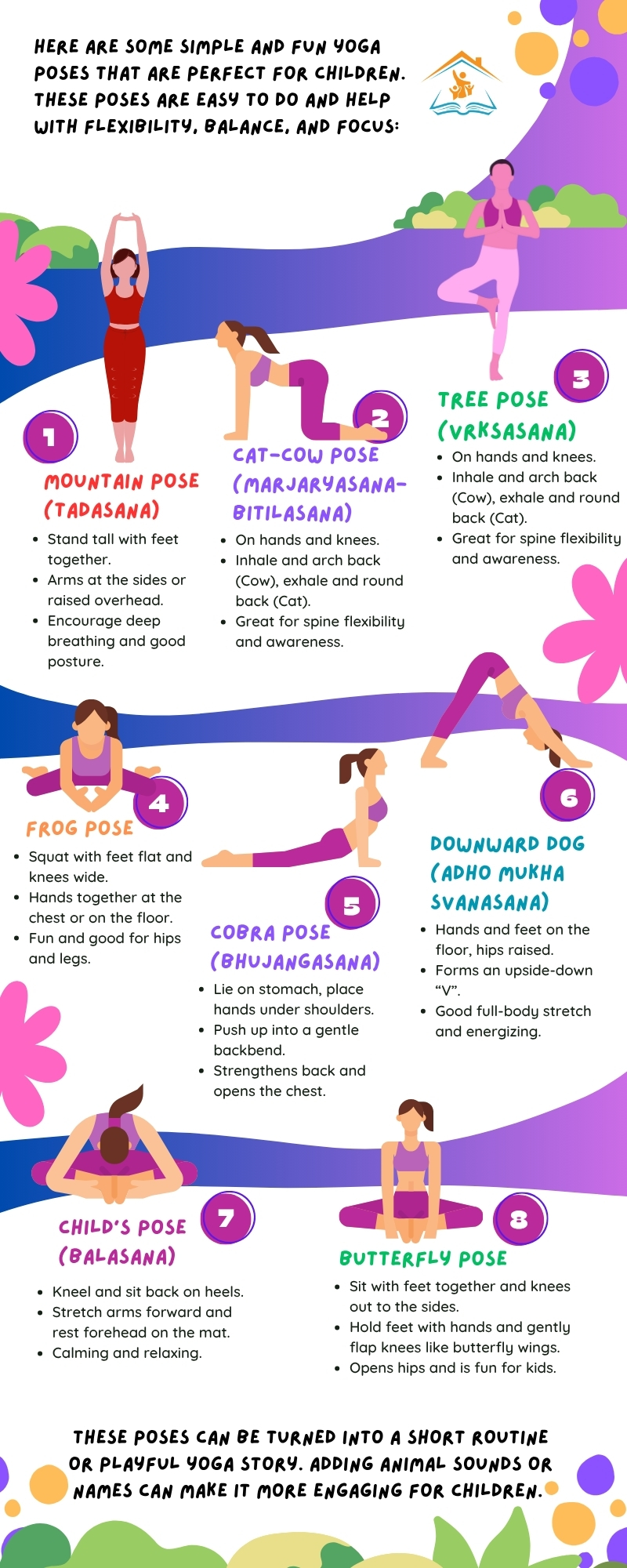
    Yoga improves flexibility, balance, and focus. Try introducing fun, kid-friendly poses like “cat-cow” stretches, “tree pose,” or “downward dog.” Kids can follow along with yoga videos or create their own flow. Yoga can also serve as a calming activity for children who feel cooped up.
  • Bodyweight Exercises
    Simple exercises like push-ups, sit-ups, squats, and planks are great for building strength. Create a mini workout routine your kids can follow, such as 10 squats, 5 push-ups, and 20 seconds of plank. For younger kids, modify these exercises to be easier, like knee push-ups or shorter plank holds.
  • Imaginative Animal Moves
    Ask your children to pretend they are animals. Can they hop like a frog, waddle like a penguin, or crawl like a crab? These activities not only get them moving but also tap into their creativity.
  • Stair Climbing
    If you have a safe staircase at home, encourage your kids to walk or run up and down the stairs. Make it more engaging by turning it into a race or timing how many trips they can complete in a minute.
  • Shadow Boxing
    This is a fun and safe way to burn energy. Have your child pretend they’re “punching” an invisible target, adding in movements such as ducking and lunging to engage their full body.

By focusing on activities that don’t require equipment, you avoid extra costs while keeping physical education hassle-free and accessible.

Creating a Routine and Making It Educational

Establishing a regular fitness routine can help physical education seamlessly fit into your homeschooling schedule. A structured plan not only keeps kids active but also teaches them discipline and responsibility. Follow these steps to create a successful routine:

  • Schedule Consistent Times
    Choose a time each day for physical activity. Early mornings or mid-afternoons are typically when kids have the most energy. A consistent schedule ensures that fitness isn’t overlooked amidst other homeschooling priorities.
  • Introduce Weekly Themes
    Keep things exciting by planning themed activities, such as a “sports day” featuring basketball drills or a “dance-off” day. Weekly themes add variety and maintain your child’s interest.
  • Get Kids Involved in Planning
    Allow your children to help choose activities for their PE time. This increases their sense of ownership and motivates them to participate fully.

Make physical education doubly beneficial by incorporating educational elements:

  • Teach the benefits of exercise, explaining how it strengthens muscles or improves flexibility.
  • Introduce nutrition lessons, and talk about how healthy eating supports physical activity.
  • Integrate math or science concepts into exercises. For example, children could measure their pulse before and after a workout to see how exercise affects heart rate.

Making PE both fun and educational maximizes its value in your homeschooling program.

Woman practicing yoga on a pink mat indoors, performing child's pose for relaxation and flexibility.

Indoor Movement Ideas for Elementary Students

For elementary-aged homeschoolers, activities should balance energy-burning with skill-building. Here are a few ideas to keep this group active:

  • Relay Races
    Set up a simple race around your living room or hallway. Add challenges like balancing a book on their head or running backward. Relay races improve coordination and speed while promoting teamwork if there is more than one participant.
  • Target Practice with Soft Objects
    Use rolled-up socks or small bean bags and set a target like a laundry basket or cardboard box. Kids can practice throwing and hitting the target from different distances and angles. This activity sharpens coordination and spatial awareness.
  • Floor Is Lava
    Create a pathway with cushions or paper, and have the kids jump from one “safe spot” to another without touching the floor. This fun, imaginative game encourages strategic thinking and balance.
  • Simon Says with Fitness Actions
    Play Simon Says but focus on fitness-related actions. For example, “Simon says do five jumping jacks” or “Simon says spin around twice.” This version helps build listening skills and reinforces physical activity.

Adapting for Varied Age Groups

Tailoring activities to different age groups ensures all your children are included and engaged.

  • For Younger Kids
    Simplify activities like obstacle courses or games of tag to accommodate their motor skill development. The focus should be on basic movements like hopping, skipping, and crawling.
  • For Elementary-Aged Kids
    Introduce more structured activities like fitness challenges, relay races, and problem-solving games that stimulate physical and cognitive skills.
  • For Older Kids and Teens
    Offer independent activities like yoga or personal fitness challenges. Encourage them to set goals, track progress, and explore exercises that match their interests, such as dance or strength training.

Adjusting the difficulty and structure of indoor PE activities allows you to cater to the needs of a variety of ages while keeping everyone engaged.

Keeping It Fresh with Variety

To maintain enthusiasm for indoor PE, vary the activities you offer. Variety prevents boredom and ensures children develop a well-rounded set of physical skills.

  • Combine strength, flexibility, and cardio exercises in your weekly routine. For example, alternate between dynamic activities like scavenger hunts and calming ones like yoga.
  • Introduce “themed days” to foster creativity. These could include a superhero workout where kids imagine carrying “heavy” objects or a jungle adventure involving “wild animal” movement.
  • Rotate games weekly to avoid overuse. Activities like “Freeze Dance” might be a favorite one week, while obstacle courses may captivate more attention the next.

Changing things up helps keep every session fresh, fun, and engaging for your kids.

Rainy days are an excellent chance to explore creative, simple indoor fitness games for kids. By incorporating movement into your homeschooling plan, you’re supporting their physical health, sharpening their focus, and adding a spark of fun to their day. With so many ideas to choose from, you’ll never run out of opportunities to keep your children engaged, learning, and active indoors.

10 Physical Education Activities For Elementary Homeschool Kids

For homeschooling parents, ensuring a well-rounded curriculum that includes physical education can feel challenging, but it’s an essential part of your child’s growth. Physical education doesn’t just boost physical health; it also promotes mental well-being, builds confidence, and improves social skills.

If you’re asking yourself, “What are the best PE activities for homeschool kids?” this article is here to provide practical ideas to make physical education a fun, engaging, and valuable part of your homeschool routine.

Why Is PE Important for Homeschool Kids?

Physical activity supports more than just fitness. It enhances core motor skills, helps with focus, and encourages healthy habits from a young age. Many parents wonder how to include PE in a homeschool setting, and the answer lies in choosing accessible, enjoyable activities. These activities can be adjusted to fit your space, resources, and your child’s interests.

Here are 10 effective physical education ideas to help you get started.


1. Obstacle Courses

Obstacle courses offer versatile, customizable challenges that support agility, balance, and coordination.

  • Use household items like chairs, cushions, broomsticks, or painter’s tape to create pathways.
  • Incorporate crawling under tables, jumping over objects, and balancing along a line of tape.
  • Make it a timed challenge or create several variations to build excitement.

This activity keeps kids active and mentally stimulated as they figure out how to complete each stage.


2. Simon Says with a Physical Twist

This classic game gets an upgrade when you add physical movements.

  • Include commands like jumping jacks, hopping on one foot, or lunging.
  • Encourage your child to pay attention by alternating between simple and tricky instructions.

This activity develops listening skills, concentration, and gross motor abilities, all while being playful and fun.


3. Dance and Movement

Introducing dance to your PE curriculum can be a lively and creative way to stay active.

  • Access free or paid online tutorials based on your child’s skill level.
  • Play your child’s favorite music and incorporate freeze dance, where they must stop moving when the music pauses.
  • Experiment with different styles, like hip-hop, salsa, or freestyle.

Dance improves flexibility, coordination, and rhythm. It also fosters creativity and encourages self-expression.


4. Yoga and Mindfulness

Yoga offers both physical and mental benefits.

  • Start with simple poses like tree, child’s pose, or downward dog.
  • Use children’s yoga videos to guide sessions.
  • Add deep breathing exercises or guided imagery to promote relaxation and focus.

Yoga helps with flexibility, strength, balance, and mindfulness, making it ideal for homeschool PE.


5. Sports Basics

Introduce your child to team sports by teaching basic skills and rules.

  • Use a soft ball to practice indoor basketball or set up a mini soccer goal in the yard.
  • Practice dribbling, passing, and shooting to develop hand-eye coordination.
  • If space allows, play small games like tossing a Frisbee or badminton.

Sports teach teamwork, improve motor skills, and are a great way to keep physical education exciting.


6. Hiking and Outdoor Adventure

For kids who enjoy the outdoors, hiking or nature walks are a perfect fit.

  • Plan visits to local parks, trails, or even a safe path in your neighborhood.
  • Turn walks into learning opportunities by identifying plants, animals, or insects.

This activity not only strengthens muscles and builds endurance but also connects kids with nature and encourages curiosity.


7. Scavenger Hunts

Scavenger hunts encourage movement while boosting problem-solving and observation skills.

  • Create a list of simple items for your child to find around the house or yard.
  • Add physical challenges between clues, like hopping or crawling to the next spot.
  • Use themes like nature scavenger hunts or story-based adventures to keep things fresh.

Scavenger hunts are flexible and can be tailored to match your child’s interests and energy level.


8. Chalk Art Obstacles

Blend creativity with movement by creating chalk obstacles outside.

  • Ask your child to draw patterns or paths and then follow them by hopping, jumping, or balancing.
  • Incorporate challenges like zigzag running or leapfrogging over an imaginary river.

This activity allows kids to express creativity while staying active.


9. Interactive Technology

Use technology to add a digital spin to PE activities.

  • Explore apps, virtual reality setups, or video games that involve physical movement.
  • Try dance games, fitness challenges, or step trackers to encourage friendly competition.
  • Monitor progress and set fitness goals using apps designed for children.

Interactive technology engages children who enjoy digital tools while promoting exercise.


10. Playdates and Group Activities

Physical activities with peers can build social and teamwork skills.

  • Organize small group sessions like relay races, team soccer, or tag games.
  • Do virtual challenges with other homeschooling families for added excitement.
  • Set up co-op groups to share PE ideas and rotate hosting responsibilities.

This collaborative approach makes physical education fun and interactive while helping children build friendships.

Group of happy children playing tug-of-war outdoors, enjoying a fun homeschool physical education activity in a grassy park.

Making PE a Consistent Part of Homeschooling

Fitting physical education into your homeschool schedule ensures your child gets daily exercise. Aim for a mix of activities that address different fitness goals, such as aerobic exercises, strength training, and skill-building.

Aerobic Activities

  • Brisk walking, running, or jogging.
  • Jumping rope for a quick heart-pumping session.
  • Riding bikes or scooters for fun workouts.

Strength-Building Exercises

  • Push-ups, planks, or sit-ups using proper form.
  • Use resistance bands or light hand weights for age-appropriate strength activities.

Flexibility Exercises

  • Stretching routines to prevent stiffness and improve range of motion.
  • Yoga poses combined with deep breathing for added mindfulness.

Skill-Based Games

  • Tossing and catching games with balls or bean bags.
  • Fun drills like bowling with household items or target practice.

Including variety ensures your child stays motivated and develops a lifelong love for physical activity.


Tips for Success

  1. Know Your Child’s Interests
    Pay attention to your child’s preferences. Choose activities that feel fun and exciting for them—whether it’s dancing, exploring the outdoors, or playing sports.
  2. Be Flexible with Time
    PE doesn’t have to last hours. Short, 20–30 minute sessions work well. The key is consistency.
  3. Mix Things Up
    Add variety to keep your child engaged. Alternate between indoor and outdoor activities or combine physical exercise with educational themes.
  4. Track Progress
    Celebrate small achievements to keep motivation high. For example, track how many seconds they can hold a balance pose or how fast they complete an obstacle course.
  5. Model the Behavior
    Join in on the activities when you can. Your enthusiasm will inspire your child to stay active.


Physical education doesn’t have to feel like a chore. By tailoring activities to your child’s interests, mixing things up, and maintaining a fun, enthusiastic approach, PE can easily become one of the highlights of your homeschooling day. If you’re still asking, “What are the best PE activities for homeschool kids?” just remember—you’ll find success in keeping movement creative, consistent, and enjoyable!

Top 10 Activities For Homeschool Physical Education

Incorporating physical education into your homeschool curriculum can be both rewarding and challenging. Many homeschooling parents often grapple with finding ways to keep their children active while making learning fun and engaging. The good news is that homeschool physical education activities don’t have to be daunting or complex. With a mix of creativity and enthusiasm, you can transform PE time into a highlight of your child’s day.

In this blog, we’ll explore ten exciting activities that will not only get your kids moving but also broaden their learning horizons. Whether you’re a seasoned homeschooler or new to the scene, these ideas will inspire you to create a dynamic and effective PE program for your kids.

Incorporating Physical Education into Homeschooling

Physical education is a vital component of any well-rounded curriculum, even in a homeschool setting. It offers children an opportunity to stay active, build essential skills, and explore their creativity. Here are some key benefits and ideas for incorporating physical education into your homeschooling routine:

Builds Discipline and Teamwork 

  • Physical education activities promote important life skills, such as discipline, teamwork, and strategic thinking. Whether it’s playing games or engaging in organized sports, children learn to collaborate and develop focus.

Encourages Creative Exploration

  • Homeschooling allows for flexibility, providing a unique environment for creativity in physical activities. Try incorporating:
  • Obstacle courses that test problem-solving and agility.
  • Ballet to develop balance, coordination, and self-expression.
  • Martial arts teach discipline, resilience, and physical strength.

Improves Academic Performance

  • Studies suggest regular exercise boosts academic success. Physical activity improves not only fitness levels but also cognitive functions, leading to better focus and a positive approach to learning.

Fosters Resilience and Problem-Solving Skills

  • When children participate in physical challenges, like creating their own obstacle courses or learning new dance steps, they develop perseverance and problem-solving abilities that are invaluable in all areas of life.

By integrating these physical education activities into your homeschool curriculum, you ensure that children not only grow stronger physically but also gain key personal and interpersonal skills. Physical education is a true investment in their overall well-being and future success.

Setting Up Your Homeschool PE Space

Creating a dedicated space for physical education in your home doesn’t have to be complicated. With a bit of planning, you can set up a versatile area that accommodates various homeschool physical education activities. Start by identifying a safe and open space, whether it’s a room in your house or an area in your backyard that can serve as your PE zone.

Once you’ve chosen a location, equip it with basic, multipurpose equipment. Items such as jump ropes, yoga mats, cones, and hula hoops are versatile tools that can be used in a wide range of fun physical education ideas for homeschoolers. These tools not only save space but also allow for a diverse array of activities that keep your child engaged and active.

Consider the weather and seasonal changes when planning your homeschool PE space. Indoor activities are perfect for rainy days, while outdoor activities can take advantage of sunny weather. Having a flexible setup ensures that physical education remains a consistent part of your homeschooling routine, regardless of external conditions.

Kids running and playing tag outdoors, promoting active homeschool physical education.

Top 10 Homeschool Physical Education Activities

  1. Obstacle Course Challenges

Creating an obstacle course is an excellent way to combine exercise with problem-solving and creativity. Use household items like cushions, chairs, and broomsticks to set up a course that challenges your child’s agility and strategic thinking. Encourage them to alter the course design, fostering their creativity and adaptability.

Obstacle courses are adaptable for various age groups and fitness levels, making them ideal for families with multiple children. They can be set up indoors or outdoors, offering ample opportunities for both cooperative and competitive play. This dynamic activity ensures that your children remain motivated and engaged in their physical education.

  1. Dance Party Workouts

Dance party workouts are one of the most enjoyable and fun physical education ideas for homeschool. All you need is a playlist of upbeat songs that your kids love. Dancing improves coordination, flexibility, and cardiovascular health while boosting mood through the release of endorphins. Encourage your children to create their dance routines, turning exercise into a creative expression. You can also integrate educational elements, such as learning about different dance styles from around the world, which enhances cultural awareness alongside physical benefits.

  1. Nature Walks and Scavenger Hunts

Nature walks combined with scavenger hunts offer an excellent way to incorporate learning with physical activity. These activities encourage exploration and curiosity, helping children develop an appreciation for nature. Provide them with a list of items to find or challenges to complete, stimulating their observational skills and attention to detail.

Scavenger hunts can be tailored to focus on specific topics, such as different plant species or geological formations. This allows parents to seamlessly integrate other subjects like biology or geography into their homeschool physical education activities.

  1. Yoga and Mindfulness Sessions

Yoga offers children a chance to improve flexibility, balance, and concentration. It’s one of the creative PE activities for homeschooling that can be easily adapted to suit different ages and skill levels. Incorporating mindfulness practices alongside yoga can help children learn to manage stress and enhance their focus.

The beauty of yoga is its versatility; it can be practiced anywhere and requires minimal equipment. Providing children with a quiet space and instructional videos or yoga cards can facilitate their practice, encouraging self-directed learning and promoting a healthy lifestyle.

  1. Sports Sampler

Expose your children to a variety of sports by organizing a sports sampler day. This activity allows them to try out different sports, such as soccer, basketball, or tennis, and discover which ones they enjoy the most. Rotate between sports every few weeks to maintain interest and develop a range of skills. Participating in team sports teaches children important social skills, such as communication and teamwork. It’s also a great way to meet other homeschooling families and build a community around shared interests.

  1. Jump Rope Fitness

Jump ropes are an affordable and effective tool for cardiovascular workouts. Incorporating jump rope routines into your PE schedule can improve coordination and endurance. Challenge your children with different techniques and tricks, turning a simple activity into an engaging workout. You can introduce jump rope games and competitions to add an element of fun and motivation. These activities are portable and can be done almost anywhere, making them a convenient addition to your homeschool physical education activities.

  1. Cycling Adventures

Cycling is an excellent way for children to develop endurance while exploring their surroundings. Plan regular cycling trips to nearby parks or trails, integrating geography lessons by mapping out routes and discussing the terrain. Safety is paramount when cycling, so ensure your children are equipped with helmets and understand road safety rules. Cycling adventures not only promotes physical fitness but also fosters a sense of adventure and independence.

  1. Martial Arts Basics

Introducing martial arts to your children can boost their physical confidence and discipline. Many martial arts studios offer online classes, making it easy for homeschooling families to access professional instruction. Martial arts improve strength, flexibility, and mental focus. Practicing martial arts at home can be supplemented with educational content about the history and philosophy of different disciplines. This holistic approach enriches your homeschooling curriculum while keeping children physically active.

  1. Backyard Sports Day

Organize a backyard sports day with family and friends, including various athletic events like sprints, relays, and ball games. This event provides a platform for children to apply their skills in a fun and supportive environment.  Sports days can be themed and include educational components, such as timing races and calculating averages, incorporating math skills into the activity. It’s a perfect opportunity to celebrate achievements and foster teamwork among participants.

  1. Creative Movement Activities

Encourage your children to express themselves through creative movement activities. These can include acting out stories, mimicking different animals, or inventing their movement sequences. The creative movement develops imagination, coordination, and confidence. Providing props or costumes can enhance the experience, turning physical education into a theatrical event. This type of activity engages both body and mind, making learning a joyous and integrated process.

Incorporating Physical Education

Incorporating physical education into your homeschooling routine is a rewarding endeavor that benefits both physical and mental development. By utilizing a variety of homeschool physical education activities, parents can ensure their children receive a comprehensive education that promotes health, creativity, and lifelong learning skills.

From dance parties to martial arts, each activity offers unique advantages that cater to different interests and abilities. Remember, the key to successful physical education is keeping activities fun, engaging, and diverse.

We hope these fun physical education ideas for homeschool inspire you to create an enriching PE curriculum that your children will love. If you’re interested in more creative PE activities for homeschooling, consider reaching out to local homeschooling communities or online forums for additional resources and support. The possibilities are endless when it comes to combining learning with movement, and we look forward to seeing how you bring these ideas to life in your homeschooling environment.

Teaching Health and Wellness: A Holistic Approach to Homeschool P.E.

Homeschooling provides a unique opportunity for parents to tailor education to their child’s specific needs and interests. While subjects like math, science, and literature often take center stage, one critical component that should not be overlooked is physical education. Integrating health and wellness into your homeschool curriculum is vital for fostering a well-rounded education. This blog post will explore why gym class is important in a homeschool setting, how teaching wellness to kids can be seamlessly incorporated into daily routines, and strategies for making physical education for children both fun and effective.

The Importance Of Physical Education In Homeschooling

Physical education for children is often seen as just a way to burn off extra energy, but its benefits go far beyond that. Physical activity helps build strong bones and muscles, improves cardiovascular health, and can even boost mental well-being. Children who engage in regular physical activity are more likely to develop healthy habits that they carry into adulthood. But why gym class is important goes beyond just the physical benefits. It also teaches essential life skills such as teamwork, discipline, and resilience. In a homeschool setting, physical education can be tailored to suit the individual needs of your child. Unlike traditional school environments where P.E. classes may be crowded and competitive, homeschooling allows for a more personalized approach. This means you can focus on activities that your child enjoys and is motivated to participate in, whether it’s swimming, hiking, or even dancing in the living room.

The goal is to make physical activity a natural and enjoyable part of daily life rather than a chore. Additionally, teaching wellness to kids can be woven into the fabric of your homeschool curriculum. This holistic approach ensures that physical education is not just about exercise but also about understanding the importance of a balanced diet, mental health, and overall wellbeing. By integrating these elements, you create a more comprehensive learning experience that benefits your child’s body, mind, and spirit.

Creating A Balanced Homeschool P.E. Curriculum

When planning your homeschool P.E. curriculum, it’s essential to consider a variety of activities that promote different aspects of physical fitness. Cardiovascular exercises, strength training, flexibility, and coordination should all be included to provide a well-rounded physical education for children. Start by setting specific goals for your child. These could be as simple as improving endurance, learning a new sport, or developing better flexibility. One effective strategy is to incorporate daily physical activities that are both structured and unstructured. For example, you might begin the day with a structured workout routine, such as a series of stretches and strength exercises. This can be followed by an unstructured activity like free play in the backyard or a nature walk. The key is to keep things varied and engaging so that your child looks forward to these activities each day.

Understanding why gym class is important can also help you design a more effective curriculum. Gym class is not just about physical activity; it’s also about fostering a sense of community and teamwork. Even in a homeschool setting, these elements can be included. Consider organizing group activities with other homeschooling families or participating in local sports leagues and community events. These experiences can provide valuable social interactions and help your child develop important social skills.

Teaching wellness to kids should also be a priority in your homeschool P.E. curriculum. This means educating them about the importance of nutrition, sleep, and mental health. You can integrate lessons on healthy eating by involving your child in meal planning and preparation. Discuss the benefits of different foods and how they contribute to overall health. Similarly, educate your child about the importance of adequate sleep and establish a consistent sleep routine. Mental health can be addressed through mindfulness exercises, meditation, and open discussions about emotions and stress management.

Young girl with braided hair and a pink headband smiling while sitting cross-legged on a yoga mat in a brightly lit fitness studio, promoting physical activity and wellness for children.

Practical Tips For Homeschool P.E. Success

Making physical education for children a success in your homeschool requires creativity, consistency, and a willingness to adapt to your child’s needs. One practical tip is to create a dedicated space for physical activities. This could be a corner of your living room, a section of your backyard, or even a nearby park. Having a designated area for exercise can help establish a routine and make it easier to incorporate physical activity into your daily schedule. Another tip is to use resources and tools that make physical education fun and interactive. There are numerous online platforms and apps designed specifically for kids that offer guided workouts, yoga sessions, and dance routines. These can be a great way to introduce variety and keep your child engaged. Additionally, consider using fitness trackers or apps that allow your child to set and track their fitness goals. This can provide a sense of accomplishment and motivation to stay active.

Understanding why gym class is important can also guide you in choosing the right activities for your child. Focus on activities that align with their interests and abilities. For instance, if your child loves animals, consider incorporating activities like horseback riding or nature hikes. If they enjoy music, try dance or rhythm-based exercises. The goal is to make physical education a positive and enjoyable experience that fosters a lifelong love of fitness. Teaching wellness to kids can also be enhanced through hands-on experiences and real-life applications. For example, you might involve your child in gardening, which not only provides physical activity but also teaches them about nutrition and the importance of fresh produce. Similarly, cooking together can be an opportunity to discuss healthy eating and the nutritional value of different foods. These practical experiences help reinforce the lessons learned in your homeschool P.E. curriculum and make them more meaningful and memorable.

Incorporating a holistic approach to health and wellness in your homeschool P.E. curriculum is essential for fostering a well-rounded education. Understanding why gym class is important and how physical education for children can benefit their overall well-being is the first step. By creating a balanced curriculum that includes a variety of activities, focusing on teaching wellness to kids, and using practical tips to keep things engaging, you can ensure that your child develops healthy habits that will last a lifetime.

Not Just About Exercise

Remember, physical education is not just about exercise; it’s about creating a lifestyle that prioritizes health and wellness. By taking the time to integrate these elements into your homeschool routine, you provide your child with the tools they need to thrive physically, mentally, and emotionally. If you’re looking for more resources or personalized guidance, consider reaching out to a homeschooling community or professional who can offer additional support and advice. Your child’s health and happiness are worth the effort, and the benefits of a holistic approach to homeschool P.E. will be felt for years to come.

By focusing on the importance of physical education for children and understanding why gym class is important, you can create a homeschool environment that truly nurtures your child’s development. Teaching wellness to kids is a lifelong gift that will help them grow into healthy, happy, and well-rounded individuals. Take the first step today and start incorporating these principles into your homeschool P.E. curriculum. Your child will thank you for it.

Mind and Body: Integrating Yoga and Mindfulness in Homeschool P.E.

In today’s fast-paced world, homeschooling parents often seek innovative ways to integrate physical education into their children’s curriculum. While traditional P.E. activities like running and team sports have their place, there’s a growing trend toward incorporating holistic practices like yoga and mindfulness. These practices not only benefit the body but also nurture the mind, offering a comprehensive approach to physical education. This blog post aims to explore how integrating yoga and mindfulness into your homeschool P.E. program can enhance your child’s physical and mental well-being. We’ll discuss the benefits, provide practical tips for implementation, and share insights on making these practices an enriching part of your daily routine.

Why Yoga And Mindfulness?

Yoga and mindfulness offer a unique blend of physical exertion and mental focus, making them ideal for homeschool P.E. Unlike traditional sports, which often emphasize competition and physical prowess, yoga and mindfulness encourage self-awareness, emotional regulation, and a sense of inner peace. This dual focus on mind and body is particularly beneficial for children who are still developing their emotional and cognitive skills. By incorporating yoga and mindfulness into your homeschool P.E. curriculum, you can create a balanced program that supports all aspects of your child’s development.

One of the most significant benefits of yoga for children is its ability to improve flexibility, strength, and coordination. Unlike other forms of exercise that may be too intense or competitive, yoga offers a gentle yet effective way to build physical skills. Additionally, the practice of yoga encourages children to listen to their bodies and respect their limits, fostering a sense of self-awareness and self-care. This is particularly important for children, who may be more susceptible to pushing themselves too hard in competitive sports. By incorporating yoga into your homeschool P.E. program, you can help your child develop a healthy relationship with their body and physical activity. In addition to its physical benefits, yoga also offers significant mental health benefits. The

practice of yoga encourages mindfulness, which has been shown to reduce stress, improve focus, and enhance emotional regulation. For children who may struggle with managing their emotions and attention, this can be particularly beneficial. By teaching mindfulness through yoga, you can help your child develop essential life skills that will serve them well beyond their homeschooling years. Furthermore, the practice of yoga provides a safe and supportive environment for children to explore their emotions and build resilience.

Yoga Steps Infographic

Practical Tips For Integrating Yoga And Mindfulness

Integrating yoga and mindfulness into your homeschool P.E. program doesn’t have to be complicated or time-consuming. With a few simple strategies, you can create a routine that fits seamlessly into your homeschooling day. One of the easiest ways to get started is by setting aside a specific time each day for yoga and mindfulness practice. This could be first thing in the morning to start the day off on a positive note or in the afternoon as a way to unwind and relax after a busy day of learning. Consistency is key, so try to stick to the same time each day to help establish a routine.

When it comes to teaching yoga and mindfulness to kids, it’s important to keep things fun and engaging. Children are more likely to stick with a practice if they enjoy it, so try to incorporate games, stories, and music into your sessions. For example, you could create a yoga story where each pose represents a different character or part of the plot. This not only makes the practice more enjoyable but also helps to develop creativity and imagination. Additionally, using props like yoga mats, blocks, and straps can make the practice more accessible and enjoyable for children of all ages and abilities.

Another important aspect of teaching mindfulness and yoga to children is to lead by example. Children learn best by watching and imitating, so make sure to join in on the practice and model the behaviors you want to see. This not only provides a positive example but also reinforces the idea that yoga and mindfulness are valuable practices for everyone, regardless of age. Additionally, practicing together can strengthen the bond between you and your child, creating a shared experience that you can both enjoy and look forward to each day.

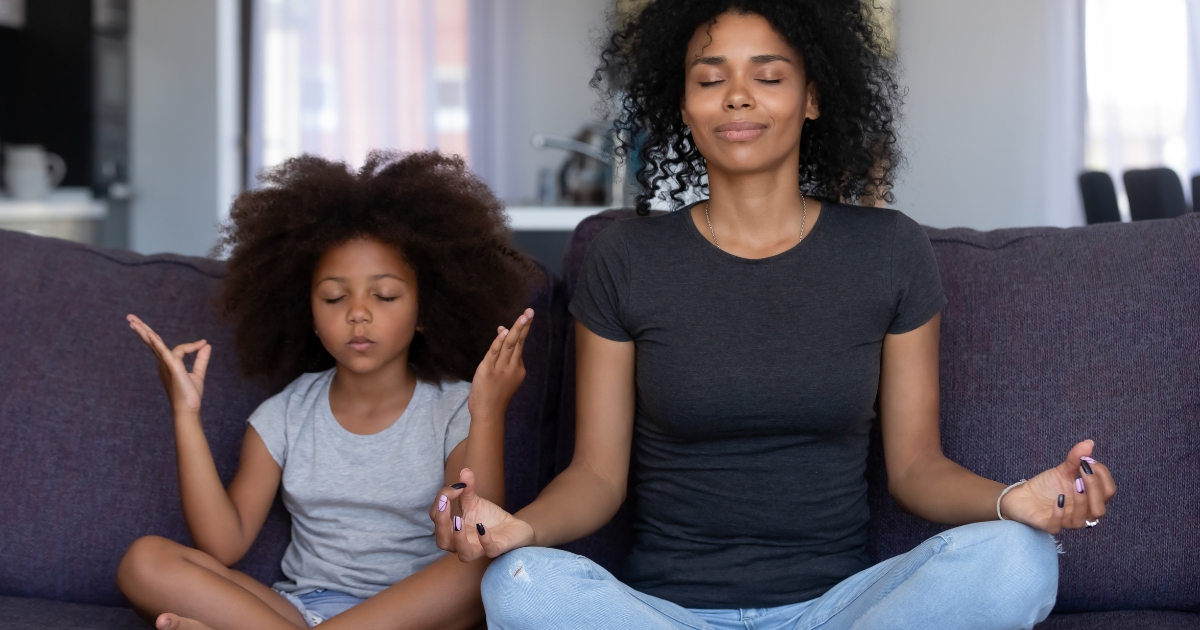
A mother and her young daughter sitting cross-legged on a sofa, practicing mindfulness and meditation with their eyes closed and hands in a meditative gesture, in a serene home setting

Creating A Supportive Environment

Creating a supportive environment for yoga and mindfulness practice is essential for fostering a positive experience. This starts with choosing a quiet, comfortable space where your child can practice without distractions. This could be a dedicated room in your home, a corner of the living room, or even an outdoor space if the weather permits. Make sure the area is free from clutter and has enough room for your child to move freely without feeling confined. Additionally, providing a comfortable yoga mat and any necessary props can help create a welcoming and supportive environment.

In addition to the physical environment, it’s also important to create a supportive emotional environment. Encourage your child to approach their practice with an open mind and a positive attitude. Remind them that yoga and mindfulness are not about perfection or competition but rather about self-exploration and personal growth. Provide plenty of positive reinforcement and celebrate their efforts, no matter how small. This can help build confidence and motivation, making the practice more enjoyable and rewarding. Finally, consider incorporating a sense of community into your yoga and mindfulness practice. This could involve joining a local yoga class or group for children, participating in online classes or forums, or simply connecting with other homeschooling families who share an interest in yoga and mindfulness. Building a community can provide additional support, encouragement, and inspiration, making the practice more enjoyable and sustainable in the long run. Additionally, it can provide opportunities for social interaction and connection, which are essential for your child’s overall well-being.

Integrating yoga and mindfulness into your homeschool P.E. program offers a wealth of benefits for both the mind and body. By teaching mindfulness through yoga, you can help your child develop essential life skills, improve their physical health, and foster a sense of inner peace and balance. With a few simple strategies and a supportive environment, you can create a routine that fits seamlessly into your homeschooling day and provides lasting benefits for your child’s well-being. Remember, the key to success is consistency, patience, and a positive attitude. Don’t be discouraged if your child doesn’t take to the practice right away. Like any new skill, it takes time and practice to develop. Keep things fun and engaging, lead by example, and provide plenty of encouragement and support. With time and dedication, you and your child can enjoy the many benefits of yoga and mindfulness together.

Ready to get started? Set aside a specific time each day for yoga and mindfulness practice, choose a quiet and comfortable space, and approach the practice with an open mind and a positive attitude. Join a local yoga class or group, participate in online classes or forums, and connect with other homeschooling families who share an interest in yoga and mindfulness. Together, you can create a supportive community that fosters growth, connection, and well-being for all.

Fitness Fun: Engaging Physical Activities for Homeschool Kids

In the world of homeschooling, parents often find themselves juggling many roles—teacher, caretaker, and entertainer, to name a few. One aspect that sometimes gets overshadowed is physical education. Yet, keeping kids active is vital for their physical and mental well-being. Engaging homeschool children in fun fitness activities can transform the way they learn and grow, making the process both enjoyable and beneficial. This blog aims to provide homeschooling parents with creative and practical ideas for integrating fitness for kids into their daily routines, ensuring that physical education becomes an exciting part of homeschool education.

Homeschooling offers a unique flexibility that traditional schooling does not. This flexibility can be a tremendous advantage when it comes to incorporating varied and engaging physical activities. However, the challenge lies in turning this flexibility into structured yet fun fitness routines that keep kids motivated. In this blog, we’ll explore several creative ways to make physical education in homeschool education both engaging and effective. From the importance of physical activity to practical tips and examples, this guide will equip you with everything you need to keep your homeschool kids active and healthy.

The Importance Of Physical Activity For Homeschool Kids

Physical activity is essential for children, helping them develop strong muscles and bones, maintain a healthy weight, and reduce the risk of chronic diseases. For homeschool kids, the benefits of staying active go beyond physical health. Regular exercise can improve mood, boost energy levels, and enhance cognitive function, all of which contribute significantly to better learning outcomes. Incorporating fitness for kids into your homeschool routine can help break up the monotony of sitting for extended periods, giving children the physical outlet they need to stay focused and engaged.

One of the main advantages of physical education in homeschool education is the ability to tailor activities to suit your child’s interests and needs. Unlike traditional school settings, where PE classes might follow a rigid curriculum, homeschooling allows for a more personalized approach. This flexibility can make physical education more enjoyable for kids, encouraging them to participate willingly and enthusiastically. By making fitness a regular part of your homeschool routine, you can help your child develop a positive attitude towards physical activity, setting the foundation for a healthy lifestyle.

Another critical aspect of keeping kids active is the social component. Physical activities often involve teamwork and cooperation, helping children develop essential social skills. For homeschool kids, who might not have as many opportunities for social interaction as their peers in traditional schools, engaging in group fitness activities can be particularly beneficial. Whether it’s a neighborhood sports league or a local fitness class, finding ways to incorporate social elements into your child’s fitness routine can enhance their overall development and well-being.

Creative Ways To Incorporate Fitness Into Homeschooling & Creating A Balanced Schedule

One of the best ways to make physical education enjoyable for homeschool kids is to incorporate activities that align with their interests. If your child loves dancing, consider adding a dance session to your daily routine. There are plenty of online dance classes available that cater to different age groups and skill levels, making it easy to find something that suits your child’s preferences. Dancing is not only a fun way to stay active but also a great way to improve coordination, balance, and rhythm. For kids who enjoy being outdoors, nature-based activities can be a fantastic way to keep them engaged and active. Activities like hiking, bird watching, or even gardening can provide a good workout while allowing children to connect with nature. These activities can be easily integrated into your homeschool curriculum, turning a simple nature walk into a lesson on local flora and fauna or an outdoor science experiment. By making physical activity a part of your outdoor learning experiences, you can help your child develop a love for nature and an appreciation for the environment.

Another effective strategy for keeping kids active is to incorporate fitness challenges and games into your homeschool routine. Simple activities like obstacle courses, scavenger hunts, or relay races can make exercise feel more like play, keeping kids motivated and excited. You can even turn household chores into a fun fitness challenge by setting a timer and seeing how quickly your child can complete a task. These activities not only promote physical fitness but also help develop problem-solving skills and encourage a sense of accomplishment.

A young boy crawling through a colorful pool noodle tunnel in a backyard obstacle course, with other children watching in the background, enjoying an outdoor activity.

When it comes to integrating fitness for kids into your homeschool routine, consistency is key. Establishing a regular schedule for physical activity can help your child develop healthy habits and ensure they get the exercise they need. Aim to include at least 60 minutes of moderate to vigorous physical activity each day, as recommended by health experts. This can be broken down into shorter sessions throughout the day, making it easier to fit into your existing homeschool schedule. Variety is also important when it comes to keeping kids active. Mixing up different types of activities can prevent boredom and ensure that your child gets a well-rounded workout. Incorporate a mix of aerobic exercises, strength training, and flexibility exercises to target different muscle groups and fitness components. For example, you might start the day with a quick yoga session to improve flexibility, followed by a mid-morning dance break for some cardio, and finish the day with a strength-building activity like bodyweight exercises.

In addition to structured fitness activities, don’t forget to encourage unstructured playtime. Activities like playing tag, riding bikes, or simply running around the yard can provide valuable opportunities for physical activity and creativity. Allowing your child to engage in free play not only helps them stay active but also promotes problem-solving skills and emotional well-being. By creating a balanced fitness schedule that includes both structured activities and free play, you can help your child develop a lifelong love for physical activity.

Encouraging A Positive Attitude Toward Fitness

One of the most important aspects of keeping kids active is fostering a positive attitude toward fitness. Help your child see physical activity as a fun and rewarding part of their daily routine rather than a chore. Celebrate their achievements, no matter how small, and provide plenty of encouragement and praise. By creating a positive and supportive environment, you can help your child develop a lifelong love for fitness. It’s also important to lead by example. Children often model their behavior after their parents, so make sure to prioritize your own fitness and demonstrate a positive attitude toward physical activity. Join your child in their workouts, participate in family fitness activities, and share your own fitness goals and achievements. By showing your child that you value and enjoy physical activity, you can inspire them to do the same.

Finally, be mindful of your child’s individual preferences and abilities. Every child is different, and what works for one might not work for another. Pay attention to your child’s interests and tailor their fitness activities accordingly. Whether they love sports, dance, or outdoor adventures, find ways to incorporate their passions into their fitness routine. By respecting their preferences and providing opportunities for them to explore different activities, you can help your child discover the joy of staying active.

Incorporating fitness for kids into your homeschool routine can have a profound impact on their physical, mental, and emotional well-being. By making physical education in homeschool education fun and engaging, you can help your child develop healthy habits, improve their learning outcomes, and build a positive attitude toward fitness. From creative activities and technology integration to building a supportive community and encouraging a positive mindset, there are countless ways to keep your homeschool kids active and motivated. Remember, the key to successful physical education is consistency, variety, and a positive attitude. With the flexibility of homeschooling, you have the unique opportunity to tailor your child’s fitness routine to their individual needs and interests. By prioritizing physical activity and making it an enjoyable part of your daily routine, you can set your child on a path to lifelong health and well-being.

If you’re looking for more ideas and resources to enhance your homeschool fitness routine, don’t hesitate to reach out to local fitness programs, join online communities, and explore new activities together with your child. The journey to keeping kids active is a shared one, and with the right support and inspiration, you can make fitness a fun and rewarding part of your homeschooling adventure.

Homeschool Gym Class: Fun Competitions to Keep Kids Motivated and Moving

Homeschooling offers an incredible opportunity to tailor education to fit the unique needs of each child. However, one of the challenges many homeschooling parents face is keeping their kids physically active and engaged. Traditional gym classes provide a structured way for kids to stay fit, but replicating that structure at home can be difficult. That’s where fitness challenges come in. By transforming physical education into a series of fun competitions, you can keep your kids motivated and moving all year long.

In this blog post, we’ll explore a variety of fitness challenges that are perfect for homeschool gym class. We’ll show you how to create engaging competitions that not only get your kids exercising but also make physical education a highlight of their day. From step-count contests to family fitness goals, you’ll find plenty of ideas to inspire your next PE session. We’ll also share tips on tracking progress, rewarding achievements, and fostering a supportive atmosphere that encourages kids to stay active.

Fitness Challenges: Step-Count Competitions & Daily Exercise Streaks

Fitness challenges are a great way to make physical education for children more exciting and motivating. Unlike traditional gym class activities, which can sometimes feel repetitive or uninspiring, fitness challenges introduce an element of competition and achievement. Kids love the thrill of competing against themselves or others, and the satisfaction of reaching a goal can be incredibly motivating. Additionally, fitness challenges can be easily tailored to suit different ages, abilities, and interests, making them a versatile tool for any homeschool gym class. One of the biggest advantages of fitness challenges is that they promote a positive attitude towards exercise. Instead of viewing physical activity as a chore, kids come to see it as a fun and rewarding part of their day. This shift in perspective can have a lasting impact on their overall health and well-being. Furthermore, fitness challenges encourage kids to set personal goals and push themselves to improve, fostering a sense of discipline and determination that can benefit them in many areas of life.

Another key benefit of fitness challenges is that they can be done almost anywhere with minimal equipment. Whether you have a spacious backyard or just a small living room, you can create engaging and effective fitness challenges that keep your kids active. This flexibility makes fitness challenges an excellent option for homeschool families with limited space or resources.

One of the simplest yet most effective fitness challenges in gym class for homeschool kids is a step-count competition. All you need is a pedometer or a step-counting app, and you can turn daily walks or runs into a fun and motivating game. Set a daily or weekly step goal, and challenge your kids to meet or exceed it. You can even create a leaderboard to track progress and add an extra layer of competition. Step-count competitions are a great way to encourage kids to move more throughout the day. They can be integrated into other activities, such as walking the dog, going on nature hikes, or even doing chores around the house. The key is to make it fun and rewarding. Celebrate milestones, offer small prizes for achieving goals, and keep the focus on personal improvement rather than competition with others.

In addition to promoting physical activity, step-count competitions can also teach valuable lessons about goal-setting and perseverance. Kids learn that reaching a goal often requires consistent effort and determination, and they experience the satisfaction that comes from achieving something they’ve worked hard for. This can help build confidence and a positive attitude towards exercise.

Another engaging fitness challenge for homeschool gym class is the daily exercise streak. This challenge involves committing to a certain amount of exercise every day for a set period of time, such as a week or a month. The goal is to maintain the streak by completing the daily exercise without missing a day. This type of challenge can be particularly effective for building healthy habits and encouraging consistency. To start a daily exercise streak, work with your kids to choose a type of exercise they enjoy. This could be anything from jumping rope to practicing yoga, as long as it’s something that gets them moving.

Three children enjoying an outdoor activity, jumping rope in a lush green park, showcasing fun and active fitness during a homeschool gym class.

Set a realistic daily goal, such as 20 minutes of exercise, and create a calendar to track their progress. Each day they complete the exercise, they can mark it off the calendar, creating a visual reminder of their commitment. Daily exercise streaks can be made even more motivating by adding rewards for reaching certain milestones. For example, you could offer a special treat or privilege for completing a week-long streak or a larger reward for maintaining the streak for a month. The key is to make the challenge fun and achievable so your kids feel motivated to stick with it.

Family Fitness Goals & Encouraging A Lifelong Love Of Fitness

Fitness challenges can be even more fun and motivating when the whole family gets involved. Setting family fitness goals is a great way to promote physical activity and strengthen family bonds at the same time. These challenges can range from simple activities, like taking weekly bike rides together, to more ambitious goals, like training for a family fun run. To set a family fitness goal, start by choosing an activity that everyone enjoys and feels comfortable doing. This could be anything from hiking to swimming to playing sports. Set a specific goal, such as completing a certain number of miles or minutes of exercise each week, and create a plan to achieve it. Track your progress together, and celebrate your achievements as a family. Family fitness goals are a great way to teach kids about teamwork and support. They learn that working together can help them achieve more than they could on their own, and they experience the joy of sharing their successes with the people they love. This can create a positive and supportive atmosphere that encourages everyone to stay active and healthy.

One of the ultimate goals of physical education for children is to foster a lifelong love of fitness. By making exercise fun and rewarding, you can help your kids develop positive habits and attitudes towards physical activity that will stay with them for life. Fitness challenges are a great way to achieve this, as they make exercise enjoyable and engaging. To encourage a lifelong love of fitness, focus on variety and enjoyment. Introduce your kids to a wide range of activities, from team sports to individual pursuits, and help them discover what they enjoy most. Make exercise a regular part of your family routine, and model positive behavior by staying active yourself. Another important aspect of encouraging a lifelong love of fitness is to emphasize the benefits beyond physical health. Help your kids understand that exercise can boost their mood, improve their concentration, and increase their overall well-being. This holistic approach can help them see fitness as an essential and enjoyable part of their lives.

Overcoming Obstacles & Making Fitness Fun

Even the most motivated kids can face obstacles when it comes to staying active. Whether it’s a lack of time, space, or motivation, there are many challenges that can make it difficult to maintain a regular fitness routine. The key is to find creative solutions and stay flexible in your approach. One common obstacle is a lack of time. Between homeschooling, chores, and other activities, it can be hard to find time for fitness. One solution is to integrate physical activity into your daily routine. This could be as simple as taking a walk during a break from schoolwork or doing a quick workout together in the living room. Another common obstacle is a lack of motivation. Kids are more likely to stay motivated when they enjoy the activities they’re doing. This means finding fitness challenges that are fun and engaging and offering rewards and recognition for their efforts. It’s also important to be flexible and willing to adapt your approach as needed.

The most important aspect of keeping kids moving and motivated is to make fitness fun. This means finding activities that they enjoy and creating a positive and supportive atmosphere. Fitness challenges are a great way to achieve this, as they make exercise a fun and rewarding part of their day. One way to make fitness fun is to introduce a variety of activities. This could be anything from playing sports to doing yoga to going on nature hikes. The key is to find activities that your kids enjoy and look forward to doing. You can also make fitness fun by incorporating games and competitions and offering rewards and recognition for your efforts. Another important aspect of making fitness fun is to involve your kids in the planning and decision-making process. Ask for their input on what types of fitness challenges they would like to try, and work together to set goals and track progress. This gives them a sense of ownership and control over their fitness routine, which can be highly motivating.

Keeping kids motivated and moving can be a challenge, but fitness challenges offer a fun and effective solution. By incorporating step-count competitions, daily exercise streaks, and family fitness goals into your homeschool gym class, you can create a positive and engaging atmosphere that encourages kids to stay active. Remember to track progress, reward achievements, and focus on personal improvement rather than competition with others. With the right approach, you can help your kids develop a lifelong love of fitness and build healthy habits that will stay with them for life. If you’re looking for more ideas and support, consider joining a community of like-minded homeschooling parents who share your commitment to physical education for children. Together, we can keep our kids moving and motivated, one fitness challenge at a time.

Mindfulness and Movement: Incorporating Yoga and Mindful Exercises into Homeschool

In today’s fast-paced world, homeschooling parents often face the challenge of keeping their children engaged and focused. With so many distractions at home, maintaining a structured educational environment can be tough. One effective way to address this issue is by incorporating yoga and mindfulness practices into your homeschool routine. These activities not only promote physical health but also enhance mental well-being, making them an excellent addition to your daily schedule.

The Power Of Mindfulness, Movement, & Homeschool Yoga

Mindfulness and movement are powerful tools that can help children manage stress, improve concentration, and boost their overall sense of well-being. Yoga, in particular, is a great way to combine physical activity with mindfulness. By engaging in yoga and mindful exercises, children can develop better body awareness, flexibility, and strength. These practices also teach them to focus on the present moment, which can be incredibly beneficial for their mental health. Integrating yoga and mindfulness into your homeschool routine can provide a much-needed break from academic work, allowing children to recharge and refocus. It can also create a calming environment that fosters learning and growth. In this blog post, we will explore various ways to incorporate yoga and mindfulness into your homeschool routine, share age-appropriate yoga routines and breathing exercises, and offer resources for online yoga classes and kid-friendly meditation apps.

Mindfulness is the practice of being fully present and engaged in the current moment. For children, mindfulness can be a powerful tool to help them manage their emotions, reduce anxiety, and improve their focus. When children practice mindfulness, they learn to observe their thoughts and feelings without judgment, which can help them develop better self-awareness and emotional regulation. Incorporating mindfulness into your homeschool routine can have numerous benefits for your child’s mental and emotional well-being. Mindfulness exercises can help children become more aware of their thoughts and feelings, allowing them to respond to challenging situations with greater calm and resilience. By practicing mindfulness regularly, children can develop a greater sense of inner peace and balance, which can enhance their overall quality of life.

To start, consider introducing simple mindfulness exercises such as deep breathing, body scans, or guided visualizations. These activities can be easily incorporated into your daily routine and can be a fun and relaxing way for your child to begin their day. Encourage your child to take a few moments each day to practice mindfulness and observe the positive changes it brings to their mood and behavior.

Yoga is an excellent way to incorporate physical activity into your homeschool routine while also promoting mindfulness. Yoga for kids can be a fun and engaging practice that helps children develop strength, flexibility, and body awareness. It also teaches them to focus on their breath and stay present in the moment, which can enhance their overall sense of well-being. When introducing yoga to kids, it’s important to choose age-appropriate poses and routines. Start with simple poses such as cat-cow, tree pose, and child’s pose, and gradually introduce more complex poses as your child becomes more comfortable with the practice. Make sure to provide clear instructions and demonstrate the poses yourself to help your child understand the proper alignment and technique.

In addition to physical benefits, yoga can also help children develop important life skills such as patience, perseverance, and self-discipline. By practicing yoga regularly, children can learn to set goals, work towards them, and celebrate their progress. This can boost their confidence and self-esteem, making them more resilient and adaptable in the face of challenges.

Creating a calming environment is essential for a successful yoga and mindfulness practice. A peaceful and clutter-free space can help your child feel more relaxed and focused, allowing them to fully engage in the activities. Consider designating a specific area in your home for yoga and mindfulness practice, and make sure it is free from distractions such as noise and electronic devices. To enhance the calming atmosphere, you can use soft lighting, calming colors, and soothing music. You can also incorporate elements of nature, such as plants, stones, or water features, to create a serene and grounding environment. Encourage your child to personalize their practice space with their favorite items, such as a cozy blanket or a special cushion. In addition to creating a calming environment, it’s important to establish a consistent routine for yoga and mindfulness practice.

Set aside a specific time each day for these activities, and make it a non-negotiable part of your homeschool schedule. By prioritizing yoga and mindfulness, you can help your child develop healthy habits that will benefit them for years to come.

Breathing Exercises For Mindfulness And Relaxation

Breathing exercises are a key component of both yoga and mindfulness practices. They help children become more aware of their breath, calm their minds, and regulate their emotions. Here are a few simple breathing exercises that you can incorporate into your homeschool routine:

  1. Balloon Breathing – Have your child sit comfortably and close their eyes. Instruct them to take a deep breath in through their nose, imagining that they are filling up a balloon in their belly. Then, have them slowly exhale through their mouth, imagining that they are letting the air out of the balloon. Repeat this exercise several times, encouraging your child to focus on the sensation of their breath.
  1. 4-7-8 Breathing – Have your child sit comfortably and close their eyes. Instruct them to inhale through their nose for a count of 4, hold their breath for a count of 7, and then exhale slowly through their mouth for a count of 8. Repeat this exercise several times, encouraging your child to focus on the rhythm of their breath.
  1. Rainbow Breathing – Have your child sit comfortably and close their eyes. Instruct them to take a deep breath in through their nose, imagining that they are drawing in the colors of the rainbow. Then, have them slowly exhale through their mouth, imagining that they are releasing any stress or tension. Repeat this exercise several times, encouraging your child to visualize the colors and sensations.

Incorporating Mindfulness For Children Into Daily Activities

Practicing mindfulness doesn’t have to be limited to formal exercises. You can also incorporate mindfulness into your child’s daily activities to help them stay present and engaged throughout the day. Here are a few ideas to get you started:

An infographic with illustrated visuals highlighting three mindfulness activities for children: 'Mindful Eating' featuring two kids enjoying meals at a table, 'Mindful Walking' showing three children walking together, and 'Mindful Journalling' represented by a hand writing in a journal surrounded by colorful stationery.

  1. Mindful Eating – Encourage your child to practice mindfulness during meals by paying attention to the taste, texture, and aroma of their food. Have them take small bites, chew slowly, and savor each mouthful. This can help them develop a greater appreciation for their food and improve their digestion.
  1. Mindful Walking – Take your child on a mindful walk, encouraging them to pay attention to their surroundings and the sensations in their body. Have them notice the sights, sounds, and smells around them and focus on the feeling of their feet touching the ground. This can help them develop a greater sense of connection with their environment.
  1. Mindful Journaling – Encourage your child to keep a mindfulness journal, where they can write about their thoughts and feelings throughout the day. Have them reflect on their experiences, noting any moments of mindfulness or awareness. This can help them develop greater self-awareness and emotional regulation skills.

Incorporating yoga and mindfulness into your homeschool routine can have numerous benefits for your child’s physical, mental, and emotional well-being. By creating a calming environment, using age-appropriate routines, and connecting with other homeschooling families, you can foster a sense of balance and harmony in your child’s education. Start small, be consistent, and watch as your child grows and thrives through the power of mindfulness and movement.

Sports and Games for Homeschoolers: Building Skills and Team Spirit

Homeschooling offers a unique and flexible educational environment, but it can sometimes lack the opportunities for physical education and team-building that traditional schools provide. Sports and games are essential not just for physical health but also for developing social skills, teamwork, and a sense of community. This blog post will explore how homeschooling parents can integrate sports and games into their curriculum, creating a well-rounded, engaging, and spirited learning experience for their children.

Teaching Sports And Games In A Homeschool Setting

Homeschooling parents often wonder how to incorporate physical education and team-building activities into their daily routines. While academic subjects take precedence, it’s crucial to remember that sports and games play a vital role in a child’s development. Engaging in physical activities helps children stay fit, learn new skills, and build team spirit. For homeschoolers, this may seem challenging, but with a bit of creativity and planning, parents can provide a comprehensive sports education right at home. This blog will discuss various strategies for teaching sports and games, organizing family sports days, joining local homeschool sports leagues, and setting up backyard games like soccer, basketball, and badminton. By the end of this post, you’ll have a toolkit of ideas to ensure your homeschooler gets the same opportunities for physical and social development as their peers in traditional schools.

One of the most effective ways to incorporate sports for homeschooling is to start by teaching the basics of different sports. Begin by selecting a few sports your children are interested in. Explain the rules, demonstrate the skills, and practice together. For example, if you choose soccer, teach them how to dribble, pass, and shoot the ball. Use online resources, instructional videos, and books to help explain the techniques and strategies. Make it a fun learning experience by turning each session into an interactive and engaging activity. Encourage your children to ask questions and be patient as they learn new skills. Remember, the goal is to make sports enjoyable, so focus on positive reinforcement and celebrate their progress.

In addition to teaching individual sports, consider incorporating a variety of games for kids into your homeschooling routine. Games like tag, capture the flag, and relay races can be easily organized in the backyard or a nearby park. These games not only provide physical exercise but also help children develop coordination, agility, and problem-solving skills. Rotate different games each week to keep things exciting and to expose your children to a wide range of activities. This approach prevents monotony and ensures that physical education remains a fun part of their day.

Organizing Family Sports Days, Joining Local Homeschool Sports Leagues, & Setting Up Backyard Games

Family sports days are a fantastic way to bring everyone together and create lasting memories. Set aside a day each month for a family sports event where everyone participates in various activities. Plan ahead by choosing a mix of sports and games that cater to different age groups and skill levels. Activities like tug-of-war, three-legged races, and frisbee tournaments can be enjoyed by both children and adults.

Don’t forget to include some friendly competition to add excitement. Small prizes or certificates will be awarded to winners to motivate everyone to give their best effort. To make family sports days even more special, invite other homeschooling families to join. This not only fosters a sense of community but also provides an opportunity for children to make new friends and build team spirit. Organizing a potluck picnic alongside the sports activities can enhance the experience, allowing families to share a meal and socialize. By collaborating with other homeschooling families, you can create a supportive network that encourages physical activity and teamwork.

Three teenagers participating in a game of tug-of-war on a grassy field, wearing colorful bandanas and showcasing teamwork and determination during an outdoor activity.

Many communities have local sports leagues specifically designed for homeschoolers. These leagues offer structured opportunities for children to participate in team sports such as soccer, basketball, and baseball. Joining a homeschool sports league provides several benefits, including regular practice sessions, organized games, and the chance to compete against other teams. It’s an excellent way for children to experience the camaraderie and discipline that come with being part of a team. Research local homeschool sports leagues in your area and reach out to other homeschooling families for recommendations. In addition to traditional sports leagues, consider enrolling your child in specialized sports classes or workshops. Martial arts, dance, yoga, and swimming are all great options that can complement your homeschooling curriculum. Many gyms and community centers offer classes tailored to homeschooling schedules, making it convenient for families to participate. These activities not only provide physical exercise but also help children develop discipline, confidence, and social skills.

Creating a dedicated space for sports and games in your backyard can make physical activity a regular part of your homeschooling routine. Set up mini-courts for sports like badminton, basketball, and soccer. Invest in basic equipment such as a basketball hoop, soccer goals, and badminton net. Having these setups readily available makes it easy to engage in spontaneous play and practice sessions. Encourage your children to invite friends and neighbors to join in, fostering a sense of community and teamwork. Backyard games are not limited to traditional sports. Consider inventive and creative activities that promote physical exercise and fun. Set up an obstacle course using household items, organize a scavenger hunt, or create a DIY mini-golf course. These activities can be tailored to suit different age groups and skill levels, ensuring that everyone has a great time. The key is to keep things varied and enjoyable so your children look forward to their daily dose of physical activity.

Teaching The Rules, Developing Skills, & Fostering A Sense Of Teamwork 

When teaching sports for homeschool, it’s essential to focus on both the rules of the game and the development of specific skills. Start with a thorough explanation of the rules and objectives of the sport. Use visual aids, diagrams, and videos to make it easier for your children to understand. Once they grasp the basics, they move on to skill development. Break down each skill into manageable steps and practice them one at a time. For instance, when teaching basketball, focus on dribbling, shooting, and passing separately before combining them into a full game. Regular practice is crucial for skill development. Set aside dedicated time each week for practice sessions. Create a structured schedule that includes warm-up exercises, skill drills, and mini-games. Consistency is key, so encourage your children to stick to the schedule and track their progress. Provide constructive feedback and celebrate their achievements, no matter how small. This positive reinforcement boosts their confidence and motivates them to keep improving.

One of the most valuable lessons children can learn from sports and games is the importance of teamwork and sportsmanship. Encourage your children to work together and support one another during practice sessions and games. Highlight the significance of cooperation, communication, and mutual respect. Teach them that winning is not the sole objective; rather, it’s about giving their best effort and enjoying the game. Lead by example and demonstrate good sportsmanship in your interactions. To reinforce these values, organize team-building exercises and cooperative games. Activities like trust falls, team relays and group challenges help children develop trust and collaboration skills. Discuss the importance of fair play and integrity, and address any instances of unsportsmanlike conduct promptly. By emphasizing teamwork and sportsmanship, you instill values that extend beyond the playing field and into all aspects of their lives.

Integrating sports and games into your homeschooling curriculum is not only possible but also incredibly rewarding. By teaching the rules, developing skills, and fostering teamwork and sportsmanship, you provide your children with a well-rounded education that extends beyond academics. Organizing family sports days, joining local homeschool sports leagues, and setting up backyard games create opportunities for physical activity, social interaction, and community building. Remember, the goal is to make physical education enjoyable and engaging, so focus on creating positive experiences that your children will cherish. By incorporating sports for homeschool and various games for kids, you’re helping your children develop essential life skills while staying active and healthy. Building team spirit through sports and games fosters a sense of camaraderie and belonging that enhances their overall well-being. Start small, be consistent, and most importantly, have fun. Your efforts will not only benefit your children’s physical fitness but also contribute to their social and emotional growth. Happy homeschooling, and may your home be filled with the joyful sounds of play and laughter.

For more tips and guidance on homeschooling and incorporating physical education into your curriculum, feel free to explore our resources and connect with our community of homeschooling parents. Together, we can create enriching and fulfilling educational experiences for our children.

Outdoor Adventures: Integrating Nature-Based Physical Education into Your Homeschool Routine

Are you looking to inject some excitement and vitality into your homeschool routine? If so, incorporating nature-based physical education might be the perfect solution. Engaging children in outdoor activities not only helps them stay physically fit but also enhances their learning experience in unique and enriching ways.

This blog post explores the various benefits of outdoor physical activities and offers practical ideas on how to weave these adventures into your homeschool curriculum. Get ready to discover how hiking, biking, nature scavenger hunts, and gardening can revolutionize your homeschooling approach!

The Benefits Of Outdoor Physical Activities

The advantages of incorporating outdoor physical activities into your homeschool routine are manifold. Firstly, these activities promote physical fitness by encouraging children to move their bodies and engage in exercise. Whether it’s a brisk hike through a local park or a leisurely bike ride around the neighborhood, these activities help children develop strength, coordination, and cardiovascular health.

Furthermore, outdoor physical education for children provides a refreshing break from the traditional classroom setting. Stepping outside and immersing oneself in nature can reduce stress, improve mood, and enhance overall well-being. The sights, sounds, and smells of the natural world offer a sensory-rich experience that can invigorate the mind and rejuvenate the spirit.

In addition to the physical and mental benefits, bringing learning outdoors offers unique opportunities for hands-on education. Nature serves as a living classroom where children can explore, observe, and interact with their surroundings. From identifying different plant species to studying animal tracks, outdoor adventures provide a wealth of experiential learning experiences that can deepen a child’s understanding of the natural world.

Hiking Adventures, Biking For Fun, Nature Scavenger Hunts, & Gardening As Learning Experiences

Hiking Adventures

Hiking is a fantastic way to incorporate nature-based physical education into your homeschool routine. It benefits both the body and mind by providing a cardiovascular workout and fostering a deeper connection with the environment.

  • Choose Local Trails: Select trails that match your children’s age and fitness levels to ensure an enjoyable experience.
  • Make It Regular: Aim to include hiking in your weekly plans to build a consistent routine.
  • Encourage Observations: During hikes, prompt your children to notice their surroundings. Discuss flora, fauna, ecosystems, and other natural features.
  • Use Learning Tools: Bring field guides or apps to identify plants and animals and integrate science lessons like geology or weather patterns.

To keep your hikes exciting, consider themed hikes or nature scavenger hunts. For example:

  • Create a list of items—such as leaves, rocks, or animal tracks—for your children to find.
  • Tie the theme to a subject you’re teaching, like visiting a historical site if you’re studying history or a location tied to a book you’re reading.

These activities turn hikes into adventures that inspire curiosity and build knowledge.

Biking for Fun

Biking is another fantastic outdoor activity that combines exercise with life skills and learning opportunities. It not only improves physical fitness but also enhances balance, coordination, and endurance.

  • Safety First: Equip your children with helmets, knee pads, and other protective gear. Teach road safety rules and good cycling habits.
  • Make It Routine: Plan bike rides regularly, either around your neighborhood or through scenic bike trails.
  • Teach Maintenance Skills: Show children how to check tire pressure, clean the chain, and make basic repairs to their bike. This builds independence and responsibility.

To make biking even more engaging, plan routes that pass by interesting landmarks like historical sites or nature reserves. Use these stops as springboards for discussions and learning moments. For instance, explore the history behind a landmark or discuss the types of habitats found in a nature reserve. This turns bike rides into holistic adventures that promote both education and physical activity.

Nature scavenger hunts are a fun and interactive way to bring learning outdoors and stimulate your children's curiosity.

Nature Scavenger Hunts

Nature scavenger hunts are exciting ways to blend play, learning, and exploration. They stimulate curiosity and improve observation skills while encouraging physical activity.

  • Create a Themed List: Focus on topics like plants, insects, or birds relevant to your homeschool curriculum. You can ask your children to find things like a certain leaf, bug species, or bird feather.
  • Provide Tools: Equip your children with magnifying glasses, notebooks, and cameras to document their findings.
  • Build a Nature Journal: Ask them to sketch, describe, and record what they found, reinforcing what they’ve learned.

For added depth, encourage your children to research their discoveries and share their findings with family or friends. This enhances confidence while reinforcing the knowledge gained during the activity.

Gardening as a Learning Experience

Gardening offers hands-on learning opportunities while teaching children about plants, ecology, and sustainability.

  • Collaborative Garden Design: Plan and design the garden together, discussing which plants to grow and why. Use this as a chance to research and schedule planting times.
  • Assign Responsibilities: Give age-appropriate tasks like watering, weeding, and monitoring plant growth, helping children develop responsibility and practical skills.
  • Teach Scientific Concepts: Explore topics like photosynthesis, soil health, and pollination. Conduct experiments, such as comparing plant growth in different soils or testing homemade fertilizers.

Gardening is an ongoing project that nurtures valuable skills over time. It provides a sense of accomplishment, reinforces environmental stewardship, and makes learning tangible through real-world experience.

Incorporating Seasonal Activities

One of the joys of bringing learning outdoors is the opportunity to experience the changing seasons firsthand. Each season offers unique opportunities for outdoor physical education and hands-on learning. By incorporating seasonal activities into your homeschool routine, you can keep things fresh and exciting throughout the year.

In the spring, focus on activities such as planting a garden, exploring blooming flowers, and observing the return of migratory birds. Spring is also a great time for nature walks and hikes as the weather becomes milder and the natural world bursts into life.

Summer provides ample opportunities for water-based activities, such as swimming, kayaking, or beachcombing. Take advantage of the long daylight hours to plan extended outdoor adventures, such as camping trips or overnight hikes. Summer is also a great time for stargazing and learning about astronomy.

Fall is perfect for activities such as leaf collecting, apple picking, and exploring the changing colors of the foliage. Take nature walks to observe the preparations animals make for winter and incorporate lessons about hibernation and migration. Fall is also a great time for outdoor art projects, such as leaf rubbing or nature-inspired crafts.

Winter may bring colder temperatures, but it also offers unique opportunities for outdoor fun. Activities such as sledding, ice skating, and building snow forts provide excellent physical exercise. Use the winter landscape to teach lessons about weather patterns, animal adaptations, and the science of snow and ice.

By incorporating seasonal activities into your homeschool routine, you’ll provide your children with a rich and varied learning experience that reflects the natural rhythms of the year.

Nature-Based Physical Education

Integrating nature-based physical education into your homeschool routine offers a wealth of benefits for both you and your children. From promoting physical fitness and mental well-being to providing hands-on learning experiences and fostering a sense of community, outdoor adventures can enrich your homeschool program in countless ways. By incorporating activities such as hiking, biking, nature scavenger hunts, and gardening, you’ll create a dynamic and engaging learning environment that encourages curiosity, exploration, and a deep connection with the natural world. Don’t hesitate to reach out to local homeschooling groups or online communities for support and inspiration. Together, we can create a homeschooling experience that is both educational and deeply fulfilling.

Are you ready to transform your homeschool routine with outdoor adventures? Start planning your next nature-based activity today and watch as your children’s love of learning and the natural world blossoms.