Unstructured learning gives homeschool kids the freedom to explore, create, and think independently. It builds creativity, problem-solving skills, and a genuine love of learning by allowing children to follow their interests without rigid schedules or constant direction.
How Does Art Help Children’s Creativity?
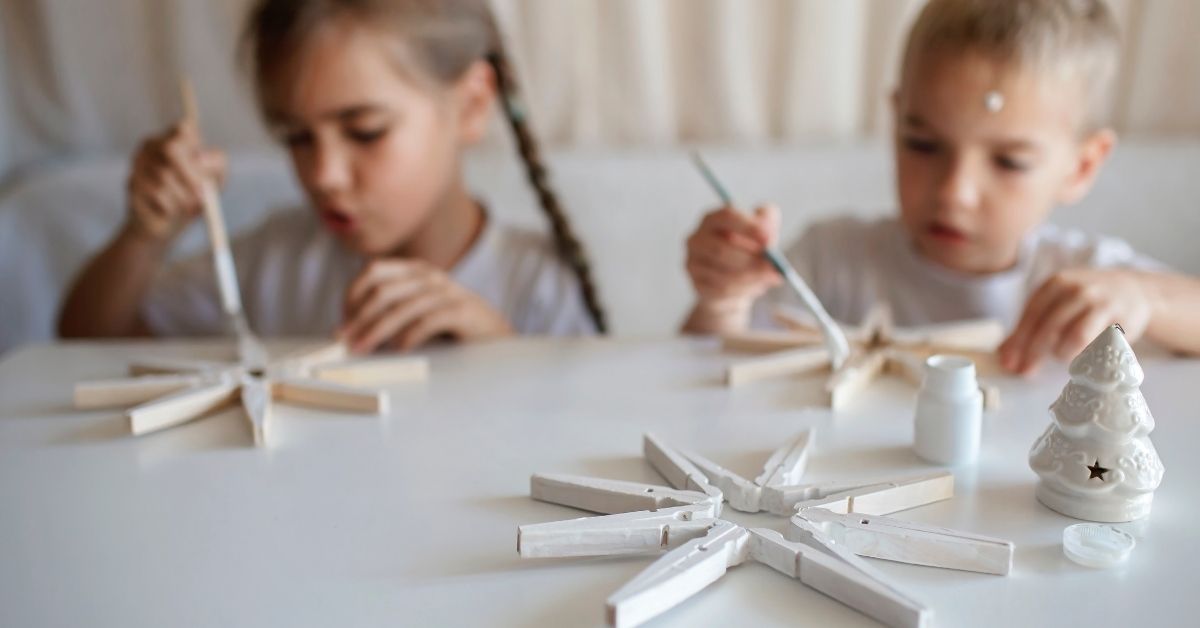
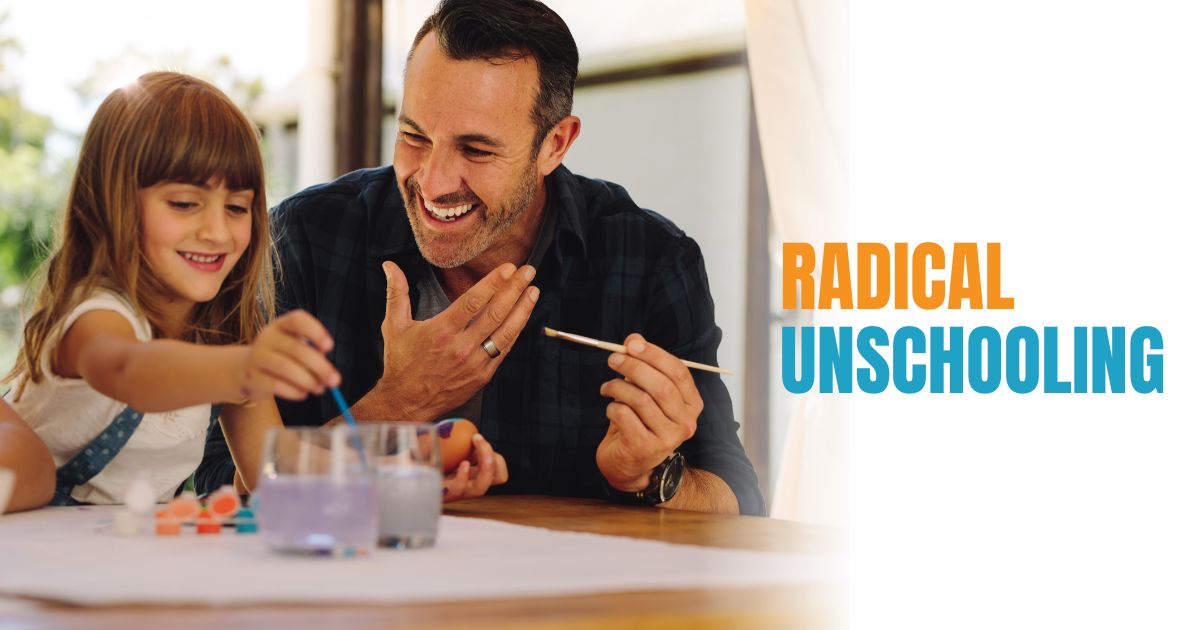
Art is one of the clearest examples of unstructured learning in action. When kids draw, paint, sculpt, or build, they’re making decisions without a “right” answer—and that’s where creativity grows.
Here’s what art does for your homeschool child:
Encourages original thinking
Builds confidence in self-expression
Strengthens problem-solving skills
Helps process emotions in a healthy way
Develops patience and focus
For example, if your child decides to paint a “blue tree,” there’s no correction needed. That freedom tells them their ideas matter. Over time, this builds a mindset where they’re willing to take risks—not just in art, but in writing, science experiments, and even social situations.
Quick tip: Set out simple supplies (paper, crayons, glue, recycled materials) and let your child create without instructions. Resist the urge to guide unless they ask.
What Is Unstructured Learning (And Why It Matters)?
Unstructured learning is exactly what it sounds like—learning without a strict plan, curriculum, or outcome. It’s not about doing nothing; it’s about allowing curiosity to lead the way.
Instead of:
“Today we will complete pages 12–15 in math,”
It might look like:
Building a ramp to test how fast toy cars go
Writing a comic book just for fun
Spending an hour figuring out how something works
This kind of learning matters because real-world thinking doesn’t come from worksheets alone. It comes from asking questions, experimenting, and sometimes even failing.
Common mistake to avoid: Thinking unstructured learning means no learning is happening. In reality, your child is developing skills like:
Decision-making
Creativity
Persistence
Independent thinking
Those are lifelong skills that no textbook can fully teach.
The Hidden Benefits Most Parents Don’t Expect
When parents first hear about unstructured learning, they often think of creativity—but there’s so much more happening beneath the surface.
Stronger intrinsic motivation:Kids learn because they want to, not because they have to.
Better focus over time: When children choose activities, they tend to stick with them longer.
Improved emotional regulation: Free play helps kids process stress and emotions.
More resilience: Trial-and-error builds perseverance naturally.
Let’s say your child spends 45 minutes trying to build a LEGO bridge that keeps collapsing. That’s engineering, problem-solving, and persistence—all rolled into one.
Simple step you can try this week:
Block off 30–60 minutes each day
Remove screens (unless used intentionally)
Let your child choose the activity
Observe without interrupting
You’ll be surprised what happens.
Children often surprise us when we give them space. A child who seems uninterested in traditional lessons might suddenly spend hours designing a paper city or writing stories when given freedom. This shift can feel uncomfortable at first because it’s less predictable, but it reveals how naturally curious kids really are. When learning is self-directed, it becomes something they own rather than something they endure. Over time, this ownership builds confidence that carries into every subject.
Parents sometimes worry they’re “falling behind” if they aren’t constantly directing learning. But stepping back doesn’t mean stepping away—it means trusting the process. You’re still guiding the environment, offering resources, and being available for support. The difference is that your child is leading the exploration, which often leads to deeper understanding.
How To Add Unstructured Learning To Your Homeschool Day
You don’t need to overhaul your entire homeschool schedule. Small changes can make a big difference.
Here are practical ways to get started:
1. Create a “Yes Space” Set up an area where your child can explore freely—art supplies, building materials, books, puzzles.
2. Schedule Open Time Even 30 minutes a day of unstructured time can have a big impact.
3. Follow Their Interests If your child loves animals, let that guide reading, drawing, and research.
5. Limit Over-Scheduling Too many structured activities can crowd out creativity.
Helpful low-cost resources:
Library books and activity kits
Nature walks (free and powerful!)
Recycled materials for building
Free online tutorials (art, coding, crafts)
Real-Life Homeschool Examples That Actually Work
One homeschool mom we worked with noticed her son resisted writing assignments daily. But when she gave him unstructured time, he started creating comic books—pages and pages of them. Without pressure, he practiced storytelling, spelling, and sequencing naturally.
Another parent shared that her daughter struggled with math worksheets but loved baking. By letting her experiment in the kitchen, she began using measurements, fractions, and timing without even realizing it.
These moments aren’t accidents—they’re the result of giving kids space to learn in ways that connect with them.
Common mistake to avoid:
Jumping in too quickly to “teach” during these moments Let the learning unfold. You can always connect it back later.
Unstructured learning also helps restore balance in your homeschool day. When everything is planned and outcome-driven, both parents and kids can feel pressure building. That pressure often leads to resistance, frustration, and burnout. Adding in open-ended time creates breathing room, which makes the structured parts of your day smoother and more enjoyable.
You might notice fewer power struggles and more cooperation simply because your child feels heard and trusted. That emotional shift is just as important as academic progress. When kids feel safe to explore and make mistakes, they become more willing to try new things—even the harder subjects.
Simple Weekly Plan To Get Started
If you’re wondering how to actually implement this, here’s a simple structure you can try:
Monday–Friday:
Morning: Core subjects (math, reading, writing)
Midday: Break / outdoor time
Afternoon: 30–60 minutes of unstructured learning
Weekly focus idea:
Monday: Art or building
Tuesday: Nature exploration
Wednesday: Creative writing or storytelling
Thursday: STEM tinkering
Friday: Free choice
Keep it flexible—the goal is freedom, not another rigid schedule.
FAQs Of Unstructured Learning
FAQ: What is unstructured learning in homeschooling? Unstructured learning in homeschooling allows children to explore topics freely without strict lesson plans. It encourages creativity, independence, and curiosity, making it a key part of many effective homeschool strategies.
FAQ: How much unstructured learning time should homeschool kids have? Most families start with 30–60 minutes daily, but it depends on your child’s needs. Even small amounts of unstructured learning can improve creativity and engagement in your homeschool routine.
FAQ: Does unstructured learning replace a homeschool curriculum? No, it complements your homeschool curriculum. Structured lessons build foundational skills, while unstructured learning helps children apply those skills creatively and develop critical thinking.
Keep Learning Along With Your Child
Unstructured learning isn’t about doing less—it’s about learning differently. By giving your child space to explore, create, and think independently, you’re helping them build skills that last far beyond the homeschool years.
Start small this week. Try one block of unstructured time and simply observe what happens. You might discover new interests, hidden strengths, and a renewed love of learning in your child.
At DKM Homeschool Resource, we’re here to support you every step of the way. Explore more of our blog for practical homeschool tips, encouragement, and real-life strategies that actually work for busy families like yours.
If you’re wondering how to start homeschooling as a beginner, the short answer is this: understand your state’s homeschool laws, choose a simple curriculum, set a realistic daily routine, and start small. You don’t need a perfect plan — you just need a clear first step and the confidence to begin.
At DKM Homeschool Resource, we’ve walked alongside hundreds of new homeschool families. We know that feeling — excitement mixed with total overwhelm. You want to do this right. You want your child to thrive. And you’re probably asking yourself, “What if I mess this up?”
Take a breath. You won’t.
Let’s break this down into clear, doable steps.
How Do I Start Homeschooling As A Beginner?
Starting homeschooling isn’t about recreating school at home. It’s about creating a learning environment that works for your child and your family.
Here’s your simple roadmap:
Check your state homeschool laws. Visit your state Department of Education website or use trusted homeschool legal resources like HSLDA (Homeschool Legal Defense Association). Know what’s required: notification, attendance records, testing, etc.
Choose a simple curriculum. Don’t overcomplicate it. Start with:
Set a flexible schedule. Especially for beginners, 2–4 focused hours a day is often enough for elementary students.
Create a learning space. This doesn’t require a Pinterest-worthy homeschool room. A kitchen table works just fine.
Start small. Try two weeks. Adjust. Keep what works. Drop what doesn’t.
That’s it. No 27-step master plan required.
Understanding Homeschool Laws Without Getting Overwhelmed
This is the part that makes most parents freeze.
Legal requirements sound intimidating, but they’re usually simpler than you think. Every state has its own homeschool laws, but most fall into one of these categories:
You do not need to become a homeschool legal expert. You just need to meet your state’s minimum requirements. Everything beyond that is optional.
Many beginners make the mistake of over-preparing for regulations that don’t even apply to them. That mental overload can delay your start by months. Don’t let it.
Choosing A Curriculum Without Second-Guessing Yourself
Curriculum shopping can feel like falling into a black hole.
Quick Tip: If you’re overwhelmed, choose an all-in-one curriculum for your first year. It reduces decision fatigue.
Common mistake to avoid: Buying five different programs “just in case.” Start with one. Give it 4–6 weeks before deciding if it works.
What A Realistic Homeschool Day Looks Like
One of the biggest myths about homeschooling is that it takes 6–8 hours per day.
It doesn’t.
For elementary students, here’s a realistic beginner schedule:
Example (3rd Grade):
9:00 – Math (30–45 min)
9:45 – Reading/Language Arts (45 min)
10:30 – Snack break
10:45 – Science or History (30 min)
11:15 – Independent reading or hands-on project
Done by noon
That’s about 2.5–3 hours.
Middle and high school may take longer, but rarely a full traditional school day.
Now let’s pause here for something important.
Homeschooling feels different from traditional school because learning is more efficient at home. There are no classroom transitions, no waiting for 25 students to line up, no busywork. You’re working one-on-one. That alone saves hours. Many new homeschool parents panic the first week because “we finished too early.” That’s normal. It doesn’t mean you’re doing it wrong. It means it’s working.
Another important shift is understanding that learning happens all day. Cooking teaches math. Grocery shopping teaches budgeting. Nature walks teach science. Conversations build language skills. When you start noticing learning everywhere, homeschooling stops feeling like pressure and starts feeling like freedom.
Common Beginner Mistakes (And How To Avoid Them)
Let’s save you some frustration.
1. Trying to Recreate Public School at Home
Homeschooling works best when it’s flexible. Don’t force a rigid classroom structure unless your child thrives on it.
2. Overscheduling
You don’t need:
Co-op
Sports
Music lessons
Field trips
Clubs
Daily enrichment activities
All at once.
Start slow.
3. Comparing Yourself to Veteran Homeschoolers
You are in Year 1. They are in Year 10. It’s not a fair comparison.
4. Switching Curriculum Too Quickly
Every curriculum has an adjustment period. Give it time.
5. Ignoring Your Child’s Learning Style
Some kids need:
Movement
Visual aids
Audiobooks
Hands-on activities
Observe your child. Adjust accordingly.
Here’s a small action step you can take this week:
Choose your math and language arts curriculum.
Set up a basic morning routine.
Pick one day to officially “start.”
Commit to two weeks before evaluating.
Momentum matters more than perfection.
Budget-Friendly Homeschool Resources That Actually Help
You do not need to spend thousands of dollars to homeschool successfully.
Printable worksheets from reputable homeschool blogs
Affordable Supplies:
Basic printer
Notebooks
Whiteboard
Pencils and markers
Storage bins
That’s it.
Let’s talk honestly for a moment.
It’s easy to feel like you need the fancy homeschool room, matching planners, color-coded bins, and the latest curriculum release. Social media makes it look like everyone else has it figured out. But what your child needs most is your attention, consistency, and patience. Homeschooling succeeds because of relationship, not aesthetics. A peaceful kitchen table beats a perfect homeschool room every time.
When you strip away the noise, homeschooling becomes surprisingly simple. Teach. Practice. Read. Talk. Explore. Repeat tomorrow.
Walking This Journery With You
Starting homeschooling as a beginner can feel overwhelming, but it doesn’t have to stay that way. When you break it into steps—understanding homeschool laws, choosing a manageable curriculum, setting a simple routine—it becomes completely doable.
Remember:
You don’t need to know everything on Day 1.
You don’t need a perfect schedule.
You don’t need the most expensive resources.
You need consistency. You need flexibility. And you need grace for yourself.
At DKM Homeschool Resource, we’re here to walk this journey with you. Whether you’re looking for curriculum reviews, practical homeschool tips, encouragement on hard days, or step-by-step guidance for beginners, we’ve got you covered.
FAQ: How many hours a day do I need to homeschool? Most elementary homeschool schedules only require 2–4 focused hours per day. Homeschooling is more efficient than traditional school because it’s one-on-one. Older students may need more time, but rarely a full 8-hour day.
FAQ: Do I need teaching experience to start homeschooling? No. Parents successfully start homeschooling every year without formal teaching degrees. With the right homeschool curriculum, clear homeschool planning, and consistent routines, most families learn as they go and adjust over time.
FAQ: What is the best homeschool curriculum for beginners? The best homeschool curriculum for beginners is one that is simple, structured, and fits your child’s learning style. Many new homeschool parents prefer all-in-one programs for their first year to reduce stress and decision fatigue.
Yes — you absolutely can unschool social studies without a textbook, especially for reluctant readers. In fact, many kids learn history, geography, civics, and culture more deeply through real-life experiences, conversations, and hands-on exploration than they ever would through worksheets and chapters.
If your child groans at the sight of a thick social studies book, you are not alone. At DKM Homeschool Resource, we hear this from parents all the time. The good news? Social studies is one of the easiest subjects to unschool — and often the most enjoyable.
Is There Curriculum For Unschooling?
Short answer: unschooling doesn’t require a traditional curriculum, but you can absolutely use resources as tools.
Unschooling is not the same as doing nothing. It’s intentional. Instead of following a scripted program, you follow curiosity.
If your child hates reading long chapters, social studies can still happen every single day. You just change the delivery method.
Why Unschooling Works So Well For Reluctant Readers
Here’s the honest truth: traditional social studies is heavily text-based. Long paragraphs. Dry summaries. Vocabulary lists. For a reluctant reader, that can feel overwhelming before learning even begins.
When you remove the textbook barrier, something amazing happens. Kids start engaging.
Imagine this scenario:
Your 10-year-old refuses to read about the American Revolution. But one evening, you watch a short documentary clip together. Suddenly they ask, “Wait — why were they so mad about tea?” That question leads to a rabbit trail about taxes, government power, and representation. No worksheet required.
Reluctant readers often:
Learn better through listening
Retain more through discussion
Engage more through visuals
Thrive with hands-on activities
Unschooling social studies gives them those pathways.
And here’s something we want you to hear clearly: Struggling with reading does not mean struggling with intelligence. When we separate learning from heavy reading demands, many children flourish.
One of the biggest mindset shifts for parents is realizing that social studies is about understanding people and systems — not completing chapters. When a child begins connecting historical events to modern life or comparing cultures out of genuine curiosity, that’s real learning. It may not look like a workbook page, but it often goes deeper and lasts longer.
Practical Ways To Unschool Social Studies (Starting This Week)
Let’s make this simple. You do not need to overhaul your homeschool overnight.
Here are practical, doable ways to begin unschooling social studies immediately:
1. Start With Their Interests
Ask:
Do they love Minecraft? Study ancient civilizations.
Many parents worry that unschooling social studies will leave their child “behind.” But behind whom? Every state standard is available online, and you can glance at them for reassurance without turning them into a checklist. Often you’ll discover your child is covering multiple standards naturally through interest-led learning.
The biggest mistake we see at DKM Homeschool Resource is overcompensating. Parents remove the textbook but then try to prove learning with constant quizzes or forced writing assignments. Trust the process a little. Observation and conversation tell you more than a test ever will.
What Unschooling Social Studies Looks Like In Real Life
Picture this: your child becomes fascinated with World War II after seeing a clip in a documentary. Over the next month, you:
Listen to an audiobook about a child during wartime.
Watch a documentary together.
Locate countries involved on a map.
Talk about how war affects families.
Visit a local veterans memorial.
No formal unit study. No printed packet. Yet you covered history, geography, civics, and cultural impact.
Or maybe your child becomes curious about Japan after trying sushi. That could lead to:
Finding Japan on a globe.
Watching videos about daily life there.
Learning about traditional clothing.
Cooking a simple Japanese meal.
Comparing schools in Japan to schools in the U.S.
That’s social studies. And it’s powerful.
Sometimes the richest learning happens in the most ordinary moments. A question in the car about why flags are different. A conversation about why some countries drive on the opposite side of the road. A curiosity sparked by a coin from another nation. When you slow down and follow those questions, you create meaningful, connected understanding rather than isolated facts.
Unschooling does not mean chaos. It means responsive teaching. You observe what captures your child’s attention and gently provide tools, experiences, and conversations to support that curiosity. Over time, you’ll see patterns of interest that can guide deeper exploration without ever opening a textbook.
Simple Free And Low-Cost Resources For Unschooling Social Studies
Your local library (books, audiobooks, DVDs, digital apps)
PBS Kids documentaries
National Geographic Kids videos
Google Earth (virtual travel!)
Free printable maps online
Library museum passes
Historical podcasts for kids
Community events and cultural festivals
Quick tip: Ask your librarian for “high-interest, low-reading-level” history books. They exist — and they’re gold for reluctant readers.
You can also rotate resources. One month focus on documentaries. The next, focus on field trips. Keep it fresh.
And remember: you don’t have to teach everything at once. Social studies is a long game.
FAQs About Unschooling
FAQ: Is unschooling social studies legal in my state? Homeschool laws vary by state, but unschooling typically falls under homeschool regulations. As long as you meet your state’s homeschool requirements (such as record keeping or portfolio reviews), you can use an unschooling approach. Always check your state homeschool laws for specific guidelines.
FAQ: How do I know my child is learning without a textbook? Watch their conversations. Can they explain events? Compare cultures? Ask thoughtful questions? In unschooling social studies, understanding shows up in discussion, projects, and curiosity. Keeping a simple learning log or portfolio helps you track progress without formal curriculum.
FAQ: What if my reluctant reader never enjoys reading history? That’s okay. Social studies learning can happen through audiobooks, documentaries, hands-on projects, and real-life experiences. Many children develop stronger reading skills later when interest increases. For now, focus on engagement and comprehension instead of forcing traditional curriculum methods.
DKM Homeschool Resource Can Help Busy Parents
Unschooling social studies for reluctant readers is not about lowering expectations. It’s about removing barriers so real learning can happen.
You can start this week. Pick one topic your child already loves. Swap reading for listening. Have one meaningful conversation. Visit one place. That’s it.
At DKM Homeschool Resource, we believe homeschooling should feel doable — not overwhelming. If this approach resonated with you, explore more of our practical homeschool tips, encouragement, and resource guides designed specifically for busy parents like you.
You’ve got this. And your child can love learning — even social studies — without ever opening a textbook.
What if your child could find these answers not in a textbook, but through their own curiosity? That’s the heart of unschooling, where STEM—science, technology, engineering, and math—becomes a playground for hands-on discovery. Children learn best when they follow their interests, and science offers endless opportunities for exploration in everyday life.
Unschooling isn’t about chaos; it’s about trust. It trusts that children are natural learners when given freedom, resources, and encouragement. Instead of checking off lessons, unschoolers dive into the world around them. They ask questions, experiment, and reflect. Every activity, from building a backyard bird feeder to coding a simple game or mixing ingredients in the kitchen, becomes a chance to explore scientific ideas in a meaningful way.
This blog will show you how unschooling and STEM can intersect to create confident, curious, and capable learners. You’ll soon see that learning science doesn’t require expensive kits or rigid schedules—just curiosity, guidance, and the real world.
How Do Unschoolers Learn?
At the heart of unschooling is the belief that children learn best when they are actively interested in a topic. Rather than relying on textbooks, lectures, or worksheets, unschoolers absorb knowledge through real-life experiences, play, observation, and experimentation. Parents act as facilitators, providing resources, answering questions, and helping children explore ideas—but they don’t dictate what must be learned or when.
In a STEM context, this means children naturally engage with science, technology, engineering, and math by following their curiosity. They might notice patterns while baking, calculate measurements for a craft project, or observe insects in the backyard. Instead of memorizing formulas, they understand concepts through application.
Some key strategies unschoolers use to learn include:
Observation: Watching nature, machines, or experiments closely to notice patterns.
Questioning: Asking “why” or “how” and exploring answers through hands-on activities.
Experimentation: Trying ideas, testing outcomes, and learning from successes and mistakes.
Reflection: Thinking about what they observed, journaling findings, or discussing results with parents or peers.
Child-Led Projects: Choosing activities or experiments based on personal interests, which increases engagement and retention.
Building a homemade volcano or coding a simple game
This comparison shows that unschoolers are active participants, learning STEM naturally through curiosity, observation, and experimentation—without rigid schedules or massive curricula.
Curiosity: The Driving Force of Learning
Curiosity is the engine that drives unschooling, especially in STEM. When children are naturally curious, they ask questions, explore, and experiment without being told to. This intrinsic motivation creates deeper learning than worksheets or lectures ever could.
In an unschooling STEM environment, questions spark discovery. A child might wonder, “Why does ice float?” or “How do plants drink water?” These questions lead to observation, simple experiments, and hands-on exploration. The parent’s role is to provide resources, guidance, or a little encouragement—but not to dictate answers.
Fostering curiosity can be simple:
Ask Open-Ended Questions: Encourage thinking with prompts like, “What do you notice?” or “What do you think will happen?”
Provide Materials and Tools:Everyday objects, science kits, or even kitchen ingredients can become experiments.
Explore Outdoors: Nature walks, backyard observations, and local field trips provide endless opportunities for scientific inquiry.
Encourage Reflection: Journals, sketches, or casual discussions help children process discoveries and remember lessons naturally.
Celebrate Questions: Treat every question as valuable, even if it seems silly or random. Curiosity is the start of deeper understanding.
This approach also helps children develop critical thinking. They learn to make predictions, test ideas, and adjust based on results. Unlike traditional schooling, which often values the “right answer,” unschooling values the process of discovery.
Curiosity turns everyday life into a STEM lab. Cooking, building, gardening, or observing weather patterns all become opportunities for children to ask questions, experiment, and learn. The focus is on exploration, not grades.
When curiosity is encouraged, STEM concepts are absorbed naturally. Children internalize scientific thinking, develop problem-solving skills, and retain knowledge longer. This method is effective because learning is active, meaningful, and fun—exactly the way science was meant to be experienced.
Everyday Experiments and Observation
One of the most powerful ways unschoolers learn STEM is through everyday experiments and observation. Children don’t need formal labs or expensive kits to explore scientific ideas. Their world is full of natural experiments waiting to happen.
Routine activities can teach concepts like cause and effect, measurement, and problem-solving. Cooking is a perfect example. Measuring ingredients, observing chemical reactions like baking soda and vinegar, or noting changes in temperature all teach science and math skills naturally.
Gardening is another rich opportunity. Children can observe plant growth, track sunlight and water needs, and experiment with different soils or seeds. Even recycling or composting teaches biology, chemistry, and environmental science.
Observation doesn’t have to be complicated. Encourage children to notice patterns, record findings, and ask questions about what they see. A simple notebook or sketchpad is often enough. Observing how clouds form, how shadows move, or how insects behave can spark hours of discussion and experimentation.
Tips for fostering everyday STEM experiments:
Use Household Items: Kitchen, garden, and craft supplies are perfect for low-cost experiments.
Encourage Hypothesis-Making: Ask, “What do you think will happen if…?” before trying an experiment.
Document Discoveries: Keep a notebook, take photos, or draw diagrams to track observations.
Iterate and Experiment: Encourage children to try multiple approaches and learn from unexpected results.
Connect to Big Ideas: Link small experiments to larger scientific concepts like gravity, energy, or life cycles.
By integrating STEM into everyday life, learning becomes seamless. Children practice critical thinking, problem-solving, and observation without worksheets or memorization. Experiments are not a separate “lesson” but a natural part of curiosity-driven play.
Everyday observation and experimentation show that science isn’t confined to a lab. It’s happening all around us, every day. Unschoolers learn best when they are encouraged to notice, ask questions, and test ideas in real-world contexts. This approach makes STEM meaningful, memorable, and fun.
Online simulations, educational apps, and interactive websites can help children visualize scientific concepts. For example, physics simulations can show how forces affect motion, while coding apps let children experiment with creating games or animations. These tools turn abstract ideas into hands-on experiences without requiring textbooks or worksheets.
YouTube and other video platforms are also useful. Children can watch experiments, nature documentaries, or STEM demonstrations at their own pace. The focus should remain on exploration—watching videos to spark questions, then trying small experiments to test hypotheses.
Simple DIY kits or maker projects can complement tech-based learning. Kits that let children build circuits, create simple machines, or mix safe chemical reactions provide tactile, real-world experiences. But remember: the goal isn’t to complete every step perfectly; it’s to experiment, observe, and learn from trial and error.
Here are some strategies for using technology effectively in unschooling STEM:
Let Curiosity Lead: Allow children to choose which apps, videos, or projects interest them.
When used intentionally, technology enhances unschooling STEM by providing visualization, experimentation, and interactive learning opportunities. Children stay engaged because they’re following their interests, exploring ideas, and testing outcomes.
In short, tech isn’t a replacement for real-world exploration—it’s a bridge. It supports natural curiosity, deepens understanding, and empowers children to investigate STEM concepts in ways that are meaningful, memorable, and fun.
Nature as a Science Lab
Nature is one of the richest classrooms for unschooling STEM. Every backyard, park, or trail offers opportunities to explore biology, chemistry, physics, and environmental science—all without textbooks or formal lessons.
Observation is the first step. Children can watch plants grow, insects move, or clouds shift across the sky. Noticing patterns and changes in their environment builds critical thinking and scientific reasoning. Nature also encourages experimentation. For example, children might test how sunlight affects plant growth or how different surfaces impact water absorption.
Journaling or sketching observations strengthens learning. Even simple notes, drawings, or photographs help children remember patterns, track progress, and reflect on discoveries. Reflection turns casual exploration into structured understanding without imposing rigid lessons.
Field trips and community resources extend learning beyond the backyard. Botanical gardens, science centers, aquariums, and local parks offer hands-on experiences that spark curiosity. These excursions provide opportunities to ask questions, interact with experts, and connect concepts to the real world.
Tips for making nature a STEM lab:
Daily Observation: Encourage short, frequent nature walks to notice patterns and changes.
Keep a Nature Journal: Sketch plants, insects, weather, or natural phenomena.
Experiment with the Environment: Test simple ideas, like how soil type affects plant growth or which materials float or sink.
Ask Questions: Guide children to ask “why” and “how,” fostering investigation and problem-solving.
Connect Across Subjects: Link observations to math (measuring growth), chemistry (plant biology), or physics (water flow, shadows).
Using nature as a science lab shows children that STEM isn’t confined to classrooms or labs. It’s everywhere, waiting to be explored. Unschoolers learn best when they are engaged with the real world, actively investigating, reflecting, and experimenting.
Nature provides context, hands-on experience, and endless questions—making science exciting, meaningful, and completely natural for curious minds.
Building STEM Skills Without Worksheets
One of the biggest advantages of unschooling STEM is that children develop real skills without ever opening a worksheet. Hands-on exploration, experimentation, and problem-solving naturally teach math, science, and engineering concepts in ways that are meaningful and memorable.
Children learn best by doing. Instead of memorizing formulas, they measure ingredients while cooking, track plant growth in a garden, or design simple machines from everyday materials. These activities teach critical thinking, logic, and spatial reasoning organically.
Here are practical ways to build STEM skills without worksheets:
Project-Based Learning: Let children create models, build structures, or design experiments. Projects can be as simple as constructing a cardboard bridge or coding a small game.
Real-Life Applications: Encourage math and science through everyday life. Measuring ingredients, calculating distances, or tracking weather patterns provides authentic practice.
Problem-Solving Challenges: Pose small questions or challenges, like “How can we make this ramp launch a toy car farther?” and let children experiment with solutions.
Observation and Analysis:Teach children to note patterns, track results, and draw conclusions. Journals, sketches, or even photos work well.
Iteration and Reflection: Encourage trying different approaches, learning from mistakes, and improving designs. This develops resilience and analytical thinking.
The key is to let children lead and explore at their own pace. Guidance can be provided through questions, demonstrations, or materials, but the focus remains on discovery rather than completion.
By emphasizing action and reflection over worksheets, unschoolers not only master STEM concepts—they develop lifelong skills like creativity, critical thinking, and persistence. They learn how to ask questions, test ideas, and adapt solutions, which are far more valuable than memorizing answers.
STEM becomes a living, dynamic part of everyday life, integrated into play, curiosity, and exploration. Children gain both knowledge and confidence, making learning enjoyable and self-directed.
Collaboration and Peer Learning
Collaboration is a natural part of unschooling STEM. Children often learn best when they share ideas, solve problems together, or teach one another. Peer interaction encourages communication, creativity, and critical thinking in ways that worksheets or solo activities cannot.
Siblings, friends, or community groups can become co-explorers. Working together on experiments, building projects, or coding challenges allows children to see multiple approaches to the same problem. They learn teamwork, compromise, and how to explain their thinking clearly.
Here are some practical ways to encourage collaboration in unschooling STEM:
Group Experiments: Work with siblings or friends on simple science experiments, like making a homemade volcano or testing different paper airplane designs.
Maker Spaces and Clubs: Local maker labs, robotics clubs, or coding meetups offer hands-on, collaborative STEM learning.
Peer Teaching: Encourage children to explain discoveries or demonstrate experiments to others. Teaching reinforces their understanding and builds confidence.
Discussion Circles: Set aside time to discuss observations, ask questions, or solve problems together. This develops reasoning and communication skills.
Project-Based Teamwork: Allow children to co-create projects, like designing a small garden, building a bridge, or programming a game, with each child contributing ideas.
Collaboration also introduces new perspectives. Children can learn different ways to approach a problem, encouraging flexibility and innovation. It helps them see that there isn’t always a single “right” answer, which is an essential part of scientific thinking.
Even informal collaboration, like chatting about an experiment or sharing a new discovery, fosters social skills and curiosity. Children develop confidence in expressing ideas and learn to respect others’ viewpoints, while still pursuing their own interests.
In unschooling STEM, peer learning transforms curiosity into shared discovery. Children gain skills, knowledge, and confidence while enjoying the social aspect of learning. Collaboration turns ordinary exploration into rich, meaningful experiences that deepen understanding and make STEM fun and engaging.
Documenting Learning Naturally
In unschooling STEM, assessment doesn’t come from tests or grades. Instead, children document their learning in ways that are meaningful, reflective, and entirely natural. This approach encourages self-awareness, reinforces understanding, and shows progress over time without the pressure of formal evaluations.
Documentation can be simple and flexible. A notebook, sketchbook, or even a digital folder is enough to record discoveries, experiments, and reflections. The goal is to capture ideas, track observations, and reflect on what was learned rather than check off a pre-set list.
Journals: Record experiments, sketches, observations, or reflections. Children can note questions, results, and surprises.
Photography: Take pictures of experiments, nature walks, or projects. Photos provide visual evidence and a way to review findings later.
Videos: Record experiments or explanations. Children can narrate what they did and what they learned, reinforcing comprehension.
Portfolios: Collect work samples, drawings, or project notes over time to see growth and development.
Reflections: Encourage children to summarize discoveries orally or in writing, explaining what they learned and what they might try next.
Documenting learning also helps children develop metacognition—the ability to think about their own thinking. By reflecting on discoveries and noting their thought processes, they gain deeper understanding and problem-solving skills.
Parents act as facilitators rather than evaluators. They can prompt reflection, ask guiding questions, or provide tools for documentation, but the focus remains on the child’s own exploration and expression.
This approach turns ordinary curiosity and experimentation into a structured record of learning. Children see the connections between activities, concepts, and skills, reinforcing understanding naturally.
By documenting learning in ways that feel meaningful and personal, unschoolers gain a clear sense of accomplishment and growth. STEM becomes not just a subject to learn, but a journey of discovery that children can see, reflect on, and enjoy.
Overcoming Challenges in Unschooling STEM
Unschooling STEM can be incredibly rewarding, but it comes with its own set of challenges. Parents often worry about gaps in knowledge, keeping children motivated, or handling skepticism from family, friends, or even themselves. The good news is that these challenges can be addressed with intentional strategies and a focus on curiosity-driven learning.
One common concern is exposure to core STEM concepts. Since unschooling is child-led, children might not cover every topic in a traditional sequence. The solution is gentle facilitation. Parents can introduce resources, ask guiding questions, or provide materials that naturally connect to their child’s interests. For example, a fascination with insects can lead to biology lessons, measurement practice, and data tracking.
Motivation can also fluctuate. Children might dive deeply into one project for weeks and then lose interest. This is normal. Allowing them to explore freely, rotate activities, and take breaks keeps engagement high. Forcing topics usually backfires and undermines curiosity.
Handling skepticism is another challenge. Friends or relatives may question whether unschoolers are learning enough. One way to address this is by documenting learning naturally—through journals, photos, videos, and projects. Sharing these tangible outcomes demonstrates that your child is learning, exploring, and building skills in meaningful ways.
Here are practical strategies to overcome common challenges:
Gently Introduce Key Concepts: Connect STEM topics to your child’s current interests.
Rotate Activities: Keep engagement high by changing experiments, projects, or areas of focus periodically.
Celebrate Discovery, Not Completion: Emphasize the process of learning over “finished” assignments.
Document Learning: Use journals, photos, or videos to track progress and provide evidence of growth.
Model Curiosity: Ask questions, explore alongside your child, and show that learning is a lifelong adventure.
By approaching challenges with flexibility and intentionality, unschooling STEM becomes sustainable and joyful. Children continue to explore, question, and discover, building confidence and skills naturally while parents support learning without pressure.
Encouragement for Parents
Unschooling STEM can feel intimidating at first, especially if you’re used to traditional curricula. It’s normal to worry about gaps, structure, or whether your child is “learning enough.” The truth is, learning happens all around us every day. By trusting your child’s curiosity and providing opportunities, you are giving them the tools to explore, experiment, and think critically.
Here are ways to support your child confidently:
Trust Curiosity: Allow questions and interests to guide exploration. Children naturally want to understand the world.
Provide Resources, Not Rules: Offer books, materials, and experiments, but avoid forcing schedules or assignments.
Celebrate Discovery: Focus on what your child learns, not whether it fits a checklist or test.
Stay Flexible: Let projects and experiments evolve naturally. Learning doesn’t need to follow a rigid timeline.
Learn Alongside Them: Model curiosity, share in discoveries, and show that learning is a lifelong adventure.
Remember, your role is to facilitate, encourage, and occasionally guide—not to control every lesson. Unschooling STEM works because children are motivated by genuine interest, not obligation.
By fostering a supportive environment, you create space for children to build knowledge, confidence, and problem-solving skills while having fun. Your encouragement, patience, and enthusiasm are more important than any curriculum.
STEM Is Everywhere
Unschooling STEM proves that science, technology, engineering, and math aren’t confined to textbooks, labs, or schedules. Children learn naturally when curiosity leads the way, hands-on exploration is encouraged, and reflection is part of the process.
By trusting your child, providing resources, and celebrating discovery, you can cultivate a lifelong love of learning. STEM becomes exciting, meaningful, and memorable—without rigid lessons, tests, or pressure. Every question, experiment, and observation is a step toward confident, capable, and curious learners.
Homeschooling with both Montessori and unschooling is absolutely possible — and it doesn’t have to feel chaotic. The key is creating gentle structure while protecting your child’s natural curiosity and freedom. When done well, Montessori provides the prepared environment, and unschooling brings the child-led exploration.
To combine Montessori and unschooling without chaos, create a prepared environment with structured materials (Montessori) while allowing your child to choose what and how they learn (unschooling). Keep simple daily rhythms, limit materials to avoid overwhelm, and observe your child closely so freedom stays purposeful — not messy.
At DKM Homeschool Resource, we’ve helped countless overwhelmed parents blend methods successfully. If you love the calm beauty of Montessori but also crave the freedom of unschooling, you’re not alone. Let’s break this down in a way that feels doable — even if your homeschool currently feels like a pile of books and half-finished projects.
What Is The Biggest Criticism Of Montessori?
The biggest criticism of Montessori is that it can feel too rigid, too structured, or too dependent on specific (often expensive) materials. Some parents worry it limits creativity or feels overly controlled compared to more relaxed approaches like unschooling.
That concern is understandable.
If you’ve ever scrolled through pictures of pristine Montessori classrooms — perfectly aligned trays, neutral colors, wooden materials lined up just so — it can feel intimidating. Some parents assume they must recreate that exact environment at home or they’re “doing it wrong.” Others worry their energetic, imaginative child won’t thrive in something that looks so orderly.
Montessori emphasizes order, routine, and carefully designed materials. Lessons are often presented in a specific sequence. Activities are demonstrated in a particular way. There’s a clear beginning, middle, and end to many tasks. For families who lean toward relaxed homeschooling, that structure can feel restrictive or even stiff.
Another common criticism is cost.
Authentic Montessori materials can be pricey. Pink towers, golden beads, moveable alphabets — they add up quickly. This creates the impression that Montessori homeschooling requires a large budget. For many families, especially those just beginning their homeschool journey, that feels unrealistic.
There’s also the perception that Montessori limits imagination.
Because traditional Montessori environments prioritize real-life activities and realistic toys (instead of fantasy-based play), some critics believe it stifles creativity. Parents sometimes ask us, “If everything has a specific purpose, where does pretend play fit in?”
These concerns don’t come out of nowhere. They usually come from surface-level impressions.
On the flip side, unschooling is often criticized for the opposite reasons. It’s described as too loose, too hands-off, or lacking academic direction. Critics worry children might miss foundational skills or fall behind traditional grade-level expectations.
So here’s the honest truth:
Both methods get misunderstood.
Montessori isn’t about control — it’s about independence within structure.
The structure exists so the child can function independently without constant adult direction. The organized shelf, the defined workspace, and the clear routine are not there to restrict the child. They’re there to remove chaos so the child can focus deeply and build self-discipline.
In fact, a well-run Montessori environment gives children tremendous freedom. They choose their work. They move at their own pace. They repeat activities as often as they like. The adult’s role is guide, not lecturer.
Unschooling isn’t about no learning — it’s about interest-driven learning.
It doesn’t mean abandoning math or reading. It means those subjects grow out of real curiosity instead of imposed worksheets. When done intentionally, unschooling can produce highly motivated, self-directed learners.
The tension between these two approaches often comes from misunderstanding the purpose behind each one.
Montessori structure without freedom can feel rigid. Unschooling freedom without structure can feel chaotic.
But when you combine them intentionally, they actually balance each other beautifully.
Together, they create something many homeschooling parents are secretly looking for: freedom with foundation.
Here’s a practical example.
Imagine a child who loves drawing comics.
A rigid Montessori-only mindset might focus strictly on handwriting practice and language materials. A pure unschooling approach might allow endless drawing without skill development.
A blended approach looks like this:
Provide high-quality paper, sharpened pencils, and organized supplies (Montessori environment).
Allow the child to choose comic creation daily (unschooling interest).
Introduce spelling tools or grammar mini-lessons when needed for their stories (intentional guidance).
The result? Skill growth driven by passion.
When parents hear criticism about Montessori being too strict, we encourage them to ask: “Strict compared to what?” Compared to traditional school, Montessori is remarkably child-centered. Compared to unschooling, yes — it has more visible structure.
But structure isn’t the enemy of creativity. Chaos is.
Children often flourish when they know:
Where materials belong
What their options are
How to work independently
That predictability builds confidence. And confidence fuels creativity.
It’s also important to remember that Montessori was designed to cultivate self-discipline over time. The goal isn’t compliance. It’s internal motivation. When children repeatedly complete purposeful work in an orderly environment, they develop focus that carries into their passions.
Many overwhelmed parents come to us saying: “I tried unschooling, and my house feels wild.” or “I tried strict curriculum, and my child shut down.”
The criticism of Montessori often highlights its structure. But that structure, when softened with flexibility and child-led exploration, becomes the stabilizing force many families need.
Instead of asking whether Montessori is too rigid, a better question might be:
Some children crave clear routines. Others need wide-open exploration. Most fall somewhere in between.
That’s why combining Montessori and unschooling works so well for modern homeschoolers. You can adjust the dial. Add more structure when things drift. Add more freedom when motivation dips.
The criticism, in many ways, opens the door to innovation.
You don’t have to replicate a Montessori classroom perfectly. You don’t have to abandon structure completely to embrace child-led learning. You can design a homeschool that keeps order without crushing curiosity.
And that’s where the magic happens.
#image_title
Montessori Vs. Unschooling: What’s The Real Difference?
Before we combine them, let’s simplify what each one really offers.
Montessori focuses on:
Prepared environments
Hands-on learning materials
Independence and responsibility
Calm, predictable routines
Practical life skills
Unschooling focuses on:
Child-led interests
Real-life learning
Flexible schedules
Curiosity as the driver
Learning through everyday experiences
At first glance, they seem opposite. One looks structured; the other looks free-flowing.
But here’s the powerful connection: Both respect the child.
Both trust that children are capable. Both prioritize intrinsic motivation over worksheets.
The difference is how much structure the parent builds around that freedom.
That’s unschooling interest supported by Montessori-style environment and independence.
One of the most beautiful outcomes of combining Montessori and unschooling is watching confidence grow. Children begin to manage their own time, care for their environment, and pursue ideas deeply. When parents stop micromanaging and start preparing the space thoughtfully, kids rise to the occasion. It’s not instant, but the shift is powerful and lasting.
Simple Steps You Can Take This Week
Let’s make this practical.
Here’s what you can do in the next seven days:
1. Declutter Learning Spaces
Remove half the visible materials. Store the rest.
2. Create a “Yes Shelf”
Fill it with:
Paper and art tools
One math option
One reading option
One practical life activity
3. Set a 2-Hour Exploration Block
No screens. No interruptions. Just choice.
4. Start an Observation Notebook
Write down:
What they choose
How long they stick with it
What questions they ask
This becomes your guide for future materials.
5. Visit the Library
Free resources are gold for blended homeschooling.
Look for:
Interest-based nonfiction
Audiobooks
Activity guides
STEM kits (many libraries offer these now)
Low-cost homeschooling resources make Montessori–unschooling much more sustainable.
When This Approach Works Best (And When It Doesn’t)
Blending Montessori and child-led learning works especially well for:
Curious, independent kids
Families who dislike strict schedules
Parents willing to observe more than lecture
If you have a child who naturally asks questions, starts projects on their own, or disappears into deep focus while building, drawing, or reading — this approach will likely feel like a breath of fresh air. Montessori gives those children tools and order, while unschooling gives them space to explore their ideas fully.
It also works beautifully for families who don’t thrive under rigid timetables. If hourly schedules stress you out, but total chaos stresses you out too, this middle ground offers structure without suffocation. A gentle rhythm replaces bells and timers.
And perhaps most importantly, it works well for parents who are willing to step back.
That doesn’t mean you’re uninvolved. It means you’re intentional. You observe patterns. You adjust the environment. You introduce materials strategically instead of delivering constant lectures. If you’re open to becoming a guide rather than the center of instruction, this blend becomes powerful.
Now let’s talk honestly about when it can feel harder.
It may feel more challenging if:
You need tight control to feel secure
Your home environment is highly cluttered
You expect traditional grade-level pacing
If you feel anxious without clear lesson plans, textbooks, and measurable benchmarks, combining Montessori and unschooling can initially feel uncomfortable. This model requires trust — both in your child and in the long game of learning.
A cluttered home environment can also sabotage this approach quickly. When everything is accessible but nothing is organized, “freedom” turns into overwhelm. Montessori principles depend heavily on order. If shelves are overflowing or supplies are scattered, you may see frustration instead of focus.
Another sticking point is grade-level expectations. If you’re constantly comparing your child’s progress to public school benchmarks, you may feel like they’re “behind” during interest-driven seasons. Unschooling especially doesn’t always move in a straight line. Growth often happens in leaps, not steady increments.
Let’s pause here for something important.
Mindset matters more than materials.
Parents who succeed with this blend usually shift from asking, “Are we covering enough?” to asking, “Is my child engaged and growing?” That subtle change reduces pressure dramatically. You start measuring progress by depth of understanding instead of page numbers completed.
This doesn’t mean academics disappear. It means they are integrated more naturally. A child who spends three weeks immersed in building a cardboard city is practicing math, engineering, planning, writing, and creativity — even if no workbook page was assigned.
There’s also a personality component for parents.
If you thrive on spreadsheets and strict pacing guides, you don’t have to abandon that strength. But you may need to loosen your grip slightly. Consider using planning as a support tool rather than a control mechanism. Keep goals in the background while allowing your child’s interests to lead the foreground.
On the flip side, if you lean extremely relaxed, you may need to intentionally build more visible structure into your home. Montessori-style shelves, clear workspaces, and daily reset routines are not optional in this blend. They are what keep unschooling from drifting into distraction.
Here’s a practical self-check you can use this week:
Ask yourself:
Do I feel stressed when my child chooses something unexpected?
Your honest answers will show you where small adjustments are needed.
Remember, difficulty doesn’t equal impossibility.
If you need more control, start with a stronger daily rhythm. If clutter is the problem, declutter one shelf at a time. If pacing worries you, set quarterly goals instead of daily quotas.
Small shifts make this blend sustainable.
And here’s the encouragement every parent needs to hear:
Homeschooling is not about recreating school at home. It’s about building a lifestyle of learning.
When learning becomes part of everyday life — cooking, building, reading, exploring, questioning — it stops feeling forced. Montessori provides the scaffolding. Unschooling supplies the spark. Together, they create something steady, flexible, and deeply personal.
If it feels messy at first, that’s okay. Most meaningful transitions do. Stay observant. Stay patient. Adjust gently.
You’re not trying to copy a classroom. You’re building a home where learning lives naturally.
Common FAQs About Montessori and Unschooling
FAQ: Can Montessori and unschooling really work together in homeschool? Yes, Montessori homeschooling and unschooling complement each other when you balance structure with freedom. Montessori provides the prepared environment and independence skills, while unschooling encourages curiosity and interest-led exploration. Together, they create focused but flexible learning.
FAQ: How do I prevent chaos in relaxed homeschooling? Prevent chaos by keeping a simple daily rhythm, limiting visible materials, and observing your child’s interests. Relaxed homeschooling works best when the environment is organized and expectations are clear, even if the schedule isn’t rigid.
FAQ: Do I need expensive Montessori materials to combine these methods? No. You can create a Montessori-inspired homeschool using everyday items, library books, and DIY resources. Focus on accessibility, independence, and purposeful materials rather than brand-name products.
Keep Learning With DKM Homeschool Resource
Combining Montessori and unschooling without chaos isn’t about perfection. It’s about thoughtful balance. Create a prepared environment. Protect your child’s curiosity. Keep your rhythm simple. Observe more than you control.
If you’re feeling overwhelmed, start small this week. Declutter one shelf. Protect one exploration block. Visit the library. Small shifts lead to big calm.
At DKM Homeschool Resource, we’re here to walk this journey with you. Explore more of our homeschool advice, practical guides, and encouragement for parents who want freedom without frustration. Your homeschool doesn’t have to look like anyone else’s — it just needs to work for your family.
Writing can be one of those subjects that makes both parents and kids want to hide under the kitchen table. You picture tears over blank pages, endless erasing until the paper rips, and the sheer boredom of another generic prompt about what you did last summer. But here is the secret sauce to making it bearable—and maybe even fun: writing across the curriculum homeschool style. Instead of treating writing like a lonely island subject that only happens between 10:00 and 10:45 AM, you can weave it into everything else you are already doing. It saves time, it makes the writing actually mean something, and it stops the groan-fest before it starts.
Let’s be real for a second. Most of us didn’t grow up writing about math or science. We wrote book reports for English class, and that was about it. But when you integrate writing into other subjects, you aren’t just checking a box; you are helping your kids think deeper about what they are learning. When a child has to explain how a seed grows in their own words or write a diary entry as a Roman soldier, the information sticks like glue. Plus, it takes the pressure off “Writing Class” because they are too busy thinking about seeds or soldiers to realize they are crafting paragraphs. Sneaky? Maybe. Effective? Absolutely.
So, grab your coffee (or your third coffee, no judgment here), and let’s dive into how you can ditch the boring workbooks and start integrating writing into your history, science, and even math lessons without losing your mind.
Why Integrated Writing Instruction Saves Your Sanity
We all have the same 24 hours in a day, but sometimes a homeschool day feels like it only has about three usable hours before everyone melts down. Integrated writing instruction is basically the multitasking superhero of the educational world. Rather than trying to cram in separate grammar lessons, spelling lists, and creative writing blocks, you merge them with the subjects you are already covering.
Think about the efficiency here. If you are studying Ancient Egypt, why stop history to switch gears for a separate writing curriculum? Just stay in Egypt!
Context is King: Kids write better when they have something to say. It is incredibly hard to “write a descriptive paragraph” about nothing in particular. It is much easier to write a descriptive paragraph about the gross mummification process they just read about.
Double Dipping: You are grading one assignment for two subjects. If they write a report on the water cycle, you are checking their science understanding and their sentence structure at the same time. Efficiency for the win.
Retention Boost: Writing is thinking on paper. When a child has to organize their thoughts to write them down, they are processing the information at a much higher level than if they just filled in a multiple-choice worksheet.
Reduced Boredom: Let’s face it, generic writing prompts can be snoozers. Writing about real things they are actually interested in—like LEGO engineering or weird animals—keeps engagement high.
You don’t need a fancy degree to pull this off. You just need to look at your current subjects and ask, “How can we write about this?” It’s about shifting your mindset from “writing is a subject” to “writing is a tool we use to learn everything else.”
Practical Homeschool Writing Strategies For History And Science
Okay, so the theory sounds great, but what does this actually look like on a Tuesday morning when the toddler is coloring on the walls and your tween is rolling their eyes? The beauty of writing across the curriculum is that it scales easily from your first grader to your high schooler.
For history, try moving away from the “read the chapter and answer the questions” routine. That is a quick way to kill a love for history. Instead, let’s get creative. History is literally a collection of stories, so let them be storytellers.
Try these history-based writing ideas:
Historical Postcards: Have your child design a postcard from a specific time period. On the back, they have to write a message to a friend describing what they see, smell, and hear in that era. “Dear Mom, The Colosseum is loud today! The lions look hungry…”
The “Fake News” Paper: Create a newspaper front page for a major historical event. They can write the headline article, an editorial opinion piece, and even draw a political cartoon.
Character Journals: This is a classic for a reason. Have them take on the persona of a historical figure—famous or ordinary—and write diary entries for a week. What did a pioneer girl eat for breakfast? What was she scared of?
Travel Brochures: Studying a specific country or region? Have them make a travel brochure persuading people to visit (or warning them not to, depending on the time period!).
Science is another goldmine for writing. Science isn’t just about explosions and slime; it’s about observation and explanation. Writing in science forces kids to slow down and really look at what is happening.
Here is how to mix writing into your science labs:
Lab Reports (The Fun Kind): Don’t make them too stiff. Ask for a hypothesis (what do you think will happen?) and a conclusion (what actually happened and why?). Even young kids can draw a picture and write one sentence about their experiment.
Nature Journaling: Go outside. Seriously, just go outside. Have them sketch a leaf, a bug, or a bird and write detailed descriptions. Encourage them to use sensory words—is the bark rough? Is the mud squishy?
“How It Works” Guides: Have your child write a manual explaining a scientific concept to an alien who has never visited Earth. How would you explain gravity or photosynthesis to someone with zero context? It forces them to be incredibly clear and thorough.
Biography of an Inventor: Instead of just learning about the lightbulb, have them write a short biography of Thomas Edison, focusing on his failures and how he kept going.
Implementing Writing Across The Curriculum Homeschool Methods In Math
Yes, you read that right. We are going to talk about writing in math. I can hear you groaning from here. “Math is for numbers, not words!” you say. But hear me out. If a child can explain a math concept in words, they truly understand it. If they can only crunch the numbers but can’t tell you why it works, they might just be memorizing algorithms.
Math journaling is a fantastic, underutilized tool. It doesn’t have to be long or complicated. It can be as simple as a designated notebook where they solve a problem on one side and explain their steps on the other. This is especially helpful when they get stuck. Often, in the process of writing down “I got stuck when I tried to divide the fraction because…”, they figure out the solution themselves.
Another strategy is the “Create Your Own Word Problem” game. Kids usually hate solving word problems, but they love writing them, especially if they can make them silly. Let them write a word problem involving their siblings, their favorite video game characters, or an obscene amount of pizza. Then, you (the parent) have to solve it. They get a kick out of testing you, and they have to understand the math logic to write a solvable problem. It’s a win-win that brings a little levity to a subject that often causes tears.
Finally, have them write “Math Reflections” at the end of a tough unit. Ask questions like, “What was the hardest part of long division?” or “What mistake did you make most often, and how did you fix it?” This builds metacognition—thinking about thinking. It helps them recognize their own learning patterns and realize that making mistakes is just part of the process.
Making It Stick Without The Stress
The biggest hurdle to new strategies is usually our own perfectionism. We think we have to overhaul our entire homeschool overnight. Please don’t do that. You will burn out by Thursday. Start small. Pick one subject—maybe history—and try one integrated writing assignment this week. If it goes well, try another one next week.
You also don’t need to grade everything with a red pen. In fact, for writing across the curriculum homeschool tasks, focus on the content first. Did they understand the history? Did they explain the science correctly? If they missed a comma or spelled “ancient” wrong, maybe let it slide this time or gently point it out later. The goal is to encourage the flow of ideas, not to paralyze them with grammar corrections.
Keep it light. If an assignment isn’t working, scrap it. If they hate writing diary entries, try a comic strip instead. The goal is communication, and there are a million ways to communicate. By weaving writing into the fabric of your day, you are teaching them that writing isn’t a chore to be endured; it’s a powerful way to express what they know and who they are.
Continue Your Homeschool Journey With Us
We know that homeschooling is a wild ride full of messy experiments, lost library books, and beautiful “aha” moments. You don’t have to figure it all out alone.
If you found these tips helpful, we have plenty more where that came from. Whether you are looking for curriculum reviews, organizational hacks, or just a little encouragement on the hard days, DKM Homeschool Resource is here for you. Read more of our blogs for homeschool advice and resources to keep your homeschool fresh, fun, and thriving. Let’s make this year the best one yet!
So, you’ve decided to homeschool. First off, take a deep breath and give yourself a high-five. That’s a huge, exciting step! Now comes the fun part: figuring out how you’re actually going to do it. You’ve probably heard a million terms thrown around, from Charlotte Mason to Montessori to something called… unschooling? It can feel like trying to choose a single snack from a giant candy store. The big debate often boils down to unschooling vs homeschooling in a more structured sense. On one end, you have a formal, school-at-home setup. On the other hand, you have a free-flowing, child-led adventure. Which path is right for your family?
Let’s break it all down.
The World Of Structured Homeschooling
When most people picture homeschooling, they often imagine a structured approach. This is the “school-at-home” model where parents act as teachers, using a set curriculum, following a schedule, and tracking progress with tests and grades. Think of it as bringing the traditional classroom environment into your living room, but with better snacks and more comfortable seating. This method provides a clear framework, which can be incredibly comforting for families just starting their homeschooling journey. It offers a sense of security, knowing that all the academic bases are being covered according to a pre-planned sequence.
For many parents, the appeal of structure is its predictability and ease of implementation. You purchase a “boxed curriculum” that comes with everything you need: textbooks, workbooks, teacher manuals, and sometimes even science experiment kits. There’s no guesswork about what to teach next or whether you’re meeting state requirements. This approach helps create a distinct line between “school time” and “free time,” which can be beneficial for both parents and children who thrive on routine.
There are several popular structured homeschooling methods, each with its own unique philosophy and focus. Here’s a quick look at some of the heavy hitters:
Traditional (School-at-Home): This is the most straightforward method. It uses grade-level curriculum, often the same textbooks used in public or private schools. Learning is sequential, and progress is measured through traditional assessments like quizzes and exams.
Classical Education: This rigorous, language-focused method is based on a three-stage process called the Trivium. It progresses from memorizing facts (Grammar Stage) to logical reasoning (Logic Stage) and finally to eloquent self-expression (Rhetoric Stage). It heavily emphasizes history, literature, and Latin.
Charlotte Mason: Developed by British educator Charlotte Mason, this method is based on the idea that children are whole persons who deserve a rich, broad education. It uses “living books” (well-written narrative books) instead of dry textbooks, and incorporates nature study, art appreciation, and habit training.
Montessori: While often associated with preschool, the Montessori method can be adapted for all ages. It emphasizes hands-on, self-directed learning with specially designed materials. The parent or teacher acts as a guide, preparing the environment and allowing the child to explore their interests at their own pace within a structured framework.
Unschooling Vs Homeschooling: A Deep Dive Into Child-Led Learning
Now, let’s wander over to the other side of the educational spectrum: unschooling. If structured homeschooling is a carefully planned roadmap, unschooling is more like an off-road adventure with a compass and a sense of wonder. The core philosophy of unschooling is that children are naturally curious and will learn what they need to know when they are ready. Instead of a top-down, parent-directed curriculum, learning happens organically through everyday life, interests, and experiences.
This doesn’t mean it’s a hands-off, “do nothing” approach. Far from it. Unschooling parents are deeply involved, acting as facilitators rather than teachers. Their role is to strew the child’s path with interesting resources—books, documentaries, museum trips, conversations with experts, project materials—that align with their current passions. If a child becomes obsessed with video games, an unschooling parent might use that interest as a gateway to learning about coding, storytelling, graphic design, or even the physics engines that make the game work.
So, what does a typical “school day” look like for an unschooling family? It doesn’t. There are no set school hours, no required subjects, and no tests. Learning is integrated into life. Here are a few examples of what that might look like:
Math in the Kitchen: A child helps bake a cake, learning about fractions, measurements, and temperature conversions in a practical, delicious context.
History through Travel: A family road trip to a historical site sparks an interest in a particular time period, leading to a deep dive into books, movies, and online resources about that era.
Science in the Backyard: A child who finds a strange-looking bug spends the afternoon researching its species, habitat, and life cycle online and in field guides.
Language Arts via Hobbies: A passion for a particular fantasy series inspires a child to write their own fan fiction, create a detailed world map, and discuss complex character motivations.
The biggest benefit of unschooling is that it fosters a genuine, lifelong love of learning. Because the child is in the driver’s seat, their education is intrinsically motivated and deeply meaningful to them. They learn how to learn, a skill that is invaluable in our rapidly changing world.
Homeschooling Styles Comparison: Which One Fits Your Family?
Choosing between a structured approach and unschooling isn’t a simple a-or-b decision. Many families find their sweet spot somewhere in the middle, creating a hybrid model that works for them. Perhaps you use a set curriculum for math and language arts but take an unschooling approach to science and history. Or maybe you follow a structured routine during the traditional school year but embrace unschooling during the summer. There are no homeschooling police! The beauty of this journey is the freedom to customize it to your child’s personality and your family’s lifestyle.
Consider your own personality and teaching style. Do you crave the certainty of a lesson plan and a checklist, or does the idea of a rigid schedule make you want to run for the hills? Think about your child. Do they thrive with clear expectations and routine, or do they wilt under pressure and shine when they have the freedom to explore? There is no right or wrong answer, only what is right for you. The goal is to create an environment where your child feels happy, supported, and excited to learn.
To help you decide, here’s a quick comparison:
Feature
Structured Homeschooling
Unschooling
Curriculum
Parent-selected, pre-planned curriculum
No formal curriculum; learning is interest-led
Schedule
Follows a set daily or weekly schedule
No set schedule; learning happens anytime
Parent’s Role
Teacher and instructor
Facilitator and resource provider
Learning Driver
Curriculum-driven and sequential
Child-driven and organic
Assessment
Tests, quizzes, and formal evaluations
Observation, conversation, and project outcomes
Best For…
Families who value routine, clear expectations, and ensuring no academic gaps
Children who are highly self-motivated and families who value freedom and flexibility
Find More Homeschooling Gold Here
Navigating the world of homeschooling methods can feel overwhelming, but it’s also an incredible opportunity to design an education that truly fits your child. Whether you go with a detailed daily schedule or let curiosity be your guide, remember that you know your child best. Trust your instincts, be willing to adapt, and enjoy the journey. The perfect approach for your family is out there.
For more practical advice, resource recommendations, and a supportive community to cheer you on, keep exploring our blog. We’re here to help you every step of the way.
The days are getting shorter, the air is crisp (or downright freezing depending on where you live), and the cozy vibes are calling. If you are an unschooling family, this shift in seasons often means a shift in rhythm. While traditional schools might be gearing up for holiday concerts and finals, we get to lean into the natural flow of winter. This is the perfect time to explore Winter unschooling project ideas that don’t feel like forced assignments but rather like genuine, cozy fun. Whether you are buried under three feet of snow or just dealing with a bit more rain than usual, winter offers a unique canvas for child-led learning.
Let’s be honest: sometimes the “winter slump” is real. We all want to hibernate. But hibernation doesn’t mean our brains turn off. It just means our learning might look a little different—more hot cocoa, more blankets, and perhaps a bit more introspection. The beauty of unschooling is that we don’t have to fight the season; we can work with it. So, grab a warm mug of something delicious, and let’s dive into some ways to make this winter full of wonder and discovery.
Embracing Seasonal Learning For Unschoolers
Winter has a way of slowing us down, doesn’t it? The frantic energy of summer and the transitional bustle of autumn settle into something quieter. For unschoolers, this is a golden opportunity. Seasonal learning isn’t about printing out a snowflake worksheet; it’s about observing the world as it changes right outside your window. It is about noticing the dormant trees, the change in animal behavior, and the physics of ice on the sidewalk.
When we talk about seasonal learning, we are really talking about connection. It is connecting our daily lives to the earth’s cycles. You might find your kids naturally sleeping later or wanting to read more. That is okay! It is biology. Unschooling allows us to respect those biological urges rather than fighting them with a 6:00 AM alarm clock.
We can use this time to dive deep into subjects that require focus and stillness. Maybe summer was for running wild in the woods, but winter is for figuring out how those woods survive the cold. It is a time for longer stories, more complex board games, and projects that might take days or weeks to complete because we aren’t rushing out the door to the park every five minutes.
Science In The Snow (And Ice)
You don’t need a textbook to learn thermodynamics; you just need a freezing day. Winter is practically a giant science lab waiting to happen. If you live in a snowy area, the possibilities are endless. If you don’t, you can still explore the concepts of cold, insulation, and weather patterns.
Here are some ways to spark scientific curiosity this season:
Snow Crystal Photography: Did you know you can photograph snowflakes with a macro lens on a smartphone? It is incredibly cool. Have your kids catch flakes on a black piece of paper and zoom in. This naturally leads to questions about crystal structures, symmetry, and why no two flakes are alike.
The Great Ice Experiment: Fill various containers with water and leave them outside (or in the freezer). Add salt to one, sugar to another, and maybe food coloring to a third. Ask questions. Which one freezes first? Why does the salt melt the ice? This is chemistry in action without a single flashcard.
Animal Tracking: Fresh snow is the best storyteller. Go for a walk and see who has been visiting your yard. Is that a rabbit? A deer? A neighborhood cat? Identifying tracks teaches observation skills and biology. You can even make plaster casts of the tracks if you are feeling ambitious.
Bird Watching Station: Winter is tough for birds. Building a bird feeder isn’t just a craft; it’s an ecology lesson. Identify the local birds that stick around for winter. What do they eat? How do they stay warm? You might find your kids becoming little ornithologists by February.
These activities aren’t “lessons” in the traditional sense. They are experiences. And for unschoolers, experiences are the best teachers. You are simply providing the environment and the tools; the kids provide the curiosity.
Creative Winter Unschooling Project Ideas
When the weather outside is frightful, the creativity inside can be delightful. Winter is the ultimate season for makers. With fewer outdoor distractions, kids often find themselves drawn to building, painting, knitting, or cooking. This is where child-led learning really shines. You aren’t assigning a diorama; you are facilitating a creative explosion.
Maybe your child has been obsessed with The Lord of the Rings. Why not spend the winter building a scale model of Helm’s Deep out of cardboard and papier-mâché? Or perhaps they love video games. Could they learn to code their own simple winter-themed game? The key is to follow their lead and offer support where needed.
We often underestimate how much learning happens during “play.” A child building a fort is learning engineering. A child knitting a scarf is learning patterns and math. A child writing a story is learning literacy and narrative structure. Our job is to strew interesting materials around and see what sticks.
Here are some hands-on project starters to leave around the house:
The “Write Your Own Book” Challenge: Buy some blank hardcover books (they are cheap online). Leave them out with good markers and maybe some story prompts. “What if a dragon woke up in the middle of a blizzard?” You might get a graphic novel, a cookbook, or a diary.
Stop Motion Animation Studio: All you need is a tablet or phone with a free stop-motion app and some LEGOs or clay. Winter afternoons are long and perfect for the tedious-but-rewarding work of animation. It teaches patience, storytelling, and technology skills.
Textile Arts: There is something primal about working with wool in winter. Finger knitting, crochet, or even simple weaving can be very meditative. Plus, at the end of it, they have a hat! That is practical life skills 101.
Map Making: Since we are inside, why not map imaginary worlds? Get big sheets of butcher paper. Draw coastlines, mountain ranges, and cities. This can turn into a geology discussion (where do rivers usually flow?) or a political science discussion (who rules this land?).
The Kitchen As A Classroom
Let’s talk about the kitchen. It is the heart of the home, especially in winter. It is also the best place for stealth math and science. Cooking is unschooling gold. You have fractions, chemistry, history (if you explore cultural recipes), and art all rolled into one delicious package.
If your kids are interested, hand over the reins for a meal or a specific dish. “Child-led” can mean they choose the recipe, make the shopping list (budgeting!), and do the actual cooking.
Here is how to turn the kitchen into a winter workshop:
Baking Bread from Scratch: Yeast is fascinating. It’s alive! Watching dough rise is a biology experiment. Kneading dough is great sensory work. And the smell? Unbeatable.
International Winter Solstice Feast: Research how different cultures celebrate winter. Do they eat Yule logs in France? What about dumplings for Lunar New Year? Pick a culture, learn about it, and try to cook a traditional dish. It connects geography and culture to taste.
The Hot Chocolate Bar: This is pure fun, but it requires planning. Let the kids set up a hot cocoa station. They can experiment with flavors—peppermint, chili powder (Aztec style!), caramel. They can make homemade marshmallows (chemistry again!).
Preserving and Canning: If you did any gardening in the fall, or if you buy seasonal produce like citrus, making jams or dried fruit slices is a great project. It teaches about food preservation and planning for the future.
Navigating The “I’m Bored” Moments
It is going to happen. It is inevitable. The shine of the snow wears off, the internet goes down, or they are just sick of being inside. “I’m bored” echoes through the hallway. Do not panic. As unschooling parents, we often feel the pressure to become the cruise director, instantly providing entertainment. Resist that urge!
Boredom is actually a vital part of the creative process. It is the uncomfortable space before a new idea is born. When we rush to fill that space with screens or structured activities, we rob our kids of the chance to stretch their own imaginative muscles.
When the complaints start, try to see it as a reset button. It usually means they have consumed enough and need to create, or they need a change of sensory input. Sometimes, the solution is as simple as a bath, a wrestling match on the living room rug, or putting on some loud music and having a dance party.
Here are a few low-pressure ways to handle the mid-winter slump without taking over:
Strewing: This is an unschooling classic. Leave interesting things out without saying a word. A puzzle on the coffee table. A magnet kit on the fridge. A book about spies open on the couch. Curiosity often kills boredom.
Audiobooks and Podcasts: Sometimes their eyes are tired, but their ears are hungry. Put on a gripping audiobook (Harry Potter is a classic for a reason, but try non-fiction too!) while they draw or play with LEGOs. It changes the atmosphere of the room instantly.
The “Boredom Jar”: Okay, this is a bit more structured, but it works. Have a jar filled with slips of paper. Some are chores (“Empty the dishwasher”—risky, but effective!), some are fun challenges (“Build a pillow fort”), and some are weird (“Walk backward around the house three times”).
Screen Time with Purpose: Screens aren’t the enemy. If they are bored, challenge them to learn a specific skill on YouTube. “Bet you can’t learn to juggle in an hour.” “Can you figure out how to draw a realistic eye?” Turn consumption into creation.
Getting Cozy with Hygge
Have you heard of Hygge? It’s the Danish concept of coziness and contentment. It is practically made for unschooling families. Winter shouldn’t just be endured; it should be enjoyed. Integrating Hygge into your home creates an atmosphere where learning feels safe and inviting.
This isn’t about buying expensive candles. It is about lighting. It is about soft textures. It is about presence. When the environment is calm, children are more likely to engage in deep play and deep thought.
Try dimming the overhead lights and using lamps. Build a reading nook with every pillow in the house. Make tea time a daily ritual where you just sit and talk. These aren’t “educational activities,” but they build the emotional security that is the foundation of all learning. When kids feel safe, warm, and connected, their brains are open.
You might find that your best conversations happen by candlelight or while huddled under a blanket fort. You might find that your teenager opens up about their fears or dreams when you are just sitting quietly watching the snow fall. That emotional intelligence and family bonding? That is the most important curriculum of all.
More Homeschooling Inspiration Awaits
Winter doesn’t have to be a time of stagnation. It can be a season of deep roots and quiet growth. By embracing the natural rhythm of the season and following your child’s lead, you can turn these cold months into a time of warmth and discovery.
If you are looking for more tips on how to navigate the unschooling life, or need specific resources for different subjects, don’t stop here. Check out our other blog posts on DKM Homeschool Resource for advice on everything from curriculum reviews (for those who dabble) to managing household chaos. We have got plenty more ideas to keep you inspired all year round!
If you’ve been down the homeschooling rabbit hole for a while, you’ve probably heard the phrase unschooling vs radical unschooling tossed around. They sound similar (and they are!), but they aren’t quite the same thing. Both approaches take a relaxed, child-led path to education —ditching textbooks, tests, and rigid schedules—but the philosophy and how far parents take it can look pretty different.
Let’s unpack what these methods mean, how they work day-to-day, and how they compare to other alternative education styles parents are exploring right now.
What Exactly Is Unschooling?
Unschooling is a learning philosophy based on the idea that kids learn best when they follow their natural curiosity. It’s not “doing school at home” — it’s creating a life full of opportunities to learn in organic, everyday ways.
Think of it like this: instead of a structured curriculum, your child’s interests drive the learning.
Here’s how unschooling typically works:
Child-led learning: Your kid’s questions, hobbies, and passions set the agenda.
No set curriculum: You might still use resources (documentaries, library books, online courses) — but only if your child wants to.
Real-life experiences as lessons: Baking becomes math and science. Gardening becomes biology. Budgeting becomes practical math.
Parental role as guide: You’re not the “teacher.” You’re more of a resource finder, supporter, and partner in exploration.
Unschooling is flexible. Some families blend a little structure in when needed (like using a math program for confidence), while others go fully interest-driven.
So Then, What Is Radical Unschooling?
Radical unschooling takes the philosophy of unschooling beyond academics — into every area of life. It’s not just about letting kids learn what they want; it’s about trusting them to make choices about everything.
The core idea: trust. Radical unschoolers believe that children, when respected and given freedom, will naturally make choices that support their growth and well-being.
Instead of setting limits, parents model responsible decision-making and communicate openly. It’s about mutual respect rather than parental control.
Unschooling Vs Radical Unschooling: The Main Differences
Now that we’ve defined both, let’s look at where they diverge.
Aspect
Unschooling
Radical Unschooling
Focus
Academic freedom
Total life freedom
Structure
Some parental boundaries (especially around daily life)
Minimal to no boundaries; full child autonomy
Parent’s Role
Learning facilitator
Equal family member and guide
Learning Environment
Child-directed but may include resources or light structure
100% child-led and interest-based in every aspect of life
Discipline
Natural consequences or gentle guidance
Collaborative problem-solving and mutual respect
In short, unschooling focuses on freedom in learning, while radical unschooling extends that freedom to all parts of life.
For some families, radical unschooling feels too open-ended. For others, it feels like the ultimate expression of trust and connection.
Interest-Based Unschooling: The classic form—kids follow their curiosities and explore freely.
Project-Based Unschooling: Kids dive deep into long-term projects, learning multiple subjects along the way.
Academic-Light Unschooling: Some parents keep a loose framework for certain core subjects like math or reading but let everything else unfold naturally.
Worldschooling: Learning happens through travel and exposure to different cultures, languages, and experiences.
Hybrid Unschooling: Families blend unschooling with structured lessons or co-ops to get the best of both worlds.
Every version is flexible. The beauty of unschooling is that it adapts to your family’s rhythm — not the other way around.
How Unschooling Works in Real Life
If you’re wondering what an “unschooled” day looks like, the answer is: it depends! No two families look alike.
Here are some real-world examples:
Morning: Your 9-year-old wakes up and watches a video about volcanoes. You help them find a DIY lava experiment on YouTube.
Afternoon: You head to the grocery store, and your child helps compare prices, calculate totals, and read ingredient labels.
Evening: They play Minecraft with friends, building a digital city — and learning teamwork, design, and problem-solving without realizing it.
The key is that learning happens naturally. Parents observe, suggest, and support — but rarely “assign.”
Benefits Parents Often See
Families who embrace unschooling (in any form) often notice big shifts in how their children engage with learning and life.
Some common benefits include:
More genuine curiosity — Kids stay excited about discovering new things.
Better mental health — Less stress and comparison can lead to calmer, happier children.
Family bonding — Relationships become more cooperative and less authoritarian.
Deeper learning — Children learn because they want to, not because they have to.
Unschooling also encourages independence, creativity, and problem-solving — skills that serve kids well in adulthood.
Challenges To Watch Out For
Of course, no education approach is perfect. Unschooling and radical unschooling both come with potential challenges.
A few to keep in mind:
Parental burnout: It takes time, patience, and trust to follow your child’s lead.
Outside pressure: Family or friends may not understand what you’re doing — or may think your kids aren’t “learning enough.”
Documentation: Depending on your state or province, you may still need to log progress or meet legal requirements.
Balance: Finding the right mix between freedom and structure can take time (and trial-and-error).
These challenges aren’t deal-breakers — they’re just part of the adjustment process. Most families fine-tune their approach as they go.
Comparing Other Alternative Education Styles
If you’re researching unschooling vs radical unschooling, you’ve probably bumped into other alternative education methods too. Here’s how they stack up:
Montessori: Child-centered but structured, using specific materials and guided activities.
Waldorf: Focuses on creativity, rhythm, and delayed academics, with strong teacher-led guidance.
Charlotte Mason: Literature-based learning emphasizing good habits and “living books.”
Reggio Emilia: Collaborative, art-driven early education focused on exploration and expression.
Self-Directed Learning (SDL): Often overlaps with unschooling, but usually involves resources like learning centers or online mentorships.
Each approach offers a unique path. Some families even blend philosophies — using Montessori materials with unschooling principles, or combining Charlotte Mason reading time with child-led projects.
Tips for Parents Considering Unschooling or Radical Unschooling
If you’re curious about trying unschooling, start small. Here are some actionable steps to ease into it:
Deschool first. Give yourself and your kids time to decompress from traditional schooling habits.
Observe and listen. Notice what your child gravitates toward naturally.
Create a rich environment. Stock your home with books, tools, art supplies, and access to experiences.
Stay curious with them. Show that learning is a lifelong habit — not something that ends with a grade.
Trust the process. It can feel uncertain at first, but kids truly do learn all the time.
You don’t have to go “all-in” from day one. Many families experiment gradually, finding the right level of autonomy that works for everyone.
Why Some Families Move Toward Radical Unschooling
Parents often shift from unschooling to radical unschooling when they notice how well autonomy works in learning — and wonder, “What if we applied this to life in general?”
They see that when kids have a say in their education, they also thrive when trusted with everyday decisions. Radical unschooling, then, becomes an extension of that trust.
It’s not about chaos or lack of boundaries — it’s about mutual respect, collaboration, and understanding that real learning happens through living fully.
Encouragement for Parents
You don’t have to fit into one label or philosophy perfectly. Whether you choose unschooling, radical unschooling, or something in between, remember this: you know your child best.
The ultimate goal is to create an environment where your kids feel safe, curious, and empowered to grow. The form that takes will naturally evolve over time — and that’s perfectly okay.
Keep Exploring Homeschool Insights
If this peek into unschooling vs radical unschooling has you rethinking what learning can look like, you’re not alone! The homeschooling journey is full of discovery — for both parents and kids.
For more insights, real-life examples, and helpful tips, check out our other blogs at DKM Homeschool Resource. Whether you’re exploring curriculum options, alternative learning paths, or ways to make home education feel more natural, we’ve got you covered.
If you’ve ever found yourself daydreaming about tossing out the lesson plans, ditching the rigid schedules, and letting your kids learn freely, you’ve probably stumbled across the concept of radical unschooling. It’s an approach that takes the idea of self-directed education and turns it up a notch—or three. Before we dive deep, let’s talk about one of the most intriguing aspects of this lifestyle: unschooling benefits.
From greater independence to happier family dynamics, radical unschooling challenges everything we think we know about education—and sometimes, even about parenting.
What Exactly Is Radical Unschooling?
Imagine education that looks nothing like “school.” No grades, no curriculum, no tests—and not just at home, but in all areas of life. Radical unschooling extends beyond academics into how kids eat, sleep, and interact with the world. It’s about trusting that children are naturally curious and capable of directing their own learning through daily life experiences.
In traditional unschooling, parents act as guides or facilitators, helping their children explore interests and access resources. Radical unschooling takes it further: parents also let kids make choices about non-academic areas, too. For instance:
Bedtimes: Instead of setting a strict bedtime, kids decide when they’re tired.
Meals: Instead of “clean your plate,” kids learn to listen to their bodies.
Technology: Instead of screen limits, kids discover how to balance play, learning, and downtime.
At its core, radical unschooling is about trust. Trust that your kids want to learn. Trust that they’ll find balance. Trust that connection, not control, leads to real growth.
The Real-World Unschooling Benefits Parents Notice
So why do families go this route? Here are some of the biggest unschooling benefits that parents and kids often experience:
Genuine Love of Learning
Without pressure or grades, kids rediscover learning as something joyful. They explore because they want to, not because they have to. That passion can lead them deep into topics that interest them—like marine biology, coding, or ancient history—without the need for a textbook telling them to.
Stronger Family Relationships
When the power struggles end, relationships can blossom. Instead of constant conflict over “getting work done,” parents and kids start to see each other as teammates, not opponents.
Self-Motivation and Independence
Radical unschooling encourages kids to make decisions and solve problems on their own. They learn to manage their time, handle frustration, and find answers independently—skills that traditional schooling often sidelines.
Emotional Awareness and Confidence
When children’s choices are respected, they develop a stronger sense of self. They understand their emotions better and gain confidence through real-world experiences instead of test scores.
Flexible and Individualized Education
Every child learns differently. Radical unschooling allows your child to set the pace, dive into deep interests, and switch gears when something no longer serves them.
Common Myths About Radical Unschooling
You might be thinking: “But what about structure? Don’t kids need that?” Totally fair question! Let’s bust a few myths.
Myth 1: Radical unschooling = zero guidance. Nope! Parents still play a big role—they provide resources, model curiosity, and help kids access opportunities.
Myth 2: Kids won’t learn basic skills. Everyday life is full of math, reading, and science. Measuring ingredients, budgeting allowance, reading signs, experimenting—it’s all learning.
Myth 3: It’s chaotic and undisciplined. Actually, radical unschooling families often report that kids learn self-discipline faster because they’re in charge of their own decisions.
Myth 4: It only works for “certain” kinds of families. Radical unschooling looks different for everyone. City or country, one kid or five—it’s about adapting principles, not perfection.
How Radical Unschooling Differs from Other Education Methods
Here’s a quick comparison to help you see where radical unschooling fits on the alternative education spectrum:
In other words: if traditional homeschooling is a classroom at home, and unschooling is learning through curiosity, radical unschooling is life itself as the classroom.
Tips for Parents Curious About Trying It
Thinking about dipping your toes in? You don’t have to jump all in overnight. Try easing into the mindset first:
Observe before you direct. Notice what your kids naturally gravitate toward when they’re free to choose.
Ask instead of telling. “What do you think we could do about that?” encourages ownership and critical thinking.
Redefine what counts as learning. Video games can teach problem-solving, cooking teaches math and chemistry, and nature walks spark scientific curiosity.
Create a resource-rich environment. Keep books, art supplies, instruments, and tools easily accessible.
Stay connected with other families. Radical unschooling can feel isolating at first. Online groups and local meetups are gold for support and new ideas.
When Radical Unschooling Might Not Be the Right Fit
Radical unschooling is not a one-size-fits-all model. Some families find that:
They prefer a bit more structure or accountability.
Many parents who transition to radical unschooling describe it as freeing. They stop feeling like enforcers and start feeling like collaborators. Children begin to make thoughtful choices, not out of fear of punishment, but out of understanding and trust.
It’s not always easy—there are moments of doubt, especially when it feels like your child’s learning doesn’t look “normal.” But then you see them light up when they teach themselves how to code, design, or write poetry at midnight, and you realize that learning was never supposed to be a box.
The Future of Education Is Flexible
As technology and culture evolve, so do our definitions of success and intelligence. Radical unschooling aligns with a world that values creativity, adaptability, and self-driven thinking.
Alternative education models like:
Montessori, focusing on hands-on independence,
Waldorf, emphasizing imagination and rhythm, and
Project-based homeschooling, centered on real-world application—
all point toward one big truth: learning thrives when it’s personal and purposeful. Radical unschooling just takes that truth to its purest form.
Ready to Explore More Homeschool Wisdom?
Radical unschooling might not be for everyone—but it’s definitely worth exploring if you crave more freedom, trust, and connection in your family’s learning journey. The best part? You don’t have to figure it out alone.
Check out more of our blogs here at DKM Homeschool Resource for practical homeschooling tips, creative ideas, and real-life stories from families carving their own educational paths. Whether you’re a planner or a free spirit, there’s something here to help you make learning feel natural—and joyful—for your family.