Homeschooling offers an incredible opportunity to customize a child’s education, allowing them to learn at their own pace while pursuing their unique interests. However, along with the freedom of homeschooling comes the responsibility of record keeping. Many parents find this aspect daunting, but maintaining well-organized homeschool records is essential for tracking progress, fulfilling legal requirements, and preparing for future academic opportunities.
Imagine trying to recall what your child learned in history six months ago or struggling to find a math test needed for a portfolio review. Organization in homeschooling isn’t just about tidiness—it directly impacts your ability to track progress, demonstrate achievements, and stay compliant with any legal requirements in your state.
This guide will walk you through the importance of homeschool record keeping, provide practical strategies for staying organized, and offer real-life examples to illustrate the benefits. Whether you’re new to homeschooling or looking to refine your record-keeping system, this guide will help make the process easier and more effective.
Why Is Homeschool Record Keeping Important?
- Legal Compliance
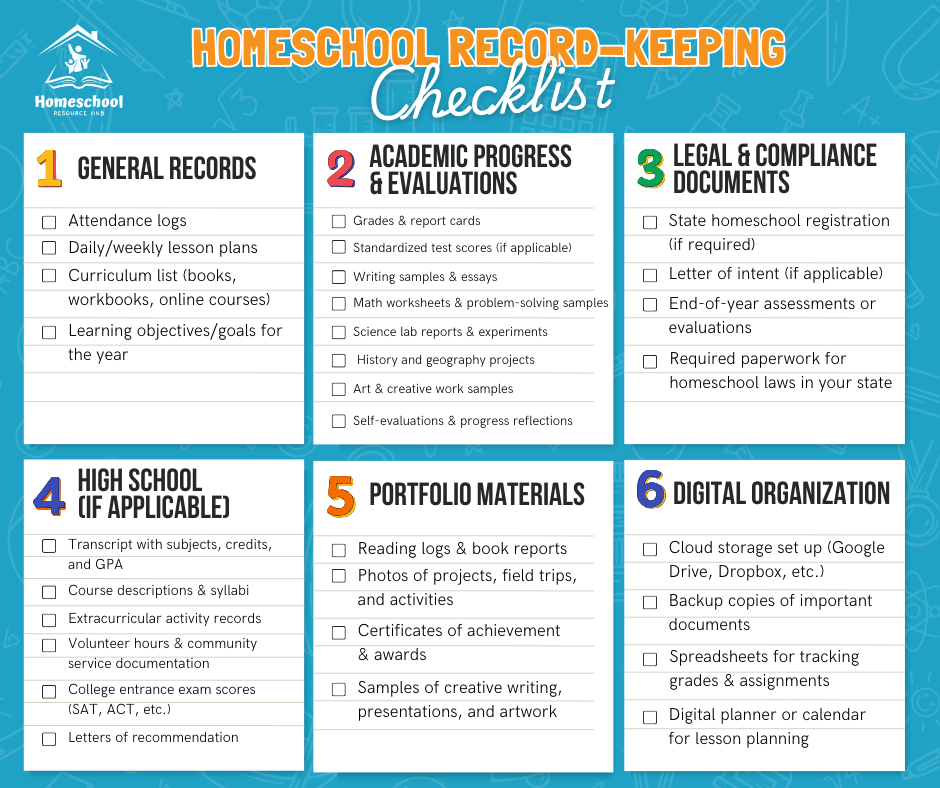
Each state has its own homeschooling regulations, and some require parents to keep detailed records. These records may include attendance logs, progress reports, or standardized test scores. If you live in a state with strict homeschooling laws, keeping meticulous records will ensure you remain compliant.
Some states require parents to submit portfolios for review or maintain proof of instructional time. Without proper record keeping, you could find yourself scrambling to gather documentation when asked to provide proof of compliance.
- Tracking Academic Progress
Homeschool records help parents monitor their child’s progress over time. Without a structured approach to record keeping, it can be difficult to identify learning gaps or areas where your child excels.
Keeping track of assignments, projects, and assessments allows you to:
- Adjust lesson plans to meet your child’s needs.
- Ensure subjects are being covered thoroughly.
- Document skills development and learning milestones.
- Preparing for High School and Beyond
If your child plans to attend college or transition into the workforce, having a well-documented homeschool transcript is essential. Many colleges require transcripts, course descriptions, and standardized test scores as part of the admissions process.
Additionally, homeschool graduates applying for scholarships often need to provide records of academic achievements and extracurricular activities. Proper documentation can also be useful when seeking dual-enrollment opportunities or preparing for AP exams.
- Creating a Meaningful Portfolio
A homeschool portfolio is a collection of your child’s work and achievements, which can serve multiple purposes:
- Provides a tangible record of academic growth.
- Showcases creativity and accomplishments.
- Acts as a keepsake to look back on in later years.
With organized records, compiling a homeschool portfolio becomes a straightforward and rewarding process rather than a stressful last-minute task.
Practical Tips for Maintaining Homeschool Records
- Choose the Right Record-Keeping System
There is no one-size-fits-all approach to homeschool record keeping. The best system is one that works for you and your child. Consider these options:
Digital Record Keeping Tools
- Homeschool Tracker: A powerful digital tool that allows you to track coursework, grades, and attendance.
- Google Drive or Dropbox: Store lesson plans, worksheets, and assignments in digital folders.
- Trello or Notion: Create digital boards to organize lesson plans and track progress.
Physical Record Keeping Systems
- Color-coded binders: Assign a different color for each subject to easily organize worksheets, tests, and projects.
- File folders: Store important documents such as transcripts, report cards, and legal paperwork.
- Journals or notebooks: Keep a daily or weekly homeschool log to track learning activities and observations.
- Establish a Routine for Updating Records
Consistency is key to maintaining an organized homeschool record-keeping system. Set aside a specific time each week or month to update your records. This could include:
- Logging test scores and completed assignments.
- Updating reading lists and book reports.
- Recording extracurricular activities and volunteer work.
By making record keeping a habit, you avoid the last-minute stress of compiling records when needed.
- Keep Attendance Logs
Even if your state doesn’t require attendance tracking, keeping a log can help establish structure in your homeschool routine. A simple method is to use:
- A printable attendance sheet.
- A digital spreadsheet.
- A homeschool planner with built-in attendance tracking.
Logging attendance can also be useful when applying for educational discounts or verifying instructional hours.
- Organize Physical and Digital Documents
If you prefer physical records, invest in a filing cabinet or storage bins. For digital records:
- Create folders for each subject.
- Use cloud storage to prevent data loss.
- Backup files regularly to avoid losing important documents.
A combination of physical and digital record keeping is often the most effective approach.
- Maintain a Homeschool Portfolio
A well-structured homeschool portfolio includes:
- Samples of your child’s best work.
- Photos of science projects or field trips.
- A reading log and book reports.
- A transcript (for high school students).
Portfolios not only serve as an official record but also as a cherished keepsake of your child’s educational journey.
- Develop a Grading & Evaluation System
If you assign grades, keep it simple with:
- A grading spreadsheet in Excel or Google Sheets.
- A rubric-based grading system for essays and projects.
- Periodic self-assessments where your child reflects on their learning.
This ensures that when the time comes for college applications or evaluations, you have everything well-documented.
Real-Life Examples of Effective Homeschool Record Keeping
Example 1: The Organized Parent
Jennifer, a homeschooling mom of three, uses Google Drive to store her children’s assignments, tests, and transcripts. She has a folder for each child and subfolders for different subjects. Every Friday, she updates their progress logs, making record keeping a stress-free process.
Example 2: The Paper-Lover
John prefers physical record keeping. He uses binders with clear plastic sleeves to store his child’s work samples, attendance records, and test scores. He keeps a portfolio of achievements to share with evaluators at the end of the year.
Example 3: The Hybrid Approach
Laura combines digital and physical record keeping. She logs grades in a Google Spreadsheet, maintains a paper planner for daily lesson plans, and stores completed assignments in a filing system. This method allows her to stay organized without feeling overwhelmed.
Record Keeping Doesn’t Have TO Be Overwhelming
Homeschool record keeping doesn’t have to be overwhelming. By choosing the right system, maintaining a routine, and utilizing both physical and digital storage methods, you can stay organized and stress-free. Whether you’re homeschooling for a year or through high school graduation, these strategies will help you stay compliant, track progress effectively, and prepare your child for future success.
Start small, build your system over time, and enjoy the peace of mind that comes with having everything in order!