Creating a homeschool-friendly science lab at home doesn’t require a dedicated room, expensive equipment, or a science degree. Most families can build an effective homeschool science space using everyday items, a few key tools, and an organized learning area.
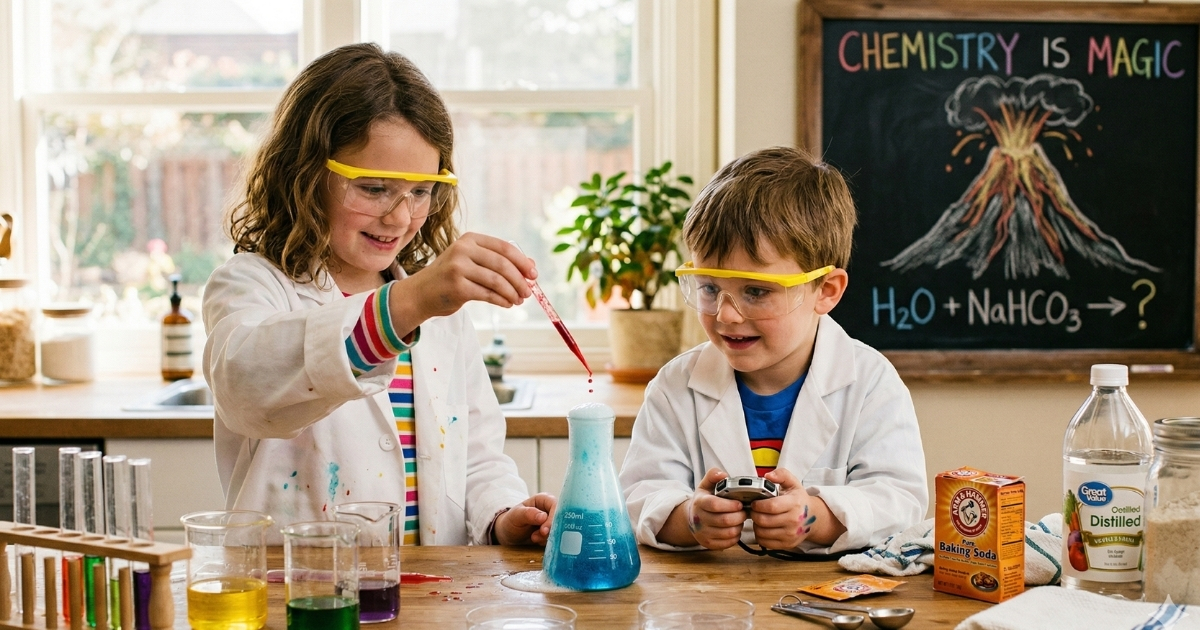
A homeschool science lab at home can be as simple as a small table, basic measuring tools, safety gear, and common household supplies like baking soda, vinegar, and magnifying glasses. Add a few science kits, storage bins, and notebooks, and you have everything needed for engaging hands-on science experiments.
Hands-on science is one of the most exciting parts of homeschooling. Kids get to explore, test ideas, and learn by doing instead of just reading a textbook. The good news is that creating a science-friendly home environment is far easier than most parents expect.
At DKM Homeschool Resource, we’ve seen thousands of parents successfully turn kitchen counters, garage corners, and spare desks into amazing learning labs. The key isn’t perfection—it’s creating a space where curiosity is welcome and experiments can happen easily.
Let’s walk through exactly what you need to set up a homeschool science lab that works for your family.
What Equipment Do You Need For A Homeschool Science Lab?
Most homeschool science labs need only a few basic tools to support experiments, observation, and hands-on learning.
Here are the essential items many homeschool families start with:
Basic Observation Tools
- Magnifying glass
- Microscope (optional but helpful)
- Binoculars for nature studies
- Flashlight
Measurement Tools
- Measuring cups and spoons
- Kitchen scale
- Thermometer
- Ruler and measuring tape
- Stopwatch or timer
Experiment Supplies
- Baking soda
- Vinegar
- Food coloring
- Balloons
- Plastic cups
- Pipettes or droppers
- Baking trays
Recording Materials
- Science notebook
- Graph paper
- Colored pencils
- Clipboards
Safety Equipment
- Safety goggles
- Apron or lab coat
- Rubber gloves
You likely already have many of these items at home. A homeschool science lab is less about specialized gear and more about giving children tools to explore the world around them.

Choosing The Best Location For Your Homeschool Science Lab
One of the biggest misconceptions about homeschooling science is that you need a separate room or a formal lab setup. In reality, many families run excellent science programs right from their kitchen table.
What matters most is having a predictable space where experiments can happen without stress. When kids know where science supplies live and where experiments happen, they become more independent learners. That consistency also helps reduce the chaos many parents worry about.
You also don’t need a large area. A simple corner with a storage bin, a foldable table, and a few shelves can become a fantastic learning hub. Some families even keep their science supplies in a rolling cart that moves between rooms depending on the day’s activities.
Here are a few popular homeschool science lab locations:
Kitchen Table Lab
Great for younger kids and quick experiments.
Pros:
- Easy cleanup
- Access to water and sink
- Good lighting
Garage Science Station
Perfect for messier projects.
Pros:
- Space for larger experiments
- Safe for chemical reactions
- Good for engineering projects
Desk or Study Table
Ideal for observation-based science.
Pros:
- Good for microscope work
- Organized learning environment
- Quiet focus time
Outdoor Science Area
Amazing for nature-based learning.
Pros:
- Weather experiments
- Plant studies
- Biology observations
If you’re just starting out, choose the easiest location in your home. You can always expand later.
Budget-Friendly Science Tools Every Homeschool Family Should Have
You do not need expensive lab equipment to teach excellent science at home. In fact, many of the most memorable homeschool experiments use items already sitting in your pantry.
At DKM Homeschool Resource, we encourage parents to focus on versatile tools that can support dozens of different experiments rather than buying single-purpose kits. A good magnifying glass, measuring tools, and a few reusable lab supplies can cover an entire year of science activities.
Here are some low-cost tools worth investing in:
1. Basic Microscope
A beginner microscope can often be found for $40–$70 and opens the door to a whole new world of discovery.
Kids can examine:
- leaves
- onion cells
- pond water
- salt crystals
2. Dropper Pipettes
Incredibly useful for chemistry experiments and easy to use for younger students.
3. Clear Beakers or Measuring Cups
Perfect for mixing solutions and observing reactions.
4. Digital Kitchen Scale
Helpful for chemistry experiments and learning measurement skills.
5. Storage Containers
Plastic bins help keep supplies organized and easy to access.
Free or nearly free science resources:
- Nature collections (rocks, leaves, insects)
- Recycling materials for engineering projects
- Library science books
- Free printable experiment guides
When kids can easily access these tools, science stops feeling like a chore and starts feeling like an adventure.
Organizing Homeschool Science Supplies Without The Chaos
Science can quickly turn into a mess if supplies aren’t organized well. The trick is to make everything visible, labeled, and easy to put away.
A simple organization system can make a huge difference in how often your children engage with science activities.
Here’s a practical setup many homeschool families use:
1. Use Clear Bins
Label bins for categories like:
- Chemistry supplies
- Biology tools
- Nature collection items
- Experiment materials
2. Keep a “Current Experiment” Tray
This holds the supplies needed for the week’s science project.
3. Store Liquids Separately
Place liquids in sealed containers inside a plastic tub to prevent spills.
4. Create a Science Notebook Station
Keep notebooks and pencils near the experiment area so kids can record observations right away.
5. Rotate Materials
You don’t need every supply out at once. Rotate items to match what you’re studying.
An organized science space encourages kids to take initiative. When supplies are easy to find, curiosity turns into action much faster.
Common Homeschool Science Lab Mistakes (And How To Avoid Them)
Many parents worry they’ll “mess up” science education at home. Fortunately, the most common mistakes are easy to fix once you know what to watch for.
One mistake we see often is focusing too heavily on complicated experiments. Parents sometimes believe science must involve dramatic reactions or advanced equipment to be meaningful. In reality, simple observations—like watching seeds sprout or tracking the phases of the moon—teach powerful scientific thinking skills.
Another common issue is waiting for the perfect curriculum before starting hands-on learning. Science exploration can begin immediately using everyday materials and simple questions. Children learn a tremendous amount just by observing, predicting outcomes, and discussing results with a parent guiding the process.
Some families also unintentionally remove the fun from science by turning every experiment into a graded assignment. While recording observations is valuable, the heart of science is curiosity. Allow kids to explore, ask questions, and sometimes make a mess while they discover how things work.
Simple Science Lab Activities You Can Start This Week
You don’t need months of planning to begin using your homeschool science lab. A few simple activities can spark excitement right away.
Here are some easy ideas you can try this week.
1. Baking Soda Volcano
Supplies:
- baking soda
- vinegar
- dish soap
- food coloring
Concepts learned:
- chemical reactions
- gas formation
2. Seed Germination Experiment
Place seeds in a clear bag with a damp paper towel and tape it to a window.
Kids observe:
- root development
- plant growth stages
3. Density Rainbow
Use sugar water and food coloring to create layered liquids.
Concepts learned:
- density
- liquid properties
4. Nature Observation Journal
Go outside and document:
- insects
- leaves
- weather patterns
5. Simple Engineering Challenge
Give kids household materials and ask them to build a bridge that holds a book.
Materials:
- paper
- tape
- cardboard
- popsicle sticks
These types of projects build real scientific thinking while keeping learning exciting.
Homeschool-Friendly Science Lab
Creating a homeschool-friendly science lab at home doesn’t require perfection, expensive equipment, or a dedicated room. With a few simple tools, an organized space, and a willingness to explore alongside your kids, science can quickly become one of the most exciting parts of your homeschool routine.
The real magic of homeschooling science isn’t in fancy experiments—it’s in watching curiosity grow. When children can ask questions, test ideas, and see results with their own eyes, they begin to think like scientists. Those moments of discovery are what make science stick for life.
If you’re just beginning your homeschool journey, remember that small steps matter. Start with a few supplies, try one experiment this week, and build from there. Over time, your homeschool science lab will grow naturally as your kids’ interests expand.
At DKM Homeschool Resource, we love helping parents feel confident in their homeschooling journey. Explore more of our blog for practical homeschooling strategies, curriculum ideas, organization tips, and encouragement for every stage of homeschool life.
Science Lab FAQs
FAQ: Do homeschoolers really need a science lab at home?
A full laboratory isn’t necessary for effective homeschooling science. Many families use a kitchen table or small workspace with simple science tools like measuring cups, magnifying glasses, and notebooks. The goal is creating a consistent place where experiments and observation-based learning can happen easily.
FAQ: What age should kids start doing science experiments at home?
Children can start simple homeschool science activities as early as preschool. Young kids enjoy sensory experiments, nature observation, and basic reactions like baking soda and vinegar. As they grow, parents can gradually introduce more structured homeschool science lab activities and recording methods.
FAQ: What are the best homeschool science resources for beginners?
Some excellent beginner homeschool science resources include library experiment books, nature study guides, and simple science kits. Many families also use free online experiment ideas combined with basic science lab supplies to create engaging lessons without expensive curriculum programs.