A Beginner’s Guide to the Waldorf Homeschooling Method

Homeschooling opens up the opportunity for parents to tailor their child’s education in a way that aligns with their family values and their child’s unique needs. One popular approach is the Waldorf homeschooling method, rooted in the philosophies of Rudolf Steiner. This approach emphasizes creativity, hands-on learning, and a deep connection with nature. If you’re considering this educational method, this guide will help you get started.

Below, we’ll explore beginner Waldorf education tips, discuss the fundamentals of building a Waldorf homeschool curriculum, and provide practical strategies to make this philosophy come alive in your home.

Understanding The Basics Of Waldorf Education

Waldorf education focuses on holistic child development by balancing academics with creative and practical skills. The overarching principles include:

  • Education of the Whole Child: This method nurtures the head, heart, and hands. It blends intellectual growth (thinking), emotional development (feeling), and physical activities (doing).
  • Minimal Screen Time: Steiner advocated for reducing screen exposure, especially for young children. The focus should remain on real-life experiences and direct interaction with the world.
  • Rhythm and Routine: The day-to-day structure follows a consistent rhythm, fostering security and balance for children. Morning lessons might focus on academics while afternoons are dedicated to creative or outdoor activities.
  • Art and Creativity: Subjects are often introduced through storytelling, music, painting, or hands-on activities. Creative expression is woven into all areas of learning.
  • Nature as a Classroom: Spending time outdoors is essential. Whether it’s gardening, nature walks, or observing seasonal changes, children are encouraged to develop a harmonious relationship with the natural world.

Keep these principles in mind as you design your Waldorf-oriented homeschool environment.

Essential Tips For Beginner Waldorf Homeschoolers

Essential Tips For Beginner Waldorf Homeschoolers

Adopting Waldorf homeschooling can feel overwhelming at first, especially if you’re new to the method. Use these beginner-friendly tips to ease into the process and build a foundation for future success.

  1. Start Small

You don’t need to overhaul your entire homeschool setup overnight. Slowly integrate Waldorf elements. For example, begin by incorporating more storytelling into your lessons or planning an outdoor activity every afternoon. Gradually add more aspects like rhythm-based scheduling or handwork projects as you and your child adapt.

  1. Prioritize a Daily Rhythm

One of the first steps to implementing a Waldorf homeschool is establishing a daily rhythm. This doesn’t mean micromanaging every minute but rather creating a predictable flow to the day. A general rhythm might look like this:

  • Morning: Main lesson (math, reading, or history) taught through storytelling or artistic activities.
  • Midday: Snack, outdoor time, or physical activity.
  • Afternoon: Handwork, baking, or nature studies.
  • Evening: Family dinner, storytelling, or quiet reading time.

A consistent rhythm creates stability and helps children transition smoothly between activities.

  1. Gather Natural Materials

Waldorf homeschooling starts with creating a welcoming and inspiring environment. Swap out excessive plastic toys or gadgets for natural, open-ended materials like wooden blocks, wool felt, or pinecones. These tools can be used in multiple imaginative ways, encouraging creative play.

  1. Learn Alongside Your Child

You don’t need to be an expert in Waldorf philosophy to get started. Dedicate time to learn alongside your child. Read Waldorf-inspired books or follow online courses to deepen your understanding. Remember, homeschooling is as much about your growth as it is about your child’s.

  1. Be Flexible

Children blossom at their own pace, and Waldorf education recognizes this. Don’t stress if your child is “behind” in reading or arithmetic according to conventional standards. Waldorf encourages delayed academics, particularly for young children, focusing instead on storytelling, movement, and hands-on experiences before age seven.

Building Your Waldorf Homeschool Curriculum

A Waldorf homeschool curriculum adapts Steiner’s philosophy to your personal teaching style and your child’s needs. Here are some curriculum ideas and resource suggestions to help you get started.

Main Lesson Blocks

The Waldorf curriculum is organized into main lesson blocks, focusing deeply on one subject for several weeks. This method promotes immersion and mastery. Below are a few examples of subjects by age group:

  • Ages 6-7: Fairy tales, painting, and basic math (taught through stories).
  • Ages 8-9: Legends, ancient history, cursive writing, or gardening.
  • Ages 10-12: Greek mythology, geometry, geography, and science experiments.
  • Teen years: World history, Shakespeare, advanced science, or philosophy.

Arts and Handwork

Creative arts and handwork form the backbone of Waldorf education. Incorporate activities such as:

  • Drawing with beeswax crayons or colored pencils.
  • Knitting, crocheting, or weaving.
  • Seasonal crafts like candle making or leaf pressing.

By teaching practical skills, you are not only nurturing creativity but also building your child’s confidence and focus.

Nature Studies

Design science lessons around hands-on, outdoor exploration. Encourage your child to journal about their observations, start a small garden, or study local wildlife during nature walks.

Resources for Waldorf Curriculum

Several publishers and online platforms specialize in Waldorf-inspired homeschooling materials. Explore options like:

  • The Christopherus Homeschool Curriculum (tailored for Waldorf homeschoolers).
  • Oak Meadow (offers flexible, Waldorf-inspired programs).
  • Traditional books such as “Teaching Waldorf at Home” by Donna Simmons.

Seasonal Festivals

A unique aspect of the Waldorf method is celebrating the changing seasons. Build your curriculum around seasonal festivals by incorporating storytelling, baking, or crafts tied to those themes. For example, bake bread for Michaelmas in the fall or make lanterns for Martinmas in November.

The Role of Play and Imagination in Early Childhood

For young children in Waldorf homeschooling, play is a vital part of their development. It’s not considered time off from learning but rather an integral part of their education.

Children build problem-solving skills, strengthen social connections, and develop fine motor skills through play. Unstructured, open-ended play allows them to use their imagination freely. For example, a simple stack of wooden blocks could become a castle, a boat, or a tiny village. These experiences foster creativity and independence, which are foundational for later academic success.

You may also notice an emphasis on dramatic play in Waldorf education. Younger children may role-play stories they’ve heard or create elaborate fantasy adventures. By encouraging this imaginative approach, you’re helping your child learn how to think creatively and critically about the world around them.

Creating A Waldorf-Friendly Homeschool Space

Your homeschool environment plays a huge role in bringing Waldorf principles to life. Small adjustments to your space can make learning feel more natural and inviting. Here’s how to get started:

  • Declutter the Space: A clutter-free, organized space helps both you and your child focus. Remove outdated or disorganized materials and keep essential supplies neat.
  • Bring Nature Indoors: Decorate with items like fresh flowers, pinecones, or seasonal elements to make your child feel connected to the outside world.
  • Soft, Warm Colors: Waldorf classrooms often feature calming, neutral tones. Consider painting walls a soft peach or light yellow, and use gentle lighting instead of harsh fluorescents.
  • Designate a Handwork Area: Set aside a corner for handwork activities, complete with bins for yarn, paintbrushes, or fabric scraps.
  • Create a Reading Nook: A comfy, well-lit corner for storytelling time or quiet reading will help your child associate joy and relaxation with books.

These changes don’t need to happen all at once; implement them over time to align with your family’s pace and priorities.

Encouraging Consistency and Patience

Starting your Waldorf homeschool is an adventure that requires patience and adaptability. Some days may feel magical, with your child immersed in painting, storytelling, or a nature walk. Other days may feel chaotic or unproductive. Both experiences are part of the process.

The key to success lies in consistency. Stick to your daily rhythm and trust the process, even if the results don’t seem immediate. Small, steady steps will lead to a rich and rewarding homeschooling experience over time.

Finally, remember that Waldorf education is not about perfection. It’s about creating a nurturing space to help your child grow into a thoughtful, imaginative, and well-rounded individual. By starting this method, you’re offering them a remarkable gift of discovery and growth.

Waldorf homeschooling can feel like a significant transition, but when you approach it with curiosity and care, the results are incredibly rewarding for both you and your child. Now it’s time to take the first step and see where this educational path leads you!


Want To Travel With Your Kids? Try Roadschooling!

Homeschooling opens up a world of flexibility for families, and that freedom can include something extraordinary: roadschooling. If you’ve dreamed of hitting the road, exploring new places, and teaching your kids along the way, roadschooling might be for you. Combining travel and education, roadschooling provides unique benefits for families, fostering meaningful connections, real-world learning, and unforgettable experiences.

Here’s how to make the most of the benefits roadschooling offers to families, with practical advice on keeping things simple and educational while exploring new horizons.

Why Roadschooling Works For Families

Roadschooling combines the flexibility of homeschooling with the adventure of travel. It empowers families to shift their classroom to wherever the road takes them. Here’s why this approach works so well for families:

  • Hands-On Learning Opportunities: Traveling allows kids to engage with subjects in real, tangible ways. Visiting historical landmarks, touring science museums, or exploring natural wonders makes lessons come alive in ways no textbook can. For example, studying U.S. history while touring Washington, D.C., offers kids a deeper understanding of the nation’s past through firsthand experiences.
  • Fostering Global Awareness: Kids develop a broader perspective on cultures, customs, and worldviews by visiting different states or countries. This immersive exposure helps them appreciate diversity and understand global connections.
  • Flexible Schedules: Homeschooling already has the benefit of customized schedules, but roadschooling takes that a step further, letting families design their educational routines around destinations and experiences. For instance, mornings can be spent on math lessons, while afternoons are reserved for exploring National Parks.
  • Strengthened Family Bonds: Time spent traveling promotes stronger connections. Roadschooling families often find that shared adventures bring them closer as they experience new places, solve problems together, and create lifetime memories.
  • Teaches Adaptability: Traveling naturally exposes kids to change, whether it’s navigating a new city, adjusting to an unfamiliar environment, or learning to plan on the go. These experiences teach resilience and flexibility, valuable life skills for any child.

By combining travel and education, roadschooling makes learning immersive and fun. Families unlock a new level of freedom while fostering curiosity and growth in their children.

Traveling And Homeschooling Made Easy

Traveling And Homeschooling Made Easy

Venturing into roadschooling may feel daunting at first, but with a little preparation, it’s easier than it seems. The key is to keep things organized and prioritize both learning and fun. Here’s how to simplify the process:

  • Invest in Portable Learning Tools: Look for lightweight and portable homeschooling essentials like a laptop, e-reader, or compact whiteboard. Digital resources, such as online curriculums and educational apps, are a lifesaver for parents on the move. Programs like Khan Academy or Duolingo can cover various subjects without requiring heavy books.
  • Plan Around Educational Destinations: Choose destinations that align with your kids’ current curriculum. If they’re studying marine biology, visit aquariums or coastal areas. If they’re learning about the Civil War, seek out battlefields and historical reenactments. Educational trips and family vacations can overlap beautifully.
  • Create a Workspace System: Even in small spaces like an RV or hotel room, it’s important to have a defined learning area to help kids focus. Portable desks, trays, or fold-down tables can create instant workspaces.
  • Stick to a Routine: While the flexibility of roadschooling is wonderful, having a loose daily routine ensures kids stay on track academically. Mornings might involve structured lessons, while afternoons are for exploring. Consistency helps maintain momentum.
  • Utilize Library Cards and Museums: Get library cards at local stops to borrow books and resources. Many libraries also offer free Wi-Fi, workspace, and helpful librarians who can guide you toward educational events in the area. Cultural passes from libraries can even grant free admission to museums and other attractions.
  • Practice Minimalism: When you’re packing for travel, less really is more. Stick to multi-use items and focus on essentials for both school and leisure. A well-organized educational tote or backpack ensures quick access to all the learning materials you need.
  • Stay Connected With Homeschool Communities: Many families are taking the roadschooling path today. Online homeschooling forums or local Facebook groups can help you connect with other roadschoolers, share tips, and arrange meetups.

By taking manageable steps and being flexible, your family can move from a beginner’s mindset to confident roadschooling pros in no time.

Educational Travel Tips For Homeschooling Parents

Combining travel with education may seem overwhelming at first, but a few practical strategies can make all the difference. Here’s how to make the most of your roadschooling experience:

  • Leverage Free or Affordable Attractions: Look for national parks, local nature centers, or government-funded historical sites that offer free or discounted entry. Consider the America the Beautiful National Park Pass, which gives families unlimited access to thousands of sites.
  • Use Travel Time for Audiobooks and Podcasts: Long drives are the perfect opportunity for passive learning. Audiobooks related to history, science, or literature allow students to soak up knowledge on the go. Age-appropriate podcasts can spark curiosity, too.
  • Turn Vacations Into Deep Dives: When visiting a specific place, incorporate full learning units around it. For example, a trip to Arizona’s Grand Canyon could include lessons on geology, natural erosion, westward expansion, and Native American cultures. Research these topics ahead of time for meaningful teaching moments during your visit.
  • Document the Journey: Having your kids keep travel logs or journals enhances their writing skills, encourages reflection, and creates a lifelong memento. They can jot down observations about each place, draw what they saw, or even pen fictional stories inspired by their travels.
  • Make Financial Literacy Fun: Traveling provides a unique opportunity to teach budgeting, currency exchange, or cost comparisons. Getting kids involved in planning expenses for a trip allows lessons about math and money to naturally unfold.
  • Capture Learning With “Education Kits”: Consider packing kits tailored for subjects like science or art. A small magnifying glass, notebook, and field guide can spark the study of insects or plants while hiking. Art kits with sketchbooks and colored pencils let kids draw what they observe in different environments.
  • Tap Into Local Experts: Some of the best lessons come from interacting with locals who can provide unique insights. Park rangers, museum guides, or cultural performers may have entertaining and educational anecdotes to share. Be sure to ask questions and engage fully in these experiences.

By carefully planning educational activities alongside your travel plans, you can transform every trip into a rich learning experience.

Making The Most Of Roadschooling For Families

A big part of what makes roadschooling special is how it blends education with exploration in a way that feels seamless. For parents, it’s about finding that balance between structure and spontaneity. For children, it can ignite a lifelong passion for learning and adventure.

Roadschooling helps kids experience history in motion, science in nature, and culture through engagement. When lessons are tied directly to their travels, kids internalize knowledge more deeply. Imagine discussing the physics of geysers at Yellowstone or learning geometry by measuring the angles of ancient structures. These moments bring out the best in learning by making it relatable.

Additionally, this lifestyle lets parents create invaluable memories with their kids. Travel builds shared stories and teaches teamwork. Whether it’s navigating a map together, preparing meals in a campervan, or solving an unexpected challenge on the road, each moment becomes part of the family’s collective learning experience.

When families leave behind the confines of a classroom, they gain the freedom to explore at their own pace. The result? Children who are curious, informed, and better prepared for the world. That’s the true benefit of roadschooling.

How To Plan A Unit Study School Year

Planning a unit study homeschool year can be an exciting and effective way to tailor your child’s education to their interests while maintaining structure and organization. By focusing on thematic units that integrate multiple subjects, you can create an engaging and cohesive learning experience for your family. 

Here, we’ll explore how to organize your homeschool with unit studies and develop schedules that keep everything on track, even when life throws unexpected challenges your way.

Organizing Your Homeschool With Unit Studies

Unit studies focus on a central theme or topic and weave various subjects like language arts, science, history, and math into that theme. Organizing your homeschool around unit studies can make the learning process more immersive and streamlined, but it requires thoughtful planning.

Here are essential steps to organize your homeschool with unit studies:

  1. Choose Themes That Excite and Inspire
  • Consider Your Child’s Interests
    Begin by identifying topics your child is naturally curious about. This could range from dinosaurs to space exploration, world cultures, or famous artists. When kids are genuinely interested, they’re more likely to stay engaged.
  • Integrate Core Learning Areas
    Ensure the theme allows you to cover essential subjects. For example, a study of “oceans” could include:

    • Science (ocean ecosystems, marine biology)
    • Language Arts (read books about the ocean, write reports or creative stories)
    • Math (calculating distances across oceans, measuring depths)
    • Art (sketching marine life, creating underwater scenes)
    • History/Geography (naval exploration, mapping the world’s oceans)
  • Keep Age and Ability in Mind
    Tailor themes to your child’s grade level. Younger kids may thrive with simpler, hands-on topics, while older children can handle more in-depth research and critical thinking projects.
  1. Establish Learning Goals
  • Identify what you want your child to achieve by the end of each unit. Learning goals should include skills, knowledge, and concepts they’ll retain:
    • For younger kids, goals might include learning to recognize patterns or improving fine motor skills.
    • For older children, you might focus on mastering essay writing or understanding key historical events.
  • Write down these goals to keep you focused throughout the unit.
  1. Build a Homeschool “Unit Study Library”

Having resources readily available makes planning smoother. Consider:

  • Gathering books, documentaries, and online resources aligned with your themes.
  • Collecting arts and crafts supplies for hands-on projects.
  • Incorporating educational games, apps, and field trip ideas.
    A well-stocked library not only helps in planning but also keeps materials accessible for spontaneous curiosity.
  1. Create a Flexible Structure

Although unit studies are thematic, it’s important to stay organized:

  • Use binders or digital folders to store resources and track your progress.
  • Break your unit into manageable chunks, such as weekly or bi-weekly lessons.
  • Leave room for flexibility. If your child gets deeply interested in a specific aspect of a theme, it’s okay to spend more time exploring it.

Creating Effective Unit Study Schedules

Creating Effective Unit Study Schedules

Once you’ve organized your unit studies, the next step is designing a schedule that works for your family. Homeschooling offers the advantage of adaptability, so feel free to customize until you find a rhythm that fits your unique needs.

Daily and Weekly Planning Tips

To avoid feeling overwhelmed, plan both daily and weekly schedules for your unit studies. Here’s how:

  • Set Weekly Themes or Focus Areas
    Divide the unit’s overarching theme into smaller weekly topics. For example, in a unit about Ancient Egypt:

    • Week 1: Geography of Egypt
    • Week 2: Daily life in Ancient Egypt
    • Week 3: Famous monuments and their construction
    • Week 4: Pharaohs and their roles
  • Block Out Study Times
    Dedicate specific times of the day for focused study, while leaving space for hands-on activities and projects. For instance:

    • Morning (Core subjects): Reading, writing, and research
    • Midday (Interactive learning): Science experiments, crafts, or field trips
    • Afternoon (Review & reflection): Documenting lessons in a journal or discussing key takeaways
  • Balance Structure and Flexibility
    Stick to your planned times when possible but don’t be afraid to pivot. If your child is fascinated by a topic, give them time to explore it without rushing to the next section.

Building Time for Independent and Group Work

  • Create moments for independent work, like reading or completing worksheets. This encourages self-discipline and critical thinking.
  • Frame collaborative time for discussions or team-based projects if you are homeschooling multiple children. Older siblings can even assist younger ones, reinforcing their learning.

Preparing for Seasonal and Life Changes

Life doesn’t always go as planned, so prepare your schedule with flexibility:

  • During busy seasons, create “lighter” schedules with shorter lessons or independent activities.
  • Keep a stash of quick, ready-to-go ideas like educational videos, audiobooks, or simple craft projects.

Adapting for Multiple Children 

If you’re homeschooling children of different ages, unit studies can be a lifesaver, allowing everyone to learn together on the same theme at their own level.

For instance, a unit on weather could involve the younger child creating a simple weather journal with drawings, while the older child writes a research paper on the causes of hurricanes. Both children can participate in shared activities like building a weather vane or discussing predictions from the local forecast.

When planning schedules, allot group learning time for shared activities, and designate individual learning blocks tailored to each child’s abilities. This helps maintain momentum and ensures everyone’s needs are met without added stress. Be sure to check in regularly to see how each child is progressing and whether specific adjustments are needed.

Keeping Unit Studies Manageable 

The beauty of unit studies is their flexibility, but it’s also easy to fall into the trap of overcomplicating them. To keep things manageable, aim for depth rather than breadth. Instead of tackling everything under the sun about a theme, hone in on a few core aspects that you can explore more deeply.

Also, don’t hesitate to use pre-made unit study guides or curricula if time is tight. While creating your content can be fulfilling, there’s no shame in leveraging well-structured resources from trusted providers. These guides often come with book recommendations, activity ideas, and schedules, making them a helpful foundation to build on.

Another time-saving trick is to recycle or adapt past unit studies. If you’ve already done a theme with one child, you can tweak it for younger siblings by changing books or activities to match their current stage of learning.

Tips For Long-Term Success

Ultimately, the goal is to create a sustainable routine that works for your family. Consider these additional tips for long-term success when planning a unit study homeschool year:

  • Review and Reflect
    At the end of each unit, take time to review what your child enjoyed and learned. This helps you refine future plans and identify areas needing improvement.
  • Keep It Fun
    Learning should be enjoyable. Incorporate games, hands-on projects, and field trips whenever possible to avoid monotony.
  • Take Breaks
    Don’t forget to build in downtime. Breaks allow everyone to recharge and prevent burnout.
  • Celebrate Achievements
    Wrap up each unit with a celebration, like a themed party or mini-presentation of what your child has learned. These moments build confidence and reinforce the value of their hard work.

By thoughtfully organizing your homeschool with unit studies and developing schedules that fit your family’s lifestyle, you can create an enriching, flexible, and engaging educational experience for your children. Once you get into the rhythm, you might just find unit study planning is as fulfilling for you as it is exciting for your kids!

What Is The Best Curriculum For Gifted Children

Selecting the right curriculum for gifted children can be challenging for homeschooling parents. Gifted learners often require more advanced, varied, and stimulating educational resources to keep them engaged and help them thrive. This post explores some of the best homeschooling curriculums and approaches for advanced learners, along with resources that help nurture their unique abilities. 

Whether your child excels in math, reading, the arts, or critical thinking, there are options to meet their needs.

Characteristics Of Gifted Children And Their Educational Needs

Gifted children are those who demonstrate above-average intelligence, exceptional creativity, or advanced skills in specific areas. While these characteristics sound exciting, how you approach homeschooling can make a massive difference.

Gifted learners:

  • Grasp concepts quickly and need less repetition.
  • Exhibit intense curiosity with a passion for exploring topics in depth.
  • Require flexibility to learn at their own pace.
  • Often have asynchronous development, meaning their intellectual abilities may not align with their emotional or social maturity.

A one-size-fits-all curriculum may fail to meet these complex needs. This is why using tailored programs or resources for homeschooling gifted children is vital.

Homeschooling Programs For Advanced Learners

Homeschooling parents often seek structured programs that cater to gifted learners. Here are some of the most popular and effective options to consider:

  1. Online Curriculums

For families seeking flexibility, online homeschooling platforms are a blessing. Many of them include self-paced courses, interactive lessons, and challenging material designed for gifted students.

Examples include:

  • CTY Online Programs (Johns Hopkins Center for Talented Youth): These offer advanced courses in subjects such as computer science, math, and literature for K-12 learners.
  • Khan Academy: Although free, its lessons in advanced math, science, and computing challenge even the brightest students.
  • Time4Learning: Their curriculum spans PK-12 and allows kids to work at their level, whether ahead or behind in certain subjects.

Homeschooling Programs For Advanced Learners

  1. Classical Education Approach

Classical education breaks learning into three phases:

  • The Grammar Phase focuses on foundational knowledge through memorization.
  • The Logic Phase introduces critical thinking.
  • The Rhetoric Phase emphasizes articulation and reasoned expression.

Many gifted children thrive in this rigorous and structured model. Programs like Memoria Press and The Well-Trained Mind are great options for homeschoolers interested in classical education.

  1. Project-Based Learning (PBL)

Some gifted learners excel in hands-on environments where they can apply knowledge creatively. PBL emphasizes student-driven projects on topics that motivate them. For instance:

  • Building a bridge for an engineering-focused lesson.
  • Writing and producing a play to combine language arts with performance.
  1. Customizable Curriculums

Curriculums like Moving Beyond the Page and Oak Meadow cater specifically to advanced learners. They allow for adjustment of activities and depth based on the student’s abilities, balancing academics with enrichment.

  1. Subject-Specific Programs

Sometimes, a child’s giftedness lies in one specific subject. Specialized curriculums, such as Beast Academy for math or Brave Writer for creative writing, allow parents to hone these strengths while addressing other areas with a more generalized approach.

Education Resources for Gifted Kids

Beyond curriculums, many additional resources can help gifted children. Access to supplementary materials and community tools enriches the homeschool experience. For example, libraries offer free access to complex texts, inspiring young readers. Likewise, museum memberships can create opportunities to experience hands-on scientific or historical learning.

Many parents of gifted children look for classes, camps, or clubs where their kids can interact with peers who share their interests and talents. From robotics teams to coding camps, these settings allow kids to develop friendships while continuing to explore the subjects they love. Local homeschooling co-op groups or online communities (like Mensa Kids) are excellent platforms to connect with other families on the same educational path. When combined with a strong curriculum, these resources provide balance and depth to a gifted child’s learning environment.

Enrichment Activities to Complement Your Curriculum

Gifted children thrive when their education includes a mix of academics, creativity, and experiential learning. Enrichment activities keep homeschooling engaging and open new doors for exploration.

Here are ideas to integrate enrichment activities into your homeschooling routine:

  • Nature Exploration: Encourage science learning through outdoor activities like bird watching, gardening, or studying ecosystems.
  • Creative Endeavors: Support your child’s artistic or musical interests by introducing painting, sculpture, or learning an instrument.
  • Language Immersion: Use apps or online resources such as DuoLingo or Rosetta Stone to start learning a new language.
  • Competitions: Provide opportunities to participate in math competitions, spelling bees, or coding challenges.
  • Book Clubs: Organize reading circles to expose them to classic literature or contemporary novels and encourage critical thinking.

Balancing academic excellence with creativity ensures a well-rounded development for your advanced learner.

Social And Emotional Considerations For Gifted Kids 

The social and emotional needs of gifted children are equally critical as their academic requirements. Many gifted learners struggle with feelings of isolation or frustration because their peers may not understand their advanced thinking. This is one reason a parent’s approach to socialization is so important.

Look for mentors, role models, and educators who recognize and celebrate your child’s intellectual and emotional uniqueness. Coaching them into teamwork during homeschool co-op activities, group science experiments, or debate clubs helps them learn collaborative skills while navigating different dynamics. Active listening and creating safe zones for them to express frustrations or anxieties also build confidence.

Understanding and addressing these emotional nuances ensures that your gifted child feels valued, supported, and socially connected.

Key Features To Look For In A Curriculum

When shopping for the best curriculum for gifted children, keep these features top of mind:

Flexibility

A curriculum needs to allow your child the freedom to pick subjects of interest, accelerate through familiar topics, and pause to explore challenging areas.

Depth

Gifted learners often enjoy deeper dives into concepts that extend into specialized knowledge. Look for curriculums offering optional extensions and extra materials.

Assessment Tools

Advanced learners may need formative assessments that track mastery rather than basic proficiency. Programs with adaptive assessments are ideal for meeting this need.

Student-Led Learning Opportunities

Some of the best programs enable students to follow their curiosity by integrating research projects, experiments, or independent study units.

Multi-Age Adaptability

Many gifted children aren’t at the same educational level across all subjects. Curriculums that allow cross-level learning help address their asynchronous development.

Balancing Independence and Guidance in Homeschooling

Gifted children often crave independence, but even the brightest learners benefit from parental guidance. Striking a balance is crucial. Give your child the space to explore topics at their pace, but also provide structure and encouragement when needed.

Try strategies like:

  • Setting Weekly Goals: Allow your child to help craft their schedule to feel ownership of their learning.
  • Offering Checkpoints: Regularly review progress so that challenges or misunderstandings can be addressed.
  • Encouraging Research: For independent thinkers, encourage online research or reading beyond the scope of curricula.
  • Stretch Assignments: Challenge them with tasks slightly outside their comfort zone to maintain momentum.

When children feel supported yet empowered, their confidence, curiosity, and love of learning will grow tremendously.

Final Thoughts on Choosing the Right Curriculum

No single curriculum works equally for every gifted child, and that’s okay. The beauty of homeschooling is that you can adapt based on your child’s needs. Whether you lean into online courses, project-based learning, or specialized academic tracks, the key lies in remaining flexible and open to experimentation.

Pairing a strong base curriculum with resources, tools, and your child’s passions creates a learning environment where they can flourish. Gifted learners are full of potential, and as parents, you have the unique opportunity to guide them toward becoming lifelong learners and confident individuals.

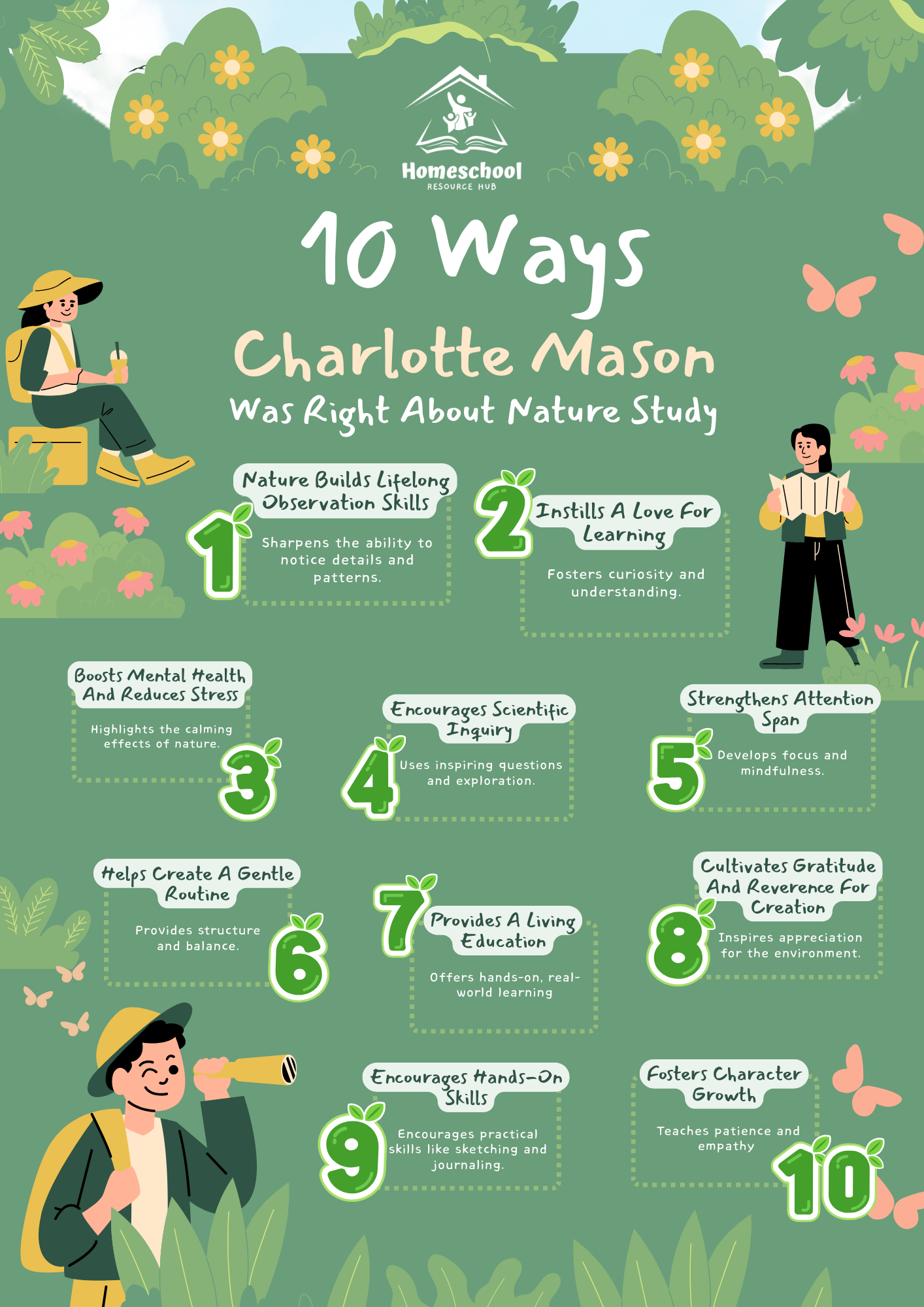
10 Ways Charlotte Mason Was Right About Nature Study

Nature is more than a backdrop for family hikes or a playground for kids. For homeschool families, it’s one of the most effective and overlooked educational tools. Charlotte Mason, a 19th-century educator who profoundly influenced modern homeschooling, believed deeply in the power of nature to shape minds, character, and curiosity. Her ideas remain as relevant today as they were in her time, offering countless benefits to contemporary homeschooling methods. 

Here are 10 ways Charlotte Mason’s nature study methods can benefit your homeschool.

1. Nature Builds Lifelong Observation Skills

Charlotte Mason advocated for getting children outdoors regularly, where they could develop keen observation skills. The goal was simple but profound—to train children to carefully notice the world around them. This practice aligns perfectly with modern homeschooling. Observation encourages critical thinking and attention to detail, which are essential for many academic disciplines like science, art, and even history.

  • How to Incorporate This: Take outdoor walks where children are encouraged to notice small details like the veins on a leaf, the texture of bark, or the songs of birds. Keep the walks short with younger children but increase the time as they grow.
  • Practical Tip: Provide magnifying glasses or binoculars for closer exploration. You’ll be amazed at how many questions naturally arise when kids look closely.

2. Instills A Love For Learning

Charlotte Mason’s nature study methods are not about memorizing botanical terms or completing worksheets. Instead, this approach fosters a love for discovery. By simply observing and interacting with the natural world, children learn organically, often without realizing they’re “studying.”

  • How to Incorporate This: Designate a regular “nature study day” and treat it as an adventure instead of a lesson. Encourage exploration of a stream, collecting wildflowers, or identifying insects while letting curiosity take the lead.
  • Practical Tip: Show excitement yourself. When your enthusiasm for nature is apparent, your children will mimic that same energy.

Boosts Mental Health And Reduces Stress

3. Boosts Mental Health And Reduces Stress

Homeschooling families often juggle academics while securing strong emotional bonds. This can sometimes lead to stress—for both parents and kids. Mason’s emphasis on nature helps alleviate this. Studies show that spending time outdoors reduces cortisol levels and improves mood, which indirectly benefits learning.

Taking a break from indoor routines and textbooks to enjoy the fresh air can rejuvenate everyone, making lessons indoors more productive.

  • How to Incorporate This: Plan your outdoor time during transitions between challenging subjects. For instance, spend 15 minutes outside after math before moving on to reading.
  • Practical Tip: Even urban families can benefit by visiting nearby parks or using their backyard for quick mental resets.

4. Encourages Scientific Inquiry

Charlotte Mason believed that spending time in nature naturally kindled curiosity about the sciences. A child who watches ants carrying food to their colony may begin asking questions about ecosystems, teamwork, or biology. With gentle guidance, these observations become springboards for deeper learning.

  • How to Incorporate This: Use questions like, “Why do you think the soil here is different from the park?” or “What might happen to this pond in winter?” Treat observations as gateways to topics like earth science, biology, or meteorology.
  • Practical Tip: Keep basic tools on hand, such as field guides, sketching notebooks, and a small microscope to encourage deeper exploration.

5. Strengthens Attention Span

Unlike fast-paced screens or toys with flashing lights, nature engages children in a slower, sustained form of attention. Mason understood this, appreciating how nature study could help children build patience and concentration. These skills are invaluable, both for higher learning and daily life.

  • How to Incorporate This: Encourage kids to sit quietly and observe a specific spot for a few minutes. Can they spot the changes, like a bird moving or a flower shifting in the wind?
  • Practical Tip: Challenge older kids to sketch plants or animals they encounter in order to train focus and attention.

Charlotte Mason Nature Study

6. Helps Create A Gentle Routine

Charlotte Mason valued rhythm and structure but believed strongly in allowing for flexibility. Nature study offers the perfect balance. By incorporating daily, weekly, or seasonal nature walks into your homeschool, you create a calming routine that fosters a sense of stability for your children.

It’s not about forcing kids to clock hours outside every day. Even small, consistent moments add up to a rich educational experience.

7. Provides A Living Education

Mason often spoke of a “living education,” where real experiences trumped canned lessons. Nature epitomizes this. Rather than reading about river ecosystems in a textbook, students can experience a riverbank firsthand. Seeing the flow of water, observing fish and plant life, and feeling wet soil teaches more than any diagram could.

  • How to Incorporate This: Turn local parks, gardens, or even your backyard into your classroom. Observe animals and plants as they truly function.
  • Practical Tip: Use nature excursions as jumping-off points for other subjects. For example, a study on tree rings could inspire math (counting growth years) or art (creating tree-inspired crafts).

8. Cultivates Gratitude And Reverence For Creation

One of Charlotte Mason’s most cherished ideas was using nature to inspire awe and gratitude. Observing the beauty and complexity of the natural world fosters an appreciation for the Earth and its Creator. This quality is often lifelong, shaping children into adults who value and protect nature.

  • How to Incorporate This: Help your children keep gratitude journals specifically for nature. They can list moments or things they’ve appreciated during their outdoor time.
  • Practical Tip: Engage in scavenger hunts to discover hidden beauties, like spotting dew drops on spiderwebs or counting shades of green in a meadow.

9. Encourages Hands-On Skills

Nature study goes beyond observation when children engage with the environment in hands-on ways. For example, gathering leaves, building simple bird feeders, or planting a small garden. These moments make learning tactile and rooted in reality, which reinforces deeper understanding.

Spending time handling nature also nurtures a scientific mindset. Kids learn to classify objects, notice patterns, and use hypotheses, solid foundations for STEM learning.

10. Fosters Character Growth

Perhaps one of the most overlooked benefits of nature study is the way it shapes character. Mason saw outdoor education as a way to nurture qualities like humility, perseverance, and resourcefulness. Whether it’s patiently waiting for a butterfly to land or persisting on a long hike, nature allows kids to face small challenges that build resilience.

It also teaches stewardship. When kids recognize the beauty and fragility of an ecosystem, they instinctively care more about protecting the environment, which says a lot about the adults they will grow to become.

Take moments to celebrate each character milestone you notice. Whether your child overcomes a fear of picking up a worm or successfully grows vegetables in a garden bed, these lessons extend beyond academics.

Homeschooling with nature-based learning offers a world of possibilities for both you and your children. Every observation, every question, and every outdoor minute strengthens your homeschool experience while instilling a lifelong love of learning. The beauty of Charlotte Mason’s methods lies in their simplicity and adaptability. With small efforts, you’ll find that your children begin to notice the first blooms of spring, sketch birds they see in winter, and rekindle your own appreciation for the natural world.

If you’re new to nature study, start small. Create a schedule, grab a few basic supplies, and introduce structured activities like nature journaling or photography challenges. With these strategies, you’ll see firsthand how nature study sparks curiosity, builds patience, and lays a solid foundation for learning, memories, and character formation.

Why Unit Schooling Is Great For Large Families

For homeschooling parents of large families, finding strategies that work for everyone can feel overwhelming. Each child has their own needs, interests, and learning styles, which can complicate lesson planning. Enter unit schooling, a flexible and inclusive strategy ideal for big families. By teaching multiple children using a single theme or topic, this approach simplifies your day while boosting collaboration, creativity, and engagement.

Unit schooling involves building lessons and activities around a central theme or topic. For example, instead of teaching math, science, and history as separate, unrelated subjects, you weave them together under one theme like ancient Egypt, outer space, or environmental conservation. Within this approach, every subject connects to the theme, creating a holistic and immersive learning experience.

For families with multiple learners in different age groups, unit schooling is a game-changer. It encourages children of various levels to explore the same topic, while parents adapt the lessons to suit each child’s ability. Younger kids might color maps of ancient Egypt while older ones analyze pyramid construction techniques, fostering a balance of individual learning and family-wide collaboration.

Benefits Of Unit Schooling For Large Families

Unit schooling aligns naturally with the needs of large families. Its structure offers both efficiency and flexibility, making your homeschool days smoother and more rewarding. Here’s why it works so well:

  • Simplified Planning
    Instead of juggling separate curriculums for every child, you create a single unit that incorporates all subjects. This eliminates unnecessary duplication and streamlines the planning process.
  • Strengthened Family Bonds
    Learning together as a family builds shared knowledge and experiences. A group lesson on space exploration, for instance, sparks conversations and connections that extend far beyond the classroom.
  • Customizable for Different Ages
    A well-designed unit can include lessons for toddlers to teens. Younger children might focus on tactile activities, like building models, while older kids tackle research projects or advanced experiments.
  • Less Overlap, More Depth
    Planning a single theme in-depth means you’re not rushing through unrelated topics. With unit schooling, you can dig deep into fascinating subjects, enabling kids to develop critical thinking and a richer understanding.
  • Encourages Leadership
    Older siblings often take on mentoring roles during collaborative lessons, helping younger ones with activities or reading aloud. This nurtures leadership skills and strengthens sibling relationships.
  • Suits Varied Learning Styles
    By incorporating a range of activities—from hands-on projects to writing assignments and discussions—unit schooling accommodates visual, kinesthetic, and auditory learners alike.

Benefits Of Unit Schooling

Designing a Unit-Based Curriculum for Large Families

Creating a unit-based curriculum for your homeschool requires thoughtful planning and organization. With a little upfront effort, you can reap the rewards of an efficient, engaging system that works for all your children.

  • Pick Themes That Spark Interest
    Choose topics that excite your kids. Animal habitats, world cultures, or famous inventions are all great options.
  • Tie Subjects Together
    For any theme, consider how to weave in various subjects. If the theme is “oceans,” you can study marine biology (science), shipping routes (geography), nautical myths (literature), and oceanic trade economics (math).
  • Adjust for Age and Skill Level
    Provide scaffolded assignments suited to each child’s level. Younger kids could draw sea creatures, while older ones write essays on coral reef ecosystems.
  • Schedule Collaborative and Independent Work
    Balance group learning (like watching a documentary together) with independent tasks suited to each child’s pace.
  • Include Creative Projects
    Hands-on activities like building dioramas, painting murals, or cooking theme-based meals make learning fun and memorable.

Strategies for Managing Large Family Homeschooling

Homeschooling big families comes with logistical challenges, but the right strategies can make your day run smoothly. These tips help you foster a productive, balanced environment:

  • Use Rotational Activities
    While older kids work on independent tasks, you can focus on guiding younger ones through their activities. Rotational schedules ensure everyone gets individualized attention.
  • Encourage Peer Learning
    Pair children together for group activities that suit their strengths. Older siblings can help younger ones with reading or share skills, like map-making or model-building.
  • Set Up a Shared Workspace
    Create a central learning area stocked with supplies like pencils, paper, glue sticks, and books. This eliminates wasted time searching for materials and keeps everyone in one place.
  • Establish a Daily Routine
    A predictable schedule helps children know what to expect and keeps transitions between subjects smooth. For instance, start each day with a family read-aloud, followed by themed activities.
  • Delegate Household Tasks
    Large families often mean a busy household. Assign age-appropriate chores to your children to create time in your day for teaching and planning.
  • Celebrate Achievements Together
    End each unit with a family celebration, like a themed party, group presentation, or display of completed projects.

Collaborative Learning In Homeschooling 

One of the standout features of unit schooling is its emphasis on collaborative learning. When children of different ages work together on common activities, they learn to communicate, share ideas, and solve problems as a team. This mirrors real-world dynamics, helping them develop interpersonal skills from an early age.

For example, during a unit on ancient civilizations, older kids might research the daily life of the Romans while younger children construct a model of a Roman villa. At the end of the unit, everyone presents their work to the family. This shared experience fosters unity while instilling confidence in each participant.

Through collaboration, children also gain an appreciation for differing perspectives. Younger siblings learn from the expertise of older ones, while the older children develop patience and empathy. These group dynamics not only enhance education but create lifelong memories.

Overcoming Challenges in Large-Family Homeschooling

Homeschooling a big family can sometimes feel chaotic, but with patience and adaptability, you can overcome the challenges. Here’s how:

  • Set Realistic Expectations
    Understand that not every day will go perfectly. Flexibility and a sense of humor go a long way in navigating the unexpected.
  • Create Clear Boundaries
    Establish rules about noise levels, shared supplies, and taking turns during group activities. Clear guidelines create smoother days.
  • Take Breaks
    Allow time for recess, play, or simply relaxing. Over-scheduling can lead to burnout—for both parents and kids.
  • Prioritize Self-Care
    With a large family, finding time for yourself might feel impossible, but it’s essential. Take small moments to recharge, whether that’s a quick walk or enjoying your favorite book.
  • Use Technology Wisely
    While homeschooling often emphasizes hands-on learning, don’t shy away from educational apps and online programs as tools for supplemental teaching.

A Family-Centered Education 

Unit schooling thrives because it reflects the importance of family. Learning together, solving problems as a group, and exploring different ideas builds deeper relationships. This family-centered focus strengthens more than academics; it reinforces respect, collaboration, and a sense of belonging.

When you share the joy of discovery through unit schooling, you create lasting experiences that go beyond textbooks. Cooking an ancient-recipe stew, trekking through a forest to search for native plants, or simply reading historical novels aloud are all examples of ways this approach creates shared culture within the family. These moments remind us that homeschool education isn’t just about grades or standards but about nurturing bonds that last a lifetime.

Tools and Resources for Simplifying Unit Schooling

Having the right tools can make planning and implementing unit schooling easier. Here are some resources to consider:

  • Library Books and Documentaries
    Your library is a treasure trove for unit-based learning. Borrow books, DVDs, and magazines on your chosen topics.
  • Notebooking and Lapbooks
    Encourage your kids to record their lessons creatively. Whether it’s writing journal entries or creating foldable lapbooks, these methods foster retention and creativity.
  • Printable Unit Studies
    Explore online platforms offering ready-made unit studies. These save you planning time while covering various interests and academic levels.
  • Local Field Trips
    Museums, science centers, and historical sites are amazing supplements to themed learning. Search for local spots that tie into your units.
  • Hands-On Experiment Kits
    Science kits, gardening supplies, and art materials make lessons come alive and leave a stronger impression.

Unit schooling offers a uniquely versatile, engaging, and family-focused approach to education. For large homeschooling families, this method turns challenges into opportunities for connection, creativity, and growth. With thoughtful planning, you can make it work seamlessly for every member of your family.


Top 5 Best Unit Studies Curriculum And Resources

Unit studies provide a refreshing, creative approach to homeschooling. They take a thematic idea and use it to teach multiple subjects, creating an interconnected and engaging learning experience. Rather than separating subjects like math, science, and language arts, unit studies integrate these areas into one cohesive topic. For children who thrive on interactive learning or have a passion for specific subjects, this method is ideal. 

To help you get started, we’ve compiled the top resources for unit study education, highlighting curricula and tools that make homeschooling flexible and enjoyable.

Why Unit Studies Work

Unit studies are perfect for developing critical thinking and problem-solving skills. Instead of isolated lessons, they emphasize how subjects link together. For instance, a theme on “Weather” could include:

  • Exploring the science of the water cycle and storm formation.
  • Learning math through weather-related data like temperatures or precipitation levels.
  • Studying historical events like hurricanes or droughts.
  • Writing poems or essays about different seasons.
  • Creating arts and crafts inspired by storms, clouds, or rainbows.

This integrative approach works well for children who don’t thrive in traditional schooling or need more hands-on, engaging content. Unit studies allow parents to tailor lessons to their child’s interests and strengths, which often motivates kids to learn more.

1. Gather ‘Round Homeschool

Gather ‘Round Homeschool is one of the top resources for unit study education, particularly for families teaching multiple children. Designed by Rebecca Spooner, this curriculum is an all-in-one program where families can work around a single theme while accommodating different ages and skill levels.

Key Features:

  • Each unit revolves around engaging topics, like geography, ecosystems, or ancient civilizations.
  • Lessons are inclusive of science, language arts, and art, with the option to integrate Bible study.
  • Available as downloadable PDFs or physical copies, making it convenient for any lifestyle.

Tips for Success:

  • Adjust assignments for your children based on their age or learning progress.
  • Use weekly planning to organize lessons and supplemental materials.
  • Add hands-on elements, like lapbooks or experiments, to make content come to life.

The flexibility offered by Gather ‘Round makes it a go-to option for homeschoolers who want to streamline their curriculum without sacrificing quality or variety.

op 5 Best Unit Studies Curriculum And Resources

2. KONOS Character Curriculum

KONOS is a favorite among families who value character building alongside academics. Utilizing a faith-based approach, this program integrates virtues like responsibility, courage, and humility into its thematic lessons.

What Sets KONOS Apart:

  • Lessons are built around character traits and combine subjects like history, literature, and practical life skills.
  • Activities are hands-on, encouraging children to engage with the material actively.
  • Includes interactive group elements, such as role-playing and science experiments, which work well for co-op settings.

How to Make the Most of It:

  • Dedicate time to cooperative learning activities, such as family presentations or group discussions.
  • Lean into the program’s emphasis on character development by incorporating relevant family devotions or challenges.
  • Customize projects to suit your child’s interests and skill levels.

KONOS is especially suited for families looking for an immersive, values-driven curriculum. Its heavy involvement from parents creates a deep and rewarding learning environment.

3. Five in a Row (FIAR)

Five in a Row takes a story-based approach to unit studies, making it ideal for younger children. The program uses beautifully illustrated picture books to teach lessons in language arts, science, social studies, and math. Each book is explored over five days, with activities and questions designed to deepen understanding.

Highlights:

  • Engages children through storytelling while sneaking in academic topics.
  • Minimal preparation for parents; the guide provides everything needed for the week.
  • Encourages creativity through crafts and related activities.

Pro Tips:

  • Borrow or purchase suggested picture books from the library or local bookstore. Some favorites include Madeline and The Tale of Peter Rabbit.
  • Enhance lessons with complementary activities, like watching documentaries or organizing related field trips.
  • Keep a homeschool journal where children can reflect on the stories and activities.

Five in a Row is an inviting gateway for parents just starting with unit studies or wanting to instill a love of reading in young learners.

4. The Good and the Beautiful Unit Studies

The Good and the Beautiful offers stand-alone unit studies that emphasize wholesome, family-friendly content. Each unit is designed to be visually stimulating and academically enriching.

Notable Features:

  • Topics range from biology and history to fine arts, giving families variety to explore.
  • Minimal parent prep is required; the lessons are well-structured and ready to use.
  • The curriculum incorporates character-building themes that complement the academic focus.

You can use The Good and the Beautiful as a complete curriculum or mix it with other tools to diversify your routine. The flexibility of picking individual units ensures you can easily align lessons with your child’s curiosity.

5. Apologia for Creation-Based Learning

For families seeking faith-based unit studies, Apologia offers a science-centered curriculum grounded in creationism. Whether your child is fascinated by zoology, anatomy, or earth’s natural wonders, Apologia has a well-planned unit to explore.

Why Families Love Apologia:

  • Clear, easy-to-understand lessons ensure even complex scientific ideas are approachable.
  • Hands-on activities reinforce concepts, helping children fully grasp the subject matter.
  • Designed for a wide age range, so siblings can learn together.

Using Apologia allows parents to blend science education with faith-based discussions, making it a versatile addition to homeschooling.

Tools And Supplies For Unit Studies

Creating unit studies requires organization and the right resources. Beyond dedicated curricula, having tools and supplies on hand can make the experience seamless and enjoyable. Here’s what can help:

Digital Platforms:

  • Teachers Pay Teachers is excellent for affordable, ready-made unit study activities and lessons designed by educators.
  • Pinterest brims with free and creative ideas, from crafts to detailed project tips.
  • Homeschool Planet helps you organize lessons, track assignments, and keep everything in one place.

Physical Supplies:

Stock up on common homeschooling materials to support learning at home:

  • Craft essentials like glue, paper, markers, and paints.
  • Science kits for experiments related to specific themes.
  • Visual aids, including maps, globes, and flashcards.
  • Journals for note-taking and creative writing.

By keeping these materials accessible, you can easily transition between topics without rushing to gather supplies.

Building Custom Unit Studies

For homeschoolers who prefer flexibility, creating custom unit studies is a fantastic alternative to packaged curricula. This approach allows parents to tailor lessons to their child’s specific needs and interests.

Steps to Get Started:

  1. Choose a Theme: Whether your child is curious about dinosaurs, oceans, or the Renaissance, start with something that excites them.
  2. Integrate Subjects: Plan lessons that touch on multiple disciplines:
    • Explore math by calculating speeds, temperatures, or quantities.
    • Teach geography or history by mapping locations and timelines.
    • Encourage writing with creative prompts or research essays.
  3. Plan Hands-On Activities: Build models, perform experiments, or create artwork tied to the theme to encourage deeper engagement.
  4. Set Clear Goals: Outline specific learning objectives, whether they’re academic or involve soft skills like collaboration and time management.

A homemade unit study not only adapts to your child’s personal pace but also makes learning an immersive adventure.

Creating a Lasting Impression with Unit Studies

Unit studies revolutionize the way children learn by integrating subjects around a central theme. They inspire curiosity and deepen understanding through hands-on experimentation and creative exploration. The top resources for unit study education in this list, from structured curricula like Gather ‘Round and KONOS to flexible programs like Five in a Row, serve as great starting points. Whether you choose pre-made materials or venture into creating custom lessons, unit studies will bring joy and lasting knowledge to your homeschooling experience.

No Textbooks? No Problem! Try Unschooling

Homeschooling today looks very different from the rigid, textbook-driven structure it had in previous generations. Many parents are now seeking alternative methods of education, and unschooling has emerged as a flexible and child-centered approach to learning. Instead of sticking to set lesson plans and materials, unschooling prioritizes a child’s natural curiosity and interests, allowing education to unfold organically. This approach puts children in charge of their learning while parents provide support and resources to help them thrive.

This post explores unschooling methods for homeschooling, the benefits of this alternative education style, and practical strategies to try it in your home.

Unschooling is a child-led, interest-driven model of homeschooling that moves away from the structured frameworks of traditional curriculum. While traditional learning often involves standardized curriculum, schedules, and workbooks, unschooling allows children to determine what and how they want to learn. Parents take on the role of facilitators, helping their children find resources, experiences, and tools to satisfy their curiosity.

Through unschooling, children naturally develop skills and knowledge in a way that feels meaningful and relevant to them. For instance, a child who loves animals may explore biology, ecology, and even art through sketching wildlife. Instead of focusing on set subjects at specific times, this method allows children to integrate multiple skills and disciplines organically.

The ultimate goal of unschooling is to foster a love of learning, promote creativity, and encourage children to explore their passions without the constraints of rigid lesson plans.

Benefits Of Unschooling Education

Unschooling offers various advantages for both children and parents. Shifting away from traditional methods allows children to develop problem-solving skills, confidence, and curiosity, while parents experience the joy of sharing and facilitating their child’s educational discoveries.

  1. Personalized Learning

Every child is unique, with their own interests, strengths, and learning styles. Unschooling tailors education to fit the child rather than forcing the child to fit into a standardized mold. A few examples include:

  • A child passionate about coding may learn advanced computer programming alongside basic math skills through creating apps or games.
  • Someone interested in history might explore the past through museums, historical documentaries, and creative writing projects.

This personalized approach nurtures love and excitement for learning, as the focus is on what truly excites the child.

  1. Freedom to Learn at Their Own Pace

Unschooling allows children to explore concepts and ideas without the pressure of timelines or grades. If a child needs more time to understand a topic, they can spend as much time as they need. Conversely, if a child finds a subject easy, they can quickly move on to the next challenge. This flexibility builds confidence and reduces frustration.

  1. Real-World Experiences

Instead of learning exclusively through textbooks and worksheets, unschooling emphasizes practical, hands-on education. From exploring science through experiments in the kitchen to learning math while building a treehouse, real-world experiences provide depth and context that make knowledge stick. Daily activities such as shopping, cooking, and gardening offer endless potential for lessons in math, science, language arts, and more.

  1. Encourages Independence and Self-Motivation

Unschooling places responsibility for education in the hands of the child. By allowing kids to direct their own learning, they develop independence, self-discipline, and time management skills. For example, a child working on a creative project might learn how to set goals and manage their time to complete it.

  1. Reinforces Creativity and Critical Thinking

Without predetermined lesson plans, unschooling encourages children to think outside the box. It fosters questioning, problem-solving, and hands-on experimentation. Whether they’re inventing a new game or solving a tricky puzzle, this approach inspires creative and critical thinking skills that are immensely valuable in any field of adult life.

How To Implement Unschooling At Home

How To Implement Unschooling At Home

Unschooling can seem overwhelming for parents used to traditional teaching methods, but it’s easier than you might think. Here are actionable tips to help you kick off this approach in your home:

  • Start by Observing Your Child’s Interests
    Pay attention to what excites your child. Do they love dinosaurs? Science experiments? Making art? Use these interests as starting points for their learning.
  • Create a Resource-Rich Environment
    Keep a variety of books, art supplies, science kits, building tools, and even access to digital platforms at home. The more options they have, the easier it will be for them to explore their interests.
  • Encourage Self-Directed Exploration
    Provide the freedom for your child to follow their curiosity. For instance, if they show an interest in gardening, give them seeds, soil, and tools to experiment with planting and growth. Avoid stepping in unless they ask for guidance.
  • Bring Learning into Everyday Life
    Every day includes natural learning opportunities. Grocery shopping can teach budgeting and math. Cooking introduces concepts like measuring, chemistry, and planning. Even a car ride can lead to lessons on geography, observation skills, or cultural discussion about the music you listen to.
  • Practice Patience and Trust
    Unschooling may not resemble traditional learning, and that’s intentional. Trust your child’s natural ability to learn by exploring their interests. Over time, you’ll see skills develop that reflect both their enthusiasm and capabilities.

Alternative Approaches To Homeschooling

Unschooling is one of many creative homeschooling methods. If it feels unfamiliar or you want to blend approaches, these alternatives can complement your homeschooling approach:

  1. Project-Based Learning

This hands-on method revolves around completing meaningful projects. Children explore ideas and acquire skills through planning, researching, and creating something tangible. Examples include building a simple robot with a kit, filming a short documentary, or designing a model city.

  1. Waldorf Homeschooling

Inspired by the Waldorf education model, this approach emphasizes holistic, creative, and nature-based learning. Storytelling, music, outdoor exploration, and handmade crafts become central tools for teaching.

  1. Montessori-Inspired Methods

The Montessori philosophy values independence and hands-on learning. Set up a learning environment where kids can explore practical life skills, such as cooking or cleaning, alongside academic subjects. This method reinforces autonomy while fostering a sense of responsibility.

  1. Eclectic Homeschooling

If you’re unsure which method works best, try integrating elements from different approaches. For example, you might follow a structured math program while leaving history and science instruction open to exploration.

  1. Forest Schooling

This nature-focused approach combines learning with the great outdoors. Nature hikes, survival skills, and environment-based challenges make the world a living classroom. Studies of local ecosystems, weather observation, or animal habitats can all be integrated.

Challenges And Misconceptions Of Unschooling

Despite its many benefits, unschooling can sometimes be misunderstood.

  • Myth: Unschooling lacks structure and discipline.
    Reality: While it avoids rigid schedules, unschooling often naturally develops routines around a child’s learning needs and interests.
  • Myth: Children miss core academic topics.
    Reality: Essential skills like math and reading tend to arise naturally as kids encounter situations that require them, whether it’s baking from a recipe or designing a model airplane.
  • Myth: Colleges don’t accept unschooled students.
    Reality: Many colleges seek out unschoolers for their creativity, independence, and unique experiences.

Find Your Unschooling Network

Unschooling doesn’t mean going it alone. Many communities, both online and offline, support parents who want to try unschooling methods for homeschooling. Connecting with like-minded families can help structure playgroups, organize field trips, and share resources for educational growth. Look for local meetups or digital forums to find other families using this approach.

Unschooling empowers children to explore their passions while building essential skills for life. By respecting your child’s natural curiosity and providing opportunities for real-world learning, this approach creates an environment of joyful exploration and personal growth. You might be surprised at how naturally your child thrives when education is tailored to their individual interests and abilities.

What You Should Know Before Signing Up For An Online Curriculum

Homeschooling families increasingly turn to online curricula for the flexibility and variety they offer. But stepping into this digital landscape requires careful planning and awareness. Not all programs are made equal, and understanding how to assess your options can save time, money, and frustration. 

Below, we’ll explore online homeschool curriculum tips, focusing on selecting the best programs and leveraging top online resources to create an engaging and effective learning experience.

Choosing The Best Online Programs For Homeschooling

Finding the perfect online curriculum can feel overwhelming with so many options available. To simplify the process, keep these considerations in mind:

  1. Understand Your Child’s Learning Style
    Every child learns differently. Some may thrive in visual-heavy programs, while others prefer interactive or auditory elements. Identify whether your child benefits most from videos, hands-on projects, or live virtual interaction. This insight will help narrow down your choices.
  2. Check for Accreditation
    While accreditation isn’t necessary for all homeschoolers, it’s essential if you plan to transition to a traditional school or apply for colleges later. An accredited program ensures the curriculum meets state and national education standards.
  3. Review Content Quality and Scope
    Take time to preview the curriculum’s scope and sequence. Does it align with your state’s educational requirements? Does it cover all the core subjects, such as math, science, language arts, and social studies, at the right grade level?
  4. Evaluate Teacher Support Options
    Some online curricula offer access to certified teachers or tutors, while others are entirely parent-led. Decide how much external teaching support you want before committing to a program.
  5. Assess Flexibility and Pacing
    Look for programs that allow flexibility in pacing, especially if your child has specific educational needs. Self-paced options can be a lifesaver if you need to adapt the schedule to fit your family’s lifestyle.
  6. Ensure an Easy-to-Use Interface
    Online platforms should be user-friendly. Complicated navigation or buggy interfaces can create more stress than ease. Test out demos or trials to ensure the system is simple to use for both you and your child.
  7. Look Into Costs and Hidden Fees
    While some programs offer free resources, others can be costly, especially if they require additional supplies, books, or subscriptions. Look out for hidden fees, and calculate the total cost to ensure it fits your budget.
  8. Read Reviews and Seek Recommendations
    Parent reviews offer valuable insights you won’t find in the program’s description. Join homeschooling forums or social media groups to ask for feedback on specific curricula.
  9. Prioritize Customer Support
    Reliable customer support is as important as the content itself, especially if you’re new to homeschooling. Make sure help is available if technical issues arise or if you need guidance.

Advantages and Challenges of Online Homeschooling Programs

Advantages and Challenges of Online Homeschooling Programs

Online curricula open up incredible opportunities for homeschoolers. By offering interactive tools, a wide range of subjects, and access to specialists, these programs bring structure and variety to education. But they also come with challenges. Prolonged screen time can lead to fatigue, and staying motivated without face-to-face interaction may be tough for some children. Weighing these pros and cons helps create realistic expectations, ensuring your homeschooling experience is a positive one.

Online Education Resources For Homeschoolers

Beyond selecting a core program, supplementary resources can add depth and excitement to homeschooling. These tools and platforms help diversify learning while keeping kids engaged.

  1. Free Educational Platforms and Websites
    Numerous free online tools can complement your main curriculum:
  • Khan Academy: Offers lessons in math, science, history, and more with video tutorials and practice exercises.
  • Duolingo: Great for foreign language learning, with gamified lessons kids enjoy.
  • National Geographic Kids: Provides engaging resources on science, geography, and wildlife for young learners.
  • Scratch (by MIT): Teaches coding and computational thinking through fun, interactive projects.

These tools make it easy to fill gaps in a curriculum while keeping costs down.

  1. Virtual Libraries and Databases
    Access to high-quality reading materials is crucial for enhancing literacy. Many public libraries now offer digital collections of eBooks, audiobooks, and study guides. Popular platforms include OverDrive and Libby apps. Also, consider Britannica Online or JSTOR for advanced research needs among older students.
  2. Online Assessment Tools
    Standardized test prep or formative assessments help track your child’s progress. Websites like IXL or Edulastic allow parents to assess knowledge across various subjects.
  3. Collaborative Learning Platforms
    Programs like Outschool facilitate live digital classes, where students interact with subject experts and peers. For project-based or interactive learning, this is invaluable. Alternatively, some homeschooling co-ops host virtual group lessons or discussion clubs to create a collaborative environment.
  4. Educational YouTube Channels
    YouTube boasts countless educational channels to make concepts more relatable and entertaining. Channels like CrashCourse (high school level) or SciShow Kids (elementary level) provide lessons across a variety of topics.

Balancing Online Education with Offline Activities

A balanced homeschooling schedule includes both online and offline activities. While online tools provide structure and resources, it’s equally important to incorporate experiences that don’t involve screens. Consider hands-on projects, nature exploration, and book-based learning to foster well-rounded growth. Physical activities, such as PE programs or sports, can also prevent the sedentary habits often encouraged by online schooling. Strike a balance so that your child benefits from both digital innovation and real-world experiences.

Tips For Success With Online Learning

The shift to online education requires parents to take on roles such as teacher, facilitator, and tech support all at once. Here are practical tips to succeed with online curricula:

  • Set a Daily Routine
    Establishing predictable routines helps reduce overwhelm. Block consistent periods for core subjects, breaks, and enrichment activities.
  • Create a Dedicated Workspace
    Having a clutter-free learning area limits distractions and fosters focus. Invest in ergonomic furniture to ensure comfort, especially if your child spends long hours at the computer.
  • Learn Together
    Explore the curriculum ahead of time so you can better support your child during lessons. Collaborate during difficult concepts by learning alongside them.
  • Encourage Independence Gradually
    Online homeschooling often teaches self-discipline. Allow younger children to complete tasks with guidance but encourage older students to manage their assignments independently.
  • Monitor Progress Regularly
    Utilize progress reports or built-in tracking tools if the platform provides them. Host weekly check-ins with your child to reflect on goals and achievements.
  • Stay Flexible
    If something isn’t working, revisit your plan. Homeschooling allows you to experiment, so don’t hesitate to adjust aspects of your curriculum or daily schedule as needed.

Building a Community Through Online Homeschooling

One common concern for homeschoolers is the social aspect of learning. Online programs can fill this gap through forums, virtual meetings, and live discussion circles. Look for online groups connected to your curriculum provider, or encourage your child to join extracurricular learning communities. These connections foster friendships while developing communication skills.

Online homeschooling also provides opportunities for parents to connect. Joining homeschool support groups allows families to exchange resources, share successes, and troubleshoot challenges together. These communities are a valuable source of inspiration and motivation, especially for new homeschoolers navigating these waters for the first time.

By carefully preparing and exploring all your options, you’ll set a strong foundation for homeschooling success. Online curricula, paired with ample offline activities and supportive tools, can meet your child’s educational needs while fostering independence, curiosity, and growth.

Why Debate Is So Important In Homeschooling

Homeschooling allows for the flexibility to not only meet academic benchmarks but also to develop core life skills. One activity that truly stands out in this regard is debate. The importance of debate in homeschooling goes far beyond simply learning how to argue a point. Debate encourages critical thinking, sharpens communication skills, builds confidence, and nurtures empathy in students.

By incorporating debate into your homeschool curriculum, you’re not just helping your child learn how to give persuasive speeches or organize their thoughts. You’re equipping them with skills that will serve them in college, the workplace, and throughout life. Let’s explore how debate can bring out the best in your homeschooling experience, particularly in helping your child develop debate skills and how to create meaningful homeschool debate activities.

Benefits Of Debate In Homeschooling

Debating isn’t just about having spirited discussions. It’s a multifaceted activity that can enrich your homeschooling curriculum in numerous ways.

  1. Critical Thinking Skills
    Debate requires students to analyze topics from multiple angles, anticipate counterarguments, and back up their points with logic and evidence. These challenges push kids to think in a more structured, insightful way.
  2. Confidence Building
    Whether it’s speaking in front of family or a group of homeschooling peers, debating helps students overcome stage fright. The more they practice, the more they’ll trust their own ability to present ideas clearly and confidently.
  3. Effective Communication
    Strong communication skills are a lifelong asset. Debate teaches homeschoolers how to craft persuasive arguments, listen carefully to opposing views, refine their thoughts, and articulate those thoughts clearly and respectfully.
  4. Empathy and Open-Mindedness
    Understanding both sides of an issue is key to forming a balanced debate strategy. Having to argue for a position they don’t agree with can help students develop empathy for different perspectives and opinions.
  5. Research Ability
    Debate teaches children how to gather and evaluate information, which is crucial for academic success. They’ll become adept at identifying reliable sources and using evidence to support their claims.

Debate Skills For Homeschoolers

Debate Skills For Homeschoolers

Instilling debate skills in your homeschooler doesn’t have to be overwhelming. The goal is to nurture skills that will grow over time. Here’s how to focus on the foundational skills every young debater should have:

  1. Structuring Arguments

Teaching your kids to structure their arguments is a core element of debate. Introduce them to simple frameworks like “claim, warrant, impact”:

  • Claim: What are they arguing?
  • Warrant: Why, based on evidence, is their claim valid?
  • Impact: Why does it matter?

This structure helps them build arguments in a clear and logical manner. A fun way to practice this is by asking them to write or discuss a persuasive paragraph on a simple topic, such as “Why should our family have a movie night?”

  1. Speaking and Listening Skills

Public speaking is integral to any debate. Practice speaking exercises during homeschool sessions where your child explains their thoughts without interruptions. Follow this with mock debates where they alternate between speaking and listening.

Listening is just as important as speaking. Once your child has presented their argument, encourage them to summarize the opposing side’s points. This ensures they’ve fully understood the counterargument.

  1. Research and Evidence Use

Teach kids how to support their arguments with credible evidence. First, identify topics they’re excited about, like whether school uniforms are beneficial. Guide them in finding relevant articles, studies, or historical examples.

With time, introduce discussions around reliable vs. unreliable sources so they learn to discern factual information from opinion or bias.

  1. Time Management During Discussions

Teach your child to deliver succinct but informative arguments within the time given. Use activities or tools like a timer during practice debates to encourage discipline regarding time constraints.

  1. Emotional Control

Debate can become heated, so teach your child to remain calm and composed even when discussing controversial topics. Encourage them to target the argument, not the person, when presenting rebuttals.

Practical Homeschool Debate Activities

Now that we’ve covered the skills homeschoolers need, it’s time to put those skills into practice. Here’s how you can organize fun and structured activities to strengthen your homeschool debate program.

  1. Family Debates

Family debates are an easy way to foster a love for debate. Pick a lighthearted topic such as “Are books better than movies?” Assign roles, with one person as the moderator and others taking different viewpoints.

  • Set a time limit for each speaker.
  • Allow each person to provide an opening argument, a rebuttal, and a closing statement.
  • Discuss what could have been improved, but celebrate everyone’s effort.
  1. Weekly Debate Challenges

Make debates part of your weekly homeschool schedule. Have your child research a new topic each week like “Should kids be allowed unlimited screen time?” or “What’s more important in sports, teamwork or skill?”

Assign them two perspectives–one for and one against–and allow them to switch positions midway. This reinforces flexibility and teaches them to analyze issues more thoroughly.

  1. Mock Formal Debates

To prepare your homeschooler for competitive debate settings, simulate formal debates. Choose a topic, like “Should animals be kept in zoos?” Each participant can follow formal guidelines with the roles of a proponent, opponent, and judge.

Introduce scoring criteria, such as clarity, persuasiveness, and adherence to time limits. You can use online guides or templates to mimic real debate formats like Lincoln-Douglas debates.

  1. Debate with Peers in a Co-op Group

If your homeschooling group or co-op has regular meetings, propose a debate activity. Engaging with peers sharpens your child’s ability to communicate outside their usual environment.

  • Use team debates where kids work together to prepare arguments.
  • Rotate roles to ensure every child gets a chance to present an argument.
  • Encourage constructive feedback at the end.
  1. Debate Journals

Debating isn’t always about verbal exchange. Encourage your homeschooler to write down arguments on specific topics in a dedicated debate journal.

  • Have them pick a side and write a structured argument every week.
  • Later, challenge them to argue the opposing viewpoint–this teaches adaptability.
  • Reflect together to improve their reasoning and writing skills.

How To Get Started With Debate In Homeschooling

When bringing debate into your homeschool curriculum, start small. Begin with informal discussions over dinner or during family activities. Choose a topic that’s relevant to their age and interest. For example, younger children might enjoy debating about “Is ice cream the best dessert?” while older students might tackle broader social issues like “Should artificial intelligence replace certain jobs?”

Once your child has practiced the basics, gradually introduce more complexity. Provide informational resources like articles, news clips, or books for them to examine before a debate. When possible, connect their debate topics to their regular homeschooling curriculum. For instance, if you’re covering environmental science, host a debate on renewable energy.

The role of the parent or teacher is crucial in guiding discussions and offering constructive feedback. Encourage your homeschooler to take risks in their arguments and to see mistakes as valuable learning opportunities.

Long-Term Impact of Debate

Engaging students in debate doesn’t just impact their current education. The skills they gain will ripple into other areas of their life. For instance, they may find it easier to present innovative ideas in college, respond tactfully in workplace meetings, or engage in meaningful discussions within their communities.

By developing empathy, they’re more likely to respect diverse viewpoints and approach future debates or disagreements with an open mind. Their enhanced critical thinking skills will also enable them to solve problems with a calm and logical perspective.

Homeschooling provides the perfect environment for nurturing these skills. Debate doesn’t require expensive equipment or specific locations–just dedication, curiosity, and a willingness to learn.

Debate has the power to transform the homeschooling experience. By weaving it into your curriculum, you’ll help your child gain lasting skills that go beyond academics.