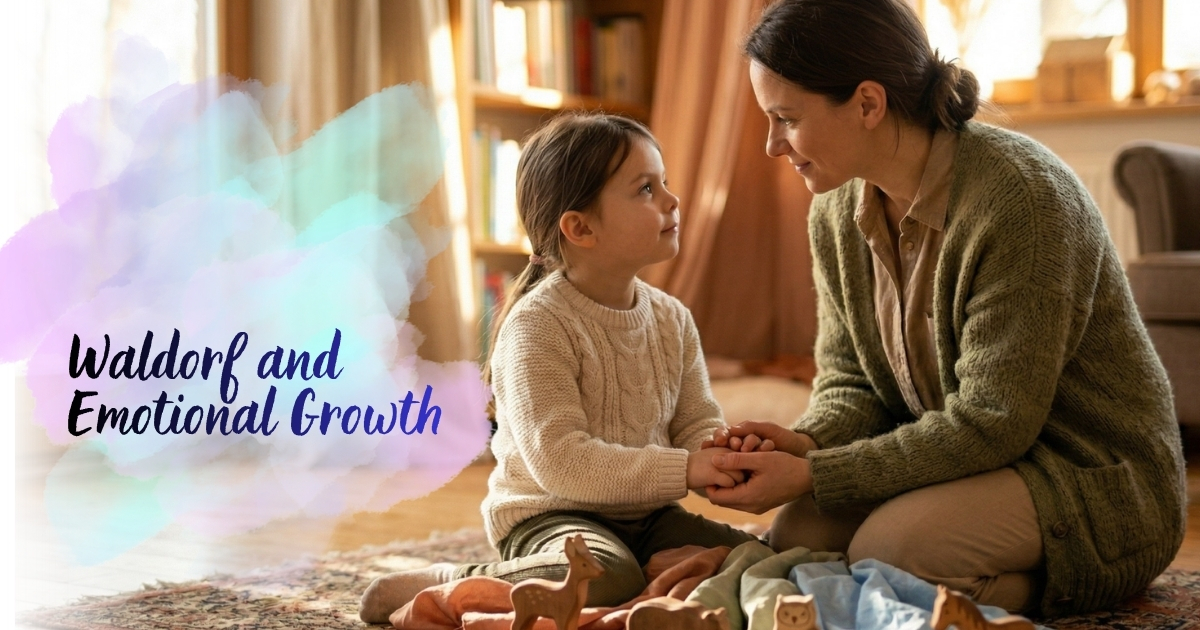
Waldorf homeschooling supports emotional development by focusing on creativity, imagination, routine, and meaningful human connection. Instead of pushing early academics, it prioritizes emotional maturity, resilience, empathy, and a strong sense of self. For many families, this approach creates calmer homes, happier learners, and children who feel secure exploring the world.
Parents often come to us at DKM Homeschool Resource feeling overwhelmed by the many homeschool philosophies available. Waldorf stands out because it recognizes something many parents instinctively know: emotional development is just as important as academic progress.
Let’s walk through how Waldorf homeschooling nurtures emotional growth and which children tend to thrive most in this learning style.
What Types Of Kids Are Best In Waldorf Homeschooling?
Waldorf homeschooling tends to work beautifully for children who thrive in creative, hands-on environments and who benefit from slower, emotionally grounded learning. Kids who enjoy storytelling, art, nature, movement, and imaginative play often flourish in Waldorf settings.
Children who typically do well in Waldorf homeschooling include:
- Highly imaginative kids
- Children sensitive to stress or academic pressure
- Kids who learn better through hands-on activities
- Children who enjoy nature and outdoor play
- Kids who need strong emotional connection with parents
This doesn’t mean only certain children can succeed in Waldorf. Many families adapt the approach to meet different learning needs.
However, the Waldorf philosophy shines particularly bright for children who:
- Feel overwhelmed by traditional school pressure
- Need time to develop emotional maturity
- Learn through creativity and storytelling
One parent recently shared with us that her son struggled in traditional schooling because worksheets drained his motivation. Once she introduced Waldorf storytelling and hands-on lessons, his confidence blossomed almost immediately.
Sometimes the difference is simply giving a child the emotional space to grow.
Why Emotional Development Is The Heart Of Waldorf Education
Waldorf education begins with a simple belief: children learn best when they feel emotionally secure.
Many traditional academic systems emphasize memorization and performance early. Waldorf takes a different approach. It focuses on emotional foundations first so children can develop curiosity, confidence, and resilience naturally.
In the early years, Waldorf homeschooling emphasizes:
- Imaginative play
- Storytelling
- Creative expression
- Daily rhythm and routine
- Connection with nature
These elements work together to support emotional growth.
For example, storytelling isn’t just entertainment in Waldorf education. Stories help children process emotions, understand relationships, and explore moral ideas safely.
Through stories, children experience:
- courage
- kindness
- perseverance
- empathy
Those lessons stay with them far longer than worksheets.
Parents often tell us they notice emotional changes quickly once they begin using Waldorf-inspired methods at home. Children who previously resisted learning become curious again when lessons involve movement, art, and imagination instead of rigid structure. Emotional safety creates the mental space kids need to explore and take risks.
When children feel pressured or anxious, their brains shift into survival mode. Learning becomes much harder. Waldorf homeschooling gently removes that pressure and replaces it with rhythm, creativity, and connection.
The result is often calmer learning environments where both parent and child feel more relaxed.

Simple Waldorf Practices That Build Emotional Intelligence
The beauty of Waldorf homeschooling is that parents can begin incorporating it immediately. You don’t need expensive curriculum or complicated schedules.
Here are simple practices that support emotional development right away.
1. Establish a daily rhythm
Children feel emotionally secure when their days have predictable patterns.
A simple Waldorf-inspired rhythm might look like:
Morning rhythm example:
- Breakfast together
- Morning walk outside
- Storytime or read-aloud
- Main lesson activity
- Creative play
The goal isn’t strict scheduling. The goal is creating a gentle flow children can rely on.
2. Replace lectures with storytelling
Instead of explaining concepts academically, introduce ideas through stories.
Examples:
- History → tell historical stories
- Science → nature observation stories
- Character lessons → fairy tales or fables
Stories speak directly to a child’s emotions.
3. Encourage open-ended creativity
Creative activities help children process feelings and build confidence.
Great Waldorf-style options include:
- watercolor painting
- beeswax modeling
- drawing nature journals
- simple crafts
You don’t need fancy materials.
Low-cost supplies include:
- basic watercolor sets
- colored pencils
- recycled craft materials
- homemade play dough
4. Spend time in nature every day
Nature play helps children regulate emotions naturally.
Try:
- forest walks
- backyard gardening
- nature scavenger hunts
- outdoor journaling
Even 20 minutes outdoors can reset a child’s mood and attention.
Common Mistakes Parents Make When Trying Waldorf Homeschooling
When parents first discover Waldorf education, it’s easy to overcomplicate things.
We see several common mistakes among new homeschool families.
Mistake 1: Trying to recreate a classroom
Waldorf homeschooling is meant to feel natural and home-centered.
You don’t need:
- desks in rows
- rigid schedules
- formal grading
Instead focus on connection and rhythm.
Mistake 2: Buying too many expensive materials
Social media sometimes makes Waldorf look expensive.
But many authentic Waldorf activities use:
- natural materials
- handmade items
- simple supplies
A nature walk and a sketchbook can teach more than a $200 curriculum kit.
Mistake 3: Pushing academics too early
Waldorf delays formal academics intentionally.
Young children benefit more from:
- movement
- storytelling
- imaginative play
Academic learning becomes easier later when emotional readiness is strong.
Mistake 4: Ignoring emotional signals
If a child is overwhelmed, pause the lesson.
Waldorf homeschooling encourages parents to observe their child closely and adjust learning accordingly.
Many parents discover that Waldorf homeschooling transforms their relationship with their children. When learning shifts from performance to connection, children often feel more understood and supported. Instead of battles over worksheets, families begin sharing stories, creative projects, and outdoor adventures together.
This emotional shift can ripple through the entire household. Parents frequently report that their homes feel calmer and more cooperative once they adopt a rhythm-based approach to learning. Emotional development becomes something the whole family experiences together.
Homeschooling suddenly feels less like managing schoolwork and more like living and learning as a family.
Practical Steps To Try Waldorf Homeschooling This Week
If you’re curious about Waldorf but unsure where to start, try these simple steps this week.
Step 1: Introduce a morning story
Choose a simple fairy tale or folk story and read it aloud each morning.
Recommended free resources:
- local library fairy tale collections
- Project Gutenberg folk tales
- classic Grimm stories
Repeat the same story for several days. Children love repetition.
Step 2: Start a nature observation habit
Take a short daily walk and ask your child:
- What do you notice today?
- What changed since yesterday?
Encourage drawing observations afterward.
Step 3: Create a simple weekly rhythm
Example beginner rhythm:
- Monday → nature walk
- Tuesday → watercolor painting
- Wednesday → baking together
- Thursday → storytelling & drawing
- Friday → outdoor exploration
Consistency helps children feel secure.
Step 4: Reduce unnecessary pressure
If a lesson isn’t working, take a break.
Try:
- going outside
- reading together
- doing a hands-on activity
Learning will still happen.
Step 5: Keep lessons short
Especially for younger children.
Helpful rule of thumb:
- Ages 6–8 → 20–30 minutes
- Ages 9–12 → 30–45 minutes
After that, movement and play help reset focus.
Waldorf FAQs
FAQ: What age works best for Waldorf homeschooling?
Waldorf homeschooling is especially popular for preschool and elementary years because emotional development and imagination are emphasized. Many families begin using Waldorf-inspired homeschooling methods between ages 3–10. However, the philosophy can adapt well to middle school homeschool and even high school homeschool planning.
FAQ: Is Waldorf homeschooling good for sensitive or anxious children?
Yes. Waldorf homeschooling often works extremely well for sensitive children because it reduces academic pressure and focuses on emotional development, creativity, and rhythm. Many homeschool parents find Waldorf methods help anxious learners feel calmer, more confident, and more connected to learning.
FAQ: Do children still learn strong academics with Waldorf homeschooling?
Absolutely. Waldorf homeschooling simply delays formal academics slightly to prioritize emotional readiness. Once children are developmentally ready, academic skills often develop quickly and deeply. Many Waldorf homeschool families find their children retain knowledge better because learning is connected to stories, art, and hands-on experiences.
One Beautiful Path
Every homeschool family’s journey looks a little different, and that’s okay. Waldorf homeschooling is simply one beautiful path that helps nurture emotionally strong, curious, and creative children.
At DKM Homeschool Resource, we believe homeschooling should feel encouraging rather than overwhelming. Small shifts—like adding storytelling, daily rhythm, or nature exploration—can transform the emotional atmosphere of learning in your home.
If you’re exploring Waldorf education or just looking for practical homeschooling tips, we invite you to continue exploring our blog. You’ll find step-by-step guides, creative homeschool ideas, and real-life encouragement from families walking the same path.
Homeschooling doesn’t have to be perfect to be powerful.
And sometimes, the most meaningful learning happens in the quiet moments between lessons.